Archive for the 'UN' Category

Myanmar: no impunity for the military leaders

March 23, 2022

On 23 March 2022 the above-mentioned NGOs issued a Joint Press Release: “Hold the Myanmar military accountable for grave crimes”

UN must explore all possible ways to prosecute Myanmar military leaders and hold them accountable for genocide and atrocity crimes” said Human Rights Defenders from Myanmar in an online event as they engaged with the UN Human Rights Council following a series of reporting on Myanmar during the Council’s 49th Regular Session.

Nearly 14 months after the military launched its nationwide campaign of violence and terror in an attempt to illegally seize power, the military has killed over 2,000 people, including women and children and detained over 12,000. See also: https://humanrightsdefenders.blog/2022/02/02/myanmar-one-year-after-the-coup-only-getting-worse/

Having so far failed to impose its rule over the territory and population, the military continues to intensify its cruel and brutal attacks against the people of Myanmar with indiscriminate airstrikes, shelling, massacres, burning down of villages, torture, and sexual and gender-based violence. In addition, the military continues to block humanitarian aid to over 880,000 displaced people across the country while attacking medical facilities and medical and humanitarian workers.

Despite the brutal violence, the Myanmar people have continued to resist the military, steadfastly demonstrating their courageous will and defense of their democracy.

Over 400,000 civil servants who have joined the Civil Disobedience Movement refuse to work under the military, while others carryout general strikes and street protests. Boycott of military products and refusal to pay electricity bills continues and self-defense forces and formation of new autonomous local administrations alongside the existing parallel administrations in ethnic areas mar the military’s desperate attempts to assert administrative and territorial control.

Responding to calls made by civil society organizations for the UN to explore avenues to prosecute Myanmar military leaders and hold them accountable for grave crimes in Myanmar, His Excellency Aung Myo Min, National Unity Government’s Minister for Human Rights expressed his support during the online event, stating, ‘The UN Secretary-General should explore the feasibility of the establishment by the General Assembly or the Human Rights Council of an ad hoc tribunal to support accountability for alleged violations of international law in Myanmar.’

Following Minister Aung Myo Min’s remarks, Marzuki Darusman of Special Advisory Council for Myanmar and Former Chairperson of the Indpendent International UN Fact-Finding Mission on Myanmar stated during the event, ‘To complement the Independent Investigative Mechanism for Myanmar, that has been in operation for the last few years, it is only logical that an entity needs to be set up that is precisely a jurisdiction that would allow the IIMM – that was established by the Human Rights Council – to undertake its next step, and that is, on the basis of preparing the ground for criminal prosecution, for the Council to decide on a jurisdiction where those prosecutions can take place.’

Human Rights Defenders also called on the UN to seek pathways for accountability.
‘International community must rally to end cycle of impunity enjoyed by the military, and call on the Human Rights Council to explore all options to establish a jurisdiction to prosecute Myanmar military for committing war crimes, crimes against humanity and genocide, and stand with the people of Myanmar in their defense of democracy,’ said Khin Ohmar of Progressive Voice.

‘We welcome US designating the brutal violence committed against the Rohingya as genocide, but this must translate into action to hold the perpetrators accountable. Failure to act on the grave crimes being committed against the people of Myanmar, past and present, will only serve to embolden the military junta,’ said Razia Sultana of RW Welfare Society.

‘The military junta continues to conduct fierce airstrikes against civilians in Karen State, as well as in Karenni, Chin, and Sagaing with total impunity. CSOs and other human rights organizations have already provided, and continue to provide, the necessary evidence of atrocity crimes committed by the Myanmar military to UN bodies. It is time for active steps to be taken by the Human Rights Council to ensure that justice mechanisms move forward without delay.’ said Naw Htoo Htoo of Karen Human Rights Group.

‘Myanmar military is burning villages to the ground, conducting mass scorched earth campaigns in towns such as Thantlang, Chin State and using rape as a weapon of war. Without concrete action to stop this military’s campaign of terror, including an arms embargo and targeted sanctions, whole villages will continue to be reduced to ashes,’ said Salai Za Uk of Chin Human Rights Organization.

‘The price of inaction is surely clear to the Members of the Human Rights Council, which has documented military’s crimes for over 15 years. Through its various mandates and mechanisms such as the Fact-Finding Mission and Independent Investigative Mechanism for Myanmar, the Council has amassed vast amounts of evidence of Myanmar military’s atrocities including the genocide against Rohingya. It is time for the Council to build on this work and explore all possible avenues to hold the military leaders accountable through criminal prosecutions,” said FORUM-ASIA.

The online Side Event during the 49th Regular Session of the Human Rights Council “Justice and Accountability for Myanmar: Expectations and Possibilities”, which took place on 22 March 2022 can be viewed here: https://www.facebook.com/progressivevoice/videos/2137679243064231

***

For a PDF version of this press release, click here

India sinking in civic freedoms survey

March 21, 2022

While the world’s attention is understandably focused on the war in Ukraine, other major countries should not stay outside the limelight, e.g. India (conspicuously absent in the condemnation of the aggression) which continues to flaunt human rights. [See e.g. https://humanrightsdefenders.blog/2022/01/28/anti-terror-laws-in-india-keep-being-used-against-human-rights-defenders/].

On 10 March 2022, The Wire in New Delhi reported that India has been added to CIVICUS’ watchlist of countries that have seen a “rapid decline” in civic freedoms by an independent monitor, highlighting the drastic measures taken by Prime Minister Narendra Modi to silence critics of his Bharatiya Janata Party (BJP).

India and Russia were added to CIVICUS Monitor’s Watchlist. CIVICUS Monitor is an online platform that tracks the latest developments to civic freedoms, including the freedoms of expression, association and peaceful assembly, across 197 countries and territories.

India has remained a “repressed” nation in the ‘People Power Under Attack 2021’ report by the CIVICUS Monitor, along with 48 other countries including Afghanistan, Russia and Hong Kong. Its rating was first downgraded in 2019, “due to a crackdown on human rights activists, attacks on journalists and civil society groups, and the assault on civic freedoms in Indian administered Jammu and Kashmir”.

This rating is typically given to countries where civic space is heavily contested by power holders, who impose a combination of legal and practical constraints on the full enjoyment of fundamental rights.

In its report, CIVICUS highlighted several developments that it saw as cause for concern.

In January, the Central Bureau of Investigation conducted raids on Madurai-based human rights watchdog, People’s Watch. The raid came against the backdrop of 6,000 other civil society organisations, including Oxfam, losing their foreign funding licenses under the controversial Foreign Contribution (Regulation) Act. Greenpeace and Amnesty International are among the civil society groups that have had to close their offices in India.

Meanwhile, scores of human rights defenders and activists remain in detention under the draconian Unlawful Activities (Prevention) Act (UAPA) and other laws. They include the 15 human rights defenders linked to the 2018 Bhima Koregaon incident who have been accused of having links with Maoist organisations, based on evidence believed to be “fabricated”.

Waiting for bail, 84-year-old tribal rights activist Stan Swamy, who remained in custody since October 2020 in the Elgar Parishad case under UAPA, died in July last year. [Update on this case: The death of Jesuit priest and Adivasi rights activist Stan Swamy in judicial custody will “forever remain a stain on the human rights record of India”, says a new brief by the United Nations’ Working Group on Arbitrary Detention. The group had formally adopted its opinion on Swamy’s death during its 92nd session on November 16, last year but made its comments public just this week. The Working Group transmitted to the Indian Government a communication concerning Swamy on May 12 last year, but did not receive any response. India is a party to the International Covenant on Civil and Political Rights [ICCPR]. In its communication, the Working Group urged the Government to prioritize the use of non-custodial measures at all stages of criminal proceedings, including during the pretrial phase, in the current context of a global pandemic. Furthermore, its source submitted that placing Father Swamy in prison increased his risk of contracting COVID-19 and thus put his life at risk. The failure of the Government to heed these prescient warnings led to his avoidable death in custody, the opinion states.] [https://theleaflet.in/un-working-group-asks-india-to-accord-stan-swamys-family-with-compensation-and-reparations-under-international-law/]

Further, at least 13 activists who were arrested under the UAPA for their work against the Citizenship (Amendment) Act (CAA) 2019 remain in detention. The slow investigative processes and extremely stringent bail provisions ensure that those detained under the law are held in pre-trial detention for long periods.

“The office raids and foreign funding bans are part of the government’s strategy to harass and silence their critics,” said Josef Benedict, Civic Space Researcher for the CIVICUS Monitor. “The use of broadly worded anti-terrorism laws against activists, journalists, academics, and students, reflect a multi-year decline in the state of civic and democratic freedoms in the country.”

Journalists have continued to be targeted in India for their work in recent months and there have also been concerns about the widespread surveillance of activists, journalists and others critical of the Modi government following the Pegasus spyware expose.

The government must release all human rights defenders detained and come clean about its surveillance of activists and journalists as well as establish an independent and effective oversight mechanism to monitor all stages of interceptions of communications,” said Henri Tiphagne, national working secretary of HRDA – India.

In a letter addressed to Prime Minister of India Narendra Modi, 21 members of European Parliament stated, “We, the undersigned Members of the European Parliament, are writing to express our concern over the treatment of human rights defenders (HRDs) in India.” “We have followed cases of HRDs being jailed for their peaceful work, targeted under anti-terror laws, labeled as terrorists, and facing increasing restrictions on their ability to safely mobilize and access funds due to restrictive legislation. We are especially concerned about the safety of unjustly jailed defenders with emphasis on 15 HRDs accused in what is known as the Bhima Koregaon case and 13 defenders currently in jail for their campaign against the Citizenship Amendment Act (CAA).”

They expressed worry that the prominent human rights defender Khurram Parvez remained in detention under the UAPA in one of the most overcrowded and unsanitary prisons in the country for his documenting of rights violations in Indian-administered Kashmir.

Echoing calls by UN experts, they viewed their case as emblematic of the way the Indian government “continues to use the UAPA as a means of coercion to restrict human rights defenders’ fundamental freedoms in the country.” [see also: https://humanrightsdefenders.blog/2021/11/23/india-arrests-khurram-parvez-again/]

See also 31 March: https://www.hrw.org/news/2022/03/31/human-rights-watch-submission-universal-periodic-review-india

https://thewire.in/rights/for-rapid-decline-in-civic-freedoms-india-added-to-civicus-monitors-watchlist

UN experts urge Bangladesh to end reprisals against human rights defenders

March 17, 2022

On 14 March 2022 a group of UN human rights experts today called on Bangladesh to immediately cease reprisals against human rights defenders and relatives of forcibly disappeared persons for their activism and co-operation with international human rights bodies and UN mechanisms.

Following the announcement of sanctions imposed by the United States of America against top Rapid Action Battalion (RAB) officials on 10 December 2021, Bangladeshi authorities have reportedly launched a campaign of threats, intimidation and harassment against relatives of forcibly disappeared persons, human rights defenders, and civil society actors. See also: https://humanrightsdefenders.blog/2014/05/12/bangladesh-chains-of-corruption-strangle-nation-asian-human-rights-commission/

In the period between December 2021 and February 2022, the homes of at least 10 relatives of forcibly disappeared individuals were reported to have been raided late at night.

During the raids, relatives were intimidated, threatened and forced to either sign blank sheets of paper or pre-written statements indicating that their family member was not forcibly disappeared and that they had deliberately misled the police. This is unacceptable,” the experts observed.

The experts noted with concern the increasingly challenging situation relatives, human rights defenders and civil society are facing in Bangladesh. Repeated accusations by senior Government officials against some civil society organizations of providing “false information” to the UN mechanisms risk undermining the civil society’s key role.

Bangladesh must ensure that relatives and human rights defenders are able to carry out their legitimate work in a safe and enabling environment without fear of threats, intimidation or reprisals of any kind,” the experts stressed. They expressed their concern that the reported reprisals may have a chilling effect and deter others from reporting on issues of public interest, including human rights, and from cooperating with the UN, its representatives and mechanisms.

Since 2009, the RAB has reportedly been involved in the perpetration of the majority of cases of enforced disappearance in the country, as noted in several reports by the UN Working Group on Enforced or Involuntary Disappearances.**

“Bangladeshi authorities are obliged under international law to promptly launch ex officio, independent, impartial and thorough investigations into these serious allegations, complemented by a thorough and comprehensive search for disappeared persons. At the same time, the RAB and other security agencies should not be shielded from scrutiny and criminal responsibility.”

The experts also reiterated their request to the Government of Bangladesh to take effective steps to protect and uphold the rights of victims and their families to truth, justice, reparation, and guarantees of non-recurrence.

On 17 March HRW stated that the Bangladesh government should meaningfully respond to United Nations concerns regarding grave allegations of torture, enforced disappearance, and extrajudicial killings in the country.

https://www.hrw.org/news/2022/03/17/bangladesh-stop-flouting-un-rights-concerns

20 Years later, Guantanamo’s legacy still there

March 16, 2022

On the 20th anniversary of Guantanamo Bay Kasmira Jefford of Geneva Solutions looks at the legacy of the so-called “war on terror”. She does so in conversation with UN special rapporteur Fionnuala Ní Aoláin on the promotion and protection of human rights and fundamental freedoms while countering terrorism. From camps in north-eastern Syria, where thousands are detained without legal processes, to China where detention camps are posing under the guise of “education facilities” – secret detentions and enforced disappearances are still happening every day under the banner countering terrorism. Here some lengthy extracts:

In 2010, UN experts from four different working groups and special procedures joined forces to produce one of the most comprehensive studies to date on widespread systematic torture, enforced disappearances, arbitrary detention and secret detentions taking place across the world and condemning the wide range of human rights violations committed by countries.

In a follow-up report presented on Wednesday at the Human Rights Council 49th session, the special rapporteur said 10 years on, these practices are still rife and deplored the “abject failure” by states to implement the recommendations of the 2010 study.

GS News: In 2010, UN experts published a milestone study on secret detentions. What does your follow-up report show?

Fionnuala Ni Aolain: The 2010 report was unusual because it involved… four special procedure mechanisms coming together and identifying each in their collective way the scale of the problem of systematic torture and rendition of persons across borders, and systematic disappearances, arbitrary detention, and secret detentions. The [follow-up] report we’ve just published does a stock-taking and assesses whether or not the recommendations of the special experts were implemented. And possibly the single most depressing thing about that review is that the annex lists every single person who was named in the 2010 report – hundreds of names who were rendered, tortured, or both – and not a single individual received an adequate remedy [for the violation of human rights they experiend]. There was no accountability, no person was ever charged with crime for any of those acts.

The second part of the follow up report focuses on what that culture of impunity enabled. And what I find is that the culture of impunity, fostered and enabled by the “war on terror” as it was called essentially has created and enabled the conditions in which other places of mass detention have emerged. The report focuses on two of them : Xinjiang, China, and the situation in [in detention camps] in northeast Syria.

One of the observations you make is that ‘secret’ detention has evolved in the past two decades to encompass more complex forms of “formally lawful” or legalised transfer. Can you explain?

In the evolution that we’ve seen…dark-of-night arrivals into places like Poland and Lithuania and other countries that were accepting these rendition flights stopped because the global heat, if you want, on that kind of rendition was simply too high. It just became intolerable and unacceptable for states who were cooperating in enabling torture and rendition to continue to do it. But there’s been this transition into this ‘lawful transfer’. These are diplomatic assurances, [for example], where one state offers an assurance to another state that they will not torture the person who’s transferred into their custody.

But as the report makes clear, if you have to provide an assurance that you’re not going to do that, it tells you that there’s something fundamentally dysfunctional about the legal system that’s producing the assurance  – and there’s a fundamental question about the trustworthiness of the assurance if it happens. And what we know in practice is that so many of those assurances are not worth the paper they are written on. People have had the worst kinds of practices meted out to them under the cover of diplomatic assurance. And there have been no consequences for states in breaking those assurances.

One of the issues you raise in the report is the lack of a globally agreed definition on terrorism or acts of terrorism. Why has it been so complex to agree upon a definition?

Part of what happened is that 9/11 spawned this culture where everybody agree that terrorism was a bad thing but nobody ever defined it. …What we see in practice is the systemic abuse of counterterrorism across the globe. We see it in multiple countries. Over 67 per cent of all the communications the mandate has sent since 2005 have involved the use of a counterterrorism measure against a civil society actor. So this tells you that actually, they’re doing really bad counterterrorism.

We have to understand that, in fact, there’s a structural endemic problem. And in many countries, states’ security is governed by counterterrorism. The example I often use is the Kingdom of Saudi Arabia, when women’s rights activist Loujain al-Hathloul was jailed on terrorism charges and processed through a Special Criminal Court. So this shows terrorism being everything and nothing.

…….

In your annual report presented to the General Assembly in October last year, you said that efforts to improve counter terrorism measures are in fact damaging human rights. Would you say that counterterrorism is incompatible with the respect of human rights?

Security is a human right. It’s found in the Universal Declaration on Human Rights. Our most fundamental right that enables us to have other rights is the right to be secure. So I don’t think they’re incompatible and I don’t think the drafters of the Universal Declaration thought they were incompatible. I grew up in Northern Ireland in a society which was, in many ways, defined for decades by counterterrorism law. The problem is that expansive counterterrorism law, which is what we have, is imprecise – and vague counterterrorism law is fundamentally incompatible with the rule of law.

The fundamental idea contained in the rule of law is that if you are to be charged with an offence by the state, that you know precisely what acts you engaged in that are likely to make you subject to the course of power of the state. And the fundamental problem with terrorism is that it really, in so many countries, kind of injures that the concept of the rule of law, because it’s not precise. A reasonable individual could not know what kind of actions they would engage in would implicate the use of a state or measure against them. So I don’t think it’s incompatible but unfortunately, we have very few examples of good practice.

One of the key examples you highlight in your report are the camps in northeast Syria where thousands of people – the majority women and children – are being detained. You describe this as “a human rights black hole”. What can or should be done immediately for these people who are living in desperate situations?

You have thousands, almost over 60,000 men and  women being held in detention centres, prisons, who have never been through any legal process; the idea that we would hold people in these conditions is simply abhorrent. And then we turn to look at the conditions in those camps. The special rapporteur on torture and I have found that the conditions in the camps reach the threshold of torture, inhumane, and degrading treatment under international law. So the fact that they are there is also unacceptable. But the bottom line is that we have states, mostly western states, who simply will not take back their nationals including children, who refuse.

So, there’s a large-scale political solution that’s required to fix the challenge in northeast Syria, which involves all of the significant parties to the conflict. However, in the short run, the only international law compliance solution to the situation in these camps is the return of women and children to their countries of nationality. We have some states who have made active and ongoing efforts to do so and some who have made no effort.

https://genevasolutions.news/global-news/twenty-years-after-guantanamo-mass-detention-a-worrying-legacy-of-war-on-terror

100 NGOs join Amnesty International’s call for Biden to pardon Steven Donziger

March 16, 2022
Amnesty International Logotype

For more than two years, human rights lawyer Steven Donziger – currently serving the remainder of a six month sentence on house arrest – has been arbitrarily detained in apparent retaliation for his work to hold Chevron accountable for its deliberate dumping of more than 16 billion gallons of toxic oil waste into the Amazon rainforest. Despite repeated calls from human rights advocates and governmental authorities for Donziger’s release, the Department of Justice has refused to respond or take any action to remedy this human rights violation. Today, over 100 human rights and environmental organizations from around the world joined Amnesty International, Greenpeace USA, Amazon Watch, Global Witness, Rainforest Action Network, HEDA Resource Center, ReCommon, and the Pachamama Alliance to call on President Biden to exercise his clemency powers to pardon Steven Donziger as a way to ensure his immediate release.

In a letter to President Biden, the organizations state: “More than four months since a discerning opinion by the UN Working Group on Arbitrary Detention that found Steven Donziger’s detention to be arbitrary, U.S. judicial authorities have thus far failed to take any action to remedy the situation and implement the Working Group’s call to ensure Mr. Donziger’s  immediate release.”  See also: https://humanrightsdefenders.blog/2020/08/17/steven-donziger-speaks-out-himself-about-being-targetted-by-chevron

In a statement in October 2021, President Biden promised the U.S. would “stand in solidarity with, and continue to work tirelessly in support of, the activists, human rights defenders, and peaceful protestors on the front lines of the struggle between freedom and tyranny.”All the while, the administration has failed to side with the brave human rights defenders within the United States and respond to the demand of the U.N. Working Group on Arbitrary Detention, Congress, and the international community to free Steven Donziger. 

Steven Donziger is a human rights defender that bravely stood up against one of the most powerful corporations in the world,” said Daniel Joloy of Amnesty International. “In response, he has endured years of harassment, intimidation, smear campaigns and more than two years in arbitrary detention. President Biden must now listen to the over 100 human rights and environmental organizations calling to pardon Steven Donziger and ensure he is released immediately and unconditionally. Allowing this ordeal to continue only sends a chilling message that corporations around the world can continue attacking human rights defenders without consequences.”

Paul Paz y Miño of Amazon Watch said “Instead of supporting the people of Ecuador who were poisoned by Chevron’s admitted deliberate dumping of billions of gallons of toxic waste, Biden has turned a blind eye to the persecution of a key lawyer who worked to win a historic judgment against Chevron. The U.S. government’s responsibility should be to make Chevron clean up its waste and support efforts to hold the fossil fuel company accountable, not allow the appointment of a private prosecutor with ties to the very same oil company to imprison human rights lawyer Steven Donziger. This travesty has gone on for over two years, and Biden has ignored members of the E.U. parliament, members of the House and Senate, and even the United Nations High Commissioner for Human Rights. Well over 100 organizations are now demanding action, and Biden’s lack of action continues to be a dark stain on his alleged claims to respect human rights. Oil companies do not prosecute and imprison people in the U.S. This must end now.”

Chevron’s legal attack on Donziger is not the first, nor will it be the last case of its kind. Right now, the right to dissent is being repressed by both our government and corporations

Annie Leonard, co-Executive Director Greenpeace USA

Simon Taylor, Co-Founder & Director, Global Witness said “I have spent much of the past 25 years seeking accountability of the fossil fuel industry for its gross human rights abuses and other crimes. Amongst the judicial authorities we have liaised with during this time, the Southern District of New York has stood as a beacon in this fight against criminality. Shockingly, just as Biden gears up this struggle, New York’s judicial authorities seem instead intent on destroying their reputation, thanks to their apparent complicity in the unprecedented corporate prosecution and judicial harassment of Steven Donziger. These acts, in my experience, are more what I would expect from one of the ‘Banana Republics’ we have investigated around the world. These are shameful acts. If Biden is serious about tackling the climate crisis, he cannot allow the fossil fuel industry to weaponise the US judicial system to go after its detractors – Biden must act now and release Steven Donziger.”

https://www.commondreams.org/news/2022/03/15/100-groups-urge-biden-pardon-human-rights-lawyer-steven-donziger

Interactive Dialogue with Special Rapporteur on human rights defenders

March 12, 2022

The Human Rights Council on 11 March held an interactive dialogue with the Special Rapporteur on the situation of human rights defenders. With thanks to Reliefweb, here an extract:

Mary Lawlor, Special Rapporteur on the situation of human rights defenders, said last year she had presented a report detailing the shocking scale of killings of human rights defenders across the world – in almost a third of the Member States of the United Nations. Words of support had been heard from States at her presentation, saying they would work with her to stop this scourge – to date, she had received no invitations from any States as to ways to discuss how to stop these killings, and she had received more communications on killings. Human rights defenders who worked against corruption were often attacked for exposing or researching abuse of power, graft, bribery, fraud and other related malpractices, and these attacks took many forms. Governments and business targeted anti-corruption fighters as they feared exposure. Corruption was deeply rooted in some societies and could not be rooted out overnight, but States needed to publicly recognise the work of human rights defenders, and openly combat attacks against them.

In the ensuing dialogue, speakers said the international community should work to better support human rights defenders and protect them from retaliation. Human rights defenders played a vital role all across the globe. States should end impunity for those seeking to stifle the voices of human rights defenders, and work better to protect them, amplifying their voices in the United Nations system. Human rights defenders protected and fought for the core values of the international community; they should be given an enabling environment. Corruption was, as the Special Rapporteur’s report said, a human rights issue, and national legislators were obliged to defend those investigating it. Work needed to continue to create an environment where human rights defenders and all civil society workers could operate without fear of violence and reprisals, which would further reinforce democratic and legislative institutions.

Speaking in the dialogue with the Special Rapporteur on the situation of human rights defenders were European Union, Lithuania (on behalf of a group of countries), Australia (on behalf of a group of countries), Liechtenstein, Germany, Paraguay, Philippines, Egypt, UN Women, Norway (on behalf of a group of countries), Sierra Leone, Montenegro, Slovenia, Iraq, Cuba, France, Venezuela, Luxembourg, China, Burkina Faso, India, Namibia, Marshall Islands, Lesotho, Armenia, Netherlands, Switzerland, Russian Federation, Cambodia, Indonesia, Peru, Morocco, Algeria, Togo, Ireland, Belarus and Uruguay. Tunisia, United States, Belgium, Afghanistan, Bahrain, Côte d’Ivoire, United Kingdom, Niger, Czech Republic, Albania, Botswana, Malta, Vanuatu, Italy, Georgia, Mauritania, Kazakhstan, Colombia, Republic of Moldova, Saudi Arabia, Viet Nam, Iran and Pakistan.

Also speaking were SUHAKAM, Morocco National Human Rights Institution, Helsinki Foundation for Human Rights, American Association of Jurists, Sociedade Maranhense de Direitos Humanos, International Service for Human Rights, Dominicans for Justice and Peace – Order of Preachers, World Organisation Against Torture, Oidhaco, Bureau International des Droits Humains – Action Colombie, Families of Victims of Involuntary Disappearance (FIND), Peace Brigades International, and Il Cenacolo.

Speaking in right of reply were Armenia, Israel, Lithuania, China, Indonesia, Cambodia, Cuba, Azerbaijan and Bahrain.

https://reliefweb.int/report/world/human-rights-council-holds-interactive-dialogue-special-rapporteur-situation-human

International Women’s Day 2022

March 8, 2022

International Women’s Day is today 8 March and celebratory events are being held around the world. This year’s theme is #BreakTheBias, aimed at imagining “a world free of bias, stereotypes, and discrimination.” While this special day offers hope for gender equity, it is also a reminder of the omnipresent phenomenon of violence against women, which exists regardless of the day, and needs to be addressed in a fundamental way.

See also: https://www.humanrightscareers.com/issues/why-international-womens-day-is-important/

There is too much to choose from (as usual); for last year’s see: https://humanrightsdefenders.blog/2021/03/08/celebrating-international-womens-day-in-2021/]

Still, here some concrete samples:

Upasana Rana reports Global Voices of 7 March on Nepal [https://globalvoices.org/2022/03/07/this-international-womens-day-lets-come-together-against-violence/]

On the same site Njeri Wangari tells us about how Feminist music icons from around Africa to celebrate this International Women’s Day. See her Spotify playlist with hits from artists like Fatoumata Diawara, Cesária Évora, Shishani Vranckx, Thandiswa Mazwai, and more.

Amnesty International issued a statement “International Women’s Day: Dramatic deterioration in respect for women’s rights and gender equality must be decisively reversed

  • Alarming assaults on women’s rights around the world in 2021/22. 
  • Legal protections dismantled, and women human rights defenders now at unprecedented risk.
  • Protection and promotion of women’s and girls’ rights and support for women human rights defenders crucial, including for Covid-19 recovery. 
  • Governments must act decisively to reverse regressions and uphold human rights for women and girls. 

Catastrophic attacks on human rights and gender equality over the past twelve months have lowered protection for and upped threats against women and girls across the globe.  On International Women’s Day, the organization called for bold action to reverse erosions of human rights for women and girls.   

 “Events in 2021 and in the early months of 2022 have conspired to crush the rights and dignity of millions of women and girls.  The world’s crises do not impact equally, let alone fairly. The disproportionate impacts on women’s and girls’ rights are well-documented yet still neglected, when not ignored outright.  But the facts are clear. The Covid-19 pandemic, the overwhelming rollback on women’s rights in Afghanistan, the widespread sexual violence characterizing the conflict in Ethiopia, attacks on abortion access in the US and Turkey’s withdrawal from the landmark Istanbul Convention on Gender Based Violence: each is a grave erosion of rights in its own terms but taken together? We must stand up to and stare down this global assault on women’s and girls’ dignity,” said Amnesty’s Secretary General, Agnès Callamard. [see https://www.amnesty.org/en/latest/news/2022/03/international-womens-day-dramatic-deterioration-in-respect-for-womens-rights-and-gender-equality-must-be-decisively-reversed/]

Human Rights Watch focuses on Afghanistan: On International Women’s Day, we should remember Afghanistan, and consider what the state of women’s rights there means for the struggle for gender equality worldwide. The Taliban were notorious for violating women’s rights when they ruled Afghanistan from 1996 to 2001. So, when the Taliban took control of Afghanistan again on August 15 last year, Afghan women’s rights defenders were deeply skeptical that the new rulers would be any different from the Taliban that controlled the country before, despite their pledges to respect women’s rights. They were right.

In less than seven months since taking over, the Taliban have:

  • closed most girls’ secondary schools;
  • created barriers to women and girls pursuing higher education;
  • banned women from most paid employment;
  • abolished the Ministry of Women’s Affairs;
  • restricted women’s movement including blocking them from leaving the country alone;
  • dismantled Afghanistan’s system that provided protection from gender-based violence;
  • created barriers to women and girls accessing health care;
  • beaten and abducted women’s rights protesters;
  • silenced female journalists;
  • banned women’s sports; and
  • appointed a men-only administration.

Afghanistan is not the only country where women’s rights are under attack this International Women’s Day. But the speed and extent of the obliteration of women’s rights in Afghanistan is a warning to women around the world about the fragility of progress toward equality, how quickly it can vanish, and how few will defend it. We should all be in solidarity with Afghan women; their fight is a fight for women’s rights everywhere. [See: https://www.hrw.org/news/2022/03/08/standing-afghan-women-and-girls-international-womens-day]

Caitlin Fitzsimmons in the Sydney Morning Herald of 6 March argues that “International Women’s Day highlights climate justice as a feminist issue”. Women are on the front lines of the global climate crisis, making up 80 per cent of the 21.5 million people displaced every year by climate-related events. [See: https://www.smh.com.au/environment/climate-change/international-women-s-day-highlights-climate-justice-as-a-feminist-issue-20220303-p5a1ba.html]

On International Women’s Day, UN Human Rights stands with women and girls human rights defenders of all ages, backgrounds & identities leading our collective struggle to protect our climate and environment. See.g.:

Meet Brianna Frueran, a Pacific climate change activist fighting for her native Samoan islands’ survival.

Meet Mya Pol, a content creator from the United States who advocates for disability rights and educates people about environmentalism on her social media platform.

https://news.un.org/en/story/2022/03/1113872

Animated video clip on work of UN Special rapporteur on Human Rights Defenders

March 8, 2022

On 7 February 2022, the UN Special Rapporteur on Human Rights Defenders released an animated video explaining how to raise concerns about threats to HRDs and human rights abuses by governments and businesses.

Communications are the main tool used to addressed attacks, such as criminalization, smear campaign, threats and killings. Communications will remain confidential for up to 60 days, giving governments and businesses the time to respond to the allegations. The SR also makes two official country visit every year, and writes two thematic reports.

The UN Special Rapporteur has a mission to promote and protect the work of Human Rights Defenders (HRDs). Find out how she does this, and how you can send information about a Human Rights Defender at risk.

See also: https://humanrightsdefenders.blog/2021/05/20/special-rapporteur-mary-lawlor-starts-new-website/

Visit: https://srdefenders.org/

Follow: https://twitter.com/MaryLawlorhrds

Draft Resolution on Human Rights Defenders in 49th session of Human Rights Council gets support from civil society

March 4, 2022

On 4 March 2022 Forum Asia published an Open Letter to States on the Draft Resolution on Human Rights Defenders, which has been signed by an impressive number of NGOs:

“At its current session, the UN Human Rights Council will be discussing a draft resolution on human rights defenders operating in conflict and post-conflict situations.  This is a useful and timely focus providing a means to give effect to a range of recommendations including those contained in the report of the Special Rapporteur on Human Rights Defenders in 2020.

[see also: https://humanrightsdefenders.blog/2022/02/21/guide-to-49th-session-of-human-rights-council-with-human-rights-defenders-focus/]

It is important for the Council to adopt a resolution that reflects the gravity and the reality of the situation defenders face every day and is tailored to addressing the specific protection needs they face. Our organisations call on members of the UN Human Rights Council to ensure that the resolution adopted by the Council clearly:

  • Acknowledges the critical role of human rights defenders in conflict and post-conflict situations, including those who report on gross and systematic human rights violations or systematic targeted violations against particular populations and communities as these can serve to provide an early warning of escalating conflict;
  • Acknowledges the precariousness that human rights defenders can experience working in conflict and post-conflict situations due to the disruption to basic supplies and services and increased security risks, all of which compound the risks associated with defending human rights;
  • Recognises the intersectional dimensions of discrimination, violations and abuses against specific groups of human rights defenders, including women human rights defenders, indigenous peoples, people of African descent, children, people belonging to minorities, defenders working on issues related to sexual orientation, gender identity and expression, older persons and rural and marginalized communities, and calls on States to pay particular attention to the protection needs of different groups in conflict and post-conflict situations integrating an age and gender responsive approach;
  • Outlines the elements that constitute a safe and enabling environment and restates that States have the obligation to create and safeguard such an environment including in conflict and post-conflict situations;
  • Includes in that overview the need to urgently lift all undue restrictions on the rights to freedom of association and collective bargaining, peaceful assembly and expression, including restrictive ‘NGO Laws’, foreign agent and foreign funding laws, counter-terrorism laws, ‘fake news’ laws and those specifically targeting women and LGBTQ+ organizations and defenders;
  • Expresses deep concern at the invocation of countering terrorism and extremism as a justification to target, threaten, or limit the activities and access to funding sources of human rights defenders operating in conflict or post-conflict areas, both online and offline;
  • Stresses that the use of digital surveillance tools must be regulated to ensure they are not used for violating human rights, including by targeting human rights defenders or journalists, and that mobile networks and internet access must not be shut down;
  • Calls for the development of protection mechanisms and support for human rights defenders in such contexts in line with the best practice identified by the Special Rapporteur. These should address the fact that, in some cases, state and non-state actors orchestrate ways  to make defenders appear to be supporting hostilities, and that attacks against defenders constitute “collateral damage” during hostilities;
  • Recognises that impunity and failure to protect and provide effective remedy prevails in several conflict and post-conflict situations, including in regard to attacks against human rights defenders, all of which can fuel further conflict;
  • Acknowledges the role of women human rights defenders and women peacebuilders in the prevention, in mediation and the resolution of conflicts, and recognizes the link between their involvement and the effectiveness and long-term sustainability of those efforts;
  • Recognizes that women human rights defenders are targeted for violence and subjected to intimidation and retaliation because of their efforts to ensure women’s rights, including sexual and reproductive health rights and for their demanding accountability for pervasive sexual violence and feminicides;
  • Calls on States to reaffirm the positive, important, and legitimate role played by child human rights defenders for the promotion of human rights in conflict and post-conflict situations, and the role of organisations advocating for the protection of the rights of older persons in these contexts;
  • Calls on States to act on their responsibility to protect against human rights abuses by non-State actors, including businesses, including in times of conflict when oversight of the operations of businesses can be weaker and human rights defenders can stand unprotected as they resist corporate abuse;
  • Calls on States to monitor and report on the implementation of this resolution in a comprehensive and systematic way and share updates on challenges faced and progress made during relevant UN dialogues and debates.

We ask States to actively support the drafting of a resolution that recognizes the essential work of human rights defenders operating in conflict and post-conflict situations, outlines means to ensure their work is enabled despite the situation of conflict and uncertainty that may prevail, and formulates concrete asks of States, companies and all other actors with the power to protect and promote the right to defend rights. We also call on States to resist efforts that undermine and weaken the resolution.”

Signed,

  • Access Now
  • African Centre for Democracy and Human Rights Studies (ACDHRS)
  • Al Mezan Centre for Human Rights
  • Al-Haq – Law in the Service of Man
  • Amnesty International
  • Amnesty International Norway
  • ARTICLE 19
  • Asian Forum for Human Rights and Development (FORUM-ASIA)
  • Association for Progressive Communications (APC)
  • Cairo Institute for Human Rights Studies (CIHRS)
  • Center for Reproductive Rights
  • Centro de Estudios Legales y Sociales (CELS)
  • Centro de Justicia y Paz – Cepaz
  • Centro para los Defensores y la Justicia (CDJ)
  • CIVICUS: World Alliance for Citizen Participation
  • Commonwealth Human Rights Initiative (CHRI)
  • DefendDefenders (East and Horn of Africa Human Rights Defenders Project)
  • Egyptian Initiative for Personal Rights (EIPR)
  • Freedom House
  • FRI – The Norwegian Organisation for Sexual and Gender Diversity
  • Gulf Centre for Human Rights
  • Human Rights House Foundation
  • Human Rights Watch
  • IFEX
  • International Commission of Jurists (ICJ)
  • International Service for Human Rights (ISHR)
  • KIOS Foundation
  • Mwatana for Human Rights
  • Norwegian Helsinki Foundation
  • Peace Brigades International
  • Protection International
  • Rafto Foundation for Human Rights
  • Rainforest Foundation Norway
  • Save the Children
  • Sexual Rights Initiative
  • UN Association of Norway
  • World Organisation Against Torture (OMCT)

Human Rights High Commissioner Bachelet urges support for environmental defenders

March 2, 2022
United Nations
Protect the defenders of the planet, UN rights chief urges
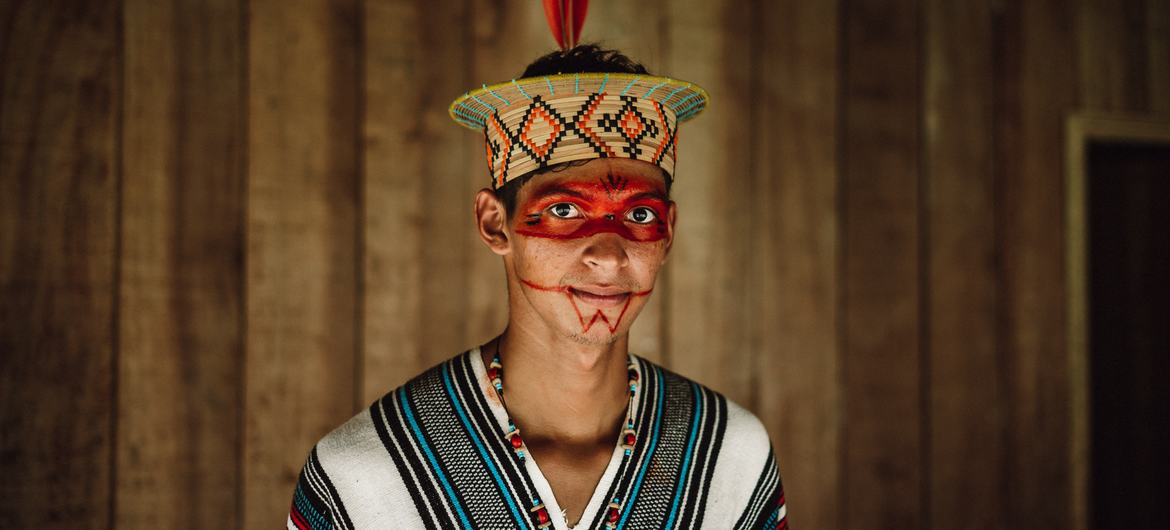
Poyowari Piyãko, a young activist, poses in his home in the Apiwtxa village, which belongs to the Ashaninka indigenous people, in northern Brazil.

Poyowari Piyãko, a young activist, poses in his home in the Apiwtxa village, which belongs to the Ashaninka indigenous people, in northern Brazil. © UNICEF/Alécio Cézar

The world must be made a safer place for people working to protect the planet, who sometimes pay with their own lives for their activism, UN Human Rights High Commissioner Michelle Bachelet said on Tuesday 1 March 2022.  Protecting the environment goes hand-in-hand with protecting the rights of those who defend it, she told the UN Human Rights Council in Geneva, which is holding its annual month-long session. 

Ms. Bachelet revealed how speaking out and standing up for environmental rights can come at enormous cost as activists have been killed or subjected to abuse, threats and harassment.   

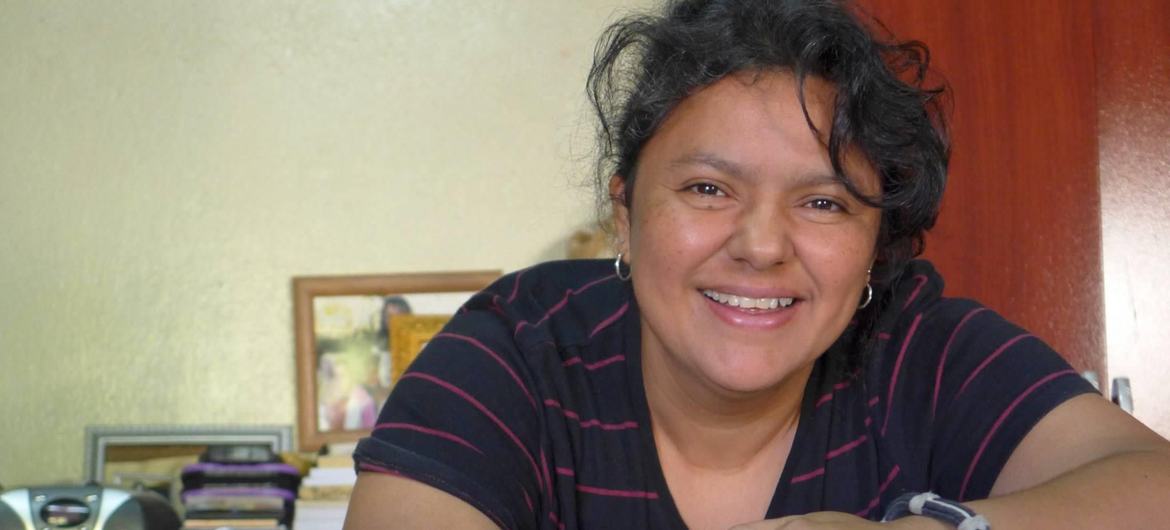
At particular risk are people who speak out against deforestation, extractives, loss of cultural heritage or identity, or large scale-agribusinesses and development projects – including those intended to produce clean energy, such as mega dams,she said.  Many environmental human rights defenders are also indigenous peoples, or members of local communities or minority groups – or those representing them.   Berta Caceres, an environmental activist from Honduras, was assassinated in March 2016.  She was recognized posthumously as a UN Champion of the Earth laureate for her tireless campaign for the rights of indigenous people.

Berta Caceres, an environmental activist from Honduras, was assassinated in March 2016. She was recognized posthumously as a UN Champion of the Earth laureate for her tireless campaign for the rights of indigenous people. © UNEP

She said entire communities may face threats and intimidation when someone speaks out on their behalf.  Ms. Bachelet underlined that States have an obligation to respect and protect the rights of environmental human rights defenders, and the communities they represent.  Authorities must also prevent and ensure accountability for attacks.  These actions are in line with a Council resolution adopted last year which upholds the right to a healthy environment, she said.  See also: https://humanrightsdefenders.blog/2021/10/26/aarhus-convention-gets-new-mechanism-to-protect-environmental-defenders/ and

“In addition, it is critical that States effectively regulate businesses and hold them accountable for human rights violations,” she said, while corporations also have a similar duty, as outlined in the UN Guiding Principles on Business and Human Rights

Ms. Bachelet advised that prior to undertaking any climate project, both governments and businesses must carry out human rights risk assessments.  

If indigenous peoples’ rights are at risk of being adversely affected by such projects, it is crucial that their free, prior and informed consent is obtained,” she said. 

The UN rights chief also reported on some of the global work of her staff.  “All around the world, my Office is committed to supporting States, businesses and environmental human rights defenders in all of their efforts to protect our planet,” she said. 

For example, over 200 human rights defenders in the Pacific region have been trained to help boost sustainable development, business and human rights in the context of climate change.  

In Southeast Asia, OHCHR is monitoring cases of harassment, arrest, killings and disappearances of environmental human rights defenders, while

https://yubanet.com/world/protect-the-defenders-of-the-planet-un-rights-chief-urges/working with governments towards ending punitive measures levelled against activists. 

https://news.un.org/en/story/2022/03/1113022