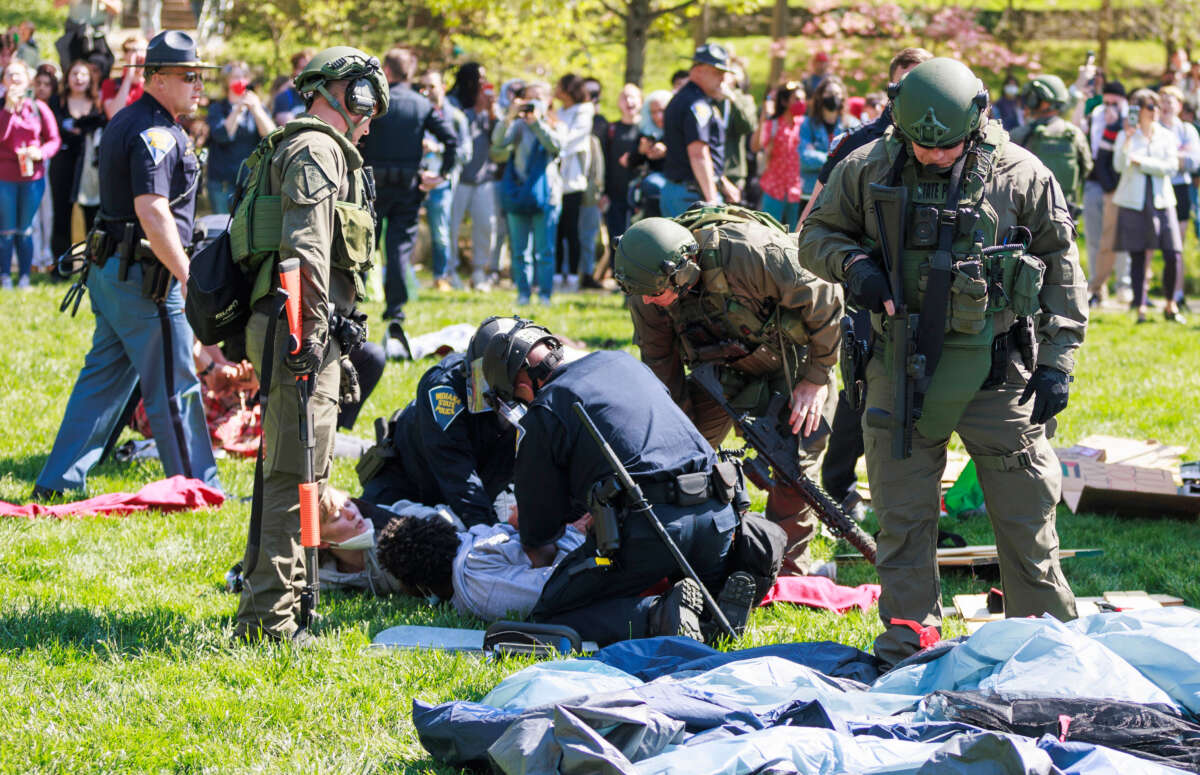
UN human rights officials are expressing alarm over the recent wave of violent repression by university administrators against the student protests for Palestinian liberation that have swept the U.S., raising concerns that protesters’ rights to free speech and assembly are being violated.
A statement on Tuesday said that UN High Commissioner for Human Rights Volker Türk, the UN’s top human rights officer, is “troubled” over a “series of heavy-handed steps taken to disperse and dismantle protests” across U.S. college campuses.
“Freedom of expression and the right to peaceful assembly are fundamental to society — particularly when there is sharp disagreement on major issues, as there are in relation to the conflict in the Occupied Palestinian Territory and Israel,” said Türk. “I am concerned that some of the law enforcement actions across a series of universities appear disproportionate in their impacts.”
Over the last two weeks, over 1,200 protesters have been arrested across dozens of campuses after university administrators enlisted police to crack down on encampments and other demonstrations set up by students calling for their schools to divest from Israel and supporting corporations, among other demands. At some universities, administrators even allowed law enforcement officers to aim sniper rifles at their students for their peaceful acts of protest.
UN Special Rapporteur on Human Rights Defenders Mary Lawlor said that universities’ crackdowns are an obvious violation of students’ rights.
On 19 April 2024 – Indigenous Peoples Day in Brazil – tribal leaders and activists used the occasion to criticize government of Brazilian President Luiz Inácio Lula da Silva for falling short on promises to safeguard native land rights.
This is revolting for us Indigenous peoples to have had so much faith in the government’s commitments to our rights and the demarcation of our territories,” Alessandra Korap Munduruku, a member of the Munduruku people and a 2023 winner of the prestigious Goldman Environmental Prize, told Amazon Watch in a statement published Friday.
“We hear all of these discussions about environmental and climate protection, but without support for Indigenous peoples on the front lines, suffering serious attacks and threats. Lula cannot speak about fighting climate change without fulfilling his duty to demarcate our lands,” she added.
On the same day United Nations Special Rapporteur on the situation of human rights defenders, Mary Lawlor said that Brazil needs to prioritise the demarcation and titling of land – the root cause of most attacks against human rights defenders in the country.
“Human rights defenders are under extreme threat in Brazil. The Federal Government knows this but has so far failed to put the structures in place to provide them with better protection and tackle the root causes of the risks they face,” said Mary Lawlor, in a statement following an official visit to the country.
Brazil’s Federal Government recognises human rights defenders and their work, and understands the risks they face, the expert noted. However, when human rights defenders challenge structures of power that impose and reinforce injustice, they are violently attacked and face an extremely high level of risks, she said. “Again and again during my visit I heard from defenders who had survived assassination attempts, who had been shot at, had their houses surrounded, had death threats delivered to their door. I heard from defenders whose work had been criminalised,” Lawlor said.
“The defenders most at risk in Brazil are indigenous and quilombola people and members of other traditional communities. In many cases, perpetrators of the attacks are known. Yet, there is rampant impunity for these crimes,” the expert said.
The UN expert said business and markets play a key role as drivers of conflicts, putting human rights defenders at risk. “The demarcation and titling of indigenous, quilombola and other traditional peoples’ land, as well as the revision of the legality of all existing concessions given to companies must be prioritised,” she said.
Lawlor said that in urban areas, human rights defenders were also being attacked, defamed and heavily criminalised, specifically black women human rights defenders, journalists, popular communicators and lawyers, and social and cultural workers.
“The conflation of human rights defenders with criminals by local authorities – in particular defenders who are part of social movements and supporting the most vulnerable in society – is a clear problem and must end,” the expert said.
A protection programme to address situations of risk for human rights defenders has been in place in Brazil for some time. However, Lawlor said it was currently unfit for purpose and needs radical reform and expansion. Lawlor applauded the Federal Government for re-opening the door to human rights defenders and civil society in the design of policy that affects them and encouraged authorities to not abandon these efforts.
“The Federal Government needs to match the courage of human rights defenders in the country – and it must do so now,” Lawlor said.
On 22 April 2024 Maria Laura Canineu HRW’s Deputy Director, Environment and Human Rights, said she wanted to use this quilombolaas an opportunity to celebrate the work of the courageous people who put themselves at risk fighting for a world in which people and the planet can thrive. “I personally would like to honor Osvalinda Marcelino Alves Pereira. Sadly, she passed away from a long-standing illness just over a week ago.”
The failure of States to pay their membership dues to the United Nations in full and in time, and the practice of conditioning funding on unilateral political goals is causing a financial liquidity crisis for the organisation, the impacts of which are felt by victims and survivors of human rights violations and abuses. … Without the resources needed, the outcomes of this session can’t be implemented. The credibility of HRC is at stake.
We welcome the adoption of three resolutions calling for the implementation of effective accountability measures to ensure justice for atrocity crimes committed in the context of Israel‘s decades long colonial apartheid imposed over the Palestinian people, and for the realisation of the Palestinian people’s right to self-determination. Special Procedures expressed their profound concern about “the support of certain governments for Israel’s strategy of warfare against the besieged population of Gaza, and the failure of the international system to mobilise to prevent genocide” and called on States to implement an “arms embargo on Israel, heightened by the International Court of Justice’s ruling […] that there is a plausible risk of genocide in Gaza […].” This session, the Special Rapporteur on the OPT concluded that the actions of Israel in Gaza meet the legal qualifications of genocide.
We deplore the double standards in applying international law and the failure of certain States to vote in favor of ending impunity. This undermines the integrity of the UN human rights framework, the legitimacy of this institution, and the credibility of those States. From Palestine, to Ukraine, to Myanmar, to Sudan, to Sri Lanka, resolving grave human rights violations requires States to address root causes, applying human rights norms in a principled and consistent way. The Council has a prevention mandate and UN Member States have a legal and moral duty to prevent and ensure accountability and non-recurrence for atrocity crimes, wherever they occur.
We want to highlight and specifically welcome the adoption of the first ever resolution on combating discrimination, violence and harmful practices intersex persons. The resolution builds on growing support in the Council on this topic and responds to several calls by the global coalition of intersex-led organisations. The resolution takes important steps in recognising that discrimination, violence and harmful practices based on innate variations of sex characteristics, such as medically unnecessary interventions, takes place in all regions of the world. We welcome that the resolution calls for States to take measures to protect the human rights of this population and calls for an OHCHR report and a panel discussion to address challenges and discuss good practices in protecting the human rights of intersex persons.
We welcome the renewal of the mandate of the Independent Expert on the enjoyment of human rights by persons with albinism. As attested by human rights defenders with albinism, the mandate played an invaluable role by shedding light on human rights violations against persons with albinism through ground breaking research, country visits, and human rights training, and ensuring that defenders with albinism are consulted and take part in the decision-making. The organisations also welcomed the inclusion of language reflecting the important role played by “organizations of persons with albinism and their families”, and the reference to the role of States in collaboration with the World Health Organization, “to take effective measures to address the health-related effects of climate change on persons with albinism with a view to realizing their right to the enjoyment of the highest attainable standard of physical and mental health, particularly regarding the alarming incidence of skin cancer in this population, and to implement the recommendations of the report of the Independent Expert in this regard”.
We welcome the adoption of the resolution on the renewal of the mandate of the Special Rapporteur on the human right to a clean, healthy and sustainable environment. We also welcome the update of the title of the mandate acknowledging the recognition of this right by the Human Rights Council in its resolution 48/13 on 8 October 2021 and the General Assembly resolution 76/300 on 28 July 2022. We also welcome the inclusion of gender-specific language in the text, and we call on the Special Rapporteur to devote a careful attention to the protection of environmental human rights defenders for their strong contribution to the realisation of the right to a clean, healthy, and sustainable environment, as called for by several States. We also welcome that the Council appointed for the first time a woman from the global south to fulfill this mandate, and we welcome the nomination of another woman as Special Rapporteur on the promotion and protection of human rights in the context of climate change.
We welcome the resolution on countering disinformation, which addresses new issues whilst once again rejecting censorship and reaffirming the ‘essential role’ that the right to freedom of expression plays in countering disinformation. We welcome the specific focus on girls – besides women – as well as risks associated with artificial intelligence, gender-based violence, and electoral processes. We urge States to follow the approach of the resolution and to combat disinformation through holistic, positive measures, including by ensuring a diverse, free and independent media environment, protecting journalists and media workers, and implementing comprehensive right to information laws. Importantly, we also urge States to ensure that they do not conduct their own disinformation campaigns. At the same time, social media companies have an essential role to play and should take heed of the resolution by reforming their business models which allow disinformation to flourish on their platforms. The resolution also mandates the Advisory Committee to produce a new report on disinformation, and it is absolutely essential that this report mirrors and reinforces existing standards on this topic, especially the various reports of the Special Rapporteur on freedom of opinion and expression.
Whilst we welcome the technical renewal of the resolution on freedom of religion or belief, we regret that the parallel resolution on combating intolerance (widely known by its original name Resolution 16/18) was not tabled at the session. Since 2011, these duel resolutions have been renewed each year, representing a consensual and universal framework to address the root causes of hate based on religion or belief in law, policy, and practice. We call on the OIC to once again renew Resolution 16/18 in a future session, while ensuring no substantive changes are made to this consensual framework. We also urge all States to reaffirm their commitment to Resolution 16/18 and the Rabat Plan of Action and adopt comprehensive and evidence-based national implementation plans, with the full and effective participation of diverse stakeholders.
We welcome the adoption of the resolution on prevention of genocide and its focus on impunity, risks and early warnings, as well as the paragraph reaffirming that starvation of civilians as a method to combat is prohibited under international humanitarian law; however, we regret that the resolution fails to adequately reflect and address serious concerns relating to current political contexts and related risks of genocide.
We welcome the adoption of the resolution on the rights of the child: realising the rights of the child and inclusive social protection, strengthening the implementation of child rights-compliant inclusive social protection systems that benefit all children. We also welcome the addition of a new section on child rights mainstreaming, enhancing the capacity of OHCHR to advance child rights mainstreaming, particularly in areas such as meaningful and ethical child participation and child safeguarding. We remain concerned by persisted attempts to weaken the text, especially to shift the focus away from children as individual right-holders, to curtail child participation and remove the inclusion of a gender perspective.
We welcome the adoption of the resolution on torture and other cruel, inhuman or degrading treatment or punishment which addresses effective national legislative, administrative, judicial or other measures to prevent acts of torture. We welcome the new paragraph urging States concerned to comply with binding orders of the International Court of Justice related to their obligations under the Convention Against Torture.
We welcome the adoption of a new resolution on the human rights situation in Belarus. The Belarusian authorities continue their widespread and systematic politically-motivated repression, targeting not only dissent inside the country, but also Belarusians outside the country who were forced to flee for fear of persecution. Today, almost 1,500 prisoners jailed following politically-motivated charges in Belarus face discriminatory treatment, severe restriction of their rights, and ill-treatment including torture. The resolution rightly creates a new standalone independent investigative mechanism, that will inherit the work of the OHCHR Examination, to collect and preserve evidence of potential international crimes beyond the 2020 elections period, with a view to advancing accountability. It also ensures the renewal of the mandate of the Special Rapporteur who remains an essential ‘lifeline’ to Belarusian civil society.
We welcome the resolution on technical assistance and capacity building in regard to the human rights situation in Haiti and emphasis on the role civil society plays in the promotion and protection of human rights and the importance of creating and maintaining an enabling environment in which civil society can operate independently and free from insecurity. We similarly welcome the call on the Haitian authorities to step up their efforts to support national human rights institutions and to pursue an inclusive dialogue between all Haitian actors concerned in order to find a lasting solution to the multidimensional crisis, which severely impacts civil society. We welcome the renewal of the mandate of the designated expert and reference to women and children in regard to the monitoring of human rights situation and abuses developments, as well as encouragement of progress on the question of the establishment of an office of the Office of the High Commissioner in Haiti. We nonetheless regret that the resolution does not address the multifaceted challenges civil society faces amidst escalating violence, fails to further address the link between the circulation of firearms and the human rights violations and abuses, and does not identify concrete avenues for the protection of civilians and solidarity action to ensure the safety, dignity and rights of civilians are upheld.
We welcome the adoption of the resolution on Iran, renewing the mandate of the Special Rapporteur on human rights in Iran and extending for another year the mandate of the Independent International Fact-Finding Mission on Iran. The continuation of these two distinct and complementary mandates is essential for the Council to fulfill its mandate of promotion and protection of human rights in Iran. However, given the severity of the human rights crisis in the country, we regret that this important resolution remains purely procedural and fails to reflect the dire situation of human rights in Iran, including the sharp spike in executions, often following grossly unfair trials. It also fails to address the increased levels of police and judicial harassment against women and girls appearing in public without compulsory headscarves, human rights defenders, lawyers, journalists and families of victims seeking truth and justice, and the continued pervasive discrimination and violence faced by women and girls, LGBTI+ persons and persons belonging to ethnic and religious minorities in the country.
We welcome the adoption by consensus of the resolution on Myanmar, which is a clear indication of the global concern for the deepening human rights and humanitarian crisis in the country as a result of the military’s over three-year long brutal war against the people resisting its attempted coup. We further welcome the Council’s unreserved support for Myanmar peoples’ aspirations for human rights, democracy, and justice as well as the recognition of serious human rights implications of the continuing sale of arms and jet fuel to Myanmar.
We welcome the resolution on the situation of human rights in Ukraine stemming from the Russian aggression. The latest report of the Independent International Commission of Inquiry (COI) reveals disturbing evidence of war crimes, including civilian targeting, torture, sexual violence, and the unlawful transfer of children. These findings underscore the conflict’s brutality, particularly highlighted by the siege of Mariupol, where indiscriminate attacks led to massive civilian casualties and infrastructure destruction. The report also details the widespread and systematic torture and sexual violence against both civilians and prisoners of war. Moreover, the illegal deportation of children emerges as a significant issue, as part of a broader strategy of terror and cultural erasure. The COI’s mandate extension is crucial for ongoing investigations and ensuring justice for victims.
By adopting a resolution entitled ‘advancing human rights in South Sudan,’ the Council ensured that international scrutiny of South Sudan’s human rights situation will cover the country’s first-ever national elections, which are set to take place in December 2024. With this resolution, the UN’s top human rights body extended the mandate of its Commission on Human Rights in South Sudan.
We welcome the resolution on the human rights situation in Syria and the extension of the mandate of the Independent International Commission of Inquiry (COI), which will continue to report on violations from all sides of the conflict in an impartial and victim-centered manner. Syria continues to commit systematic and widespread attacks against civilians, in detention centers through torture, arbitrary detention and enforced disappearance and through indiscriminate attacks against the population in Idlib. We welcome that the resolution supports the mandate of the Independent Institution of the Missing People and calls for compliance with the recent order on Provisional Measures by the ICJ – both initiatives can play a significant role in fulfilling victims’ rights to truth and justice and should receive support by all UN Member States. In a context of ongoing normalisation, the CoI’s mandate to investigate and report on human rights abuses occurring in Syria is of paramount importance.
We continue to deplore this Council’s exceptionalism towards serious human rights violations committed by the Chinese government. At a time when double-standards are enabling ongoing atrocity crimes to be committed in Palestine, sustained failure by Council Members, in particular OIC countries, to promote accountability for crimes against humanity against Uyghurs and Muslim peoples in China severely undermines the Council’s integrity, and its ability to prevent and put an end to atrocity crimes globally. Findings by the OHCHR, the UN Treaty Bodies, the ILO and over 100 letters by UN Special Procedures since 2018 have provided overwhelming evidence pointing to systematic and widespread human rights violations across the People’s Republic of China. We reiterate our pressing call for all Council Members to support the adoption of a resolution establishing a UN mandate to monitor and report on the human rights situation in China, as repeatedly urged by UN Special Procedures. We further echo Special Procedures’ call for prompt and impartial investigations into the unlawful death of Cao Shunli, and all cases of reprisals for cooperation with the UN.
We regret the Council’s silence on the situation in India despite the clear and compounding early warning signs of further deterioration that necessitate preventive action by the Council based on the objective criteria. The latest of these early warning signals include the recent notification of rules to implement the highly discriminatory Citizenship Amendment Act by the Bharatiya Janata Party-led government just weeks before the election, along with recent intercommunal violence in Manipur and ongoing violence against Muslims in various parts of India amid increasing restrictions on civic space, criminalisation of dissent and erosion of the rule of law with political interference.
We further regret that this Council is increasingly failing to protect victims of human rights violations throughout the Middle East and North Africa, including in Algeria, Bahrain, Egypt, Libya, Saudi Arabia, and Yemen. The people of Yemen and Libya continue to endure massive ‘man-made’ humanitarian catastrophes caused in large part by ongoing impunity for war crimes, crimes against humanity and other grave violations of international law. In Algeria, Egypt, Bahrain, Saudi Arabia and in other MENA countries, citizens are routinely subjected to brutal, wide-spread human rights violations intended to silence dissent, eradicate independent civil society and quash democratic social movements. Countless citizens from the MENA region continue to hope and strive for a more dignified life – often at the cost of their own lives and freedom. We call on this Council and UN member States to rise above narrow political agendas and begin to take steps to address the increasing selectivity that frequently characterises this Council’s approach to human rights protection and promotion.
We regret that once more, civil society representatives faced numerous obstacles to accessing the Palais and engaging in discussions, both in person and remotely, during this session. The UN human rights system in Geneva has always and continues to rely on the smooth and unhindered access of civil society to carry out its mandate. We remind UN Member States, as well as UNOG, that the Council’s mandate, as set out in HRC Res 5/1, requires that arrangements be made, and practices observed to ensure ‘the most effective contribution’ of NGOs. Undermining civil society access and engagement not only undermines the capacities and effectiveness of civil society but also of the UN itself.
Signatories:
All Human Rights for All in Iran
Asian Forum for Human Rights and Development (FORUM-ASIA)
Association Arc pour la defense des droits de l’homme et des revendication democratique/culturelles du peuple Azerbaidjanais Iran -”ArcDH”
Balochistan Human Rights Group
Cairo Institute for Human Rights Studies
Child Rights Connect (CRCnt)
CIVICUS
Commonwealth Human Rights Initiative (CHRI)
Egyptian initiative for Personal Rights (EIPR)
Ensemble contre la Peine de Mort
Franciscans International
Gulf Center for Human Rights
Impact Iran
International Bar Association’s Human Rights Institute (IBAHRI)
NGOs and activists paid tribute to the late Chinese human rights defender Cao Shunli by holding a moment of silence and applauding her name during their speaking time at the Human Rights Council.
Delivering a joint statement before the Council plenary on behalf of ISHR and 16 organisations accredited to the UN as well as 20 NGOs without consultative status, a human rights defender from the Chinese mainland concluded her intervention with a short silence and a call to States and NGOs to mirror the courage of human rights defenders and always stand in solidarity with them.
After the intervention, in a sign of respect to Cao Shunli, the room was filled with applause from NGOs and a handful of governments in honour of Cao and in solidarity with victims of reprisals for cooperation with the UN.
‘It is unacceptable to normalise reprisals,’ the human rights defender from the Chinese mainland said. ‘Cao’s courage inspires defenders globally, so let her legacy and name resonate in this room until there is accountability for all victims of reprisals,’ she emphasised.
In an attempt to silence the activist, the Chinese delegation raised a point of order protesting against the statement. This mirrored their 2014 response to ISHR and other NGO’s attempt to hold a moment of silence at the Council after Cao’s death, during which Chinese diplomats disrupted the session for over an hour. This time, Cuba, Venezuela, the Democratic People’s Republic of Korea and Russia supported China in their attempt to silence activists’ right to speak at the United Nations.
In response to China’s attacks, Belgium on behalf of the 27 states of the European Union, supported by the United States of America, Canada and the United Kingdom, took the floor to defend NGOs’ right to speak freely.
‘We cannot allow Cao’s story and her work to be forgotten,’ said Raphaël Viana David, China Programme Manager for ISHR. ‘Ten years on, no one has been held to account for this emblematic case of tragic State reprisals. UN experts called for an inquiry in 2014, 2019 and once again last week. Governments cannot let Beijing off the hook: they must push for accountability for Cao’s fate and for that of all activists who have been persecuted for cooperating with the UN in standing up for human rights.’
ISHR and its civil society partners urge the international community to hold the individuals and institutions responsible for Cao’s death to account and to end all acts of reprisals and repressive measures seeking to restrict civil society space and prevent activists from engaging with the UN.
Michelle Langrand for Geneva Solutions of 20 March 2024 has an exclusive report on the liquidity crunch and its effect on the UN human rights branch. Here her report in full:
UN secretary general António Guterres and UN human rights high commissioner Volker Türk at the opening of the Human Rights Council 55th session in Geneva, 26 February 2024. (UN Photo/Elma Okic)
As the United Nations faces its worst liquidity crisis in recent history, experts, staff and observers worry about the ramifications on human rights work. Correspondence seen by Geneva Solutions reveals concerns at the highest levels of the UN human rights branch in Geneva as they are forced to scale back their operations.
A patchwork of cost-saving measures taken over the winter holidays at the Palais des Nations in Geneva, from keeping the heat down and closing the premises for two weeks, revealed how serious the UN’s cash troubles were after states failed to fully pay their bills in 2023. The new year didn’t brighten prospects either. In January, UN secretary general Antonio Guterres in New York announced that “aggressive cash conservation measures” would be taken across the organisation to avoid running out of cash by August as year-end arrears reached a record $859 million.
It couldn’t have come at a worse time for a cash-strapped UN Office of the High Commissioner for Human Rights (OHCHR) as worsening human rights crises worldwide add to its workload. The Geneva-based office acts as a secretariat for dozens of independent experts, investigative bodies and human rights committees that rely for the most part on the UN’s regular budget and few voluntary contributions from states. Between vacancies and travel restrictions, both insiders and outsiders worry that planned cuts could severely impair the UN’s crucial human rights work.
Understaffed and overwhelmed
On 12 February, just as the UN’s Geneva headquarters prepared for one of its busiest months hosting the Human Rights Council’s first session of the year, bad news came from New York. Countries had only paid one-third of the UN’s $3.59bn regular budget for 2024, and instructions from the higher-ups were that the hiring freeze imposed in July 2023 would be extended throughout 2024 across UN operations. The organisation said that $350 million would need to be shaved off through spending restrictions on travel, conference services and others.
Human rights bodies, where vacancies had been piling up in the last months, would have to continue to run with reduced staff. In a letter from 23 December, UN high commissioner for human rights Volker Türk had already warned Council president Omar Zniber that 63 posts in over 10 investigative mandates were waiting to be filled while recruitments had been placed on hold. Currently, there are active investigations on serious human rights abuses in Ukraine, Iran, Syria, South Sudan and Nicaragua among others.
“While no compromise has been made in terms of methodology, some of the investigative bodies have had to narrow the scope of both their investigations and their upcoming reports,” the letter reads.
The fact-finding mission on Sudan was one of the bodies immediately affected. Created in October to collect evidence on atrocities committed during the last year of bloody conflict in which thousands of civilians have been killed and millions displaced, the probe body has struggled to begin work. The independent experts composing it, who aren’t paid, have been appointed since December, but as of late February, the Human Rights Office hadn’t been able to hire a support team due to insufficient cash flow, according to a Human Rights Council spokesperson. The experts, who have been mandated for one year, are due to present their findings in September, with observers wondering whether the western-led proposal will garner the political backing it needs to be renewed.
That isn’t the only initiative struggling to get off the ground. “We have met with some new mandates, and we realised that they barely have a team, if any, to support them,” said one NGO member who collaborates with the human rights mechanisms and asked to remain anonymous. Observers say most investigative bodies, even older ones, are impacted at some level.
Kaoru Okoizumi, deputy head of the Independent Investigative Mechanism on Myanmar (IIMM) – the largest human rights probe team – said six out of 57 staff positions funded through the UN’s regular budget were vacant, significantly affecting their work. The IIMM, which also relies on a trust fund made up of voluntary donations and doesn’t depend on the OHCHR’s budget, is coping better than most.
Expert committees that oversee states’ compliance with international human rights law, such as on children’s rights and on torture, are also stretched thin. One staffer said they were required to take on more work than normally expected, for example, having to conduct research and compile information about several countries at the same time for one session. “It’s just too much!” they said, adding that their team was short of more than 10 people.
Another worker from the OHCHR’s special procedures branch, who said was covering for several vacant spots, conceded that the quality of work is affected in such conditions. “Of course, you won’t work as well after pulling all-nighters,” they said. Türk’s letter to Zniber acknowledges that the secretariat was having trouble supporting some 60 special procedures, which are UN-backed independent experts or groups of experts assigned to report to the council on a specific theme or country.
While the problem of understaffing isn’t new, and many also point to cumbersome months-long recruitment processes that are often incompatible with brief mandates, the situation has worsened. To compensate for the hiring freeze, the UN has also increasingly resorted to temporary contracts that last for a few months and can be exceptionally renewed for up to two years. The two workers, who have living on contract to contract for more than a year, said that there is fear that temporary staff may be among the first to go, along with consultants. “In the food chain of contracts, we’re at the bottom,” one of them said.
A slim year for the Human Rights Council
The UN’s human rights branch, which receives as little as four per cent of the UN’s total budget – around $142 million – just enough to cover one third of its activities, has been scrambling to cut back on spending. On Friday, in another letter seen by Geneva Solutions, Türk informed Zniber that his office would be forced to axe certain activities this year.
OHCHR spokesperson Marta Hurtado confirmed the information to Geneva Solutions by writing: “The office has developed an internal contingency plan, which provides for adjustment pending the complete availability of regular budget resources become available.”
Among the measures it proposes is postponing some activities to 2025 altogether while as many consultations and meetings as possible would be moved online without interpretation, according to Hurtado, since the UN in New York hasn’t authorised it for virtual meetings. For those that will be held in person, resources to fly in experts and civil society will also be reduced.
The UN’s recent decision that it would no longer provide online services for meetings has drawn outcry from rights campaigners who argue it curtails the possibility of civil society groups and states with little resources to participate. While the move has been attributed to matters of rules, observers can’t help but wonder if it isn’t, in the end, about the money. Echoing the concerns in the letter, Türks described the impact of these measures on participation from experts and other stakeholders as “deeply regrettable”.
Another issue raised by the UN rights chief is the difficulty that his office has been facing in providing technical assistance to national authorities. He gave the example of the Marshall Islands, which requested help in 2022 to assess the human rights impact of US nuclear testing in its territory in the 1940s and 50s. A source said that although a first visit finally took place this year, work has been delayed.
Marc Limon, director of the human rights think tank Universal Rights Group, remarked that work by the Council to help states improve their rights record through capacity-building support was unfortunately “almost inexistent” and regretted that resources couldn’t be spared for what he calls the “hard end of human rights diplomacy”. “While UN investigations must be protected, there is little threat to key commissions of inquiry due to the huge budgets allocated to them in the first place,” he said. Most probe bodies have between 17 to 27 staff while special procedures usually have one or two assistants.
The Moroccan ambassador forwarded Türk’s letter to fellow states on Monday and said a draft decision regarding the measures would be tabled for the council to consider at the end of the session at the beginning of April.
Human rights credibility at stake
One that has raised eyebrows but isn’t explicitly mentioned by the UN rights chief is limiting country visits by UN experts to one visit instead of two. Hurtado acknowledged that special procedures and other expert mechanisms, including probe bodies, would see their country visits “reduced” while not commenting on the number of authorised visits.
One UN expert, speaking under the condition of anonymity, voiced concern over the restriction. “Country visits are extremely important because they give us a real intimate understanding of a place and the state gets direct feedback on what they’re doing well and what they can do to improve, while also energising civil society,” they said, point out that experts were already barely able to conduct visits during the Covid-19 pandemic.
Limon commented that while it was a wise choice to cut back on some of the “superfluous” debates and activities, reducing special rapporteur trips to countries to one per year, an idea that he said has been floated around before, showed the office “had its priorities wrong”.
Travel restrictions could also have significant implications for criminal cases. Okoizumi said her Myanmar team only had 65 per cent of its usual travel budget, which is key for the Geneva-based group to reach victims and witnesses. “We do our witness interviews in person because we think it’s important in a criminal investigation to make sure that interviews are being conducted in a way that preserves the integrity of the testimony,” she said.
The body, set up in 2018 by the Human Rights Council, is currently working to support a case brought by The Gambia against Myanmar for violating the Genocide Convention at the International Court of Justice, as well as investigations on crimes against the Rohingya at the International Criminal Court and Argentina.
“These are very concrete proceedings and our ability to support them will be impacted by the number of interviews that we’re able to conduct or the analysis that we’re able to produce and share with these jurisdictions,” Okoizumi said, noting that the ICJ case is particularly time-sensitive as both parties were expected to make submissions this year.
The international lawyer said this has meant shifting resources to meet shorter-term deadlines at the risk of putting aside other objectives. “The whole point of having an investigative mechanism is to make sure that we can collect the evidence very soon after a crime happens, even if there isn’t an investigation or prosecution until many years or even decades later. So, shifting our resources in that way, overall will have a negative impact,” she explained.
Top experts within the human rights branch have also rang alarm bells about the wider repercussions of the funding crisis. In a letter seen by Geneva Solutions addressed to the president of the General Assembly, Dennis Francis, dated 23 February, 10 chairs of human rights committees warned that the liquidity crisis “severely threatens the credibility and efficiency of the United Nations human rights system”.
The experts said the treaty bodies were “being denied even the minimum staff and operational resources required to deliver their critical mandates to advance human rights” at a time of “such a severe existential crisis of multilateralism and of non compliance with international law”.
Referring to some of the measures being considered, the signatories also argue that suspending sessions “for the first time in their over six decades of history for financial reasons, together with visits to prevent torture and other human rights violations” would lead to “concrete and irreversible” harm.
“When the collective security system has failed to honour the ‘never again’ pledge of 1945, the least to do is to strengthen human rights monitoring mechanisms, so that human rights violations are documented, even when justice seems extremely challenging to serve. We note with deep regret that the opposite is being done,” the custodians of human rights law wrote.
“Effectively realising human rights for everyone, everywhere is the pathway to free, fair and just communities and a more peaceful and sustainable world“, write ISHR Director Phil Lynch and Board Chair Vrinda Grover on 8 March 2024. Here some excerpts from a piece worth reading:
We face a global climate emergency. We witness atrocity crimes being perpetrated with apparent impunity, from Afghanistan to Sudan, Palestine to Ukraine, and Nicaragua to Xinjiang. We confront rising populism and propaganda, with artificial intelligence misused to fuel disinformation and discrimination, and democracy facing a ‘make-or-break year’ in 2024, with over 70 national elections. Each of these crises and conflicts are complex, yet they are also interconnected in four fundamental ways.
First, repression and rights violations are among the root causes of all these crises and conflicts…
Second, respect for human rights, and accountability for violations, is essential to address and resolve these crises and conflicts. ..
Third, very few States, if any, have been prepared to treat human rights as paramount and apply human rights standards in a principled, consistent way to each crisis and conflict. ..The selective and inconsistent application of international human rights law undermines the integrity of the framework, as well as the credibility, legitimacy and influence of States and other actors who engage in such double standards.
Fourth and finally, the work of human rights defenders at the national level, as well as their engagement and advocacy at the international level, is essential to address and resolve each of these conflicts and crises. Defenders prevent rights violations, document abuses, promote accountability, and propose solutions that are grounded in community priorities and needs. Indigenous rights defenders carry the knowledge that is necessary to live sustainably and to respect and protect the environment. Digital rights activists are pushing for rights-based regulation of artificial intelligence to ensure that humanity benefits from its innovations and efficiencies. Whistleblowers are exposing government wrongdoing and corporate misfeasance, working to safeguard democracy, while corporate accountability activists are campaigning for an international treaty on business and human rights. Women human rights defenders from Afghanistan are leading the campaign to hold the Taliban accountable for the crime of gender apartheid, while also ensuring that humanitarian aid reaches the most vulnerable populations. In Sudan, women defenders are leading peace movements and protests at the local level, as well as international advocacy, which was instrumental in the establishment of a UN investigative mechanism, further adding to the pressure on the Sudanese Armed Forces and the Rapid Support Forces to end the war. Despite the challenges, complexities and uncertainties we collectively face, we remain convinced that, with international human rights laws and standards providing a compass, human rights defenders can chart a course to a more peaceful, just and inclusive world….
Despite the challenging times, exacerbated by declining funding for international human rights advocacy and organisations by some States and foundations, ISHR continues to pursue a positive and forward-looking agenda.
We’re pleased that in 2023 the Democratic Republic of Congo enacted a specific national law on the protection of defenders, the culmination of years of work by ISHR and national partners. With this development, the DRC joins the ranks of countries like Côte d’Ivoire, Niger, Burkina Faso, Mali, and Mongolia amongst the countries where we have worked alongside national partners to strengthen legal frameworks for defenders and establish specific defender protection laws and will continue to work to ensure effective implementation.
In the area of women’s rights, we are working with defenders from Afghanistan and Iran, together with international legal experts, to push for the explicit recognition and codification of the atrocity crime of gender apartheid. This would fill an international protection gap for women and girls, as well as impose responsibilities on third States and non-State actors to take concrete steps to prevent and end gender apartheid.
With 2023 marking the 25th anniversary of the Declaration on Human Rights Defenders, we are coordinating a broad coalition to develop an authoritative baseline document of international and regional jurisprudence in relation to the protection of defenders, which will be launched in 2024.
And throughout 2024 we’ll continue allying with Black-led organisations to promote racial justice, with feminist and LGBTIQ+ organisations to resist anti-rights narratives and movements, with corporate accountability activists to strengthen laws on business and human rights, and with Global South defenders to ensure that key multilateral fora are relevant, accessible and responsive to them.
Reflecting on our collective wins over 2023, we identified one golden thread: human rights defenders working in dynamic coalitions, movements and networks to strategically leverage international law and mechanisms to contribute to positive change. With 2023 marking both the 75th anniversary of the Universal Declaration of Human Rights and the 25th anniversary of the Declaration on Human Rights Defenders, and 2024 marking ISHR’s own 40th anniversary, it is apt to recall that the work of defenders and the integrity of the international framework are essential to the realisation of human rights on the ground.
The promise of the Universal Declaration will only be fulfilled when we work in coalition to ensure that defenders are protected and that standards are consistently respected and applied.
On 12 March 2024 the recently appointed UN Special Rapporteur on the promotion and protection of human rights while countering terrorism, Ben Saul, warned that two decades of prolific global efforts to counter terrorism have not been matched by an equally robust commitment to human rights.
In his first report to the Human Rights Council, the Special Rapporteur painted a counter-terrorism landscape strewn with human rights violations, including unlawful killings, arbitrary detention, torture, unfair trials, privacy infringements from mass surveillance, and the criminalisation of freedoms of expression, assembly, association and political participation. For earlier posts on this topic, see: https://humanrightsdefenders.blog/tag/anti-terrorism-legislation/
“The misuse of counter-terrorism measures not only violates the rights of suspected criminals but can also jeopardise the freedoms of the innocent,” Saul said.
He condemned the rampant weaponisation of overly-broad terrorism offences against civil society, including political opponents, activists, human rights defenders, journalists, minorities, and students. Unjustified and protracted states of emergency continue to undermine human rights, the expert warned.
“Excessive military violence in response to terrorism also destroys fundamental rights, including through violations of international humanitarian law and international criminal law,” Saul said. “Cross-border military violence is increasingly used by states even when it is not justified under the international law of self-defence.”
“Many states have also failed to address the root causes of terrorism, including state violations of human rights – while impunity for those violations is endemic,” he said.
Saul said regrettably, the UN has been part of the problem, by encouraging authoritarian regimes to strengthen counter-terrorism laws in the absence of a rule of law culture or human rights safeguards. “The UN must also do better to meaningfully consult civil society on counter-terrorism,” he said.
Announcing his priorities for his three-year term, the Special Rapporteur said his focus would include ensuring regional organisations respect human rights when countering terrorism; all coercive administrative measures used to prevent terrorism comply with human rights; and States are held accountable for large-scale violations of human rights resulting from counter terrorism – and victims receive full and effective remedies.
Saul will also continue the efforts of his predecessor on preventing the abuse of counter-terrorism measures against civil society; protecting the 70,000 people arbitrarily detained in north-east Syria in the conflict against ISIL; protecting detainees and transferees from the detention facility at Guantánamo Bay, Cuba; ensuring that the UN safeguards human rights in its counter-terrorism work, regulating new technologies used in counter-terrorism; and protecting the victims of terrorism.
“Human rights in counter-terrorism are at increased risk because of rising authoritarianism, surging domestic polarisation and extremism, geopolitical competition, dysfunction in the Security Council and new tools, including social media, for fuelling dehumanisation, vilification, incitement and misinformation,” the Special Rapporteur warned.
“Double standards and selectivity by major powers in the enforcement of human rights is also eroding public confidence in the credibility of the international human rights system,” he said. “States must move beyond rhetorical commitment to human rights and instead place human rights at the heart of all counter-terrorism measures.”
Global Voices has released a special coverage called Empowering voices: Women in politics, which explores the state of women’s political participation around the world.
Human Rights First referred to a new report reveals that WHRDs face increasing harassment and threats from a global movement against gender equality and LGBTQI+ rights. The Kvinna till Kvinna Foundation, a leading feminist women’s rights organization, released Hope and Resistance Go Together: The State of Women Human Rights Defenders 2023, a report that found discouraging growth in harassment of WHRDs. The foundation surveyed 458 women’s and queer rights activists and interviewed 25 activists representing WHRDs from 67 countries affected by violence or conflict.
They found that 75% reported facing harassment for their activism, a 15% increase from two years ago, and 25% of respondents have received death threats. Most harassment comes from government authorities, but increased harassment from far-right groups and anti-gender equality actors is also driving these startling statistics. Human Rights Defenders (HRDs) across the world face resistance and violence. In 2022, at least 401 HRDs were killed for their peaceful work. But some of the obstacles facing WHRDs are distinct. https://humanrightsfirst.org/library/recognizing-women-human-rights-defenders-on-international-womens-day/
Human Rights Watch on 7 March carried a piece by Macarena Sáez who says inter alia:
On this International Women’s Day, we march for the one in three women who experience physical or sexual violence in their lifetime. We cheer for countries like Argentina, Colombia, and Ireland that value our autonomy to choose to be pregnant and have legalized access to safe abortion, while protesting that abortion is still or again illegal in many places, including US states like Alabama and Texas. At the same time, we march to honor the women who marched before us, like the Mexican women who organized the first feminist congress in 1916 to push for family law reforms and their right to vote, and the Nigerians who waged their “Women’s War” against colonization and patriarchal laws in 1929. Their struggles sadly mirror the reality of many women around the world today – especially women who belong to historically marginalized groups – who continue to rally against violence and abuse.
Fearing the power of women’s solidarity and collective actions, governments have stifled women’s speech through restrictions on movement, censorship, smear campaigns, and criminal prosecutions. In highly repressive contexts, like Afghanistan and Iran, women suffer arbitrary detention, and even enforced disappearance and torture, for their activism. Meanwhile, social media companies have not done enough to protect women from online violence, chilling women’s freedom of expression on and offline. These barriers make it hard for women’s equality to become reality. Gender justice requires an enabling environment in which women can express themselves, speak and spread their political views, and participate in political and public life. Instead of repressing or tolerating the repression of women, governments should recognize our collective actions – and consequent power – and enshrine our rights in laws, policies, and practice. [https://www.hrw.org/news/2024/03/07/womens-voices-have-power-drive-change]
On 8 March 8, 2024 Almyra Luna Kamilla and Rosalind Ratana opined in IMHO on “Navigating the storms of repression: The resilience of young women rights defenders in Asia”
In recent years, Asia has been witnessing rising authoritarianism and shrinking civic space. Among those in the frontlines of resistance are young women human rights defenders. As we celebrate International Women’s Day, let us demand for an enabling world where women human rights defenders can continue their noble pursuits without fear of reprisals.
In Thailand, the royal defamation law is being excessively used to silence criticisms against the monarchy. Meanwhile in Sri Lanka, economic and political mismanagement has sparked peaceful protests that are met with violence and intimidation. The fate of Asia’s political climate hangs by a thread as elections are held across many countries, including Bangladesh, Indonesia, India, South Korea, and Pakistan. Now more than ever, governments across the region are finding ways to solidify their power, putting an even tighter grip on civil society to the detriment of democracy and people’s fundamental rights and freedoms.
Despite such challenges, many are courageously speaking out and taking collective action to reclaim power for the people. This includes young women human rights defenders – or Youth WHRDs – who are claiming space to call out human rights violations and to demand accountability from oppressive governments. [https://www.rappler.com/voices/imho/young-women-rights-defenders-asia/]
The Alliance for Human Rights in Afghanistan(a coalition of 9 major NGOs) urgently appealed to the international community to significantly bolster its support and actively safeguard the human rights of Afghan women and girls, including Afghan women human rights defenders who face persecution for their peaceful campaigns for rights and basic freedoms.
In 2023, the Taliban further intensified its oppressive policies toward women, girls, the LGBTIQ+ community, and religious minorities. Afghan women and girls have seen their rights and prospects increasingly curtailed, from greater enforcement of restrictions on education – including a ban on girls attending secondary schools and universities – to intensifying exclusion of women from political and public life. Women have been banned from a growing list of forms of paid employment, and economic barriers, such as the ban on women registering organisations and undergoing vocational training, have contributed to a sharp decline in women’s participation in the labour market, impeding their right to make a living. This exacerbates financial insecurity, widens gender disparities, and further confines women to the private sphere. Lesbian, bisexual, and transgender women face severe threats, including torture, sexual violence, forced marriage, and death. Victims of gender violence, including those who identify as such, lack minimal legal and practical support. Obstacles to healthcare and education have exacerbated poverty and vulnerability among women and girls. In 2023, new discriminatory restrictions imposed by the Taliban included the closure of all beauty salons, blocking women from overseas travel for study, mandating female health workers in some areas to have a male chaperone while travelling or at work, and prohibiting women from entering a famous national park.
The oppressive environment extends to female activists, NGO leaders and journalists. Notable cases include the arrests of women’s rights activists Neda Parwani and Zholia Parsi, the enforced disappearance and subsequent discovery of Manizha Seddiqi in Taliban custody to date, the arrest of Matiullah Wesa, founder of an NGO advocating for girls’ education rights, and the arbitrary detainment of Ahmad Fahim Azimi and Seddiqullah Afghan—both dedicated girls’ education activists, among many others. Journalists reporting on the Taliban, facing arrests and threats, equally illustrate the difficulties encountered by the media, particularly women, when covering crimes against women or advocating for women’s rights. Collectively, these cases underscore the near-total denial of freedom of expression, gender equality, or any other internationally recognized right in Afghanistan under the Taliban.
Amid this growing oppression, segregation and fear, Afghan women human rights defenders have urged the international community to exert greater pressure on the Taliban. They call on international bodies to involve Afghan women in all negotiations with the Taliban and to facilitate direct meetings between women and the de facto authorities to address their concerns. Afghan women have also stressed the importance of advocacy for women’s rights by external actors based on the voices and realities of women inside Afghanistan. They call for coordinated efforts between organisations inside and outside the country to defend the rights of Afghan women and girls.
The UN Special Rapporteur on the situation of human rights in Afghanistan, Richard Bennett, called on the Taliban to release women human rights defenders as the world marks International Women’s Day.
I reiterate my appeal to the Taliban to respect all the human rights of women and girls in Afghanistan, including to education, work, freedom of movement and expression, and their cultural rights, and I urge the meaningful and equal participation of Afghan women and girls in all aspects of public life. I call on the Taliban to immediately and unconditionally release all those who have been arbitrarily detained for defending human rights, especially the rights of women and girls.”
On International Women’s Day, the a group of NGOs (ALQST for Human Rights, Amnesty International, CIVICUS, European Saudi Organization for Human Rights (ESOHR), Front Line Defenders, Gulf Centre for Human Rights (GCHR), HuMENA for Human Rights and Civic Engagement, International Service for Human Rights (ISHR),MENA Rights Group, Salam for Democracy and Human Rights) renewed their call on Saudi Arabian authorities to release all women human rights defenders (WHRDs), women’s rights activists and their supporters who are detained in contravention of international human rights standards. The organisations further call on Saudi authorities to lift travel bans imposed on WHRDs and their relatives, and to abolish the male guardianship system. [https://ishr.ch/latest-updates/civil-society-reiterates-their-call-on-saudi-authorities-to-release-jailed-womens-rights-activists/]
The President of Georgia awarded severl with mesla of honor: co-founder of “Safari” organization Babutsa Pataraia, human rights defender Ana Arganashvili, founders of “National Network for Protection from Violence”: Eliso Amirejibi and Nato Shavlakadze and founder of “Vedzeb” organization Tamar Museridze.
UN Report Unveils Strategies to Shield Child, Youth Human Rights Defenders
Emmanuel Abara Benson, on 6 March 2024, unveils in BNN a new UN report which highlights the challenges faced by young activists, advocating for global support and legal frameworks to safeguard their rights and efforts:
Amnesty International heralds a new UN report as a significant advancement for young activists worldwide, set to be introduced by UN Special Rapporteur Mary Lawlor during the 55th Session of the Human Rights Council on 12 March 2024. The document, titled “We are not just the future”: challenges faced by child and youth human rights defenders”, highlights the unique challenges faced by young activists, including oppression, age-based discrimination, and barriers to resources and legal aid.
The report by Mary Lawlor sheds light on the considerable obstacles child and youth defenders encounter, such as intimidation, threats, and attacks, both in physical and digital realms. Amnesty International’s Sara Vida Coumans emphasizes the overdue recognition of the distinct experiences and adversities young defenders face compared to their adult counterparts. The report also addresses the issue of “gatekeeping” by adult-led groups, which hampers the ability of young activists to access necessary resources and participate in decision-making processes.
Amnesty International has documented numerous instances of abuses against young human rights defenders. Examples include Fatima Movlamli from Azerbaijan and Mahmoud Hussein from Egypt, who faced intimidation and arbitrary detention, respectively, due to their activism. Moreover, the report mentions the plight of child climate defender Leonela Moncayo in Ecuador, who was intimidated with an explosive device outside her home, highlighting the risks young activists face. The organization calls for governments worldwide to heed the Special Rapporteur’s recommendations, particularly in providing legal aid and support for young defenders. See also: https://humanrightsdefenders.blog/2023/11/13/hrw-submission-to-special-rapporteur-focuses-on-child-and-youth-human-rights-defenders/
The document not only brings to the forefront the specific challenges faced by child and young human rights defenders but also underscores the importance of global support and legal frameworks to safeguard these individuals. By spotlighting the adverse impact of social media, the right to peaceful assembly, and the effects of climate change on young people, the report advocates for a more inclusive and supportive environment for young activists. Governments are urged to adopt the recommendations, recognizing the vital role of young defenders in advocating for human rights and democratic reforms.
This groundbreaking report marks a pivotal moment in the recognition and support of child and young human rights defenders. By highlighting the unique challenges they face and offering targeted strategies for protection, the UN and Amnesty International are paving the way for a more inclusive and equitable future for young activists. The global community’s response to these recommendations will be instrumental in ensuring that young voices are not only heard, but also protected in their brave efforts to defend human rights.
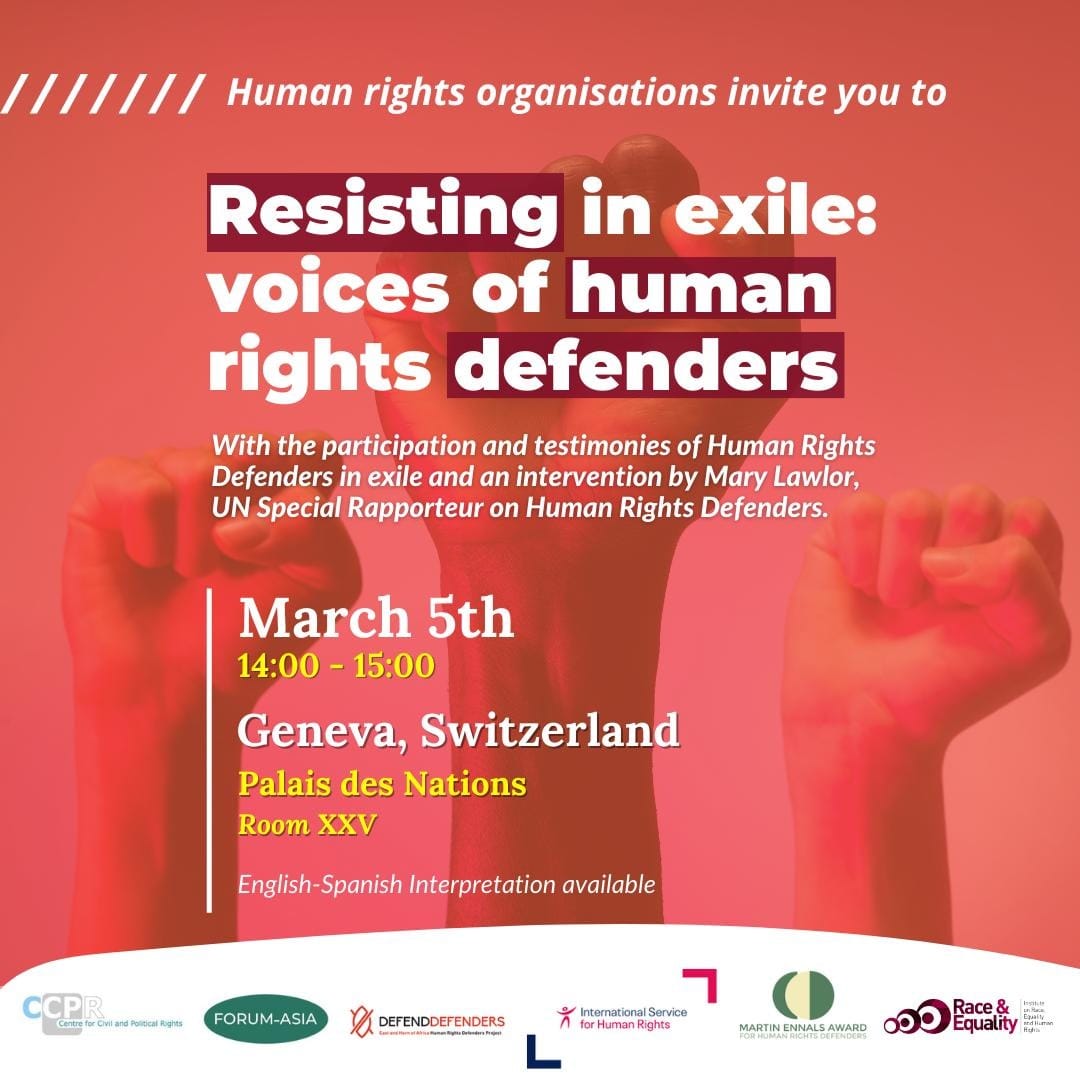
On Tuesday, 5th March, 2pm – at the Palais des Nations, Room XXV- will take place the side event Resisting in Exile: Voice of Human Rights Defenders
“I do not like the idea of being a refugee. I do not want to leave the country because I wanted to make it better.” Human rights defender quoted by the Special Rapporteur on Human Rights Defenders in A/HRC/37/51.
In ‘People Power Under Attack’ (2022), CIVICUS reports that the number of countries where civic freedoms are being curtailed and civil society is under severe attack is increasing… In such contexts and under such pressure, defenders can see leaving the country as their only option. These defenders, along with defenders expelled by their home governments, face the huge challenges of short or protracted exile, including economic insecurity and ongoing threats. Defenders in exile question if and how they can continue human rights work from abroad and how those who remain deal with a fractured human rights community.
In this event the four organisers [Centre for Civil and Political Rights (CCPR-Centre), International Institute on Race, Equality and Human Rights, (Race and Equality), International Service for Human Rights (ISHR), and DefendDefenders] will bring the voices of human rights defenders from around the world to the Council so that States, UN experts and officials and civil society colleagues can hear their voices. What is the experience of being in exile like? What is the impact on individual work and that of the community of defenders? What demands do exile defenders make to the Council?
This event aims to raise greater awareness about the phenomenon of defenders in exile and encourage discussion and action on how to support these defenders. It is also aimed at looking at what is needed to prevent exile becoming some defenders’ only feasible option.
During this event, defenders in exile from will speak of the impact of their experience of exile on their own lives, those of their families, and their communities. They will highlight the specific needs defenders in exile have in terms of legal guarantees, and political and financial support and of their ongoing work to defend rights from exile.
Defenders in exile will also send in testimonies, to be shown in video form or read out by fellow defenders. We aim to fill the room with the voices of those in exile who cannot be in Geneva to participate directly.
Recall the recommendations made by the previous Special Rapporteur on Human Rights Defenders, Michel Forst, in his 2018 report to the Council (A/HRC/37/51), including in regard to the prohibition of non-refoulement to persecution, relocation schemes, and access to protection measures for defenders in exile.
The conversation will take place during the Council session when the Special Rapporteur on Human Rights Defenders will be presenting her report to the Council. We hope that the Special Rapporteur will be available to, highlight the need for greater attention to, and investment in the prevention of, the closure of civic space so as to forestall the need for defenders to leave the country.

![[OPINION] Navigating the storms of repression: The resilience of young women rights defenders in Asia](https://www.rappler.com/tachyon/2024/03/women-rights-defenders-asia-mar-7-2024.jpg)
/bnn/media/media_files/7d7279a6fe08cbdd641cda8431af6038216be3c9c100f79beacc07763c194f26.jpg)
 Hans Thoolen on Human Rights Defenders and their awards