Archive for the 'organisations' Category

Bernd Lange sees breakthrough for human rights in EU dual-use export

December 12, 2020


On 11 December 2020 Bernd Lange, Vice-chair of the Group of the Progressive Alliance of Socialists and Democrats in the European Parliament, wrote in New Europe the following piece about how after 6 years there has come an European agreement on stricter rules for the export of dual-use goods, which can be used for both civilian and military ends.


All good things are worth waiting for. After long six years negotiators from the European Parliament, the Commission and member states finally agreed on stricter rules for the export of dual-use goods, which can be used for both civilian and military ends. Parliament’s perseverance and assertiveness against a blockade by some of the European Union member states has paid off in the sense that as of now respect for human rights will become an export standard.

Up until now, export restrictions applied to aerospace items, navigation instruments or trucks. From now on, these rules will also apply to EU produced cyber-surveillance technologies, which demonstrably have been abused by authoritarian regimes to spy on opposition movements; for instance, during the Arab Spring in 2011.

This is a breakthrough for human rights in trade by overcoming years of various EU governments blocking the inclusion of cyber-surveillance technology in the export control rules for dual-use goods. Without a doubt: Technological advances, new security challenges and their demonstrated risks to the protection of human rights required more decisive action and harmonised rules for EU export controls.

Thanks to the stamina of the Parliament, it will now be much more difficult for authoritarian regimes to abuse EU produced cybersecurity tools such as biometric software or Big Data searches to spy on human rights defenders and opposition activists. Our message is clear: economic interests must not take precedence over human rights. Exporters have to shoulder greater responsibility and apply due diligence to ensure their products are not employed to violate human rights. We have also managed to increase transparency by insisting on listing exports in greater detail in the annual export control reports, which will make it much harder to hide suspicious items.

In a nutshell, we are setting up an EU-wide regime to control cyber-surveillance items that are not listed as dual-use items in international regimes, in the interest of protecting human rights and political freedoms. We strengthened member states’ public reporting obligations on export controls, so far patchy, to make the cyber-surveillance sector, in particular, more transparent. We increased the importance of human rights as licensing criterion and we agreed on rules to swiftly include emerging technologies in the regulation.

This agreement on dual-use items, together with the rules on conflict minerals and the soon to be adopted rules on corporate due diligence, is establishing a new gold standard for human rights in EU trade policy.

I want the European Union to lead globally on rules and values-based trade. These policies show that we can manage globalisation to protect people and the planet. This must be the blueprint for future rule-based trade policy.

Civil Rights Defender of the Year Award 2020 goes to Naw Ohn Hla

December 11, 2020
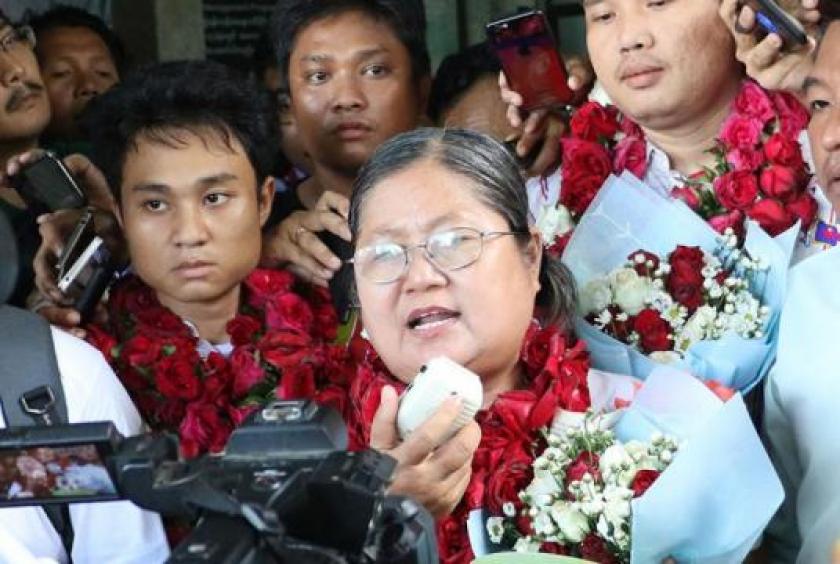
Naw Ohn Hla appears in court in Kyauktada Township in October last year on charges of organizing Kayin Martyr’s  Day. (Photo-Nay Myo Win)

Naw Ohn Hla appears in court in Kyauktada Township in October last year on charges of organizing Kayin Martyr’s Day. (Photo-Nay Myo Win) Published 11 December 2020

Naw Ohn Hla, chairperson of Democracy and Peace Women Network in Myanmar, has been presented with the Civil Rights Defender of the Year Award 2020 by Civil Rights Defenders based in Sweden. The award announcement was made on Human Rights Day on December 10.

Naw Ohn Hla is a Karen democracy activist, politician, human rights defender, environmental rights and land rights activist for decades. She has been active in campaigning against the Letpadaung mining project in northern Burma. Naw Ohn Hla is also serving as general secretary of the United Nationalities Democracy Party.

Naw Ohn Hla has received the award for her exceptional perseverance in the fight against oppression and for her continued courage to stand up to those in power, Civil Rights Defenders said in its statement.

We are standing by the victims of human rights violations. It is now encouraging to see that not only us but also the international community is standing by this. It also encourages us to do more,” said Naw Ohn Hla.

She said she would accept the award at the headquarters of Civil Rights Defenders in Sweden together with the 2021 award winner because this year sees the Covid-19 outbreak.

For more on the Civil Rights Defender of the Year Award see: https://www.trueheroesfilms.org/thedigest/ 

See also: https://humanrightsdefenders.blog/2017/01/25/civil-rights-defender-of-the-year-award-2017-goes-to-edmund-yakani-from-south-sudan/

https://elevenmyanmar.com/news/naw-ohn-hla-wins-civil-rights-defender-of-the-year-award-2020

https://en.wikipedia.org/wiki/Naw_Ohn_Hla

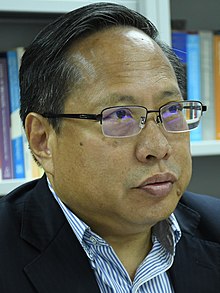
Albert Ho wins Baldwin Medal 2020

December 10, 2020

Human Rights First announced today that it will award the 2020 Roger N. Baldwin Medal of Liberty to Hong Kong human rights defender Albert Ho. The award will be presented today 10 December in a virtual event that will include a conversation between Ho and Human Rights First Senior Advisor Brian Dooley.

Albert Ho is a veteran Hong Kong lawyer and advocate whose career in human rights and political activism stretches back almost four decades. A leading figure in the pro-democracy movement for many years, he remains prominent in the protest movement that energized Hong Kong in 2019 and 2020.

No dictatorship is too big or too strong to take on,” said Vladimir Vladimir Kara-Murza, Senior Advisor for Human Rights Accountability at Human Rights First and 2020 Baldwin Award jury member. “This decision shows who is right and wrong, and Albert Ho is in the right. There are no lost causes, and the cause of democracy in China is not lost.

Ho is now facing a dozen charges related to those peaceful protests and his law firm continues to represent many others who have protest-related charges.

I’m honored to accept this award,” said Ho, “but I do it on behalf of many colleagues who have shared the case of human rights in Hong Kong with me for so many years.”

Ho is the co-founder and senior partner of Ho, Tse, Wai and Partners (HTW), a Hong Kong law firm renown for advocacy on landmark human rights cases.  Ho and HTW have represented many arrested pro-democracy protestors and challenged many of the Hong Kong government’s dubious actions, such as the banning of face masks under a colonial-era law and the disqualification of numerous pro-democracy lawmakers.

Ho has also done extensive advocacy for human rights lawyers in mainland China. He founded the China Human Rights Lawyers Concern Group in 2007 to provide humanitarian assistance to detained human rights lawyers and their families, advocate on behalf of detained lawyers, and share knowledge and experience with Chinese lawyers.

Despite surveillance and threats by Chinese authorities, Ho has maintained his steadfast support for his peers in mainland China in the face of the government’s crackdown on human rights lawyers, the “709 crackdown” known for the day it began – July 9, 2015. Placing the pursuit of justice before his own safety, Ho continues to raise awareness of the plight of human rights lawyers in China to see that the world holds the Chinese Communist Party accountable for human rights abuses.

For more on the Baldwin Medal of Liberty see: https://www.trueheroesfilms.org/thedigest/award/F23B5465-6A15-4463-9A91-14B2977D9FCE.

https://www.humanrightsfirst.org/press-release/human-rights-first-honors-hong-kong-human-rights-defender-albert-ho-baldwin-medal

Film The Dissident – about Khashoggi’s murder – soon available for streaming

December 10, 2020

On 9 December 2020) the NEW-York based Human Rights Foundation announced that THE DISSIDENT, a new feature film directed by Academy Award-winning director Bryan Fogel and produced by the Human Rights Foundation (HRF), will arrive on streaming platforms for viewers to rent or own beginning 8 January, 2021. Briarcliff Entertainment, the film’s distribution partner, has also announced a limited national theatrical release on Friday, December 25.

The film exposes the labyrinth of deceit behind the high-profile October 2018 murder of Washington Post columnist Jamal Khashoggi inside the Saudi consulate in Istanbul, Turkey. Featuring never before seen surveillance footage and unprecedented access to a wealth of other damning information previously unavailable to the public, the film weaves together a story of courage, money, power, tyranny, love, and technology run amok. See: https://humanrightsdefenders.blog/tag/jamal-khashoggi/

THE DISSIDENT is a chilling illustration of what results from unchecked power,” said HRF president Thor Halvorssen. “It shines a powerful light on the darkness of authoritarianism. Dictatorships are undone by public exposure and we are committed to taking this story across the world, enlisting the partnership of the general public and civil society across the political and ideological spectrum to hold MBS and his henchmen accountable.

https://mailchi.mp/hrf.org/the-dissident-release-december-25?e=f80cec329e

9 December: 2020 Front Line Defenders Award Ceremony on line

December 9, 2020

The 2020 Front Line Defenders Award Ceremony [see: https://humanrightsdefenders.blog/2020/11/30/2020-front-line-defenders-award-ceremony-on-9-december-and-the-winners-of-2020/], will be on-line on 9 December, International Human Rights Defenders Day:

To watch :

in English: www.frontlinedefenders.org/2020award

YouTube:https://youtu.be/KebPxuAa_ac

Vimeo:https://vimeo.com/frontlinedefenders/2020awardenglish

Facebook <https://www.facebook.com/FrontLineDefenders>
_______________

Also available in French, Spanish, Arabic and in Tamil and Armenian .

EU now has its own ‘Magnitsky’ regime to sanction human rights abuses

December 8, 2020

Efi Koutsokosta  in Euronews of 8 December 2020 writes that the European Union has agreed to establish a regime similar to the Magnitsky Act in America that will allow the 27 member bloc to sanction those responsible for human rights abuses. The decision came at a meeting of European foreign ministers in Brussels on Monday and will allow the EU to freeze assets and impose travel bans on individuals involved in serious human rights abuses. [see also: https://humanrightsdefenders.blog/2015/05/08/the-case-for-smart-sanctions-against-individual-perpetrators/]

The new measures will allow for travel bans on involved individuals and the freezing of their funds too. It could also be forbidden from making funds available to those being sanctioned.

A European Magnitsky Act, as it’s known, is named after Sergei Magnitsky, who died in a Russian jail after uncovering a huge fraud scheme allegedly involving government officials. [see also; https://humanrightsdefenders.blog/2019/08/29/european-court-rules-on-sergei-magnitskys-death/]

Bill Browder, who helped Magnisky discover these fraudulent acts, told Euronews this is an historic step for Europe, but not the perfect one. [see also: https://humanrightsdefenders.blog/2020/08/29/bill-browder-speaks-abouit-his-global-magnitsky-act/]

This unanimity rule is a real problem. Another problem with the EU Magnitsky Act is that it doesn’t include kleptocracy, it only includes human rights abuse. And what we found is that kleptocracy and human rights abuse go hand in hand, they are intertwined. Of course, we are celebrating today because this is a huge milestone but tomorrow the work begins to put pressure on sanctioning bad actors in countries like Russia and China and to make sure that the law that the EU has, is upgraded to include corruption,” Browder said.

The criteria for sanctions will apply to acts such as genocide, crimes against humanity, as well as. torture, slavery, extrajudicial killings, arbitrary arrests, or detentions.

It will then be up to the European Council, which consists of all 27 national governments, to act upon a proposal from a member state or from the High Representative of the EU for Foreign Affairs and Security Policy, to establish, review and amend the sanctions list.

https://www.euronews.com/2020/12/08/eu-agrees-its-own-magnitsky-regime-to-sanction-human-rights-abuses

Facebook and YouTube are allowing themselves to become tools of the Vietnamese authorities’ censorship and harassment

December 1, 2020

On 1 December 2020, Amnesty International published a new report on how Facebook and YouTube are allowing themselves to become tools of the Vietnamese authorities’ censorship and harassment of its population, in an alarming sign of how these companies could increasingly operate in repressive countries. [see also: https://humanrightsdefenders.blog/2020/06/03/more-on-facebook-and-twitter-and-content-moderation/].

The 78-page report, “Let us Breathe!”: Censorship and criminalization of online expression in Viet Nam”, documents the systematic repression of peaceful online expression in Viet Nam, including the widespread “geo-blocking” of content deemed critical of the authorities, all while groups affiliated to the government deploy sophisticated campaigns on these platforms to harass everyday users into silence and fear.

The report is based on dozens of interviews with human rights defenders and activists, including former prisoners of conscience, lawyers, journalists and writers, in addition to information provided by Facebook and Google. It also reveals that Viet Nam is currently holding 170 prisoners of conscience, of whom 69 are behind bars solely for their social media activity. This represents a significant increase in the number of prisoners of conscience estimated by Amnesty International in 2018.

In the last decade, the right to freedom of expression flourished on Facebook and YouTube in Viet Nam. More recently, however, authorities began focusing on peaceful online expression as an existential threat to the regime,” said Ming Yu Hah, Amnesty International’s Deputy Regional Director for Campaigns.

Today these platforms have become hunting grounds for censors, military cyber-troops and state-sponsored trolls. The platforms themselves are not merely letting it happen – they’re increasingly complicit.

In 2018, Facebook’s income from Viet Nam neared US$1 billion – almost one third of all revenue from Southeast Asia. Google, which owns YouTube, earned US$475 million in Viet Nam during the same period, mainly from YouTube advertising. The size of these profits underlines the importance for Facebook and Google of maintaining market access in Viet Nam.”

In April 2020, Facebook announced it had agreed to “significantly increase” its compliance with requests from the Vietnamese government to censor “anti-state” posts. It justified this policy shift by claiming the Vietnamese authorities were deliberately slowing traffic to the platform as a warning to the company.

Last month, in Facebook’s latest Transparency Report – its first since it revealed its policy of increased compliance with the Vietnamese authorities’ censorship demands – the company revealed a 983% increase in content restrictions based on local law as compared with the previous reporting period, from 77 to 834. Meanwhile, YouTube has consistently won praise from Vietnamese censors for its relatively high rate of compliance with censorship demands.

State-owned media reported Information Minister Nguyen Manh Hung as saying in October that compliance with the removal of “bad information, propaganda against the Party and the State” was higher than ever, with Facebook and Google complying with 95% and 90% of censorship requests, respectively.

Based on dozens of testimonies and evidence, Amnesty International’s report shows how Facebook and YouTube’s increasing censorship of content in Vietnam operates in practice.

In some cases, users see their content censored under vaguely worded local laws, including offences such as “abusing democratic freedoms” under the country’s Criminal Code. Amnesty International views these laws as inconsistent with Viet Nam’s obligations under international human rights law. Facebook then “geo-blocks” content, meaning it becomes invisible to anyone accessing the platform in Viet Nam.

Nguyen Van Trang, a pro-democracy activist now seeking asylum in Thailand, told Amnesty International that in May 2020, Facebook notified him that one of his posts had been restricted due to “local legal restrictions”. Since then, Facebook has blocked every piece of content he has tried to post containing the names of senior members of the Communist Party. 

Nguyen Van Trang has experienced similar restrictions on YouTube, which, unlike Facebook, gave him the option to appeal such restrictions. Some appeals have succeeded and others not, without YouTube providing any explanation.

Truong Chau Huu Danh is a well-known freelance journalist with 150,000 followers and a verified Facebook account. He told Amnesty International that between 26 March and 8 May 2020, he posted hundreds of pieces of content about a ban on rice exports and the high-profile death penalty case of Ho Duy Hai. In June, he realized these posts had all vanished without any notification from Facebook whatsoever.

Amnesty International heard similar accounts from other Facebook users, particularly when they tried to post about a high-profile land dispute in the village of Dong Tam, which opposed local villagers to military-run telecommunications company Viettel. The dispute culminated in a confrontation between villagers and security forces in January 2020 that saw the village leader and three police officers killed.

After Facebook announced its new policy in April 2020, land rights activists Trinh Ba Phuong and Trinh Ba Tu reported that all the content they had shared about the Dong Tam incident had been removed from their timelines without their knowledge and without notification.

On 24 June 2020, the pair were arrested and charged with “making, storing, distributing or disseminating information, documents and items against the Socialist Republic of Vietnam” under Article 117 of the Criminal Code after they reported extensively on the Dong Tam incident. They are currently in detention. Their Facebook accounts have disappeared since their arrests under unknown circumstances. Amnesty International considers both Trinh Ba Phuong and Trinh Ba Tu to be prisoners of conscience.

The Vietnamese authorities’ campaign of repression often results in the harassment, intimidation, prosecution and imprisonment of people for their social media use. There are currently 170 prisoners of conscience imprisoned in Viet Nam, the highest number ever recorded in the country by Amnesty International. Nearly two in five (40%) have been imprisoned because of their peaceful social media activity.

Twenty-one of the 27 prisoners of conscience jailed in 2020, or 78%, were prosecuted because of their peaceful online activity under Articles 117 or 331 of the Criminal Code – the same repressive provisions that often form the basis of ‘local legal restrictions’ implemented by Facebook and YouTube. For every prisoner of conscience behind bars, there are countless people in Viet Nam who see this pattern of repression and intimidation and are understandably terrified about speaking their mind. Ming Yu Hah

These individuals’ supposed “crimes” include peacefully criticizing the authorities’ COVID-19 response on Facebook and sharing independent information about human rights online.

For every prisoner of conscience behind bars, there are countless people in Viet Nam who see this pattern of repression and intimidation and are understandably terrified about speaking their minds,” said Ming Yu Hah.

Amnesty International has documented dozens of incidents in recent years in which human rights defenders have received messages meant to harass and intimidate, including death threats. The systematic and organized nature of these harassment campaigns consistently bear the hallmarks of state-sponsored cyber-troops such as Du Luan Vien or “public opinion shapers” – people recruited and managed by the Communist Party of Viet Nam (CPV)’s Department of Propaganda to engage in psychological warfare online.

The activities of Du Luan Vien are complemented by those of “Force 47”, a cyberspace military battalion made up of some 10,000 state security forces whose function is to “fight against wrong views and distorted information on the internet”.

While “Force 47” and groups such as Du Luan Vien operate opaquely, they are known to engage in mass reporting campaigns targeting human rights –related content, often leading to their removal and account suspensions by Facebook and YouTube.

Additionally, Amnesty International’s investigation documented multiple cases of bloggers and social media users being physically attacked because of their posts by the police or plainclothes assailants, who operate with the apparent acquiescence of state authorities and with virtually no accountability for such crimes.


Putting an end to complicity

The Vietnamese authorities must stop stifling freedom of expression online. Amnesty International is calling for all prisoners of conscience in Viet Nam to be released immediately and unconditionally and for the amendment of repressive laws that muzzle freedom of expression.

Companies – including Facebook and Google – have a responsibility to respect all human rights wherever they operate. They should respect the right to freedom of expression in their content moderation decisions globally, regardless of local laws that muzzle freedom of expression. Tech giants should also overhaul their content moderation policies to ensure their decisions align with international human rights standards.

In October 2020, Facebook launched a global Oversight Board – presented as the company’s independent “Supreme Court” and its solution to the human rights challenges presented by content moderation. Amnesty International’s report reveals, however, that the Board’s bylaws will prevent it from reviewing the company’s censorship actions pursuant to local law in countries like Vet Nam. It’s increasingly obvious that the Oversight Board is incapable of solving Facebook’s human rights problems. Ming Yu Hah

“It’s increasingly obvious that the Oversight Board is incapable of solving Facebook’s human rights problems. Facebook should expand the scope of the Oversight Board to include content moderation decisions pursuant to local law; if not, the Board – and Facebook – will have again failed Facebook users,” said Ming Yu Hah.

[see also: https://humanrightsdefenders.blog/2020/04/11/algorithms-designed-to-suppress-isis-content-may-also-suppress-evidence-of-human-rights-violations/]

“Far from the public relations fanfare, countless people who dare to speak their minds in Viet Nam are being silenced. The precedent set by this complicity is a grave blow to freedom of expression around the world.”

https://www.amnesty.org/en/latest/news/2020/12/viet-nam-tech-giants-complicit/

https://www.theguardian.com/world/2020/dec/01/facebook-youtube-google-accused-complicity-vietnam-repression

https://thediplomat.com/2020/07/facebook-vietnams-fickle-partner-in-crime/
75 countries join statement on reprisals at the Third Committee but more needed

November 30, 2020

As reprisals is one of the main topics on this blog [see e.g. https://humanrightsdefenders.blog/tag/reprisals/] readers will forgive me to report a bit belatedly on the GA Third Committee statement which the Service for Human Rights, quite timely, on 19 October 2020, brought to our attention:

For the second year in a row, a cross-regional group of countries called on all States and the UN to prevent, respond to, and ensure accountability for cases of intimidation and reprisals against those who engage or seek to engage with the UN.

In a joint statement presented to the Third Committee of the General Assembly today, 75 countries (listed below) acknowledged the crucial role civil society and human rights defenders play in the work of the UN and condemned acts of intimidation and reprisal against them. This represents an increase compared to the 71 countries that joined a similar statement last year

This welcome move led by the Permanent Mission of the United Kingdom to the UN is in line with the call made last September in resolution 42/28 at the Human Rights Council for the General Assembly to remain seized of all work in this area. 

The joint statement welcomed the Secretary-General’s report on reprisals against those who cooperate with the UN and shared his concerns on the growing number and patterns of reprisals globally; the disproportionate impact on certain groups, including women human rights defenders and peacebuilders; and the continued attacks on journalists and media workers. 

30 years ago, the Commission on Human Rights first expressed concern about reprisals and intimidation against those cooperating with the UN and searching for a solution requested the Secretary-General to report on the issue. Yet we find ourselves three decades later grasping for anything resembling progress. This year’s report is appalling as ever’, said ISHR’s Madeleine Sinclair.

The joint statement highlighted the need for more frequent reporting on reprisals, including in New York, to increase awareness and accountability. ‘At this point the Secretary-General’s report on reprisals is only considered once a year by the Human Rights Council. We are disturbed by the high number of countries cited (45 in 2020), the vast majority of which have been cited before. The increase in the number of countries cited for a pattern of intimidation and reprisals is equally alarming. For countries like Bahrain, Burundi, China, Cuba, Egypt, India, Israel, Myanmar, Saudi Arabia, Sri Lanka and Venezuela, and for the overwhelming majority of victims cited in 30 years of reporting whose cases remain unresolved, it seems a report delivered once a year is not enough’, added Sinclair.  

‘While we welcome this statement and the leadership of the United Kingdom as a step towards enhanced dialogue on the issue of reprisals at the General Assembly, more needs to be done to protect the right of everyone to communicate with the UN. We echo previous calls for States to step up efforts to address reprisals, including by referring to  specific cases during future dialogues at the UN’, added Sinclair. 

The full statement as delivered is available here. The statement was made by the United Kingdom on behalf of Afghanistan, Antigua and Barbuda, Albania, Andorra, Argentina, Australia, Austria, The Bahamas, Belgium, Bosnia and Herzegovina, Bulgaria, Canada, Chile, Colombia, Costa Rica, Croatia, Cyprus, Czech Republic, Denmark, Dominican Republic, El Salvador, Ecuador, Estonia, Finland, Fiji, France, Georgia, Germany, Greece, Guatemala, Honduras, Iceland, Ireland, Italy, Japan, Jordan, Latvia, Lebanon, Liechtenstein, Lithuania, Luxembourg, Malta, Marshall Islands, Mexico, Moldova, Monaco, Mongolia, Montenegro, Nauru, Netherlands, New Zealand, North Macedonia, Norway, Panama, Palau, Paraguay, Poland, Portugal, The Republic of Korea, Romania, San Marino, Seychelles, Slovakia, Slovenia, South Africa, Spain, Sweden, Switzerland, Tunisia, Tuvalu, Ukraine, United Kingdom, USA, Uruguay, Vanuatu. 

New States joining this year include: Antigua and Barbuda, Argentina, Honduras, Nauru, Palau, Paraguay; States who joined last year but not this year include: Samoa and Turkey.

Contact: Madeleine Sinclair, m.sinclair@ishr.ch

https://www.ishr.ch/news/unga75-75-countries-join-statement-reprisals-third-committee

2020 Front Line Defenders Award Ceremony on 9 December and the winners of 2020

November 30, 2020

Front Line Defenders will be celebrating the 2020 Front Line Defenders Award Winners at an online Award Ceremony on 9 December.

The event will be available on the Front Line Defenders Facebook page http://www.facebook.com/FrontLineDefenders, YouTube channel https://www.youtube.com/frontlinehrd  and at http://www.frontlinedefenders.org/2020award

For more on this and other awards especially for human rights defenders, see: https://www.trueheroesfilms.org/thedigest/award/2E90A0F4-6DFE-497B-8C08-56F4E831B47D

This year’s Regional Award Winners include four women human rights defenders and an indigenous collective.

The 2020 Laureates are:

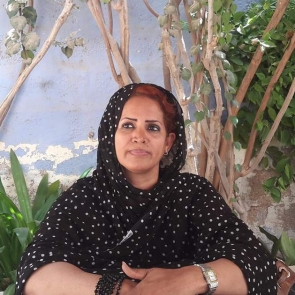
Mekfoula

Mekfoula Mint Brahim is is the President of Pour une Mauritanie Verte et Démocratique (For a Green and Democratic Mauritania), an organisation leading women’s empowerment projects in rural areas. She is also a member of Alliance pour la Refondation de l’Etat Mauritanien (AREM), which promotes good governance and fights against impunity.

Read More

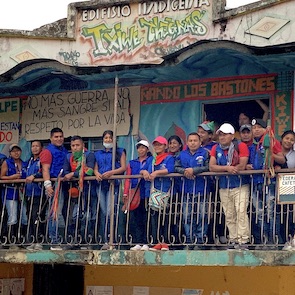
The Guardia Indígena del Cauca – Kiwe Thegnas (Defenders of Life and Territory), member of the organization Asociación de Cabildos Indígenas del Norte del Cauca (ACIN), CRIC branch, is a community life and ancestral resistance composed of women, men, boys and girls who defend their territories in a peaceful, unarmed way.

Read More

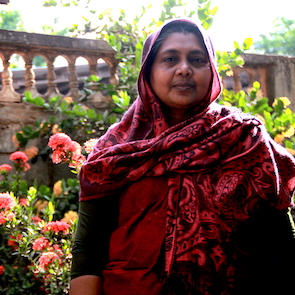
Juwairiya Mohideen is a Muslim woman human rights defender based in Puttalam in the North West of Sri Lanka. In 2010 she established the Muslim Women’s Development Trust (MWDT), providing daily practical support, comfort, advice and legal assistance to women and girls facing abuse, violence and discrimination.

Read More

Lara Aharonian is co-founder of the Women’s Resource Center Armenia, a non-governmental feminist organization based in Yerevan that works to empower women and girls to become active citizens by combatting gender stereotypes and providing psychological and legal support to survivors of gender-based violence in Armenia.

Read More

Iraqi Women Human Rights Defenders have faced a wave of assassinations and attempted killings, particularly especially in the southern city of Basra. Since mass popular protests erupted throughout the country in 2019, human rights defenders have been targeted for attack, including kidnappings, physical attacks and killings.

For last year’s Front line award see: https://humanrightsdefenders.blog/2019/05/17/breaking-news-2019-front-line-defenders-award-to-5-lgbti-human-rights-defenders/

https://www.frontlinedefenders.org/en/2020-front-line-defenders-award-human-rights-defenders-risk

International Women Human Rights Defenders Day: two special events

November 30, 2020

On the occasion of International Women Human Rights Defenders Day (29 November) and marking this year’s 16 Days Campaign to combat gender based violence, Front Line Defenders presents a new edition of Cypher: https://www.frontlinedefenders.org/sites/default/files/cypher05.pdf , the digital monthly comic magazine featuring stories of human rights defenders from around the world. This edition features stories of WHRDs working for accountability in the context of the rights of women and girls, with a focus on GBV, from Zimbabwe, Transnistria/Moldova, Tonga and Argentina. [see also: https://humanrightsdefenders.blog/2020/07/23/new-cypher-comics-for-human-rights-defenders/]

Also in celebration of International Women Human Rights Defenders Day the International Service for Human Rights (ISHR) in Geneva organises an on-line ‘exhibition “The Gaze that Subverts” of pieces by the painter Z.

Each painting tells a story of a woman or women who, in defiance of patriarchal structures and authoritarian repression, occupy public space in China in their fight for justice.

Z’s paintings are both prompted by, and provide – in their embodiment, the bent torso, the flexed muscle – a response to, a central question of rights defence: ‘How do we change unjust power relationships with the all-too-scarce resources we have at our disposal?’

The exhibition runs from 29 November 2020 through March 2021. A public event to close the exhibition will be announced in the coming months. Download the flyer <https://ishr.us1.list-manage.com/track/click?u=97549cf8cb507607389fe76eb&id=d75b3cecd8&e=d1945ebb90>