share information on human rights defenders, with special focus on human rights awards and laureates
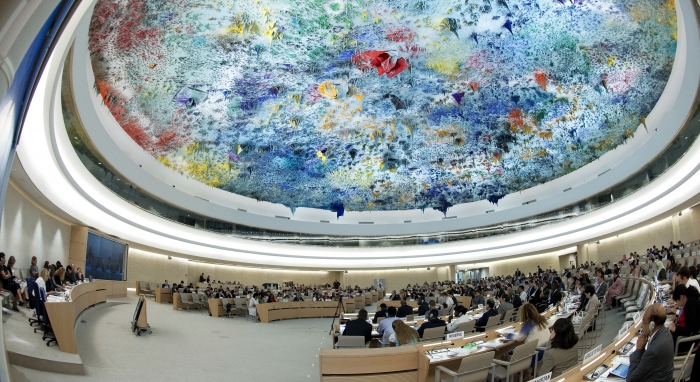
Thanks to the International Service for Human Rights I am able to give you a short overview of what issues directly relevant to human rights defenders are coming up in the 37th session of the UN Human Rights Council starting on Monday 26 February 2018. For the broader human rights view please follow the link at the end of this post.

A few days ago I posted https://humanrightsdefenders.blog/2018/02/20/michel-forst-empowering-defenders-on-the-move-is-crucial-to-the-prevention-of-further-tragedy/ which refers to:
– the Global Compact for Migration which States will negotiate (in an open letter sent on 21 February, High Commissioner for Human Rights Zeid urged States to develop a compact that ‘explicitly recognizes and fully conforms to the existing international human rights framework as the authoritative protection agenda for all migrants’)
– a thematic report on the situation of defenders of the rights of people on the move by the Special Rapporteur Michel Forst (read ISHR’s detailed analysis)
– the OHCHR Principles and Practical Guidance for the protection of the Human Rights of Migrants in Vulnerable Situations (Principle 18 which states that States should ‘respect and support the activities of human rights defenders who promote and protect the human rights of migrants’)
– the Special Rapporteur on Torture’s report which is expected to focus on torture and other forms of ill-treatment in the context of migration.
During its last session, the Council adopted a resolution on reprisals. The resolution established a dedicated dialogue to address acts of intimidation and reprisals at each September Council session. Through the resolution, the Council also affirmed the particular responsibilities of its Members, President and Vice-Presidents to investigate and promote accountability for reprisals and intimidation.Reports of cases of reprisals not only continue, but grow in spite of the passage of this resolution, and the appointment of the UN Assistant Secretary General as the Senior Official on addressing Reprisals. As requested by Council Resolution 12/2, the General Debate under Item 5 of the Council is a key moment for States and civil society to raise and follow up cases of reprisals, and to push for accountability for such acts. [one of my favorite topics: https://humanrightsdefenders.blog/tag/reprisals/]
Other key thematic report will be the one by the body working on developing a treaty on business and human rights. The open-ended inter-governmental working group on transnational corporations and other business enterprises (known as IGWG), will present its third report to the Council. ISHR is concerned about the limited protection for human rights defenders in the current elements discussed at the last session. Any process towards drafting a business and human rights treaty should effectively prevent and respond to cases of reprisals.
Country-specific developments relating specially to HRDs:
Burundi. During the 36th session, the Council passed two resolutions on Burundi; one led by the European Union extending the mandate of the Commission of Inquiry and a second resolution by the African Group that requested OHCHR to urgently dispatch a team of three experts to engage with the Burundian authorities and all other stakeholders. Read here ISHR’s analysis of the two resolutions. At the 37th session, the Commission of Inquiry on Burundi will present an oral briefing to the Council. In addition, the High Commissioner will give an oral briefing of the Council on the mission of the OHCHR. Furthermore, the Secretary-General’s report on Burundi noted that OHCHR continued to receive allegations of serious human rights violations and abuses, primarily by the State and affiliated actors, including killings, enforced disappearances, torture and ill-treatment, more than 1,000 arbitrary arrests and detentions and restrictions on the freedoms of association, expression and movement. Burundi’s vice president criticised the report, suggesting that the Secretary-General has been transformed into an opposition member. ISHR and other NGOs continues to remain highly concerned about the human rights situation in Burundi and its refusal to cooperate with the Council’s mechanisms, which both clearly warrant an invitation to the General Assembly to consider the suspension of Burundi as a member of the Council. [see also: https://humanrightsdefenders.blog/2016/02/08/what-is-burundi-doing-in-the-un-human-rights-council/] For more information on the situation of human rights defenders in Burundi, check ISHR Briefing Paper for the UPR here.
China. Since Xi Jinping’s assumption of power in 2013, the situation for human rights defenders in China has gone from bad to worse. Five current cases illustrate the sense of impunity with which Chinese authorities trample on the rights of civil society actors. ISHR has discussed many of them in detail, but in short they include:
Other country situations:
The Council will hear reports on and is expected to consider resolutions addressing a range of country situations, in many instances involving the renewal of the relevant expert mandates and the situation of human rights defenders. They include:
The High Commissioner will present his annual report in the last interactive dialogue of his term. Read here ISHR and other regional and international human rights organisations’ open letter to the Secretary General on the selection process of the next High Commissioner. [see also https://humanrightsdefenders.blog/2017/12/22/bound-to-happen-but-still-high-commissioner-zeid-announces-he-will-not-seek-second-term/]
During this session the Council will adopt the UPR reports which list the recommendations the State under review is expected to implement of the following 14 countries: Czechia, Argentina, Gabon, Ghana, Peru, Guatemala, Benin, the Republic of Korea, Switzerland, Pakistan, Zambia, Japan, Ukraine and Sri Lanka. ISHR submits briefing papers regarding the situation facing human rights defenders in some States under review and advocates for the UPR to be used as mechanism to support and protect human rights defenders on the ground.
The President of the Human Rights Council has proposed candidates for the following a number of vacancies of mandate holders to be filled at this session, including:
During each Council session, panel discussions are held to provide member States and NGOs with opportunities to hear from subject-matter experts and raise questions. All panel discussions will be broadcast live and archived on http://webtv.un.org. Seven panel discussions are scheduled for this upcoming session, including:
Side events. States and NGOs are holding a series of events. You can download the list of State events here and NGO events here. I will post on some of these separately.
https://www.ishr.ch/news/hrc37-key-issues-agenda-march-2018-session
Amnesty International´s annual report, The State of the World’s Human Rights 2017, assesses the human rights situation in 159 countries and delivers a most comprehensive analysis of the state of human rights in the world today. Here follow some summaries form the media:
AI itself highlights in the launch on 22 February 2018, the deepening human rights crisis in the Americas. “People across the Americas faced a deepening human rights crisis fuelled by growing government intolerance of dissent and increasing demonization in political rhetoric that cemented its status as one of the most violent and unequal regions in the world“, Amnesty International warned. Nevertheless, the organization found that a growing resistance movement of both first-time and seasoned activists provides real hope of reversing the slide towards oppression and fear.
The report highlights alarming trends for the state of human rights in the Americas, including:
Yet these injustices have also inspired many more people to join long-standing struggles, and the report details many important achievements that human rights activists helped to secure. These include lifting the total ban on abortion in Chile and the approval of a law to help victims of enforced disappearances in Mexico find their missing loved ones. [see also my: https://humanrightsdefenders.blog/2017/12/31/2017-a-year-to-forget-for-human-rights-defenders-but-dont-forget-the-human-rights-defenders/]
“Last year proved that however disenfranchised people were, they refused to resign themselves to a future without human rights. Emerging social discontent inspired people to take to the streets, stand up for their rights and demand an end to repression, marginalization and injustice,” said Erika Guevara Rosas, Americas Director at Amnesty International The Americas was at the hub of this new wave of activism. The “Ni Una Menos” (“Not one woman less”) movement denounced violence against women and girls across the region, while survivors of gender-based and sexual violence in Argentina, Mexico, Jamaica, Peru, and many other countries took to the streets to protest against impunity for such crimes.
Protesters and refugees bear the brunt of ‘normalized’ violence: Hundreds of activists were killed last year as authorities sought to repress civil society and muzzle the media, the report says. Human rights defenders faced threats, harassment and attacks in most countries in the region, while states failed to protect them and acknowledge the importance of their work.
The injustice of President Trump’s cruel pledge to build a wall along the USA-Mexico border was emphasized by Central America’s ongoing refugee crisis. More than 50,000 people from Honduras, Guatemala and El Salvador sought asylum in other countries, thousands of whom were then apprehended at the US border. Mexico received a record number of asylum applications but repeatedly failed to provide protection to those who needed it – instead pushing people back to highly dangerous situations.
The numbers of people fleeing Venezuela rocketed as it faced one of the worst human rights crises in its recent history, fuelled by an escalation of government-sponsored violence. When the country’s crippling shortage of food and medical supplies sparked protests, the security forces’ heavy-handed response lead to more than 120 deaths.
Instead of trying to suppress people when they speak out, governments should address their concerns, said Amnesty International.
“We are witnessing history in the making as people rise up and demand justice in greater numbers. If leaders fail to discern what is driving their people to protest, then this ultimately will be their own undoing. People have made it abundantly clear that they want human rights: the onus now is on governments to show that they are listening,” said Salil Shetty, Secretary General of Amnesty International.
[for last year see: https://humanrightsdefenders.blog/2017/02/24/2017-10-need-to-reset-for-human-rights-movement/]
Interesting to note the different emphasis placed on the report such as in the Al-Jazeera article: “World leaders abandoning human rights: Amnesty”
World leaders are undermining human rights for millions of people with regressive policies and hate-filled rhetoric, but their actions have ignited global protest movements in response, a rights group said. US President Donald Trump, Russian leader Vladimir Putin, and China’s President Xi Jinping were among a number of politicians who rolled out regressive policies in 2017, according to Amnesty International’s annual human rights report published on Thursday. The human rights body also mentioned the leaders of Egypt, the Philippines and Venezuela. “The spectres of hatred and fear now loom large in world affairs, and we have few governments standing up for human rights in these disturbing times,” Salil Shetty, Amnesty’s secretary-general, said. “Instead, leaders such as el-Sisi, Duterte, Maduro, Putin, Trump and Xi are callously undermining the rights of millions.” [see also my https://humanrightsdefenders.blog/2018/01/19/ai-welcomes-resistance-to-trumps-human-rights-policies/]
Radio Free Europe/Radio Liberty also focuses on the US angle: Amnesty International has taken aim at U.S. President Donald Trump and other world leaders the global watchdog says are abandoning human rights, accusing them of setting a “dangerous precedent” for other governments to follow. And then gives a useful summaries of countries in its region:
Central Asia
Afghanistan
Armenia
Azerbaijan
Belarus
Bosnia-Herzegovina
Georgia
Moldova
Russia
Ukraine
Adding Iran and Pakistan.
Euronews obviously also focus on Europe: Between eastern Europe’s “hostile discourse to human rights” and the rights of freedom of association and assembly put at risk in the entire continent, this year’s Amnesty International World Report warned that “space for civil society continued to shrink in Europe” and gives then a thematic overview of the key takeaways for Europe from the report.
The ISHR in a piece of 16 February 2018 draws attention to tow complementary reports on the situation of human rights defenders in a migration context. They fit admirably with the outcry of 250 NGOs concerning Hungary referred to in my earlier post of today [https://humanrightsdefenders.blog/2018/02/20/250-ngos-address-letter-to-hungarian-parliament-regarding-restriction-on-the-work-of-human-rights-defenders/].
The second is the OHCHR Principles and Practical Guidance for the protection of the Human Rights of Migrants in Vulnerable Situations, especially Principle 18 which states that ‘States must respect and support the activities of human rights defenders who promote and protect the human rights of migrants’.
Both document will be considered at the upcoming session of the UN Human Rights Council.
‘The two documents are fully complementary’, Sarah Brooks of the ISHR says. ‘The recommendations of the OHCHR and the UN expert have no daylight between them – their message is quite simple. In order for lives to be saved, States must ensure that human rights defenders and civil society can operate safely and without hindrance.’

Migrants – including migrant workers – who seek to stand up for their rights and those of others face unique threats, including deportation. The case of Sujana Rana and Rose Limu Jee, two migrant domestic workers from Nepal who were detained and deported after advocating for freedom of association in Lebanon, is a prime example. And defenders in countries of destination – whether the Gulf, the United States, or many Member States of the European Union (e.g. Hungary) – find that their own governments may rollback protections or even funding for civil society and defenders when migration-related issues are the focus, or in the worst cases criminalise assistance to migrants and refugees.
Main challenges
http://www.ishr.ch/news/hrc37-global-community-must-recognise-defenders-people-move-says-un-expert
Click to access 201802_ohchr_principles_and_practical_guidance.pdf

More than 250 (!) human rights organizations protested today against the new laws proposed by the Hungarian Parliament aimed at limiting the work of NGOs helping refugees in the country. “We express our solidarity with civil society and all human rights defenders in Hungary – the brave people who are fighting for a more honest society,” reads part of the open letter published by Amnesty International [the list can be consulted via the link below]. Today, parliament is going to discuss legislative changes that will impose new restrictions on non-governmental organizations in the country. It is expected that many of them will even be banned. According to the bills published last week on Parliament’s website, these organizations will be required to pay a 25% tax on all their foreign funding, and their workers will be banned from accessing refugee centers near the country’s borders.
The affected NGOs will also have to register with the Ministry of the Interior, which in turn will have the right to impose fines or deny them the right to work legally in Hungary. But to approve the changes, Prime Minister Viktor Orban’s government needs a two-thirds majority, which is not currently in parliament.
On 15 February 2018 the High Commissioner of Human Rights of the Council of Europe had already addressed the issue in a tough statement :
I am seriously concerned at the legislative package recently announced by the Hungarian government under the name “Stop Soros”. If adopted by Parliament, it will introduce further arbitrary restrictions to the indispensable work of human rights NGOs and defenders in Hungary. In a letter I sent to the Hungarian Parliament in May 2017, I set out my concerns regarding the then draft law on the Transparency of Organisations Supported from Abroad, which stigmatised a large number of organisations pursuing lawful activities in the field of human rights and introduced far-reaching restrictions on freedom of association in contravention of international human rights standards. I regret that instead of addressing those pressing human rights concerns, the Hungarian government appears now intent on intensifying stigmatisation and restrictions against NGOs working specifically on migration-related issues.
While I have not yet seen the final text of the proposed legislative package – changes to an earlier version I had examined were announced only the day before yesterday to make it “significantly stricter” – I am alarmed that it will aggravate the situation of freedom of association in Hungary even further. I understand that the changes made this week introduce mandatory licences for NGOs with a goal “to ensure that it is only possible to organise, support or finance migration in Hungary while in possession of a licence, which would be issued by the Minister of Interior following an assessment of the related national security aspects”. NGOs failing to abide by this requirement could be subject to sanctions, including a fine and ultimately dissolution. In addition, any such NGO that receives any amount of funding from abroad would be required to pay a 25% tax on such foreign funding.
The package also foresees the creation of “immigration restraining orders” that can be used to prevent any person deemed to “support the unlawful entry and residence of a third-country national” from accessing an 8-km zone from external borders – or even the entire Hungarian territory for non-nationals. Considering the context in which the proposed measures were conceived, there is an obvious risk that arbitrary restrictions may be applied on the freedom of movement of persons involved in refugee assistance at the border.
These proposed measures raise particular concerns because of the likelihood that they will be applied to organisations and individuals who carry out activities in the field of protecting the human rights of immigrants, asylum seekers and refugees that should be fully legitimate in a democratic society. Unfortunately recent public declarations of the Hungarian government referring to organisations which may come under the effect of the package only reinforce these concerns. In particular, the proposed package (which the government itself has named “Stop Soros”) follows a series of legal measures and stigmatising government rhetoric targeting entities funded or otherwise linked to Hungarian-American philanthropist George Soros, which carry out professional and important work in Hungary, including in the field of human rights.
Finally, I am alarmed at the escalating rhetoric used by the Hungarian government to portray NGOs and immigrants as a threat to national security. This discourse is stirring up among the population fears and intolerance towards foreigners and mistrust towards civil society organisations.
The proposed package of laws introduces administrative and financial burdens that constitute restrictions on freedom of association which cannot be regarded as necessary in a democratic society and are therefore at variance with international human rights standards. The package as a whole is stigmatising and is bound to have a chilling effect on NGOs but also their donors and individuals who work for or with them. I call once more on Hungary to refrain from penalising, stigmatising or putting at any disadvantage whatsoever NGOs, including those working in the field of migration, and to restore an enabling environment conducive to the work of human rights defenders.
The next day the UN High Commissioner for Human Rights labeled the law an “assault on human rights” and urged its government to uphold the right of freedom of association. It appeared to mark a further tightening of controls on groups “working on issues the government regards as against state interests, such as migration and asylum”, U.N. human rights spokesman Rupert Colville said. It represented “an unjustified restriction on the right to freedom of association and is a worrying continuation of the government’s assault on human rights and civic space,” he told a Geneva news briefing…
See also my earlier post: https://humanrightsdefenders.blog/2014/06/13/human-rights-defenders-in-hungary-not-yet-foreign-agents-but-getting-close/
https://www.amnesty.org/en/latest/campaigns/2018/02/in-solidarity-with-civil-society-in-hungary/
http://www.novinite.com/articles/188074/200+European+Human+Rights+Organizations+Protest+in+Hungary
Trailer for Human Rights Watch Film Festival in London. From 7-16 March, 2018, in London.
For information and tickets: https://ff.hrw.org/

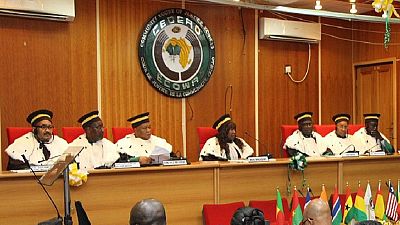
On 14 February 2018 the Economic Community of West African States (ECOWAS) Regional Court of Justice found that Jammeh-era media laws violated the right to freedom of expression in The Gambia. The Federation of African Journalists and four Gambian journalists filed a case in the court in December 2015. They argued that their rights, including their rights to freedom of expression, had been violated by Gambia through the enforcement of laws criminalising libel, sedition and false news in the country. Two of the journalists were also subject to torture whilst in the custody of the then notorious National Intelligence Agency following their arrests under these laws.
Arguments were heard by the court in October 2016. The case was supported by the Media Legal Defence Initiative (MLDI). Amnesty International filed an amicus brief in the case along with other freedom of expression organisations. Although press freedom has improved under the new government of President Barrow, who was inaugurated in January 2017, these restrictive laws are still in place.
The ruling will set an important precedent as many countries within West Africa continue to use similar repressive laws to silence freedom of expression, and hinder the vital work of journalists, in violation of international and regional human rights law. The ball is now in the court of the Adama Barrow government to repeal the said laws in order to realign the law to respect media freedoms. Amnesty International’s West Africa researcher has hailed the ruling as a historic day for The Gambian media landscape. “Today is an historic day for Gambia’s journalists and human rights defenders who, for decades, have suffered torture, imprisonment or exile just for exercising their right to freedom of expression,”Sabrina Mahtani said.
The Financial Times (amongst others) reports that changes in Uzbekistan are possibly going in the right direction. [“While Mr Mirziyoyev was part of the old system too, as prime minister for 13 years, his ousting of Mr Inoyatov was the boldest in a series of steps apparently designed to start opening the country up. He has freed 18 high-profile political prisoners — even if thousands more remain in jail — and taken nearly 16,000 people off a 17,500-strong security blacklist of potential extremists that stopped them travelling or getting jobs”.] This echoes what HRW said on 5 September 2017 after delegation had made its first visit to Uzbekistan since the organization was banned there in 2010: “The key is for the Uzbek government to transform the modest steps it has taken thus far into institutional change and sustainable improvements”. Now (13 February 2018) twelve international NGOs have publicly urged Uzbekistan to release journalists and human rights defenders.

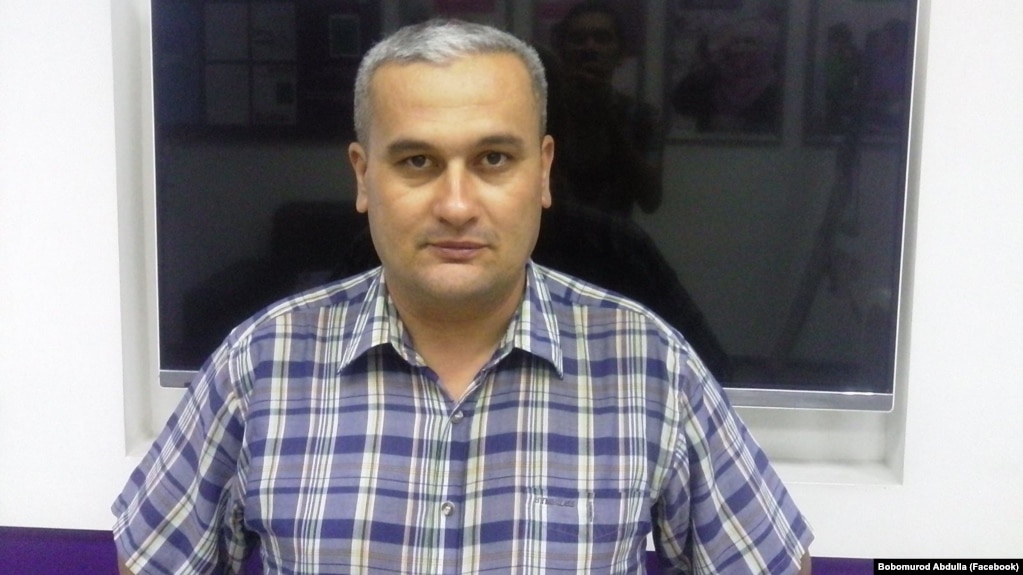
In a joint statement HRW, IPHR, Amnesty International, the Association for Human Rights in Central Asia, Civil Rights Defenders, the Committee to Protect Journalists, Freedom House, the Norwegian Helsinki Committee, Reporters Without Borders, Freedom Now, ARTICLE 19, and the Uzbek-German Forum for Human Rights have called on Tashkent to “ensure a thorough, impartial, and independent investigation into the alleged torture and other ill-treatment” of independent journalist Bobomurod Abdullaev.
[Abdullaev was detained in September on charges of “conspiracy to overthrow the constitutional regime” and faces up to 20 years in prison if found guilty. In October, Uzbek authorities arrested well-known economist and blogger Hayot Nasriddinov. They have accused him and others, including Akrom Malikov, an academic who was arrested in 2016, of plotting to overthrow the government.
“At a time when the Uzbek government appears to be taking steps to reform the country’s feared security services, reports of a journalist’s torture in their custody should prompt an immediate investigation and decisive, public condemnation,” HRW Central Asia researcher Steve Swerdlow said in the statement.
“There is a real opportunity for change in Uzbekistan – and yet we hear of journalists and bloggers still being detained and tortured. This case is a test of whether Uzbekistan’s human rights situation is really improving or not,” Brigitte Dufour, director of International Partnership for Human Rights (IPHR), said in the rights groups’ statement.
For my earlier posts on Uzbekistan, see: https://humanrightsdefenders.blog/tag/uzbekistan/
—
https://eurasianet.org/node/84971
https://www.ft.com/content/6c37419c-0cbf-11e8-8eb7-42f857ea9f09
Prominent Pakistani human rights defender and lawyer Asma Jahangir has died at the age of 66. She reportedly suffered a cardiac arrest and was taken to hospital, where she later died.
She was one of the most recognized and honored human rights defenders with over 17 human rights awards, including the Martin Ennals Award in 1995, whose film on her work shows a much younger Asma, fearless in spite of threats on her life:
I met her for the first time in 1993 at the 2nd World Conference on Human Rights in Vienna, where she deeply impressed me by standing up and openly criticizing her fellow NGO representatives for having tried to prevent former President Jimmy Carte from speaking at the NGO forum. This principled stand was a hallmark of her life as Pakistani human rights lawyer and as UN Special Rapporteur. In many instances she was able to give sound advice on cases of other human rights defenders in difficulty. For earlier posts on Asma see: https://humanrightsdefenders.blog/tag/asma-jahangir/
Nobel Peace Prize winner Malala Yousafzai called Ms Jahangir a “saviour of democracy and human rights”.
A prominent Pakistani lawyer, Salman Akram Raja, tweeted that Ms Jahangir was “the bravest human being I ever knew” and that the world was “less” without her.
A long interview with Asma you can find here: https://asiasociety.org/interview-asma-jahangir,
A 2017 interview can be found on the website of the RLA: https://vimeo.com/225966475
—-