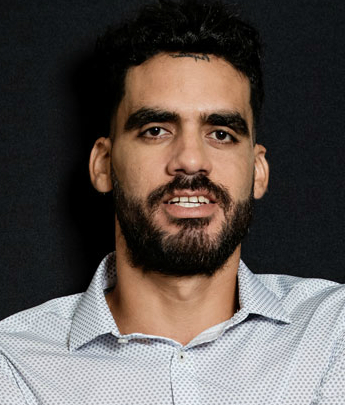
The Human Rights Foundation reported that Cuban graffiti artist Danilo ‘El Sexto’Maldonado was finally released from prison on 21 January 2017, after spending two months in detention. Cuban authorities arrested El Sexto for spray painting “Se fue” (in English, “He’s gone”) shortly after the death of the island’s former dictator, Fidel Castro. He was sent to one of Cuba’s most notorious maximum security prisons, El Combinado de Este, where he was subjected to daily psychological torture and frequent death threats. The Human Rights Foundation filed an individual complaint with the U.N. Working Group on Arbitrary Detention for its Havel Prize Laureate.[https://humanrightsdefenders.blog/2015/04/16/havel-prize-for-creative-dissent-awarded-to-girifna-sakdiyah-maruf-and-el-sexto/]
On 24 May 2016 Vladimir Kara-Murza spoke at the Oslo Freedom Forum. As the Human Rights Foundation states: “The Russian government doesn’t love activist Vladimir Kara-Murza, but he loves Russia. That’s why he is devoting his life to the fight for democracy in Russia, even though it might get him killed.“
Cuban blogger Yoani Sánchez explains how technology is helping to break the information monopoly the Castro dictatorship has maintained for more than fifty years. In a country where purchasing internet access costs up to a third of the average salary, Sanchez says thumb-drives loaded with information are a vital tool of progress. Cuba is the last dictatorship in the Americas, but change is coming, and Sánchez is convinced that—aided by more information and education—the next revolution will lead to the democracy the Cuban people desire and deserve. This video is a bit older (Oslo Freedom Forum 2014) but still relevant.
Having reported last month on the Atlantic Council‘s questionable idea of giving an award to Gabon’s leader [https://thoolen.wordGabon’s leaderpress.com/2016/09/20/how-awards-can-get-it-wrong-four-controversial-decisions-in-one-week/], I would be amiss in not referring the big spat that this has developed into between Thor Halvorssen of the Human Rights Foundation and Frederick Kempe of the Atlantic Council. In opinion page in The Hill of 26 October does not mince words. The final paragraph sets the tone: “It’s fair to wonder how Kempe and his staff can look at themselves in the mirror every morning when they spend their days defending dictators like Eritrea’s Afwerki, Gabon’s Bongo, and Kazakhstan’s Nazarbayev. The donations might be juicy, but at some point, Kempe’s colleagues and prestigious board members must stop and realize that they are taking the side of tyrants, betraying the very ideals they set out to promote in the first place.” Some of the juicy excerpts:
Pavlensky told RFE/RL on July 8 that HRF President Thor Halvorssen had informed him of the formal decision to revoke his prize in an e-mailed letter. The letter, which has been seen by RFE/RL, states that HRF regrets the decision as “unfortunate and unprecedented” but says the prize’s selection criteria disqualify those who have “advocated the use of violence as a valid method to fight government oppression.” Speaking to RFE/RL on July 8, Halvorssen confirmed that the organization had revoked Pavlensky’s prize but said HRF had nothing to add beyond the text of the letter sent to the artist.
Dissident artist Pyotr Pavlensky talked to RFE/RL [Tom Balmforth] about what prompted him to take up political art, and how he sees his political stunts as a rejection of a pervasive “clerical” ideology. He does not take the cancellation lightly and accused the organizers of the Vaclav Havel International Prize for Creative Dissent of essentially “acknowledging their support for police terror” by withdrawing the award after he pledged to devote the $42,000 in prize money to the legal defense of convicted police killers in Russia’s Far East.
That reprisals also take place in a regional human rights context is made clear by a report on 21 June 2016 by the New-York based Human Rights Foundation (HRF). It condemns the arbitrary arrest of activists Oscar Luis Milian and Yoandrys Gutiérrez, members of the Cuba-based youth movementMesa de Diálogo de la Juventud Cubana. Both activists were detained for six hours last week at José Martí Airport in Havana when returning to the country after taking part in meetings with the Secretary General of the Organization of American States (OAS), Luis Almagro. The meetings — organized by the Latin American Youth Network for Democracy within the framework of the 46th General Assembly of the OAS in Santo Domingo — brought together human rights and democracy activists from all over the hemisphere.
“Bringing notepads and pens with slogans in favor of democracy and human rights into Cuba has always been considered a ‘subversive’ activity by Cuba’s 57-year-old dictatorship,” said Javier El-Hage, HRF’s chief legal officer. “Oscar and Yoandrys join an endless list of brave activists who are treated like criminals for daring to bring information from the outside world to ordinary citizens in Cuba. If Raúl Castro really wants to show tolerance and openness, he should begin by dismantling the regime’s repressive structure that prohibits people to think for themselves.”
Milian and Gutiérrez were released six hours after their arrival in the Cuban capital and were never informed of the reason for their arrest.
After her father, Oswaldo Paya, was killed in a car accident, Rosa María Payá had two choices: keep her head down, or raise her own voice. She chose the latter. Today, despite the threats Cuban dissidents face from the Castro regime, Payá is demanding accountability for her father’s death and is pushing forward on his ambitious plan for a free and democratic Cuba. From the 2016 Oslo Freedom Forum on 24 May 2016. https://oslofreedomforum.com/talks/let-cuba-decide


 Hans Thoolen on Human Rights Defenders and their awards