Archive for the 'HRW' Category

NGOs remember 10th Anniversary of Natalia Estemirova’s murder

July 15, 2019
On the 10th anniversary of the murder of Natalia Estemirova, Chechnya’s most prominent human rights defender, nine international and two Russian human rights groups, jointly with FIDH and its member organization, Human Rights Centre “Memorial,” call on the Russian authorities to finally fulfil their obligation to conduct a thorough, impartial and effective investigation into her killing, bring the perpetrators to justice in fair trials before ordinary civilian courts, and end impunity for human rights violations in Chechnya.

Third Anniversary of Kem Ley’s Murder in Cambodia: the real culprit?

July 12, 2019

Mourners observe Kem Ley's funeral procession in Phnom Penh, July 24, 2016.

Mourners observe Kem Ley’s funeral procession in Phnom Penh, July 24, 2016.- AP Photo

Two dozen nongovernmental organizations on Tuesday 9 jult 2019 demanded that Cambodia’s government establish an independent and impartial commission to investigate the murder of prominent political commentator and rights campaigner Kem Ley, a day ahead of the third anniversary of his death. Kem Ley was shot to death in broad daylight on July 10, 2016 while having a morning coffee at a Caltex gas station in the capital Phnom Penh, days after publicly criticizing Prime Minister Hun Sen and his family for abuse of power.

Authorities charged a former soldier named Oeuth Ang with the murder and sentenced him to life in prison in March 2017, but many in Cambodia do not believe the government’s story that Kem Ley was killed by the man over a debt. In May, Cambodia’s Supreme Court rejected Oeuth Ang’s appeal for reduction of sentence and upheld his life imprisonment term. The day of Oeuth Ang’s sentencing, Geneva-based International Commission of Jurists (ICJ), New York-based Human Rights Watch and London-based Amnesty International highlighted multiple issues they said had not been adequately investigated during his trial and called for a probe into Kem Ley’s killing that adheres to international standards.

On Tuesday, 21 other groups joined the three NGOs in reiterating that call and questioning why the government had failed to take meaningful action in the case. “It has been three years since significant gaps were highlighted in the investigation and trial of Kem Ley’s case, which need to be remedied through an independent, impartial and effective investigation,” said Frederick Rawski, ICJ’s director for Asia and the Pacific.

The 24 NGOs noted in Tuesday’s statement that 164 organizations had signed a joint letter to Cambodia’s Deputy Prime Minister Sar Kheng calling for the creation of an independent Commission of Inquiry into Kem Ley’s case, citing the “flawed investigation” into his killing and “lack of progress in subsequent investigations” of suspected accomplices.

Soon after Kem Ley’s funeral, and fearing for their safety, his wife Bou Rachana—then pregnant—fled with her children from Cambodia to neighboring Thailand to seek asylum in a third country. They spent over a year and a half in Thailand before being granted permission to settle in Australia in February last year.

Debbie Stothard, the secretary-general of Paris-based International Federation for Human Rights (FIDH), said: “The Cambodian authorities’ ongoing failure to identify and prosecute the masterminds behind Kem Ley’s murder shows that an independent investigation is urgently needed to deliver justice to his family and to make progress towards ending impunity for the killing of human rights defenders in Cambodia,” she said.

Tuesday’s statement called Kem Ley’s killing “an alarming reminder of Cambodia’s culture of impunity” in cases of killings and harassment of rights defenders, labor leaders, journalists, members of the political opposition and others critical of Hun Sen’s regime.

Sok Ey San, spokesman of Hun Sen’s ruling Cambodian People’s Party (CPP), dismissed Tuesday’s statement as “politically motivated” and said it was “filled with groundless allegations.”

The call by the 24 NGOs came as police in Phnom Penh charged youth activist Kong Raiya and three of his family members with “incitement of social unrest” after arresting them for selling T-shirts bearing Kem Ley’s portrait and urging people to wear them on Wednesday to mark the anniversary of his murder. Am Sam Ath, deputy director of the Cambodian rights group LICADHO, told RFA’s Khmer Service that police arrested Kong Raiya, his wife and his parents-in-law on Tuesday along with his six-month-old baby, who was later released to family members.

See also Global Voices of 17 July: : https://globalvoices.org/2019/07/17/cambodian-activists-arrested-for-commemorating-the-anniversary-of-political-analyst-kem-leys-death/

https://www.rfa.org/english/news/cambodia/probe-07092019170518.html

Joint letter by 22 States to Human Rights Council re China’s Uighurs

July 12, 2019
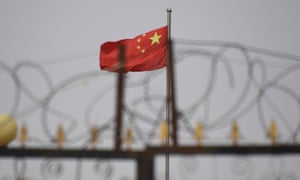
A Chinese flag behind razor wire at a housing compound in Yangisar, south of Kashgar, in China’s western Xinjiang region
China is reportedly holding one million people, mostly ethnic Uighurs, in internment camps in Xinjiang Photograph: Greg Baker/AFP/Getty Images

UN ambassadors  – including Australia, Britain, Canada, France, Germany and Japan – co-signed the letter released Wednesday and sent to the Human Rights Council president, Coly Seck, and the High Commissioner for Human Rights, Michelle Bachelet.

Rights groups and former inmates describe them as “concentration camps” where mainly Muslim Uighurs and other minorities are being forcefully assimilated into China’s majority ethnic Han society. The letter expresses concern “about credible reports of arbitrary detention… as well as widespread surveillance and restrictions, particularly targeting Uighurs and other minorities in Xinjiang.” It calls on China to stop arbitrary detention and allow “freedom of movement of Uighurs and other Muslim and minority communities in Xinjiang.” The authors, who include ambassadors from across the EU as well as Switzerland, requested that the letter become an official document of the Human Rights Council, which ends its 41st session in Geneva on Friday. Chinese officials describe the camps as voluntary “vocational education centres” where Turkic-speaking Uighurs receive job training.

The letter may have been the only available option with China having enough support in the UN Council to vote down a formal resolution. See also: ttps://www.reuters.com/article/us-china-xinjiang-rights-idUSKCN1U721X?utm_campaign=trueAnthem:+Trending+Content&utm_content=5d28c3e00ca7240001cb2eef&utm_medium=trueAnthem&utm_source=twitter

On the same day Human Rights Watch commented: Most importantly, the joint letter sends a strong message that we are moving beyond the era of selectivity, and that no country, large or small, is exempt from the scrutiny of this Council. We understand that the joint letter remains open for additional signatures, and we encourage those delegations that have not yet signed to do so. We are particularly disappointed that OIC member states have not yet engaged meaningfully or credibly with the human rights situation affecting Muslims in Xinjiang, while they have spoken out on other situations. This risks fueling perceptions of double standards and politicization; supporting the constructive joint statement would be a useful step towards addressing such perceptions.

We also welcome China’s acceptance of a UPR recommendation to respond positively to a country visit request by the UN Special Rapporteur on freedom of religion or belief.

We would suggest that China could benefit from technical assistance by drawing on the expertise of other UN Special Rapporteurs, such as the Special Rapporteur on the promotion of human rights while countering terrorism. Given that China has advanced the need to counter terrorism as its rationale for mass programs directed at Uyghurs and others in Xinjiang, the Special Rapporteur could offer useful guidance on whether there are more rights-respecting ways to counter terrorism than mass surveillance, detaining over a million Muslims, and stripping an entire population of its rights to freedom of religion, privacy, culture and expression.

See also: https://humanrightsdefenders.blog/2016/10/11/hot-news-ilham-tohti-chinas-mandela-wins-2016-martin-ennals-awad/

https://www.theguardian.com/world/2019/jul/11/more-than-20-ambassadors-condemn-chinas-treatment-of-uighurs-in-xinjiang

https://www.hrw.org/news/2019/07/11/independent-reporting-xinjiang-abuses-requires-unfettered-access-not-stage-managed

UN Council agrees action on Philippines in spite of vehement objection

July 11, 2019

On 11 July 2019 the United Nations Human Rights Council’s approved the resolution initiated by Iceland by a vote of 18 to 14, that requests the UN human rights office to present a comprehensive report on human rights in the Philippines to the council next June. [see also: https://humanrightsdefenders.blog/2019/06/07/philippines-labour-rights-defender-dennis-sequena-shot-dead-while-meeting-with-workers/]. The resolution also expresses concern about the range of rights violations in the country and calls on the government to cooperate with UN human rights mechanisms and experts. The Philippine government earlier denounced the resolution as a “divisive motion” and sought to block it. The Philippines rejected the resolution, with Foreign Affairs Secretary Teodoro Locsin Jr. calling it a “travesty” in a statement a representative read on his behalf.

(A total of 14 countries, meanwhile, voted no, including China; fifteen countries abstained, including Japan, Pakistan, and Brazil.

https://news.abs-cbn.com/news/07/11/19/un-rights-body-oks-investigation-on-ph-drug-killings-rights-situation

https://www.hrw.org/news/2019/07/11/philippines-un-takes-critical-step-toward-accountability-0

NGOs ask EU to intervene for human rights defender Azimjon Askarov in Kyrgyzstan

July 10, 2019

On 11 June 2019 NGOs wrote a joint Letter to High Representative Mogherini regarding detained Human Rights Defender Azimjon Askarov in Kyrgyzstan. His is a wellknown case, see e.g.: https://humanrightsdefenders.blog/2015/07/23/fury-about-us-award-for-askarov-in-kyrgyzstan-backlash-or-impact/

Human rights defender Daniel Bekele now Commissioner of the Ethiopian Human Rights Commission

July 8, 2019

As a further indication of the chances taking place in Ethiopia [https://humanrightsdefenders.blog/2019/05/07/ethiopia-a-progress-report-by-defenddefenders-made-public-on-7-may/], the Parliament approved on 2 july 2019 the appointment of former NGO activist, Daniel Bekele, to serve as Commissioner of the Ethiopian Human Rights Commission. Daniel served in different organization including as Executive Director of the Africa Division at Human Rights Watch [see e.g.: https://humanrightsdefenders.blog/2013/11/19/new-laws-are-being-introduced-in-kenya-to-restrict-human-rights-defenders/] and advisor at Amnesty International. Daniel who holds a Master’s Degree in International Law and legal Studies from Oxford university, has also been working as an independent consultant.

(In the 2005 parliamentary elections in Ethiopia, Daniel was actively involved in promoting human rights and independent election monitoring, as well as peace initiatives in the aftermath of the post-election crisis. However, he was arrested by the authorities and spent more than two years in prison. He was recognized as prisoner of conscience and in 2009 received the Alison Des Forges Award)

Ethiopia appoints Amnesty International advisor to lead commission

NGO joint letter to UN Human Rights Council about Belarus

June 16, 2019
Five international human rights organisations (see below), urge the UN Human Rights Council to maintain scrutiny on the human rights situation in Belarus, including by ensuring the renewal of the mandate of the Special Rapporteur and seeking preventive measures to ensure against an increase in human rights violations ahead of upcoming Parliamentary and Presidential elections in Belarus.

One-day dialogue on Human Rights Council membership on 1 july 2019

June 12, 2019

ISHR, Amnesty International and Human Rights Watch organise a meeting on STRENGTHENING AND LEVERAGING HUMAN RIGHTS COUNCIL MEMBERSHIP on Monday 1 July 2019, 13h00-14h30 Restaurant des Délégués, 8th Floor, Palais des Nations, Geneva.The composition of the HRC has captured significant public attention over the past year – with people around the world rightly asking: how can States accused of gross and systematic human rights violations become members of the United Nations’ Human Rights Council? And what does that mean for the credibility and effectiveness of this body? Clearly, for the HRC to be effective, and to be credible and relevant to the wider human rights community, and the wider public, it needs members committed to the promotion and protection of human rights at home and abroad in its 47 seats, as foreseen by UNGA resolution 60/251. Of course, no State has a perfect human rights record, and a wide and diverse range of States should be encouraged to address their shortcomings and enhance their commitment to human rights through HRC participation and engagement. While the argument does not apply to candidates that are in clear breach of the membership criteria, HRC membership may be an important incentive for national-level change, particularly where States, as candidates, make voluntary pledges and commitments, and are willing and able to implement them. The framing and implementation of those pledges and commitments is, however, rarely discussed at national or international level. Against this backdrop, in February 2019, Amnesty International, Human Rights Watch, the International Service for Human Rights (ISHR) and HRC-net convened a one-day dialogue bringing together national and regional actors – including human rights defenders and NHRIs – with a cross-regional group of State representatives, OHCHR officials and international civil society, to address two important and interlinked questions regarding HRC membership: 1) how can we encourage greater respect and application of the membership criteria clearly set out in GA resolution 60/251; and 2) how can a State’s membership of the HRC be leveraged for positive change on human rights at national level? Drawing on good practices and lessons learned, participants identified a range of challenges, opportunities and practical recommendations. A report of the one-day dialogue will be presented during a lunch time reception at the Restaurant des Délégués on 1 July, in the side-lines of the 41st session of the Human Rights Council. The reception will provide an opportunity for the presentation of some of the key challenges, opportunities and practical recommendations identified in the report, including with regards to good practice relating to candidacy and membership of the HRC.

Speakers:

  • Ambassador Nazhat Shameem Khan, Permanent Representative of Fiji to the UN
  • Salma El Hosseiny, ISHR’s Human Rights Council Advocate
  • Hilary Power, Amnesty International’s Senior UN Advocate

Please RSVP by clicking here <https://crm.ishr.ch/sites/all/modules/civicrm/extern/url.php?u=884&qid=111418> by 19 June 2019 to confirm your participation at this event.

See also: https://humanrightsdefenders.blog/2017/09/02/hrc-elections-how-do-the-candidates-for-2018-rate-11-september-events/

Robert Bernstein, publisher and human rights advocate, dies at 96

May 29, 2019

Robert L. Bernstein was the publisher of Random House and founding chairman of Human Rights Watch. (Elisabeth D. Bernstein)

Standing at 6 foot 3, with freckled features and a low-key leadership style, Mr. Bernstein began his career as a junior office boy at Simon & Schuster and rose to become the president, chief executive and chairman of America’s most renowned publishing house…


Mr. Bernstein’s memoir, “Speaking Freely: My Life in Publishing and Human Rights,” was published in 2016. (Courtesy of the New Press)

For decades, he spent what few free hours he had promoting human rights, a passion that deepened in the 1970s when he visited Moscow with a delegation of American publishers. His meetings with dissidents such as Andrei Sakharov, the nuclear physicist and Nobel Peace Prize laureate, led him to create the Fund for Free Expression, a group of writers, editors and other literary figures concerned with rights abuses around the world. In the aftermath of the 1975 Helsinki Accords, he also formed Helsinki Watch to monitor the protection of basic freedoms behind the Iron Curtain. It was followed by similar organizations centered on the Americas, Africa, Asia and the Middle East, which merged in 1988 to form Human Rights Watch.

Mr. Bernstein sometimes held board meetings for the organization out of Random House’s headquarters in Manhattan and participated in its research activities firsthand. In 1985 he flew to Nicaragua and drove “to within 20 miles of the Honduran border,” according to a Times report, “to investigate charges that acts of terrorism were being waged by the contras against unarmed civilians.”

Combining his interests, Mr. Bernstein published works by dissidents around the world, including Sakharov and his wife, Yelena Bonner; Natan Sharansky, a former Soviet political prisoner; Jacobo Timerman, who was tortured by Argentina’s military government in the 1970s; and Vaclav Havel, the Czech statesman and playwright.

Mr. Bernstein shifted his focus to Human Rights Watch, which was active in 70 countries by the time he stepped down as chairman in 1998. That same year, President Bill Clinton honored him as one of the first recipients of the Eleanor Roosevelt Award for Human Rights, calling Mr. Bernstein “a pathbreaker for freedom of expression and the protection of rights at home and abroad.”..

In 2009, he took the unusual step of criticizing the organization he had founded, writing in an op-ed column for the Times that Human Rights Watch had issued reports “on the Israeli-Arab conflict that are helping those who wish to turn Israel into a pariah state.”

The group, he argued, was better served focusing on closed authoritarian states such as Iran than condemning violations of international law in Israel. (Two chairs of the organization disagreed with his reasoning, writing in a letter to the Times that “it is essential to hold Israel to the same international human rights standards as other countries.”)

https://www.washingtonpost.com/local/obituaries/robert-bernstein-random-house-publisher-and-human-rights-advocate-dies-at-96/2019/05/28/6b85f126-8153-11e9-bce7-40b4105f7ca0_story.html?noredirect=on&utm_term=.bd940d7ef530

Reprisal against Egyptian human rights defender Mohamed Soltan

May 12, 2019

On 10 May 2019, a number of NGOs issued a joint statement on the defamation campaign by Egypt against human rights defender Mohamed Soltan:

We, the undersigned organizations strongly condemn the defamation campaign by the Egyptian authorities against human rights defender Mohamed Soltan, 

 
Mohamed Soltan is a prominent human rights defender from The Freedom Initiative, an independent human rights advocacy group in Washington D.C. He spent nearly two years in prison in the case known as “Raba’ Operations Room,” in which authorities pressed politically-motivated charges in 2014-2015 against scores of critical journalists and political figures for “membership in an illegal group”, “publishing false news” and “planning to overthrow the ruling regime”, among other charges. Some of the charges do not constitute recognizable crimes under international law. In any case, the US State Department, and Human Rights Watch’s analysis of the casefile in April 2015, found that prosecutors failed to present any credible evidence to establish him as a suspect, let alone establishing Soltan’s individual criminal responsibility  for the alleged crimes. An Egyptian court sentenced him to life in prison in 2015.
 
In protest of his unjust detention by the Egyptian authorities, Soltan entered into an open-ended hunger strike and was supported by a worldwide campaign effort. The U.S. government intervened at the highest levels and successfully facilitated his release and return to the United States on May 30th, 2015. Since his release, Soltan has become a full-time human right advocate relentlessly defending democratic values and human rights.
 
The Freedom Initiative has worked diligently with Egyptian and international human rights organizations to shed light on the deteriorating human rights situation in Egypt. The organization’s annual flagship event, the Egypt Advocacy Day, involved two award-winning actors who joined over 100 Egyptians and Egyptian Americans from over 25 U.S. states and six countries for meetings with members of the U.S. Congress and State Department. The aim of the meetings was to engage the Egyptian diaspora in the U.S. with their elected representatives on human rights and democratic governance issues in Egypt
 
In response, the Egyptian authorities have apparently unleashed a systematic defamation campaign against some of those who participated in the meetings and against the organizers, particularly the award-winning actors, The Freedom Initiative and Soltan. The Egyptian government,as well as privately owned newspapers, falsely accused him of being a convicted terrorist, a member of the Muslim Brotherhood and working on behalf of foreign agents. The defamatory statements were reported on government-sponsored media outlets in Egypt and Saudi Arabia.
 
The coordinated harassment of Soltan is part of a broader repression of rights and freedoms in Egypt and is aimed to stigmatize human rights defenders, both nationally and abroad, and undermine the effectiveness of their work.
 
We stand in solidarity with Mohamed Soltan, The Freedom Initiative and all Egyptians who peacefully speak out against human rights abuses despite the hefty price. We urge the Egyptian government to respect its obligations under international human rights treaties and the Egyptian constitution, end the crackdown on critics, halt the persecution of human rights defenders and release all those detained for peacefully expressing their opinions.
 
Adalah Center for Rights and Freedoms
Amnesty International
Andalus Institute for Tolerance and Anti-Violence Studies
Cairo Institute for Human Rights Studies
Committee for Justice
Egyptian Front for Human Rights
Egyptian Human Rights Forum
EuroMed Rights
Front Line Defenders
Human Rights First
Human Rights Watch
International Federation for Human Rights (FIDH), under the Observatory for the Protection of Human Rights Defenders
Project on Middle East Democracy (POMED)
The Freedom Initiative

https://mailchi.mp/euromedrights/egypt-reprisal-against-human-rights-defender-mohamed-soltan-for-human-rights-advocacy?e=1209ebd6d8