On 14 March 2022 a group of UN human rights experts today called on Bangladesh to immediately cease reprisals against human rights defenders and relatives of forcibly disappeared persons for their activism and co-operation with international human rights bodies and UN mechanisms.
In the period between December 2021 and February 2022, the homes of at least 10 relatives of forcibly disappeared individuals were reported to have been raided late at night.
“During the raids, relatives were intimidated, threatened and forced to either sign blank sheets of paper or pre-written statements indicating that their family member was not forcibly disappeared and that they had deliberately misled the police. This is unacceptable,” the experts observed.
The experts noted with concern the increasingly challenging situation relatives, human rights defenders and civil society are facing in Bangladesh. Repeated accusations by senior Government officials against some civil society organizations of providing “false information” to the UN mechanisms risk undermining the civil society’s key role.
“Bangladesh must ensure that relatives and human rights defenders are able to carry out their legitimate work in a safe and enabling environment without fear of threats, intimidation or reprisals of any kind,” the experts stressed. They expressed their concern that the reported reprisals may have a chilling effect and deter others from reporting on issues of public interest, including human rights, and from cooperating with the UN, its representatives and mechanisms.
Since 2009, the RAB has reportedly been involved in the perpetration of the majority of cases of enforced disappearance in the country, as noted in several reports by the UN Working Group on Enforced or Involuntary Disappearances.**
“Bangladeshi authorities are obliged under international law to promptly launch ex officio, independent, impartial and thorough investigations into these serious allegations, complemented by a thorough and comprehensive search for disappeared persons. At the same time, the RAB and other security agencies should not be shielded from scrutiny and criminal responsibility.”
The experts also reiterated their request to the Government of Bangladesh to take effective steps to protect and uphold the rights of victims and their families to truth, justice, reparation, and guarantees of non-recurrence.
On 17 March HRW stated that the Bangladesh government should meaningfully respond to United Nations concerns regarding grave allegations of torture, enforced disappearance, and extrajudicial killings in the country.
International Women’s Day is today 8 March and celebratory events are being held around the world. This year’s theme is #BreakTheBias, aimed at imagining “a world free of bias, stereotypes, and discrimination.” While this special day offers hope for gender equity, it is also a reminder of the omnipresent phenomenon of violence against women, which exists regardless of the day, and needs to be addressed in a fundamental way.
Amnesty International issued a statement “International Women’s Day: Dramatic deterioration in respect for women’s rights and gender equality must be decisively reversed“
Alarming assaults on women’s rights around the world in 2021/22.
Legal protections dismantled, and women human rights defenders now at unprecedented risk.
Protection and promotion of women’s and girls’ rights and support for women human rights defenders crucial, including for Covid-19 recovery.
Governments must act decisively to reverse regressions and uphold human rights for women and girls.
Catastrophic attacks on human rights and gender equality over the past twelve months have lowered protection for and upped threats against women and girls across the globe. On International Women’s Day, the organization called for bold action to reverse erosions of human rights for women and girls.
“Events in 2021 and in the early months of 2022 have conspired to crush the rights and dignity of millions of women and girls. The world’s crises do not impact equally, let alone fairly. The disproportionate impacts on women’s and girls’ rights are well-documented yet still neglected, when not ignored outright. But the facts are clear. The Covid-19 pandemic, the overwhelming rollback on women’s rights in Afghanistan, the widespread sexual violence characterizing the conflict in Ethiopia, attacks on abortion access in the US and Turkey’s withdrawal from the landmark Istanbul Convention on Gender Based Violence: each is a grave erosion of rights in its own terms but taken together? We must stand up to and stare down this global assault on women’s and girls’ dignity,” said Amnesty’s Secretary General, Agnès Callamard. [see https://www.amnesty.org/en/latest/news/2022/03/international-womens-day-dramatic-deterioration-in-respect-for-womens-rights-and-gender-equality-must-be-decisively-reversed/]
Human Rights Watch focuses on Afghanistan: On International Women’s Day, we should remember Afghanistan, and consider what the state of women’s rights there means for the struggle for gender equality worldwide. The Taliban were notorious for violating women’s rights when they ruled Afghanistan from 1996 to 2001. So, when the Taliban took control of Afghanistan again on August 15 last year, Afghan women’s rights defenders were deeply skeptical that the new rulers would be any different from the Taliban that controlled the country before, despite their pledges to respect women’s rights. They were right.
In less than seven months since taking over, the Taliban have:
Afghanistan is not the only country where women’s rights are under attack this International Women’s Day. But the speed and extent of the obliteration of women’s rights in Afghanistan is a warning to women around the world about the fragility of progress toward equality, how quickly it can vanish, and how few will defend it. We should all be in solidarity with Afghan women; their fight is a fight for women’s rights everywhere. [See: https://www.hrw.org/news/2022/03/08/standing-afghan-women-and-girls-international-womens-day]
On International Women’s Day, UN Human Rights stands with women and girls human rights defenders of all ages, backgrounds & identities leading our collective struggle to protect our climate and environment. See.g.:
Meet Brianna Frueran, a Pacific climate change activist fighting for her native Samoan islands’ survival.
Meet Mya Pol, a content creator from the United States who advocates for disability rights and educates people about environmentalism on her social media platform.
To Permanent Representatives of Member and Observer States of the United Nations (UN) Human Rights Council:
Excellency,
As the 49th session of the UN Human Rights Council gets underway, and Russia continues its invasion of Ukraine, we, the undersigned civil society organisations, would like to draw your attention to the dire human rights situation within the Russian Federation, and urge all states to bring this neglected country situation onto the agenda of the Human Rights Council.
A year after last year’s joint statement on the situation in Russia, authorities there have further intensified the already unprecedented crackdown on human rights. A fully-fledged witch hunt against independent groups, human rights defenders, media outlets and journalists, and political opposition, is decimating civil society and forcing many into exile.
The gravity of this human rights crisis has been demonstrated in the last few days by the forcible dispersal of anti-war rallies and pickets across Russia with over 6,800 arrested (as of 2 March 2022), attempts to impose censorship on the reporting of the conflict in Ukraine and to silence those media and individuals who speak out against Russia’s invasion of Ukraine, including through blocking media websites, threats of criminal prosecution under “fake news” and “high treason” charges and other means.
In a shocking development, the authorities moved to shut down “Memorial,” one of the country’s most authoritative human rights organizations. At the end of December, courts ruled to “liquidate” the group’s key legal entities, International Memorial Society and Human Rights Center Memorial, over alleged persistent noncompliance with the repressive legislation on “foreign agents.” On 28 February, the Supreme Court upheld this decision, despite an article 39 ruling from the European Court of Human Rights ordering the Russian authorities to halt liquidation proceedings.
The December rulings came at the end of a particularly terrible year for human rights in the country, during which authorities threw top opposition figure Alexei Navalny in prison, banned three organizations affiliated with him as “extremist,” launched criminal proceedings against several of his close associates, doubled down on Internet censorship, and designated more than 100 journalists and activists as “media-foreign agents”.
Recent months also saw a dramatic escalation of repression in Chechnya, where Russian law and international human rights obligations have been emptied of meaning. With the Kremlin’s tolerance or acquiescence, the local governor, Ramzan Kadyrov has been eviscerating all forms of dissent in Chechnya, often using collective punishment. In December 2021, Kadyrov opened a brutal offensive against his critics in the Chechen diaspora, by having the police arbitrarily detain dozens of their Chechnya-based relatives. It continued in January with the abduction and arbitrary detention on fabricated charges of Zarema Musaeva, mother of human rights lawyer Abubakar Yangulbaev, and death threats issued against the Yangulbaev family and some prominent human rights defenders and journalists.
This is a country situation urgently requiring the Council’s attention. We urge the Human Rights Council to adopt a resolution expressing serious concern about the human rights violations and abuses occurring in Russia, requesting the High Commissioner to monitor and report on the situation, and appointing a dedicated Special Rapporteur to address the human rights situation in Russia.
Yours sincerely,
Signed:
Human Rights Watch
Amnesty International
Human Rights House Foundation
International Federation for Human Rights
International Service for Human Rights
Human Rights Centre Memorial (Russia)
Civic Assistance Committee (Russia)
There was also a statement was delivered by Yulian Kondur and the International Charitable Organization Roma Women Fund ‘Chiricli’ in the name of Minority Rights Group (MRG) and other organizations at the Human Rights Council’s Urgent Debate, held on Friday 4 March 2022, on the situation of human rights in Ukraine stemming from the Russian Aggression. They called on authorities and aid actors to ensure that Roma, minorities and marginalised peoples are granted equal access to protection and safety when seeking refuge, including those without identity documentation.
The global human rights organizations market is expected to grow from $16.60 billion in 2021 to $17.47 billion in 2022 at a compound annual growth rate (CAGR) of 5.3%. The growth is mainly due to the companies rearranging their operations and recovering from the COVID-19 impact, which had earlier led to restrictive containment measures involving social distancing, remote working, and the closure of commercial activities that resulted in operational challenges.
The market is expected to reach $20.53 billion in 2026 at a CAGR of 4.1%.
The human rights organizations market consists of revenue generated through human rights services by entities that are engaged in promoting causes associated with human rights either for a broad or a specific constituency.
Establishments in this industry address issues such as protecting and promoting broad constitutional rights and civil liberties of individuals and those suffering from neglect, abuse, or exploitation, promoting the interests of specific groups such as children, women, senior citizens, or persons with disabilities, improving relations between racial, ethnic, and cultural groups, and promoting voter education and registration.
The main types of human rights organizations are nongovernmental organizations, intergovernmental organizations, governmental organizations and international organizations. Governmental human rights organizations are run by government bodies and are involved in the protection of human rights and the reduction of human rights violations.
The different modes of donation include online, offline. The organization locations can be domestic, international and have various applications in areas such as all humans, children, women, disabled, LGBTQ, others.
Asia Pacific was the largest region in the human rights organizations market in 2021. North America was the second largest region in the human rights organizations market. The regions covered in this report are Asia-Pacific, Western Europe, Eastern Europe, North America, South America, Middle East and Africa.
The rise in hate crimes is expected to drive the human rights organizations market. Hate crime is a form of criminal violence upon a person or property, caused in whole or in part by an offender’s bias against a race, religion, disability, sexual orientation, ethnicity, gender, or gender identity.
As per the annual report of FBI published in 2019, physical attacks against individuals have risen, accounting for 61% of the 7,120 cases reported by law enforcement authorities nationally as hate crimes in the USA. Government and non-governmental organizations aim to curb the abuses that challenge people’s human rights, which further aids in the growth of the human rights organizations market. Increasing attacks against human rights defenders are anticipated to hinder the human rights organization market. Attacks against human rights organizations that strive to safeguard human rights are rising at an alarming rate.
It is of course the worst for the direct victims of Russia’s aggression in Ukraine, but the very courageous people who stand up against the autocratic government and nationalistic media in Russia deserve all our attention. On 26 February 2022, Human Rights Watch wrote “Russia: Arbitrary Detentions of Anti-War Protesters“:
Police arbitrarily detained hundreds of peaceful protesters across Russia on February 24, 2022, at rallies in solidarity with Ukraine and against the war, Human Rights Watch said. The authorities also arrested at least two human rights defenders who spoke up against Russia’s full-scale invasion in Ukraine, threatened to block mass media outlets in case their reporting on the war differed from the official narrative, and demanded that foreign social media platforms stop restricting reports from Russian state media.
“For years, Russian authorities have been suppressing free speech and peaceful protests to stifle critical voices,” said Hugh Williamson, Europe and Central Asia director at Human Rights Watch. “Now the government is silencing all those who speak out against the war with Ukraine.”
According to OVD-Info, an independent human rights project working to protect freedom of assembly in Russia, by the evening of February 25, police had detained at least 1,858 people for participation in anti-war protests in 57 cities, including Moscow, Saint Petersburg, Krasnodar, Ekaterinburg, Saratov, Nizhny Novgorod, and Voronezh. Some of detained protesters stood in single pickets and held posters saying “no to war, do not be silent,” “stop the war,” and other similar slogans.
At around 3 p.m. on February 24, the police detainedMarina Litvinovich, a human rights activist, in Moscow after she had made a call over social media to “come out and say we are against war.” She was released several hours later, pending a court hearing and the next day was fined for violating the rules on public gatherings. https://www.rferl.org/a/russia-litvinovich-fined-ukraine-invasion-protest/31723131.html
In response to calls for peaceful protests, Russia’s Investigative Committee published a news release with a warning that organizing unsanctioned gatherings is a prosecutable offense and threatening “harsh punishment” for organization of “mass riots.”
In the evening of February 24, protesters gathered in different cities across Russia to demonstrate against war. According to OVD-Info, more than 1,000 protesters were arbitrarily detained in Moscow and around 400 in Saint Petersburg where the biggest protests took place.
Human Rights Watch analyzed and verified 27 videos recorded north of the Gostinny Dvor metro station in Saint Petersburg and close to Pushkinskaya Square in Moscow that were published on social media on February 24. The vast majority document brutal arrests of peaceful activists by police officers. In at least four cases, videos show police officers beating protestors, pushing them to the ground, dragging them, grabbing them by the head, and choking them.
Mass media and OVD-Info also reported other cases of excessive use of force by the police, refusal of medical assistance, and denial of access to lawyers. At night, at least six police stations in Moscow, and some stations in Saint Petersburg, Saratov, Voronezh and Ekaterinburg refused access to outside visitors after initiating the “Fortress” protocol, authorized for a situation of potential attack, which meant lawyers were denied access to their clients for hours. On February 25, OVD-info reported they could not get in touch with three of the detainees on their list.
Russian public figures, journalists, scientists, activists, and average social media users have been publicly expressing their shock and indignation at the full scale Russian military operations in Ukraine and calling for the hostilities to end. Thousands used the hashtag #нетвойне (#notowar).
Lev Ponomarev, a prominent human rights defender and the founder of the Movement for Human Rights, initiated a petition “against war,” calling on the Russian military to withdraw from Ukraine and inviting people to join the peaceful anti-war movement. The police detained Ponomarev on February 24 and charged him with organizing unsanctioned protests in connection with the petition, which had gathered over 550,000 signatures by the evening of February 25.
On February 24, the internet regulator Roskomnadzor published a warning to mass media disseminating “unverified” and “false” information, claiming that only information from official sources can be used when reporting on the “special operation” in Ukraine. The authorities also said that all “false” information would be instantly blocked and warned about fines for disseminating “fake” news.
Roskomnadzor also sent official letters to Facebook (Meta) demanding that it should lift restrictions imposed by the social media platform on official pages of state and government mass media. The authorities said that Facebook had marked them as “untrustworthy” and hid their publications from the platform’s search. Roskomnadzor also called on Russian users to switch to national internet resources and social networks due to “unfounded blockings by foreign platforms.”
On February 25, the Office of the Prosecutor General, in coordination with the Ministry of Foreign Affairs, accused Facebook of being “involved in violation of fundamental human rights and freedoms” and imposed restrictions on access to the platform in Russia.
The authorities’ actions to prevent people from participating in peaceful public protests and freely expressing their opinions violate fundamental rights, including those to freedom of expression and assembly and the prohibition on arbitrary detention, guaranteed by the European Convention on Human Rights (ECHR), the International Covenant on Civil and Political Rights (ICCPR), and Russia’s own Constitution.
“The ability to express disagreement in a peaceful way is crucially important in any society that respects human rights and rule of law,” Williamson said. “This abusive crackdown on a peaceful anti-war movement is yet further proof, if more was needed, of the government’s intolerance of independent voices.”
On the other hand, in a post of 25 February 2022, Brian Dooley of Human Rights First relates what human rights defenders in Ukraine are telling about the immediate impact on them of the Russian invasion.
All charges against Öztürk Türkdoğan, the co-chair of Turkey’s most prominent human rights organisation and a respected lawyer, should be immediately dropped, Amnesty International said ahead of the start of his trial. Öztürk Türkdoğan, the co-chair of the Human Rights Association (IHD), faces baseless charges of “membership of a terrorist organization”, “insulting a public official” and “insulting the Turkish nation and the Turkish state” for public statements he made in relation to his association’s human rights work. See also: https://humanrightsdefenders.blog/2021/03/22/turkey-arrests-and-backsliding-on-femicide/.
“The prosecution of Öztürk Türkdoğan is an undisguised attack on this one human rights defender and also on all those who speak out for human rights in Turkey,” said Julia Hall, Amnesty International’s Deputy Director for Research for Europe. “With these spurious charges against the co-chair of Turkey’s longest-standing human rights organisation, the prosecuting authorities send a chilling message that increases the climate of intense fear among Turkey’s already beleaguered human rights community.”
According to IHD’s records, over 200 separate criminal investigations and prosecutions of IHD members and elected representatives of the organization are ongoing across Turkey.
“The criminalization of human rights defenders and of the Human Rights Association are the true insults here. The authorities’ unrelenting attack on Öztürk Türkdoğan and Turkey’s civil society movement has to end,” said Julia Hall. “Turkey must immediately drop all charges against Öztürk Türkdoğan and create an enabling, protective environment for civil society in line with its obligations under international human rights law.”
In December 2021, the Turkish authorities initiated three separate prosecutions against Öztürk Türkdoğan. He was tried under Article 125 of the Turkish Penal Code allegedly for “insulting” a public official in a statement published on the IHD website on 29 June 2018. The first hearing of this prosecution, in which the Minister of Interior is the alleged victim, was held on 18 February 2022. The next hearing will be held on 11 May.
He was also charged with “membership of a terrorist organization” under Article 314/2 of the penal code after the authorities detained him and searched his home on 19 March 2021. During the search, his phone and laptop were confiscated. The first hearing for this case will take place on 22 February 2022.
The United Nations Human Rights Council’s 49th session, which begins on February 28 in Geneva, presents an opportunity to send a powerful message to the Ortega-Murillo government that these human rights violations will not be tolerated. Governments should support a strong resolution on Nicaragua, demanding the release of all detainees subjected to arbitrary detention and prosecutions and establishing an independent mechanism to investigate rights violations.
Tamara Taraciuk Broner, Acting Director, Americas Division of HRW, describes the latest in the Nicaraguan Government’s Attempts to Tighten its Authoritarian Grip:
Nicaragua’s courts are scheduled to hold a sham trial of seven government critics and opposition leaders, all arbitrarily imprisoned since June 2021. It’s the latest in a slew of trials of people detained on absurd charges months on end.
This week’s trial epitomizes Nicaragua’s mockery of justice: A joint trial, with no due process, on charges of “conspiracy to undermine national integrity,” in most cases based solely on the defendants’ exercise of their right to free expression, that will most likely result in swift convictions for all.
Since February 1, at least 14 detainees have been found guilty of “undermining national integrity” during closed-door trials at “El Chipote” prison, rather than at public courthouses, as Nicaraguan law requires. Each trial has lasted just a few hours and has resulted in swift convictions and sentences of several years in prison.
Announcing the trials on January 31, the Attorney General’s Office called the detainees “criminals and thieves.” Authorities had suspended the trials in October 2021 without offering a clear reason.
Between May and November 2021, the government unleashed a wave of arbitrary arrests to pave the way for President Daniel Ortega’s reelection to a fourth consecutive term. Nicaraguan authorities arrested at least 40 critics, including student and business leaders, campesino representatives, defense lawyers, journalists, activists, and seven presidential candidates. More than 130 others were detained earlier and remain in detention.
Criminal proceedings have lacked basic due process. In many cases, detainees were held incommunicado for weeks or months at El Chipote, some in prolonged solitary confinement. When allowed visits, families described abusive conditions, including repeated interrogations and insufficient food.
On February 12, Hugo Torres died in detention. Torres a 73-year-old former companion of Nicaraguan President Daniel Ortega, had been arbitrarily arrested in early June and accused of “treason.”
Prosecutors have based serious accusations solely on claims that the accused had given interviews to media outlets, shared WhatsApp messages, participated in meetings, or signed letters calling for free elections, demanding international condemnation of government abuses, or expressing support for sanctions against Nicaraguan officials.
These trials contribute to President Ortega’s mounting record of abuse. Given the lack of judicial independence of Nicaraguan courts, this would provide victims the possibility of being heard by an independent body with a chance to holding perpetrators accountable.
Other inmates also are in dire straits, according to family members and rights defenders, who say the prisoners are malnourished, losing weight, teeth and memory, and getting weaker by the day.
“Many are facing a serious risk to health and life,” the former president of the Inter-American Commission on Human Rights (IACHR), Antonia Urrejola, said on Twitter.
Ortega, who secured a fourth consecutive term in November elections, has faced widespread criticism from rights groups, opposition figures and international observers who decried the vote as “a sham”.
On Monday, the European Union’s external affairs spokesman, Peter Stano, sent “deep condolences” to Torres’s family and called for an independent investigation into his death. “We reiterate our call for the immediate and unconditional release of all political prisoners … subjected to inhumane detention conditions” in Nicaragua, Stano tweeted.
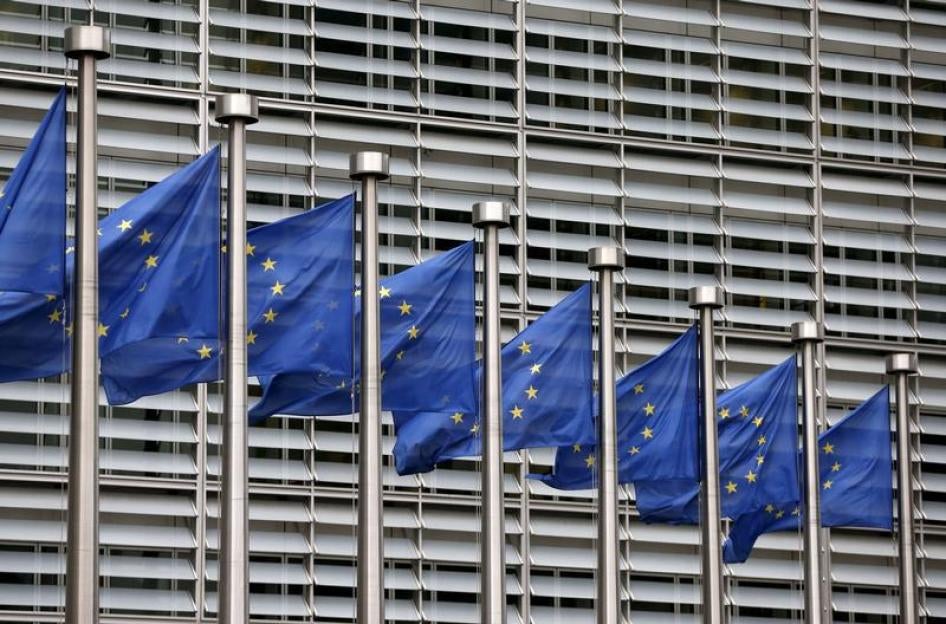
The decision on February 16, 2022 by the Court of Justice of the European Union to allow EU institutions to tie funding to EU states to respect for the rule of law clears the way for strong action by the European Commission, Human Rights Watch said. The EU Court’s ruling dismissed the actions brought by Hungary and Poland against the new conditionality mechanism.
“The EU Court has sent a clear signal that EU funds should be used in ways that uphold rather than undermine Europe’s democratic values,” said Philippe Dam, Europe and Central Asia Advocacy Director at Human Rights Watch. “The EU Commission should now act swiftly and demonstrate that defending the rule of law is at the top of its agenda.”
In December 2020 the EU adopted a regulation creating a new conditionality mechanism to protect the EU budget from rule of law breaches by an EU member state. A last-minute deal among EU member states obliged the Commission to wait for a ruling by the EU Court of Justice before finalizing the guidelines for applying the conditionality mechanism. Hungary and Poland brought legal action before the EU Court seeking to annul the rule of law conditionality mechanism in March 2021, initiating that process…
The court’s ruling confirms that “compliance by the Member States with the common values on which the European Union is founded (…) such as the rule of law and solidarity, justifies the mutual trust between those States.” The Court added that the EU “must be able to defend those values.”
The European Commission should demonstrate its stated commitment to protect the rule of law and democratic values in the EU by swiftly initiating procedures provided by the regulation, Human Rights Watch said. It should seek to suspend, reduce, or prevent new agreements to provide EU funds to a member state if it finds that the state has failed to respect the rule of law.
In applying the conditionality mechanism, the European Commission should ensure that a broad range of breaches to EU’s democratic values could lead it to recommend cutting funds to EU member states. These should include attacks on the independence of the judiciary, as well as state interference with media and civil society. The Commission should also seek to ensure that EU funding cannot be used to promote intolerance or discriminatory policies, including against women and lesbian, gay, bisexual, and transgender (LGBT) people and other minorities.
The Commission should also ensure that carrying out this procedure does not punish EU citizens for the actions of their governments, including by negatively affecting their economic and social rights. The Commission should conduct human rights impact assessments to determine the risk that people’s rights would be harmed by any decision and should divert rather than cut funding as required, to ensure that beneficiaries’ rights are not affected.
Hungary and Poland, the two EU countries that initiated legal action against the regulation, are already facing scrutiny for their poor rule of law records under the Article 7 procedure – the EU treaty provision dealing with governments that flout EU values, which can ultimately lead to the suspension of their voting rights in the Council. Hungary is among the largest recipients of EU funding per capita, and Poland is the largest overall net recipient.
Poland’s government has eroded judicial independence and ignored recent EU Court of Justice decisions. It also used its politically compromised constitutional tribunal to undermine women’s rights and the binding nature of EU law. LGBT and women’s rights activists face threats and harassment. In Hungary, restrictive laws target civil society groups, and the government or its supporters control most media outlets. A June 2021 law banned discussion on gender identity and sexual orientation, putting health providers, educators, artists, and broadcasters at risk of sanctions.
EU member states also have a serious responsibility to ensure that all member states respect EU’s democratic values and the rule of law. On February 22 they will hold a hearing on the situation of the rule of law in Poland under the Article 7 procedure. But since Article 7 was triggered in 2017 on Poland and in 2018 on Hungary, other EU member states have failed to take further action to hold those two governments to account.
..Proceedings under Article 7 should remain the cornerstone of the action against the erosion of EU values in countries like Hungary and Poland. The EU is equipped with the tools needed to stand up against member states that disregard the EU’s own democratic values, Human Rights Watch said. What has been missing is political will by the EU Commission and by leading EU member states to take decisive action and to hold states responsible for abuses to account.
“The EU Court ruling underscores that EU institutions can fight back against the erosion of the rule of law within the bloc, but much depends on the European Commission quickly building on this momentum,” Dam said. “Tying EU money to EU values and strengthening scrutiny of rule of law abuses should go hand in hand to demonstrate that EU membership and respect for the rule of law are inseparable.”
ISHR, the Martin Ennals Foundation and eight other major human rights groups urge in a joint statement the Chinese government to ensure lawyer Yu Wensheng is able to leave Nanjing Prison on March 1st, and freely reunite with his family in Beijing.
The signatory organisations also called in the joint statement for sustained attention on the growing risks and threats his wife, Xu Yan, faces for advocating for his rights and release.
For this, the authorities revoked his legal license on 16 January, 2018. Three days later, he was forcibly disappeared, a day after publishing an open letter calling for constitutional reform. He was put on trial in secret on 9 May 2019, but his wife, Xu Yan, was only informed of his four-years jail sentence in June 2020.
The signatories of the joint statement express grave concern that Yu Wensheng may be put under a de facto home arrest, severely restricted in his movements and communication, and unable to reunite with his family in Beijing.
Human rights lawyers have endured such restrictions upon leaving prison on grounds of a supplemental sentence of ‘deprivation of political rights’, in a phenomenon known as ‘non-release release’. In September 2019, UN experts condemned the use of this practice against lawyer Jiang Tianyong as ‘gratuitously punitive and legally unjustified’.
IThe signatory organisations urge the Chinese authorities to:
Ensure that Yu Wensheng is able to reunite with his family in Beijing on 1 March, to exercise his rights to move and communicate freely, and that he is not subjected to surveillance and harassment. He must also be able to resume his legal work without restrictions;
Put an end to the surveillance and harassment of Yu Wensheng’s family;
Guarantee in all circumstances that all lawyers in China, including human rights lawyers, are able to carry out their legitimate professional duties without fear of reprisals and free of restrictions.
In Newsweek of 3 February 2022 Omar Baddar, Director of the Arab American Institute, published an opinion piece entitled “Amnesty Settles It: It’s Time for U.S. Accountability on Israel”.
Amnesty International, issued on 1 February 2022 an extensive report titled “Israel’s Apartheid against Palestinians: Cruel System of Domination and Crime against Humanity.” As the report documents, “Israel has imposed a system of oppression and domination over Palestinians wherever it exercises control over the enjoyment of their right.” The report further found that Israel’s policies are part of a “systematic as well as widespread attack directed against the Palestinian population, and that the inhuman or inhumane acts committed within the context of this attack have been committed with the intention to maintain this system and amount to the crime against humanity of apartheid.“
Omar Baddar, states: The most important consequence of this consensus is that it lays to rest the false but popular notion of an “Israeli-Palestinian conflict” between two equal sides. The new consensus instead frames the issue more accurately as a struggle between an oppressor and an oppressed people. In the same way that Apartheid in South Africa and Jim Crow segregation in the American South denied people the ability to live in freedom with their full rights simply because of who they are, Israel also denies freedom to Palestinians and many basic rights to Palestinians just because they are Palestinians.
Like the Human Rights Watch report before it, what’s remarkable about the new Amnesty report is how extensive and detailed it is. Amnesty did its due diligence and made sure that its central claims are backed by a mountain of evidence, meticulously documenting unlawful killings, forced displacement and systemic discrimination on a massive scale. Unsurprisingly, the devastating and irreproachable nature of this report triggered a meltdown among Israel’s apologists. See for this also: https://yubanet.com/world/human-rights-organizations-from-israel-condemn-vicious-attacks-on-amnesty-international/
Unable to argue with the substance of the Amnesty report, pro-Israel groups have resorted either to blindly asserting—as AIPAC did—that Amnesty was lying, or baselessly claiming—as the ADL did—that the report would spark antisemitic attacks. The latter is nothing short of a cynical weaponization of antisemitism—which, in fact, is a serious and rising scourge in America and across the world—unscrupulously exploited in order to silence criticism of Israeli government policy.
We cannot have the open debate we need in a free society if speaking honestly about Israeli policy results in smears of bigotry. By misusing the charge of antisemitism in this fashion, Israel’s apologists aren’t just harming the human rights defenders being smeared by it; they’re also harming the real effort to eliminate antisemitism—a goal that we all have a moral obligation to come together and accomplish.
What this Amnesty report should have done is serve as a wake-up call to an American political establishment that prioritizes pandering over sensible policy, and that has turned a blind eye to a grave injustice for far too long. After all, it is U.S. military funding, to the unrivaled tune of $3.8 billion per year, which enables the Israeli military to maintain its suffocating grip on the occupied Palestinian population, and it is U.S. diplomatic protection, through more than 40 vetoes at the UN Security Council and beyond, that shields Israel from accountability for its crimes.
And yet, despite repeatedly claiming to prioritize human rights in its foreign policy, the Biden administration’s reaction to this report was utterly disappointing. The administration rejected it out of hand.
The Amnesty report bemoans the fact that, “for over seven decades, the international community has stood by as Israel has been given free rein to dispossess, segregate, control, oppress and dominate Palestinians.” It criticizes countries like ours that have “actively supported Israel’s violations by supplying it with arms, equipment and other tools to perpetrate crimes under international law and by providing diplomatic cover, including at the UN Security Council, to shield it from accountability.” The report also reiterated its call for “states to immediately suspend the direct and indirect supply, sale or transfer of all weapons, munitions and other military and security equipment.”


 Hans Thoolen on Human Rights Defenders and their awards