Archive for the 'Amnesty international' Category

Amnesty announces Kumi Naidoo as next Secretary General, effective August 2018

December 22, 2017

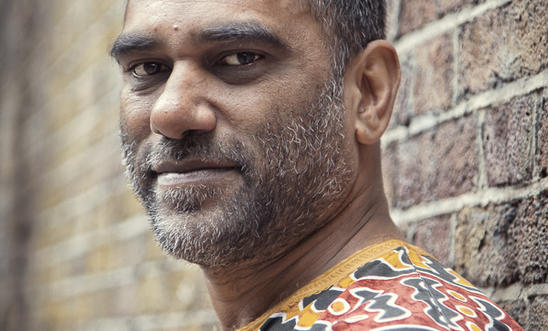
Amnesty International has appointed Kumi Naidoo as its next Secretary General. As from August 2018, Kumi will succeed Salil Shetty, who served two terms as Secretary General from 2010.

Mr Naidoo is an activist and civil society leader. His previous leadership roles include Executive Director of Greenpeace International, Chair of the Global Call for Climate Action, Founding Chair of the Global Call to Action against Poverty and Secretary General and CEO of CIVICUS, the World Alliance for Citizen Participation. [see also: https://en.wikipedia.org/wiki/Kumi_Naidoo]. Mr Naidoo currently chairs three start-up organisations in his home country South Africa: Africans Rising for Justice, Peace and Dignity; the Campaign for a Just Energy Future; and the Global Climate Finance Campaign.

Mwikali Muthiani, Chair of the Board of Amnesty, said: “We are delighted to be welcoming Kumi as our new Secretary General. His vision and passion for a just and peaceful world make him an outstanding leader for our global movement, as we strengthen our resolve for a world where human rights are enjoyed by all.

Mr Naidoo himself stated: “I have been an activist and campaigner all my life, so I am excited to be joining the world’s largest people movement for human rights at a time when we need to counter increasing attacks on basic freedoms and on civil society around the globe. This means adapting to a fluid fast-changing global environment with urgency, passion and with courage. ..Amnesty International’s campaigns for justice and equality today are more urgent than ever, and I am humbled and honoured to be leading the organisation in these challenging times.

Amnesty has a global presence including offices in more than 70 countries, 2,600 staff and seven million members, volunteers and supporters worldwide.

Salil Shetty will remain in office until July 2018. [see also: https://humanrightsdefenders.blog/tag/salil-shetty/]

https://www.amnesty.org/en/latest/news/2017/12/kumi-naidoo-next-amnesty-international-secretary-general/

Amnesty just published major report on human rights defenders

December 6, 2017

This report – published on 5 December – is part of Brave, Amnesty International’s campaign launched in May 2017 calling on states to recognize the work of human rights defenders, and to ensure they are able to carry out their work in a safe and enabling environment. States around the world are failing in their duty to effectively protect people who defend human rights, leading to an escalation in preventable killings and enforced disappearances, Amnesty International said.

The organization’s new report, Deadly but Preventable Attacks: Killings and Enforced Disappearances of Those who Defend Human Rights, highlights the growing risks faced by human rights defenders.
The report includes testimonies from friends, relatives and colleagues of human rights defenders, including environmentalists, LGBTIQ and women’s rights activists, journalists and lawyers, who have been killed or disappeared. Many described how victims’ pleas for protection had been repeatedly ignored by the authorities and how the attackers had evaded justice, fuelling a deadly cycle of impunity. “We spoke to families of killed and forcibly disappeared human rights defenders all over the world, and kept hearing the same thing: these people knew their lives were at risk,” said Guadalupe Marengo, Head of Amnesty International’s Global Human Rights Defenders Programme. “Their deaths or disappearances had been preceded by a string of previous attacks, which authorities turned a blind eye to or even encouraged. If states had taken their human rights obligations seriously and acted diligently on reports of threats and other abuses, lives could have been saved.”

Cases include:
Berta Cáceres, a Honduran environmental and Indigenous activist who was shot dead in 2016 after years of threats and attacks. [https://humanrightsdefenders.blog/2016/03/07/exceptional-response-from-ngo-world-on-killing-of-berta-caceres/]
Xulhaz Mannan, an LGBTIQ activist who was hacked to death in Bangladesh, along with his colleague, in 2016. Over 18 months later, justice is yet to take place.
Pierre Claver Mbonimpa, founder of a human rights organization in Burundi, who was shot in the face and neck in 2015. Months later, while he was recovering abroad, his son and son-in-law were killed. [https://humanrightsdefenders.blog/2017/10/17/mbonimpa-wins-also-the-2017-civil-courage-prize/]
The “Douma 4”, four Syrian activists who were abducted from their office by armed men in December 2013 and have not been seen since.

When the UN General Assembly adopted the Declaration on Human Rights Defenders in 1998, the international community committed to protecting them and recognizing their crucial work. But Amnesty International’s report shows that championing human rights continues to be highly dangerous work, with thousands of human rights defenders killed or forcibly disappeared by state and non-state actors in the two decades since. [https://humanrightsdefenders.blog/2017/11/21/breaking-news-un-adopts-key-resolution-on-human-rights-defenders/]
Amnesty International’s report reveals the motives behind these attacks are multiple and layered. Some people are attacked because of their occupations (for example, journalists, law professionals, trade unionists), for standing up to powerful actors violating human rights, for sharing information or raising awareness. Others are at heightened risk of attack both for what they do and who they are, facing discrimination and violence. These people include those defending the rights of women; sex workers; lesbian, gay, bisexual, transgender and intersex people; Indigenous peoples and other minority groups. Others are attacked in context-specific situations, for example during conflict or where communities are in the grip of organized crime and violent crackdown.

  • Amnesty International is urging all states to prioritize the recognition and protection of human rights defenders.
  • Authorities must publicly support their work, and acknowledge their contribution to the advancement of human rights.
  • They must take all necessary measures to prevent further attacks on them, and bring to justice those responsible for attacks by effectively investigating and prosecuting killings and enforced disappearances.


View Original

Write for Rights again in December 2017

December 4, 2017

Every December, Amnesty International supporters across the globe write millions of letters and take actions for people whose human rights are under attack, in what has become the world’s biggest human rights campaign. Last year at least 4.6 million actions were taken. “For 15 years Write for Rights has given people hope in their darkest moments. Imagine being ill in jail and receiving thousands of letters of support and solidarity; or finding out that people all over the world are behind you in your quest for justice for a murdered relative. Writing letters really can change lives,” said Salil Shetty, Amnesty International’s Secretary General. For last year’s see: https://humanrightsdefenders.blog/2016/11/04/time-for-the-annual-write-for-rights-campaign/

This year Amnesty International is writing to, among others:

  • The Bangladeshi Home Minister, calling on him to bring the killers of Xulhaz Mannan to justice, without recourse to the death penalty. Xulhaz, a founder of Bangladesh’s only LGBTI magazine, was in his apartment with a colleague when men wielding machetes burst in and hacked them to death in April 2016. Despite ample evidence, the killers have yet to be charged.
  • The Prime Minister of Jamaica, telling him to protect Shackelia Jackson, who has been fighting for justice for her brother Nakiea since he was killed by police in 2014, and has refused to be silenced by police intimidation.  In the past decade around 2,000 men, usually young and poor, have been killed by police in Jamaica.
  • The Prime Minister of Israel, telling him to drop all charges against Farid al Atrash and Issa Amro, Palestinian human rights defenders, who want an end to illegal Israeli settlements on Palestinian land. They brave constant attacks by soldiers and settlers, and are facing ludicrous charges after they joined a peaceful protest march.


This year, these 10 people and groups urgently need your support:

Xulhaz Mannan

Xulhaz was a founder of Bangladesh’s only LGBTI magazine, a daring venture in a country where same-sex relations are illegal. He was in his apartment with a colleague when men wielding machetes burst in and hacked them to death. Despite ample evidence, including CCTV footage and eyewitness testimony, one year on the killers have yet to be charged for this brutal murder.

Mahadine

Tadjadine Mahamat Babouri, commonly known as Mahadine, is an online activist from Chad. In September 2016 he posted videos on Facebook criticizing the Chadian government. Within days, he was snatched off the streets, and beaten and chained up for several weeks. He faces a life sentence and is also gravely ill, having caught tuberculosis in prison.

Ni Yulan

A former lawyer, Ni Yulan has supported scores of people forced from their homes by lucrative construction projects. She has braved almost 20 years of violent harassment for defending housing rights, and has been monitored, arrested and repeatedly evicted by the authorities. She was once beaten so badly in detention that she now uses a wheelchair. Ni Yulan continues to help people stand up for their rights

Hanan Badr el-Din

Hanan Badr el Din’s life changed forever when her husband disappeared in July 2013. She last saw him on television, wounded and at a hospital after attending a protest. Hanan’s relentless search for him led her to others whose loved ones were taken by the Egyptian security forces. Now a leading voice exposing Egypt’s hundreds of disappeared, her latest search for information about her husband has seen her arrested on false charges which could result in five years in prison.

Sakris Kupila

Sakris Kupila, a 21-year-old medical student from Finland, has never identified as a woman. Yet he has to endure daily discrimination because his identity documents say he is female – the gender he was assigned at birth. To legally reassign your gender in Finland, you must be diagnosed with a “mental disorder” and sterilised. Sakris opposes this humiliating treatment. And despite threats and open hostility, he continues to demand a change to the law.

MILPAH Indigenous Movement

For the Indigenous Lenca people in Honduras, the land is their life. But huge hydroelectric, mining and other interests are out to exploit that land. MILPAH, the Independent Lenca Indigenous Movement of La Paz, is at the forefront of the struggle against them. They brave smear campaigns, death threats and physical assault to protect their environment, yet their attackers are rarely brought to justice.

Farid and Issa

Farid al-Atrash and Issa Amro are two Palestinian activists who demand an end to Israeli settlements – a war crime stemming from Israel’s 50-year occupation of Palestinian land. Dedicated to non-violence, the two activists brave constant threats and attacks by soldiers and settlers. In February 2016, Issa and Farid marched peacefully against settlements and the Israeli occupation. As a result, they face ludicrous charges apparently designed to obstruct their human rights work.

Shackelia Jackson

Shackelia Jackson will not give up. When her brother, Nakiea, was gunned down by police, she took on Jamaica’s sluggish court system to lead a bold fight for justice for his murder. In doing so, she rallied dozens of families whose loved ones were similarly killed. In response, the police have repeatedly raided and harassed her community. But Shackelia will not be silenced.

Clovis Razafimalala

Clovis is doing everything he can to protect Madagascar’s vanishing rainforest. Its rosewood trees are a precious resource under threat from a network of smugglers, bent on selling them off in what has become a billion dollar illegal trade. Clovis’ efforts to save this rare ruby-coloured tree have brought him unwanted attention. He has been convicted on false charges and could be jailed at any moment

Turkey

Right now, 11 people who have dedicated their lives to defending the human rights of journalists, activists and other dissenting voices in Turkey are themselves in danger. Among them are Amnesty International’s Director, İdil Eser, and its chair, Taner Kılıç, who remains in prison after five months. All are on trial for ‘terrorism’-related crimes, an absurd charge and face a jail sentence of up to 15 years.

Amnesty International’s Brave campaign calls on governments around the world to protect human rights defenders.
https://www.amnesty.org/en/latest/news/2017/11/amnesty-launches-worlds-biggest-human-rights-campaign/

Celebrities come out to support Taner Kılıç, Amnesty Turkey’s chair, on trial today

November 22, 2017
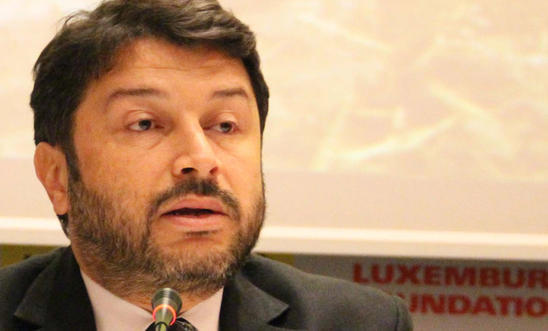
Taner Kılıç, Amnesty Turkey’s Chair, has been behind bars for nearly six months
As the trial of ‘Istanbul 10’ and the Chair of Amnesty Turkey resumes today 22 November 2017, more than 70 persons signed an open letter calling for the case against the 11 human rights activists to be dropped. As quite a few celebrities make missteps in the human rights area [see recently: https://humanrightsdefenders.blog/2017/11/10/helen-hunt-joins-list-of-celebrities-that-show-insensitivity-on-human-rights/ ], it is heartening to see names such as Ai Weiwei, Edward Snowden, Anish Kapoor, Catherine Deneuve, Angélique Kidjo, Indira Varma, Tim Farron, Bianca Jagger, Canon Mark Oakley, Hilary Benn, Juliet Stevenson, and Sting among the signatories.In the AI UK letter (see full text and list of signatories below), the group say they’re “proud” to add their voices to “the global demand to end this gross injustice”.

[Amnesty’s Turkey Chair, Taner Kılıç, was arrested on 6 June, jail three days later and remains in detention. Meanwhile, ten other activists, including İdil Eser, the Director of Amnesty Turkey, were detained a month later. Seven of them were remanded in Turkey’s high-security Silivri Prison for almost four months, with one remanded in Ankara’s Sincan Prison. The eight were held for almost four months and released last month at their first hearing. They are all accused of “membership of a terrorist organisation”.] See also: https://humanrightsdefenders.blog/2017/10/12/many-birthday-parties-for-jailed-human-rights-defender-in-turkey/ 

OPEN LETTER AHEAD OF TRIAL OF TANER KILIC AND ISTANBUL 10

On Wednesday the trial of 11 human rights defenders including including Taner Kılıç, and İdil Eser the chair and director of Amnesty International Turkey, will resume in Istanbul. 

The 11 face outlandish “terrorism” charges in what can only be described as a politically-motivated prosecution aimed at silencing critical voices within the country. If convicted they could face jail terms of up to 15 years. This sends a chilling message not just to people in Turkey but around the world. 

With many people unfairly imprisoned as part of the crackdown following the bloody coup attempt in Turkey – including journalists, lawyers and civil society leaders – some may ask: why focus on these 11 people? The answer is simple: when human rights defenders are silenced, all our rights are put at risk. They are the ones that stand up for us. Now we must stand up for them.

We are proud to add our voices to the global demand to end this gross injustice and to immediately and unconditionally release Taner Kılıç from jail.

The Turkish authorities must know that the eyes of the world will be on Istanbul’s central court for this trial. We will not stay silent. Defending human rights is not a crime. 

Signed:

Edward Snowden, human rights activist
Catherine Deneuve, actor 
Ai Weiwei, artist
Angélique Kidjo, musician
Anish Kapoor, artist
Peter Gabriel, musician
Francois Morel, actor 
Elif Shafak, author
Bianca Jagger, human rights activist
Juliet Stevenson, actor
Indira Varma, actor 
Mogens Lykketoft MP, ex-President of the UN General Assembly
Nacho Sanchez Amor, OSCE Human Rights Committee Chair
Mirosław Wyrzykowski, Constitutional judge, Poland
Dr. Shashi Tharoor MP (former UN Under-Secretary General)
Ryan Gage, actor
Pasha Bocarie, actor 
Nazanin Boniadi, actor 
HK, musician
Sting, musician
Anti-Flag, musicians
C 215, artist 
Lucas Belvaux, film maker 
Laurent Gaudé, writer 
El Moustach/Hicham Gaoua, artist  
Said Salhi, Vice president of LADDH (Algeria)
Salil Shetty, Amnesty International Secretary General
Ken Roth, Executive Director, Human Rights Watch
Claude Rolin MP (Belgium)
Tanita Tikaram, musician
Mohamed Fahmy, journalist
Peter Greste, journalist
Mark Oakley, Canon Chancellor of St Paul’s Cathedral
Peter Tatchell, human rights defender
Natacha Régnier, actor  
Franck Pavloff, writer 
Emily Loizeau, musician 
Romain Goupil, film director 
Nicolas Lambert, comedian 
Clotilde Courau, comedian 
David Lammy MP
Caroline Lucas MP
Stephen McCabe MP
Tom Brake MP
Catherine West MP
Carol Monaghan MP
Joan Ryan MP
Christopher Stephens MP
Clive Lewis MP
Jo Stevens MP
Kerry McCarthy MP
Richard Burden MP
Kevin Brennan MP
Jim Cunningham MP
Rosie Cooper MP
Eleanor Smith MP
Wes Streeting MP
Stephen Doughty MP
Daniel Zeichner MP
Stephen Kinnock MP
Geraint Davies MP
Marie Rimmer MP
Grahame Morris MP
Antoinette Sandbach MP
Madeleine Moon MP
Tonia Antoniazzi MP
Preet Gill MP
Phillipa Whitford MP
Sarah Wollaston MP
Gareth Thomas MP
Emma Dent Coad MP
Hilary Benn MP
Tommy Sheppard MP
Olivier Py, France 
Paul Rondin, France
Monika Płatek, President of the Polish Association for Legal Education
Adam Bodnar, former board of United Nations Fund for Victims of Torture
Mikołaj Pietrzak, former Chair of the Human Rights Council of the Polish Bar Council
Krzysztof Śmiszek, co-founder of Polish Society of Anti-Discrimination Law

https://www.amnesty.org.uk/press-releases/ai-weiwei-catherine-deneuve-bianca-jagger-and-peter-greste-among-those-calling-end

Many birthday parties for jailed human rights defender in Turkey

October 12, 2017
human rights defenders in Turkey, still in jail after 100 days

Ten activists, including İdil Eser, the Director of Amnesty International Turkey, were arrested on 5 July. İdil’s 54th birthday is on 14 October, which she will spend imprisoned on baseless and trumped-up charges. [https://humanrightsdefenders.blog/2017/07/12/turkey-detention-of-human-rights-defenders-further-extended/] (Amnesty International Turkey’s Chair, Taner Kılıç, was also arrested a month earlier. On 4 October a prosecutor filed an indictment calling for jail terms of up to 15 years for all 11 human rights defenders on absurd terrorism charges.)

After three months the investigation has unsurprisingly failed to provide any incriminating evidence to substantiate the prosecutor’s fantastical charges. .. The activists are accused of assisting a variety of “armed terrorist organisations” with diametrically opposing ideologies. They face maximum sentences of 15 years. The charges against them include outlandish claims that standard human rights activities – such as appealing to stop the sale of tear gas, making a grant application or campaigning for the release of hunger striking teachers – were carried out on behalf of terrorist organizations. Some of the claims against İdil are based on Amnesty International documents and public communications that predate her appointment at the organisation.

To mark İdil’s 54th birthday, Amnesty International will hold more than 200 parties and actions globally, starting with a public, pop-up, Turkish-themed birthday party on 13 October in Auckland. Elsewhere around the world there will be a birthday party in the European Parliament and a press conference in a makeshift prison in Madrid. The parties will feature full-size paper cutouts of Idil to highlight her absence, along with Turkish food, music, decorations and more.

I am ready to pay the price for my choice to work on human rights and I am not scared. My time in jail has made me even more committed to standing up for my values. I will not compromise them.” Idil Eser (8/19/17).


Amnesty report big rise in number of human rights defenders killed in 2016

May 16, 2017

Amnesty International said there an 80% rise in the number of human rights activists killed around the world in 2016. https://www.amnesty.org/en/get-involved/brave/

Amnesty International said 281 people were killed in 2016 while working to defend human rights. The organisation said it is part of a growing trend of intimidation and persecution of activists. Amnesty also pointed out that oppressive measures are not just happening far afield – with abuses reported in countries like Hungary and Turkey. This is how the Executive Director of Amnesty International, Ireland Colm O’Gorman described it: “We’re seeing an unparallelled global assault on the work of human rights defenders, so laws that are brought in to inhibit human rights work, whether it be the foreign agent laws we’ve seen in Russia, bans of foreign funding for NGOs in Hungary and other countries or indeed mass surveillance techniques being used against human rights defenders.”

Colm O’Gorman.

see also: https://humanrightsdefenders.blog/2017/01/09/front-line-launches-its-2016-report-on-human-rights-defenders-at-risk/

Source: Amnesty report huge rise in number of human rights activists killed in 2016 | BreakingNews.ie

Amnesty International campaigns with “7 women who refuse to wait for their rights”

March 8, 2017

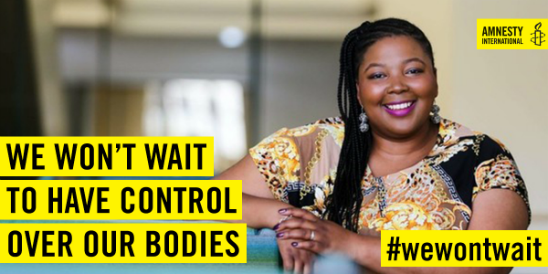
Also in the light of International Women’s Day 2017…….here are the seven Women Human Rights Defenders whom AI UK are profiling in their campaign of women who “refuse to wait in the face of injustice, and often paying the price of freedom in the process”..:

Dr Tlaleng Mofokeng – She won’t wait… while women are still denied abortions 

Dr Tlaleng Mofokeng

Tlaleng is a medical doctor in South Africa. She fearlessly advocates for sexual health as a radio presenter, spreading her message far and wide.  ‘I won’t stop until the right of women to have an abortion is respected and provided for safely,’ she says. ‘In South Africa, women die every year due to unsafe abortions, yet politicians think they can use women’s reproductive rights as a political ping pong ball.‘ Tlaleng is also challenging rape culture, and championing the drive to get health practitioners to treat patients with respect and without discrimination.

Karla Avelar – She won’t wait… while refugees are denied safety

Karla Avelar

Karla Avelar is a survivor. She’s made it through gang attacks, murder attempts and prison in El Salvador. Today, she heads Comcavis Trans, which supports LGBTI people, all of whom face threats and violence in El Salvador. Their situation is so difficult in the country that many flee as refugees. Through Comcavis, Karla provides information and other support to help them on what is often a treacherous journey that normally takes them to the USA or Mexico. But the US’s hardline stance on refugees and migrants entering the country has thrown these LGBTI refugees into even greater jeopardy – something Karla is now tackling with energetic defiance.

Su Changlan – She won’t wait … to reunite another child bride with her parents

Sue Changlan

Former school teacher Su Changlan’s story is not unique. One of her closest friends says that hers is the story of many women in China. She couldn’t stand by when she heard about girls trafficked as brides or parents whose children had gone missing. She did her best to help them and many others, her activism extending to land rights issues and support for pro-democracy protests in Hong Kong. She did all this knowing that she might have to sacrifice her freedom in the process. Sadly, this is just what happened. She has been detained by the authorities since 2015. ‘I hope that parents do not despair about searching for their missing children. We, civil society, should work together to help them reunite with their children. The government should also invest more in these efforts instead of hindering our work!

Samira Hamidi – She won’t wait… while women are excluded from government

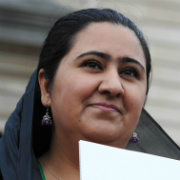
Samira Hamidi

Since 2004, Samira Hamidi has been blazing a trail for women in Afghanistan. As Chairperson of the Afghan Women’s Network (AWN) she has actively tried to ensure that women’s voices and concerns are represented at the highest levels of government. At the same time, she is a staunch advocate in the international arena, reminding governments and potential aid donors that promoting and securing women’s rights in Afghanistan must be part of any conversation they may have with the country’s leaders. She faces a steep road, but she remains undaunted, championing other women human rights defenders, ensuring that their concerns are amplified. Women should be given an equal opportunity to make a better Afghanistan.

Jeanette John Solstad Remø – She won’t wait… for the right to be recognised as a woman

Jeanette John Solstad Remo

Until recently, she was John Jeanette, her name signifying the dual identity she was forced to accept every day in Norway. Although this former submarine commander felt her future could only be female, Norwegian law did not allow her to change her legal gender without undergoing a compulsory ‘real sex conversion’. This would have involved having her reproductive organs removed, as well as a psychiatric diagnosis. She refused to put herself through any of this. As a result, her driving license, passport, medical prescriptions, even her library card, still referred to her as male. She campaigned hard against Norway’s abusive law and her actions, alongside those of her supporters – including Amnesty – scored a huge victory. In 2016, Norway finally adopted a new law on legal gender recognition, which allows transgender people to choose their gender. Today, in acknowledgement of this milestone, she has changed her name to Jeanette John.

Loujain al-Hathloul – She won’t wait… for the right to drive a car 

180Loujain%20al-Hathloul.png

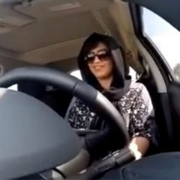
Fearless and formidable, Loujain defied Saudi Arabia’s driving ban and faced the consequences. In November 2014, she was detained for 73 days for live-tweeting herself driving into Saudi Arabia from the United Arab Emirates. Released in February 2015, she went on to stand for election in November that year – the first time women were allowed to both vote and stand in elections in the state. However, despite finally being recognised as a candidate, her name was never added to the ballot. Today, she continues her fight to create a better future for her fellow Saudis – one where women enjoy their rights as full citizens of their nation. ‘I will win. Not immediately, but definitely.’

Connie Greyeyes – She won’t wait… for another sister to be stolen

Connie Greyeyes

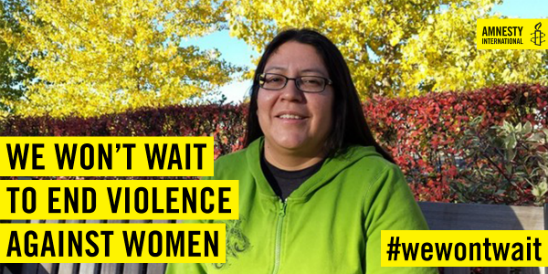
Connie Greyeyes is an ‘accidental’ activist. An Indigenous Cree woman living in the province of British Columbia in Western Canada, she realised that a shocking number of Indigenous women in her community had gone missing or had been murdered. She began organising to support the families of these women and took the demand for a national inquiry to the Canadian capital in Ottawa. According to official figures, more than 1,000 Indigenous women have gone missing or been murdered in Canada in the last three decades. The efforts of Connie and many other Indigenous women across Canada have borne fruit, with the Canadian government finally announcing an inquiry in 2016. ‘When we’re together, there’s so much strength. Being able to smile even after finding out that your loved one was murdered. How can you not be inspired by women who have been to hell and back over their children? How can you not be inspired and want to continue fighting?

https://www.amnesty.org.uk/blogs/campaigns/international-womens-day

2017 (10): need to ‘reset’ for human rights movement

February 24, 2017

This is the last post in my “2017 series“.

Amnesty International (AI) on Tuesday 21 February 2017 released its Annual Report 2016/17. It contains a summary of an international human rights survey that discusses the role “rhetoric of fear, blame and hate” have played in rolling back human rights around the world. AI analyzed major political leaders that identify as anti-establishment, such as US President Donald Trump and Turkish President Tayyip Erdoğan, arguing that their rhetoric has led to dangerous impacts on policy. AI’s conclusion is for individuals to come together and push governments to respect human rights, stating, “we cannot rely on governments to protect our freedoms, and so we have to stand up ourselves.” AI said that inspiration should be found in the “civil rights activists in the USA, anti-apartheid activists in South Africa,” or things as recent as the International Women’s March and pro-democracy protests in Gambia. Beyond localized efforts, AI said that “global solidarity is crucial if we are to protect each other from those governments quick to portray dissent as a threat to national security and economic development.”

Last month the 2017 World Report from Human Rights Watch (HRW) stated that a surge in populist leaders in Europe and the US threatens human rights while inviting autocratic abuse in other nations [https://humanrightsdefenders.blog/2017/01/20/2017-3-hrw-reminds-world-of-continuing-repression-of-minorities-and-their-defenders/].

In September UN High Commissioner for Human Rights Zeid Ra’ad Al Hussein unleashed a scathing criticism of Western “demagogues,” accusing them of spreading populist xenophobia and racism.[https://humanrightsdefenders.blog/2016/09/14/un-high-commissioner-for-human-rights-states-may-shut-my-office-out-but-they-will-not-shut-us-up/]

See also: https://humanrightsdefenders.blog/2017/01/26/2017-6-predictions-on-trump-and-the-un-prophets-or-cassandras/

Source: JURIST – Amnesty: global politics threatening human rights

The Situation of Human Rights Defenders – Amnesty International’s Statement to the UN Human Rights Council 2017

February 15, 2017

The document “The Situation of Human Rights Defenders – Item 3: Amnesty International’s Written Statement to the 34th Session of the UN Human Rights Council (27 February- 24 March 2017)” could of course be obtained directly from AI. However, I do it via: http://www.refworld.org/docid/58a195034.html, in order to highlight this very useful service provided by the documentation service of the UN High Commissioner for Refugees (UNHCR) which regularly gives links to documentation concerning countries of origin of refugees. The entry will look like this:

Title The Situation of Human Rights Defenders – Item 3: Amnesty International’s Written Statement to the 34th Session of the UN Human Rights Council (27 February- 24 March 2017)
Publisher Amnesty International
Publication Date 13 February 2017
Topics Human rights activists | Human rights and fundamental freedoms
Reference IOR 40/5647/2017
Cite as Amnesty International, The Situation of Human Rights Defenders – Item 3: Amnesty International’s Written Statement to the 34th Session of the UN Human Rights Council (27 February- 24 March 2017), 13 February 2017, available at: http://www.refworld.org/docid/58a195034.html %5Baccessed 13 February 2017]
Disclaimer

In their submission AI states in part:

In 1998 the international community adopted, by consensus, the Declaration on the Right and Responsibility of Individuals, Groups and Organs of Society to Promote and Protect Universally Recognized Human Rights and Fundamental Freedoms thereby recognising the importance that civil society actors play in the defence of the values that underpin human rights. The Declaration stresses that we all have a role to fulfil as human rights defenders and urges States particularly to protect human rights defenders from harm as a consequence of their work.

However, almost two decades after that historical moment human rights defenders continue to be harassed, tortured, jailed and killed for speaking out against injustice. During the protests against the Dakota Access Pipeline in the USA last year, the security forces used excessive and unnecessary force when arresting members of the Standing Rock Sioux Tribe and other Indigenous communities who oppose its construction.

Over 3,500 human rights defenders have been killed since the Declaration was adopted in 1998 and according to recent figures released by Frontline Defenders, the number of killings in 2016 marked an increase in the number reported in the previous year.

These killings usually occur after threats and warnings. Berta Cáceres, the leading indigenous, environmental and women’s rights defender from Honduras was killed in March 2016 despite enjoying a high national and international profile. In the aftermath of her killing, Honduras was under increased pressure to protect its human rights defenders, nonetheless, in October 2016, José Ángel Flores and Silmer Dionisio George of the Unified Movement of the Aguán were murdered, and currently international organization Global Witness, along with Honduran organizations MILPAH, COPINH and CEHPRODEC are facing a smear campaign against them for their work defending land, territory and environmental rights.

Amnesty International also continues to receive reports of human rights defenders being subjected to unfounded criminal proceedings, arbitrary detention and judicial harassment, which prevents them from speaking up against injustice, delegitimizes their causes and creates a chilling effect on activities that promote human rights. Human rights defender Narges Mohammadi is serving 22 years’ imprisonment after being convicted of national security related charges in Iran. Her conviction stems from her peaceful human rights activities, including her work to end the death penalty and her 2014 meeting with the former European Union (EU) High Representative for Foreign Affairs and Security Policy.

In Egypt civil society has been subjected to an unprecedented crackdown. In 2016, the authorities intensified a criminal inquiry into NGOs’ registration and foreign funding that could lead to criminal prosecution and sentences reaching up to life imprisonment. The authorities have also subjected NGO personnel to interrogation, freezing of personal and organizational assets, preventing leading human rights defenders from foreign travel, arbitrary arrest and detention.

Amnesty International notes with concern that the organisations, networks and methods people rely on to stand up for their communities are also attacked. Unions are threatened. Lawyers and activists in China have been ill- treated and sometimes tortured in detention. In Pakistan, human rights defenders are labeled as ‘foreign-agents’. In Viet Nam, attacks against human rights defenders are common, and include beatings and daily harassment and surveillance.

In other parts of the world, newspapers are closed down. Social media are banned and digital conversations monitored. Taking to the streets to protest is impossible.

In Turkey, against the backdrop of the failed military coup in 2016, unfair criminal prosecutions under criminal defamation and counter-terrorism laws targeted political activists, journalists and other critics of public officials or government policy. Over 180 media outlets have been arbitrarily shut down and 80 journalists remain in pre-trial detention.

States also repeatedly interfere with human rights defenders’ ability to communicate safely and expose human rights violations to regional and international human rights mechanisms, including this Council and its mechanisms. Recently the Special Rapporteur on the situation on the situation of human rights defenders noted, with great concern, the number of human rights defenders that received social media threats simply for meeting with him on his visit to Mexico at the beginning of this year.

In Burundi in January 2017, the Bujumbura Court of Appeal ruled to disbar three lawyers and suspend another. Each had contributed to a civil society report to the UN Committee against Torture prior to its review of the country in July 2016. The permanent closure of five human rights organizations and the suspension of five others was ordered in October 2016 on the allegation that they tarnished the image of the country. One of the suspended organizations was later banned following publication of a controversial report.

……..Amnesty International urges the Human Rights Council to:

  1. Renew the mandate of the Special Rapporteur on the situation of human rights defenders and cooperate fully with it, including by encouraging swift and comprehensive responses to communications from the Special Rapporteur and acceptance of requests for country visits.
  2. Reaffirm that protecting human rights is necessary for individuals to live in dignity, and that deepening respect for these fundamental freedoms lays the foundation for stable, safe and just societies;
  3. Recognize the legitimacy of human rights defenders and applaud the role they play in the advancement of human rights, and urge States to facilitate and publicly support their work;
  4. Urge States to adopt and implement legislation which recognises and protects human rights defenders;
  5. Stress the urgent need for all States to establish national protection mechanisms for human rights defenders at risk;
  6. Urge States effectively to address threats, attacks, harassment and intimidation against human rights defenders, including, where applicable, by thoroughly, promptly and independently investigating human rights violations and abuses against them and bringing alleged perpetrators to justice in fair trials without recourse to the death penalty, and providing effective remedies and adequate reparations to the victims;
  7. Urge States to ensure that the criminal justice system or civil litigation is not misused to target nor harass human rights defenders;
  8. Refrain from bringing criminal charges or, other judicial proceedings or taking administrative measures against human rights defenders because of the peaceful exercise of their rights;
  9. Ensure that those who challenge injustice peacefully are not portrayed as threats to security, development or traditional values;
  10. Emphasize the fact that human rights defenders who work on gender equality, women’s rights or LGBTIQ rights face particular risk of being subjected to certain forms of violence and other violations that need to be particularly addressed;
  11. Pay particular attention to other groups who may be at risk, such as those who work for economic, social and cultural rights, defenders who work in the area of business and human rights; in an area exposed to internal conflict or a natural disaster; defenders living in isolated regions or conflict zones; and defenders working on past abuses, such as the families of victims of enforced disappearance;
  12. Condemn any acts of intimidation or reprisals against human rights defenders who cooperate or seek to cooperate with international human rights mechanism;
  13. Urge States to cooperate fully with the recently mandated Assistant Secretary-General for Human Rights to prevent, end and redress acts of reprisal and intimidation.

Source: Refworld | The Situation of Human Rights Defenders – Item 3: Amnesty International’s Written Statement to the 34th Session of the UN Human Rights Council (27 February- 24 March 2017)

2017 (4): Canada’s year of real human rights action?

January 23, 2017

Alex Neve and Beatrice Vaugrante (Amnesty International Canada) wrote in the Ottawa Citizen (23 January 2017) a piece entitled: “Why 2017 must be Canada’s year of human rights action”.

Referring to Trump’s election and a number of human rights ‘anniversaries’ they say that there “is no better way to mark 2017’s many anniversaries, and keep a clear Canadian identity, than to make it a year devoted to advancing a strong human rights agenda, at home and abroad. That is the theme of Amnesty International’s most recent Human Rights Agenda for Canada, released today: A Year to Get It Right.”

The need is certainly great….a deeply troubling current of populism, racism, xenophobia and misogyny that has dominated election and referendum campaigns in numerous countries, most notoriously in the United States. The world collectively holds its breath in worried apprehension about the human rights implications of Trump’s presidency. And what of Canada?

Important Canadian government policy changes last year point to a renewed commitment to human rights; not consistently, but certainly sorely needed after years of diminished world standing. That is particularly so when it comes to gender equality, refugee protection and diversity. We have significantly re-engaged with the UN human rights system, including support for institutions that we once helped established, such as the International Criminal Court.

On the home front, the government’s talk of a new relationship with Indigenous peoples is welcome. It has laid the ground for the long-overdue National Inquiry into Missing and Murdered Indigenous Women and Girls, which faces challenges and misgivings but is nonetheless underway. However, it is disappointingly evident that inspirational words and gestures are not translating into the concrete measures needed to truly address the decades of human rights abuse at the heart of Canada’s legacy of colonialism. Nowhere is that more obvious than when major resource development projects – be it pipelines, mines or hydroelectricity – are at stake. This is well-evidenced in the continued federal support for British Columbia’s Site C Dam despite a scathing environmental impact assessment, vocal opposition from First Nations, and the government’s own acknowledgement that its Treaty obligations have been sidelined.  …..

It adds up to a year of considerable human rights responsibility and expectation for Canada. Responsibility: to make sure that 2017 is a turning point for Indigenous rights in Canada. No more excuses.  Governments, institutions and Canadian society more broadly must sincerely commit to profound action to ensure that violations against Indigenous peoples will at long last be brought to an end and justice done for those who have borne the burden of this terrible history.

Expectation: to stand up for human rights around the world.  There will be much pressure on Prime Minister Justin Trudeau to appease new counterparts, south of the border and elsewhere, who have come to power having fuelled discrimination and division. But there can be no room to waiver. Respect for human rights must be at the heart of what Canada seeks to advance around the world, as never before. 2017 must be a year for human rights.  

Alex Neve is Secretary General of Amnesty International Canada’s English Branch. Béatrice Vaugrante is Director General of Amnesty International Canada’s Francophone Branch.

Source: Why 2017 must be Canada’s year of real human rights action | Ottawa Citizen