Archive for the 'human rights' Category

Dakar Rally starts on 5 January in Jeddah but HRDs in jail

January 4, 2020

Ross LaJeunesse and human rights policy at Google

January 3, 2020
The former Google Exec said it was driven out after trying to start a human rights program

An illuminated Google logo can be seen in an office building in Switzerland on December 5, 2018. (Arnd Wiegmann / Reuters)

Several newspapers (here the BBC) wrote on 2 January 2020 about ex-Google executive Ross LaJeunesse revelations concerning the firm’s human rights policy. This matters more than usual in view of Google’s self-professed commitment to human rights, e.g. in the context of the Global Network Initiative (GNI) which brings information technology companies together with NGOs, investors and academics. Founding companies are: Google, Microsoft, and Yahoo!. GNI’s principles and guidelines provide companies with a framework for responding to government requests in a manner that protects and advances freedom of expression and privacy. Companies that join GNI agree to independent assessments of their record in implementing these principles and guidelines [see https://humanrightsdefenders.blog/2013/05/23/facebook-joins-the-global-network-initiative-for-human-rights/. Or by providing funding [see e.g. https://humanrightsdefenders.blog/2019/05/08/excellent-news-huridocs-to-receive-1-million-from-google-for-ai-work/].

A former Google executive has raised concerns about the tech giant’s human rights policies as it eyes expansion in China and elsewhere. Ross LaJeunesse, the firm’s former head of global international relations (until May last year), said he was “sidelined” after he pushed the company to take a stronger stance. Google defended its record in a statement, saying it has an “unwavering commitment” to human rights.

Mr LaJeunesse is now campaigning for a seat in the US senate. He said his experience at Google convinced him of the need for tougher tech regulations. “No longer can massive tech companies like Google be permitted to operate relatively free from government oversight,he wrote in a post on Medium.

Google’s main search business quit China in 2010 in protest of the country’s censorship laws and alleged government hacks. But it has since explored ways to return to the country, a major market, stirring controversy.bLaJeunesse said Google rebuffed his efforts to formalise a company-wide programme for human rights review, even as it worked to expand in countries such as China and Saudi Arabia. “Each time I recommended a Human Rights Program, senior executives came up with an excuse to say no,” he wrote. “I then realized that the company had never intended to incorporate human rights principles into its business and product decisions. Just when Google needed to double down on a commitment to human rights, it decided to instead chase bigger profits and an even higher stock price.

Google said it conducts human rights assessments for its services and does not believe the more centralised approach recommended by Mr LeJeunesse was best, given its different products.

View at Medium.com

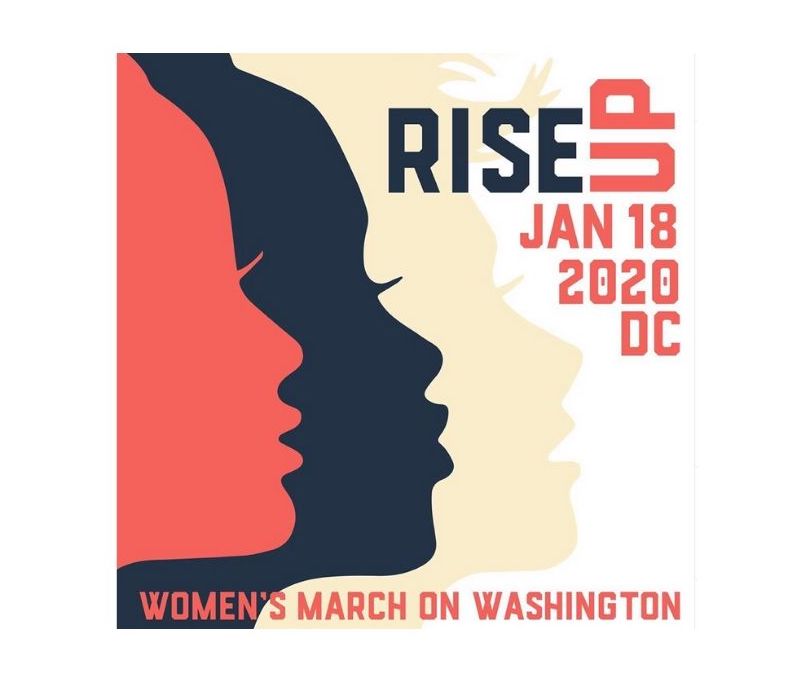
4th Annual Global Women’s March is on 18 January 2020

January 1, 2020
2020 women's march BELatina

On January 21st of 2017, millions of women and allies around the world took to the streets to make themselves seen and heard, demonstrating to advance women’s human rights. Now, nearly three years later, the Women’s March movement has announced that on 18 January, 2020, feminists and women’s human rights defenders will march yet again in the 4th Annual Global Women’s March.

Common Dreams also reported that women and men alike marched in France, Spain, Uganda, and other countries in November 2019 to demand that their elected officials work to end violence against women. In Spain, tens of thousands of people marched to recognize the day. But as the New York Times reported, the country’s far-right Vox Party—which, though still a minority party, doubled its representation in Parliament in recent elections—used the opportunity to affirm its opposition to a law aimed at protecting women from gender-based violence. Women gathered at City Hall in Madrid shouted, “This is shameful!” as Vox secretary-general Javier Ortega Smith spoke out against the law and called for national attention to men who are killed by their partners.

Women during a protest on the commemoration of the International Day for the Elimination of Violence Against Women, in Nantes, France, on November 25, 2019. (Photo: Estelle Ruiz/NurPhoto via Getty Images)

As part of the global effort, the International Labor Organization (ILO) called for ratification of its new Convention, adopted in June, to recognize the right of all people to be free from harassment and violence in their workplaces. “This commitment now needs to be turned into concrete, practical action,” the ILO wrote. “Violence and harassment in the world of work has enormous human, social and economic costs. Violence and harassment constitutes one of the greatest threats to decent work. No more excuses. Let’s work together and make the promise of Convention No. 190 a reality for all.”

It’s Official! The 4th Annual Global Women’s March is in January of 2020

with hope for 2020

December 31, 2019

I wish you all a very good 2020 and can only hope – against a lot of evidence to the contrary – that next year will be better for human rights defenders. Let’s hope that the Malaysian cartoonist Zunar is too pessimistic with his:


https://www.zunar.my/toons/2020-is-coming/

To end the year: sports washing quotes in 2019 from the Guardian:

December 31, 2019

Having this year spent quite a bit of time on the issue of celebrites [https://humanrightsdefenders.blog/tag/star-power/] and sports washing [https://humanrightsdefenders.blog/tag/sports-washing/] I thought that these quotes from the Guardian of 29 December 2019 are fitting end of year message:

Gianni Infantino in June – addressing Fifa’s congress two years after he sacked the ethics team investigating him. “We turned it around! Fifa has gone from being toxic, almost criminal, to what it should be: synonymous with credibility, trust, integrity, equality, and with human rights.His other big message in 2019: rejecting talk that it was Fifa’s new reliance on Chinese sponsors that led it to drop all human rights checks and award China the 2021 Club World Cup. “There are problems in this world, everywhere, in many countries. It is not the mission of Fifa to solve the problems of this world.

Also not buying complaints from human rights and ethics groups about sportswashing in 2019 UEFA head Aleksander Ceferin:

a) Explaining why holding the Europa League final in Azerbaijan was the right thing to do: “Human rights is a problem in other places too. Does it mean the fans in Baku do not deserve live football?”, and

b) reacting to the World Anti‑Doping Agency’s call for Russia to be stripped of Euro 2020 by confronting Vladimir Putin in St Petersburg. His message to Putin – Uefa stands by Russia because: “I must say, the World Cup was organised perfectly… I do not speak just to be nice: I really mean it.

from: https://www.theguardian.com/sport/2019/dec/29/alternative-2019-sports-awards-quotes-gaffes-meltdowns

Annual reports 2019: the women in the Arab world

December 30, 2019


And another end of year reflection, this one by the Collective for Research and Training on Development Action (CRTDA).

This is a Lebanon-based non-governmental organization started in July 1999. CRTDA works with partner civil society organizations in Lebanon and across the Arab World primarily in Yemen, Egypt, Syria, Morocco, Tunisia, and Algeria.

..For the Lebanese, everything that has happened this year has been overshadowed by the last
two months. These months have represented unprecedented empowerment, as we have seen a
mass uprising that cuts across sectarian lines aimed at ousting the political elite that have
propagated corruption, division, and inequality for many years. The unity felt in the streets has
been led by women, who have constantly showcased their bravery and leadership capacity
throughout this uprising.
Of course, this popular movement has also led to fresh challenges as the economic crisis
engendered by decades of mismanagement causes unemployment to spike, increasing poverty
among the most vulnerable populations and causing tension and polarization between
communities. In this context, of opportunity for women’s empowerment and challenge to peace
and stability between Lebanon’s communities, the work of CRTD.A both comes to fruition and
becomes increasingly important. At this cross-roads for Lebanon, we share with you some of
our highlights from the past year, and some of our hopes for the future.
This year, we saw women standing up to oppression and demanding change all over the
world. In Lebanon, women were at the forefront of the revolution: organizing, protesting, and
showing their bravery. They formed barriers with their bodies to keep the peace, and the icon of
the Lebanese protests was a woman, whose kick to a security officer became the symbolic image
of the revolution. Women’s rights, such as the right of women to pass on their nationality, have
taken a huge place in the protests, as women say enough is enough. What we have seen in
Lebanon has also been true for many countries across the world. In Sudan and Hong Kong,
women have become the icons of revolution, displaying their power to lead and to fight.
Women’s marches have also played a huge role in Chile’s demands for an end to a corrupt
system.
We have also seen women taking control of the narrative of environmental degradation, with
young icons such as Greta Thunberg showing that neither youth nor gender can get in the way
of determination and a powerful message. It is key for both our future and for empowerment
for women and girls to take initiative and make their voices heard to force the global elite to
face up to the biggest threat to our planet and our species. Women across the world have been
taking this initiative, from the Pacific Islands to the Amazon Rainforest.

For more information about their work, please check out the annual report via: https://bit.ly/378pQIY

In-depth investigative report on journalist Miroslava in Mexico

December 30, 2019

On 6 September, 2019 the  Bellingcat Investigation Team published a piece “Miroslava: The Journalist Who Refused to be Complicit“.  [see also: https://humanrightsdefenders.blog/2018/03/24/new-national-award-to-honor-slain-mexican-journalists/]. It is a very detailed report and worth reading in full:

Miroslava Breach lived under constant threat starting in March 2016, when she began to feel pressure over her publications regarding links between drug cartels and politics. She brought this to the attention of her old friend, the recently elected governor of Chihuahua state Javier Corral, as well as those in charge of the mechanisms at the federal level to protect journalists. The Colectivo 23 de Marzo is made up of Mexican journalists in collaboration with Forbidden Stories, Bellingcat and Centro Latinoamericano de Investigaciones Periodísticas (CLIP). We reconstructed the thread of threats linked to Miroslava’s work, the warnings that she raised about the danger she was in, and the clues that she let in her publications prior to her murder on March 23 2017 that the authorities did not fully investigate.

Miroslava Breach in the Tarahumara sierra. She investigated illegal logging, the effects of megaprojects, and narcopolitics. Source: Colectivo 23 de Marzo

Before her murder, a grey Malibu prowled down José María Mata street in the Granjas neighbourhood of Chihuahua. Security cameras captured the vehicle on the street six times between March 21 and 22 2017 as it passed in front of the two-story house now infamous for the murder: number 1609, with its brown gates and a small garden out front. On the morning of March 23, 2017, journalist Miroslava Breach Velducea was shot to death while waiting inside her car to take her son to school.…….

https://www.bellingcat.com/news/americas/2019/09/06/miroslava-the-journalist-who-refused-to-be-complicit/

Annual reports 2019: Sport and Human Rights

December 29, 2019

Mary Harvey, CEO, the Centre for Sport and Human Rights

The 4th annual report 2019 I would like to mention comes in the form of a preface by Mary Harvey of Sports and Human Rights [https://humanrightsdefenders.blog/2018/12/12/mary-harvey-her-goal-is-now-human-rights/]

As my first year leading the Centre for Sport and Human Rights comes to a close, I wanted to reflect on some of what we have achieved in 2019 as we look ahead to where we need to make further progress in 2020. At the 2018 Sporting Chance Forum in Paris, I said we were at a point where the sport and human rights movement had been mobilised, and it was important to translate the theory of change behind the Centre’s creation into concrete action.

The opportunity to demonstrate this came sooner than expected. Prior to my start in January, many of our stakeholders raised the concerning case of the detainment and possible refoulement of refugee footballer Hakeem Al-Araibi, and rightly asked how the Centre was going to respond. My first week on the job, the Centre convened calls to bring together sports bodies, governments, IGOs, corporates, and civil society with the sole objective of freeing Hakeem. The combined efforts and collective action of the Centre, Advisory Council and others not only played an important role in freeing Hakeem, but provided a powerful and indelible example of what we can achieve together..

Building on the resources developed as part of the MSE Platform, our work in 2019 set out to put these tools into action, including by helping strengthen the capacity of those working most closely with sport. We developed new tools which are now with you for consultation (Games Time Risk Guide, Championing Human Rights into the Governance of Sports Bodies – annex specific to Multi-sport governing bodies). In September, we had the opportunity to deliver human rights training to the 53 national federations that make up the Commonwealth Sport family. We also engaged prospective bidding countries for the 2023 Women’s World Cup. Finally, we held briefing calls with our broadcaster stakeholders on human rights issues at events taking place in countries such as Azerbaijan, China and Saudi Arabia.

In May of this year, with the landmark decision from CAS ruling against Caster Semenya, it became clear that human rights awareness needed to be raised and capacity built for those who give legal advice to sports bodies. As part of our developing work on Remedy this year and to begin this important conversation, the Centre hosted a workshop for sports law practitioners with our colleagues at Clifford Chance. The event more than met expectations, with consistent feedback from attendees who welcomed debate on an important topic in need of serious engagement.  We are pleased that, with the support of colleagues at Clifford Chance, the workshop will be an annual event going forward.

We took our first steps during 2019 to work with partners in Africa by hosting a workshop in Rabat, Morocco which brought together a number of sports bodies and national human rights institutions from both anglophone and francophone countries on the continent. We took further steps in developing our Africa Strategy by hosting 16 African National Human Rights Institutions (NHRIs) at an event in Rwanda to discuss child rights and remedy.

On children, the Centre expanded its own capacity by appointing our first senior thematic expert. Millions of children and young people take part in sporting activities every day across the world, and they have the right to participate in sport in a safe and enjoyable environment. Unfortunately, this is not always the case. One of the first actions the Centre took on child rights was to successfully lobby to ensure that references to sport were included in the Guidelines to Optional Protocol 2 of the Convention on the Rights of the Child.

——

Sad end of year message by Andrew Gilmour as he leaves his UN post

December 29, 2019

His assesment of the human rights situation – as laid down in the article ofThe past decade has seen a backlash against human rights on every front, especially the rights of women and the LGBT communities. Andrew Gilmour said the regression of the past 10 years hasn’t equaled the advances that began in the late 1970s — but it is serious, widespread and regrettable. He pointed to “populist authoritarian nationalists” in North America, South America, Europe and Asia, who he said are taking aim at the most vulnerable groups of society, including Myanmar’s Rohingya Muslims, Roma, and Mexican immigrants, as well as gays and women. He cited leaders who justify torture, the arrests and killing of journalists, the brutal repressions of demonstrations and “a whole closing of civil society space.”

I never thought that we would start hearing the terms ‘concentration camps’ again,” Gilmour told The Associated Press in an exclusive interview. “And yet, in two countries of the world there’s a real question.” He didn’t name them but appeared to be referring to China’s internment camps in western Xinjiang province, where an estimated 1 million members of the country’s predominantly Muslim Uighur minority are being held; and detention centers on the United States’ southern border, where mostly Central American migrants are being held while waiting to apply for asylum. Both countries strongly deny that concentration camp-like conditions exist.

….Despite his dim view of the past decade, Gilmour — a Briton who previously worked in politics and journalism — said he didn’t want to appear “relentlessly negative.” “The progress of human rights is certainly not a linear progression, and we have seen that,” he said. “There was definite progression from the late ’70s until the early years of this century. And we’ve now seen very much the counter-tendency of the last few years.”

He pointed to the fact that in the past eight years or so, many countries have adopted laws designed to restrict the funding and activities of nongovernmental organizations, especially human rights NGOs. And he alleged that powerful U.N. member states stop human rights officials from speaking in the Security Council, while China and some other members “go to extraordinary lengths to prevent human rights defenders (from) entering the (U.N.) building even, let alone participate in the meetings.”…..

The rights of women and gays are also at stake, Gilmour said. He said nationalist authoritarian populist leaders such as Hungarian Prime Minister Viktor Orban, Russian President Vladimir Putin and Turkish President Recep Tayyip Erdogan, have made “derogatory comments” about both groups. He said the U.S. is “aggressively pushing” back against women’s reproductive rights both at home and abroad. The result, he said, is that countries fearful of losing U.S. aid are cutting back their work on women’s rights. Gilmour also pointed out a report issued in September that cited 48 countries for punishing human rights defenders who have cooperated with the U.N. [See: https://humanrightsdefenders.blog/2019/12/10/andrew-gilmour-in-the-financial-times-about-reprisals/]

I feel that we really need to do more — everybody … to defend those courageous defenders,” he said. Gilmour said the U.N. should also stand up when it comes to major violations of international law and major violations of human rights, but “I have found it extremely difficult to do so in all circumstances.

..Gilmour said that after his departure from the U.N, he will take a fellowship at Oxford’s All Souls College, where he will focus on the importance of uniting human rights and environmental rights groups. “The human rights impact of climate change — it’s going to be so monumental,” he said.

What gives me hope as we start a new decade is that there will be a surge in youth activism that will help people to get courage, and to stand up for what they believe in,” he said.

https://apnews.com/1d7e80128857308743224aaaf28cd5f8

Annual reports 2019: Amnesty International

December 29, 2019

The 3rd annual report comes from Amnesty International which this year looks at some of the positive highlights, many won by human rights defenders:

[The first two annual reports in this blog are: https://humanrightsdefenders.blog/2019/12/27/annual-reports-2019-civicus-global-report/ and https://humanrightsdefenders.blog/2019/12/28/annual-reports-2019-huridocs-harnessing-the-power-of-human-rights-information/]

With inequality, injustice and hate speech seemingly ever more prevalent across the globe, you’d be forgiven for thinking 2019 has been a bad year for human rights. Yet, AI says that we have also seen some significant wins. Activists the world over have been galvanised to stand up and fight for our human rights – and thanks to their relentless campaigning we achieved some striking leaps forward. Here are some highlights…

January 

Legal abortion services were finally available to women in Ireland, following an historic referendum in May 2018 that marked a huge victory for women’s rights. It was the result of years of dedicated work by activists, including Amnesty International, to encourage a powerful conversation that helped catalyse the abortion debate in Ireland. This ultimately led to greater protection for those people who need an abortion there, and paved the way for the same inspiring progress in Northern Ireland later in the year.

As a tribute to Julián Carrillo, an environmental rights defender killed in October 2018, we launched Caught between bullets and neglect, a digest on Mexico’s failure to protect environmental human rights defenders. Just a few hours after the launch, two suspects in Julián’s murder were arrested, showing the immediate impact Amnesty’s work can have on justice.

The Angolan Parliament approved a revision of the Criminal Code to remove a provision widely interpreted as criminalizing same-sex relationships. They even took a step further, by criminalizing discrimination against people based on sexual orientation – the first country in 2019 to make this move, and a hearteningly radical move for an African nation.

February

After spending 76 days in detention in Thailand, refugee footballer Hakeem al-Araibi was able to return to his home in Melbourne on 12 February. The Bahrain-born footballer had been detained upon arrival in Bangkok on 27 November 2018, due to an erroneous Interpol red notice, and faced the threat of extradition to Bahrain. A campaign launched by Amnesty and other groups to free the footballer, who is a peaceful and outspoken critic of the Bahraini authorities, grew into the #SaveHakeem movement. The campaign spanned three continents, engaging footballers, Olympians and celebrities, and drawing the support of more than 165,000 people.

Following international attention and campaigning by Amnesty, Saudi authorities overturned a call by the Public Prosecution to execute Saudi woman activist Israa al-Ghomgham for charges related to her peaceful participation in protests. Israa al-Ghomgham still faces a prison term, and Amnesty continues to campaign for her immediate and unconditional release.

March

In Ukraine, an International Women’s Day rally organized by human rights defender Vitalina Koval in Uzhgorod, western Ukraine, went ahead peacefully, with participants protected by police. The event marked a major change for the region, after similar rallies organised by Koval in previous years had been targeted by far-right groups, with police singularly failing to protect participants from violence.

AFRICOM admitted for the first time that its air strikes have killed or injured civilians in Somalia, after the release of Amnesty’s investigation The Hidden US War in Somalia: Civilian Casualties from Air Strikes in Lower Shabelle. Following this report, US military documents came to light confirming that the US authorities knew of further allegations of civilian casualties resulting from many of their air strikes in Somalia.

Gulzar Duishenova had been championing disability rights in her country Kyrgyzstan for years. In March 2019, her persistence paid off when Kyrgyzstan finally signed up to the Disability Rights Convention. Amnesty supporters wrote nearly a quarter of a million messages backing her.

And in Iraq, just days after Amnesty and other NGOs raised the alarm about a draft cybercrime law that would seriously undermine freedom of expression there, the Iraqi parliament chose to withdraw the bill, confirming to Amnesty that its “concerns have been heard”.

April

In April, love triumphed when a ban on all LGBTI events in Ankara, Turkey, was lifted by the administrative appeals court. “This is a momentous day for LGBTI people in Turkey, and a huge victory for the LGBTI rights activists – love has won once again,” said Fotis Filippou, Campaigns Director for Europe at Amnesty International.

The District Court of The Hague issued an interim ruling in favour of Esther Kiobel and three other women who took on one of the world’s biggest oil companies, Shell, in a fight for justice. Esther has pursued the company for more than 20 years over the role she says it played in the arbitrary execution of her husband in Nigeria. Amnesty has shared over 30,000 solidarity messages with Esther Kiobel, and is supporting her Kiobel vs Shell case in The Hague. As a result of this hearing, the court in October 2019 heard for the first time the accounts of individuals who accuse Shell of offering them bribes to give fake testimonies that led to the ‘Ogoni Nine’ – who included Esther Kiobel’s husband – being sentenced to death and executed.

President of Equatorial Guinea, Teodoro Obiang Nguema, announced that his government would introduce legislation to abolish the death penalty.

May

Taiwan became the first in Asia to legalize same-sex marriage after passing an historic law on 17 May, with the first same-sex weddings taking place on 24 May. Together with LGBTI rights groups from Taiwan, Amnesty had campaigned for this outcome for many years. We are now working to end all discrimination against LGBTI people in Taiwan.

Qatar promised more reforms to its labour laws ahead of the 2022 World Cup. Human rights pressure also played a role in FIFA’s decision to abandon plans to expand the 2022 Qatar World Cup to 48 teams, which would have involved adding new host countries in the region. Amnesty worked together with a coalition of NGOs, trade unions, fans and player groups, calling attention to the human rights risks of the expansion, including the plight of migrant workers building new infrastructure.

June

Climate change activist Greta Thunberg and the Fridays for Future movement of schoolchildren were honoured with Amnesty International’s Ambassador of Conscience Award 2019. The Fridays for Future movement was started by Greta, a teenager from Sweden who in August 2018 decided to miss school every Friday and instead protest outside the Swedish parliament, until it took more serious action to tackle climate change.

In a long overdue move, Greece passed legislation to recognize that sex without consent is rape, and Denmark’s government committed to doing the same. This development is testament to the persistence and bravery of survivors and campaigners for many years, and creates real momentum across Europe following 2018 Amnesty’s review of outdated legislation in 31 European countries and other barriers to accessing justice for rape survivors.

From 1 June 2019, contraceptives and family planning clinic consultations became free of charge in Burkina Faso. The change was seen as a response to our 2015 My Body My Rights petition and human rights manifesto calling for these measures to be put in place. With financial barriers removed, women in Burkina Faso now have better access to birth control, and more choice over what happens to their bodies.

July

In a momentous and inspiring day for human rights campaigners, the UK parliament voted through a landmark bill on 22 July to legalize same sex marriage in Northern Ireland. The bill also forced the UK government to legislate for abortion reform in Northern Ireland, including decriminalization on the basis that a Northern Ireland Executive (government of NI) did not return in three months.

Also in July, in a US Congressional hearing, a senior Google executive gave the clearest confirmation yet that the company has “terminated” Project Dragonfly, its secretive programme to develop a search engine that would facilitate the Chinese government’s repressive surveillance and censorship of the internet. This followed Amnesty’s #DropDragonfly campaign, and hundreds of Google staff speaking out.

On 22 July, 70-year-old human rights defender and prominent Palestinian Bedouin leader Sheikh Sayyah Abu Mdeighim al-Turi was released from prison in Israel, after spending seven months in detention for his role in advocating for the protection of Bedouins’ rights and land. Sheikh Sayyah thanked Amnesty International and all those who took action on his behalf: “I thank you all very much for standing up for the right of my people and the protection of our land. While I was in prison, I felt and heard your support loud and clear, and it meant the world to me.”

August

Mauritanian blogger Mohamed Mkhaïtir, who was sentenced to death and held in arbitrary detention for more than five years after publishing a blog on caste discrimination, finally walked free.

In August, Saudi Arabia announced major reforms easing some of the major restrictions imposed on women under its repressive male guardianship system, including allowing them the right to obtain a passport which should make it possible for them to travel without permission from a male guardian. The changes also grant women in Saudi Arabia the right to register marriages, divorces, births and deaths and to obtain family records. While we welcome these changes, people campaigning for women’s rights remain in prison, and we must do all we can to fight for their freedom.

September

Syrian national Ahmed H. was finally allowed to return home, after being imprisoned and then held in immigration detention in Hungary for more than four years. He had been arrested on terrorism charges after being caught up in clashes on the Hungarian border. At the time he was helping his elderly parents, who were escaping Syria and were crossing into Hungary as refugees. An amazing 24,000 people joined the #BringAhmedHome campaign, calling on Cyprus to allow Ahmed to return to his family.

A court in Tunis acquitted 18-year-old activist Maissa al-Oueslati, after she faced trumped-up charges that could have resulted in her imprisonment for up to four years. Maissa and her 16-year-old brother had been arbitrarily detained by police earlier in the month for filming a protester threatening to set himself on fire in front of a police station.

October

At midnight on Tuesday 22 October 2019, after a last-minute effort by the DUP to overturn the bill, same sex marriage became legal in Northern Ireland, while abortion was decriminalised. All criminal proceedings were dropped, including those against a mother who faced prosecution for buying her 15 year-old daughter abortion pills online.

Grainne Teggart, Amnesty International’s Northern Ireland Campaign Manager, said it was the beginning of a new era for Northern Ireland, in which the nation was freed from oppressive laws that police people’s bodies and healthcare. “Finally, our human rights are being brought into the 21st century. This will end the suffering of so many people. We can now look forward to a more equal and compassionate future with our choices respected.”

November

Kurdish-Iranian award-winning journalist and refugee Behrouz Boochani arrived in New Zealand to attend a special WORD Christchurch event on a visitor’s visa sponsored by Amnesty International. It was the first time Boochani, known for his work reporting on human rights abuses from within the Australian government’s refugee detention centres, had set foot outside Papua New Guinea since he was detained on the country’s Manus Island in 2014.

Humanitarian volunteer Dr Scott Warren was found not guilty by a court in Arizona of charges linked to helping migrants on the US-Mexico border. In a similar case, Pierre Mumber, a French mountain guide who gave hot tea and warm clothes to four West African asylum seekers in the Alps, and was acquitted of “facilitating irregular entry”.

December

Alberto Fernández is inaugurated as President of Argentina on 10 December. As president-elect, Fernández announced he would push for the legalization of abortion as soon as he took office, saying: “It is a public health issue that we must solve.”

The Philippines’ Commission on Human Rights said that 47 major fossil fuel and carbon-polluting companies could be held accountable for violating the rights of its citizens for the damage caused by climate change. The landmark decision paves the way for further litigation, and even criminal investigations, that could see fossil fuel companies and other major polluters either forced to pay damages, or their officials sent to jail for harms linked to climate change.

The regional Economic Community of West African States’ (ECOWAS) Court of Justice rejected a 2015 ban imposed by the government of Sierra Leone preventing pregnant girls from sitting exams and attending mainstream school – and ordered the policy to be revoked with immediate effect.