With a special release on Youtube on the Playing for Change channel on Thursday, December 10th at 12 pm PST / 3 pm EST, Peace Through Music: A Global Event for Social Justice will feature artists and public figures like Aloe Blacc, Angélique Kidjo, Becky G, Brandi Carlile with Mike McCready of Pearl Jam, Carlos Santana and Cindy Blackman Santana, Gabi Melim, Gary Clark Jr., Jack Johnson, Mavis Staples, Peter Gabriel, Rhiannon Giddens, Ringo Starr, Robbie Robertson, Run The Jewels with Josh Homme, Sheila E., Skip and Cedella Marley, The War and Treaty, Yo-Yo Ma and more. Billie Eilish, Killer Mike, Megan Rapinoe and Sue Bird, Norman Lear and Sara Bareilles among others are scheduled to make special appearances.
The event, a collaboration between Playing For Change, an organization that aims to connect the world through music, and the United Nations Population Fund (UNFPA), presented by Corning® Gorilla® Glass and co-produced by Blackbird Presents, calls for equality, the recognition of human rights and an end to racism and discrimination.
“The things in life that divide us disappear when the music plays,” says Mark Johnson, PFC Co-Founder, “and that’s something we hope you see and feel during this event.”
Efi Koutsokosta in Euronews of 8 December 2020 writes that the European Union has agreed to establish a regime similar to the Magnitsky Act in America that will allow the 27 member bloc to sanction those responsible for human rights abuses. The decision came at a meeting of European foreign ministers in Brussels on Monday and will allow the EU to freeze assets and impose travel bans on individuals involved in serious human rights abuses. [see also: https://humanrightsdefenders.blog/2015/05/08/the-case-for-smart-sanctions-against-individual-perpetrators/]
The new measures will allow for travel bans on involved individuals and the freezing of their funds too. It could also be forbidden from making funds available to those being sanctioned.
“This unanimity rule is a real problem. Another problem with the EU Magnitsky Act is that it doesn’t include kleptocracy, it only includes human rights abuse. And what we found is that kleptocracy and human rights abuse go hand in hand, they are intertwined. Of course, we are celebrating today because this is a huge milestone but tomorrow the work begins to put pressure on sanctioning bad actors in countries like Russia and China and to make sure that the law that the EU has, is upgraded to include corruption,” Browder said.
The criteria for sanctions will apply to acts such as genocide, crimes against humanity, as well as. torture, slavery, extrajudicial killings, arbitrary arrests, or detentions.
It will then be up to the European Council, which consists of all 27 national governments, to act upon a proposal from a member state or from the High Representative of the EU for Foreign Affairs and Security Policy, to establish, review and amend the sanctions list.
Many media (here Sudarsan Raghavan for the Washington Post on 3 December 2020) have reported the good news that three Egyptian human rights defenders were released from detention Thursday after a wave of international condemnation against the Arab nation’s authoritarian government that included UN and Hollywood celebrities.
The trio — Gasser Abdel-Razek, Karim Ennarah and Mohamed Basheer — work for the Egyptian Initiative for Personal Rights, one of the few remaining rights groups in Egypt, where President Abdel Fatah al-Sissi has waged a massive crackdown on opponents and activists alike.
“They are fine, they are in good spirits,” said Ragya Omran, their lawyer, Thursday night.
“It was a very quick and clean release, which is unprecedented,” Omran said. “There was a lot of international pressure. … It worked.”
Few arrests have sparked the global outrage that followed the detention of the EIPR employees. The United Nations, France and other governments publicly denounced the arrests. Antony Blinken, President-elect Joe Biden’s nominee for secretary of state, declared in a tweet that “meeting with foreign diplomats is not a crime. Nor is peacefully advocating for human rights.”
On social media, a petition campaign with the hashtags #FreeEIPRstaff and #FreeKarimEnnarah went viral, spearheaded by Ennarah’s British wife, Jess Kelly. It prompted Hollywood celebrities such as Scarlett Johansson and Emma Thompson to post videos of themselves on YouTube urging the release of the EIPR staffers. In Egypt, EIPR remained vocal and defiant.
On Thursday night, after the three men took cabs from the prison to their homes, one of the group’s leaders publicly noted that the global outcry played a significant role in convincing the regime to release his colleagues.
“I can confirm my friends and EIPR colleague, Gasser, Basheer and Karim have been released and are home which I guess means we (and you) managed to #FreeEIPRstaff,” tweeted Hossam Bahgat, the organization’s founder.
Bahgat, despite being under a travel ban and asset freeze imposed by the Sissi government, returned to take the helm last month after Abdel-Razek, its executive director, was taken into custody. Placed in a cold cell, he was initially denied warm clothing and a mattress, among other ill treatment, said Amnesty International.
On Thursday, 3 December 2020 Scoop carries the recent report by the Euro- Med Monitor which shows actions in a number of countries covered by the NGO
Hungary
The European Commission issued a new notice/ procedure against Hungary in which it considers Hungary’s new laws against refugees and asylum seekers illegal and violates the European Union laws for asylum seekers. The Hungarian government closed its transit areas and approved a new law prohibiting asylum seekers from entering the country. Under the new law, asylum seekers must first submit “a declaration of intent” at the embassies of Hungary in Serbia or Ukraine, and if they were approved by the National Directorate-General for Aliens Policing (formerly the Office of Immigration), asylum seekers can then enter the territory of Hungary to formally submit an asylum application.
During a lobbying and advocacy campaign extending for more than three years, Euro-Med Monitor has worked with partner international organizations to pressure the EU governments to accommodate more asylum seekers and distribute the burden among them. Euro-Med Monitor called on the EU to search for the best mechanisms to redistribute refugees and asylum seekers in Hungary in a fair manner between the EU member states, pressure the Hungarian government to take full responsibility for migrants and asylum seekers in its custody, and put an end to violations of their basic rights.
The EU Ombudsman announced on 10 November that an investigation has been opened into the possible complicity of the EU’s Executive in mismanaging funds allocated for overseeing the conduct of the Croatian border officers accused of participating in violence against asylum seekers, including shootings of refugees.
On May 19, Euro-Med Monitor addressed the Croatian government and concerned parties in the EU to immediately put an end to all illegal and discriminatory practices against asylum seekers and to conduct an independent investigation into violations committed by the Croatian police against refugees.
Spain
On 30 November, the Spanish authorities have cleared and dismantled dock camp in Gran Canaria, which was used to accommodate thousands of migrants and asylum seekers in very adverse conditions since last August.
On November 26, Euro-Med Monitor issued an urgent appeal to the Spanish authorities to end the overcrowding conditions in refugee camps in the Canary Islands, to deal with unsanitary conditions, to increase alternative reception centers, to transfer asylum seekers to the Spanish mainland in a quicker manner, and to establish fair asylum procedures for migrants and asylum seekers.
The Palestinian Territories
The EU called on the Israeli government to halt its policy of home demolitions in the occupied Palestinian territories (oPt), including demolishing housing units funded by the EU. This comes amid the high rate of demolitions this year.
In lobbying and advocacy campaigns that spanned over years, Euro-Med Monitor representatives met with members of the European Parliament and launched an intensive correspondence campaign revealing the high number of demolitions against projects funded by the EU in the Palestinian territories. Euro-Med Monitor brought the case to the United Nations Human Rights Council (UNHRC), providing a number of reports and statements, and contacted the Special Rapporteur on housing to exert pressure on Israel to put an end to its violations and demolitions last September.
The Jericho Magistrate’s Court issued a decision to release Palestinian activist Nizar Banat after he was arrested for publishing a video on Facebook criticizing the resumption of relations between the Palestinian Authority (PA) and Israel.
On November 22, Euro-Med Monitor called on concerned bodies in the PA and its Public Prosecutor to immediately release Banat, and urged the PA to to review its security policies in dealing with opponents and to put an end to all violations committed against the rights guaranteed by relevant international laws and treaties.
Saudi Arabia/United Arab Emirates
Negotiators in the European Council and the European Parliament approved new rules on November 8 that would control the export of dual-use goods such as electronic surveillance equipment to third countries that might use these technologies to harm their own citizens and are involved in human rights violations.
During the past months, Euro-Med Monitor, in cooperation with partner organizations, addressed several European Parliament members and representatives. The Euro-Med released several reports revealing the grave human rights violations committed by both Saudi Arabia and the UAE against civilians, including the war in Yemen, enforced disappearances, and arrest campaigns against journalists and activists for opposing the regime. Euro-Med Monitor, in cooperation with its partners in the region, called on the European Union (EU) countries to stop the export of weapons and modern surveillance technologies to countries that violate human rights in the Middle East.
Europe
On November 10, members of the European Parliament called for ensuring accountability for the European Border and Coast Guard Agency (Frontex) over returning migrants and asylum seekers from Greece to Turkish territorial waters. On May 6, 2020, Euro-Med Monitor addressed members of the European Parliament and the EU to impose transparency and accountability measures against Frontex practices and to establish an independent oversight committee to investigate and prevent any violations.
On 2 December 2020 the International Olympic Committee reported that “Building on the work undertaken over the last few years to address human rights issues within the scope of its responsibility across its three spheres of influence, as well as recent recommendations made by experts, the International Olympic Committee (IOC) has made further progress on the development and implementation of its human rights approach. In its recent consultative meeting, the IOC Executive Board (EB) received an update on the ongoing work in this field.
The IOC’s work has been informed by a series of “Recommendations for an IOC Human Rights Strategy”, produced by the independent experts HRH Prince Zeid Ra’ad Al Hussein, a former UN High Commissioner for Human Rights, and Rachel Davis, Vice President of Shift – a non-profit centre of expertise on business and human rights – commissioned by the IOC in 2019. They were developed following a consultative process with key internal staff and expert civil society stakeholders. Shift has been supporting the IOC since 2018 to develop the organisation’s existing human rights due diligence measures. [ see also: https://humanrightsdefenders.blog/2020/03/04/ioc-continues-its-cautious-work-on-human-rights-and-takes-first-steps-on-a-strategy/]
“We would like to thank Prince Zeid and Rachel Davis for their work and the report. The IOC remains committed not only to continuing, but also to strengthening its work concerning human rights within the scope of our responsibility,” said IOC President Thomas Bach.
The IOC has already taken a number of steps to deliver on its human rights responsibilities in its own operations. It has increased the alignment of its existing strategies on sustainability and gender equality and inclusion with human rights standards; and it is working on its own procurement processes and the creation of a human rights unit in the organisation. Engagement with human rights expert groups has also increased.
Work has further progressed in relation to the Olympic and Youth Olympic Games, supporting organising committees in developing and implementing their human rights approaches. As part of the Olympic Agenda 2020 reforms, human rights standards had already been reinforced in the “Operational Requirements” of the Host City Contract for the Olympic Games 2024 and beyond.
Setting out its role to advance respect for human rights as the leader of the Olympic Movement, the IOC is also aiming to work closely with the National Olympic Committees (NOCs) and International Federations (IFs). In its commitment to inclusion across the Olympic Movement, the IOC is working on a framework to ensure fairness, safety and non-discrimination of athletes on the basis of gender identity and sex characteristics; and it is planning to further advance its work around safe sport and implement the “Athletes’ Rights and Responsibilities Declaration”.
The IOC will continue the work already under way.
Additional action will be taken in the short term to complete the development of an IOC human rights strategy and policy commitment, and an amendment to the Olympic Charter will be considered.
Further work will look, among other things, at further embedding human rights in the good governance principles, and the establishment of the previously announced Human Rights Advisory Committee.
On 30 November, 2020 DC Velocity reported that with $1.2 million in funding (with support from Laudes Foundation, Stardust Fund, The Ray and Dagmar Dolby Family Fund, UBS Optimus Foundation and Lisa Wolverton, President, Wolverton Foundation), the Freedom Fund has launched “Freedom Rising“, a program to identify, equip, empower and support women and survivors of modern slavery to become leaders of anti-slavery organizations in their communities and in the global movement.
Of the groups working to liberate people and end the conditions that lead to modern slavery, very few are led by women and survivors of slavery. The Freedom Fund, the largest global funder of frontline, anti-slavery organizations, believes that women and survivors should be at the center of the work to end modern slavery. Today,
“We know from our experience supporting frontline organizations that the most effective and sustained way to end modern slavery is to incorporate the experiences and the leadership of women and survivors,” said Nick Grono, CEO of The Freedom Fund. “Gender bias and systemic discrimination are factors that make women and girls particularly vulnerable to modern slavery in the first place. We must center our work around the leadership of women and survivors in order to address these underlying causes. We believe we can transform the face of the movement one leader at a time, and we must start now.”
The program is designed to support leaders through a personal learning journey that provides the skills and space for participants to experience, analyze and apply their learning. Not only must women and survivors work through their experiences of trauma and bias, they must also learn new approaches to leadership in a culture where their voices are chronically undervalued or dismissed.
Each cohort of 50 leaders will receive a minimum of 12 months of mentorship, leadership and technical skills training, before graduating to join the Freedom Rising alumni network. Due to COVID-19, the program has been adapted to provide online learning until the in-person training can be safely delivered.
“We invested in Freedom Rising because we believe that transformational change comes only when women are in leadership positions and in influential roles sharing power and exerting influence,” said Natasha Dolby, founder of Freedom Forward and board member of the Freedom Fund. “These women are the best positioned to understand, analyze and shape what needs to happen in their organizations and communities, and with the anti-slavery movement at-large. We’re aware that changing norms takes time, but we’re behind the Freedom Fund’s vision that we must start now, when multiple pandemics that impact women worldwide have converged.”
Freedom Rising differs from many other leadership programs in its explicit focus on building a stronger, more strategic, and more representative anti-slavery movement. After completing the year-long leadership training, participants will be formally introduced to the program’s alumni network, enabling them to continue to build and strengthen connections at the local, regional and international levels. The program will be piloted in Tamil Nadu in Southern India throughout 2021. Learnings from the pilot will be used to adapt and improve the program before its rollout. The curriculum will then be tailored to the specific needs and contexts of each training location, and delivered in local languages.
“Initiatives to support women’s leadership like this one are crucial, especially at this critical moment, as the world battles a global pandemic,” said Nada Al-Nashif, UN Deputy High Commissioner for Human Rights. “We know that putting women at the center, indeed ensuring women are at the helm, will help.
As reprisals is one of the main topics on this blog [see e.g.https://humanrightsdefenders.blog/tag/reprisals/] readers will forgive me to report a bit belatedly on the GA Third Committee statement which the Service for Human Rights, quite timely, on 19 October 2020, brought to our attention:
For the second year in a row, a cross-regional group of countries called on all States and the UN to prevent, respond to, and ensure accountability for cases of intimidation and reprisals against those who engage or seek to engage with the UN.
In a joint statement presented to the Third Committee of the General Assembly today, 75 countries (listed below) acknowledged the crucial role civil society and human rights defenders play in the work of the UN and condemned acts of intimidation and reprisal against them. This represents an increase compared to the 71 countries that joined a similar statement last year.
This welcome move led by the Permanent Mission of the United Kingdom to the UN is in line with the call made last September in resolution 42/28 at the Human Rights Council for the General Assembly to remain seized of all work in this area.
The joint statement welcomed the Secretary-General’s report on reprisals against those who cooperate with the UN and shared his concerns on the growing number and patterns of reprisals globally; the disproportionate impact on certain groups, including women human rights defenders and peacebuilders; and the continued attacks on journalists and media workers.
‘30 years ago, the Commission on Human Rights first expressed concern about reprisals and intimidation against those cooperating with the UN and searching for a solution requested the Secretary-General to report on the issue. Yet we find ourselves three decades later grasping for anything resembling progress. This year’s report is appalling as ever’, said ISHR’s Madeleine Sinclair.
The joint statement highlighted the need for more frequent reporting on reprisals, including in New York, to increase awareness and accountability. ‘At this point the Secretary-General’s report on reprisals is only considered once a year by the Human Rights Council. We are disturbed by the high number of countries cited (45 in 2020), the vast majority of which have been cited before. The increase in the number of countries cited for a pattern of intimidation and reprisals is equally alarming. For countries like Bahrain, Burundi, China, Cuba, Egypt, India, Israel, Myanmar, Saudi Arabia, Sri Lanka and Venezuela, and for the overwhelming majority of victims cited in 30 years of reporting whose cases remain unresolved, it seems a report delivered once a year is not enough’, added Sinclair.
‘While we welcome this statement and the leadership of the United Kingdom as a step towards enhanced dialogue on the issue of reprisals at the General Assembly, more needs to be done to protect the right of everyone to communicate with the UN. We echo previous calls for States to step up efforts to address reprisals, including by referring to specific cases during future dialogues at the UN’, added Sinclair.
The full statement as delivered is available here. The statement was made by the United Kingdom on behalf of Afghanistan, Antigua and Barbuda, Albania, Andorra, Argentina, Australia, Austria, The Bahamas, Belgium, Bosnia and Herzegovina, Bulgaria, Canada, Chile, Colombia, Costa Rica, Croatia, Cyprus, Czech Republic, Denmark, Dominican Republic, El Salvador, Ecuador, Estonia, Finland, Fiji, France, Georgia, Germany, Greece, Guatemala, Honduras, Iceland, Ireland, Italy, Japan, Jordan, Latvia, Lebanon, Liechtenstein, Lithuania, Luxembourg, Malta, Marshall Islands, Mexico, Moldova, Monaco, Mongolia, Montenegro, Nauru, Netherlands, New Zealand, North Macedonia, Norway, Panama, Palau, Paraguay, Poland, Portugal, The Republic of Korea, Romania, San Marino, Seychelles, Slovakia, Slovenia, South Africa, Spain, Sweden, Switzerland, Tunisia, Tuvalu, Ukraine, United Kingdom, USA, Uruguay, Vanuatu.
New States joining this year include: Antigua and Barbuda, Argentina, Honduras, Nauru, Palau, Paraguay; States who joined last year but not this year include: Samoa and Turkey.
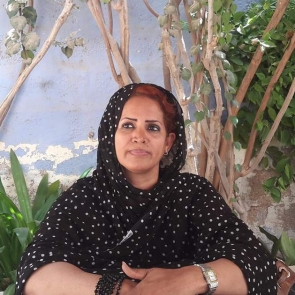
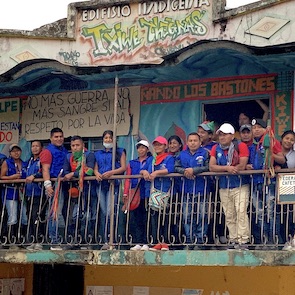
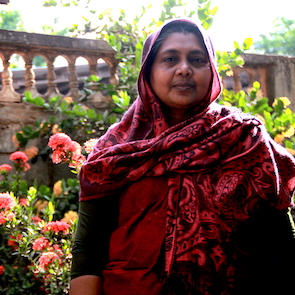
This year’s Regional Award Winners include four women human rights defenders and an indigenous collective.
The 2020 Laureates are:
Mekfoula Mint Brahim is is the President of Pour une Mauritanie Verte et Démocratique (For a Green and Democratic Mauritania), an organisation leading women’s empowerment projects in rural areas. She is also a member of Alliance pour la Refondation de l’Etat Mauritanien (AREM), which promotes good governance and fights against impunity.
The Guardia Indígena del Cauca – Kiwe Thegnas (Defenders of Life and Territory), member of the organization Asociación de Cabildos Indígenas del Norte del Cauca (ACIN), CRIC branch, is a community life and ancestral resistance composed of women, men, boys and girls who defend their territories in a peaceful, unarmed way.
Juwairiya Mohideen is a Muslim woman human rights defender based in Puttalam in the North West of Sri Lanka. In 2010 she established the Muslim Women’s Development Trust (MWDT), providing daily practical support, comfort, advice and legal assistance to women and girls facing abuse, violence and discrimination.
Lara Aharonian is co-founder of the Women’s Resource Center Armenia, a non-governmental feminist organization based in Yerevan that works to empower women and girls to become active citizens by combatting gender stereotypes and providing psychological and legal support to survivors of gender-based violence in Armenia.
Iraqi Women Human Rights Defenders have faced a wave of assassinations and attempted killings, particularly especially in the southern city of Basra. Since mass popular protests erupted throughout the country in 2019, human rights defenders have been targeted for attack, including kidnappings, physical attacks and killings.
On the occasion of International Women Human Rights Defenders Day (29 November) and marking this year’s 16 Days Campaign to combat gender based violence, Front Line Defenders presents a new edition of Cypher: https://www.frontlinedefenders.org/sites/default/files/cypher05.pdf , the digital monthly comic magazine featuring stories of human rights defenders from around the world. This edition features stories of WHRDs working for accountability in the context of the rights of women and girls, with a focus on GBV, from Zimbabwe, Transnistria/Moldova, Tonga and Argentina. [see also: https://humanrightsdefenders.blog/2020/07/23/new-cypher-comics-for-human-rights-defenders/]
Also in celebration of International Women Human Rights Defenders Day the International Service for Human Rights (ISHR) in Geneva organises an on-line ‘exhibition “The Gaze that Subverts” of pieces by the painter Z.
Each painting tells a story of a woman or women who, in defiance of patriarchal structures and authoritarian repression, occupy public space in China in their fight for justice.
Z’s paintings are both prompted by, and provide – in their embodiment, the bent torso, the flexed muscle – a response to, a central question of rights defence: ‘How do we change unjust power relationships with the all-too-scarce resources we have at our disposal?’
A group of 13 important human rights NGOs – in a joint statement – condemn the Thai police’s unnecessary and excessive use of force against peaceful protesters marching to the national parliament in Bangkok on November 17, 2020. They are concerned that authorities could employ similar measures when facing protesters who have declared they will march to the Siam Commercial Bank headquarters on November 25.
On November 17, police set out barriers and barbed wire to prevent a peaceful march organized by pro-democracy movements from reaching the parliament. Protesters planned to protest outside the parliament as members of parliament and senators debated seven different proposals for constitutional amendments, including an amendment proposed by the lawyers’ non-governmental organization iLAW (Internet Law Reform Dialogue), which was supported by the People’s Movement and its allies. Police refused to let protesters through the barriers, and when the demonstrators acted to breach those barriers, police crowd control units used water cannons laced with purple dye and an apparent teargas chemical, as well as teargas grenades and pepper spray grenades, to forcibly disperse thousands of demonstrators, including students, some of whom are children. Water cannons were first used at approximately 2:25 pm and police continued their efforts to disperse protesters, with constant use of water cannons, teargas and pepper spray into the evening.
Police also failed to prevent violence between pro-democracy protesters and royalist “yellow shirts” near the Kiak Kai intersection, near the parliament. Initially, riot police separated the two groups. However, video posted on social media later showed police officers informing the royalist protesters that they would withdraw and seconds later they vacated their position between the two groups. During the ensuing skirmishes, both sides were filmed throwing rocks and wielding clubs. Live broadcasts included sounds that appeared to be gunfire.
The Erawan Medical Centre reported that there were at least 55 protesters injured, mostly from inhaling teargas. It also reported that there were six protesters who suffered gunshot wounds. The injured included children: a kindergartener and elementary school students….
On November 18, the spokesperson for United Nations Secretary-General António Guterres “expressed concern about the [human rights] situation in Thailand … it’s disturbing to see the repeated use of less lethal weapons against peaceful protesters, including water cannons … it’s very important that the government of Thailand refrain from the use of force and ensures the full protection of all people in Thailand who are exercising a fundamental peaceful right to protest.”
We call on the Thai government to respect, protect and fulfill the right of demonstrators to peacefully protest, in line with Thailand’s international obligations under the ICCPR and customary international law. Specifically, Thailand should:
1. Permit the People’s Movement march to proceed on November 25 and allow for non-violent protesters, including those who are children, to peacefully protest in front of the Siam Commercial Bank headquarters.
2. Protect the rights of protesters, including those who are children, in accordance with the Human Rights Committee’s General Comment No. 37 on the Right of Peaceful Assembly.
3. Facilitate the exercise of the right to peacefully assemble and refrain from dispersing assemblies by using weapons, including less-lethal weapons, against protesters in line with the United Nations Basic Principles on the Use of Force and Firearms by Law Enforcement Officials and UN and other guidance on less-lethal weapons.
4. Protect protesters, including those who are children, from violence and interference by non-State actors, while also protecting the rights of counter-demonstrators.
5. Take steps to ensure accountability for rights violations associated with the government’s crackdown on the protest movement and to ensure that those whose rights have been violated enjoy the right to an effective remedy, as guaranteed under ICCPR article 2(3).
Signed by:
Amnesty International
Article 19
ASEAN Parliamentarians for Human Rights
Asia Democracy Network
Asian Forum for Human Rights and Development (FORUM-ASIA)



 Hans Thoolen on Human Rights Defenders and their awards
Thailand: joint statement by International NGOs on Pro-Democracy Protests
November 29, 2020A group of 13 important human rights NGOs – in a joint statement – condemn the Thai police’s unnecessary and excessive use of force against peaceful protesters marching to the national parliament in Bangkok on November 17, 2020. They are concerned that authorities could employ similar measures when facing protesters who have declared they will march to the Siam Commercial Bank headquarters on November 25.
On November 17, police set out barriers and barbed wire to prevent a peaceful march organized by pro-democracy movements from reaching the parliament. Protesters planned to protest outside the parliament as members of parliament and senators debated seven different proposals for constitutional amendments, including an amendment proposed by the lawyers’ non-governmental organization iLAW (Internet Law Reform Dialogue), which was supported by the People’s Movement and its allies. Police refused to let protesters through the barriers, and when the demonstrators acted to breach those barriers, police crowd control units used water cannons laced with purple dye and an apparent teargas chemical, as well as teargas grenades and pepper spray grenades, to forcibly disperse thousands of demonstrators, including students, some of whom are children. Water cannons were first used at approximately 2:25 pm and police continued their efforts to disperse protesters, with constant use of water cannons, teargas and pepper spray into the evening.
Police also failed to prevent violence between pro-democracy protesters and royalist “yellow shirts” near the Kiak Kai intersection, near the parliament. Initially, riot police separated the two groups. However, video posted on social media later showed police officers informing the royalist protesters that they would withdraw and seconds later they vacated their position between the two groups. During the ensuing skirmishes, both sides were filmed throwing rocks and wielding clubs. Live broadcasts included sounds that appeared to be gunfire.
The Erawan Medical Centre reported that there were at least 55 protesters injured, mostly from inhaling teargas. It also reported that there were six protesters who suffered gunshot wounds. The injured included children: a kindergartener and elementary school students….
On November 18, the spokesperson for United Nations Secretary-General António Guterres “expressed concern about the [human rights] situation in Thailand … it’s disturbing to see the repeated use of less lethal weapons against peaceful protesters, including water cannons … it’s very important that the government of Thailand refrain from the use of force and ensures the full protection of all people in Thailand who are exercising a fundamental peaceful right to protest.”
We call on the Thai government to respect, protect and fulfill the right of demonstrators to peacefully protest, in line with Thailand’s international obligations under the ICCPR and customary international law. Specifically, Thailand should:
1. Permit the People’s Movement march to proceed on November 25 and allow for non-violent protesters, including those who are children, to peacefully protest in front of the Siam Commercial Bank headquarters.
2. Protect the rights of protesters, including those who are children, in accordance with the Human Rights Committee’s General Comment No. 37 on the Right of Peaceful Assembly.
3. Facilitate the exercise of the right to peacefully assemble and refrain from dispersing assemblies by using weapons, including less-lethal weapons, against protesters in line with the United Nations Basic Principles on the Use of Force and Firearms by Law Enforcement Officials and UN and other guidance on less-lethal weapons.
4. Protect protesters, including those who are children, from violence and interference by non-State actors, while also protecting the rights of counter-demonstrators.
5. Take steps to ensure accountability for rights violations associated with the government’s crackdown on the protest movement and to ensure that those whose rights have been violated enjoy the right to an effective remedy, as guaranteed under ICCPR article 2(3).
Signed by:
Amnesty International
Article 19
ASEAN Parliamentarians for Human Rights
Asia Democracy Network
Asian Forum for Human Rights and Development (FORUM-ASIA)
Asian Network for Free Elections (ANFREL)
CIVICUS: World Alliance for Citizen Participation
Civil Rights Defenders
FIDH – International Federation for Human Rights
Fortify Rights
Human Rights Watch
International Commission of Jurists
Manushya Foundation
———–
https://www.hrw.org/news/2020/11/25/statement-international-ngos-pro-democracy-protests-november-17-and-25-2020
Posted in AI, Civil Rights Defenders (NGO), Front Line, HRW, human rights, Human Rights Defenders, ICJ | Leave a Comment »
Tags: freedom to demonstrate, General comment ICCPR, joint statement, NGOs, police violence, students, Thailand