Archive for the 'human rights' Category

Ground breaking conviction of Syrian torturer in Germany

January 17, 2022
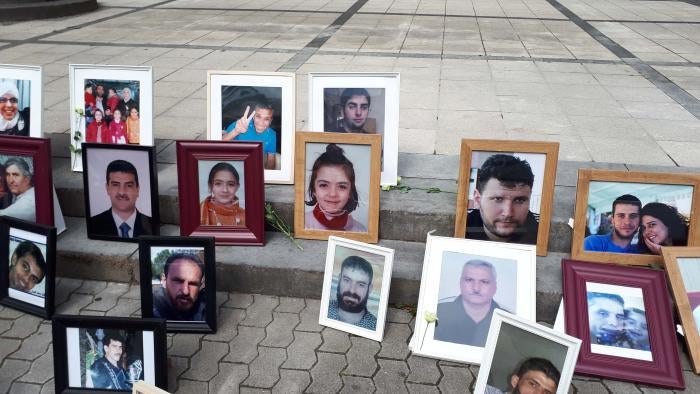
Group of framed portraits
Photos of Syrians who have been detained or disappeared set up by Families for Freedom, as part of a protest in front of the court in Koblenz, July 2, 2020. © 2020 Alexander Suttor

The conviction of a former Syrian intelligence officer for crimes against humanity by a German court is a ground-breaking step toward justice for serious crimes in Syria, Human Rights Watch said today. The judgment is a meaningful moment for civilians who survived torture and sexual abuse in Syria’s prisons.  

On January 13, 2022, a German court delivered its judgment in the trial of Anwar R., a former member of Syria’s General Intelligence Directorate, one of the country’s four main intelligence agencies commonly referred to collectively as the mukhabarat. Anwar R. is the most senior former Syrian government official to be convicted for serious crimes in Syria.  

German prosecutors accused Anwar R. of overseeing the torture of detainees in his capacity as head of the investigations section at the General Intelligence Directorate’s al-Khatib detention facility in Damascus, also known as “Branch 251.” 

The judges found Anwar R. guilty of committing crimes against humanity and sentenced him to life in prison. Following the verdict in the case, Anwar R. has one week to appeal.  

More than 10 years after the violations were committed in Syria, the German court’s verdict is a long-awaited beacon of hope that justice can and will in the end prevail,” said Balkees Jarrah, associate international justice director at Human Rights Watch. “Other countries should follow Germany’s lead, and actively bolster efforts to prosecute serious crimes in Syria.”  

Human Rights Watch issued a question and answer document and a feature article on the trial and how it is situated in the larger context of the Syrian conflict on January 6, 2022. The trial against Anwar R. and Eyad A., who was found guilty of aiding and abetting crimes against humanity in February, began in April 2020 and was the first anywhere in the world for state-sponsored torture in Syria. Eyad A.’s appeal against his conviction remains pending. 

Syrian survivors, lawyers, and activists have been central to making this trial a reality, not only pressing for justice but laying the groundwork that makes justice possible, Human Rights Watch said.  

More than 80 witnesses testified, including former detainees, former Syrian government employees, German police investigators, and experts in Syrian affairs. The testimony included well-documented accounts of torture and sexual abuse in Branch 251, descriptions of mass graves, and details of Syria’s government policy to violently crack down on peaceful protesters in 2011. Several of the witnesses were able to identify Anwar R. in the courtroom.  

One of the major challenges of this trial was witness protection. Several witnesses living in Germany and other European countries cancelled their appearance in court out of fear for their lives and safety, or that of their families. Several witnesses, some who were also victims, testified that they feared a risk to themselves and their families given their role in the trial. German authorities should ensure that witnesses and victims are sufficiently informed about their rights to protective measures, including to appear anonymously before the court. 

Tens-of-thousands of people have been detained or disappeared in Syria since 2011, the vast majority by government forces using an extensive network of detention facilities throughout the country. The Syrian government continues to detain and forcibly disappear thousands of people. 

Many of those detained have died from torture and horrific detention conditions. Comprehensive justice for these and other unchecked atrocities in Syria has been elusive. Syria is not a member of the International Criminal Court. And in 2014, Russia and China blocked efforts at the United Nations Security Council to give the court a mandate over serious crimes in Syria. 

The trial of Anwar R. and Eyad A. is possible because Germany’s laws recognize universal jurisdiction over certain of the most serious crimes under international law. That allows for the investigation and prosecution of these crimes no matter where they were committed and regardless of the nationality of the suspects or victims. Universal jurisdiction remains one of the few viable pathways to justice for crimes committed in Syria.  

Germany has several elements in place to allow for the successful investigation and prosecution of grave crimes in Syria. It has above all a comprehensive legal framework, well-functioning specialized war crimes units, and previous experience with prosecuting such crimes. Countries with universal jurisdiction laws should establish specialized war crimes units within law enforcement and prosecution services, and ensure that such units are adequately resourced and staffed. 

Germany’s trial against Anwar R. is a message to the Syrian authorities that no one is beyond the reach of justice,” Jarrah said. “The Koblenz case has shown that with other avenues blocked, national courts can play a critical role in combating impunity.” 

The first such reaction came immediately, see: https://www.ncr-iran.org/en/news/human-rights/after-german-conviction-of-syrian-official-focus-may-turn-to-swedish-trial-of-iranian/

https://www.hrw.org/news/2022/01/13/germany-conviction-state-torture-syria

https://www.fidh.org/en/region/north-africa-middle-east/syria/syria-landmark-ruling-offers-hope-to-regime-s-victims

https://www.ecchr.eu/en/case/first-criminal-trial-worldwide-on-torture-in-syria-before-a-german-court/

First planeload of Afghan human rights defenders has landed in Ottawa

January 13, 2022
Immigration Minister Sean Fraser rises during Question Period, in Ottawa, Dec. 10, 2021. Fred Chartrand/The Canadian Press

Six months after the federal government promised to help thousands of Afghan women leaders, human- rights activists and journalists flee to Canada, the first planeload has landed.

Immigration Minister Sean Fraser announced the arrival of 252 Afghan refugees on Tuesday, including the first 170 admitted through a special program for people the government deems to be human-rights defenders.

It is a privilege to welcome today this cohort of Afghan refugees, who face persecution as a result of their work to protect the human rights of others,” Mr. Fraser said in a statement.

“I am grateful for their work to document and prevent human rights abuses and proud that they now call our country home.”

The Liberal government launched the special program in July after weeks of criticism from angry Canadian veterans upset Ottawa wasn’t doing more to help Afghans facing possible Taliban reprisals for having worked with Canada in the past.

Mr. Fraser’s office said the 170 who arrived through the special program had been referred to Canada by the Ireland-based human-rights organization Front Line Defenders, which has been working to identify those most at risk.

The Liberals have promised to resettle 40,000 Afghan refugees to Canada, but nearly all of those are expected to be people living in UN camps in Pakistan and other neighbouring countries.

With Monday’s arrivals, the government says it has so far resettled about 6,750 Afghan refugees in Canada. Fraser suggested last month that it could take up to two years for the government to meet its promise of bringing in 40,000 Afghans.

Veterans and refugee groups aren’t the only ones who have lamented the pace of the government’s efforts when it comes to helping Afghans escape to Canada, with opposition parties also joining the chorus of criticism in recent months.

https://www.theglobeandmail.com/canada/article-first-afghan-human-rights-activists-arrive-six-months-after-ottawas/

Saudi Princess Basmah released from detention after 3 years

January 10, 2022
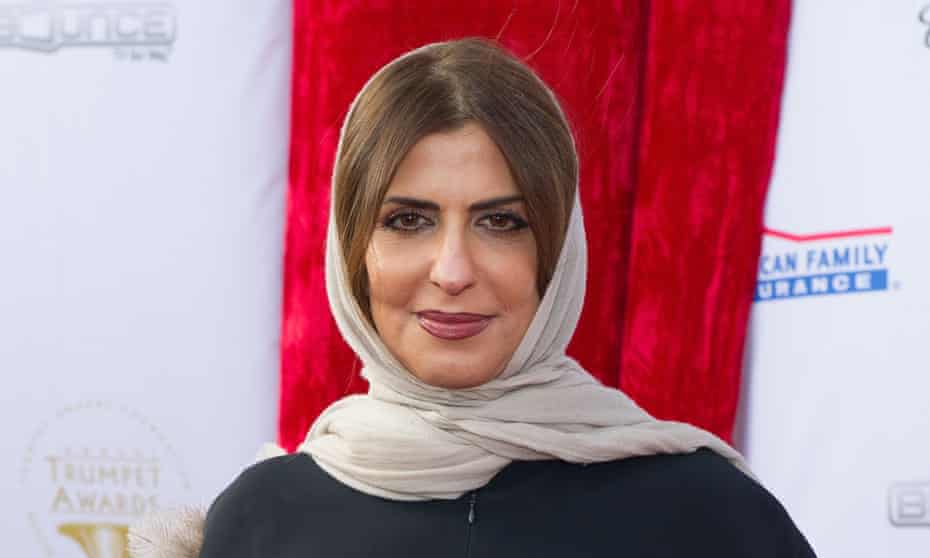
Princess Basmah

Photograph: Marcus Ingram/Getty Images

Martin Chulov in the Guardian of 9 January 2022 relates how a Saudi princess and human rights advocate has returned to her home in Jeddah after three years in a state prison without charge.

Princess Basmah bint Saud bin Abdulaziz Al Saud, 57, a staunch critic of her cousin and Saudi Arabia’s de facto leader, Mohammed bin Salman, was released on Saturday, along with her daughter, Souhoud Al Sharif, who was arrested with her in March 2019.

Mystery surrounds the pair’s detention and release, which was met with silence by Saudi officials over the weekend. However, announcing her arrest on Twitter 13 months after she vanished, Princess Basmah claimed to have done no wrong and said she was facing “very critical” health issues. Her tweets in April 2020, which were apparently sent from detention, were quickly deleted. The move appeared to fit a pattern of the arrest of dozens of Saudi dissidents and attempts to spy on activists in exile.

Saudi dissidents and rights activists say Basmah had been especially vocal about a crackdown on dissent and consolidation of power led by Prince Mohammed. She had also been critical of the kingdom’s treatment of women, who had little ability to shape their lives under the kingdom’s heavily restrictive guardianship laws – some of which have been revoked in the past three years.

She thought that her family connections would give her cover,” said one senior Saudi royal in exile. “But MBS [Mohammed bin Salman] has locked up bigger family members than her.”

Basmah’s legal adviser, Henri Estramant, confirmed on Saturday: “The princess is doing fine but will be seeking medical expertise. She seems worn out but is in good spirits, and thankful to reunite with her sons in person.”.

Basmah had been due to travel abroad for medical treatment around the time of her arrest and was informed after her detention that she was accused of trying to forge a passport, a close relative said at the time. The nature of her illness has never been disclosed.

Following her release, the rights group ALQST for Human Rights said: “She was denied the medical care she needed for a potentially life-threatening condition. At no point during her detention has any charge been levelled against her.

https://www.independent.co.uk/news/world/middle-east/saudi-princess-basmah-prison-release-b1989423.html

https://www.theguardian.com/world/2022/jan/09/outspoken-saudi-princess-released-after-nearly-three-years-in-jail

Iranian dissident Poet Baktash Abtin dies of Covid in arbitrary detention

January 10, 2022

On 8 January 2022 the Iranian poet Baktash Abtin died in Tehran after contracting COVID-19 in Evin Prison. Abtin, who died after being put into an induced coma while hospitalized, is the second known political prisoner to die in Iran in the first week of 2022. On January 1, Kian Adelpour died after going on hunger strike to protest being imprisoned without a fair trial.

This is a preventable tragedy and more prisoners’ deaths are inevitable because there is no accountability in the Iranian government,” said Hadi Ghaemi, executive director of the Center for Human Rights in Iran (CHRI). “Abtin was imprisoned in Iran because the government wanted to muzzle him with a jail cell; the state killed him.” Abtin had been serving a five-year prison sentence on the charge of “assembly and collusion against national security.

A group of main NGOs had addressed a joint letter to Ayatollah Ali Hosseini Khamenei on 7 January repeating their call that Abtin be given access to the best possible medical care as he battles for his life. In addition, we urge that: he and all those unjustly detained for their writing or expression be immediately and unconditionally released; that authorities refrain from summoning political prisoners to serve their sentences while the conditions inside Evin and other Iranian prisons remain unsafe; and that any who do contract COVID-19 or other serious illnesses while in jail be granted speedy access to all needed medical care or a medical parole on humanitarian grounds.

While offering condolences to Abtin’s family and friends, the Iranian Writers Association (IWA) where Abtin, 48, was a board member, released a statement on January 8 on the “injustice that was committed against Abtin”: “Baktash Abtin is alive because the spirit of freedom-seeking and the fight against tyranny and injustice is alive,” said the statement.

Fellow IWA board member Reza Khandan Mahabadi was also sentenced to five years in prison and Keyvan Bajan to three years and six months. An international chorus has condemned the IWA writers’ imprisonment, with dozens of high-profile writers and artistic figures including Nobel laureates calling for the writers’ acquittal.

At least 11 writers are known to be either currently imprisoned or living with an unserved prison sentence hanging over their heads in Iran as they await an appeal or to be summoned to jail, according to a list compiled by CHRI.

In an interview with CHRI in May 2019 after his trial, Abtin forcefully said the charge of “assembly and collusion against national security” was for statements published by the IWA, articles in the organization’s internal newsletter, and holding memorial ceremonies for IWA members Mohammad Mokhtari and Mohammad Jafar Pouyandeh, who were murdered in 1998 as part of a concerted state policy to eliminate political and cultural dissidents inside and outside of Iran.

“Nowhere in the world is it necessary to get a permit to gather around someone’s grave,” Abtin told CHRI. “But that’s what we’ve been charged with.”

https://www.hrw.org/news/2022/01/07/joint-ngo-letter-khamenei-baktash-abtins-condition

Qatar: where is human rights defender Noof Al-Maadeed?

January 4, 2022

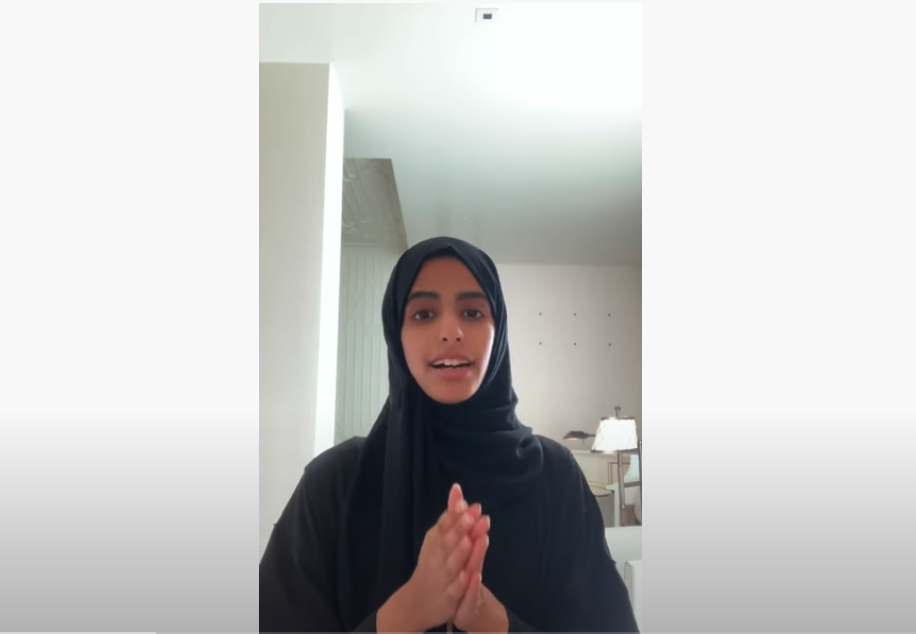
A screenshot of Noof Al-Maadeed from her YouTube video entitled “The Return of #Noof_AlMaadeed to Qatar 2021”, posted on October 6, 2021

Khalid Ibrahim, executive director of he Gulf Center for Human Rights posted on 29 December 2021 the case of Noof Al-Maadeed, a 23-year-old Qatari woman.

When she faced domestic violence from members of her family, including her father, and government institutions failed to provide her with any protection, she fled her country to Britain after using her father’s phone without his knowledge to obtain permission to travel. In a television interview on August 4, 2020, she spoke of her November 26, 2019 escape from Qatar to Britain, via Ukraine.

Upon arriving in Britain, she applied for asylum. During her stay in Britain, Al-Maadeed introduced herself as a defender of Qatari women’s rights and explained how male guardianship prevents women from working or traveling without a male family member’s consent, as well as how women victims of domestic violence are left with little protection.

Al-Maadeed withdrew her application for asylum in Britain after receiving assurances from the Qatari authorities that she would be protected if she returned to her home country. On October 6, this year, Al-Maadeed posted on her Instagram account a video in which she explained the details of her return from London on September 30 to the capital, Doha, where she arrived the following day.

What happened next is incomprehensible. Qatari authorities, who pledged to protect her, as it should with to all citizens, reneged on all their promises and left her alone trying to survive domestic abuse. In a video posted on her Twitter account on October 12, Al-Maadeed said that she had been subjected to three failed assassination attempts by her family. She also described her father’s coming into the lobby of the hotel where she was staying, despite being one of her main opponents and the reason for her running away from home. Perhaps the following tweet, dated October 12, honestly sums up the torments she suffered upon her return: https://platform.twitter.com/embed

My family, and those who I count as my own, want to slaughter me.

Shortly thereafter, she posted the following tweet: “Sheikh Tamim is the only one who can stop the danger to my life with his own hands.” On October 13, Al-Maadeed completely disappeared from social media, and her whereabouts have not yet been known. The Emir of Qatar, Sheikh Tamim bin Hamad, on whom Al-Maadeed relied for protection and pleaded for support, was not able to provide the necessary protection for a citizen who did not commit any violation and voluntarily returned to her country based on many promises from the authorities that they’ll keep her safe.

Since her disappearance, there have been conflicting reports, with regards to what has happened to the 23-year-old. According to some reports, Al-Maadeed was killed by her family, while others reported her forcible detention in a psychiatric hospital under heavy sedation, Meanwhile, the Qatari government refuses to provide documented information to prove that she is alive, which raises many suspicions.

The Gulf Center for Human Rights cannot confirm any of the above-mentioned reports but holds the authorities, who have pledged but failed to protect Noof Al-Maadeed, responsible for any harm done to her. At present, all information indicates that Al-Maadeed is facing serious risk to her life and freedom. If not killed, then it is a fact that she may be facing a lengthy incommunicado detention, which puts her life at imminent risk.

The GCHR, once again calls on the international community, particularly UN institutions, and governments with influence in Qatar—including members of the European Union—to take immediate action to pressure the Qatari authorities to ensure that Al-Maadeed is safe and can live freely in Qatar.

The government of Qatar cannot continue to ignore international opinion that is searching for the truth, and its absolute silence will be a sure condemnation, as it bears full responsibility for preserving the safety of its citizens, including Nouf Al-Maadeed.

Kadyrov – How to make a mockery of the term Human Rights Defender

January 3, 2022

The head of the North Caucasus region of Chechnya, Ramzan Kadyrov, long accused of grave human rights abuses, has been named “distinguished human rights defenders” by the regional human rights ombudsman.

Ombudsman Nurdi Nukhazhiyev, at a ceremony in Grozny on December 30 that was not attended by Kadyrov, said the Kadyrov family had made an “enormous contribution…to securing human rights and strengthening the state.

A video of the ceremony was posted on the Internet by Grozny state television.

In addition to Kadyrov, the medals were awarded to his father, former Chechen President Akhmad Kadyrov, and his mother, Aimani Kadyrova.

Akhmad Kadyrov was president of Chechnya from 2003 until his assassination in May 2004.

Earlier in the month, Kadyrov’s daughter, Aishat Kadyrova, who serves as Chechnya’s culture minister, was awarded the medal For the Defense of Human Rights.

Russian and international human rights monitors have for years accused Ramzan Kadyrov of overseeing grave human rights abuses including abductions, torture, extrajudicial killings, and the persecution of the LGBT community.

See also: https://humanrightsdefenders.blog/2019/03/19/human-rights-defender-in-chechnya-oyub-titiev-sentenced-to-4-years/

https://www.rferl.org/a/chechnya-kadyrov-human-rights/31634524.html

2022: even Prince Charles pays tribute to human rights defenders

January 3, 2022
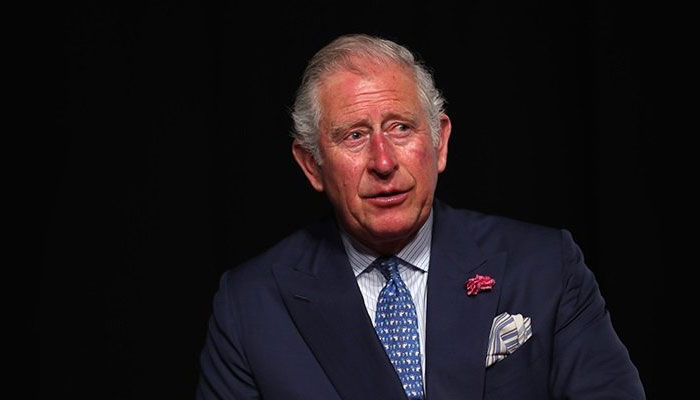
Prince Charles pays tribute to human rights defenders

On 2 January 2022 AFP reported that Britain’s Prince Charles urged people in a New Year message to “take a moment” to recognise those “standing up for freedom and human rights” around the world.

The heir to the throne paid tribute to people in places such as Afghanistan, Syria and Myanmar facing political and religious persecution and insecurity alongside increasingly dire humanitarian situations.

As we start a New Year, we might take a moment to remember the many people around the world who are standing up for freedom and human rights,” he said on Saturday.

In the face of such adversity, incredibly brave individuals, local communities and international organisations are responding to great needs by providing vital assistance.

I pray for peaceful resolutions to these conflicts and that we might all be blessed with the courage to support those in need, wherever they may be.”

https://www.thenews.com.pk/print/921817-prince-charles-pays-tribute-to-human-rights-defenders

To Counter Domestic Extremism, Human Rights First Launches Pyrra

December 26, 2021

New enterprise uses machine learning to detect extremism across online platforms

On 7 December 2021, Human Rights First announced a new enterprise, originally conceived in its Innovation Lab as Extremist Explorer, that will help to track online extremism as the threats of domestic terrorism continue to grow.

Human Rights First originally developed Extremist Explorer to monitor and challenge violent domestic actors who threaten all our human rights. To generate the level of investment needed to quickly scale up this tool, the organization launched it as a venture-backed enterprise called Pyrra Technologies.

“There is an extremist epidemic online that leads to radical violence,” said Human Rights First CEO Michael Breen. “In the 21st century, the misuse of technology by extremists is one of the greatest threats to human rights. We set up our Innovation Lab to discover, develop, and deploy new technology to both protect and promote human rights.  Pyrra is the first tool the lab has launched.”

Pyrra’s custom AI sweeps sites to detect potentially dangerous content, extremist language, violent threats, and harmful disinformation across social media sites, chatrooms, and forums.

 “We’re in the early innings of threats and disinformation emerging from a proliferating number of smaller social media platforms with neither the resources nor the will to remove violative content,Welton Chang, founding CEO of Pyrra and former CTO at Human Rights First, said at the launch announcement.  “Pyrra takes the machine learning suite we started building at Human Rights First, greatly expands on its capabilities and combines it with a sophisticated user interface and workflow to make the work of detecting violent threats and hate speech more efficient and effective.”

The Anti-Defamation League’s Center on Extremism has been an early user of the technology. 
“To have a real impact, it’s not enough to react after an event happens, it’s not enough to know how extremists operate in online spaces, we must be able to see what’s next, to get ahead of extremism,” said Oren Segal, Vice President, Center on Extremism at the ADL. “That’s why it’s been so exciting for me and my team to see how this tool has evolved over time.  We’ve seen the insights, and how they can lead to real-world impact in the fight against hate.”   

 “It really is about protecting communities and our inclusive democracy,” said Heidi Beirich, PhD, Chief Strategy Officer and Co-Founder, Global Project Against Hate and Extremism.  “The amount of information has exploded, now we’re talking about massive networks and whole ecosystems – and the threats that are embedded in those places. The Holy Grail for people who work against extremism is to have an AI system that’s intuitive, easy to work with, that can help researchers track movements that are hiding out in the dark reaches of the internet. And that’s what Pyrra does.”

Moving forward, Human Rights First will continue to partner with Pyrra to monitor extremism while building more tools to confront human rights abuses. 

Kristofer Goldsmith, Advisor on Veterans Affairs and Extremism, Human Rights First and the CEO of Sparverius, researches extremism. “We have to spend days and days and days of our lives in the worst places on the internet to get extremists’ context.  But we’re at a point now where we cannot monitor all of these platforms at once. The AI powering Pyrra can,” he said.

Pyrra’s users, including human rights defenders, journalists, and pro-democracy organizations can benefit from using the tool as well as additional tools to monitor extremism that are coming from Human Rights First’s Innovation Lab.

“This is a great step for the Innovation Lab,” said Goldsmith. “We’ve got many other projects like Pyrra that we hope to be launching that we expect to have real-world impact in stopping real-world violent extremism.”   

https://www.humanrightsfirst.org/press-release/counter-domestic-extremism-human-rights-first-launches-pyrra

Vilma Nuñez, human rights defender, who stays in Nicaragua

December 24, 2021

The long-time president of the Nicaraguan Center for Human Rights, doesn’t rule out the possibility of being jailed by the Ortega-Murillo regime. Re-published on 11 December in Havana Times:

Vilma Nuñez learned about Nicaraguan jails when she was just a child. She was eight years old when they took her to visit a political prisoner – her father. He had been imprisoned by Somoza’s National Guard, the same repressive body that years later would also jail and torture her.

In the course of over six decades of work, she’s become the veteran defender of Nicaraguans’ human rights. Founder and current president of the Nicaraguan Center for Human Rights (Cenidh), she confesses that she decided to study Law to fight against the outrages she’d experienced since childhood. Her law career has spanned 63 years, although she was very seldom the prosecutor, but almost always worked on the side of defense. See also: https://humanrightsdefenders.blog/2018/12/02/nicaragua-moves-against-women-human-rights-defenders/

Through Cenidh, Nuñez continues her struggle for the liberation of the Ortega regime’s political prisoners, just as she did in 1958, when she formed part of the Leon student movement. Through that organization, she became involved in the Committee for the Liberation of the Political Prisoners during the the Somoza regime. On one occasion, she recalls, they requested and received an audience with Luis Somoza Debayle, effectively Nicaragua’s dictator from 1956–1967. Together with university chancellor Mariano Fiallos Gil, she met with the man who had inherited the Somoza dynasty. The dictator became enraged when they demanded the release of the prisoners.

Twenty-one years after that meeting, Nuñez was jailed and tortured with electric shocks by order of the dynasty’s final successor, Anastasio Somoza Debayle. It’s not surprising, then, that the current situation of the political prisoners brings her back to the days of that other terrible dictatorship that – like the current regime – wouldn’t tolerate criticism.

In addition, Nuñez is a survivor of the student massacre of July 23, 1959. She has felt in her own flesh what it means to be jailed for false crimes because of having protested. At 83, it’s been her destiny to once more live under attack from a new dictatorship.

At the end of 2018, the Ortega regime ordered the Sandinista-dominated National Assembly to strip Cenidh of the non-profit status it had held since its founding in 1990. It also confiscated its offices.

“They’ve struck us a blow, but it doesn’t hurt us,” the Cenidh president declared defiantly. “A serious human rights organization can’t be dissolved by a resolution from a political organ with no autonomy or independence; nor can they dissolve our commitment and accompaniment of the Nicaraguan people,” she affirmed, in reference to the legislature’s decision…

According to Nuñez, all the attacks are because they won’t forgive her for having accompanied the case of Zoilamerica Narvaez, Daniel Ortega’s stepdaughter. In 1998, Narvaez filed formal accusations of 19-years of rape and sexual abuse and harassment against Ortega.

The issue most disturbs Dr. Nuñez at present is not being able to accompany the victims at the site where the human rights violations are occurring. She can’t even file an appeal, because the entire state apparatus is controlled by the Ortega regime.

“No one listens or does anything, which generates a situation of powerlessness. You can’t protest, or do anything, and for that reason I’ve said that I feel I’m a prisoner in Nicaragua,” she explains.

Vilma Núñez Cenidh

Nevertheless, she insists that she won’t cease in her struggle for the defense of human rights and the search for justice. “Fear has been one of the most powerful weapons wielded by the dictatorship, and I won’t let it dominate me,” she declares.

The human rights defender doesn’t rule out the fact that they may want to jail her. Every day, she says, she once again conquers that fear. “The authentic defense of human rights isn’t restricted to the use of the Law. Although the national and international statutes are always useful, they go hand in hand with less formal mechanisms, and one of the most effective of these is the public denunciation,” Nuñez notes.

“I’m going to continue on in Nicaragua. My commitment is to keep standing beside the people, denouncing and defending human rights as long as I can. It’s always been my lot to be standing on the sidewalk, right in the nose of the tyrants and human rights violators,” Vilma Nuñez says.

Antonia Urrejola, president of the Inter-American Commission on Human Rights: “Ever since I first met her, [Dr. Nuñez’] strength has impressed me (…) if there’s a person who’s always been present in the denunciations of human rights violations in Nicaragua, it’s her. She’s an example of strength and courage.”

Gonzalo Carrion, Nicaragua Nunca + Human Rights Collective: “The history of the human rights movement in the last sixty years in Nicaragua chronicles a people suffering and resisting two different dictatorial dynasties. Whoever writes [that story] will inevitably have to tell of Vilma Nuñez’ activism and commitment.”

Gioconda Belli, Nicaraguan writer: “Who hasn’t seen Doña Vilma traveling to the most remote places to accompany victims whose rights have been violated? No one, more than you knows how to be at the side of the Nicaraguan people.”

This article was originally published in Spanish in Confidencial and translated by Havana Times

Egypt: Activist Patrick Zaki released following international pressure

December 22, 2021

While the recent harsh sentencing of 3 human rights defenders in Egypt made headlines [see: https://humanrightsdefenders.blog/2021/12/21/alaa-abdel-fattah-and-two-others-receive-heavy-prison-sentences-in-egypt/], and the Government decried foreign intervention, it may be interesting to note that not long ago the release of another human rights defender was attributed to international pressure and campaigning.

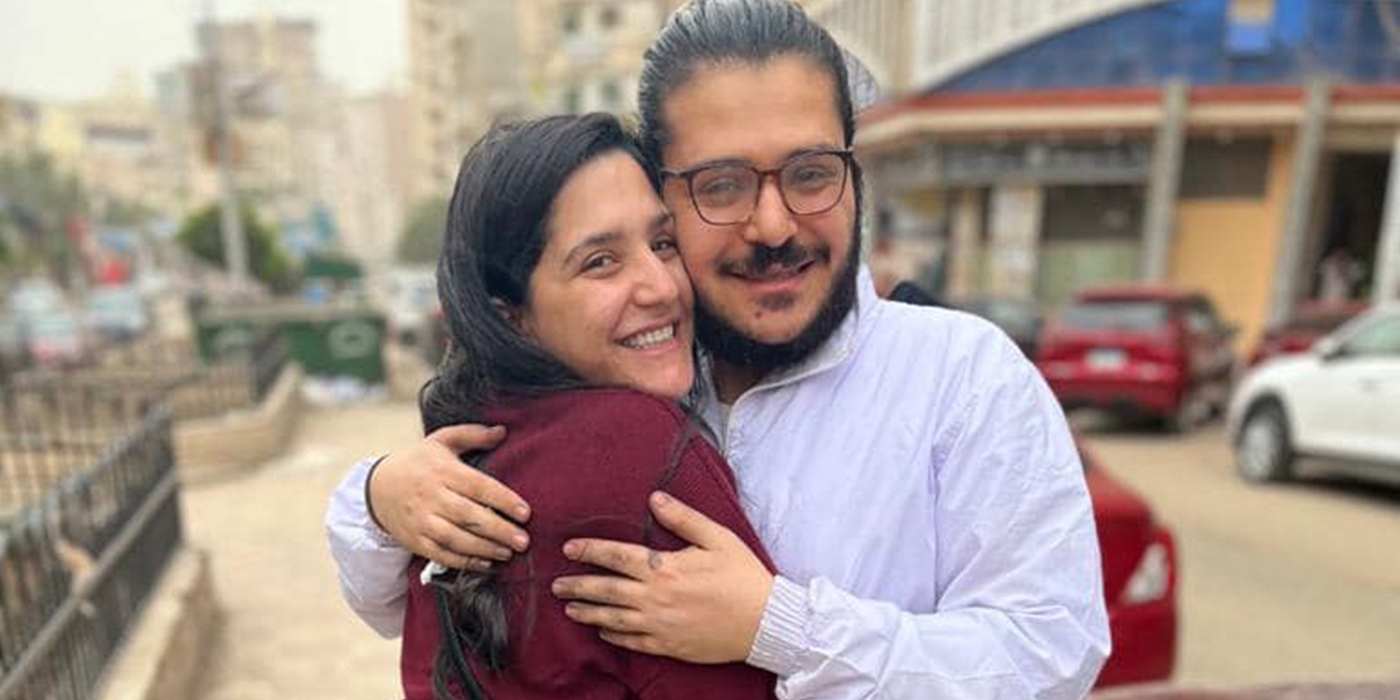
Patrick Zaki after his release on Wednesday 8 December 2021 (Screengrab/EIPR) By Areeb Ullah

Human rights activist Patrick Zaki was freed on Wednesday 8 December 2021, a day after Egypt’s Emergency State Security Misdemeanour Court ordered his provisional release. 

Zaki, a 28-year-old researcher at the Egyptian Initiative for Personal Rights (EIPR), had been studying at Italy’s Bologna University when he was taken into custody upon his return to Cairo in February 2020. Despite his release, he still faces a range of charges, including “calling for protests without permission”, “spreading false news” and “inciting violence and terrorism”. His trial will resume on 1 February 2022.

Tuesday’s hearing was the second time Zaki’s trial has been adjourned since the first session, on 14 September 2020. Human Rights Watch (HRW) told Middle East Eye that Zaki was subjected to physical torture in the days after his arrest.

Commenting on the court’s ruling for his release, Amr Magdi, Egypt researcher for HRW, described it as “rare happy news” for Patrick and his family. “Its a win with a bitter taste,” Magdi told MEE on Tuesday, pointing out that Zaki is technically still on trial as he has not been acquitted.

Zaki had been an outspoken campaigner for the truth about the 2016 murder of Italian student Giulio Regeni in Egypt. Zaki’s arrest sparked a solidarity campaign in Italy, with politicians and activists urging Egyptian authorities to release him.  Italian human rights campaigners have expressed concerns that Zaki could be at risk of torture and ill-treatment in Egypt’s notorious prisons, drawing parallels with the torture of Regeni.  Regeni’s family has also expressed solidarity with the detained activist.

In April, the Italian senate voted to approve a proposal by two lawmakers urging the government to grant Zaki Italian citizenship. Meanwhile, more than 50 Italian cities have announced the granting of “honorary citizenship” to Zaki. This was done, EIPR said, in order to show their appreciation for him as a human rights defender and to demand his immediate release in a campaign called 100 Cities with Patrick, launched by a group of human rights activists in Italy.

https://www.middleeasteye.net/news/egypt-patrick-zaki-released-italy-solidarity-regeni

https://www.middleeastmonitor.com/20220105-egypt-releases-3-prominent-political-prisoners-what-about-the-65000-others/