Archive for the 'human rights' Category
March 1, 2013
Protection International – based in Brussels – announces the launch of its new documentary, The Law of the Strongest, an in-depth account of the work of Honduran human rights defenders and the many challenges they face. You can watch it now at http://vimeo.com/58640439 (Spanish version with English subtitles). On 6 March 2013, The Law of the Strongest will be screened in Geneva.
“In this country, everything is being sold : water, earth and even oxygen” says Salvador Zúñiga, leader of the Civic Council of Popular and Indigenous Organizations of Honduras (COPINH) standing on a muddy road. Behind him, a no-trespassing sign bars the way to a dam construction project. “This project will not benefit the local population, but only the private interests”.
Like other members of his organization, Salvador Zuñiga denounces judicial harassment, threats and attempted corruption aimed at putting an end to their peaceful resistance to these mega projects.
Pascale Boosten and Eric Juzen, directors at the PI video team, met with COPINH representatives and other human rights defenders in order to produce the documentary, The Law of the Strongest.
Contact : Pascale Boosten, pboosten@protectioninternational.org
Posted in human rights, Protection International | Leave a Comment »
Tags: Brussels, corruption, dam, documentary, environment, environmental issues, film, Geneva, Honduran, Honduras, Human right, Human Rights and Liberties, Human rights defender, Pascale Boosten, Protection International, Salvador Zuñiga, The Law of the Strongest, video, Vimeo
February 28, 2013
Thai authorities should immediately investigate the murder of Prajob Nao-opas, a prominent environmentalist in Chachoengsao province, Human Rights Watch said today, 27 February 2013.
The government’s measures to protect human rights defenders, including environmentalists, who stand up for their communities have consistently proved to be inadequate. On February 25, 2013, at around 2 p.m., a gunman shot 43-year-old Prajob four times at a garage on the Phanom Sarakham-Ban Sang road as he was waiting for mechanics to repair his pickup truck. Witnesses told Human Rights Watch that Prajob was seriously wounded from the 11mm bullets and died while being rushed to the hospital by villagers at the shooting scene. The gunman escaped in a getaway car. “The cold-blooded killing of Prajob marks yet another example of the fundamental failure of Thai authorities to protect activists who risk their lives while defending their communities,” said Brad Adams, Asia director. “The government must undertake a serious investigation to bring those responsible for his death to justice, regardless of the status or political affiliation of the killers.”
Since February 2012, Prajob had led villagers in a campaign to expose the dumping of toxic waste in Chachoengsao province’s Phanom Sarakham and Plaeng Yao districts. Many ponds in the area have been filled with dangerous chemicals from industrial estates along Thailand’s eastern seaboard. The Thai government took little action until Prajob managed to get the issue into the national news headlines in August 2012. Only then did the Justice Ministry’s Department of Special Investigation DSI announce that it would treat the chemical waste disposal in Chachoengsao province as a special and urgent case under the DSI’s purview. In December 2012, Prajob told his family that he had received warnings from the Chachoengsao police that there might be an attempt on his life. Since then, he noticed and reported to the police that he was frequently followed and photographed by unidentified men on motorcycles. Despite these explicit threats, no one at either provincial or national level proposed any protective measures for Prajob. Read the rest of this entry »
Posted in HRW, human rights, Human Rights Defenders | Leave a Comment »
Tags: activists, Asia, Chachoengsao, Chachoengsao Province, civil society organizations, death threats, environment, environmental issues, Government of Thailand, HRW, Human rights defender, Human Rights Watch, killing, Prajob, right to health, Thailand, Toxic waste
February 28, 2013

Mutabar Tadjibayeva, one of Uzbekistan’s best known human rights defenders and
Laureate of the Martin Ennals Award 2008, has filed a complaint against Uzbekistan for her brutal torture and forced sterilisation when she was serving an eight-year prison sentence for her human rights activities. The international human rights organisations FIDH and REDRESS recently filed the complaint on her behalf before the UN Human Rights Committee. This is the first known case before the Committee involving a Uzbek human rights defender being forcibly sterilised.
Tadijbayeva has repeatedly sought an investigation from Uzbek authorities into the serious human rights violations that she has suffered since 2002, but her claims have never been investigated and no-one has ever been prosecuted for them. Tadjibayeva is asking the Committee to order Uzbekistan to conduct an effective investigation, punish those found responsible and provide her with reparation, including compensation, as well as her full medical records about the surgery that left her infertile, among other things.
Read the rest of this entry »
Posted in human rights | 3 Comments »
Tags: FIDH, Human right, Human rights defender, illegal detention, illtreatment, International Federation for Human Rights, Martin Ennals Award for Human Rights Defenders, MEA, MEA 2008, Mutabar Tadjibayeva, REDRESS, sexual violence, Souhayr Belhassen, torture, UN, United Nations Human Rights Committee, Uzbekistan
February 28, 2013
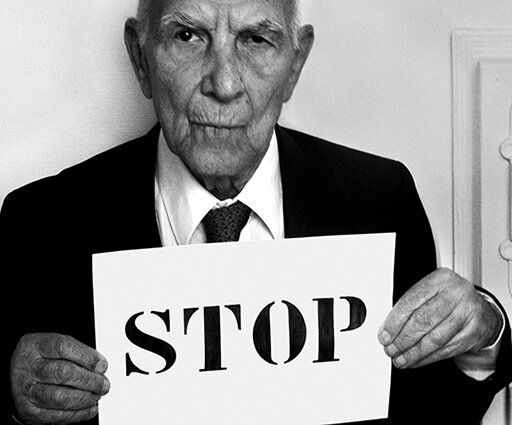
Stéphane Hessel, a hero of the French Resistance, diplomat and activist (what a rare combination) died on Tuesday 27 February in Paris at the age of 95. His life and works are described in detail by the mainstream press, so I only single out here his strength of conviction that made him publish at a very advanced age – in October 2010 – “Indignez-Vous!”, a short pamphlet that urged young people to revive the flame of resistance to injustice that burned in himself during World War II, this time in peaceful rebellion against what he termed the dictatorial forces of international capitalism, and to reassert the ideal that the privileged must help the less fortunate rise. Read the rest of this entry »
Posted in human rights, Human Rights Defenders | 3 Comments »
Tags: diplomatic action, France, French Resistance, human rights, Human rights defender, Indignez-Vous, Paris, Stéphane Hessel, Time for Outrage, Universal Declaration of Human Rights, World War II
February 27, 2013
 Legislative restrictions on “homosexual propaganda” threaten LGBT human rights defenders says the International Commission of Jurists (ICJ) in Geneva which is concerned by the growing number of laws and legislative proposals in a variety of countries that severely threaten the work of lesbian, gay, bisexual and transgender (LGBT) persons and human rights defenders. Ahead of the 22nd session of the Human Rights Council the ICJ today (27 February 2013) submitted a written statement to the UN encouraging the Human Rights Council’s Special Rapporteur on the situation of human rights defenders to follow up on these laws and legislative proposals. Pointing to unlawful restrictions on the freedoms of association and assembly, and the freedom of expression, in several countries (including Uganda, Ukraine and the Russian Federation), the ICJ encourages the Special Rapporteur to call on governments to protect these rights for everyone and to ensure that any restrictions comply with the requirements of legality, of necessity and proportionality and of non-discrimination on all grounds. Moreover, in the case of laws or legislative proposals that fail to comply with these requirements, Governments should take appropriate action.
To download the statement, go to the press announcement:
Legislative restrictions on “homosexual propaganda” threaten LGBT human rights defenders | ICJ.
Posted in human rights, ICJ, UN | 1 Comment »
Tags: Geneva, homophobia, Human Rights Council, ICJ, International Commission of Jurists, legal restrictions, LGBT, LGBT rights, Russian Federation, Uganda, Ukraine, UN
February 27, 2013
On Thursday 28 February  OMCT and FIDH organise a meeting in room XXI in the Palais des Nations of the UN (starts 13h00) on the topic: ‘RESTRICTIONS ON NGO FUNDING: FROM HARASSMENT TO CRIMINALISATION“. Many of my recent posts have dealt with this increasing phenomenon which is simply the more sophisticated way of Governments repressing the voices of human rights defenders, activists and dissidents.
The programme looks as follows:
Introductory remarks
Ms. Kyung-wha Kang, Deputy High Commissioner for Human Rights
H.E. Mr. Colin Wrafter, Director, Human Rights Unit, Department of Foreign Affairs and Trade, Ireland
Chair Antoine Bernard, FIDH CEO
Panel speakers:
Gerald Staberock, OMCT Secretary General
Olga Sadovskaya, CAT –member of the OMCT GA– (Russia)
Farida Makar, CIHRS (Egypt)
Adil Rahman Khan, ODHIKAR –member of the OMCT GA- (Bangladesh)
Entrance is free and public but one should get access to the UN building.
Posted in FIDH, human rights, Human Rights Defenders, OMCT | 4 Comments »
Tags: activists, civil society organisations, funding, Human right, Human Rights Defenders, International Federation for Human Rights, legal restrictions, meeting, NGOs, Non-governmental organization, Office of the United Nations High Commissioner for Human Rights, OMCT, repression, side event, United Nations
February 27, 2013
The Jakarta Post of February 26 2013, reports that Human Rights Defenders suspect the government’s recent initiative to hold discussions on the possibility to open human rights tribunals relating to the 1997/98 abuses were politically motivated. They argued that the discussion, which was raised in the run up to the 2014 General Elections, could implicate some of the strong presidential candidates. “We are actually surprised to learn that the Coordinating Political, Legal, and Security Affairs Minister, Djoko Suyanto, had just begun talks with the House of Representatives leadership on the plan to establish an ad hoc human rights tribunal on the 1997-1998 forced disappearance case” the Commission for Missing Persons and Victims of Violence (Kontras) and the Families of Missing Persons Association (IKOHI) said in a joint statement issued on Tuesday. “On the one hand, it is good that the tribunal might be finally established. On the other hand, however, we are concerned that the tribunal is merely [a] political tool to crush political opponents,” they added. The activists were referring to two former military leaders who are active in politics: General Wiranto and Lt. General Prabowo Subianto, who were both implicated in the violations during the 1998 riots. Kontras and Ikohi are among the organizations who have repeatedly accused the government of ignoring the victims of past human rights abuses because it failed to establish an ad hoc human rights tribunal even though a mandate had been given by the House already in 2009.
via NGOs accuse Govt of delaying human rights tribunal | The Jakarta Post.
Posted in human rights | 1 Comment »
Tags: Advocacy Organizations, Forced disappearance, gross violations, Human right, human rights, Human Rights and Liberties, IKOHI, impunity, Indonesia, Jakarta, Jakarta Post, Kontras, Non-governmental organization, Prabowo Subianto, students, tribunal, Wiranto
February 26, 2013
With apologies to the early viewers of my post of today regarding the Geneva film festival and the showing of a documentary in the UN building on alleged war crimes committed by both sides in the conflict, the link to the Sri Lankan Ambassador’s letter was faulty. This is now repaired with: http://dl.dropbox.com/u/465065/Letter-to-the-President-Human-Rights-Council-2.pdf.
Posted in human rights | Leave a Comment »
Tags: AI, Channel 4, FFIDH, Geneva, HRW, Human right, Liberation Tigers of Tamil Eelam, Sri Lanka, Sri Lankan Ambassador, United Nations, United Nations Human Rights Council
February 26, 2013

(UN Photo/Jean-Marc Ferré)
If you are looking for good quotes from top UN officials on human rights, you will find some in the panel discussion that took place on 25 February to mark the 20th anniversary of an indeed benchmark meeting, the World Conference on Human Rights held in Vienna in 1993. The resulting Vienna Declaration, which led to the creation of the post of the UN High Commissioner for Human Rights, strengthened human rights work, and reinforced the universality of human rights and the duty of States to uphold them. “Human rights and fundamental freedoms are the lifeblood of the United Nations,” Secretary-General Ban Ki-moon said in a video message to panel discussion in Geneva to commemorate the 20th anniversary of the Vienna Declaration and Programme of Action.“Since the Organization was founded, Member States and civil society partners have worked to build a body of human rights instruments that can uphold the principles of the UN Charter and the Universal Declaration of Human Rights,” he noted. The declaration – adopted at the World Conference on Human Rights, held in Vienna in June 1993, and later endorsed by the General Assembly – led to the creation of the post of the High Commissioner for Human Rights. As a member of a women’s rights organization who participated in a side event at the 1993 Conference, High Commissioner for Human Rights Navi Pillay recalled that the event took place amid a “time of transformation” with the end of the Cold War and as progress had been made in dismantling apartheid in South Africa. In remarks read out on her behalf by Bacre Ndiaye, Director of the Human Rights Council and Special Procedures Division in the Office of the UN High Commissioner for Human Rights OHCHR, Ms. Pillay said the Conference was also the first time that representatives of governments and civil society spoke about women’s rights at a conference dedicated to human issues and not specially women’s issues. “This shift in human rights thinking paved the way for key advances,” she noted, including the adoption of the UN Declaration on violence against women, and the Optional Protocol to the Convention on the Elimination of All Forms of Discrimination against Women. It also contributed to how the gender perspective was integrated into human rights work and the Organization as a whole. “However, much remains to be done. As was the case 20 years ago, women and girls continue to be sexually and physically abused, and their abusers go unpunished,” Ms. Pillay said, adding that women’s political participation and full empowerment are a “work in progress.” The High Commissioner also urged civil society to continue its strong engagement with the UN, noting the vital role non-governmental organizations played in the Vienna Declaration and Programme of Action “The United Nations cannot attain its lofty objectives without the participation of those it is supposed to serve. It is only by listening to their concerns that we can we ensure that our action is grounded in the real lives of real people,” she said.
via United Nations News Centre – Top UN officials mark 20th anniversary of declaration strengthening human rights.
Posted in human rights | Leave a Comment »
Tags: Ban Ki-moon, Human right, Navanethem Pillay, Office of the United Nations High Commissioner for Human Rights, United Nations, Universal Declaration of Human Rights, Vienna, World Conference on Human Rights
February 26, 2013
Since 2003, the Geneva Human Rights Film Festival (with the more complicated French name and abbreviation: le Festival du film et forum international sur les droits humains – FIFDH) takes place in parallel to the UN Human Rights Council. Based on the concept “A film, a subject, a debate”, the FIFDH features documentary as well fiction, on themes linked to human rights such as: violence against women, poverty, torture, international justice and even climate change. During 10 days the public is invited to watch the films, meet film makers, actors, experts and victims of human rights violations. There are special screenings for students, and teachers are issued with thematic material. This year a total of 40 films will be screened. New this year is the competition for international fiction. The Jury includes filmmakers and human rights defenders such as: Ai Weiwei, Patrick Chapatte, Romain Goupil and Fadwa Suleiman, Syrian actress in exile. The longstanding festival director is Leo Kaneman: for the programme see: http://www.fifdh.org/
In the meantime, a big controversy has erupted about the showing of the documentary “No Fire Zone: The Killing Fields of Sri Lanka” in what is called in UN terminology a ‘side event’, organised by Human Rights Watch, Amnesty International and the above-mentioned FIFDH, on the premises of the UN. As reported by AP on 25 February, the Sri Lankan Ambassador has sent a letter to the whole Human Rights Council denouncing the film as “discredited, uncorroborated and unsubstantiated” and warning that the Council would be violating its own rules if the film is screened March 1 in Geneva as planned.
The 90-minute documentary alleges government troops and Tamil Tiger rebels engaged in war crimes during the final stages of the conflict in 2009. The film shows interviews with eyewitnesses and original footage of alleged atrocities against civilians including summary execution, sexual violence and torture. The film director Callum Macrae denied that it distorted the facts: “We believe that our film contains very important evidence about the terrible events in the last few months of this war and we believe we have a duty to make that evidence available to the diplomats and country missions at the U.N. Human Rights Council who must make important decisions about how to ensure accountability and justice in Sri Lanka“. See: http://abcnews.go.com/International/wireStory/sri-lanka-opposes-screening-critical-film-18590958. The Sri Lankan Ambassador’s letter which certainly will help to attract a larger audience is to be found on: http://dl.dropbox.com/u/465065/Letter-to-the-President-Human-Rights-Council-2.pdf.
Posted in AI, films, HRW, human rights, Human Rights Defenders | 2 Comments »
Tags: Ai Weiwei, Amnesty International, documentary, ECOSOC, Fadwa Suleiman, film festival, fims, Geneva, Geneva Human Rights Film Festival, Human right, human rights, Human Rights and Liberties, Human Rights Watch, impunity, International Film Festival and Forum on Human Rights, international justice, Kaneman, media, No Fire Zone: The Killing Fields of Sri Lanka, reconciliation, Sri Lanka, Tamil Tigers, United Nations, United Nations Human Rights Council, war crimes


 Hans Thoolen on Human Rights Defenders and their awards