Archive for the 'human rights' Category

New imagination needed to understand global human rights situation says AHRC

January 25, 2019

During the last years I did quite a few posts on the changing ‘mood’ if not reality of the international human rights movement and the place of human rights defenders in it. [e.g.https://humanrightsdefenders.blog/2017/02/24/2017-10-need-to-reset-for-human-rights-movement; /https://humanrightsdefenders.blog/2018/04/25/has-the-human-rights-movement-failed-a-serious-critique/, and https://humanrightsdefenders.blog/2018/08/01/report-of-meas-25thanniversary-event-human-rights-in-a-changing-world-30-may-2018/].

Now the NGO “Asian Human Rights Commission” (AHRC) published its own view in a Statement of 23 January 2019 entitled :  “New imagination needed to understand global human rights situation.“.

Read the rest of this entry »

Two human rights personalities join the Elders

January 25, 2019

Two personalities well-known in human rights circles have joined the Elders [see: https://en.wikipedia.org/wiki/The_Elders_(organization)]

  1. Former UN rights chief Zeid Ra’ad Al Hussein
Former UN human rights chief Zeid Ra'ad Al Hussein will be joining The Elders. AP PhotoFormer UN human rights chief Zeid Ra’ad Al Hussein. AP Photo

After four years as an outspoken defender of human rights for the United Nations, Jordanian royal Zeid Ra’ad Al Hussein is set to continue his work as a member of The Elders, the group of statesmen formed by Nelson Mandela in 2007 to promote equality and world peace. Mr Al Hussein stepped down as UN High Commissioner for Human Rights last September after a four-year term in which he became became increasingly at odds with world powers he accused of failing to uphold the ideals of the very international system they created. His refusal to stand for a second term, because he expected to be opposed by these same countries, ended a stellar career of more than two decades in the United Nations. [see: https://humanrightsdefenders.blog/tag/zeid-raad-al-hussein/]


Ellen Johnson Sirleaf  was Africa’s first female Head of State and former Liberian president, Ellen Johnson Sirleaf is a laureate of the Nobel Peace Prize.

Also joined former Colombian president Juan Manuel Santos, also a Nobel Peace prize winner.

The Elders Group is chair by former president of Ireland and former UN High Commissioner for Human Rights Mary Robinson.

Cuban Roberto Fernandez Retamar to win UNESCO’s Jose Marti Prize

January 25, 2019

“Law versus Power” – Book talk by Wolfgang Kaleck, ECCHR General Secretary

January 23, 2019

Wolfgang Kaleck, who was in 2007 the founder of the European Center for Constitutional and Human Rights (ECCHR) is presenting his new book LAW VERSUS POWER – Our Global Fight for Human Rights.  [see also: https://humanrightsdefenders.blog/2018/06/15/ecchr-launches-new-institute-for-legal-intervention/]

Kaleck’s work has taken him to Buenos Aires, to stand with the mothers of youngsters “disappeared” under the Argentinian military dictatorship; to exiled Syrian communities, where he assembled the case against torture mandated by those high up in the Assad government; to Central America, where he collaborated with those pursuing the Guatemalan military for its massacres of indigenous people; to New York, to partner with the Center for Constitutional Rights in taking action against Donald Rumsfeld for the “enhanced interrogation techniques” he greenlighted after 9/11; and to Moscow, where he represents the whistle-blower Edward Snowden, “a likeable man whose talents go far beyond his technical skills.” In recounting his involvement in such cases, Kaleck gives voice to those he is representing, emphasizing the courage and persistence they bring to the global search for justice.

The Berlin book launch will take place on 6 February 2019 in Berlin (19h00) at the Denkerei, ORANIENPLATZ 2, where Wolfgang Kaleck will discuss – with Nadja Vancauwenberghe, publisher and editor in chief of Exberliner – today’s challenges and opportunities in the struggle for human rights. Syrian musician Abdahllah Rahhal is an international artists whose work aims to highlight humanity in every moment of life.. The event will be held in English and can be followed via livestream.

https://www.ecchr.eu/en/event/law-versus-power-book-talk-by-wolfgang-kaleck-1/


World Check’s ‘terrorist’ labeling exposed as biased  

January 22, 2019

In a case before a British high court World-Check, a subsidiary of Reuters, was forced to pay compensation and offer an apology to a pro-Palestine organisation which it had listed as a terrorist group on its global online database. The case may have broad ramifications for hundreds of others, both individuals and organisations, that may have been placed on World-Check’s list without their knowledge [In fact there have been several cases including that of a British mosque which also won an apology and compensation after being designated “terrorists” by the risk screening agency].

The Middle East Monitor of 21 January 2019 gives details on the case of Majed Al-Zeer, the chairman of the Palestinian Return Centre (PRC), which have both been classified as “terrorists”.

Majed Al-Zeer, the chairman of the Palestinian Return Centre (PRC)

Majed Al-Zeer (C) the chairman of the Palestinian Return Centre (PRC)

A two-year legal battle concluded with World-Check offering a public apology in open court and a legal settlement of $13,000 plus legal costs. World-Check supplies private information on potential clients for corporations, businesses and even governmental agencies, such as police and immigration. With more than 4,500 clients including 49 of the world’s 50 largest banks and 200 law enforcement and regulatory agencies, World-Check has become essential in satisfying statutory requirements towards due diligence obligations. However their failure to carry out satisfactory checks and independent verification has raised concerns over the misuse and falsification of data that can have severe consequences for victims.

Declaring his victory over World Check service today at a London press conference as “a precedent for those who are on the forefront of human rights and justice” Al-Zeer said he had been a “victim of an organised campaign waged by Israel and its spin machine of propaganda and false information.”

[The PRC has been granted consultative status with the UN Economic and Social Council. Over the past 30 years the centre has advocated for Palestinian refugees at international forums like the UN and EU. In addition to producing reports on the situation of Palestinian refugees; hosting conferences to defend their human rights, the UK organisation has been leading parliamentary delegations to refugee camps across the Middle East. Following Israel’s bombardment of Gaza in 2009 during operation “Cast Lead” in which 1,400 Palestinians were killed and thousands more were wounded, the centre organised the largest European parliamentary delegation to the besieged enclave.]

Al-Zeer’s lawyers described the victory as “shedding light into the secretive and unknown world of regulatory agencies” and the potential for their abuse. During their press conference, both expressed the urgent need to develop mechanisms for independent verification of entries that may have a “crippling effect” on people’s lives. “Such a company has a moral and ethical duty (at least from the perspective of the Media) to provide its clients with verified and real information,” said Al-Zeer, “yet, it has chosen to ignore that and stuff its database with merely politically motivated information.”….

https://www.middleeastmonitor.com/20190121-pro-palestine-group-wins-uk-high-court-battle-over-terrorist-label/

Davos: businesses need strong human rights defenders

January 21, 2019

The World Economic Forum Annual Meeting in Davos is going on and has this year a strong humanitarian element as shown inter alia in the article “Why businesses are nothing without strong human rights” published on 16 January 2019 by 3 authors, who have earned their reputation:

A human rights activists demonstrates in Santiago, Chile.

Profit depends on a rule of law maintained by courageous campaigners. Image: Reuters/Ivan Alvarado

Let’s start with a seemingly unconventional proposition: civil society and business share the same space, and therefore should share an interest in defending what unites them. How controversial is that proposition, really? This “shared space” is anchored in accountable governance. Civil society actors and companies both depend on the same legal and institutional frameworks that define the shared space to operate. Civil society cannot flourish, and business will struggle to thrive, without the rules and standards that hold public and private powers accountable.

Civic freedoms – freedoms of expression, association, information and assembly – allow citizens to expose abuses related to corruption, workplace safety, public health, toxic pollution and gender discrimination. These rights support stable, predictable legal and regulatory environments. At the same time, they enable the free flow of information, investment and entrepreneurial innovation. When these civic freedoms are undermined, business and civil society alike are subject to the law of the jungle instead of the rule of law. Companies should recognize the positive role that civil society organizations and human rights defenders play in protecting this space. Moreover, where reasonably possible, they have a responsibility to support these crucial actors when under pressure or threat.

From the murder of the Honduran environmentalist Berta Cáceres and the Saudi journalist Jamal Khashoggi to politically motivated charges against Cambodian trade unionists, attacks on human rights defenders and civic freedoms around the world should and do concern the business community. These freedoms are being eroded as authoritarian governments act with impunity and democracies embrace illiberal populism and nationalism. Nearly six in 10 countries are seriously restricting people’s fundamental freedoms of association, peaceful assembly and expression, according to the global civil society alliance CIVICUS. Sometimes, companies are complicit in this repression. Since 2015, there have been close to 1,400 recorded attacks against citizens and organizations working on human rights issues related to business.

Image: Business and Human Rights Resource Centre

Multinational corporations and their investors can no longer afford to be bystanders with so much at stake. All too often, companies take the rule of law, accountable governance and stable environments for granted. Recent research by the B Team, a leading non-profit initiative formed by a global group of business leaders, has found clear evidence that limits on important civic freedoms may produce negative economic outcomes. Countries with higher degrees of respect for civic rights experience higher economic growth rates and higher levels of human development. Issues and incidents in and out of the headlines are presenting inescapable challenges to business leaders. A growing number of corporate leaders are recognizing that they must defend the interests and values that they share with civil society around the world. Some are making public statements; others are registering their concerns privately. Increasing awareness of the “shared space” in which companies and civil society operate, and expectations of the responsibilities of businesses, are compelling shareholders and employees to take sides and pressure companies, however difficult the choices and trade-offs may be.

The rise of corporate activism

Five prominent examples from 2018 demonstrate this trend:

• Eight multinational corporations and investors issued a call to protect civic freedoms, human rights defenders and rule of law in a landmark joint statement developed through the Business Network on Civic Freedoms and Human Rights Defenders. The statement is the first of its kind, with supporters ranging across the consumer goods, mining, apparel, banking, jewellery and footwear sectors, and stresses that when human rights defenders are under attack, so is sustainable and profitable business. [see also: https://humanrightsdefenders.blog/2018/12/13/first-time-major-companies-say-that-human-rights-defenders-are-essential-for-profitable-business/]

Adidas and Nike were among global apparel brands that urged the Cambodian government to drop politically motivated criminal charges against labour rights activist Tola Moeun and others – and have publicly supported freedom of association.

• In the US, companies have spoken out in unprecedented tone and numbers against the current administration’s immigration policies: Microsoft, Cisco, Airbnb, Apple, Salesforce, and the US Chamber of Commerce, among others, challenged the travel ban imposed on citizens from half a dozen Muslim-majority countries and opposed the separation of migrant families at the US-Mexico border.

• In Germany, BMW and Daimler engaged with their employees to combat xenophobia and racism following far-right riots against immigrants; Siemens even urged employees to speak out and emphasized that tolerance and respect are important business values (as its CEO, Joe Kaeser, has made explicitly clear in public statements).

• A group of 14 human rights organizations and more than 1,400 Google employees called on Google to refrain from launching a censored search engine in China (known as “Project Dragonfly”), and partly as a result, the company has discontinued the project. These advocacy efforts illustrate that employees too are leading movements within companies, especially within the tech sector, to respect human rights. Companies will need to be mindful of rising employee expectations, or risk reputational damage and the loss of valuable talent, as younger workers seek to align their values with those of their employers.

Protesters remember Berta Cáceres, an environmental and indigenous rights campaigner murdered in 2016.

Protesters remember Berta Cáceres, an environmental and indigenous rights campaigner murdered in 2016. Image: Reuters/Jorge Cabrera

Inescapable challenges

“Corporate activism” – whether reluctant or deliberate – is not easy. New guidance published by the Business and Human Rights Resource Centre and the International Service for Human Rights anticipates these inescapable challenges for companies and their leaders. The guidance, titled Shared Space Under Pressure: Business Support for Civic Freedoms and Human Rights Defenders, provides an analytical and operational framework, with specific examples from different countries, sectors and initiatives, to inform companies as they decide whether and how to act. It highlights five specific decision factors that companies should consider:

1. Whether the company has a normative responsibility to act, based on the UN Guiding Principles for Business and Human Rights. All companies must ensure – through the application of the UN Guiding Principles – that their operations do not cause, contribute and are not linked to attacks on activists and civic freedoms. If they do, they must address the causes and consequences.

2. Whether the company has a discretionary opportunity to act. If so, whether there is a compelling business case to support civic freedoms and human rights defenders and/or a willingness to make a moral choice to do so. Besides defending the core elements of the shared space, the business case rests on managing operational and repetitional risks; building competitive advantage; and overcoming mistrust and securing the social licence to operate. Companies can also make a moral choice to act, both to do no harm anywhere and to do good where possible.

Image: Business and Human Rights Resource Centre

3. How the company will act in a particular situation or on a certain issue.There is no one type of action that applies to all circumstances: a spectrum of actions (individual and collective, public and private) may be combined to address an issue or situation. In some situations, such as the increasing restrictions on Hungarian civil society, companies prefer to raise concerns individually and privately with the government. In others, such as Cambodia’s crackdown on striking workers, companies choose to make collective and public statements. Companies should be guided by pragmatic flexibility as they consider circumstances, relationships and opportunities to make a positive difference.

4. Who within the organization decides whether and how, a company will act. it is essential that these decisions are involving corporate headquarters and in-country executives and staff. It is important to integrate legal counsel, human rights and corporate responsibility experts, government, public affairs and (in certain circumstances) security and human resources staff into the deliberative process. Equally, local civil society and other stakeholders with which the company should maintain steady engagement should be consulted. CEO-level decisions are essential when a company’s core values, reputation, operations and relationships are at stake.

5. Whether the risks of inaction outweigh the risks of action. Responsible companies should evaluate both the risks of action and inaction. Companies may perceive that taking critical positions, especially in public, may put relationships with host country governments at stake. But often companies will conclude that the risks and potential costs of inaction are more difficult to anticipate, mitigate and manage over the long-term than the risks of action. It is unwise to be on the wrong side of history based on a shortsighted cost-benefit analysis.

These decision factors provide practical steps that companies can and should take to be allies of civil society and not just bystanders – or worse, casualties – in the global crackdown against the “shared space”. It is not the business of companies to pick fights, but fights are already coming to companies that could make or break them. Companies should engage carefully but deliberately – in their own interest – to support and defend this invaluable but fragile shared space.

https://www.weforum.org/agenda/2019/01/5-ways-businesses-can-back-up-human-rights-defenders/


Funding for NGOs and electoral integrity: a debate that transcends Ireland

January 18, 2019
A letter signed by several NGOs in Ireland addresses an important question that could be an issue in other countries too. The threat of external interference in elections is perhaps in the mind of many people when considering the issue of funding from abroad for NGOs, but the letter makes clear that there is an important distinction. Small local NGOs simply do no have the means that the wealthy and big corporations already enjoy and deploy. Moreover, it is the lack of transparency that matters most.
Here the full text of the letter, signed by Irish Council for Civil Liberties; The Wheel; Amnesty International Ireland;  Uplift; Front Line Defenders.

Read the rest of this entry »

Morocco’s crackdown doesn’t silence human rights defenders

January 17, 2019

On 16 January 2019  (a freelance reporter based in Morocco, who worked as a correspondent at the French media site Mediapart and has written for Orient XXI, Rue89, Al-Monitor, and the Christian Science Monitor) published a long and substantive post in Foreign Policy:Morocco’s Crackdown Won’t Silence Dissent” She states that across the country, protesters are increasingly willing to criticize the government and the monarchy—even in the face of repression.

A Moroccan draped in the Berber, or Amazigh, flag shouts slogans while marching during a protest against the jailing of Al-Hirak or "Popular Movement" activists in the capital Rabat on July 15, 2018.

When she joined the National Union of Moroccan Students in 1978, Khadija Ryadi knew she’d face hardship. “At that time,” she recalled, “we were constantly followed by the police.” today life may be even harder. “Now not only are we followed but we are also listened to and photographed, and everywhere. The repression has remained, but the instruments have changed. I never feel at ease.

Recently, Ryadi, who was the president of the Moroccan Association for Human Rights (also known by its French acronym, AMDH) from 2007 to 2013 and won a United Nations Prize in the Field of Human Rights in 2013, has raised eyebrows. In interviews with the author, she denounced “a return to the Years of Lead”—a reference to the decades of harsh oppression in the 1960s to 1990s under Morocco’s King Hassan II. [https://humanrightsdefenders.blog/2013/12/05/winners-of-2013-united-nations-human-rights-prizes-announced-today/]

Today’s repression may be much less brutal, but just denouncing the recent crackdown could land critics in jail. Indeed, in recent months, human rights defenders have pointed to a major rise in harassment, arrests, and police violence against activists.

One of them, Abdellah Lefnatsa, said that “achievements such as freedom of expression [and] the right to protest” have started to be rolled back. Over the last two years, over a thousand people have been jailed on politically related charges, according to Youssef Raissouni, an executive director at AMDH.  ……

Another Hirak activist, Mortada Iamrachen, was arrested in November 2017 and later sentenced to five years in prison after making two posts on Facebook…..

Over the summer, meanwhile, Nasser Zefzafi and three other Hirak protest leaders were sentenced to 20 years in prison for “undermining state security.” Protesters staged rallies in Casablanca and Rabat last July to condemn the harsh sentences handed down to them and 49 other Hirak activists and citizen journalists. Now housed in the Oukacha prison in Casablanca, the activists have initiated several hunger strikes to denounce their sentencing and the conditions of their detention. Zefzafi was held more than a year in solitary confinement after his arrest, in violation of U.N. standards, according to Human Rights Watch. [see alsohttps://humanrightsdefenders.blog/2018/09/30/nominees-for-the-2018-sakharov-prize-announced-by-european-parliament/]

An appeal trial for 42 of the detained—11 have been pardoned by King Mohammed VI since the verdict last June—started in Casablanca on Nov. 14, 2018, but human rights defenders aren’t optimistic. 

….Particularly worrying for the government is the spread of social movements from the big cities to smaller towns, where locals are tired of poor living conditions.

After two miners died on the job in December 2017, residents of Jerada took to the streets to demand an economic alternative to mining coal in unsafe clandestine shafts, which is one of the few options for work there.Now more than 70 people there have been held awaiting trial since March, according to AMDH and the Unified Socialist Party activist Jawad Tlemsani. Among them, 40 have been recently sentenced to up to five years in prison. For now, such incidents are isolated, but they could portend a nationwide protest movement in the near future.

And that may be why the government’s crackdown on recent protests has been harsher in many ways than its reaction to the Arab Spring, even though the activists’ demands are less extreme. The Hirak protesters have not demanded the resignation of the government but rather more spending ….

The government responded by putting back on track an ambitious development plan that it had launched two years before but had then faced significant delays. This is part of a pattern of giving activists some of what they want before cracking down again. Beyond the rise in prosecutions, AMDH and other organizations like it have recently had trouble obtaining funding and official authorizations from local authorities. This year, out of 100 AMDH bureaus, 54 have failed to get their registration documents, which means they cannot legally work. AMDH activists haven’t had to grapple with problems like this since the 1980s, the activist Lefnatsa said, when the organization was banned and its offices closed.

As repression takes root, a culture of protest is slowly emerging throughout the country. And unlike during the Years of Lead, activists and ordinary citizens are prepared to publicly criticize the government and, at times, the monarchy.

There’s no way this would have been possible” when he started out, Lefnatsa told me, looking back on his 40 years as an activist. “What people say now on social networks, it would have cost them years of prison.” Indeed, during the Years of Lead, activists were imprisoned for years simply for distributing leaflets. Even if protest remains costly today, something fundamental has changed.

Youngsters who were considered apolitical now speak up against despotism and the unequal distribution of wealth, and ordinary men and women struggle for their social and economic rights in the most remote parts of the country,” Lefnatsa said. “The repression hasn’t succeeded in suppressing the protest movement,” he added. “And that is new.”

Front Line Defenders seeks advocacy officer for its EU office

January 14, 2019


FRONT LINE DEFENDERS has an opening at its EU OFFICE for an Advocacy Officer at Front Line Defenders’ EU office in Brussels

Contract: Full time position, indefinite (permanent) contract under Belgian law

Responsibilities

The Advocacy Officer helps develop the work of Front Line Defenders at European Union level as part of a small 2-person team in Brussels. This work includes the following tasks:

  • Responsibility for sending appeals on cases of human rights defenders at risk to EU/Member State authorities and to Norway/Switzerland to press them for action in accordance with the EU Guidelines on Human Rights Defenders and beyond;
  • Tracking results achieved, and compiling detailed data on responses for analysis and for reporting to headquarters;
  • Analysis, in coordination with Front Line Defenders’ Protection Coordinators, on the impact of EU action on Human Rights Defenders, and development and updating of strategies on maximising EU/MS response and impact on HRDs;
  • Preparing, in coordination with Front Line Defenders’ Protection Coordinators, briefings on HRDs for input into EU meetings;
  • By delegation of the Head of Office, participating in EU briefing and debriefing meetings, and advocate on HRD issues and individual cases;
  • In coordination with the Head of Office, initiating and undertaking advocacy actions, in particular through the development of contacts with EU/Member State officials;
  • Organising and coordinating events, including visits of human rights defenders, awareness-raising workshops, etc.;
  • Leading and participating in coordination activities with other NGOs;
  • Assist with fundraising and advocacy on financial matters;

Desired profile and required qualifications

  • Minimum two years of relevant experience as advocacy/political officer, and sound knowledge of the functioning of the EU Institutions, EU human rights instruments, policy and practice, and international human rights standards;
  • Dedication to the protection of human rights defenders and to the promotion of the UN Declaration on human rights defenders;
  • Knowledge of civil society and experience of human rights NGO work and/or work within the EU institutions (EEAS, Devco, EP) preferable;
  • Experience of advocacy and campaigning;
  • Strong organisation and time-management skills;
  • Excellent communication, relational and diplomatic skills, both oral and written in English and French;
  • Computer skills (office applications, database updating);

Salary €3050 per month gross. Conditions are according to Belgian legislation including the legal ability to live and work in Belgium.

If you feel you meet our criteria, and feel inspired by the objectives and challenges of the position, please send a letter of motivation and a CV to euoffice@frontlinedefenders.org by midnight on Sunday 27 January 2018 (strict deadline).

Interviews are planned to take place on 11-18 February. The position will start on 15 May.

Only shortlisted candidates will be contacted – thank you for your understanding.

http://jobs.euractiv.com/job/advocacy-officer-179212

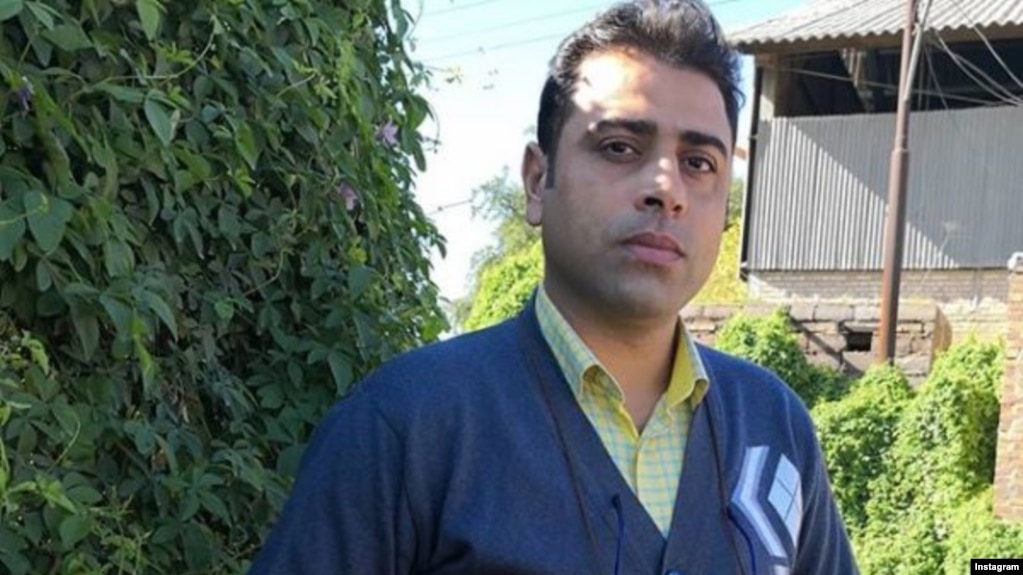
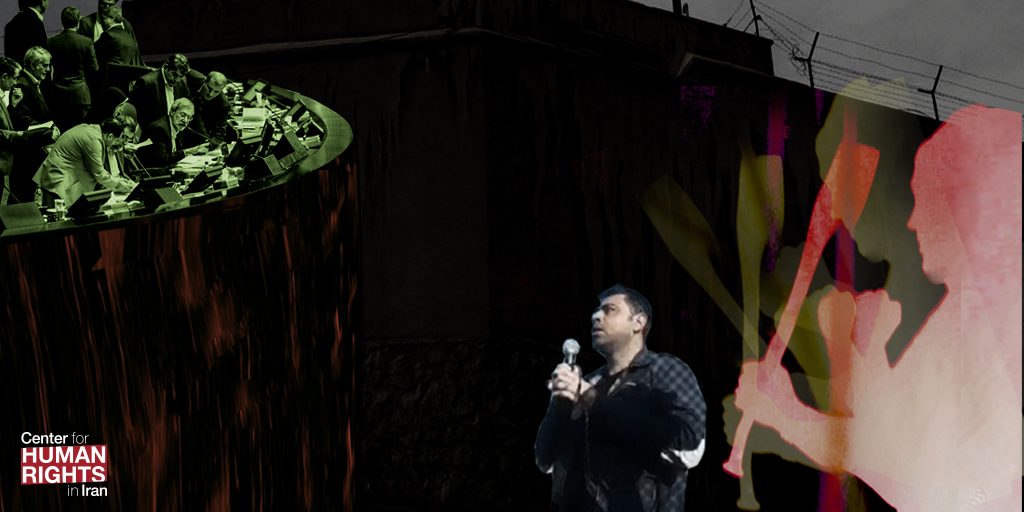
Iranian activist Esmail Bakhshi goes public with his torture claim and hits a nerve even inside Iran

January 11, 2019
Iranian activist Esmail Bakhshi was arrested in November for organizing weeks-long protests at a sugar factory.

Iranian activist Esmail Bakhshi has been out of jail for a month, but says he still bears the physical and psychological scars from being tortured “to the verge of death” during his 25-day jail stay in Khuzestan Province. Bakhshi was arrested on November 20 for his role in weeks-long protests over unpaid salaries at a local sugar factory. He was charged with disruption of public order and collusion against national security and spent weeks in jail before his release on bail on December 12. After detailing his sufferings on Instagram (public letter), Bakhshi challenged Intelligence Minister Mahmud Alavi, a mid-ranking cleric, to a live TV debate concerning the alleged torture of detainees. “As a cleric, and from the moral and human rights point of view, tell us what is the sentence for those who torture prisoners? Is torturing prisoners permissible? If it is, to what extent? Does the ministry you run have the right to secretly monitor private telephone conversations?

Now Bakhshi’s claims have shined a light into the greater issue of prisoner mistreatment and torture, which rights group say is widespread, and have prompted parliament to launch an investigation. Iranian media reported that a parliament committee has been authorized to investigate Bakhshi’s claims after lawmakers requested a probe. Ali Motahari, an outspoken member of parliament, wrote a column in the reformist Etemad daily on January 6 in which he said Bakhshi’s claims were a “source of shame” and demanded answers from the Intelligence Ministry (“The letter …. should be a wake-up call for all those with a conscience and defenders of citizens’ rights who must follow up this matter until it reaches a clear conclusion.” ).

Since the publication of the labor activist’s letter, Bakhshi’s lawyer has indicated that her client has come under intense pressure to retract his statements about being tortured.

On January 6, 2019, Judiciary Spokesman Gholam-Hossein Mohseni Ejei claimed the authorities would investigate if Bakhshi lodged a formal complaint.

“After mentioning torture Esmail Bakhshi has come under intense pressure aimed at forcing my client to deny what happened,” Zilabi said on January 7.

The suggestion that the Intelligence Ministry could be sued has brought reactions from former political prisoners and prisoners of conscience who have suffered torture at the hands of the state. They noted that it is practically impossible to bring torturers to justice and in most cases it was the victims who received punishments for publicizing the torture.


After I was released [from more than a month in detention in early December 2004] I gave interviews and spoke to judicial authorities about being tortured,Fereshteh Ghazi, an Iranian reporter living in exile in the US, tweeted on January 6.  “Then I was summoned by [the Tehran Prosecutor at the time, Saeed] Mortazavi and in the presence of my lawyer he told me I had to file a lawsuit, which I did. He said now that the suit had been filed I had to prove my case or else he would lock me up for a long period. So I became a defendant in my own suit.”

Taghi Rahmani, a reporter and political activist who lives in Paris after serving 15 years in Iran’s prisons, tweeted: “In 1991 I was beaten during interrogation. In fact Judge [first name unknown] Haddad had entered the room and witnessed most of the beating. When my attorney [Abdolfattah] Soltani brought up the beatings in court, Judge Haddad sued Soltani and he was sentenced to four months in prison…

Attorney Ali Mojtahedzade suggested that to assure the public that torturers could be sued and brought to justice, the judiciary should first conclude the prosecution of those responsible for previous atrocities, such as the deaths of Iranian-Canadian photojournalist Zahra Kazemi and blogger Sattar Beheshti during detention.

..Another former political prisoner, Hossein Ronaghi commented: “Sattar Beheshti had said that his interrogator had hung him on the ceiling and beat him. He was terrified about being tortured again”.  [see also: https://humanrightsdefenders.blog/2013/08/23/observatory-expresses-grave-concern-over-health-of-iranian-hrd-hossein-ronaghi-maleki/]

[The February 2018 report of the UN Secretary-General on Iran stated: “The Secretary-General remains concerned about continuing reports indicating that the practice of torture and ill-treatment in the Islamic Republic of Iran persists. Such reports point to a pattern of physical or mental pressure applied upon prisoners to coerce confessions….” The UN Special Rapporteur on human rights in Iran also expressed concern in his September 2018 report.]