Archive for the 'human rights' Category

Hollywood celebrities and human rights: backlash from China

August 30, 2019

Jocelyn Neo in the Epoch Times of 17 August 2019 traces the backlash from China against some of Hollywood’s best-know names for standing up against China on human rights related matters. As most of this is some time ago it is mostly for the record as this blog likes to keep up with star power and human rights [see e.g.: https://humanrightsdefenders.blog/2014/02/10/star-power-and-human-rights-a-difficult-but-doable-mix/%5D.

Read the rest of this entry »

48 Human Rights groups intervene for detained Nigerian Omoyele Sowore

August 26, 2019

On 23 August 2019 48 NGOs issued an urgent appeal in relation to the arrest and detention of Omoyele Sowore, Nigerian journalist and human rights defender, to the UN and African human rights bodies. Joy Hyvarinen, head of advocacy at Index on Censorship said: “Index on Censorship urges the Nigerian authorities to release the prominent journalist and campaigner Omoyele Sowore immediately. The arrest and detention are a shocking violation of Mr Sowore’s human rights, which calls into question Nigeria’s willingness and ability to meet international human rights obligations.


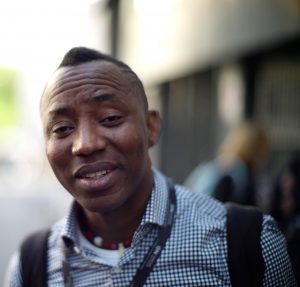
Omoyele Sowore (Photo: Mohamed Nanabhay / Wikipedia)

To the members of the Working Group and the Special Rapporteurs:

We, 48 human rights and press freedom organisations, respectfully request that you consider this urgent appeal in relation to the arrest and arbitrary detention of Nigerian journalist and human rights defender Omoyele Sowore who was arrested by the authorities following a call for peaceful protest. We request that you urgently intervene to secure the immediate release of Mr Sowore and declare his arrest and detention a gross violation of his human rights, including the right not to be arbitrarily detained as protected by Article 9(1) of the International Covenant on Civil and Political Rights (ICCPR) and Article 6 of the African Charter on Human and Peoples’ Rights (the Banjul Charter); the right to a fair trial as protected by Article 14 ICCPR and Article 7 of the Banjul Charter; the right to freedom of expression as protected by Article 19 ICCPR and Article 9 of the Banjul Charter; the right of freedom of peaceful assembly and of association as protected by Articles 21 and 22 ICCPR and Articles 10 and 11 of the Banjul Charter; and his rights as a human rights defender as outlined in the 1999 UN Declaration on Human Rights Defenders and 2017 African Commission Cotonou Declaration on strengthening and expanding the protection of all Human Rights Defenders in Africa.

Background 

  1. Mr Sowore is a prominent journalist, human rights activist and pro-democracy campaigner. He is the founder of Sahara Reporters, an online news agency based in New York City that focuses on corruption, human rights abuses and other political misconduct in Nigeria. Challenging government corruption and speaking truth to power has been the constant thread throughout Mr Sowore’s career, from the leading of student protests in the 1990’s to his recent campaign running for Presidential office in Nigeria.

Omoyele Sowore’s arrest and detention 

  1. Mr Sowore was arrested on 3 August 2019 in his hotel room during a trip to Lagos. Security agents forcefully detained Mr Sowore without informing him of any charges against him and flew him to Abuja, where he is currently being detained at the facility of the headquarters of the Nigerian State Security Service. Mr Sowore has access to food and water, but no access to the outside world: no newspapers, television or phone, and he spends most days in isolation. He was held incommunicado until 6 August, during which time Mr Sowore refused to answer any questions without consulting with his lawyer. He was allowed access to his lawyers only on 7 August, 4 days after his arrest.
  2. Based on Section 35 of the Nigerian Constitution, Mr Sowore should have been arraigned before a court within 48 hours. As of today, Mr Sowore has not been arraigned in any court.
  3. However, on 6 August, 3 days after his arrest, the State Security Service did seek an ex- parte order from the Federal High Court in Abuja to detain Mr Sowore under Section 27(1) of the Terrorism Act 2013, which enables the detention of anyone planning to “commit an act of violence”. The Court’s order of 8 August, made within 48 hours after the State Security Service’s request, granted the authorities permission to detain Mr Sowore for 45 days. Within 24 hours, his legal team, led by Mr Femi Falana, filed a motion to set aside the order and requested Mr Sowore’s immediate release, arguing that his detention was contrary to the Nigerian Constitution. At the time of writing, this request has not been heard by the courts and no date for hearing has been fixed. Importantly: no formal charges have been filed against Mr Sowore.

Mr Sowore’s call for a peaceful #RevolutionNow protest 

  1. The arrest of Mr Sowore appears to be the direct consequence of his call for a peaceful protest scheduled to take place on 5 August 2019, using the hashtag #RevolutionNow.

The objective of the protest was to demand that the Nigerian government end corruption and economic inequality and guarantee education to all. That the protest Mr Sowore and the Coalition for Revolution (CORE) movement he founded called for was a peaceful one is made clear at the very outset of the call for protest, issued on 27 July, which starts by setting out the “rules of engagement”:

We eschew all forms of violence. No protester should throw any object as little as stones or attack any security officials. We are aware of their intent to provoke the mass unduly by using undue tactics and sponsored agents, so as to give the protest a bad name. We encourage all Nigerians to remain calm as we are ready to fight these injustices to a logical conclusion. 

  1. A week earlier, in an interview with the Arise News channel, Mr Sowore stated that “Nigeria needs revolution, not war,” clearly distinguishing his call for substantial change from a call to violence. Mr Sowore has used the word “revolution” contextually to mean “change for the better” since 2006, when he founded Sahara Reporters. Mr Sowore then stated that he would “revolutionise” the way news is being reported in Nigeria –– something he actually did with the investigative citizen journalism the website publishes.
  2. Despite Mr Sowore’s arrest and detention, the 5 August #RevolutionNow protests took place in Abuja, Lagos, Osun, Ondo and Cross River. Protesters met a police force that dispersed them with teargas and gunshots. Numerous protesters, including several of Sahara Reporters’ journalists, were arrested and charged with illegal assembly.

Request for urgent action 

  1. It is clear that Mr Sowore’s arrest on apparent grounds of suspicion of terrorism is unfounded. Mr Sowore did what he has done throughout his career as a journalist and human rights activist: exercise his right to freedom of expression and seek to bring about change through peaceful means, in this case a peaceful protest. The use of the emotive term “revolution” merely underlines his desire for transformative change in what he considers the shortcomings of the current government. There are strong suspicions that Mr Sowore’s arrest stems from ulterior motives than responding to any supposed criminal wrongdoing. This is further highlighted by the fact that the authorities failed to define a charge against him for the first few days after his arrest; the investigations that were subsequently instigated against him under the Terrorism Act were clearly only created to serve the purpose of silencing Mr Sowore.
  2. As such, the arrest and detention of Mr Sowore amount to a violation of his right not to be arbitrarily detained as guaranteed under Article 9 ICCPR and Article 6 of the Banjul Charter. The fact that the charges brought against him most likely stem from his call for a peaceful demonstration and his critical stance on the Nigerian government also violates Mr Sowore’s right to free expression under Article 19 of the ICCPR and Article 9 of the Banjul Charter and his right of freedom of peaceful assembly and of association under Articles 21 and 22 ICCPR and Articles 10 and 11 of the Banjul Charter. Not properly arraigning Mr Sowore before a competent court within the time limit mandated by the Nigerian Constitution and not allowing him access to a lawyer during the initial days of his detention violates his right to a fair trial as protected by Article 14 ICCPR and Article 7 of the Banjul Charter. The foregoing also constitutes a violation of his rights as a human rights defender as defined in the 1999 UN Declaration on Human Rights Defenders and 2017 African Commission Cotonou Declaration on strengthening and expanding the protection of all Human Rights Defenders in Africa.
  3. As a State Party to both treaties, Nigeria is under an obligation to guarantee these rights to all its citizens, as specified under Article 2(1) of the ICCPR and Article 2 of the Banjul Charter. Accordingly, we appeal to the Working Group and UN and AU Special Rapporteurs to:
  • intervene urgently to secure the immediate release of Mr Sowore; and
  • declare his arrest and continuing detention a gross violation of his human rights.

SIGNED BY:
All Workers’ Convergence (AWC) 

Afrika Movement for Freedom and Justice (AMFJ)

Agege Women Agenda (AWA)

ARTICLE 19 Senegal/West Africa

Centre for Constitutional Rights

Centre for Human Rights and Social Justice (CHRSJ)

Chidi Odinkalu Former Chairman, National Human Rights Commission (Nigeria) & Senior Fellow, Open Society Justice Initiative

Coalition for Revolution (CORE) 

Committee for the Defence of Human Rights (CDHR) 

Community Women Initiatives (CWI) 

The Concerned Forum 

Congress of Progressive Youths (COPY) 

Democratic Youth League

Edo State Civil Society Organisation (EDOSCO)

Enough is Enough (EiE) Nigeria 

Freedom of Expression Hub

Gani Fawehinmi Apostles 

Gani Fawehinmi Memorial Organization (gafam.org) 

Governance Advancement Initiative for Nigeria (GAIN)

Global Voices Sub-Saharan Africa

Grassroot Justice Centre

Human and Environment Development Agenda (HEDA) 

Human Rights Network for Journalists-Uganda (HRNJ-UGANDA)

IAmVocal

Index on Censorship 

Media Legal Defence Initiative

Media Rights Agenda

Moshood Abiola Vanguard for Democracy (MAVD)

Movement For People’s Rights

National Conscience Party (NCP), Lagos State Branch

Nigerians in Diaspora Europe, Belgium-Luxembourg (NIDOE-BeLux)

Open Society for West Africa (OSIWA), Nigeria Office

Paradigm Initiative

People’s Alternative Front (PAF)

Peoples’ Unite

Rivers State Civil Society Coalition (RIVSCO)

Rule of Law and Accountability Advocacy Centre (RULAAC) 

Save Lagos Group

Socialist Vanguard Tendency (SVT) 

Socio-Economic Rights and Accountability Project (SERAP)

Sovereign Vital Force 

Spaces for Change 

Take-It-Back (TiB) Movement 

Talakawa Parliament

Veteran Group for Operation Clean Crusade (VGOCC) 

Women for Leadership Change

Workbond International Network (WIN)

Youth In Good Governance Initiative (YIGGI) 
New Zealand funds much-needed human rights monitoring in the Pacific

August 22, 2019

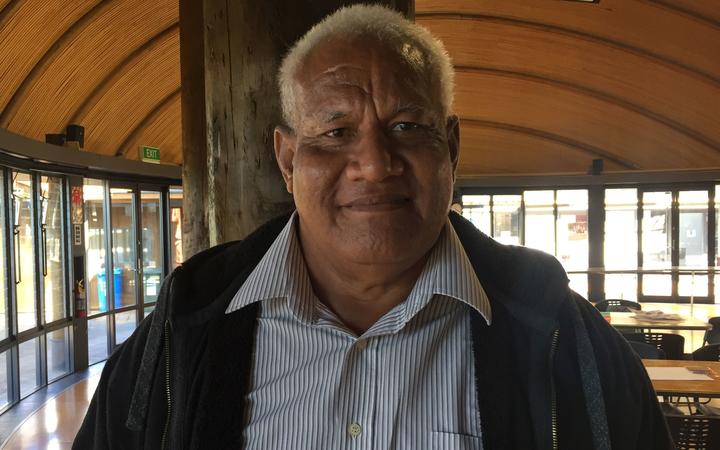
Susan Randolph – Photo: RNZ Pacific / Mackenzie Smith

New Zealand is supporting a new rollout of human rights monitoring in the Pacific. Funding of $US400,000 will allow the Human Rights Measurement Initiative (HRMI) to expand its programmes in the region. The non-profit organisation which is holding workshops in Auckland this week said it would use the money to build data sets on economic and social rights in the Pacific. Its development lead Anne-Marie Brook said it was the first time they had accepted money from a government and a clause had to be inserted into its contract with New Zealand’s Foreign Ministry to safeguard HRMI’s independence.

[see also:https://humanrightsdefenders.blog/2019/03/07/pacific-human-rights-defenders-can-do-more-to-deal-with-extractive-industries/]

Because human rights are so politically sensitive, it’s really clear that human rights needs to be measured independently of government because governments often face conflicts of interest,” she said. HRMI’s data on the Pacific is porous and often anecdotal, according to its economic and social rights lead Susan Randolph. The funding would allow more comprehensive data to be collected to help Pacific governments and civil society groups tackle human rights abuses, she said.

In Tuvalu, where the country’s first human rights institution was set up only late last year, the Chief Ombudsman Sa’aga Talu Teafa said they were still figuring out the best approach. “It’s very young, we call it very young. That’s why we are here to learn and to know what other institutions or what other human rights defenders are doing regarding human rights implementation,” he said.

It’s the same in Samoa, where recently the Ombudsman’s office, finding no data on violence, had to come up with its own to produce a report.

Tuvalu Chief Ombudsman, Sa'aga Talu Teafahome.

Tuvalu Chief Ombudsman, Sa’aga Talu Teafahome. Photo: RNZ Pacific / Mackenzie Smith

New Zealand Human Rights Commission’s Pasifika advisor Tuiloma Lina-Jodi Vaine Samu said the Pacific had a history of resistance to human rights monitoring because of faith-based systems. “Our religions, our faiths, our churches, are very, very important to us. But so are our traditional, cultural, ancestral beliefs as well,” she said. “At hui like this we are able to come together, fono, and talk about these issues, these mindsets, so that we can advance human rights forward.”

https://www.newsie.co.nz/news/160079-nz-funds-human-rights-monitoring-pacific.html

Controversial U.N.decision to hold conference on torture in Egypt

August 20, 2019

The U.N. Office of the High Commissioner for Human Rights will co-host the regional conference with the government’s National Council for Human Rights (NCHR) on 4-5 September. Some 80 participants, both government and non-governmental, from 19 Arab countries are expected to attend. U.N. human rights spokesman Rupert Colville, who in February had said torture was endemic in Egypt, told Reuters: “It is a fairly standard type of event.”…

Gamal Eid, director of the Arab Network for Human Rights Information, said the idea of Egypt hosting such an event was a joke. “More ironic is that this is through the National Council (for Human Rights), the role of which is to always polish the government’s image and complicity in the human rights situation,” he said. NHCR president Mohamed Fayek will give a welcome address at the conference’s opening ceremony, according to an agenda seen by Reuters….In 2017, Egypt raided and shut down the Nadeem Center, which documented alleged human rights abuses and treated torture victims.

In the meantime on 19 August 2019 the NGO EuroMed Rights announced that it has declined the invitation and in an open letter addressed to UN High Commissioner, Ms Michelle Bachelet, EuroMed Rights expresses its deep reservations about the decision to hold this conference in Egypt, a country where torture is systematically practised by the security forces, and in collaboration with the Egyptian National Council for Human Rights, which acts under the auspices of the government. The letter recalls that detainees and prisoners in Egypt are frequently subjected to abuses which amount to torture, including electric shocks, beatings, suspension by limbs and rape. Read full letter here

https://kfgo.com/news/articles/2019/aug/15/rights-groups-criticize-undecision-to-hold-conference-on-torture-in-egypt/927888/

European Lawyers in Lesvos awarded Pax Christi Peace Prize 2019

August 14, 2019

Pax Christi International honoured the European Lawyers in Lesvos (ELIL) as the recipient of the 2019 Pax Christi International Peace Prize at a ceremony held in Brussels on Wednesday evening, 26 June.

The prize was accepted by “European Lawyers in Lesvos” (ELIL’s) managing director, Philip Worthington, who delivered a speech on the work of ELIL and their efforts to protect the human rights of migrants and refugees in crisis. The evening began with a speech highlighting the centrality of recognising the human dignity of every person by Bishop Kevin Dowling (Rustenburg, South Africa), Co-President of Pax Christi International. His speech was followed by his counterpart, Ms Marie Dennis, Co-President of Pax Christi International, addressing the importance of the refugee crisis to Pax Christi sections and member organisations around the world and how we are inspired by the work of ELIL. Ms. Greet Vanaerschot, Pax Christi International’s Secretary General, presented the award to Mr Worthington. Attendees were treated to musical interludes by recording artist Zem. A reception followed the one-hour ceremony.

One of the very few providers of legal assistance on the Greek island of Lesvos (also known as Lesbos, a focal point of mass immigration into Europe), ELIL was founded in June 2016 by the Council of Bars and Law Societies of Europe (CCBE) and the German Bar Association (DAV). Since that time, along with a small permanent staff, almost 150 volunteer asylum lawyers from 17 countries have provided free legal assistance to more than 9,000 people, most of whom are from Syria, Iraq or Afghanistan. ELIL is the largest provider of legal assistance to asylum seekers on Lesvos and is the primary provider of legal assistance to unaccompanied minors who have been incorrectly registered as adults (over 500 cases in total) and asylum seekers in detention (almost 200 cases in total). In addition to other services, ELIL also helps reunite families by assisting with family reunification applications under the Dublin Regulation.

Established in 1988, the Pax Christi International Peace Award is funded by the Cardinal Bernardus Alfrink Peace Fund and honours contemporary individuals and organisations who make a stand for peace, justice and nonviolence in different parts of the world. For text and videos of the speeches, photos of the ceremony & more, please click HERE.

Read more about European Lawyers in Lesvos (ELIL): www.europeanlawyersinlesvos.eu

Saudi lawyer Waleed Abu al-Khair winner of ABA human rights award

August 14, 2019

Waleed Abu al-Khair

Waleed Abu al-Khair.

Saudi human rights lawyer Waleed Abu al-Khair, who was convicted on anti-terrorism charges and sentenced to 15 years in prison, is the winner of the 2019 ABA International Human Rights Award. For more on this and other awards for human rights lawyers see: http://www.trueheroesfilms.org/thedigest/awards/aba-international-human-rights-award

The ABA Journal states that Abu al-Khair founded Monitor for Human Rights, one of the only human rights organizations in Saudi Arabia, in 2008. He dedicated his legal career to defending human rights and the right to freedom of expression, and pushed for an elected parliament, independent judiciary, constitutional monarchy and other reforms in his country. Abu al-Khair’s 2014 arrest and conviction largely stemmed from comments he made to the media and on social media that criticized Saudi Arabia’s human rights record, discussions of human rights in his home and his defense of activists who were punished for criticizing the government, according to Human Rights Watch and Amnesty International. The human rights organizations say the specific charges against him included disobeying the ruler and seeking to remove his legitimacy; insulting the judiciary and questioning the integrity of judges; setting up an unlicensed organization; harming the reputation of the state by communicating with international organizations; and preparing, storing and sending information that harms public order.

His full 15-year sentence was upheld by a Saudi appeals court in 2015 after he refused to apologize for the alleged offenses. He is currently in the Dhahban Central Prison in Jeddah, Saudi Arabia. The United Nations Human Rights Council’s Working Group on Arbitrary Detention has twice reviewed the legitimacy of Abu al-Khair’s detention, and in 2018, declared that Saudi Arabia lacked legal basis and grounds for restricting his freedoms of expression and opinion, the ABA press release says.

Abu al-Khair earlier also received the Olof Palme Prize, Ludovic-Trarieux International Human Rights Prize, Law Society of Ontario’s Human Rights Award and Right Livelihood Award. [see: https://humanrightsdefenders.blog/2017/02/28/saudi-arabia-imprisoned-waleed-abu-al-khair-receives-another-human-rights-award/ and https://humanrightsdefenders.blog/2018/11/14/right-livelihood-award-urges-freedom-for-3-saudi-laureates/]

http://www.abajournal.com/web/article/imprisoned-saudi-lawyer-receives-this-years-international-human-rights-award

Call for Applications for Civic Space Litigation Surgery, 25-27 September in Nigeria

August 8, 2019
Robert F. Kennedy Human Rights and Open Society Justice Initiative are calling for applications from lawyers and/or members of civil society organizations based in West Africa to participate in a forthcoming litigation surgery on the protection of civic space. The litigation surgery will be held in Abuja, Nigeria from September 25 – 27, 2019. All applicants are required to submit a current or potential case involving the protection of civic space for discussion and workshopping.  The application deadline is 11 August 2019. To apply, please complete the online application form available HERE and send all required documents.
…..
The proposed strategic litigation surgery is aimed at considering key issues implicated in protecting civic space, particularly the protection of freedom of expression, the right to peaceful protest, assembly and association. This litigation surgery looks to support and strengthen either existing or proposed cases that are focused on defending these rights.

Criteria for participant eligibility: 

  • The litigation surgery is open to lawyers and/or members of civil society organizations working in any member state of the Economic Community of West African States (ECOWAS), including Benin, Burkina Faso, Cabo Verde, Ivory Coast, Côte d’Ivoire, the Gambia, Ghana, Guinea, Guinea Bissau, Liberia, Mali, Niger, Nigeria, Senegal, Sierra Leone, and Togo. Applicants must possess a demonstrated commitment to addressing threats to civic space in their home country through sub-regional and regional human rights litigation. Lawyers currently employed by a government institution or political party are not eligible.
  • The participants must be involved in, or considering, litigating a case or cases that address the suppression of civic space involving a violation of the rights to freedoms of expression, the right to peaceful protest, assembly, and/or association. With their application, they must submit a case that they are litigating or intend to litigate before existing human rights protection mechanisms at the sub-regional or regional levels or the national court system, which could be discussed and workshopped during the litigation surgery.
  • The following non-exhaustive list of themes are a guide for the types of cases that could be submitted with the application:
    • Suppression of peaceful protests — e.g. through excessive use of force against protesters; criminalization of protesters and organizers; legal frameworks that either prevent, restrict and/or chill protest rights generally;
    • Burdensome regulatory restrictions on civil society organizations — e.g. constraints on access to foreign funding and foreign partnerships; obstacles in registering or maintaining registration; restrictive tax laws;
  • Suppression of the media and access to information — e.g. misuse of criminal defamation laws; restricted access to the internet and social media; abuse of cyber-crimes laws; other violations that produce a chilling effect on the freedom of expression, media freedom, citizen journalism, or access to information;
  • Abuse of laws or policies in the context of countering terrorism — e.g. misuse of broad counter-terrorism laws to criminalize and/or chill legitimate activities of civic actors;
  • Impunity for threats, violence, and arbitrary detention against human rights defenders, activists, journalists, media practitioners, bloggers, social media users and other civic actors.
  • While all civic space cases will be considered, we encourage cases that touch on an intersectionality of issues and/or address untested or developing areas of human rights jurisprudence at the national, sub-regional or regional levels respectively, including:
    • Cases that highlight the role of multinational corporations in the suppression of civic space;
    • Cases that link the suppression of civic space to economic, social, and cultural rights, including in particular environmental rights;
    • Cases that demonstrate how the suppression of civic space uniquely affects women, sexual minorities, persons with disabilities, or refugees and internally displaced persons;
    • Cases that address the link between the suppression of civic space and corruption.

Other important details: The working languages for the litigation surgery will be English and French. There will be simultaneous interpretation between the two languages available to all participants. The organizers will cover the cost of airfare, visas, local transportation, accommodation, and a reasonable per diem for expenses not otherwise covered for up to about 8 selected participants.

To apply: HERE. If you have any questions regarding the litigation surgery or the application process, please email advocacy@rfkhumanrights.org.

https://rfkhumanrights.org/news/call-for-applications-civic-space-litigation-surgery-1

New documentary series highlights the struggle of women human rights in Vietnam

August 7, 2019

A new series of video interviews highlights the perspectives and struggles of human rights women in Vietnam.

The 88 Project, an organisation supporting freedom of expression in Vietnam, released the first video of an ongoing interview series with female activists in Vietnam. In the first interview with Pham Doan Trang, a dissident journalist and political activist, she discusses the challenges women face as bloggers and human rights activists: “In general, Vietnamese women are not respected. Not only in democracy activism but in all fields. In democracy activism, female activists are disadvantaged because they get attacked no less than male activists. They get beaten and assaulted. The work they do is no less than their male counterparts. But what they often get from other people is pity. I think it is not respect.” See also: https://humanrightsdefenders.blog/2017/11/18/overview-of-recent-campaigning-for-human-rights-defenders-in-vietnam/

Other women including social activist and blogger Tran Thi Nga, who is currently serving a nine-year prison sentence, have also been seriously injured following physical attacks, often conducted by hired men. Tran Thi Nga’s attack was documented and posted on Youtube with recordings of her being wheeled into a hospital accompanied by her two young children. According to family reports, Tran Thi Nga has been subjected to both physical and psychological harassment after her arrest, receiving death threats and beatings from a cellmate.

According to the 88 Project database, there are currently more than 200 prisoners of conscience in Vietnam with over 30 identifying as female. Bloggers and journalists are frequently arrested and charged for “activities attempting to overthrow the state” or “conducting propaganda against the state”. According to Amnesty International, the Vietnamese government has been conducting a growing crackdown on freedom of expression and peaceful activism over the past few years.

Nguyen Dang Minh Man, a photojournalist and the woman who has served the longest time in prison so far, is expected to be released at the beginning of August.

Journalist Kabendera in Tanzania: now suddenly held on economic charges

August 6, 2019
On 5 August 2019 prosecutors in Tanzania charged freelance journalist Erick Kabendera with money laundering, tax evasion, and assisting an organized crime racket. When he was detained on July 29, the Dar es Salaam police chief said at a press conference that police were investigating Kabendera’s citizenship status.“It seems that for the past week, authorities have been searching for a way to justify their detention of this critical freelance journalist. First, they claimed Erick Kabendera’s citizenship was in question, today they have leveled drastically different charges, which call into question their motive for holding him,” said CPJ Sub-Saharan Africa Representative Muthoki Mumo. “Prosecutors should immediately drop the charges against Kabendera and Tanzania should end its practice of retaliating against critical voices.”.. Under Tanzania’s Criminal Procedure Act, people accused of money laundering do not qualify for bail. Kabendera could remain in detention for the duration of his trial, Jones Sendodo, one of the lawyers representing the journalist, told CPJ. If convicted of assisting a criminal racket, Kabendera could be jailed for up to15 years.

Since his arrest, authorities have searched the journalist’s home at least twice, confiscated his passport and other documents, and questioned his mother, according to media reports. In addition to being interrogated about his citizenship, Kabendera was also questioned on allegations of sedition and cybercrime offences, according to the BBC and other reports. In a statement last week, the Tanzania Human Rights Defenders Coalition said that Kabendera’s rights to due process had been violated, as police moved him from station to station after arrest, denying him access to legal representation and his family. In a video posted to Twitter today, Jebra Kambole, who is also representing Kabendera, said the journalist has not yet been questioned for the crimes on the charge sheet, adding, “It is journalism work that has brought Erick here.” Kabendera will be detained at Segerea prison in Dar es Salaam until August 19, when the next hearing in his case is scheduled, his lawyer, Sendodo, said.

https://cpj.org/2019/08/tanzania-switches-track-charges-kabendera-with-eco.php

LWF rolls out Advocacy Handbook in Central America

August 5, 2019
Participants at the LWF advocacy training workshop in San José, Costa Rica, 14-16 July. Photo: LWF/F. Wilches

The persecution and killing of human rights defenders in Central America, as well as obstacles to the exercise of religious freedom in the region were under the spotlight at an advocacy training workshop in San José, Costa Rica, 14 -16 July.  The Lutheran World Federation (LWF) event was attended by 21 participants from six of the communion’s member churches in Central America and North America and from the World Service regional program.

The training facilitated by the LWF Office for International Affairs and Human Rights was an important opportunity for participants to share experiences of advocacy in their local and national contexts, hear about good practices and learn basic guidelines for effective advocacy work from a rights-based approach including gender analysis. The main tool used was the recently published LWF Advocacy Handbook, which is available in English, French and Spanish.

Participants talked about their concerns for the plight of human rights’ defenders who risk their lives on a daily basis in pursuit of justice and peace in their countries. They also discussed other human rights issues including limitations to freedom of expression and peaceful assembly, the rights of indigenous peoples, the challenges facing those living with HIV and  the importance of a critical approach to the role of the churches in the public space. “What makes this handbook special is its attempt to equip human rights defenders with a wide range of practical strategies that link local and global advocacy actions for meaningful impact at grass roots level” stated Dr Ojot Miru Ojulu, LWF Assistant General Secretary for International Affairs and Human Rights

The training is expected to be replicated in the other LWF regions over the coming years with the goal of helping the member churches, country programs and communities to strengthen their capacity to work on advocacy and human rights. See also: https://humanrightsdefenders.blog/2019/05/29/three-award-winning-colombian-human-rights-defenders-on-a-european-tour-to-raise-awareness/

LWF Advocacy Handbook

https://www.lutheranworld.org/news/lwf-rolls-out-advocacy-handbook-central-america