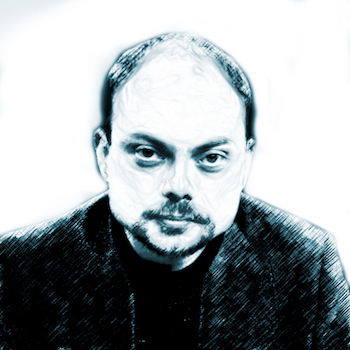
Vladimir Kara-Murza, the Russian democracy activist, historian, twice-poisoned critic of Vladimir Putin’s regime, and a senior advisor to Human Rights First, was reportedly arrested near his Moscow residence on 11 April 2022. Kara-Murza’s arrest came just days after his return to Russia and shortly after CNN broadcasted an interview with him. He is the winner of 3 human rights awards, see: https://www.trueheroesfilms.org/thedigest/laureates/34e43b60-3236-11ea-b4d5-37ffeeddd006
“We are deeply concerned for our friend Vladimir Kara-Murza’s personal safety, and we call on Russian authorities to release him immediately,” said Michael Breen, President and CEO of Human Rights First. “Putin and his regime have shown themselves to be willing to break any law, domestic or international, to suppress political opposition at home and subjugate neighboring countries like Ukraine. We call on all of democracy’s allies to oppose criminal behavior like this to protect human rights in Russia, Ukraine, and around the world.”
Having been targeted for assassination twice before, Kara-Murza knew his return to Russia put him in danger. In his recent CNN interview, Kara-Murza said, “The biggest gift we could give…to the Kremlin would be just to give up and run…that’s all they want from us.”
On 8 April 2022, the Russian government closed the offices of Amnesty International and Human Rights Watch and several other NGOs such as Carnegie Endowment for International Peace, Friedrich Naumann Foundation for Freedom, Friedrich Ebert Foundation. This decision has been taken “in connection with the discovered violations of the Russian legislation.”
On 11 March, Russia’s media regulator had already blocked access to Amnesty International’s Russian-language website.
“Human Rights Watch has been working on and in Russia since the Soviet era, and we will continue to do so,” said Kenneth Roth, executive director of Human Rights Watch. “This new iron curtain will not stop our ongoing efforts to defend the rights of all Russians and to protect civilians in Ukraine.”
Reacting to the news, Agnès Callamard, Secretary General of Amnesty International, said: “Amnesty’s closing down in Russia is only the latest in a long list of organizations that have been punished for defending human rights and speaking the truth to the Russian authorities. In a country where scores of activists and dissidents have been imprisoned, killed or exiled, where independent media has been smeared, blocked or forced to self-censor, and where civil society organizations have been outlawed or liquidated, you must be doing something right if the Kremlin tries to shut you up.“
Emily Pontecorvo a reporter for GRIST published on 6 April 2022 a piece about a new report by the Business and Human Rights Resource Centre which states that the renewable energy sector is unprepared for the protection of land rights defenders.
In April of last year, José de Jesús Robledo Cruz and his wife Maria de Jesús Gomez Vega were found dead in the desert in Sonora, Mexico. In July, Fernando Vela, a doctor in Coqueta, Columbia, was shot to death by two men on a motorcycle while he was in his truck. In September, Juan Macababbad, an attorney in the Philippines was shot dead outside his home.
“Our data shows almost the tip of the iceberg,” Christen Dobson, senior program manager for the BHRRC and an author of the new report. “Many attacks are not publicly reported. And so we know the problem is much more severe than these figures indicate.”
According to the report, human rights defenders who spoke out against mining projects consistently experienced the greatest number of attacks over the past seven years. The authors say this is especially concerning considering the expansion of mineral production required by a transition to clean energy. All those batteries, solar panels, and wind turbines are going to require a lot of cobalt, nickel, zinc, lithium, and other minerals.
“We’re already seeing this level of attack, and we’re not seeing major producers of transition minerals have strong policies or practices in place about protecting defenders,” said Dobson. “There’s a real risk there and I think it’s an area that we’re very concerned about.”
…
The report urges investors to publish a human rights policy and require that companies begin disclosing human rights and environmental-related risks. But Dobson said that voluntary actions from companies and investors was not enough. She said there was some momentum building behind mandating that companies report on measures they are taking to respect human rights, including legislation proposed in the European Union and Canada.
“It is concerning to see a vast majority of companies and investors, including major renewable energy companies, do not have policies expressing zero-tolerance against reprisals in their operations, supply chains and business relationships,” said Dobson in a statement. “It’s time for companies and investors to recognise the energy transition cannot be effective if it is not also rights-respecting.”
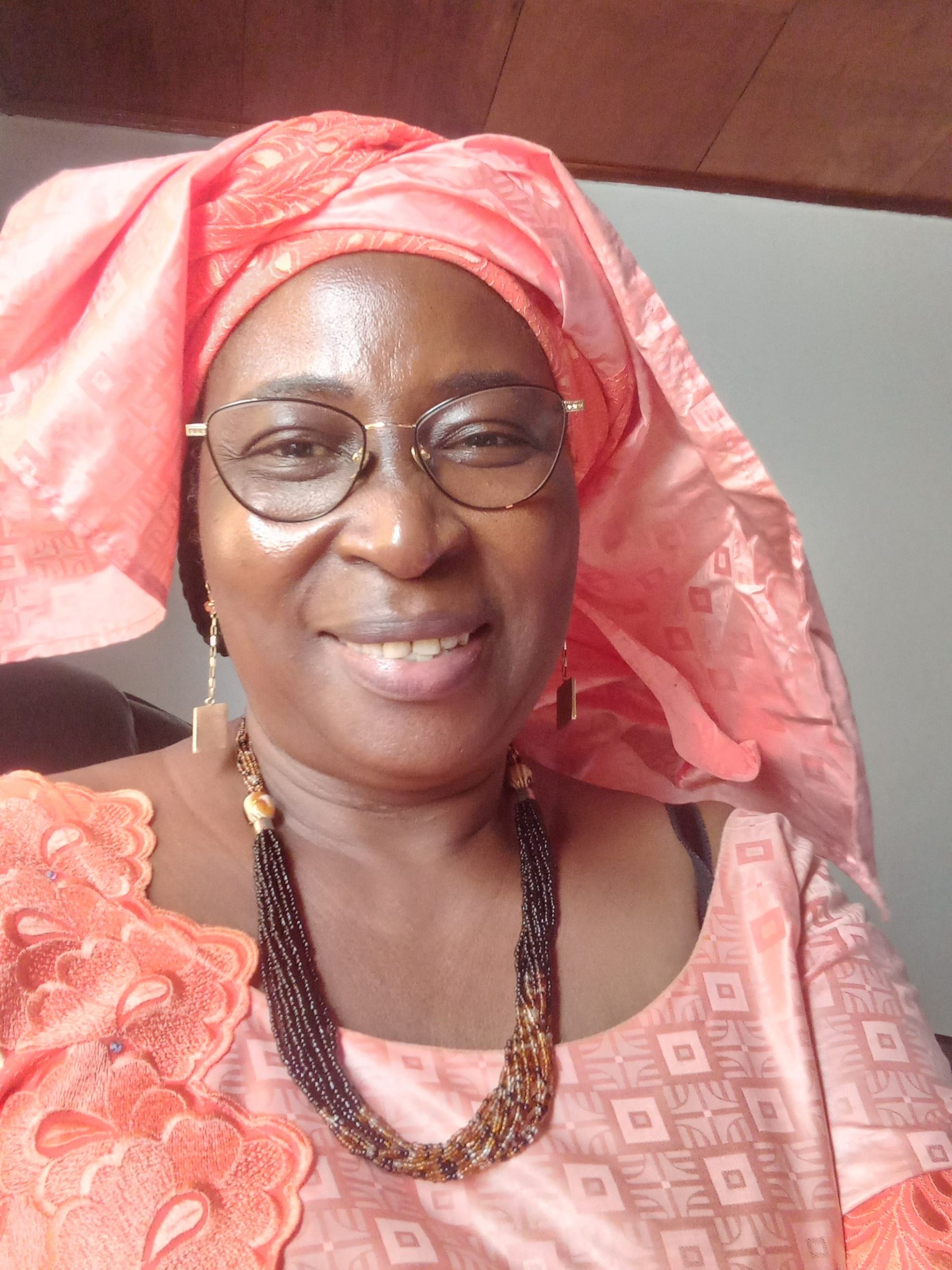
What inspires change and drives activism? Can anyone become a change-maker? These were questions we asked back in December, when 2021 Laureates Marthe Wandou, Vladimir Slivyak, Freda Huson and Legal Initiative for Forest and Environment came to Stockholm to be presented with the Right Livelihood Award. [See also: https://humanrightsdefenders.blog/2021/10/04/2021-laureates-of-the-right-livelihood-award/]
All four Laureates have succeeded in mobilising grassroots action and community-based models for change, so in an effort to learn more, we invited US journalist Dara Lind to sit down with them individually and take a deep dive into their stories. We are now happy to present “How to Mobilise Change”, a series of in-depth conversations in which we not only get to know the Laureates better and learn about what prompted them to take action but can also learn about how sustainable change can be achieved – based on their strategies and methods of action. Throughout the spring, we are releasing the recordings one by one. The series starts this week with the release of Cameroonian Laureate Marthe Wandou’s interview and a week of action to support children’s rights.
On 5 April 2022Nanjala Nyabola, Advox Director at Global Voices introduced The Unfreedom Monitor, a methodology for tracking digital authoritarianism worldwide
The Unfreedom Monitor is an Advox research initiative that examines the growing phenomenon of networked authoritarianism or digital authoritarianism. “Digital authoritarianism” describes the use of technology to advance repressive political interests. It is not purely confined to authoritarian regimes. Democratic states also use and sell advanced technology to track and/or surveil citizens, spread mis-/disinformation, and disempower citizens’ civic and political participation. Nor is it only states that perpetrate digital authoritarianism—corporations located in democratic countries are key suppliers of the technology that is used.
The Unfreedom Monitor
Authoritarian regimes have long had a complicated relationship with media and communications technologies. The Unfreedom Monitor is a Global Voices Advox research initiative examining the growing phenomenon of networked authoritarianism or digital authoritarianism.
..One major aim of this project is to provide richer context that transcends unique national or thematic situations. It would be an omission to focus solely on the internet and ignore, for example, the effects of the mechanisms of growing repression on press freedom and human rights. In the countries we studied, we found a strong correlation between declining press freedom and growing digital authoritarianism. Information, after all, is the raw material of governance, and both online spaces and traditional media serve the important function of making information available to people and communities to enable them to make independent evaluations of their governments. The impetus to control information on the internet is directly connected to the impetus to control information shared by the press.
The briefing document provides an overview of key developments in digital authoritarianism in 11 countries and explains the theoretical framework and methodology behind The Unfreedom Monitor project. The document also provides a basis for expanding this research to other countries to deepen our understanding of digital authoritarianism globally, as well as its crucial implications for the future. The preliminary sample of 11 countries was chosen to reflect a range of factors: system of government, approach to human rights (including rankings in indexes), and corporate relations. The countries are: Brazil, Ecuador, Egypt, India, Morocco, Myanmar, Russia, Sudan, Tanzania, Turkey, and Zimbabwe.
Desk research supplemented qualitative study of a dataset comprising media items exploring issues, events, actors, narrative frames, and responses, to identify trends and patterns of digital authoritarianism. We also conducted weekly seminars with the research team to gain a sense of any cross-cutting themes and commonalities that emerged. One interesting outcome was finding that while clients and their interests may be varied, only a handful of companies—many based in nominally democratic countries—were selling the technology that makes some digital authoritarian practices possible.
Another four researchers also worked with four cross-cutting themes concerning digital authoritarianism to develop an approach that can be used across contexts. These themes were: data governance, speech, access, and information. The tendency with internet research is to think about ideas or development in thematic isolation, and we encouraged this cohort of researchers to think both broadly and deeply about what unites all these separate ideas.
The report finds that digital authoritarianism is not confined to authoritarian states. Rather, it is a culture—of increasing executive power, legislation, and global capital flows—that allows the state to interfere in citizens’ lives and to stifle or frustrate civic engagement. There is no single predictive factor, but digital authoritarianism is closely related to the contraction of press freedom, and resistance to political transitions. Moreover, it is a transnational process, and the availability of technology in one part of the world will eventually have political consequences in another.
TechCrunch of 5 April 2022 reports that Investigators say they have found evidence that a Jordanian journalist and human rights defender’s iPhone was hacked with the Pegasus spyware just weeks after Apple sued the spyware’s maker NSO Group to stop it from targeting Apple’s customers.
Award-winning journalist Suhair Jaradat’s phone was hacked with the notorious spyware as recently as December 5, 2021, according to an analysis of her phone by Front Line Defenders and Citizen Lab that was shared with TechCrunch ahead of its publication. Jaradat was sent a WhatsApp message from someone impersonating a popular anti-government critic with links to the Pegasus spyware, compromising her phone. According to the forensic analysis, Jaradat’s iPhone was hacked several times in the preceding months and as far back as February 2021.
Apple had filed a lawsuit against Israeli spyware maker NSO Group in November 2021, seeking a court-issued injunction aimed at banning NSO from using Apple’s products and services to develop and deploy hacks against its customers. See also: https://humanrightsdefenders.blog/2021/07/21/nsos-pegasus-spyware-now-really-in-the-firing-line/…But so far the case has gotten off to a slow start after the first judge assigned to the case recused herself, with no decision on the case likely to be made any time before June.
Jaradat is one of several Jordanians, including human rights defenders, lawyers and fellow journalists whose phones were compromised likely by agencies of the Jordanian government, according to Front Line Defenders and Citizen Lab’s findings out Tuesday.
Among the others targeted include Malik Abu Orabi, a human rights lawyer whose work has included defending the teachers’ union, which in 2019 led the longest public sector strike in the country’s history. Abu Orabi’s phone was targeted as early as August 2019 until June 2021. Also, the phone of Ahmed Al-Neimat, a human rights defender and anti-corruption activist, was targeted by the ForcedEntry exploit in February 2021. The researchers said the hacking of Al-Neimat’s phone is believed to be the earliest suspected use of ForcedEntry.
Another Jordanian journalist and human rights defender’s phone was targeted, according to the researchers, but who asked for her identity not to be disclosed.
—
Meanwhile, on 5 April 2022, AFP reported that Palestinian lawyer Salah Hamouri, who is in Israeli detention, filed a complaint in France Tuesday against surveillance firm NSO Group for having “illegally infiltrated” his mobile phone with the spyware Pegasus.
Hamouri, who also holds French citizenship, is serving a four-month term of administrative detention ordered by an Israeli military court in March on the claim he is a “threat to security”.
On Tuesday, the International Federation for Human Rights (FIDH), the Human Rights League (LDH) and Hamouri filed a complaint with the Paris prosecutor. It accused NSO of “having illegally infiltrated the telephone of rights defender Salah Hamouri,” they said in a statement sent to the AFP bureau in Jerusalem.
“Obviously, this is an operation that is part of a largely political framework given the harassment Hamouri has been subjected to for years and the attacks on human rights defenders in Israel,” attorney Patrick Baudouin, honorary president of the FIDH, told AFP.
South Africa in the special position to have its own human rights day, not on 10 December but on 21 March, historically linked with 21 March 1960 and the events of Sharpeville. In a Maverick Citizen panel discussion on Monday 21 March, representatives of a range of civil society movements explored what it means to be an activist. The panellists discussed their own experiences of activism: the world needs activists, who in turn need commonality for success and survival
The current times — filled as they are with uncertainty and suffering — require all or most people to be active rather than passive. Though those involved in activism will become weary, they should not step back from the struggle, according to Delani Majola, communications officer for the Ahmed Kathrada Foundation. The need for activism in today’s world is far more urgent than it ever was before.
“It means that we need to… find linkages with one another, we need to recharge each other. I think we will not achieve anything — so whether it’s small victories, small gains — but we will not achieve anything if we sit back and become passive and give in to defeat,” said Majola.
Among the speakers involved in the discussion were also Nkateko Blessing Muyimane, a medical student who recently fled Ukraine and started the non-governmental organisation, SA Safe Corridor for Students; Jennifer Matibi, founding member of Nirvana, an initiative that assists young women of the Johannesburg inner city to create spaces in which they can grow; Thandeka Gqubule-Mbeki, former SABC economics editor and current PhD student at the University of Johannesburg; Siyabonga Ndlangamandla, board member at Makers Valley Partnership; and Shaeera Kalla, board member of Section27 and member of the #PayTheGrants campaign. Nkateko Blessing Muyimane, a medical student who recently fled Ukraine and began an NGO, SA Safe Corridor for Students, to assist those students still trapped in the country.
The discussion was facilitated by Maverick Citizen editor Mark Heywood and journalist Zukiswa Pikoli. Zukiswa Pikoli, journalist with Maverick Citizen.
Spaces for activism have become smaller in recent years, according to Kalla. This not only calls for more voices and action in these spaces but also cooperation and support among the different groups within civil society. There are, she emphasised, links between the various causes for which people advocate — from basic income and food sovereignty to free media and mental health.
“Being a good activist is really about also building relationships, and I think those spaces that one creates are filled with those relationships,” said Kalla. “[T]hat’s how you sustain momentum and that’s how you figure out how to take one idea and create an intersectional… spectrum, a spectrum of issues that support it, and they take it to the next level.”
She added that the “typical image” of an activist should not override the everyday struggles that people face in society. While activism is a choice for some, for others it is a lived reality; a state of fighting a system that was built against them.
Activism should come from a place of compassion, according to Muyimane. He defines activists as those who want to make an environment a better place. The decision of a person to throw themselves into a course of action is often very personal, said Gqubule-Mbeki. It can be rooted in their worldview, an innate sense of justice or outrage at something they have witnessed or experienced.
Gqubule-Mbeki’s own journey as an activist began with her experience of forced removals under apartheid. She saw both her grandparents and her parents lose their homes to this unjust policy. Thandeka Gqubule-Mbeki, PhD student and part-time lecturer at the University of Johannesburg addressing the audience. Johannesburg, 21 March 2022. (Photo: Shiraaz Mohamed)
“So, [activism is] partly personal, partly a decision to make your beliefs publicly relevant and to impact policy and how human beings relate to each other, and how societies are constructed,” she said.
Over and above the “imagination” it takes to stand up for something, Kalla believes activism is about sustaining human beings, creating a political culture and ensuring that people feel safe. In this way, separate causes are united by their common drive to see people live with dignity.
“It’s about making sure people feel seen, feel safe and feel cherished, whether or not you’re personally affected, in a direct sense,” she said. “[T]he fact that you are a human being, and you can have empathy and you can see an unjust system and want to do something about it, is enough to start trying to understand what it is that you can contribute to, in whatever form.”
There is currently a large pushback against democracy defenders by capital, corporations and institutions, according to Gqubule-Mbeki. If the victimisation of human rights activists is to be addressed, there is a need for an examination and improvement of certain laws, including the Protected Disclosures Act and Witness Protection Act.
“We must ratchet up the consequences of acting against activists, vulnerable human beings, women, and so on. So, I think that’s one of the challenges that we tend to have going forward,” said Gqubule-Mbeki.
Another challenge related to activism is the toll it can take on people’s mental health. Kalla recalled a period in her time as an activist when she struggled to eat and live healthily, saying that it taught her about creating sustainable spaces within movements. ..It is important to address the issue of “toxic behaviour” within movements, should it arise, she continued. “A lesson that I’ve learned is that you have to be tender. So, tenderness is fundamental, but firmness is equally fundamental, so that you don’t create an unhealthy space, then it collapses.”
Being a young woman whose activism has brought her into meetings dominated by older, more experienced people, Matibi has sometimes questioned her own standards and achievements. She manages these uncertainties by building supportive networks within civil society. Jennifer Matibi, founding member of Nirvana, an initiative that assists young women of the Johannesburg inner city to create spaces in which they can grow.
“Being involved with other activists, being involved with other people that are doing the work that you’re currently doing, …I have people that I can reach out to who are actually in the space and doing the kind of work that I’m doing,” said Matibi.
As an activist, it is important to guard against the potential for hubris, said Gqubule-Mbeki. This can be done through supporting other activists and offering solidarity to those who are struggling for change. However, it also requires a keen awareness of those representatives of commercial and state interests who might try and “sidle up” to a cause.
“So, when you read vested interests, then you are able not to [sell out] to money, because money – once it comes into your cause and is not properly governed – it becomes toxic and [those providing the money] can go to communities and you can give them a disproportionate power,” said Gqubule-Mbeki. “And then when the state sidles up to you, you have to be equally weary, but also conscious that this is the state’s job. The state is the collective people.” Siyabonga Ndlangamandla, board Member at Makers Valley Partnership as he listens to other panelists talk. Johannesburg, 21 March 2022. (Photo: Shiraaz Mohamed)
Activism is not an exclusive or an elite phenomenon, according to Majola. It can take the form of signing a petition, joining a demonstration or simply participating and engaging as part of an audience.
“[W]e shouldn’t sanctify or glorify activists, because ultimately, we’re still human,” he said. “So, I think anybody can get into activism, and those who are already in, I think it’s important to base and ground your movements in fact and truth.”
IFEX Deputy Executive Director Rachael Kay delivered a presentation on the situation of human rights defenders, journalists, and media organisations to the Canadian House of Commons Subcommittee on International Human Rights.
—
…Like everyone, we see the expansion of authoritarianism in all its forms. Information is being weaponized in ways that has a profound impact on people and is creating a kind of information chaos. In our network alone, we’ve seen how misuse of access to information legislation, internet shutdowns, misinformation, attacks on media and of course the murder of journalists is becoming routine. When those targeted directly with online disinformation and smear campaigns are women, the form the attacks take is usually gendered and often results in self-censorship.
The aim is to silence these voices, and it is doing just that.
We can see this played out in the current context. Immediate action is required in the most urgent situations, Ukraine/Russia, Afghanistan, Belarus, Ethiopia, Myanmar, Nicaragua and Sudan, just to name a few. It is imperative that coordinated systems of emergency support for journalists at risk and their families are created, something where we see Canada is already moving in the right direction. But we must continue to increase our effectiveness.
And to be effective, these systems should include providing emergency visas that have simple and secure methods of submission and, in the absence of such, they must expedite the processing of visas for journalists and their families, as well as ensure safe passage. Key to the success of any intervention is effective coordination with local and international civil society organisations working to protect and evacuate journalists.
We see that media freedom has never been more crucial. Democracies cannot survive and flourish without free, independent and pluralistic media. We need to reverse engineer the current branding of the media as fake news and the enemy of the people as normal. It has been the lexicon adopted around the world – language mimicked and acted upon that includes continued verbal and physical attacks on the media with total impunity. This has had a profound impact on press freedom and journalists in particular. And be sure, no country, including Canada, is exempt from this trend.
The narrative needs to be countered forcefully with words and actions. Outside of intervening in urgent situations, the government must play a significant, ongoing role in reinforcing the need for press freedom and respect for journalists in its own national context.
There is also the need for accountability. The criminalisation of journalism and abuse of law by state actors has to end and we call on multilateral relationships and institutions to ensure that those who attack the media face real consequences for their actions – otherwise attacks against the press will continue to escalate and any standards championed by Canada will remain empty.
…..
At IFEX our network of over 100 member organisations in more than 70 countries actively advocate for freedom of expression and information as a fundamental human right – many do so in very dangerous circumstances. The targeted repression of press freedom advocates and journalists, and attacks on communities and institutions, see accepted norms being increasingly undermined and weakened.
We have been called on to do more direct support for our members, across all regions, who find themselves increasingly under attack by authoritarian states focused on shutting down the voices of civil society and threatening dissent at any price.
Organisations whose offices and staff are targeted and harassed with no other aim but closure and erasure need to be supported, funded and engaged with – because these are the voices that call for accountability and if these voices are shuttered it will leave a vacuum for democracy.
We know these issues are complex. IFEX’s members and allies around the world have been working on them, doing grassroots advocacy, publishing reports, indexes and offering solutions and campaigning for years. They are a rich pool of knowledge that could inform Canada’s policies and discussions with nuance and a national and global perspective. As part of your efforts in focusing on press freedom we would welcome being a conduit to these sources.
Governments and civil society groups need to continue to find ways to collaborate, to be at the table together.
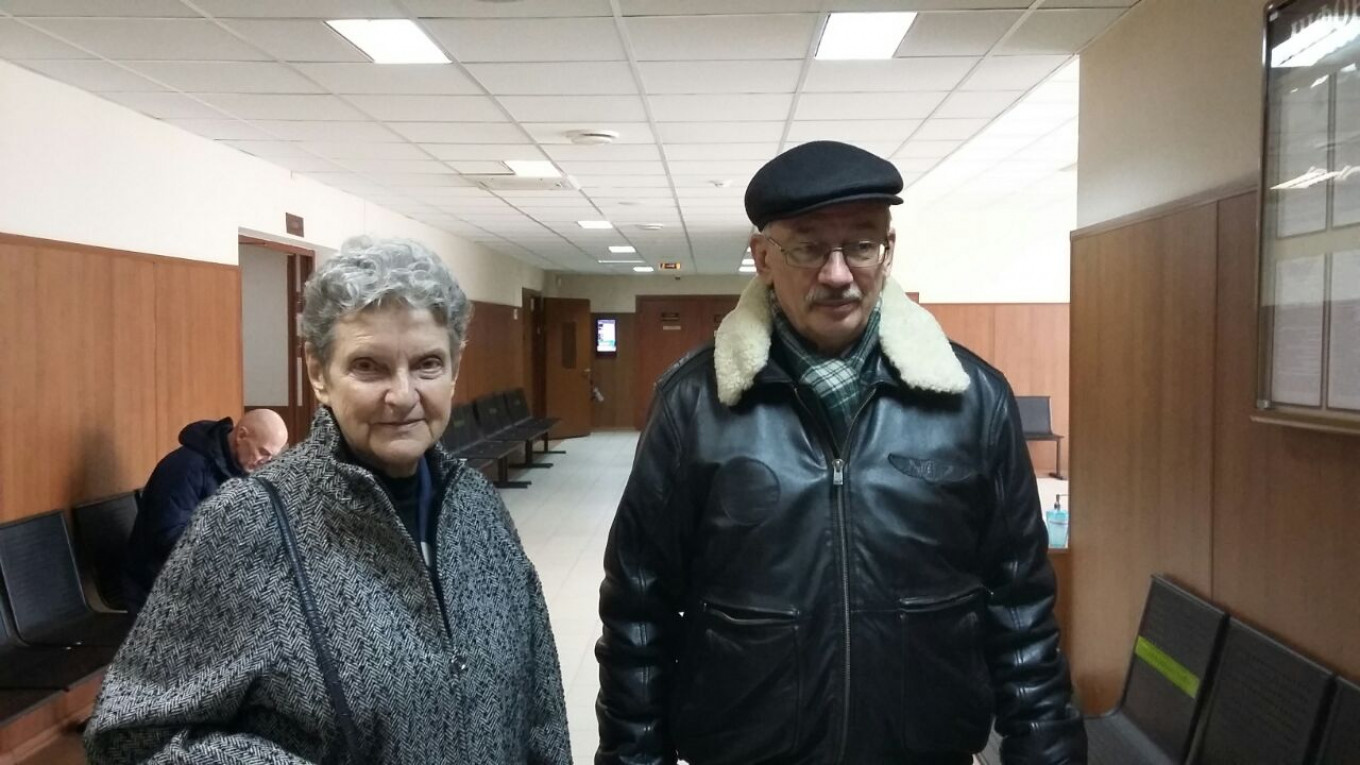
For many years, veteran Russian human rights defender Oleg Orlov thought his country’s darkest days were behind it. Not anymore. “I don’t think I have ever seen a darker period,” says Orlov, 68, who began a lifetime of activism in the early 1980s handing out leaflets against the Soviet war in Afghanistan.
“What is happening now cannot be compared with anything that happened before in Russia, maybe anywhere in the world… when a country that left totalitarianism behind went back.”
For Orlov and other activists of his generation, the conflict in Ukraine has marked the definite end of a hopeful time that started with Soviet leader Mikhail Gorbachev’s reforms in the 1980s. Nearly 40 years later, Russian troops are again fighting and dying abroad, Kremlin opponents are in jail, independent media have been shut down and thousands of Russians have decided to flee the country.
“The hopes we had did not come true, there have been terrible disappointments,” says Svetlana Gannushkina, 80, one of Russia’s most prominent post-Soviet rights activists. “Today we have a country that can no longer be called authoritarian, this is already a totalitarian regime.“
Orlov and Gannushkina are two of the last few critical voices still at work in Russia, and in interviews with AFP in Moscow this week both said they had no plans to quit or to leave. Orlov was in the offices of Memorial, which was shut down last year after decades as Russia’s most prominent rights group, where bookcases sat empty, desks had been cleared and packing boxes were piled on the floor. [see: https://humanrightsdefenders.blog/2021/12/29/russias-supreme-court-orders-closure-emblematic-memorial/]
“I don’t see myself outside Russia. I… have always wanted to live and die in this country,” says Orlov.
A biologist by training, Orlov joined Memorial in the late 1980s when the group was set up to document Soviet-era crimes. He went on to record rights abuses in a series of post-Soviet conflicts, especially in Russia’s two wars in Chechnya in the 1990s. In 1995 he was part of a group who swapped themselves for hostages taken by Chechen fighters and were eventually released, and in 2007 he was abducted, beaten and threatened with execution by a group of masked gunmen in Ingushetia next to Chechnya. After serving two years in the mid-2000s on Russia’s presidential human rights council, Orlov has since been active in opposing President Vladimir Putin. He was arrested at a March 6 protest against the military action in Ukraine, and returned home one day this week to find his front door painted over with the letter “Z” — a symbol used to show support for Russia in the conflict — and a sign reading “collaborator.”
The harsh new political climate and impact of severe sanctions have prompted thousands of Russians to leave in recent weeks, including many of the country’s young, opposition-minded liberals. Gannushkina has seen it at her Civic Assistance Committee, the group she founded in 1990 to help refugees and migrants in an often-hostile environment. “Unfortunately, our wonderful young people, who followed their hearts to our organization, are leaving,” she says…These young people, who we had so much hope for, feel in danger and helpless, so they leave. And we are left here with this insanity...”
The former mathematics professor set up the Civic Assistance Committee to help the thousands displaced by conflicts as the Soviet Union fell apart in 1991. From its modest Moscow offices, it provides legal assistance and help with finding jobs and housing, as well as campaigning for the rights of marginalized groups. Gannushkina also worked with Memorial and like Orlov served on the presidential human rights council before resigning in 2012. A letter of thanks for her service signed by Putin still hangs on her office wall. She remains very active, taking the time to meet individually with people seeking help. [see: https://www.trueheroesfilms.org/thedigest/laureates/215E5731-7786-434A-9C20-923168E65F44]
“No, I don’t think about leaving,” Gannushkina says, though she admits she is glad her children and grandchildren live abroad. I am happy they are not here, because it gives me the chance to say what I think, to everyone and everywhere.”
“We had a chance to create a normal federation, which would be governed in the way other federations are governed in democratic regimes. We missed that chance,” she says. All she can do now, Gannushkina says, is “hope that time will pass and we will get another chance. “But most likely I won’t be here to see it.”
Also on 31 March 2022 The Washington Post had an editorial: A generation of independent Russian journalists meets its grim end:
In his lecture accepting the Nobel Peace Prize on Dec. 10, the editor of the Russian investigative newspaper Novaya Gazeta, Dmitry Muratov, declared that “journalism in Russia is going through a dark valley.” He said more than 100 journalists, media outlets, human rights defenders and nongovernmental organizations have been branded “foreign agents,” a label equivalent to “enemies of the people.” Many journalists lost their jobs and fled the country. [see: https://www.trueheroesfilms.org/thedigest/laureates/bdbb2312-8b7a-4e44-bb4c-1864474daec7]
Now Novaya Gazeta itself has suspended publication, threatened by the government for failing to label a group as a “foreign agent” and because of an onerous new law that makes it a crime with penalties up to 15 years in prison to “discredit” the armed forces — including use of the words “war,” “invasion” or “attack” to describe President Vladimir Putin’s onslaught against Ukraine. A day after the invasion, Novaya Gazeta expressed outrage with a front-page three-word banner headline against a black background: “Russia. Bombs. Ukraine.” The paper continued to report, including from a correspondent in Ukraine, until it could no longer. The decision to suspend was portrayed by Mr. Muratov as temporary, but the future for all independent media in Russia appears grim.
This is a tombstone moment for a generation of independent journalists. In the final years of Soviet glasnost and in the unbridled and exuberant first years of Russia’s democracy, they threw off the straitjacket of censors and state-dominated media outlets to create newspapers, magazines, radio stations, television broadcasts and digital and social media that drew large and information-hungry audiences. To be sure, the audiences often were liberal, elite and urban, but at the very least, Russians benefited from information sources outside state control. Even in the authoritarian years of Mr. Putin’s rise, some were permitted to function. Novaya Gazeta distinguished itself with hard-hitting investigations, as Mr. Muratov noted in his lecture, fearlessly exposing money-laundering and the exploitation of Siberian forests, among other topics. Six of the paper’s reporters have been killed over the years.
But now it seems that Russia is moving from authoritarianism to totalitarianism, where the state can no longer tolerate any independent outlets. Echo Moskvy, a bastion of open discussion on radio and online, has been silenced and closed. TV Dozhd, founded in 2010, has suspended operations, and some of its journalists have fled. The popular news website Znak.com has also closed. A similar trend has swept independent media in Russia’s regions.
Mr. Putin completely missed the ferment and exhilaration of the late-1980s glasnost years — he was serving in the KGB in East Germany — and in his two decades in power, he has shown little patience for free speech. Lately, dozens of people have been arrested for expressing anti-war sentiments. Vera Bashmakova, the editor of a popular science magazine, was detained for several hours when she showed up at preschool to pick up her daughter with a “No to war!” sign in her car window. She was charged with “discrediting the army.” This is indeed a “dark valley” for Russia, and it is growing darker by the day.
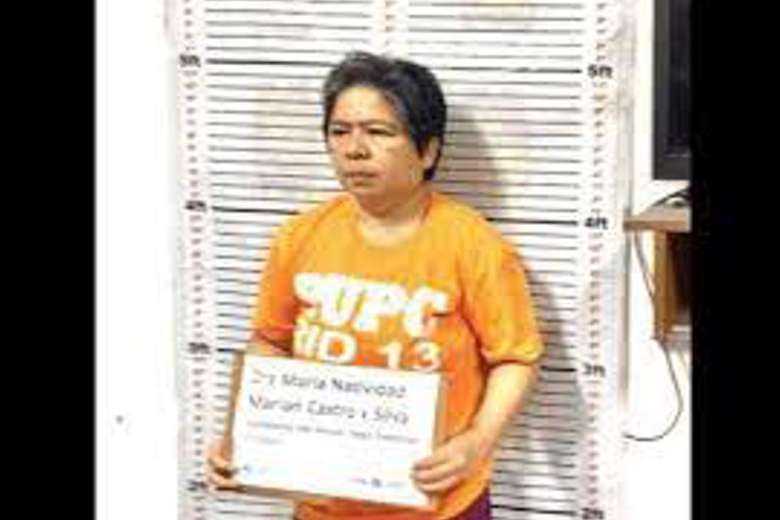
Dr. Maria Natividad (“Naty”) Castro, 53, walked free from detention on March 30 after the Bayugan City Regional Trial Court ordered her release on March 25. The judge called the arrest ‘repugnant to her right to liberty’
She had been held since her arrest in Manila on Feb. 18 for allegedly being a fundraiser for the Communist Party’s armed wing, the New People’s Army. She was also accused of being involved in the kidnapping of a government-backed militia member in 2018 while helping indigenous communities in Mindanao.



 Hans Thoolen on Human Rights Defenders and their awards