Archive for the 'Human Rights Defenders' Category

ATTACK ON HRD OKIYA OMTATAH SHOULD BE INVESTIGATED IMPARTIALLY

November 11, 2012

Reports indicate that Mr. Okiya Okoiti Omtatah was attacked in the evening on 8 November 2012 by unknown assailants at Nairobi’s Central Business District. He suffered broken teeth and a deep cut on the head. He was taken to hospital in Nairobi for medical examination. Mr. Omtatah is a known human rights defender who has been at the forefront of condemning human rights violations in Kenya, corruption and abuse of offices by state officials. Mr Omtatah has recently publicly raised concern regarding the Biometric Voter Registration Kits’ procurement process in Kenya.

The Government of Kenya should ensure that thorough and impartial investigations are carried out into the attack on Mr. Omtatah the National Coalition of Human Rights Defenders in Kenya said on 9 November.

This incident has taken place at a period when Human rights defenders in Kenya, including journalists have reported increasing threats, physical attacks and arbitrary arrest in the past few months.
The National Coalition of Human Rights Defenders condemns this incident and ongoing threats and targeting of human rights defenders as they conduct their legitimate work. We call upon the government, particularly the police to assure citizens of safety and protection of all people particularly as the country head towards elections in March 2013.

The National Coalition of HRDs further urges the Government of Kenya to fight impunity by ensuring that impartial, thorough and timely investigations are carried out into this and other incidents, and that the perpetrators are held to account in prosecutions that meet international fair trial standards.

For inquiries, please contact Kamau Ngugi, Coordinator, NCHRD on info@nchrdk.org
Related articles

Luon Sovath speaks out on Radio Free Asia

November 10, 2012

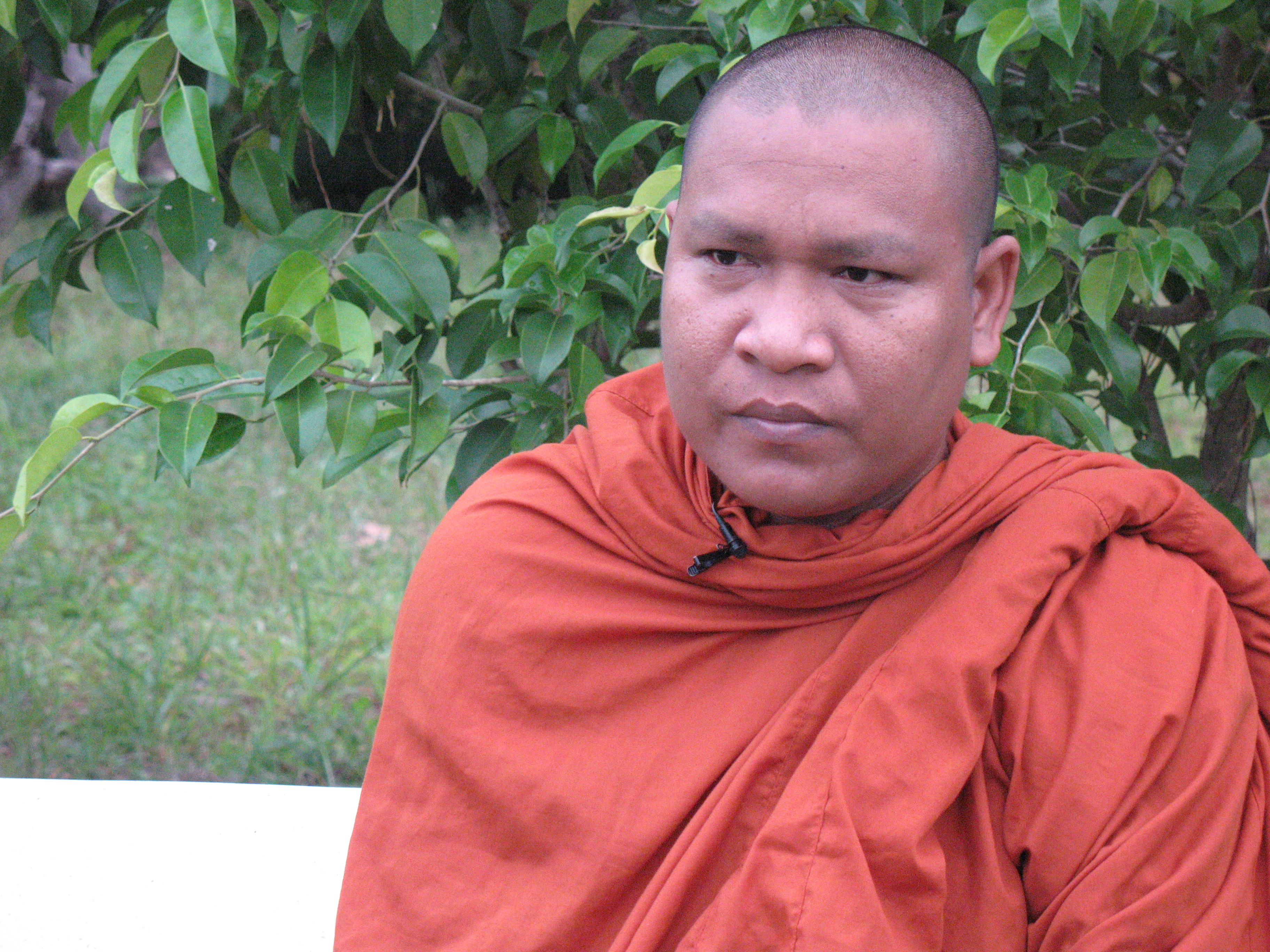
On 7 November the activist monk Luon Sovath, MEA Laureate of 2012, spoke to Radio Free Asia about his work.

As the interview is quite interesting I copied here in in full:

Fresh from receiving the “Nobel Prize for Human Rights,” Cambodia’s technology-savvy activist monk Loun Sovath has called on authorities in his country to end the use of violence in land eviction cases, vowing to continue his struggle to protect victims of land grabs. He also said he would not be cowed by government harassment and called on his fellow monks, often respected as figures of moral authority in Cambodia, to join in the struggle to defend villagers who have become victims of forced evictions. Loun Sovath was the first Southeast Asian to be presented with the 2012 Martin Ennals Award for Human Rights Defenders as he was selected for documenting the struggle of land rights activists and ordinary citizens evicted from their homes in his impoverished country. The monk collected the award—viewed by many as the Nobel Prize for Human Rights—in Geneva last month.

“The Buddha advised people to do good deeds both physically and mentally,” he told RFA’s Khmer service during an interview in Washington on Wednesday. “Respecting human rights is a good deed which will lead to peace and prosperity for this world and in the next. So for monks to become rights defenders is nothing against Buddhism, but can lead to enlightenment and peace.” “Monks play a vital role in society. I appeal to monks to rise up to follow in the Buddha’s footsteps,” he said. Loun Sovath  said the Cambodian people must also rise up to demand their rights, highlighting land disputes as the one of the biggest issues facing the public in the country.

“The authorities must stop using violence against innocent villagers who are the victims of land grabbing,” he said. Research by Cambodian rights group LICADHO shows that some 2.1 million hectares of land has been given to private companies in the form of land concessions over the last two decades. The massive transfer has led to countless forced evictions and affected over 400,000 people in the 12 provinces that LICADHO monitors since 2003 alone, the group said.

Sovath is currently touring the U.S., meeting with the Cambodian community and addressing various nongovernmental organizations on the human rights situation in his country. He began his nearly two-month visit last week in New York, traveled to Washington, and arrived in Chicago Thursday. Sovath said he was honored to receive the Martin Ennals Award.

“I was given the award because I have worked as a rights defender and a protector of social justice involved with land issues, forced evictions, and the protection of natural resources and wildlife,” he said. In June 2011, the New York-based Human Rights Watch awarded Loun Sovath with the Hellman/Hammett grant for his work supporting communities facing forced evictions and land-grabbing in Cambodia.

Luon Sovath by Dovana

Years of activism Sovath first became involved in human rights work in 2009, when members of his family were injured during a police shootout at unarmed villagers in a land eviction case. The monk’s brother and nephew were wounded in the standoff, which he documented in a video. He is known for his extensive use of video to inform the world about his confrontations with authorities, earning him the nickname “multimedia monk.” The monk is rarely seen without a mobile phone or tablet. He also uses songs and art to spread his non-violent message of defending human rights. Loun Sovath said he strove to protect human rights in the interest of his country. “I have a desire to help build Cambodia,” he said. In June, Loun Sovath was briefly detained by Cambodian authorities and accused of “causing instability” after he joined protests against the jailing of 13 women over a long-running forced land eviction case in the capital Phnom Penh. Municipal monk officials threatened to have him defrocked as a monk, but released him after he put his thumbprint on a statement assuring that he will not join future protests. Loun Sovath had been banned in April from entering pagodas in Phnom Penh after he participated in land protests.

Sovath, who has since participated in various protests, said he would not stop his activism even though he was concerned about his personal safety. “The authorities have tried to prevent me from doing good things and from helping the country and [the Buddhist] religion,” Sovath said. “I can’t accept this because I have done nothing wrong,” he said. “As long as human rights violations continue to exist in Cambodia, I will continue to do my work.”

Reported by Samean Yun for RFA’s Khmer service. Translated by Samean Yun. Written in English by Joshua Lipes.

Copyright © 1998-2011 Radio Free Asia. All rights reserved.

“Carrying the Ideal” film on women HRDs in Nepal

November 8, 2012

Women human rights defenders in Dhanusha, a district in Nepal’s southern Terai region, are often subjected to threats and attacks due to their work. In the summer of 2010, Peace Brigades International, a non-governental organization working for the protection of Nepalese human rights defenders since 2006, visited Dhanusha to profile their struggles, as well as to bring to light the special needs of women human rights defenders across Nepal.
“Carrying the Ideal: Women Human Rights Defenders” documents the courageous and often dangerous work of women defenders carried out in a climate of impunity and injustice and in a social strata supportive of caste and gender discrimination.

via “Carrying the Ideal” English on Vimeo.

Human Rights First gives Obama its agenda for human rights

November 8, 2012
Official photographic portrait of US President...

(Photo credit: Wikipedia)


Human Rights First (HRF), a New York based international NGO and member on the Jury of the Martin Ennals Award, reacted with speed to Obama’s reelection and issued a statement of what it thinks is ready for bi-partisan action on human rights:


1. Champion Women’s Rights. A record number of women will serve in the U.S. Senate in January. And Republicans and Democrats—men and women—agree on the importance of protecting women’s rights around the world. The Obama administration and Congress should work together to make sure that women’s rights are enshrined in the Egyptian constitution and that women in the region who stood side by side with men in demanding their freedom are fully represented in public life, including in elected legislatures, and not forced out of the public square.


2. Support Freedom. Last night, President Obama said, “We can never forget that as we speak people in distant nations are risking their lives right now just for a chance to argue about the issues that matter.” The United States should stand with those people. That means pressing our allies—like Bahrain—to stop cracking down on dissent. It means working effectively with the international community to bring an end to the human rights crisis in Syria. And it means supporting activists in repressive societies like Russia, China, and Cuba.


3. Protect Freedom of Religion. As the recent furor over the anti-Islam film showed, the second Obama administration will have to navigate difficult issues at the intersection of religion and foreign policy. In his second term, the President should push back against efforts to impose an international standard outlawing “defamation of religions,” which would be used, like national blasphemy laws in countries like Pakistan, to persecute religious minorities and restrict freedom of speech, and which would fuel sectarian violence and empower extremists.


4. Protect Gay and Lesbian People from Violence. Voters in Maryland, Maine, and Washington voted to legalize same-sex marriage-the first time gay marriage won at the ballot box. Wisconsin elected the first openly gay U.S. Senator. But while the tide of public opinion on gay rights has rapidly turned here, around the world, gay and lesbian people face discrimination and violence. In his second term, President Obama should build on the work of his first to provide protection for gay and lesbian people, including those forced to flee for their safety.


5. Provide Safe Haven for Refugees. Washington may finally be poised to tackle comprehensive immigration reform. While this issue has been politically challenging, there is broad bipartisan support for keeping America’s promise to be a refuge for those fleeing oppression. For starters, that means reforming the policies that land those seeking freedom in jail.


6. Close Guantanamo. Before it became a political football, national security experts and elected officials from both parties agreed that Guantanamo needed to close. President George W. Bush said he wanted to close it. Senator John McCain campaigned on it. And on his second full day in office, President Obama, flanked by retired Admirals and Generals, promised to do it. He doubled down on the Daily Show right before the election. Now it’s time to get it done. This is a legacy issue.


http://actions.humanrightsfirst.org/p/dia/action3/common/public/?action_KEY=6824


Human rights defender of the month: Sapiyat Magomedova from Dagestan

November 6, 2012

The North Caucasian republic of Dagestan is one of the most dangerous places for lawyers today in Russia. In this region Sapiyat Magomedova defends victims of grave human rights violations like enforced disappearances, extra judicial killings and torture. She has taken on cases that many lawyers would reject due to security reasons, and although it is considered almost impossible, she has won several of them. She was chosen by Stockholm-based Civil Rights Defenders as its HRD of the month. Last week I reported that she had received an important award from Sweden.

When asked about everyday life in Dagestan, local human rights lawyer Sapiyat Magomedova answers straight: ”I would not call it life.” The conflict in Dagestan is bridging on civil war. During the last two years Dagestan is considered to be the most violent region in the North Caucasus, followed by Chechnya. Local human rights defenders constantly face harassment, assaults and threats to their life.

Portrait Sapiyat Magomedova Photo: Private

In 2010 Sapiyat Magomedova was severely beaten by police officers when visiting one of her clients. When pressing charges, she was herself charged with using violence against state officials and insulting police officers on duty. Sapiyat Magomedova had already in 2009 been subjected to an unfounded criminal case for allegedly offending an Investigator from the Prosecutor’s Office. She believes that the case was a form of retaliation for her standing up to law enforcement agencies and fighting impunity. “The criminal case against me was opened to put pressure on me, to force me to retract my statement against the police officers”, Sapiyat Magomedova later said in an interview.

Sapiyat Magomedova represents victims in very sensitive cases, such as allegations that the police have tortured individuals suspected of involvement with the insurgency, and cases of sexual- and gender based violence. Normally, cases of sexual- and gender based violence go unreported in Dagestan. Sexual violence is a taboo subject in a region where honour killings, bride kidnapping, and child marriage occur. There is an absence of debate on the political level on these issues. Women’s rights are not high on the political agenda and gender based violence and other kind of abuses against women occur on a regular basis.

In 2011, Sapiyat Magomedova defended a 13-year-old girl who had been kidnapped and raped for three days by five young men. Two of the suspected rapists were sons of police officers. After strong pressure on the girl and her family, she succumbed and changed her statement. The case, however, got rather great resonance in society and might lead to inspiring other victims to dare press charges. Sapiyat Magomedova further highlighted the case on one of the first conferences on women’s rights in the region. At the conference she spoke about the problem with impunity in cases of sexual- and gender based violence.

Being a woman, Sapiyat Magomedova must also exert much effort just to be taken seriously in her legal profession. Caucasian women are commonly housewives and that “leaves its mark”, as Sapiyat Magomedova puts it. Woman lawyers have a lot of misconceptions to fight against.

Human rights defenders constantly face harassment and threats to their life in Dagestan. Since 2010, Dagestan is considered to be the most violent region in the North Caucasus, followed by Chechnya. The conflict nearly approach the level of civil war. Russian law enforcement bodies are reluctant to investigate cases of human rights abuses. Even though Russia has been convicted approximately 210 times for violations linked to North Caucasus, by the European Court of Human Rights, not even one perpetrator has been put to justice.

In many cases, violations are committed by those who are supposed to uphold the rule of law, under the pretext of fighting terrorism. In order to keep up statistics in terror crimes, it frequently occurs that law enforcement bodies fabricate evidence against innocent people and extract a confession by using torture. This in turn nurtures the insurgency that has been on the rise in the past years. A decade of failure to stabilize the region and deal with the rampant impunity has created an environment where ordinary people live in fear and have almost nowhere to turn to seek justice.

The Russian government invests enormous sums of money each year to dampen the conflicts throughout the North Caucasus. The number of dead terrorists is used as evidence that the Russian government’s initiative leads to results. Military and security forces, and the Police are being rewarded for each person that can be added to the toll of terrorists. This has led to civilians being accused of joining the separatists. Kidnappings, torture and extrajudicial executions are common.

Read more in Civil Rights Defenders country report: Human rights in Russia

Palestinian HRD Nariman Tamimi speaks out on repression of peaceful protest in AI video

November 5, 2012

In Greece there is a frequently heard ‘complaint’ that international human rights groups – in particular AI – have the same agenda as the USA. At a recent meeting with friends in Chania, AI’s position on Pussy Riot was quoted as evidence.

I countered by pointing out that AI on many occasions has taken a stand that seems to go against US policy, from the death penalty to Guantanamo Bay and the Israeli occupied territories. A recent video referred to here makes that clear again in the case of Israel. Perhaps even more shocking are some of the comments that seems to confirm the existence of an orchestrated response [by whom?] to equal any criticism of Israel to anti-Semitism.

Every Friday since December 2009 residents of al-Nabi Saleh and solidarity activists gather around noon in the village centre and march peacefully towards the spring. They have been met repeatedly with unnecessary and excessive force by the Israeli army including the use of stun grenades, pepper spray, batons and guns. Demonstrations are dispersed as soon as they begin and are usually not allowed to reach the spring. The Israeli army raids the village regularly, usually during the night, and conducts house searches and arrests, including the arrest of children under the age of 15.

Israeli military laws in place in the West Bank impose sweeping and arbitrary restrictions on freedom of expression and peaceful assembly, requiring people to obtain advance permission from the Israeli military for any proposed gathering of 10 or more persons “for a political purpose of for a matter that could be interpreted as political”.  Nariman Tamimi told Amnesty International that in al-Nabi Saleh and all areas where there is popular resistance, police use extreme violence, noting that “there is nothing [to the protests] except that you chant and express your opinion.” As one of the organizers of the al-Nabi Salneh protests and a coordinator of the village’s popular committee, Bassem Tamimi and his family have been the target of harsh treatment by the Israeli army.  For more see the excellent film:

AI video on Palestinian protest


Fars News Agency: Javad Larijani Blasts Double-Standard Policies on Human Rights in Iran

November 1, 2012


Official Blasts West’s Double-Standard Policies on Human Rights in Iran

TEHRAN (FNA)- Secretary of Iran’s Human Rights Council Mohammad Javad Larijani rapped the West’s double-standard policies and stances on human rights issues, saying that western states shelter terrorist groups like the anti-Iran terrorist Mojahedin-e Khalq Organization (MKO) and award them in the name of defending human rights.

Our people are familiar with the West’s discriminatory and hostile attitude towards the Islamic Republic of Iran,” Larijani said in a meeting with Head of Iran-Germany Parliamentary Friendship Group Bijan Jirsarayee in Tehran on Wednesday. 

Larijani rapped the double-standard polices and behavior of the western states towards the human rights issues in Iran. 

On one hand, the western states shelter and support terrorist groups like the MKO … and cooperate with the US in imposing unilateral sanctions against Iran which have inflicted great losses on the Iranian people and is a blatant violation of human rights, and on the other hand, they suddenly emerge as advocates of human rights and grant awards to culprits in Iran as if they are defenders of human rights, he added. 

The European Parliament announced that this year’s winners of the Sakharov Prize for Freedom of Thought are two Iranian culprits (!ed), lawyer Nasrin Sotoudeh and film director Jafar Panahi. Sotoudeh is now imprisoned in Iran for security crimes and Panahi is a fugitive living outside Iran.

The rest of the article is one long rambling statement against the MKO and the support it gets from the West (read for yourself if you want to) but with the marvelously inconsistent quotation of …Human Rights Watch, one of the NGO regularly denounced as a stooge of the same West..

A May 2005 Human Rights Watch report accused the MKO of running prison camps in Iraq and committing human rights violations. According to the Human Rights Watch report, the outlawed group puts defectors under torture and jail terms.”

Fars News Agency :: Official Blasts Wests Double-Standard Policies on Human Rights in Iran.

Photo exhibit on HRDs hits Stockholm – Speak Truth to Power

November 1, 2012

A exhibition at a Stockholm museum features portraits of human rights activists from around the world. The “Speak Truth To Power” exhibition, which recently opened at the Fotografiska Museum in Stockholm, features portraits by the late Pulitzer Prize-winning American photographer Eddie Adams.  “When you see the photo exhibition you suddenly understand that human rights are not abstract,” Gabor Gombos of the UN Disability Rights Committee tells The Local. “It is very concrete in terms of activities and in terms of human rights defenders,” he adds. Gombos is one of several activists featured in the exhibit, which will remain at the museum until late November.

CTRL/CLICK HERE FOR A COLLECTION OF PHOTOS FROM THE EXHIBITION

The exhibition, which also features portraits of more well-known activists such as the Dalai Lama and Desmond Tutu, advocates for “courage without borders” in an effort to raise awareness about the power of human rights.
“‘Speak Truth To Power’ combines the power of arts and education to bring attention to continuing human rights abuses and to demonstrate the capacity of an individual to create change.” The exhibition is based on a book by Kerry Kennedy, daughter of late US attorney general Robert Kennedy, called “Speak Truth to Power” which contains a set of interviews with human rights activists from around the globe.

Sanne Schim van der Loeff

Human rights photo exhibit hits Stockholm – The Local.

Sapiyat Magomedova, HRD from Dagestan, receives Swedish award

October 30, 2012

The Moscow Times reports today that the Swedish government has awarded a Russian human rights lawyer from Dagestan with the Per Anger Prize for defending victims of human rights violations. Memorial, a Moscow-based human rights center, said in comments carried by Interfax that Magomedova had defended victims of torture, kidnappings, extrajudicial killings and sex-based violence in Dagestan.

Sapiyat Magomedova was nominated by Swedish NGO Civil Rights Defenders for possessing “the best qualities that define a true human rights defender,” according to a statementposted on the NGO’s website.

The 33 year-old lawyer is known for taking up difficult cases that others have rejected for security reasons. Magomedova was herself a victim of violence in 2010, when she was brutally beaten at a local police station in the city of Khasavyurt.

Established in 2004, the Per Anger Prize supports human rights and democracy initiatives and is named after Swedish diplomat Per Anger, who helped rescue Hungarian Jews during World War II.

Sweden Honors Russian Rights Lawyer | News | The Moscow Times.

Threats against women’s rights advocate Denis Mukwege in DRC mobilize medical community

October 30, 2012

I am referring to this blog post by Dr Jocalyn Clark because it is so good to see that the medical community comes out to support a Human Rights Defender in DRC and considers the attack on him as “another wake-up call for us all”.

Last Thursday evening, as many of you will have seen via media reports, a true hero of women and human rights Dr Denis Mukwege narrowly escaped death during an assassination attempt on his life that killed his security guard. Amnesty International is now rightly calling for a full investigation and asking whether his recent criticisms of the Congolese government played a role. Attacks against human rights defenders and humanitarian workers are said to be increasing in DRC, where conflict has raged for years. Denis Mukwege, winner of many international accolades including the UN Human Rights Award, has long championed the rights of women and highlighted to the world the extent and the brutality of systemic rape against women in the conflict zones of DRC…”

Threats against women’s rights advocate Denis Mukwege are another wake-up call for us all | Speaking of Medicine.