Archive for the 'Human Rights Defenders' Category
March 5, 2013

Margaret Sekaggya (UN Photo/Jean-Marc Ferré)
Margaret Sekaggya, UN Special Rapporteur on the situation of human rights defenders, presented her report to the Human Rights Council in Geneva. She said inter alia that the response of law enforcement authorities in Tunisia to violations against human rights defenders appears ‘unsatisfactory’ and that the lack of independence of the judiciary is also a cause for concern. “I am concerned about the considerable polarization I observed in Tunisian society between secularists and Islamists, including so-called Salafists, a divide which also transpires to civil society. All stakeholders, including the international community, should work together to ensure dialogue, understanding and respect between different parts of society.”
Ms Sekaggya also told the Human Rights Council that she’s particularly concerned about the way human rights defenders are treated in countries in the Gulf region, especially in Bahrain, Saudi Arabia and the United Arab Emirates. And on recent developments in Egypt she said that the considerable violence suffered by peaceful protesters, including gender-based violence against women human rights defenders, points to a situation that is getting out of hand.
To hear the radio interview of 1’32″ by Nicki Chadwick of UN Radio in Geneva go to http://www.unmultimedia.org/radio/english/2013/03/human-rights-defenders-more-at-risk-in-tunisia-since-the-revolution/ and press LISTEN.
For the full report of the Special Rapporteur in PDF: http://www.ohchr.org/Documents/HRBodies/HRCouncil/RegularSession/Session22/A.HRC.22.47_en.pdf
Posted in human rights, Human Rights Defenders, UN | Leave a Comment »
Tags: Bahrain, Egypt, Geneva, Human right, human rights, Human Rights Council, Human rights defender, Human Rights Defenders, Margaret Sekaggya, Middle East, protection, radio, Saudi Arabia, Tunisia, UN Radio, UN Rapporteur on the situation of human rights defenders, United Arab Emirate
March 5, 2013
In IPP Media of 5 March 2013 appears a lengthy piece by correspondent GERALD KITABU who interviewed the head of the NGO ‘Tanzania Human Rights Defenders Coalition’ (THRD-Coalition) Mr ONESMO OLENGURUMWA on the protection of human rights defenders in Tanzania. It interesting to see such an article which demonstrates the depth of the Human Rights Defenders issue at the local level. Here follow a few quotes:
QUESTION: Who is a human right defender?
ANSWER: A human rights defender is any individual, groups and organs of society seeking to promote and protect universally recognized human rights and freedom. Human rights defenders include lawyers, judges, journalists, whistle blowers, bloggers, students, religious leaders, trade unionists and any other person working to combat human rights abuses in a peaceful manner.
Q: What is the current situation of human rights defenders in Tanzania?
A: Our organization has recorded a number of security incidents towards human rights defenders. Despite being change agents, these activists are continuously harassed, detained, interrogated, imprisoned, tortured and even at times paying the ultimate price when they are killed for what they do. A good example is the last year’s killing of Iringa based Channel Ten journalist Daudi Mwangosi, the barbaric and brutal torture of Dr. Stephen Ulimboka, the death of Issa Gumba, the suspicious death of women human right defender in Mara Eustace Nyarugenda who was the director of Action Based Foundation, continuing constant threats towards other journalists like Cosmas Makongo, Josephat Isango, Charless Misango, the indefinite ban of Mwanahalisi and the arbitrary arrest of human rights defenders. These are just few incidents that paints a bad picture on the map of Tanzania when it comes to observing human rights….
Posted in human rights, Human Rights Defenders | Leave a Comment »
Tags: Human right, human rights, human rights abuses, Human Rights and Liberties, Human rights defender, Human Rights Defenders, impunity, IPP media, journalists, Non-governmental organization, Non-state actor, ONESMO OLENGURUMWA, protection, Tanzania, THRD-Coalition, UN Declaration
March 4, 2013
The ongoing session 22nd of the UN Human Rights Council has many interesting issues that relate directly or indirectly to human rights defenders. One of the organizations that provides regular comments is the International Service for Human Rights (ISHR) in Geneva. Below is an example and anyone interested to follow developments should subscribe: http://www.ishr.ch/council
On Thursday 28 February 2013, the High Commissioner Mrs Pillay presented her annual report, outlining a number of thematic priorities, including tackling discrimination on all grounds, ensuring accountability for human rights violations, and strengthening human rights mechanisms. Following the presentation of the report a number of States took the floor to respond. The High Commissioner faced criticism from States unhappy with her highlighting of particular country and thematic situations of concern during her annual update to the Human Rights Council. Her call on States to ensure that no individual faces discrimination on the grounds of sexual orientation and gender identity, was met once again with categorical denial by the Organisation of Islamic Cooperation OIC that any such responsibility exists in international human rights law. The OIC reproached the High Commissioner for promoting a notion that is ‘outside the framework of international human rights law’. The OIC has expressed this position many times previously, but it is increasingly anachronistic given the mounting acceptance at the Council that discrimination on the basis of sexual orientation and gender identity as shown by its adoption of a resolution on this subject in June 2011 and subsequent holding of a panel discussion. Read the rest of this entry »
Posted in human rights, Human Rights Defenders | Leave a Comment »
Tags: Geneva, Germany, High Commissioner, Human right, International Service for Human Rights, ISHR, LGBT rights, Navanethem Pillay, Office of the United Nations High Commissioner for Human Rights, Organisation of Islamic Cooperation, Sri Lanka, United Nations Human Rights Council
March 4, 2013
In one of my posts of last week I referred to the panicked, knee-jerk reaction of the Sri Lankan Government to the showing of the film No Fire Zone: The Killing Fields of Sri Lanka at the UN in Geneva. Now I have come across a much more reasonable and constructive reaction published in the Sri Lankan The Island of 1 march 2013. The whole piece is worth reading; here follow just some excerpts for those pressed for time:
Every time, the United Nations Human Rights Council meets in session or one of the international Human Rights Organizations issues a statement on violations of human rights in Sri Lanka, the government of Sri Lanka gets into a combat mode. Their response follows the rule that attack is the best form of defence. The attack takes the form of personal abuse directed at the human rights defenders; there is no attempt to meet the issues of violations that have been raised. Its apologists and other hangers-on merely follow suit with hysterical outbursts against the United Nations, the international community and the local human rights defenders. None of them seem to care to read the reports released by the Office of the United Nations High Commission for Human Rights or by the different human rights organizations. Their criticism of the reports is therefore not informed and raises more issues than clarifying any. Mahinda Samarasinghe [the SL Ambassador] is normally not prone to such hysterical responses; his speech at the current sessions of the UNHRC therefore seems untypical of him. Read the rest of this entry »
Posted in human rights, Human Rights Defenders, UN | Leave a Comment »
Tags: FIFHR, film, film festival, Geneva, Geneva Human Rights Film Festival, Hague, human rights, humanitarian law, impunity, investigation, Lessons Learnt and Reconciliation Commission, LLRC, Navanethem Pillay, No Fire Zone: The Killing Fields of Sri Lanka, Sri Lanka, Sri Lankan government, United Nations, United Nations Human Rights Council, war crimes
March 4, 2013
Posted in AI, Amnesty international, human rights, Human Rights Defenders | 2 Comments »
Tags: AI, Amnesty International, Angélica Bello, armed security guards, Colombia, death threats, Human right, human rights, Human rights defender, Human Rights Defenders, Inter-American Commission on Human Rights, killing, Latin America, protection, sexual violence, women human rights defenders
March 2, 2013
The first side event “Killings and Violence against Women based on Sexual Orientation and Gender Identity” will take place on 5 March 2013 (16h30) at the Armenian Convention Center
630 2nd Avenue (at 35th street)
Panelists
TAMARA ADRIAN (Venezuela)
General Director of Diverlex Diversidad e Igualdad a Través de la Ley,
World Trans Secretary of ILGA
MONICA TABENGWA (Botswana)
Africa Researcher, LGBT Program, Human Rights Watch
KIM VANCE (Canada)
Co-Director, ARC International
Moderator
CYNTHIA ROTHSCHILD (USA)
Consultant, COC Netherlands Read the rest of this entry »
Posted in Human Rights Defenders | Leave a Comment »
Tags: Advocacy Organizations, CSW, Gender identity, Human right, human rights, Human Rights and Liberties, impunity, intimidation, LGBT rights, New York, protection, Sexual orientation, side event, UN, United Nations, Violence against women, women human rights defenders
March 1, 2013
Posted in human rights, Human Rights Defenders | 3 Comments »
Tags: Geneva, Human right, Human Rights Council, Human rights defender, Human Rights Defenders, Human Rights House Foundation, legislation, Non-governmental organization, Norway, protection, Special Rapporteur, UN Resolution, United Nations, United Nations Human Rights Council
February 28, 2013
Thai authorities should immediately investigate the murder of Prajob Nao-opas, a prominent environmentalist in Chachoengsao province, Human Rights Watch said today, 27 February 2013.
The government’s measures to protect human rights defenders, including environmentalists, who stand up for their communities have consistently proved to be inadequate. On February 25, 2013, at around 2 p.m., a gunman shot 43-year-old Prajob four times at a garage on the Phanom Sarakham-Ban Sang road as he was waiting for mechanics to repair his pickup truck. Witnesses told Human Rights Watch that Prajob was seriously wounded from the 11mm bullets and died while being rushed to the hospital by villagers at the shooting scene. The gunman escaped in a getaway car. “The cold-blooded killing of Prajob marks yet another example of the fundamental failure of Thai authorities to protect activists who risk their lives while defending their communities,” said Brad Adams, Asia director. “The government must undertake a serious investigation to bring those responsible for his death to justice, regardless of the status or political affiliation of the killers.”
Since February 2012, Prajob had led villagers in a campaign to expose the dumping of toxic waste in Chachoengsao province’s Phanom Sarakham and Plaeng Yao districts. Many ponds in the area have been filled with dangerous chemicals from industrial estates along Thailand’s eastern seaboard. The Thai government took little action until Prajob managed to get the issue into the national news headlines in August 2012. Only then did the Justice Ministry’s Department of Special Investigation DSI announce that it would treat the chemical waste disposal in Chachoengsao province as a special and urgent case under the DSI’s purview. In December 2012, Prajob told his family that he had received warnings from the Chachoengsao police that there might be an attempt on his life. Since then, he noticed and reported to the police that he was frequently followed and photographed by unidentified men on motorcycles. Despite these explicit threats, no one at either provincial or national level proposed any protective measures for Prajob. Read the rest of this entry »
Posted in HRW, human rights, Human Rights Defenders | Leave a Comment »
Tags: activists, Asia, Chachoengsao, Chachoengsao Province, civil society organizations, death threats, environment, environmental issues, Government of Thailand, HRW, Human rights defender, Human Rights Watch, killing, Prajob, right to health, Thailand, Toxic waste
February 28, 2013
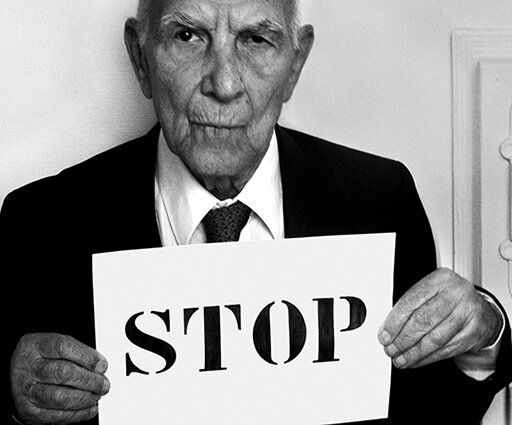
Stéphane Hessel, a hero of the French Resistance, diplomat and activist (what a rare combination) died on Tuesday 27 February in Paris at the age of 95. His life and works are described in detail by the mainstream press, so I only single out here his strength of conviction that made him publish at a very advanced age – in October 2010 – “Indignez-Vous!”, a short pamphlet that urged young people to revive the flame of resistance to injustice that burned in himself during World War II, this time in peaceful rebellion against what he termed the dictatorial forces of international capitalism, and to reassert the ideal that the privileged must help the less fortunate rise. Read the rest of this entry »
Posted in human rights, Human Rights Defenders | 3 Comments »
Tags: diplomatic action, France, French Resistance, human rights, Human rights defender, Indignez-Vous, Paris, Stéphane Hessel, Time for Outrage, Universal Declaration of Human Rights, World War II
February 27, 2013
On Thursday 28 February  OMCT and FIDH organise a meeting in room XXI in the Palais des Nations of the UN (starts 13h00) on the topic: ‘RESTRICTIONS ON NGO FUNDING: FROM HARASSMENT TO CRIMINALISATION“. Many of my recent posts have dealt with this increasing phenomenon which is simply the more sophisticated way of Governments repressing the voices of human rights defenders, activists and dissidents.
The programme looks as follows:
Introductory remarks
Ms. Kyung-wha Kang, Deputy High Commissioner for Human Rights
H.E. Mr. Colin Wrafter, Director, Human Rights Unit, Department of Foreign Affairs and Trade, Ireland
Chair Antoine Bernard, FIDH CEO
Panel speakers:
Gerald Staberock, OMCT Secretary General
Olga Sadovskaya, CAT –member of the OMCT GA– (Russia)
Farida Makar, CIHRS (Egypt)
Adil Rahman Khan, ODHIKAR –member of the OMCT GA- (Bangladesh)
Entrance is free and public but one should get access to the UN building.
Posted in FIDH, human rights, Human Rights Defenders, OMCT | 4 Comments »
Tags: activists, civil society organisations, funding, Human right, Human Rights Defenders, International Federation for Human Rights, legal restrictions, meeting, NGOs, Non-governmental organization, Office of the United Nations High Commissioner for Human Rights, OMCT, repression, side event, United Nations

 For years Angélica Bello, a human rights defender from Colombia, rarely spent a day alone – that would have been, simply, too dangerous. A number of threats against her because of her job helping the many survivors of sexual violence – women caught up in Colombia’s long-running armed conflict – meant that it was too dangerous for the 45-year-old mother of four to travel alone. In 2000, two of her daughters were kidnapped and kept as sexual slaves by paramilitaries, and were only released after Angélica personally intervened.

 Hans Thoolen on Human Rights Defenders and their awards