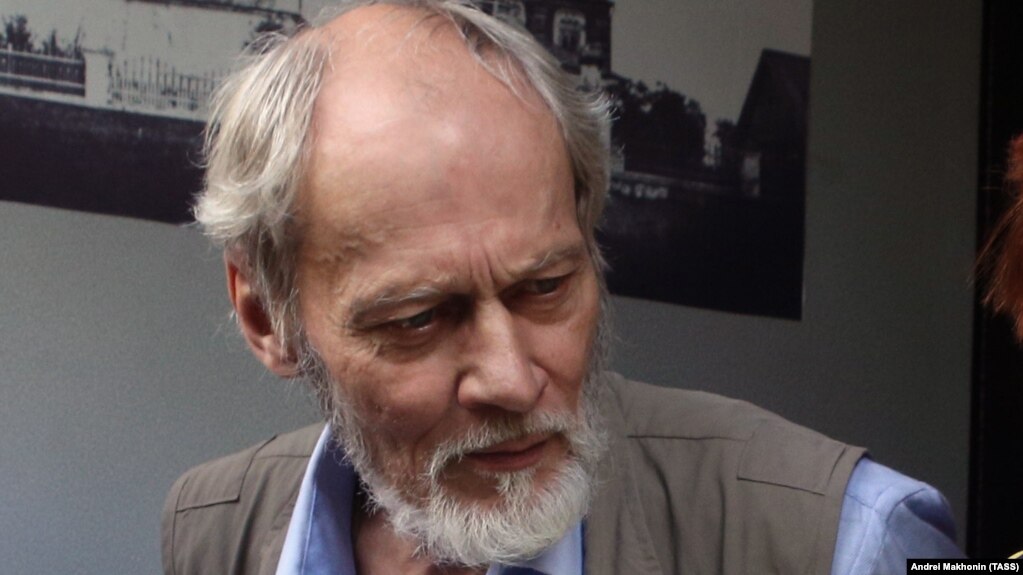
The winners of the first-ever True Story Award were announced during a ceremony at the Reportagen Festival in Bern on Saturday 31 August 2019. Three journalists from three countries were given top honours for their exceptional and courageous reporting:
Second prize went to the American journalist Mark Arax for A Kingdom from Dust – a sweeping, in-depth investigation into the world of agribusiness in California. Arax was recognised for weaving social themes such as climate change, water resources and California history into the narrative.
Chinese journalist Du Qiang received the third spot for The Vagabond Club, capturing the lives of a rebellious group of migrant workers in Shenzhen. Qiang’s report was “the most surprising story of all the entries” according to the jury and was praised for the way it captured an unknown aspect of society.
The winners were chosen from 39 nominees who were selected from more than 900 submissions from 98 countries in 21 languages. All nominees were invited to the Reportagen Festival taking place on August 30-September 1, of which 36 are attending and sharing their stories throughout the weekend. The True Story Award is a global journalism prize. It aims to recognize quality journalism and make reporters’ voices known beyond the borders of their home countries, and in doing so to increase the diversity of perspectives offered in the media. Winners were chosen by an eight-member jury from eight countries that evaluated submissions based on their depth of research, the quality of the journalism and social relevance.
.. The groups welcome Canada’s acknowledgement that human rights defenders put themselves at great risk—along with their families, communities and the movements they represent—as they work to promote human rights and strengthen the rule of law. Women and LGBTI human rights defenders, for example, face high-levels of sexual and other forms of gender-based violence because of their gender and the rights they are advocating for. “In many parts of the world, human rights defenders are at risk as a result of their courageous work and their willingness to speak truth to power. Canada and the international community need to be strong supporters of these brave individuals. Human rights defenders must be able to act freely and without any interference, intimidation, abuse, threats, violence or reprisal. We are committed to speaking out against violations, standing up for human rights defenders and striving for a world where the rights and freedoms of all people are respected,” said Foreign Affairs Minister Chrystia Freeland on 17 June in Ottawa at a human rights event where the guidelines were announced.
For Canada’s new guidelines to be effective in helping to protect and support human rights defenders, they will need to be accompanied by a comprehensive implementation plan and increased Canadian funding going directly to human rights defenders and the movements they represent. Canada also needs to take a stronger approach to support human rights defenders advocating for corporate accountability, for instance, by enabling robust investigations when defenders face heightened risks linked to private sector investments. It will also be critically important that Canada create an advisory body that includes the participation of human rights defenders with experience and first-hand knowledge of the threats facing human rights defenders….
Importantly, the new guidelines call for Canadian diplomats working abroad at overseas missions or at Global Affairs Canada headquarters in Ottawa to take a more feminist and intersectional approach to promoting the rights of defenders. The document notes that many human rights defenders have multiple and “overlapping” identities, and often work on multiple issues. Human rights defenders may belong to one or more groups facing discrimination, including women, LGBTI people, Indigenous people, land and environment defenders, people with disabilities, journalists, and those seeking greater freedom of religion or beliefs. Human rights defenders in conflict and post-conflict countries face unique risks posed by high levels of militarization.
Quotes from Canada’s Voices at Risk: Canada’s Guidelines on Supporting Human Rights Defenders
“Canada recognizes the key role played by human right defenders in protecting and promoting human rights and strengthening the rule of law, often at great risk to themselves, their families and communities, and to the organizations and movements they often represent.”
“Canada’s guidelines on supporting human rights defenders is a clear statement of Canada’s commitment to supporting the vital work of HRDs.”
The World Economic Forum announced that from 30 August to 1 September 2019 more than 400 members of the World Economic Forum’s Global Shapers Community of innovators, activists and entrepreneurs under the age of 30 meet in Geneva to Spark Global Change. The theme of the summit is Leading for Impact. The Shapers, representing about 150 countries, will share their experiences, their impact and the lessons learned in managing grassroots projects in their local Global Shaper Hubs and through regional and global collaborations. They will also participate in skills-building and leadership-development workshops.
The summit will focus on enhancing leadership in the community’s three main impact areas: standing up for equity and inclusion, protecting the planet, and shaping the future of education and employment.
In the past year, Shapers in 125 cities have developed grassroots projects to promote equity and inclusion, including awareness campaigns, education initiatives and skill-building efforts to reduce barriers to women in the workplace, increase civic engagement among minority groups and advocate for the rights of refugees.
Perhaps a good case would be that of Saba Kord Afshari who for the simple act of removing her hijab and taking a video was made a “criminal” in Iran. #SabaKordafshari was sentenced to 24 years prison for #WalkingUnveiled and being voice of the voiceless. Activists call on the world, all politicians, all celebrities, MeToo movement – and why not the Shapers of the WEF ? – to take action.
Sometimes small announcement are the most interesting: Foreign Ministers from 28 EU countries continue their ‘Gymnich’ meeting in Helsinki today, 30 Augsut 2019. On the agenda they’ll be discussing the situation in the Middle East, hybrid threats, the Arctic and the wildfires in the Amazon rainforest. Over lunch ministers will get the chance to meet with international human rights defenders to hear their stories. …..
Today, almost 10 years after his death, the European Court ruled that Russia violated Magnitsky’s right to life by failing to hold an effective investigation into the alleged medical negligence that resulted in his death; that his detention conditions amounted to inhuman and degrading treatment; that repeated extensions of his detention was unjustified; and that his posthumous trial and conviction by a Russian court was inherently unfair. True, the judgment doesn’t break new ground in light of the court’s well-established case law on ill-treatment, death in custody, and lack of accountability for perpetrators in Russia. But you should read it to see the summary of facts submitted by Magnitsky’s representatives about the alleged embezzlement and tax fraud, which at the time was possibly the largest tax fraud uncovered in Russia’s modern history.
You should read the judgment for its harrowing accounts of Magnitsky’s prolonged suffering and dying, and of the enraging mess that is the official account of his death. You should read it to feel the truly Kafkaesque ordeal Magnitsky, his mother, spouse, and lawyers went through as they desperately tried to find recourse, get him the proper medical assistance, and, after his death, to secure some justice and accountability for his death. And yet no one who had a role in his detention and suffering has been truly held accountable.
The decision as to the Prize winner will be made by the Selection Panel on 29 September 2019, and its name will be announced in the Chamber of the Parliamentary Assembly of the Council of Europe in Strasbourg, on 30 September 2019 at 12:30pm. The award ceremony for the Prize will subsequently take place in the presence of all three shortlisted candidates. Two other candidates, who have also been shortlisted are Mr Buzurgmehr Yorov (Tajikistan) and the Youth Initiative for Human Rights.
The UNPO is currently campaigning for Mr. Tohti to also be awarded the Sakharov Prize saying that such prizes are an excellent way in which the international community can continue to show support for the Uyghur people in the face of hostile oppression.
China’s predictable reaction came quickly: “Beijing slammed on Thursday the nomination of a jailed academic from China’s Uighur minority for one of Europe’s top human rights awards, saying it equated to “supporting terrorism”.
Anna Chibamu, writing in the New Zimbabwe of 26 August 2019, summarises the latest report of Amnesty International which shows that President Emmerson Mnangagwa has shown little difference with his predecessor Robert Mugabe and his near-two year reign has been replete with human rights abuses. In a statement, AI deputy director for Southern Africa Muleya Mwanawanda said Mnangagwa’s administration, since taking charge following the removal of Mugabe and the subsequent general elections last year, has been marred by a systematic and brutal crackdown on human rights and a decline in socio-economic conditions. “What we have witnessed in Zimbabwe since President Emmerson Mnangagwa took power is a ruthless attack on human rights, with the rights to freedom of expression, peaceful assembly and association increasingly restricted and criminalised,” said the group.
Amnesty International said it has documented at least 15 killings by police when nationwide protests erupted mid-January this year and last week, 128 protesters were reportedly arrested with 400 having been convicted in the disturbances that rocked the country early this year. To date, the human rights organisation said 22 people including Evan Mawarire, a well-known local cleric and activist, and trade union leader Peter Mutasa – still face trumped-up subversion charges in connection with the protests. Some of the activists and human rights defenders were arrested at Robert Mugabe International Airport in May as they returned from a capacity-building workshop on non-violent protest tactics in the Maldives [https://humanrightsdefenders.blog/2019/05/21/four-zimbabwe-human-rights-defenders-detained-at-at-the-mugabe-airport-on-their-return-from-foreign-trip/]
On 24 August the Zimbabwean made similar statements.
That not everyone agrees is obivious and in a long anti-opposition rant in the Sunday Mail of 25 August one can find gems like:
“The joint statement by the EU member states and the unashamed US was as condescending as it was patronising. Stripped to its bare essentials, the August 20 statement, without an iota of evidence, accuses Government of “intimidation, harassment and physical attacks” of hooligans disguised as human rights defenders.“…
and :“..they overly concerned with the rights of those who want to demonstrate — purportedly under the guise of freedom of assembly, association and expression, or any such gobbledygook — while ignoring the rights of those still nursing sutured, serrated and weeping wounds from the recent orgies of violence? Have these Excellencies, so besotted with human rights, ever lent an ear or a measly penny to those still counting losses and smarting from the recent violence, which destroyed their businesses and sources of livelihood? Is it not Mr Government who is picking up the tab? Hypocrites! But no sooner had the ink on the statement of these meddlesome Excellencies dried than we began discovering wholesale abductions, all played out to an excitable Twitter audience. Dear reader, it all happens on Twitter.”
Call to action: Former judge Yvonne Mokgoro says society must prioritise women’s rights. (Muntu Vilakazi/City Press/Gallo Images)
Inspired by a lecture on 14 August by former judge Yvonne Mokgoro about the dire social and economic condition of women in South Africa at a women’s month event hosted by the International Commission of Jurists and the Centre for Applied Legal Studies, On 23 August 2019, three women human rights defenders in South Africa (Mateenah Hunter, a human-rights lawyer, and Shaazia Ebrahim and Tim Fish Hodgson who work for the Africa team of the International Commission of Jurists in Johannesburg) published a piece on the plight of women in South africa:
Mokgoro, South Africa’s first black female judge and a retired justice of the Constitutional Court, emphasised in her keynote address that poor, black women particularly continued to disproportionately bear the brunt of the most severe forms of poverty and inequality in South Africa. Poor black women face difficulties accessing a number of constitutionally recognised rights, including education, healthcare, land and housing. This, despite far-reaching constitutional protections of women’s rights and socioeconomic rights in South Africa’s Constitution…
Mokgoro’s moving and passionate address created an open environment in which women human-rights defenders and public-interest lawyers voiced their experiences of gendered socioeconomic rights violations in South Africa.
Mokgoro articulated the deep frustration of South African women with the government and broader society’s failure to act to curb and prevent the social, cultural and economic violence suffered by the women of South Africa. “Women constitute most of society. Why can’t we make women’s rights at the forefront? We must structure the rules to meet the needs of women,” Mokgoro said. She was moved to tears as she spoke.
Tumelo Matlwa and Amelia Rawháni-Mosalakae, lawyers at the Centre for Applied Legal Studies, spoke to the all-too-common difficulties faced by women in South Africa who are married in community of property and who — because of an under-protective legal system and the disinterest of banks in their welfare — unwillingly take on their husbands’ debts. Poverty, they concluded, “is a form of economic violence that has a disproportionate effect on women”.
Fatima Shabodien, feminist activist and strategy director at the Raith Foundation, spoke directly to the sexual harassment crisis in the nongovernmental organisation (NGO) sector in South Africa, which has received extensive media coverage, and about the responses of a number of organisations to allegations of sexual harassment. …She urged human rights defenders, public interest lawyers, boards of NGOs and donors to demand that allegations of sexual harassment are dealt with expeditiously and effectively and that there are real and lasting consequences for perpetrators.
This was brought into sharp relief by Nonhle Mbuthuma, a community land rights activist and member of the Amadiba Crisis Committee. It is primarily women, Mbuthuma indicated, who are risking their lives and wellbeing by signing affidavits to go to court to fight against the use of their land for mining in the name of economic development. [see also: https://humanrightsdefenders.blog/2018/11/25/the-human-rights-defenders-in-ais-2018-write-for-rights-campaign/]
…
Mokgoro’s intervention was aimed at encouraging lawyers, judges and government officials to reverse this practice that often renders women invisible, thus limiting the transformative potential of the Constitution in their lives. Mokgoro called for an “engendering” of socioeconomic rights towards the social and economic liberation of women from the feminisation of poverty, citing Professor Sandra Fredman.
As young human-rights defenders, we are inspired by Mokgoro’s life, love, learning and labour through which she continues to contribute to the creation of a nonsexist society in which the oppressive effects of patriarchy are eliminated. We take this opportunity, in “Women’s Month”, to remember all those women, who, like Mokgoro, have struggled against the odds to bring us to this point.
The many women who risked their lives fighting apartheid and colonialism, including the thousands of women who marched to the Union Buildings in 1956, demanding that the apartheid government withdraw pass laws.
The women who fought to secure a seat at the table during our constitutional negotiations despite their initial marginalisation and ensured that women’s rights are now afforded significant constitutional protection;
The women who continue to campaign tirelessly for women’s reproductive rights and against gender-based violence.
The women public interest lawyers who bring women’s socioeconomic rights cases to our courts.
The women in grassroots social movements around the country who continue to claim their constitutional rights and insist that they are written into the story of our constitutional rights jurisprudence.
The women in homes around the country giving their love and labour on a daily basis to ensure that care work that is so crucial to our families and communities is undertaken.
The women in townships, urban centres and rural areas around the country who work as domestic workers, community health workers, informal traders and farm workers and many other precarious jobs; who sacrifice spending time with their own families to provide them with the basic necessities of life in the absence of sufficient support from the state.
The women of Marikana, who are still fighting for simple justice for their murdered husbands and partners and their decimated families, seven years after the Marikana massacre.
………
As Toni Morrison said: “If there’s a [story] that you want to read, but it hasn’t been written yet, then you must write it.” Mokgoro has reminded us that the story of the constitutional realisation of women’s socioeconomic rights has yet to be fully written. And she has inspired us to continue — alongside the many women activists currently doing so —to write it.
Former Moroccan journalist Ahmed Reda Benchemsi. / Ph. DR
On 20 August 2019Human Rights Watch (HRW) denounced Algeria’s expulsion of former Moroccan journalist Ahmed Reda Benchemsi, who acts as its Middle East communications and advocacy director. In a statement, the NGO recalled that Benchemsi arrived in Algeria on August 1 on behalf of the organization. Police arrested him on August 9 around 2 pm, while he «was observing the 25th consecutive Friday pro-democracy demonstration in downtown Algiers». Authorities confiscated his phone and laptop and «ordered him to provide his passwords to unlock both devices, which he refused to do».
«Ahmed Benchemsi was in Algiers simply doing his job observing human rights conditions», executive director of Human Rights Watch Kenneth Roth said. «His arbitrary arrest and mistreatment send the message that authorities don’t want the world to know about the mass protests for more democracy in Algeria», Roth added.
Benchemsi lawfully entered Algeria and revealed his professional affiliation at the request of the authorities, said HRW, recalling that the Moroccan had already made three trips to Algeria since 2017 on behalf of the organization. The Algerian authorities have not, at any time, informed Benchemsi of the charges he could be facing or the legal basis to confiscate and keep his passports, his telephone and his laptop, or to demand that he provides the passwords of the devices, he denounces. «Benchemsi’s mistreatment is a sobering reminder of the risks faced every day by Algerian human rights defenders exposing and reporting on government abuses», Roth concluded.
Speaking to Al Jazeera on Tuesday 20 August 2019, OHCHR spokesman Rupert Colville confirmed the body’s decision to postpone the Conference on Defining and Criminalising Torture in Legislation in the Arab Region. “We still plan to hold it in the Middle East/North Africa region, as for obvious reasons it is likely to have more impact within the region itself than if it is held in some more distant venue in Europe or elsewhere,” Colville said. He added that the UN “will consult widely with NGOs and national human rights institutions before deciding where and when it will now be held“.