Archive for the 'Human Rights Defenders' Category

Mural of human rights defenders Vitaly Safarov, Greta Thunberg and Berta Cáceres unveiled at Hague university

May 19, 2020
A portrait of late human rights defender and multiculturalism activist Vitali Safarov was created as part of the mural by artists Karski & Beyond. Photo via Hague University of Applied Sciences.
On 15 May 2020 Agenda.ge reported that a mural portrait of Vitali Safarov, the Jewish-Georgian human rights defender and activist killed in Tbilisi in 2018, now adorns a facade of the Hague University of Applied Sciences alongside faces of student climate movement figure Greta Thunberg and assassinated Honduran indigenous activist Berta Cáceres. Re Safarov see: https://humanrightsdefenders.blog/2019/04/22/vitos-trial-in-georgia-opens-crucial-to-challenge-raising-hate-crimes/. The 25-year-old can be seen on the large work by artist duo Karski & Beyond, painted on an outside wall of the university after the project originated at one of their sessions involving students. Thunberg, a teenage climate activist who has become widely acknowledged for inspiring school student strikes on climate change [see: https://humanrightsdefenders.blog/2019/09/17/greta-thunberg-receives-amnestys-ambassador-of-conscience-award/], and Cáceres, an indigenous leader on environmental concerns who was killed in 2016 [see: https://humanrightsdefenders.blog/tag/berta-caceres/], are the other two personalities seen in the artwork.

Started in an initiative by Justice & Peace Netherlands to commemorate the 70th anniversary of the declaration of universal human rights, the creative project pays tribute to the activists for their commitment to “climate, freedom and equality”, the university said.

The mural] is a tribute to three people who show that it is really possible to make a difference”Hague University of Applied Sciences

https://agenda.ge/en/news/2020/1530

Calls for Nominations for Roger Baldwin Award

May 19, 2020

The winner will be selected by a distinguished jury, and will receive a trip to the United States to engage in advocacy, subject to Covid-19-related travel restrictions, as well as a $30,000 prize. Nominations can be made by an individual or an organization. Nominees will be judged based on the following criteria:

  • The nominee’s work is unique or particularly distinctive;
  • The nominee’s work has been effective in advancing human rights in a country other than the United States;
  • The nominee faces risk or insecurity as a result of their work; and
  • The nominee would benefit significantly from receiving the Baldwin Award, in the form of enhanced protection, or in any other way.

For further information about the award or the nomination process, please contact Emilee Cutright at CutrightE@humanrightsfirst.org or (202) 370-3307.

https://www.humanrightsfirst.org/baldwin-award

Recent events make that May 20 elections in Burundi should be postponed

May 18, 2020
IDN-InDepthNews

It is a matter of extreme urgency that Burundi’s presidential, legislative, and local elections, scheduled for May 20, be postponed. Admittedly, it’s the eleventh hour, but the contagion of violence, and the viral contagion of COVID-19, make rescheduling imperative. Three events of the past several days make an incontrovertible  argument:

  • On May 14, the United Nations Commission of Inquiry (COI) on Burundi—investigating alleged crimes against humanity committed by Burundian government forces since September 2016  —released an urgent statement in light of the “numerous acts of violence and human rights violations” occurring during the election campaign. The Commission made clear that accelerating violence and the “shrinking of democratic space” put the electoral process at serious risk.
  • On May 13, the Burundian government expelled the World Health Organization (WHO) team just as the pandemic inexorably spreads in Burundi. The government has done little to address the COVID-19 crisis. Massive campaign events are being held—making a mockery of physical distancing — in blatant defiance of WHO recommendations. And now the government, in a spasm of defensive irrationality, declares the WHO persona non grata.
  • And, on May 8, the Burundian government informed the East African Community that election monitors would be required to quarantine for 14 days, effectively preventing them from entering Burundi before the May 20 vote. The election will thus be held without any international monitoring to ensure that the vote is free and fair.

Pierre Nkurunziza, granted the title of “Supreme Guide of Patriotism,” heads an authoritarian regime. Nkurunziza, who is not standing for re-election, has chosen as his successor a man who is complicit in the alleged crimes against humanity now being investigated by the UN’s COI and the International Criminal Court. His name is Evariste Ndayishimiye, a retired army general who has served as minister of the interior and security. “Do not be afraid,” General Ndayishimiye said of COVID-19 during the campaign. “God loves Burundi, and if there are people who have tested positive, it is so that God may manifest his power in Burundi.”

New reports from Human Rights Watch and Amnesty International amply testify that the crisis in Burundi has been worsening as the election nears. Government forces are launching attacks against real and perceived regime opponents. The few remaining independent media outlets are being threatened and harassed. Human rights defenders have either fled the country or been intimidated into silence…………..

[see: https://humanrightsdefenders.blog/tag/burundi/]


https://www.indepthnews.net/index.php/the-world/africa/3544-burundi-threatens-to-deal-a-severe-blow-to-un-reputation


IM: Adri Kemps: former director AI Netherlands and volunteer at Netherlands Helsinki Committee.

May 18, 2020
On 13 May 2020, Adri Kemps passed away at the age of 65. He was – from 1993 – 2001 – Director of Amnesty International Netherlands. Even after an infarct in 2015 he continued to be active in human rights work e.g. as an active volunteer at the Netherlands Helsinki Committee.  Adri was known for his cheerful character, optimistic outlook, but above all his passion, especially about human rights. He could be stubborn and persistent as well, but always engaging and a true gentleman. That combination brought him many successes, as the obituary written by his friend and long-time colleague Harry Hummel underlines.

Remembering the life of Adri Kemps (1955 – 2020)

…. Adri was part of a brilliant team, at the national office of Amnesty International. Human rights until that time were a concept only known to a group of foreign policy experts and to a minute fraction of the legal community. Amnesty in the Netherlands was hugely successful in popularizing the concept as a notion that stood above political struggle. Adri and his friends developed campaigns to mobilise public support to raise human rights issues in countries around the world. A new action method for Amnesty, that was viewed by many in the organization’s London headquarters as a suspect deviation. This group of volunteers was dominant in the Netherlands’ representation in Amnesty’s international decision-making bodies. By 1980, they formed the majority of the executive board of Amnesty Netherlands. A group of people aged 25 or younger leading an organization with a budget of millions and several dozen staff members, unthinkable in today’s professionalized civil society sector in the Netherlands.

At that time, Adri was part of the board for a couple of years. He was also engaged in setting up a number of other organizations working on international solidarity (as this was called). He soon left for Nicaragua, joining his partner Marijke (who he had met at Amnesty), and gradually carving out a role for himself in development work in that new location.

In the beginning of the 1990s, a much more mature man, he joined Amnesty Netherlands again as Executive Director. An exceedingly difficult job, he had to lead an organization that was professionalizing rapidly but still maintained some characteristics of the volunteer spirit. The period was a challenging time for human rights, and yet it was a high period for their national as well as international recognition. Adri skilfully utilized this for the benefit of the organization.

After yet another, shorter period living in Nicaragua, he returned to the Netherlands to head the Netherlands Fundraising Regulator (CBF). An entity that runs a certification scheme for fund-raising NGOs, independent from both government and civil society, yet a civil society body itself, and subject to diverse pressures and not easy to lead.

He started running into health problems, including a stroke now six years ago. During his recovery, he joined the Netherlands Helsinki Committee’s office, and stayed on to work on an increasingly broad range of assignments. His expertise and strategic and tactical insight helped the organization tremendously in its fund-raising efforts. He took on substantive activities as well – things important for the promotion and defence of a healthy society but that did not necessarily fall in the defined areas of work of the organization – a training on strategy development for fund-raising organizations in Ukraine, involvement in a study on political advertising on the internet.

He continued to be active in local social democracy in Haarlem, where he lived, and increasingly also in initiatives to recreate a sound environment and in addressing the climate crisis. The extreme political repression that has developed over the past years in Nicaragua, the country where he had lived for such a long time, affected him a lot. He spent time advising on initiatives to help local people and increase pressure on the government.

The maxim that to be a human rights activist, you must by definition be an optimist, definitely applied to Adri. His co-workers at the NHC remember him as a friendly, interested and cheerful colleague, bringing a lot of positivity and creativity to the workplace.

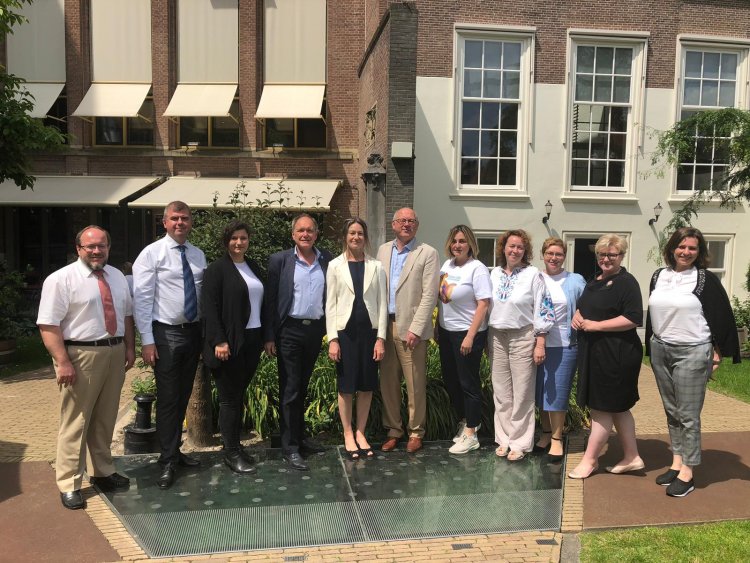
Adri (in the middle) at a meeting with Ukrainian civil society and government representatives, discuss effective government-civil society partnerships

https://www.nhc.nl/in-memoriam-nhc-expert-advisor-and-volunteer-adri-kemps/

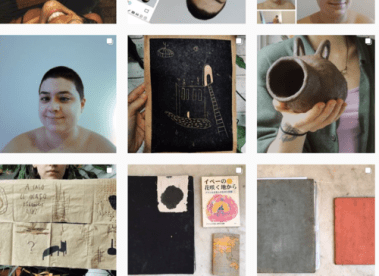
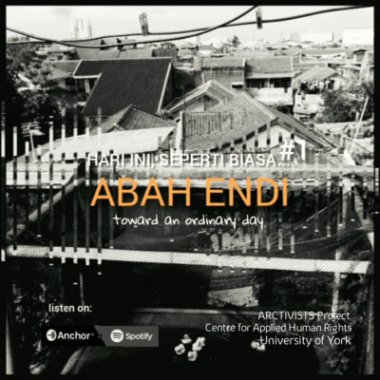
Arctivism Projects: human rights and artists collaborating

May 18, 2020

17 May was International Day against Homophobia: COVID-19 makes things worse

May 18, 2020

The commemoration on 17 May comes as the world continues to battle the COVID-19 pandemic which has increased the vulnerability of lesbian, gay, bisexual, transgender and intersex (LGBTI) people. On the eve of the International Day Against Homophobia, Transphobia and Biphobia (IDAHOBIT) a large group of United Nations and international human rights experts (for names see the link below) call on States and other stakeholders to urgently take into account the impact of COVID-19 on lesbian, gay, bisexual, transgender and gender diverse (LGBT) persons when designing, implementing and evaluating the measures to combat the pandemic.

…..
COVID-19, and the measures taken to address it, exacerbate inequalities and discrimination. The existence of criminalization laws, for example, makes LGBT persons more vulnerable to police abuse and arbitrary arrest and detention in the context of movement restrictions and curfews. While contributing to the fight against the pandemic by staying at home, LGBT children, youths and elders are forced to endure prolonged exposure to unaccepting family members, which exacerbates rates of domestic violence and physical and emotional abuse, as well as damage to mental health. In many jurisdictions, LGBT persons, particularly those most impoverished or without proper documentation, rely overwhelmingly on informal economies made impossible by COVID-19 restrictions. The socio-economic consequences of the pandemic and the loss of income might also increase the vulnerabilities of LGBT persons to human trafficking and sexual exploitation. The reallocation of health resources has also created or exacerbated shortages of antiretrovirals for those living with HIV, while also impacting the ability of trans men and women to receive hormonal therapy or gender-affirming care. Gender-based curfew laws and policies have reportedly condemned gender-diverse persons to permanent seclusion while making trans individuals targets for humiliation and violence when going out.  

The pandemic has also created a context conducive to increased persecution. Some States have enacted measures which intentionally target LGBT persons under the guise of public health, including proposing legislation to deny transgender and gender diverse persons of their legal recognition. Hate speech explicitly or implicitly inciting violence against LGBT persons has been on the rise, including discourse by prominent political or religious leaders blaming the pandemic on the existence of LGBT persons in the community. Surveillance and other digital technologies enacted to track COVID-19 carriers increase risks of infringing privacy and exacerbating stigma.

………We therefore urge States and other stakeholders, on the eve of this 17 May 2020 and in times of COVID-19, to give visibility to and protect LGBT persons in the context of the pandemic. We call on States to pursue all means necessary – including conducting research, adopting legislation, public policy, and ensuring access to justice mechanisms – to ensure that this public health emergency will neither exacerbate existing misconceptions, prejudices, inequalities or structural barriers, nor lead to increased violence and discrimination against persons with diverse sexual orientations and gender identities. We urge all stakeholders, particularly States, to urgently implement lines of action designed to sustain and ensure the continuity of the work of civil society and human rights defenders – the capacities existing within this sector must not be put in peril. And, to effectively meet these objectives, we urge States to engage with LGBT persons, organizations and communities in the design, implementation and evaluation of the measures adopted to respond to the pandemic.The history of LGBT persons, like others subjected to discrimination and violence, has been one of suffering, endurance and hope – a vital struggle for freedom and equality in the face of singular adversity. During the COVID-19 pandemic, we call upon State authorities to listen to the particular concerns of LGBT persons, respect their expertise over their own lives and communities, and accept their solidarity in the construction of new realities of freedom and equality for humankind. 

Already facing bias, attacks and murder simply for who they are or whom they love, many LGBTI people are experiencing heightened stigma as a result of the virus, as well as new obstacles when seeking health care,” added UN SG Guterres. There are also reports of COVID-19 directives being misused by police to target LGBTI individuals and organizations.”

“LGBTI people are often exposed to additional stigma, discrimination and violence, including when seeking medical services – and perhaps saddest of all, within their own families during lock-downs. They are also in some places being treated as scapegoats for the spread of the virus,” UN High Commissioner for Human Rights, Michelle Bachelet said. Referencing the theme for the international day, Ms. Bachelet urged everyone to stand up against hate and ‘break the silence’ surrounding the discrimination and violence suffered by LGBTI people.

See also: https://humanrightsdefenders.blog/2017/05/21/nine-things-everyone-needs-to-know-about-international-lgbti-rights/

https://www.coe.int/en/web/commissioner/-/covid-19-the-suffering-and-resilience-of-lgbt-persons-must-be-visible-and-inform-the-actions-of-states

https://news.un.org/en/story/2020/05/1064232

Emi Palmor’s selection to Facebook oversight board criticised by Palestinian NGOs

May 16, 2020

After reporting on the Saudi criticism regarding the composition of Facebook’s new oversight board [https://humanrightsdefenders.blog/2020/05/13/tawakkol-karman-on-facebooks-oversight-board-doesnt-please-saudis/], here the position of Palestinian civil society organizations who are very unhappy with the selection of the former General Director of the Israeli Ministry of Justice.

On 15 May 2020, MENAFN – Palestine News Network – reports that Palestinian civil society organizations condemn the selection of Emi Palmor, the former General Director of the Israeli Ministry of Justice, to Facebook’s Oversight Board and raises the alarm about the impact that her role will play in further shrinking the space for freedom of expression online and the protection of human rights. While it is important that the Members of the Oversight Board should be diverse, it is equally essential that they are known to be leaders in upholding the rule of law and protecting human rights worldwide.

Under Emi Palmor’s direction, the Israeli Ministry of Justice petitioned Facebook to censor legitimate speech of human rights defenders and journalists because it was deemed politically undesirable. This is contrary to international human rights law standards and recommendations issued by the United Nations (UN) Special Rapporteur on the promotion and protection of the right to freedom of opinion and expression, as well as digital rights experts and activists which argue that censorship must be rare and well justified to protect freedom of speech and that companies should develop tools that ‘prevent or mitigate the human rights risks caused by national laws or demands inconsistent with international standards.’

During Palmor’s time at the Israeli Ministry of Justice (2014-2019), the Ministry established the Israeli Cyber Unit, ……….

Additionally, as documented in Facebook’s Transparency Report, since 2016, there has been an increase in the number of Israeli government requests for data, which now total over 700, 50 percent of which were submitted under ’emergency requests’ and were not related to legal processes. These are not isolated attempts to restrict Palestinian digital rights and freedom of expression online. Instead, they fall within the context of a widespread and systematic attempt by the Israeli government, particularly through the Cyber Unit formerly headed by Emi Palmor, to silence Palestinians, to remove social media content critical of Israeli policies and practices and to smear and delegitmize human rights defenders, activists and organizations seeking to challenge Israeli rights abuses against the Palestinian people.


Brian Dooley to advice Mary Lawlor

May 13, 2020
Further to the announcement of Mary Lawlor as Special Rapporteur on HRDs [see: https://humanrightsdefenders.blog/2020/05/07/mary-lawlor-takes-up-post-as-un-special-rapporteur-for-human-rights-defenders/]. Human Rights First on 12 May 2020 proudly announced that Brian Dooley, its senior advisor on human rights movements and the risk of persecution and reprisal they face, will also serve as an advisor to Mary Lawlor. Dooley will advise the special rapporteur on a range of issues facing human rights defenders while continuing his work at Human Rights First.

We are incredibly proud Brian was chosen for such a distinguished and important role,” said Mike Breen, president and CEO of Human Rights First. “Brian has been critical to the success of numerous campaigns to support human rights defenders in Bahrain, Egypt and Hong Kong over the last ten years. He will be an asset to the UN Special Rapporteur’s team and his work will undoubtedly increase the visibility of the threats that human rights defenders face, and hopefully, lead to better protections for those doing the vital work of advancing human rights.”  For some of my older posts referring to Brian Dooley: https://humanrightsdefenders.blog/tag/brian-dooley/.

See also: https://en.wikipedia.org/wiki/Brian_J._Dooley

Tawakkol Karman on Facebook’s Oversight Board doesn’t please Saudis

May 13, 2020

Nobel Peace Prize laureate Yemeni Tawakkol Karman (AFP)

Nobel Peace Prize laureate Yemeni Tawakkol Karman (AFP)

On 10 May 2020 AlBawaba reported that Facebook had appointed Yemeni Nobel Peace Prize laureate Tawakkol Karman as a member of its newly-launched Oversight Board, an independent committee which will have the final say in whether Facebook and Instagram should allow or remove specific content. [ see also: https://humanrightsdefenders.blog/2020/04/11/algorithms-designed-to-suppress-isis-content-may-also-suppress-evidence-of-human-rights-violations/]

Karman, a human rights activist, journalist and politician, won the Nobel Peace Prize in 2011 for her role in Yemen’s Arab Spring uprising. Her appointment to the Facebook body has led to sharp reaction in the Saudi social media. She said that she has been subjected to a campaign of online harassment by Saudi media ever since she was appointed to Facebook’s Oversight Board. In a Twitter post on Monday she said, “I am subjected to widespread bullying & a smear campaign by #Saudi media & its allies.” Karman referred to the 2018 killing of Jamal Khashoggi indicating fears that she could be the target of physical violence.

Tawakkol Karman @TawakkolKarman

I am subjected to widespread bullying&a smear campaign by ’s media&its allies. What is more important now is to be safe from the saw used to cut ’s body into pieces.I am in my way to &I consider this as a report to the international public opinion.

However, previous Saudi Twitter campaigns have been proven by social media analysts to be manufactured and unrepresentative of public opinion, with thousands of suspicious Twitter accounts churning out near-identical tweets in support of the Saudi government line. The Yemeni human rights organization SAM for Rights and Liberties condemned the campaign against Karman, saying in a statement that “personalities close to the rulers of Saudi Arabia and the Emirates, as well as newspapers and satellite channels financed by these two regimes had joined a campaign of hate, and this was not a normal manifestation of responsible expression of opinion“.

Special Rapporteur on Human Rights Defenders in Africa issues press statement

May 13, 2020
African Commission on Human and Peoples’ Rights

On 1 May 2020 the Special Rapporteur on Human Rights Defenders and Focal Point on Reprisals in Africa, Rémy Ngoy Lumbu, expresses concern following reports of reprisals against human rights defenders and civil society in Africa and the adverse effects that national responses of States Parties to combat the COVID-19 pandemic have on their work. [please note that Africa has a regional rapporteur, not to be confused with the UN Secial Rapporteur on HRDs, Mary Lawlor (https://humanrightsdefenders.blog/2020/05/07/mary-lawlor-takes-up-post-as-un-special-rapporteur-for-human-rights-defenders/)]:

In the context of this COVID-19 global pandemic, the role of human rights defenders has become ever more important to safeguard the fundamental human rights enshrined in the African Charter on Human and Peoples’ Rights (African Charter). The Rapporteur notes, in particular, serious violations of the freedom of assembly and association, as enshrined in the African Charter and the UN Declaration on Human Rights Defenders.

The Rapporteur deplores the fact that, notwithstanding the press releases of the African Commission on Human and Peoples’ Rights of 17 and 24 March 2020 encouraging States to ensure compliance with the provisions of the African Charter and advocating for effective and human rights-based responses to curb the spread of the COVID-19  pandemic in Africa, several human rights defenders continue to be detained in overcrowded or unsanitary prisons and other detention centres without being charged, and this makes them especially vulnerable to COVID-19 infection.

The Special Rapporteur stresses the obligation of States Parties to ensure that measures adopted within the framework of COVID-19 national responses are not used as an opportunity to discriminate against, stigmatize or target particular individuals or groups, including civil society organizations and human rights defenders.

The Special Rapporteur would like to remind that efforts deployed by States Parties to curb the spread of COVID-19 in their respective territories should not result in the silencing of human rights defenders and should comply with the provisions of the African Charter. The Special Rapporteur would also like to call on human rights defenders to continue, with determination, their activities to promote and protect human rights in compliance with the laws and regulations adopted in the context of this global threat.

The Special Rapporteur urges States Parties to:

  1. Ensure that national responses to the COVID-19 pandemic do not lead to the targeting or undue interference with the work of human rights defenders;
  2. Refrain from using COVID-19 related emergency declarations to justify the adoption of repressive measures against specific groups such as human rights defenders;
  3. Also refrain from adopting measures that restrict civic space and contribute to creating a hostile environment for human rights defenders;
  4. Ensure that human rights defenders can communicate freely without fear of reprisal;
  5. Take all necessary measures enabling human rights defenders to conduct their core activities, in particular, those providing support to the most vulnerable populations, while complying with the health measures necessary to combat COVID-19; and
  6. Promptly release human rights defenders detained without charge.

https://www.achpr.org/pressrelease/detail?id=496