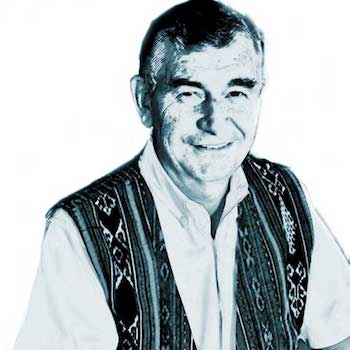
After serving in President Lyndon B Johnson’s cabinet in 1967 and 1968, Clark set up a private law practice in New York in which he championed civil rights, fought racism and the death penalty and represented declared foes of the US including former Yugoslav president Slobodan Milosevic and Sheik Omar Abdel Rahman. He also defended former Iraqi leader Saddam Hussein.
“The progressive legal community has lost its elder dean and statesman,” civil rights attorney Ron Kuby said. “Over many generations, Ramsey Clark was a principled voice, conscience and a fighter for civil and human rights.”
Clark defended antiwar activists. In the court of public opinion, he charged the US with militarism and arrogance, starting with the Vietnam war and continuing with Grenada, Libya, Panama and the Gulf war. When Clark visited Iraq after Operation Desert Storm and returned to accuse the US of war crimes, Newsweek dubbed him the Jane Fonda of the Gulf
Clark said he only wanted the US to live up to its ideals. “If you don’t insist on your government obeying the law, then what right do you have to demand it of others?” he said.
The Dallas-born Clark, who was in the US Marine corps in 1945 and 1946, moved his family to New York in 1970 and set up a pro bono-oriented practice. He said he and his partners were limiting their annual personal incomes to $50,000, a figure he did not always achieve.
Clark’s client list included such peace and disarmament activists as the Harrisburg seven and the Plowshares eight. Abroad, he represented dissidents in Iran, Chile, the Philippines and Taiwan, and skyjackers in the Soviet Union.
He was an advocate for Soviet and Syrian Jews but outraged many Jews over other clients. He defended a Nazi prison camp guard fighting extradition and the Palestine Liberation Organization in a lawsuit over the killing of a cruise ship passenger by hijackers.
“We talk about civil liberties,” he said. “We have the largest prison population per capita on Earth. The world’s greatest jailer is the freest country on Earth?”
Responding to the arbitrary arrest of prominent Vietnamese human rights defender Nguyen Thuy Hanh on 7 April , Ming Yu Hah, Amnesty International’s Deputy Regional Director for Campaigns, said: “The arrest of Nguyen Thuy Hanh is a blatant and politically-motivated attempt to silence one of the most respected human rights advocates in the country. Nguyen Thuy Hanh is an inspiring activist who has worked tirelessly to support unjustly detained persons in Viet Nam. Despite police beatings and years of harassment, she has remained steadfast in her efforts to help and support those in desperate need. Vietnamese jails are notoriously overcrowded and fail to meet minimum international standards. It is a travesty that Nguyen Thuy Hanh is being targeted for her humanitarian work in support of unjustly detained prisoners. She should be celebrated and supported for this work – not punished.
“We urge the Vietnamese authorities to immediately and unconditionally release Nguyen Thuy Hanh and to end their relentless attacks on human rights defenders and peaceful critics. Authorities must respect, protect, promote and fulfil the rights to freedom of expression, peaceful assembly, and association.” [see also yesterday’s: https://humanrightsdefenders.blog/2021/04/08/worries-about-rsf-laureate-pham-doan-trang-jailed-in-vietnam/
Nguyen Thuy Hanh is a human rights defender from Ha Noi. She founded the 50K Fund in 2017, through which she fundraised support for the families of unjustly detained persons across Viet Nam. In 2019 she won the Le Dinh Luong Human Rights Award an award given by the U.S.-based opposition party Viet Tan for her work supporting the families of prisoners of conscience.
She was arrested on 7 April 2021 and charged under Article 117 of the Criminal Code for “making, storing, or spreading information, materials or items for the purpose of opposing the State of the Socialist Republic of Viet Nam”, carrying a potential prison sentence of between five and 20 years.
Nguyen Thuy Hanh is also a vocal advocate for human rights with a popular Facebook account, where she frequently discusses human rights issues. She has faced multiple instances of harassment in retaliation for her peaceful human rights activism.
Nguyen Thuy Hanh nominated herself as an independent candidate for Ha Noi City in the 2016 National Assembly election. Since then, she has been subjected to harassment and intimidation on many occasions. Amnesty International recently called on the Vietnamese authorities to end their mounting crackdown on independent candidates and other critical voices ahead of the 2021 National Assembly election.
In January 2020, when police raided the village of Dong Tam in Ha Noi, leading to a deadly conflict, Nguyen Thuy Hanh fundraised for the family of a village leader who was killed by security forces. In retaliation, her bank account was frozen, with her bank reportedly telling Nguyen Thuy Hanh that police forced them to do so.
In June 2018, while engaging in a peaceful protest against the Law on Cybersecurity and the Law on Special Economic Zones, Nguyen Thuy Hanh was arrested and detained by police. She reported afterwards that she was severely beaten during the interrogation which resulted in injuries to her face. Police have also interrogated Nguyen Thuy Hanh on her work relating to the 50k Fund on many occasions.
Amnesty International’s 2016 report, Prisons Within Prisons, documented the widespread torture and other ill-treatment which prisoners of conscience are subjected to in Viet Nam.
Reporters without Borders (RSF) learned of the arrest exactly six months ago of Pham Doan Trang, a well-known Vietnamese journalist, was arrested at her Ho Chi Minh City home by plain-clothes policemen last October. There’s been no news of her since then.She’s not been allowed to talk to a lawyer or her family and she is facing up to 20 years in prison on a charge of “anti-state propaganda.”
As she completed her sixth month in detention, several RSF Press Freedom Prize laureates recorded video messages expressing their support for her in order to help draw international attention to her fate. All of them called for her immediate and unconditional release by the Vietnamese authorities. She continues to be held by the Vietnamese authorities and is exposed to the possibility of further acts of torture. We now fear the worst for her and we urge you to sign the #FreePhamDoanTrang petition demanding her release. Let’s save one of Vietnam’s most respected journalists. Every signature counts: SIGN THE PETITION
James Savage in Open Global Rights talks about how aligning principles with practice, addressing the power dynamics of collaboration, and nurturing an ecosystem for narrative power can help narrative work succeed.
…As the program officer for the Enabling Environment Program at the Fund for Global Human Rights, I support human rights defenders to counter a burgeoning conservative and authoritarian worldview by weaving new narratives of humanity and hope. For the past two years, I have had the joy of working with JustLabs’ Narrative Hub project, as we accompany a cohort of four human rights groups in four different countries on a journey to explore the value, tools, and tactics of successful narrative-building.
A year ago (and one year into the process with JustLabs), I shared some initial thoughts and assumptions about ways that funders might support this kind of strategic communications and narratives work. As a narrative novice, my continued apprenticeship has offered me a reminder of how important and effective it is as funders to align our principles and practice—to be our own narrative. In the spirit of open accountability, here I offer a few reflections on the “glows and grows” I’ve experienced accompanying this work over the last year—and how we, as funders, could equip this exciting, emergent field for long-term success.
I took my cue from narrative trailblazers such as ReFrame Mentorship and early funders of strategic communications work like the Thomas Paine Initiative. Based on that, I’ve striven to align principles and practice by embracing uncertainty and flexibility, as well as by elevating processes, learning over product and impact, shifting power, building trust, and collaborating authentically. Easy for me to say, but harder to do when faced with the perceptions and reality of funder power dynamics. Particularly, my experience has highlighted the difference in and connection between narrative as process and narrative as product, and how those dynamics shape the expectations and outputs of the funder-grantee relationship.
After nine months spent working with each group to incubate their narrative prototypes through research and testing, we had reached an important review point. Then COVID-19 hit.
Unable to meet in person, we recognized an opportunity to bring new creativity to both our (now online) workshops and our project’s reflection process. Although our idea—to dispense with the standard grantee-funder report and invest in more of a story-led self-reflection—had been percolating before the onset of COVID-19, the fallout of the pandemic presented a chance to operationalize this novel approach to reporting. Allowing this shift in the relationship between funder and partner relieved ourselves of the product-driven parameters we often operate in and allowed us to instead celebrate the process of experimentation and learning.
From the outset of this initiative, JustLabs and the Fund have supported, encouraged, and created processes for our partners to help them see that for narrative work to be sustainable, it can’t just be a project or product—it must be integral to their organization’s DNA and built into its system.
The power dynamics of partnership
A second reality check came in critiquing the power dynamics of partnership. Despite our best efforts to foster a participatory spirit of collaboration, there remains the uncomfortable truth that each of us still feels somewhat beholden to others’ expectations—activist to accompanier, accompanier to funder, funder to donor.
With our funding, the four groups wanted to explore new, creative ways of doing narrative work by aiming for ambitious prototypes that may, in fact, have been out of step with their everyday work and core capacity. For our part, we needed to see some level of consistency and coherence in the work across four countries while ensuring that it was shaped by context and driven by the interests and capacity of each of the four groups.
In working on this together, I have—imperfectly, I’m sure—tried to walk the line between sharing my ideas and resisting my instinct to solve. For instance, to help one partner meet its concern at over-burdening their in-house communications capacity, we offered additional resources so they had the option to engage an external design agency if they wished. Such active accompaniment has power written all over it—it takes a confident grantee or one with a strong relationship of trust to turn down their funder’s suggestion/offer. But rather than avoid it entirely and lose the benefits that come from thought partnership, co-creation, and shared learning, I wonder if we can better surface and own the forms of power at play to enable stronger collaboration between funders and grantees.
One way we—JustLabs and the Fund—tried to do that was to join our grantees in being interviewed by Rebecca Lichtenfeld, our ally storyteller, so as to also take part in the reflection process. Then, in the spirit of mutual accountability, we summarized and shared our own learning with the four groups, inviting our grantees to further help us define our collective learning process. There is much more to do here, as Panthea Lee has suggested—addressing the power dynamics of co-creation and partnership demands real intentionality.
Nurturing collective narrative power – a challenge for funders
This brings me to my third key reflection from the past year, derived both from my work with the Narrative Hub and from illuminating interactions with narrative veterans. As the points above reflect, my take on power has been mostly internal—focused on navigating the power infused in my relationships. As I think about the sustainability of this process, I realise that it is equally important to nurture the collective narrative power of partners with their peers and allies, rooted in shared values and visions. A critical question for our next year of work together, is whether we are providing the resources and accompaniment that best enables them and their allies to do that.
As Rashad Robinson has explained, narratives that help change the norms and rules that secure economic, climate, racial, gender, and other forms of social justice will come through “equipping a tight network of people organizing on the ground and working within various sectors to develop strategic and powerful narrative ideas, and then, against the odds of the imbalanced resources stacked against us, immerse people in a sustained series of narrative experiences required to enduringly change hearts, minds, behaviors, and relationships.”
As funders, we must act thoughtfully in how we help create such an ecosystem for narrative power. How we show up and how we do narrative work matters just as much as what we do and what we produce. We must center an accompaniment approach that aligns principles and process, starts from the real-world reality and goals of our partners, and invests in the infrastructure movements need to build and sustain their narrative power.
This article is a part of a collection by JustLabs and the Fund for Global Human Rights on bringing narrative initiatives to life in human rights work.
.. Prayer is a public way for a Pope to make a social and political statement of great importance.
“We pray for those who risk their lives while fighting for fundamental rights under dictatorships, authoritarian regimes and even in democracies in crisis,” he said. Pope Francis is very aware of the struggle and needs of these dedicated human rights activists fighting for justice and peace and the human dignity. Those standing for racial equality in the “Black Lives Matter” campaign and those fighting for women and children’s rights in the “Me Too Movement.”
He addressed all people – Christians, non-Christians, people of all religious beliefs or those with none at all – who have dedicated their lives serving humanity and giving unselfish service without seeking reward. They need and deserve our support when we can’t help the victims of abuse directly. They do the vital work for us defending victims of rights violations and courageously give their lives doing it. In the Philippines, 318 human rights workers and activists were killed between July 2016 and June 2020. As many as 110 lawyers were killed from 1972 to the present. Sixty-one of those killings have taken place since 2016. Also, 86 journalists and reporters have been killed since 1992.
They are accepting serious risks defending victims of abuse and violations of their human dignity and rights. The suffer hardship and abuse, rejection and imprisonment and death because of their work for human rights in supporting the downtrodden and abused victims. They are survivors themselves. They have that most fundamental love of others to uphold the dignity and rights of every human being…..
Many others have escaped to try and reach Europe in search of a new life. Pope Francis has prayed and appealed for European countries to open their borders to welcome the war refugees. Germany and some nations did. Canada has received thousands of refugees and many from Syria in recent years. However, the anti-asylum people and Neo-Nazis of Europe rose up and opposed any welcome and right-wing political parties grew to stop it and largely succeeded. Some Catholic countries slammed shut their doors with dark compassionless hearts and built fences to keep out the refugees, thousands of them homeless children. Too bad if Jesus of Nazareth and his parents were arrested at the Egyptian border and deported them to the cruel baby-killer King Herod for a death penalty, there would have been no Christianity.
Under international law, a person fleeing persecution seeking asylum has a right to reach the country of destination and choice by any means available to ask for protection, shelter and asylum. Many hard-hearted people see them as parasites, pests and vermin to be rejected. The newly proposed UK asylum law is suggesting to do just that by declaring asylum seekers who reach the UK as “illegals.”
There can be no “illegal” entry to a country by an asylum seeker. Many Germans escaping East Germany seeking asylum in the West during the Cold War would have to be declared illegal entry and returned to the communist East if such crossing the border seeking asylum was said to be illegal. Such escapes were cheered and encouraged. The proposed law by the UK wants to make illegal what under international law is right and legal and just. To deport an asylum seeker without due process and evaluation would be a violation of that refugee’s human rights, according to some UK human rights lawyers.
More dictators and populist autocratic leaders have emerged in recent decades. Pope Francis’s prayer is badly needed in Myanmar as the people have shown courage and bravery in facing down the military that staged a coup six weeks ago. The defiance and resilience of the people and youth is inspiring and as many as 260 have been killed by the military, thousands more arrested and detained.
The cries and voices of the oppressed and imprisoned Uyghurs are being heard and supported by the human rights campaigners. They will be encouraged by the prayer and support of Pope Francis, a world-renowned voice for the voiceless and oppressed people. Many are calling for an end to what they call a genocide. Millions of Uyghurs are allegedly imprisoned in re-education camps by the communist regime and women forcibly sterilized, raped and killed, according to escaped witnesses interviewed on world media.
In every country where tyrants and dictators arbitrarily arrest and imprison their own people and kill them with impunity, the voice of protest denouncing the evil deeds can be heard. We are all challenged to join the prayer of Pope Francis and thousands of human rights defenders to campaign on social media and sign petitions in their support. If ever the tyrant’s goons come for us, may we have human rights defenders at our side.
Wole Ojewale (former Assistant Program Manager at the CLEEN Foundation) wrote on 5 April 2021 in saharareporters a very warm obituary for Innocent Chukwuma who fought for a liberated and egalitarian Nigeria.
“Like many friends, comrades and associates of Innocent Chukwuma; I received the cold message from my former colleague by 12:33am on Sunday morning about the shocking exit of a man considered by many as an iroko tree and a big masquerade in the organized civil society and democracy struggle in Nigeria. My initial contact with Innocent was sometimes in June 2015…[and led to] an extremely impactful relationship I have had with Innocent in the last six years. Innocent represents many things to the diverse individuals and groups he has worked with from his days as a courageous student union activist in the pro-democracy struggle at the University of Nigeria; to his adventure in the human rights movement and the Civil Liberty Organization where he possibly developed strong interest in police reform- a cause that led him to establish CLEEN Foundation in 1998 and a field where he would later emerge as a global thought leader, who is widely respected and sought after. See also: https://www.trueheroesfilms.org/thedigest/laureates/1bc54e6a-4a3a-40f4-b8a3-b0c83af62631
Innocent typified an exceptional breed of change agents imbued with the character, audacity, selflessness, humility and intellectual inspiration to transform a system and lead the society in an upward trajectory. Few stories would suffice to narrate these traits which Innocent was known for. Raised from a very humble beginning in Imo state. Innocent would pass as a typical child that would have been advised and warned by parents to face his study alone and “stay away from trouble”. However, he chose an alternative path to fight for the rights of the common man right from his secondary school days as a house prefect. He once narrated a story about how he led a protest against the school authority at the Holy Ghost College, Umuahia over poor meals served to the students. The heroic act led to his suspension with other students who participated in that protest. This and other daring experiences would later forge him as a gallant human rights activist with many confrontations with military dictators and their brutal state agents. Innocent risked his life many times and suffered wanton harassment alongside other critical voices as they fought steely against dictatorship in the grotesque days of military rule in Nigeria. Highly urbane, cosmopolitan and nationalistic in his intellectual devotion to state building in Nigeria; Innocent’s enduring impacts would be felt in his broader contributions to police reform in Nigeria and his unalloyed commitment to youth development in the country.
I often consider him as the dean of police studies due to his sheer contributions to knowledge production in police research and practice in Nigeria. One only needs to engage him for a few minutes to perceive his depth of knowledge on the subject. I recall two vivid examples that gave credence to this assertion. One of my learned friends who is also an emerging scholar in the field of criminal justice once confided in me that he found out from his literature review that “Innocent and Professor Alemika have permanently defined the research agenda on police research in Nigeria”. Another more profound instance came when I was approached by a senior police officer to seek my advice on his research topic for a strategic course at the National Defense College in Abuja. Having discussed the topic with me; I advised him to seek an audience with Innocent and interview him.
I graciously obliged him his contact and he travelled to Lagos to meet Innocent. The senior officer returned to Abuja and came to recount his experience to me at the CLEEN Office in Abuja. In summary, he noted Innocent was recommending books and research papers on police and policing to him at the maximum of five minutes intervals in the course of the interview. He said, ‘Wole, I concluded Innocent knows policing more than me- even as a police officer”. The senior officer would later retire as a Deputy Inspector General of Police. This account attests to Innocent’s profound intellectual exertion on diverse subjects ranging from policing to security, human rights and democracy.
Innocent also made a significant impact in youth development in Nigeria. Virtually all of us who have had opportunities to be trained by him in many ways had contact with him mostly in our twenties and early thirties. Innocent knew what everyone would need to succeed in the global development profession and encouraged us individually. My Ph.D. research benefitted immensely from such a generous scheme he put in place in CLEEN Foundation. On his twitter handle, Innocent prides himself as a lifelong learner and specialist in identifying gaps and opportunities to solving wicked problems! He piloted this idea and demonstrated how to innovate for radically greater social goods in the society. He challenged bad governance as a human rights activist, and also established Oluaka Academy- a social enterprise and world class centre for innovation, business incubation, skills and enterprise development with a mission to support development of technologies for solving social problems, growth of small businesses and vocational skills in partnership with private, public and social sectors.
Innocent left indelible footprints on the sand of time and many would continue to benefit from the shades of trees he planted. He maintained national impact and global relevance. From Southern America to the Middle East, Western countries, Africa and Asia, he maintained strong alliances with other human rights activists and scholars. In many instances, when I have interacted with him, I found out that the intelligentsia I have probably read about are close allies whom he called friends and regularly compared notes with. The enigma around this aura is that most people who admire him have not even met him! But they all have great stories to share about him. Sometimes mentioning his name in international fora automatically confers respect and honour on me. I recall such experience I had in a meeting organized by the World Organisation Against Torture in Geneva in 2019 where I represented Nigeria in a working group meeting of human rights defenders. The Secretary General of the OMCT walked to me at the coffee stand and started a conversation about police brutality and human rights abuse in Nigeria. We discussed extensively and he alluded to the profound respect he has for Innocent albeit they have not met before! Such is the latitude of his impact and the scope of his sphere of influence. Innocent personified humility and dignity. He was highly strategic and inspirational in his approach to life. He was many things to some of us: a mentor, a senior friend and a comrade in the struggle for a better Nigeria. I will treasure the text message he sent to me on the 20th of December, 2020 as the last advice from a general. The text also came as an encouragement- an ideal he represented so well.
Innocent Chukwuma fought for a liberated and egalitarian Nigeria. The responsibility lies with us to pick the baton from him and complete the race he and his comrades started in their prime.
Rest in peace and power, Innocent Chukwuma- our departed hero!
published its latest annual report, outlining key impacts during the last year and its vision for 2021 and the years ahead . They have remained deeply interconnected with defenders and have supported, protected and amplified their work at the national, regional and international levels. With them, the “essential workers” of our times, ISHR strives for a 2021 full of freedom, equality, dignity and justice.
What did we achieve in 2020?
Here are just a few examples of our collective impact:
Working with UN experts, governments from all regions, and major investors to issue public statements of concern regarding human rights in China and to call for independent investigation and monitoring of widespread and systematic violations in Xinjiang and Hong Kong
Partnering with family members, human rights defenders and civil society partners to secure an urgent debate at the UN on the issue of police violence and systemic racism and to mandate the UN High Commissioner for Human Rights to investigate and report on this issue in the US and globally
Working with civil society partners to ensure that key international principles on equality and justice for LGBTI persons are reflected in laws, policies, practices and jurisprudence at the national, regional and international levels
Developing a new five-year strategy setting out the ways in which we will support and act in solidarity with defenders
Strengthening our own governance, transparency, accountability and sustainability, including through the establishment of a Working Group on Wellbeing and a Working Group on Non-Discrimination, Divers
A placard reads “Abdulhadi al-Khawaja, will and determination, hunger strike” during an anti-government protest on 5 September 2014 (AFP/File photo)
Mary Lawlor, UN special rapporteur on the situation of human rights defenders, made the case for the release of Abdulhadi al-Khawaja, former president of the Bahrain Centre for Human Rights, before his 60th birthday this week. in a video message posted to Twittery.
Khawaja, who previously served as president of the Bahrain Centre for Human Rights, has been in prison for 10 years, serving a life sentence for “organising and managing a terrorist organisation”, among other charges. “He’s serving a life sentence in prison for peacefully defending the rights of others,” Lawlor said.
“He’s been given an unfair trial and details of his torture have been corroborated by an independent commission of inquiry.” Lawlor said she had known Khawaja “for many years” and “witnessed his committed work for human rights in the Middle East”.
The UN expert also noted that Khawaja’s case had been taken up by the European Union, the United Nations and other international organisations.
“I urge the Bahraini government to finally release Abdulhadi in time for his 60th birthday on the 5th of April. His family have been fragmented and dislocated and have suffered greatly over the past ten years; it would be an honourable and compassionate act to allow them to reunite,” Lawlor concluded.
On Tuesday, March 30, 2021, the 2020 edition of the Country Reports on Human Rights Practices was released by the U.S. Department of State’s Bureau of Democracy, Human Rights, and Labor. The Secretary of State is required by law to submit an annual report to the U.S. Congress on “the status of internationally recognized human rights” in all countries that are members of the United Nations. This annual report, called the Country Reports on Human Rights Practices but commonly known as the Human Rights Report (HRR), provides information that is used by Congress, the Executive Branch, and courts in making policies and/or decisions; thus accurate information on human rights conditions is critical. The HRR also informs the work at home and abroad of civil society, human rights defenders, lawmakers, scholars, immigration judges and asylum officers, multilateral institutions, and other governments.
The country reports are prepared by U.S. diplomatic missions around the world, which collect, analyze, and synthesize information from a variety of sources, including government agencies, non-governmental organizations, and the media. The reports do not attempt to catalogue every human rights-related incident, nor are they an effort by the U.S. government to judge others. Instead, they claim to be factual in nature and focus on a one-year period, but they may include illustrative cases from previous reporting years.
Conor Finnegan for ABC News on 30 March 2021 compared the report with those of the Trump administration:
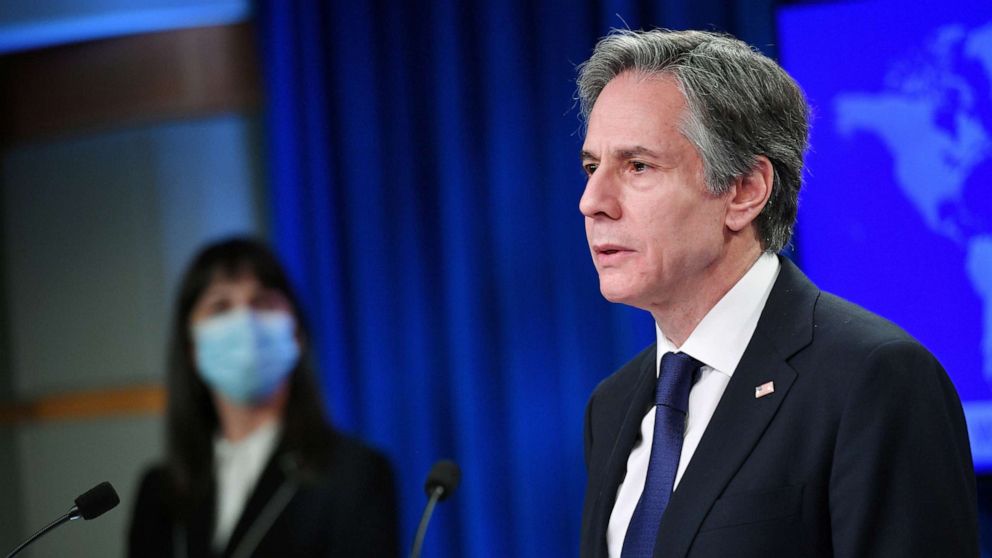
Blinken launched the department’s 45th annual human rights report Tuesday which The report covers 2020 and found a further deterioration for human rights in many countries, particularly as governments used the coronavirus pandemic to curb their citizens’ rights.
The first report under the Biden administration also included changes that eliminated the conservative take of the Trump years, like ending former Secretary of State Mike Pompeo’s “hierarchy” of rights and re-introducing a section on women’s reproductive rights that will be published later this year.
When human rights defenders “come under attack, they often look to the United States to speak up on their behalf. Too often in recent years, these defenders heard only silence from us,” Blinken said. “We are back for those brave advocates as well. We will not be silent.“
In particular, Blinken “decisively” repudiated Pompeo’s “Unalienable Rights Commission,” a panel of academics that said in a report last July that freedom of religion and right to property were the most important human rights. While Pompeo touted the report and said it would lay a foundation for future administrations, critics accused it of minimizing minority rights. Blinken essentially jettisoned the report, saying Tuesday, “There is no hierarchy that makes some rights more important than others. Past unbalanced statements that suggest such a hierarchy, including those offered by a recently disbanded State Department advisory committee, do not represent a guiding document for this administration.” [see also: https://humanrightsdefenders.blog/2019/07/11/trump-marches-on-with-commission-on-unalienable-rights/]
Human rights are increasingly under threat around the world, Blinken said, saying the trend lines “are in the wrong direction.”
In particular, he highlighted what he called the Chinese government’s genocide of Uighurs and other Muslim ethnic minorities in Xinjiang province, attacks on civil society and political opposition in Russia, Uganda and Venezuela and on pro-democracy protesters in Belarus, war crimes in Yemen, atrocities “credibly reported” in Ethiopia’s Tigray region, and abuses by the Syria’s Bashar al-Assad’s regime.
While the report doesn’t touch on Myanmar’s coup and the military’s bloody crackdown on protests, because they happened in 2021, Blinken took time to again condemn the events. But after weeks of steadily increasing U.S. sanctions that have not deterred the ruling junta, he had no specific answer on what else the U.S. could do to change the darkening trajectory there.
Mandel Ngan/Pool/ReutersU.S. Secretary of State Antony Blinken speaks during the release of the “2020 Country…
Chinese officials and state-run outlets have increasingly raised U.S. race relations to say American officials are in no position to criticize Beijing — comparing Uighur slave labor in Xinjiang to Black slaves in the U.S. South.
“We know we have work to do at home. That includes addressing profound inequities, including systemic racism. We don’t pretend these problems don’t exist. … We deal with them in the daylight with full transparency, and in fact, that’s exactly what separates our democracy and autocracies,” he said, adding that open reckoning gives the U.S. “greater legitimacy” to address other countries’ records, too.
The Biden administration will use all tools available to impose consequences on human rights abusers and encourage better behavior, Blinken said, including the new Khashoggi policy that imposes visa restrictions on officials that target or harass their countries’ dissidents.
“Standing up for human rights everywhere is in America’s interests, and the Biden-Harris administration will stand against human rights abuses wherever they occur, regardless of whether the perpetrators are adversaries or partners,” he said.
On 29 March 2021 Amnesty International announced the appointment of Dr. Agnès Callamard, a leading international human rights expert, as its new Secretary General, effective immediately.
As Secretary General, Dr. Callamard will be the Chief Executive of Amnesty’s International Secretariat and the principal spokesperson of the global Amnesty movement, which has some 10 million supporters, and offices in more than 70 countries.
“At a time when human rights are under unprecedented threat around the world, Dr. Callamard will lead, excite and rally the entire Amnesty movement to meet these challenges head-on,” said Sarah Beamish, Chair of the International Board, in announcing the appointment. “The combination of her intellectual acuity, her deep global human rights experience, and her courageous voice makes her highly qualified to front our movement. We are delighted she has accepted this challenge to take us boldly into our next phase.”
“Where governments and corporations seek to silence those who speak out against their abuses, to obfuscate the truth, and to undermine or reject human rights norms, the rigorous investigations and uncompromising campaigns of Amnesty International are more vital than ever.” Agnès Callamard
“I am honoured to take up the post of Secretary General and work alongside Amnesty’s supporters around the world so that together we defend and demand respect for all human rights for all,” Dr Callamard said.
Dr. Callamard, a French national, has built a highly distinguished career in the international human rights and humanitarian sectors, working across NGOs, academia, and the United Nations. Alongside her role as a United Nations independent human rights expert, she held the role of Director of the Global Freedom of Expression Project at Columbia University. Previously, she has been the Executive Director of the Freedom of Expression organization ARTICLE 19 and was the founder and Executive Director of HAP International (the Humanitarian Accountability Partnership).
Dr. Callamard worked with Amnesty International from 1995-2001, including as Chef de Cabinet for then-Secretary General Pierre Sané. She has led human rights investigations in more than 30 countries and published extensively on human rights, women’s rights, freedom of expression, refugee movements, and the methodology of human rights investigations.




 Mandel Ngan/Pool/ReutersU.S. Secretary of State Antony Blinken speaks during the release of the “2020 Country…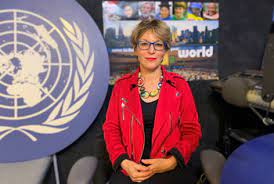
 Hans Thoolen on Human Rights Defenders and their awards