Archive for the 'books' Category

The History of Writers Defending Human Rights in the USSR, e.g. the poet Lina Kostenko

September 16, 2025

On 14 September 2025 Ilya V Ganpantsura wrote in Countercurrents:

In the USSR, writers often became defenders of human rights. They were people of various ages and backgrounds, yet their works exposed injustice and reflected personal courage to speak the truth — for which many paid with exile and labor camps. Why did the authorities fear writers so much? And why should they be honored today?

One such figure was the Soviet-Ukrainian writer and poet Lina Kostenko, who, through her works and personal stance, inspired resistance, standing proudly for freedom and against the oppressive system, despite multiple attempts to push her out of cultural and literary life. Her novel Notes of a Ukrainian Madman, written in the 1970s, was long banned and circulated only through underground self-publishing (samizdat). Through this work, Kostenko protested the totalitarian regime and shed light on the lives of those who could not live in good conscience under Soviet rule. The novel symbolized the fight for the right to be oneself.

Lina Kostenko was part of the “Sixtiers” (Shistdesyatnyky) movement, a generation that opposed Soviet propaganda stereotypes, aimed to restore historical memory, protect national culture, and resist ideological control in Ukraine. As a writer and poet, Kostenko not only used her works to critique the totalitarian regime but also supported the core values of the movement: personal freedom, the right to cultural expression, and the condemnation of repression.

“We are warriors. Not idlers. Not slackers.
And our cause is righteous and holy.
For while others fight for whatever,
We fight for independence.
That’s why it’s so hard for us.”
“A human seemingly cannot fly…
But has wings.
Has wings!”

Her contribution to the cultural revival of Ukraine and the preservation of free speech values is immeasurable. Today, Lina Kostenko still resides in Ukraine. In 1987, she was awarded the Shevchenko National Prize for her novel Marusia Churai.

One of Lina Kostenko’s close friends and fellow Sixtiers was the poet, translator, and dissident Vasyl Stus. They actively supported each other in their fight against censorship during the most difficult times of repression.

Stus openly criticized the Soviet regime for human rights violations, which led to his repeated persecution. In 1972, he was arrested and sentenced for “anti-Soviet agitation and propaganda.” Despite the harsh conditions of his imprisonment, he continued to write, and his works were distributed through samizdat, inspiring many to resist oppression.

After five years in a Mordovian labor camp and two years in exile in the Magadan region, Stus returned to Kyiv in September 1979. There, he resumed his human rights activities, supporting “prisoners of conscience” with the help of Western organizations. In 1978, he was made an honorary member of the English PEN Club. However, in early 1980, he was arrested again. Vasyl Stus died in a maximum-security labor camp in 1985. His life and works became symbols of the relentless struggle for freedom and human dignity under totalitarianism.

The stories of Lina Kostenko and Vasyl Stus remind us that words can be powerful weapons in the fight for truth and dignity. Their courage, dedication to the ideals of freedom, and love for Ukrainian culture prove that even under the harshest conditions, there is always room for bravery and resistance. Today, as issues of freedom of speech and cultural identity remain pressing, their legacy continues to inspire us to remember that truth is a value worth fighting for.

https://countercurrents.org/2025/09/the-historical-tragedy-of-writers-defending-human-rights-in-the-ussr/

Deluge of NGO criticism greets 2024 US State Department Report on human rights

August 20, 2025

The Trump administration’s omission of key sections and manipulation of certain countries’ rights abuses degrade and politicize the 2025 US State Department human rights report, Human Rights Watch, Amnesty International, Human Rights First and many other NGOs concluded .

On August 12, 2025, the State Department released its “Country Reports on Human Rights Practices” covering the year 2024. The report omits several categories of rights violations that were standard in past editions, including women, LGBT people, persons with disabilities, corruption in government, and freedom of peaceful assembly. The administration has also grossly mischaracterized the human rights records of abusive governments with which it has or is currently seeking friendly relations.

By undermining the credibility of the report, the administration puts human rights defenders at risk, weakens protections for asylum seekers, and undercuts the global fight against authoritarianism. 

This year’s human rights report may strictly keep with the minimum statutory requirements but does not acknowledge the reality of widespread human rights violations against whole groups of people in many locations.  As a result, Congress now lacks a widely trusted, comprehensive tool from its own government to appropriately oversee US foreign policy and commit resources. Many of the sections and rights abuses that the report omits are extremely important to understanding the trends and developments of human rights globally, Human Rights Watch said.

On Israel, the State Department disregards the Israeli authorities’ mass forced displacement of Palestinians in Gaza, their use of starvation as a weapon of war, and their deliberate deprivation of water, electricity, medical aid, and other goods necessary for civilians’ survival, actions that amount to war crimes, crimes against humanity, and acts of genocide. The State Department also fails to mention vast damage and destruction to Gaza’s essential infrastructure and the majority of homes, schools, universities, and hospitals.

The report is dishonest about abuses in some third countries to which the US is deporting people, stating that the US found “no credible reports of significant human rights abuses” in El Salvador, although they cite “reports” of extrajudicial executions, enforced disappearance, and mistreatment by police. The administration has transferred to El Salvador’s prisons, despite evidence of torture and other abuses. 

The State Department glosses over the Hungarian government’s escalating efforts to undermine democratic institutions and the rule of law, including severe curbs on civil society and independent media, and abuses against LGBT people and migrants. It also fails to acknowledge that Russian authorities have widely used politically motivated imprisonment as a tool in their crackdown on dissent, and its prosecutions of individuals for “extremism” for their alleged affiliation with the LGBT movement. 

Compare: https://humanrightsdefenders.blog/2024/05/04/us-state-department-2023-country-reports/

https://www.hrw.org/news/2025/08/12/us-rights-report-mixes-facts-deception-political-spin

https://www.amnestyusa.org/press-releases/u-s-state-departments-human-rights-report-puts-politics-above-human-rights/

https://www.state.gov/reports/2024-country-reports-on-human-rights-practices/

https://theweek.com/politics/state-department-stance-human-rights

https://www.bushcenter.org/publications/what-to-know-about-the-state-departments-new-human-rights-reports

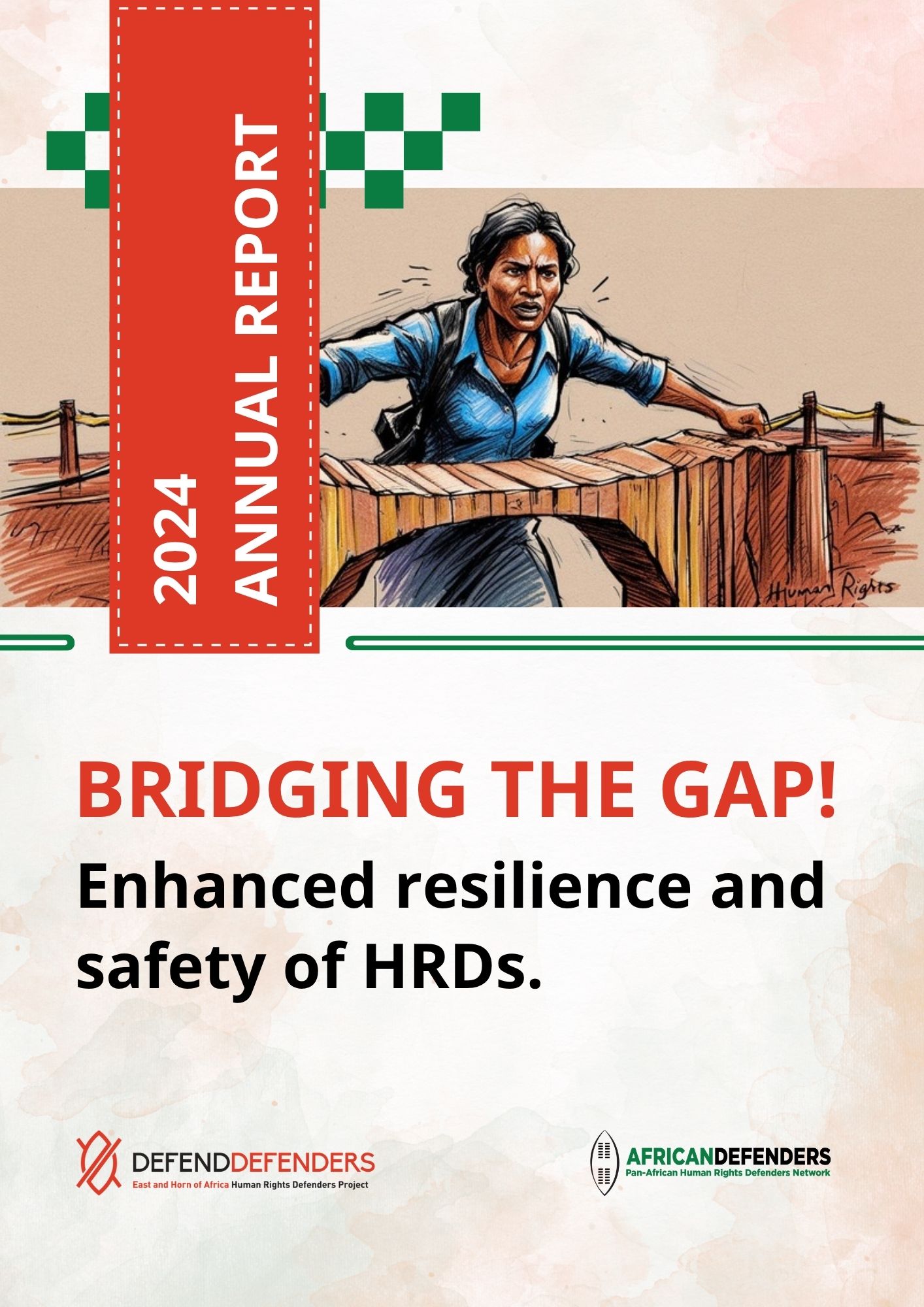
Bridging the Gap – Annual Report 2024 DefendDefenders on Africa

August 1, 2025

The year 2024 witnessed a deteriorating political and human rights climate, with the war in Sudan, police violence in Kenya, ethnic conflict in Ethiopia and political instability in the Sahel intensifying threats against human rights defenders (HRDs). Despite the risks, the East and Horn of Africa Human Rights Defenders Project (DefendDefenders) and the Pan African Human Rights Defenders Network (AfricanDefenders) remained steadfast in providing HRDs with essential protection support, supported amplifying of their voices, and enhancing their capacity to navigate the environments.

Our protection efforts were central to our work as HRDs faced heightened threats. DefendDefenders provided a total of 643 protection grants (493 emergency grants and 150 direct assists under the Ubuntu Hub Cities Initiative). AfricanDefenders strengthened partnerships with the Elisabeth-Selbert-Initiative, the Shelter Cities Initiative, and the University of Pretoria’s Centre for Human Rights to facilitate the relocation and protection of HRDs at risk.

On the advocacy front, we remained committed to ensuring that HRDs had a voice at regional, and international levels. At the UN Human Rights Council, we advocated for the renewal of critical mandates, including the UN Commission on Human Rights in South Sudan and the Special Rapporteur on Eritrea. Additionally, we launched the report Is the Tide Turning? which analyses African states’ voting patterns on human rights resolutions to inform and shape future advocacy strategies.

At ACHPR, we facilitated HRDs’ participation in the 79th and 81st ordinary sessions, organized side events, and engaged with civil society organisations. Our involvement in the African Electoral Justice Network underscored our commitment to promoting fair and transparent electoral processes. Additionally, we facilitated a benchmarking trip for ACHPR Commissioners to the Inter-American Commission on Human Rights, fostering inter-regional collaboration on human rights protection. We conducted solidarity missions to Kenya and Senegal, standing with indigenous women HRDs, grassroots defenders, and civil society leaders. We also co-hosted a global consultation with outgoing and incoming UN Special Rapporteurs on Freedom of Peaceful Assembly and Association, addressing emerging threats to civic space and climate justice activism.

We strengthened national HRD coalitions across the East and Horn of Africa, reinforcing networks for collective advocacy and protection. Our 7th Focal Point Meeting brought together members of the East and Horn of Africa Human Rights Defenders Network to assess civic space trends, evaluate our 2021-2025 Action Plan, and strategise for the 2026-2030 period. As part of this gathering, we also convened an inter-mechanism dialogue between HRDs, the Chairperson of the ACHPR, and the Chairperson of the UN Working Group on Enforced Disappearances to enhance HRDs engagement with the special mechanisms.

To sustain HRDs’ resilience, we prioritised capacity-building, equipping them with tools to navigate an increasingly hostile environment. Over the year, we trained 990 HRDs through more than 62 workshops on physical security, digital security, wellbeing, monitoring and documentation, Kobo Toolbox, and resource mobilisation. The year concluded with the launch of our annual thematic report, Rocky Ground and Shifting Sands: Human Rights Defenders Working in the Context of Elections in East Africa, offering insights into the challenges HRDs face in electoral contexts in Burundi, South Sudan, Tanzania, and Uganda.

Download Report Here:

https://defenddefenders.org/annual-report-2024/

New ISHR handbook on reprisals for human rights defenders

July 10, 2025

On 30 June 2025, ISHR launched its updated Reprisals Handbook in four languages (English, Simplified Chinese, Uyghur and Tibetan), an essential resource for all stakeholders concerned about intimidation and reprisals against those cooperating with international or regional human rights systems.

The UN as well as regional human rights bodies are often the last space where human rights defenders, rights holders, victims and witnesses can denounce violations and abuses. They must be free and safe to cooperate with and give evidence and testimony to these human rights bodies. They must be protected against any form of intimidation or reprisal in association with this engagement.

This handbook is aimed first and foremost at human rights defenders who engage with regional and international human rights systems. The focus is in particular on the United Nations (UN) human rights system, the African Commission on Human and Peoples’ Rights (ACHPR) and the Inter-American Commission on Human Rights (IACHR). 

The handbook highlights the risks that defenders can face from interacting with those systems, and suggests ways in which defenders can leverage the weight of the UN and regional human rights mechanisms to provide some degree of protection against those risks. In doing so, it does not aim to provide a fully comprehensive protection solution. In all cases, defenders should consider which option might be best, based on the context and particulars of a case.

ISHR also aims at diversifying the formats available for defenders to access relevant content, including by publishing a Reprisals Toolkit and a video in the languages mentioned above.


The International Service for Human Rights (ISHR) seeks to ensure that national, international and regional human rights systems have the policies, mechanisms and protocols in place to prevent reprisals and ensure accountability where they occur. ISHR also brings cases of alleged intimidation and reprisals to the attention of relevant officials to press for effective preventative measures and responses, including through our #EndReprisals campaigns. ISHR also maintains the #EndReprisals database, which documents cases of reprisals reported by the UN Secretary-General.

For more information on how to use the UN bodies and mechanisms referred to throughout this handbook, visit the ISHR Academy, which provides free courses in English, Spanish and French.

https://ishr.ch/latest-updates/new-ishr-handbook-on-reprisals-for-human-rights-defenders

HURIDOCS’ 2024 Annual report is out

July 8, 2025

In 2024, HURIDOCS continued strengthening partnerships, evolving tools, and expanding its reach.

“I see our contribution not just as code, but as something living—like the root bridges of Northeast India, grown with care and shaped by community. This is how I envision HURIDOCS: building human rights infrastructure that is resilient, collaborative, and deeply rooted in justice.”
— Danna Ingleton, HURIDOCS Executive Director

Supporting the global community

This year, HURIDOCS partnered with 73 organisations across 38 countries, helping develop documentation strategies, launch new platforms, and provide targeted support. This means 73 documentation projects were reimagined and refined through bespoke customisation through our flagship tool, Uwazi. From databases mapping attacks on environmental defenders to resources preserving collective memory, our work continues to be shaped by those on the frontlines of human rights struggles.

Uwazi: Built with and for civil society

In 2024, our open-source platform, Uwazi, continued to grow with new machine learning tools for translation and metadata extraction, tighter security, and full integration with the Tella mobile app, making it more responsive, secure, and aligned with the needs of human rights defenders worldwide.

Convening global conversations

In 2024, HURIDOCS engaged in key global events, including a side event at the 56th Human Rights Council, the Geneva Human Rights Platform, the first Google Impact Summit, and a Human Rights Day webinar highlighting four global initiatives powered by Uwazi.

Through these events, we advanced vital discussions on the ethical use of AI, digital monitoring technologies, and the future of technology infrastructure in support of human rights.

Navigating fundraising challenges while building resilience and sustainability

HURIDOCS continued to navigate a complex funding landscape in 2024, strengthening our financial foundations to ensure long-term resilience.

We remain committed to aligning our resource strategies with our mission, providing steadfast support, insight, and partnership to those advancing human rights globally

Strengthening our foundations

2024 marked the second year of Danna Ingleton’s leadership as Executive Director. It was a year of growth and transition, including the appointment of Grace Kwak Danciu as Chair of the HURIDOCS Board, and a heartfelt farewell to Lisa Reinsberg, whose contributions shaped the organisation for more than five years.

To ensure the long-term sustainability of our mission, we launched a new Development and Communications team under the leadership of Yolanda Booyzen. We also welcomed new staff across programmes, tech, and product, each one contributing to a stronger, more agile HURIDOCS.

As our team grows and our documentation tools evolve, we strive to build a fit-for-purpose civil society equipped to achieve justice, accountability, and the protection of human rights.

Looking ahead, we hold hope that the years to come will bring renewed compassion as we work towards a world where human rights are upheld for all.

See also: https://humanrightsdefenders.blog/2023/11/06/40-years-of-huridocs-a-bit-of-history/

Download the 2024 Annual Report


New report: Human rights defenders at risk in the renewable energy transition

May 27, 2025

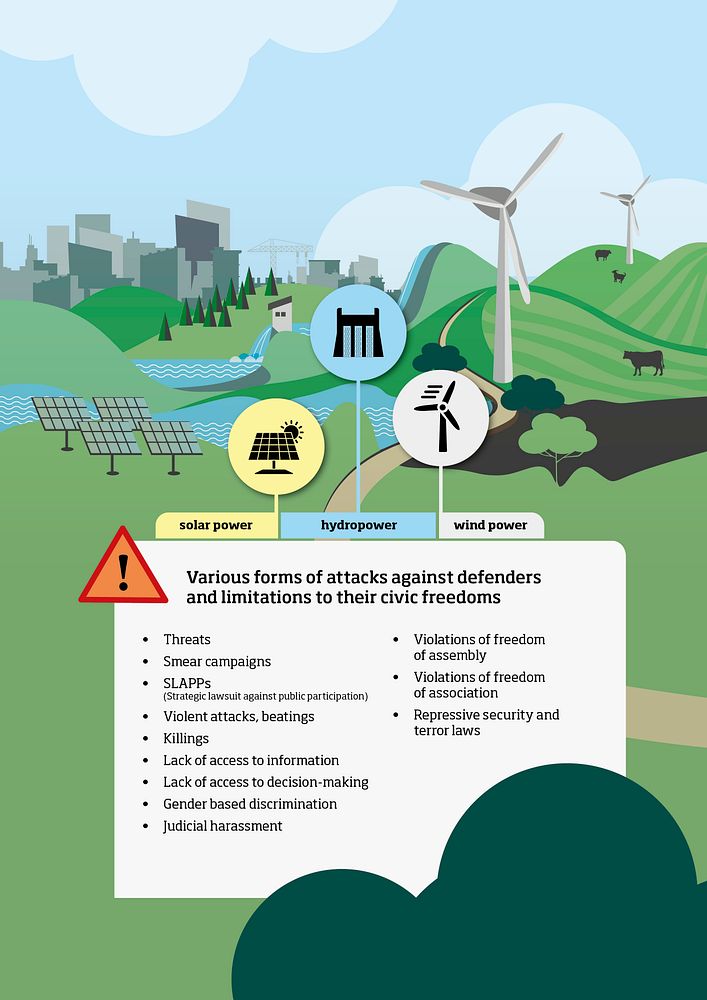
A new report by the research organization Swedwatch of 29 April 2025 highlights critical human rights risks associated with the global transition to renewable energy. The report reveals that human rights and environmental defenders face serious threats and reprisals in countries where renewable energy projects are being rapidly developed.

More than half of the world’s total prospective wind farm capacity, and more than two thirds of the prospective solar farm capacity, is estimated to take place in countries with obstructed, repressed or closed civic space.

While scaling up wind, solar, and hydropower is essential to limiting global warming to 1.5°C, this growth must not come at the expense of human rights.

We cannot build a green future on the backs of those who are silenced or displaced. The renewable energy transition must not come at the cost of human rights. Defenders are not obstacles – they are essential allies in ensuring that this is just, equitable, and sustainable, says Alice Blondel, Director Swedwatch.

Renewable energy projects require large land areas, often affecting local communities, ecosystems, and livelihoods. Swedwatch’s analysis shows that the renewable energy transition will largely take place in countries with restricted civic space and poor human rights protections, where defenders who raise concerns often face harassment, legal persecution and at times even deadly violence.

The report Renewables and Reprisals – Defenders at risk in the green energy transition in Brazil, Honduras, Mozambique, and the Philippines is based on a global mapping of such high-risk areas for defenders, where civic space is restricted and where renewable energy expansion is projected to accelerate. Additionally, the report presents four case studies from Mozambique, Honduras, Brazil, and the Philippines, where defenders and affected community members describe restrictions and reprisals of defenders linked to renewable energy projects.

The report is authored by Swedwatch with input from Terramar Institute (Instituto Terramar), Network of Women Human Rights Lawyers and Defenders (Red de Abogadas Defensoras de Derechos Humanos) and Jalaur River for the People’s Movement (JRPM).

-The report underscores the urgent need for stronger protections for defenders, transparent consultation processes, and corporate accountability. Without immediate action, the rapid expansion of renewables risk repeating the same human rights abuses seen in industries such as mining and agribusiness, rather than fostering a truly just energy transition, says Alice Blondel.

Expansion of renewables in countries with high risks for defenders
Swedwatch’s findings indicate that a large share of the expansion of renewable energy is taking place in countries where civic space is restricted, and defenders are at significant risk.

Case studies: Defenders under threat
In the four case studies, defenders from Mozambique, Honduras, Brazil and the Philippines described restrictions of basic civic freedoms and risks of verbal, legal or violent physical attacks when reporting about impacts of renewable energy projects.

Mozambique: According to interviews in the report, the planning of the Mphanda Nkuwa hydropower project has been marred by inadequate social and environmental impact assessments, lack of transparency, and suppression of civic engagement. Defenders reported threats, violation of freedom of assembly, and an overall disregard for their right to participate in decision-making processes.

Honduras: Human rights defenders have faced legal intimidation through SLAPPs (Strategic Lawsuits Against Public Participation) for their criticism of the Los Prados solar power project, according to a group of women human rights lawyers. Community members involved in protests have allegedly been surveilled and subjected to repressive actions by security forces. Defenders also reported smear campaigns in the media, further restricting their ability to voice concerns.

Brazil: In Brazil, the wind power project Bons Ventos failed to properly include impacted communities, including marginalized groups, traditional fishing, and quilombola communities, in consultations, according to interviews. Defenders decided to remain anonymous in the interviews out of fear of reprisals, citing increasing threats and violence against defenders in the past years.

The Philippines: Indigenous defenders from the Tumandok communities were allegedly threatened, harassed, and killed when the national police and the armed forces raided their communities after community leaders criticized the Jalaur River Multipurpose project, according to a CSO operating in the area. Defenders reporting on the dam project outlined persecution, surveillance and red-tagging – terror-labelling by the government accusing defenders of being communist insurgents, creating an environment of fear and impunity.

Swedwatch´s recommendations
As the world races to meet climate targets, a just transition must include the voices of those most affected by energy projects, and defenders are essential in ensuring that renewable energy projects respect human rights and the environment.

-Governments, businesses, and financial institutions must work together to ensure that human rights are protected, and that defenders can operate without fear of repression or violence. Engaging with defenders as valuable partners rather than as adversaries can help governments and businesses ensure renewable energy projects’ alignment with international human rights obligations, mitigate conflicts, and promote sustainable development, says Jessica Johansson.

Detailed recommendations to different actors can be found in the report, below the main ones are summarized:

Recommendations for governments:

  • Adopt legislation on mandatory human rights due diligence (HRDD) for companies, highlighting risks to defenders and meaningful consultation with defenders.
  • Adopt laws on company transparency laws and access to information.
  • Establish and enforce protections for defenders, ensuring they can operate without fear of retaliation, and provide effective legal remedies for those affected by violations.

Recommendations for companies and investors:

  • Strengthening their HRDD processes by integrating civic space risks and ensuring meaningful stakeholder engagement with defenders.
  • Adopt and enforce a zero-tolerance policy against reprisals targeting defenders (and affected communities).
  • Take appropriate action when business partners or third parties commit violations in relation to their business activities.


https://www.mynewsdesk.com/swedwatch/pressreleases/new-report-from-swedwatch-human-rights-defenders-at-risk-in-the-renewable-energy-transition-3382176?utm_source=rss&utm_medium=rss&utm_campaign=Alert&utm_content=pressrelease

Front Line Defenders’ Global Analysis 2024/25

May 13, 2025

Resilience of Human Rights Defenders a Source of Hope Amid Global Rollback on Rights – At least 324 defenders killed in 32 countries for their peaceful work in 2024

Frontline Defenders

On 6 May 2025 Front Line Defenders Global Analysis 2024/25 was published giving a detailed panorama of the violations against HRDs at risk in 105 countries in all regions. Despite an increasingly hostile world with expanded threats to their work, human rights defenders (HRDs) everywhere demonstrated a remarkable level of resilience and determination as they resisted a global rollback on human rights, Front Line Defenders said as it launched its flagship report.

The report also reveals statistics gathered and verified by the HRD Memorial – which Front Line Defenders coordinates – documenting the killings of at least 324 HRDs in 32 countries in 2024. HRDs working on land rights, citizen’s rights and Indigenous peoples’ rights each made up almost a fifth of the total, and the countries with the highest number of killings documented were Colombia (157), Mexico (32), Guatemala (29), Palestine (22) and Brazil (15). (See pp. 6-13 for complete data.)

Year on year, hundreds of human rights defenders pay the ultimate price when they are killed for their work, having a devastating impact on their families and communities. It is a grim reflection of the immense danger faced by those who work peacefully to defend human rights,” said Alan Glasgow, Executive Director of Front Line Defenders.“Other threats and risks are manifold. Front Line Defenders’ analysis shows that women’s rights defenders globally and HRDs working in situations of conflict were among those most targeted for their work. It is a remarkable sign of these defenders’ courage that they continue their struggle despite such immense danger. They are the best among us, who fervently believe a better world is worth fighting for.”

Arbitrary arrest/detention was the most commonly reported violation against HRDs around the world, followed by threats/other harassment, legal action, death threats and surveillance. Women HRDs reported slightly higher levels of threats/other harassment compared to their male counterparts, while trans and non gender-conforming HRDs reported this as the most common violation they faced overall.

Criminalisation of HRDs remained rife with 107 charges filed in 75 cases. The most commonly cited charges were linked to defamation (23.4%); national security (19.6%); other criminal charges (12.1%); public order offences (11.2%); and terrorism-related charges (11.2%). In every region, governments and non-state actors turned to the judicial system to disrupt, stymie, stigmatise, bankrupt and imprison HRDs, regardless of the human rights they were defending. Counter-terrorism legislation and “Foreign Agent” laws were among those weaponised for use against HRDs.

According to Front Line Defenders data, defenders working on women’s rights were among the most targeted globally in 2024, ranking in the top three for all regions except one. This trend played out in numerous ways, with women human rights defenders (WHRDs) subjected to smear campaigns, criminalisation, arbitrary arrest and detention, as well as targeted with threats – including threats of sexual and gender-based violence.

WHRDs played key roles in protest movements seeking more just societies – for example in Bangladesh – faced stark discrimination in countries like Afghanistan and Iran, and shouldered heavy burdens in conflict and crisis situations, ranging from Gaza to Colombia, DRC, Myanmar, Sudan and Ukraine.

Dr. Mahrang Baloch, an outspoken WHRD from Pakistan’s Balochistan region, faced ongoing risks throughout the year, including travel bans, smear campaigns and arbitrary detention. At the time of publication she remains jailed in Quetta after being arbitrarily arrested for leading a peaceful protest. In a foreword provided to Front Line Defenders, she described why HRDs persist in their struggle:

We must continue to resist. Because human rights defenders are the ones standing on the frontlines, risking everything so that others may find their missing loved ones, so that everyone can go to school, so that the silenced can speak, so that women raped in refugee camps can find justice, so that those fighting alone in their homes, their villages, their cities can know they are not alone. We must stand with them, and we must stand together. Not for a nation. Not for a religion. Not for a race. But for humanity. Because if we do not, who will?

For last year’s, CF: https://humanrightsdefenders.blog/2024/05/22/front-line-defenders-launches-global-analysis-2023-24-on-human-rights-defenders/

For more information or to receive a full copy of the report, please contact:

Conor Fortune
Frontline Defenders
+353 85 802 0895
cfortune@frontlinedefenders.org

https://www.frontlinedefenders.org/en/resource-publication/global-analysis-202425

https://www.wric.com/business/press-releases/ein-presswire/808917521/remarkable-resilience-of-human-rights-defenders-a-source-of-hope-amid-global-rollback-on-rights/

Leuven Centre for Global Governance Studies focuses on human rights defenders

May 1, 2025

A European project of the Leuven Centre for Global Governance Studies, presents a round-up of the latest and most innovative research on the European Union’s role in an evolving global context in a quarterly newsletter, featuring summaries of key findings and access to more in-depth discussions through EU-RENEW webinars, blogs and podcasts.

The eighth issue focuses on human rights defenders.

Human Rights Defenders (HRDs) often stand on the frontlines of global struggles—exposing injustice, seeking accountability, and working to prevent further rights violations. While the European Union has long been committed to the protection of HRDs, shrinking civic space and democratic backsliding within its own borders have exposed troubling gaps: from limited pathways for HRDs to enter or remain in the EU, to the criminalization of HRDs’ work and the rise of strategic lawsuits designed to silence them.

In its latest blog, Anna Puigderrajols Triadó examines the EU’s evolving approach to HRDs and the urgent need for stronger, more consistent protections.

Some recommendations:

Human Rights Violations Committed Against Human Rights Defenders Through the Use of Legal System: A Trend in Europe and Beyond Aikaterini-Christina Koula. Human Rights Review, 25, 2024This article explores the growing weaponization of legal systems to silence human rights defenders, particularly in Europe, developing a taxonomy of legal tactics used against HRDs

Just Pathways to Sustainability: From Environmental Human Rights Defenders to Biosphere Defenders, Claudia Ituarte-Lima et al. Environmental Policy and Law, 53(5-6), 2023

Building on the concept of Environmental Human Rights Defenders, the authors advance a new concept of ‘Biosphere Defenders’ and a ‘Defend-Biosphere Framework’ to analyse the role of these actors as agents of change in pathways towards just sustainability.

The environmental rule of law and the protection of human rights defenders: law, society, technology, and markets Elif OralInternational Environmental Agreements: Politics, Law and Economics, 24, 2024, This article considers the importance of legal regulation and state intervention for creating a safe and just space for the activities of the Environmental Human Rights Defenders.

Gender-Transformative Remedies for Women Human Rights Defenders. Aleydis Nissen Business and Human Rights Journal, 8(3), 2023. This article explores gender-transformative remediation – which should bring change to patriarchal norms and unequal power relations – for women human rights defenders who fight against corporate human rights abuses.

https://mailing.kuleuven.be/r-6064b8a35903338e724c198e434dd5c3cb5e5e10d2d00f5d

Global Witness 2023-2024 Annual Report: Violent Erasure of Land and Environmental Defenders

September 18, 2024

According to a new report by Global Witness released on 10 September, more than 2,100 land and environmental defenders were killed globally between 2012 and 2023.

  • An estimated 196 land and environmental defenders were killed in 2023 around the world, according to a new Global Witness report published today
  • The new figures take the total number of defenders killed between 2012 to 2023 to 2,106
  • For the second year running, Colombia had the highest number of killings worldwide – with a record 79 defenders killed last year, followed by Brazil (25), Mexico (18) and Honduras (18)
  • Once again, Latin America had the highest number of recorded killings worldwide, with 166 killings overall – 54 killings across Mexico and Central America and 112 in South America
  • Environmental defenders are also being increasingly subject to range of tactics for silencing those who speak out for the planet across Asia, the UK, EU and US

The new figures bring the total number of defender killings to 2,106 between 2012 and 2023.

Overall, Colombia was found to be the deadliest country in the world, with 79 deaths in total last year – compared to 60 in 2022, and 33 in 2021. This is the most defenders killed in one country in a single year Global Witness has ever recorded. With 461 killings from 2012 to 2023, Colombia has the highest number of reported environmental defender killings globally on record.

See:https://humanrightsdefenders.blog/2023/09/25/global-witness-annual-report-2022-a-land-rights-defender-killed-every-other-day/

Other deadly countries in Latin America include Brazil, with 25 killings last year, and Mexico and Honduras, which both had 18 killings.

Central America has emerged as one of the most dangerous places in the world for defenders. With 18 defenders killed in Honduras, the country had the highest number of killings per capita in 2023. A total of 10 defenders were also killed in Nicaragua last year, while four were killed in Guatemala, and four in Panama.

Worldwide, Indigenous Peoples and Afrodescendents continue to be disproportionately targeted, accounting for 49% of total murders.

Laura Furones, Lead Author and Senior Advisor to the Land and Environmental Defenders Campaign at Global Witness, said:

“As the climate crisis accelerates, those who use their voice to courageously defend our planet are met with violence, intimidation, and murder. Our data shows that the number of killings remains alarmingly high, a situation that is simply unacceptable.

While establishing a direct relationship between the murder of a defender and specific corporate interests remains difficult, Global Witness identified mining as the biggest industry driverby far, with 25 defenders killed after opposing mining operations in 2023. Other industries include fishing (5), logging (5), agribusiness (4), roads and infrastructure (4) and hydropower (2).

In total, 23 of the 25 mining-related killings globally last year happened in Latin America. But more than 40% of all mining-related killings between 2012 and 2023 occurred in Asia – home to significant natural reserves of key critical minerals vital for clean energy technologies.

As well as highlighting the number of killings worldwide, the report unearths wider trends in non-lethal attacks and their harmful impacts on communities globally. It highlights cases of enforced disappearances and abductions, pointed tactics used in both the Philippines and Mexico in particular, as well as the wider use of criminalisation as a tactic to silence activists across the world.

The report also explores the crackdown on environmental activists across the UK, Europe and the US, where laws are increasingly being weaponised against defenders, and harsh sentences are more frequently imposed on those who have played a role in climate protests. The findings form part of a concerning trend of criminalisation cases emerging worldwide.

https://www.euronews.com/green/2024/09/11/european-governments-are-using-harsh-overly-broad-laws-to-silence-climate-protesters

Despite the escalating climate crisis – and governments pledging to achieve the Paris Agreement target of 1.5C – land and environmental defenders are being increasingly subject to a wide range of attacks to stop their efforts to protect the planet. At least 1,500 defenders have been killed since the adoption of the Paris Agreement on 12 December 2015.

Nonhle Mbuthuma, author of the report’s foreword and Goldman Environmental Prize Winner 2024, said:

“Across every corner of the globe, those who dare to expose the devastating impact of extractive industries — deforestation, pollution, and land grabbing — are met with violence and intimidation. This is especially true for Indigenous Peoples, who are essential in the fight against climate change, yet are disproportionately targeted year after year.

Download Report (PDF | 2.76 MB | Full Report)

William Collins to publish two books by late Ukrainian author Victoria Amelina

July 2, 2024

A book of first-hand accounts of the war in Ukraine by Victoria Amelina is to be published posthumously by William Collins. Publication for Looking at Women Looking at War: A War and Justice Diary is scheduled for February 2025. It will be followed by a novel in 2026.

Amelina, who died exactly a year ago as a result of a missile strike in Kramatorsk, was a well-known novelist and children’s author in Ukraine. Rights to her unfinished non-fiction book were pre-empted by Arabella Pike at Williams Collins from Emma Shercliff at Laxfield Literary Associates. It will be published in the US by St Martin’s Press and translation rights have been sold in France (Gallimard), Italy (Guanda), Korea and Georgia.

Amelina’s book follows 11 female journalists, human rights defenders, lawyers, and volunteers documenting war crimes in Ukraine while the war is still ongoing. It includes Nobel Peace Prize Laureate Oleksandra Matviichuk, and chronicles Amelina’s own transformation from novelist and mother into a war crimes researcher.

Pike said: “After hearing the cruel news of Victoria’s death, it was a small consolation to us that she knew her vitally important book would be published in English. We at William Collins are so proud to publish her account of the hideous war crimes happening daily in Ukraine and regret deeply that this must be posthumous.

Arabella Tetyana Teren, head of PEN Ukraine, said: “This book is the voice of Ukraine fighting for its freedom and future. This book is the voice of a writer who, in the most difficult time for her country, chose the role of testifying about the war crimes of the Russians and seeking punishment for the perpetrators. This book was born from love—the author’s love for her country and her heroines, and our love for the talented Ukrainian writer, brave woman, and our dear friend, whose life was taken by Russia.”.”

Amelina, who was 37 when she died, worked in the high-tech industry for ten years before becoming a writer and lived in the US in 2019/20. She travelled extensively to talk about her work with Truth Hounds, and her poetry, essays and prose have appeared in publications including the Irish Times, the Dublin Review of Books, The Guardian and the New Yorker. Victoria was the founder of a literary festival in a city named New York in the Donetsk region, Ukraine. [see also: https://humanrightsdefenders.blog/2023/10/12/5th-dublin-arts-and-human-rights-festival-in-october-2023/]

https://www.thebookseller.com/rights/william-collins-to-publish-two-books-by-late-ukrainian-author-victoria-amelina