Human rights defenders and civil society are the voices of our communities. These voices must be at the heart of decision and policy making at all levels. Yet, some States and non-states actors feel those voices are too loud. Cao Shunli, Chinese human rights defender, victim of reprisals who died in detention 10 years ago. Around the world, inspiring voices echo Cao’s ambition, on different issues and in different contexts, but with the same aspiration: promoting and protecting human rights. In so doing, many have engaged with the United Nations to share evidence of abuses with experts and States. Regrettably, some are facing the same form of reprisals as Cao, and are now arbitrarily detained.
These include Trang in Viet Nam, Irfan and Khurram in India and Abdulhadi in Bahrain.
It’s time to take a stand. Join us in our campaign to #EndReprisals and call for the release of Trang, Abdulhadi, Khurram and Irfan. Let’s ensure that no one else faces Cao’s fate. Their voices deserve to be heard, and their freedom and lives must be protected.
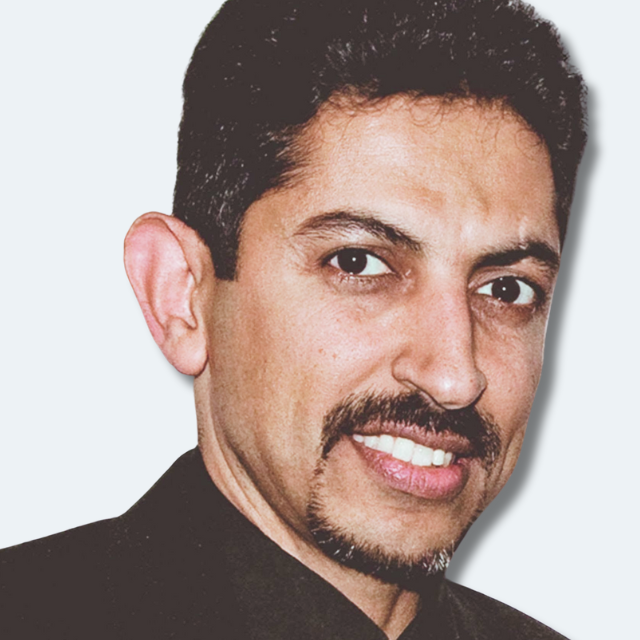
Abdulhadi Al-Khawaja
Abdulhadi Al-Khawaja is a Bahraini-Danish advocate known for his unwavering commitment to freedom and democracy. An outspoken human rights defender he serves as a source of inspiration for activists in Bahrain and globally. Abdulhadi has protested Bahrain’s unlawful detention and torture of several civilians since he was a student. He received political asylum in Denmark with his family where he continued his advocacy work, documenting human rights violations in Bahrain.
He became the first civil society representative to speak at the first Universal Periodic Review of Bahrain in 2008. He is the co-founder of both the Gulf Centre for Human Rights and the Bahrain Center for Human Rights, as well as the laureate of the 2022 Martin Ennals Award. [https://www.trueheroesfilms.org/thedigest/laureates/4d45e316-c636-4d02-852d-7bfc2b08b78d]
Abdulhadi Al-Khawaja was included for five times in the Secretary-General report on reprisals, noting “allegations of arbitrary arrest, torture and lengthy sentence following his engagement with United Nations human rights mechanisms.” In 2012, the Working Group on Arbitrary Detention found the detention of Abdulhadi arbitrary.
See also: https://humanrightsdefenders.blog/tag/abdulhadi-alkhawaja/

Pham Doan Trang
Pham Doan Trang is an author, blogger, journalist and pro-democracy activist from Viet Nam. She is a well-known advocate for human rights and has written on a wide range of human rights topics, including LGBTQI+ rights, women’s rights, environmental issues and on the suppression of activists.
She is considered among the most influential and respected human rights defenders in Viet Nam today. She has always been a major source of inspiration and mentorship for Vietnamese civil society and the next generation of human rights defenders.
Trang received the Reporters Without Borders 2019 Press Freedom Prize for Impact and was the Laureate of a Martin Ennals Award in 2022. As well as the Homo Homini in 2017 and the Women of Courage 2022. See: https://www.trueheroesfilms.org/thedigest/laureates/fe8bf320-1d78-11e8-aacf-35c4dd34b7ba
Trang was prosecuted for her articles and reports on the human rights situation in Viet Nam, including an analysis of a 2016 report on the Formosa Ha Tinh Steel Plant environmental disaster that was shared with the United Nations. See also: https://humanrightsdefenders.blog/tag/pham-doan-trang/
Trang was the subject of several communications by special procedures mandate holders and an Opinion by the Working Group on Arbitrary Detention in 2021, which found her deprivation of liberty arbitrary. On 2 November 2022, experts addressed Trang’s detention, including restriction of her right to family visits and her deteriorating health status.
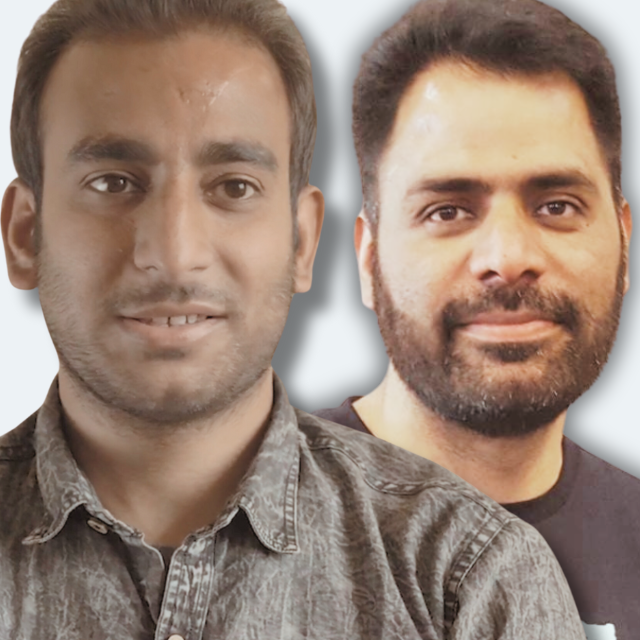
Irfan Mehraj and Khurram Parvez
Khurram Parvez and Irfan Mehraj are two Kashmiri human rights defenders. They have conducted ground-breaking and extensive human rights documentation in the Indian-administered Jammu and Kashmir, including through their work within the Jammu Kashmir Coalition of Civil Society (JKCCS) – Khurram as founder and programme coordinator, and Irfan as a researcher.
Both activists have been internationally recognised for their work. Khurram is the Chairperson of the Asian Federation against Involuntary Disappearances (AFAD), Deputy General Secretary of the International Federation for Human Rights (FIDH) and a laureate of the 2023 Martin Ennals Award. [see: https://www.trueheroesfilms.org/thedigest/laureates/81468931-79AA-24FF-58F7-10351638AFE3]
Irfan is a well-regarded independent journalist with frequent contributions to Kashmiri, Indian and international news outlets. He is the founder of Wande Magazine and is an editor at TwoCircles.net. See also: https://humanrightsdefenders.blog/2023/09/05/un-special-rapporteurs-express-serious-concern-about-kashmiri-human-rights-defenders/
On 22 November 2021, Khurram was arrested again by the Indian Government, this time by India’s National Investigation Agency (NIA) under the Unlawful Activities (Prevention) Act (UAPA) and other laws, reportedly on allegations of “terrorism funding, being a member of a terrorist organisation, criminal conspiracy, and waging war against the state.” He remains in arbitrary detention to this day.
Meanwhile, on 20 March 2023, Irfan was summoned for questioning and arbitrarily detained by the NIA in Srinagar also under provisions of the UAPA and other laws. The NIA targeted Irfan for being ‘a close associate of Khurram Parvez.’ Both Khurram and Irfan are presently in pre-trial detention in the maximum-security Rohini prison in New Delhi, India. If convicted, Khurram and Irfan could face life imprisonment or even the death penalty.
Khurram’s situation has been included in the Secretary-General’s report on reprisals since 2017 and Irfan’s case was included in the 2023 report.
In June 2023, United Nations experts expressed serious concerns regarding the charges against and arrest of Irfan and Khurram, stating that their continued detention is ‘designed to delegitimise their human rights work and obstruct monitoring of the human rights situation in Indian-administered Jammu and Kashmir.’ The United Nation Working Group on Arbitrary Detention (WGAD) published an opinion in the same year, finding Khurram’s detention arbitrary.
What do we want? It’s simple. We want Irfan, Khurram, Trang and Abduhadi to be freed so they can continue their work without fear of further reprisals, and we want accountability for Cao.
How do we achieve this?
We mobilise diplomatic missions, encouraging them to speak out and raise individual cases of reprisals against defenders at the UN and in other spaces and hold their peers to account. We convince the UN Secretary General and his team to acknowledge and document ALL cases of reprisal and intimidation by including them in his annual report on reprisals and intimidation against defenders engaging or seeking to engage with the UN and its human rights mechanisms. We push the UN system to establish clearer protocols on how to consistently and effectively prevent, respond and follow up on cases of reprisals. We encourage governments, activists, and concerned individuals to stand in solidarity with human rights defenders and organisations who are subjected to reprisals and intimidations.
What can you do?
To achieve our goals, we are drawing attention to some of the most emblematic cases of reprisals that illustrate how human rights defenders are prevented from or punished for engaging with the UN. Here are impactful actions you can take:
Write to State representatives at the UN in Geneva and New York
ISHR’s #EndReprisals database
In order to assist stakeholders with research, analysis and action on cases of reprisals and intimidation, ISHR launched an online database compiling cases or situations of intimidation and reprisals documented by the United Nations (UN) Secretary-General between 2010 and 2020.
- 878 Cases of intimidation and reprisals against human rights defenders engaging with the UN reported by the UN Secretary General between 2010 and 2020.
- 81 Countries were cases of reprisals were documented by the UN Secretary-General between 2010 and 2020.
- 13 Reports published by the UN Secretary General on intimidation and reprisals.