Archive for the 'awards' Category

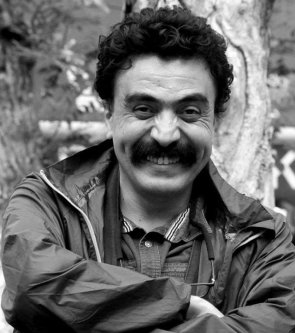
Lawyers for Lawyers: award to Turkish human rights defender Selçuk Kozağaçlı on 23 May

May 21, 2019

On 23 May 2019, L4L will be presenting the 2019 Lawyers for Lawyers Award to Selçuk Kozağaçlı, a human rights lawyer from Turkey. Selçuk Kozağaçlı is a lawyer, human rights defender and member of the People’s Law Office. He is well known for working on the “Soma Mine” disaster, the worst mine disaster in Turkey’s history, in which 301 miners were killed. He is also the chair of the Progressive Lawyers’ Association (ÇHD), an association which focuses on the right to life and advocates for the prevention of all types of attack on fundamental rights and human dignity. The Progressive Lawyers’ Association was closed on 22 November 2016 by Statutory Decree No. 677 issued under the State of Emergency.

Fore more on this award and other awards for human rights lawyers, see: http://www.trueheroesfilms.org/thedigest/awards/lawyers-for-lawyers.

The Award Ceremony will take place in Amsterdam. Prior to this ceremony an interesting seminar will be held in collaboration with the Amsterdam Bar Association and the Justitia Commission of the Young Lawyers Association Amsterdam. The main topic of the seminar will concern the developments surrounding the proposed European Convention on the Profession of Lawyers. Two panel discussions will be organized around this topic. Speakers include François Moyse (Vice-Chair of the CCBE European Convention Working Group), Mikolaj Pietrzak (president of the Warsaw Bar Association) and former Award winners and lawyers Sirikan ‘June’ Charoensiri (Thailand), Magamed Abubakarov (the Russian Federation) and Alec Muchadehama (Zimbabwe).

From 2:30 PM until 5:00 PM CEST L4L will livestream PART I with the seminar ‘Lawyers at risk! Do we need a European Convention?’ It will continue the broadcast with PART II from 5:00 PM until 5:30 PM CEST with the Award CeremonyTo watch online, please click on the following link: https://www.youtube.com/user/LawyersforLawyersL4L/live


Invitation Lawyers for Lawyers Award Ceremony 2019

https://www.frontlinedefenders.org/en/case/selcuk-kozagacli-detained

Profile of Chinese human rights Defender Teng Biao

May 20, 2019
China Digitial Times (CDT) is expanding its wiki to include short biographies of , cartoonists, , and other people pushing for change in China. The wiki is a work in progress. Here the case of Teng Biao, of whom I wrote earlier in 2015: https://humanrightsdefenders.blog/2015/03/17/stop-dancing-with-dictators-says-chinese-human-rights-defender-teng-biao/.

. (Source: Wikipedia)

Teng Biao, born on August 2, 1973 in Jilin Province, is a human rights lawyer, activist, and former professor who is dedicated to exposing China’s human rights abuses and fighting against its use of the death penalty. After being repeatedly detained for his work, Teng moved to the U.S. in 2014, where he has continued his life’s work as a visiting scholar at institutions such as Princeton, Harvard, and New York University.

Teng obtained his Doctor of Law from Beijing University in 2002 before joining the faculty of the China University of Political Science and Law as a lecturer. He later served as a visiting scholar at the Chinese University of Hong Kong and Yale University. He swiftly entered the fore of high-profile legal cases, including but certainly not limited to the Sun Zhigang incident in 2003, serving as counsel for activists Chen Guangcheng and Hu Jia, and death penalty cases such as the Leping case in Jiangxi Province.

Prior to moving to the U.S. in 2014, Teng was subject to multiple instances of police harassment. In 2008, he was detained for two days before being released following widespread calls from both domestic and foreign advocates; in 2010, he was detained for visiting a human rights lawyer under house arrest; in 2011, as those in China began to call for their own Jasmine Revolution, he was detained for ten weeks; in 2013, he was detained for attending Hu Jia’s birthday dinner.

In 2014, Teng relocated to the U.S., where he has continued observing and criticizing Chinese government practices. These include presenting a sobering view on the true nature of Xi Jinping’s corruption crackdown, expressing concern for detained fellow rights lawyer Jiang Tianyong, and calling for President Obama to pressure China on human rights at his last G20 summit appearance.

Teng again roused attention in 2016 when the American Bar Association abruptly cancelled publication of his book “Darkness Before Dawn,” a detailing of his 11-year career as a rights defender in China. The cancellation has been one of many cases of foreign entities who have either bowed to Chinese pressure for fear of upsetting the Chinese government or proactively curried favor for the sake of economic gain.

Over the course of his career, Teng has spearheaded multiple initiatives. He has co-founded two NGOs: Beijing’s China Against the Death Penalty, and the Open Constitution Initiative (Gongmeng), an organization composed of lawyers and academics that advocates for the rule of law in China. From the U.S., Teng co-founded the China Human Rights Accountability Center alongside rights defenders such as Zhou Fengsuo and Chen Guangcheng following the passage of the Global Magnitsky Human Rights Accountability Act under the Obama Administration. The act authorized the president to sanction foreign individuals who commit human rights violations or are engaged in significant levels of corruption. The Center aims to help the U.S. to enforce the Act and introduce similar legislation in other democratic countries.

Teng has been awarded the Human Rights Prize of the French Republic (2007), the NED Democracy Award (2008), Human Rights Watch Hellman/Hammett Grant (2010), Prize for Outstanding Democracy Activist (China Democracy Education Foundation, 2011), and the Religious Freedom and Rule of Law Defender Award (2012).

Entry written by Lisbeth.

Person of the Week: Teng Biao

Gwangju Human Rights Award 2019 to Philippine Carino and Indonesian choir

May 19, 2019

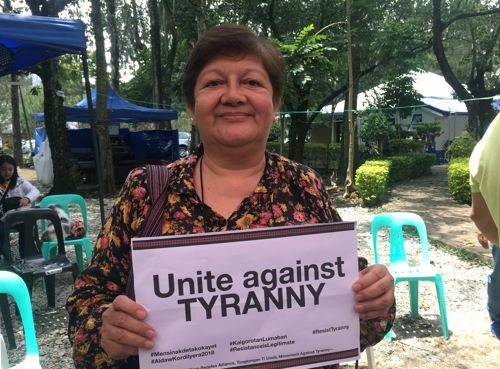
For those – like me – who missed the announcement  of the winners of the Gwangju human rights awards 2019, here a belated post.  [For more on this award see:http://trueheroesfilms.org/thedigest/awards/gwangju-prize-for-human-rights]. The winner is the Philippine human rights defender Joanna Carino.

This undated photo, released by the May 18 Memorial Foundation on April 15, 2019, shows Joanna Carino, a Philippine activist championing the rights of indigenous peoples. (Yonhap)

The Jury said “Carino has created a great sensation for her unyielding strife and sacrifice in fighting against suppression and made a favorable impression on many citizens and activists today.

The biennial special award went to Indonesia’s Dialita Choir, made up of women whose parents, relatives and friends were captured, tortured and exiled during the 1965-1966 communist purge in the Southeast Asian country. The members of Dialita co-initiate social change through singing performances. The award ceremony was on 18 May 2019 as part of events to mark the 39th anniversary of the democratic uprising. Hundreds of citizens were killed in the southwestern city during protests against the military junta of Gen. Chun Doo-hwan in May 1980.

Aachen Peace Prize to Ukrainian journalist Kotsaba severely contested

May 19, 2019

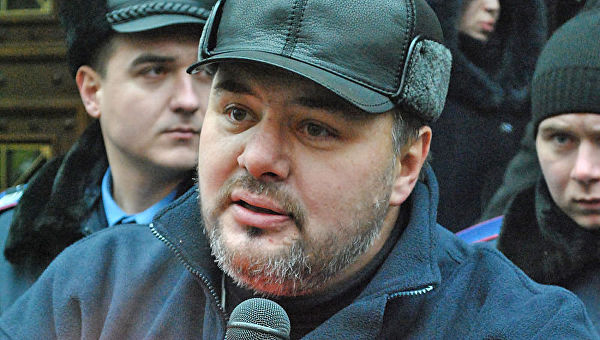
Ruslan Kotsaba Photo Mykola Vasylechko, RIA Novosti

This piece express grave doubt on the decision to award the 2019 Aachen Peace Prize to Ukrainian journalist and  blogger Ruslan Kotsaba because of a shocking anti-Semitic video posted by Kotsaba in 2011. People interested should judge for themselves, so here the full article:

The video certainly contains deeply offensive hate speech, yet it is by no means the only reason why the choice of Kotsaba seems bafflingly inappropriate. The award might possibly have seemed a little more understandable had it been given back in 2015, shortly after Kotsaba was arrested on ‘state treason’ charges.  His claim to a peace prize would still have been doubted by those familiar with his highly misleading reports on the war in Donbas, however his unwarranted prosecution and 14 months’ imprisonment  were over a video opposing mobilization.

It seems he was first nominated in 2015, but was not chosen.  In 2019, however, the Aachen Peace Prize general assembly decided that Kotsaba was an appropriate laureate for a prize given to a person or group “who campaigns for peace and a civic resolution of conflict”.

According to Lea Heuser, a member of the Peace Prize Executive Committee, Kotsaba was nominated by one of its members “who is familiar with the situation in Ukraine”.  This was almost certainly Andrej Hunko, a Bundestag deputy from the Linke Party, known for his ‘humanitarian mission’ to the self-proclaimed  ‘Donetsk people’s republic’ and very one-sided statements about the conflict in Donbas. Hunko also campaigns actively for closer German relations with Russia and for recognition of Crimea as ‘Russian’.

Heuser explained that Kotsaba was first nominated on the basis of his claim to have become a pacifist after what he saw at the front (in Donbas).  She asserts that “he does not take one side in the conflict and advocates for concessions and dialogue”. It is also claimed on the peace prize’s website that Kotsaba “unlike most of his colleagues tried to objectively cover events in the east of Ukraine which he has called “a civic war and fratricidal”.

This has been the standard line taken by Hunko and other politicians, from various European far-right or left-wing parties, when visiting the so-called Donbas ‘republics’ or Russian-occupied Crimea.   Such visits are invariably used by their official hosts and by Russia as propaganda.  This is unsurprising since their guests can be relied upon to only criticize the Ukrainian Armed Forces and Kyiv.

While Kotsaba’s position is more complex, it would be very hard to describe his presentation of events in Donbas, Odesa, Crimea or in Ukraine in general as objective.

In some cases, he pushes toxic lies which are known to have prompted young men to go and fight in Donbas.  He invariably follows Russia’s lead in claiming that the people who died in the Trade Union building fire in Odesa on 2 May 2014 were deliberately burned to death by “Ukrainian radicals”.  Russia has repeatedly demonstrated that it is aware of the substantial research refuting such claims carried out by the 2 May Group, a respected bipartisan initiative formed by journalists, scientists and civic activists, and presented here in RussianEnglish and in German, as well as by the Council of Europe’s International Advisory Panel.  It is impossible to believe that Kotsaba is not aware that he is presenting a story that has been debunked.

Kotsaba’s coverage of the war in Donbas is equally one-sided.  He is certainly entitled to his own opinion on the conflict, however his claim that he is objectively presenting two sides of the story is simply untrue.

One of the most contentious areas is, of course, Kotsaba’s repeated assertion (for example, here)  that the conflict in Donbas is a civil war, and denial of Russia’s and Russians’ active role. Speaking on the Russian state-controlled Rossiya 24 channel on 27 June 2014,  Kotsaba claimed that he had not seen any Chechen fighters and assumes there are none. He does stress that he personally did not see any and this cannot be either proven nor refuted.  The problem is that, by the time he was saying this, there was ample video footage and witness accounts making it quite clear that there were a suspiciously large number of Chechens and other Russian citizens fighting in this alleged ‘civil war’.  Kotsaba has also chosen to ignore the fact that the war essentially began after heavily armed and trained fighters seized control of Sloviansk on 12 April 2014 under the leadership of (officially) former Russian military intelligence officer Igor Girkin.  He later admitted that his men had provoked the conflict in Donbas.  “The first shots, albeit in the air, were from the rebels, carried out by our unit”.  Girkin and the leader of ‘DPR’ were only hurriedly replaced by Ukrainians after the downing of Malaysian airliner MH17 by a Russian BUK missile on 17 July 2014.

Kotsaba’s claim to Rossiya 24 that he had been invited by a local Luhansk television channel which was trying to follow journalist standards, sounds admirable but deviates seriously from the truth.  The first thing that happened when militants seized control of an area was that all Ukrainian channels were replaced by Russian, or pro-Russian channels.   Later in the interview, Kotsaba was asked why other Ukrainian journalists were not in these areas.  He claimed that this was that they still needed to develop to reach world standards and “tell the truth”.   Although some of the many journalists seized, tortured and / or imprisoned by the militants (Yehor Vorobyov; Dmytro Potekhin; Serhiy Sakadynskyv;  Nastya Stanko; Maria Varfolomeyeva and many others) post-dated this interview, there were already multiple accounts of other abductions, such as that of Viacheslav Bondarenko and Maxim Osovsky.  Two journalists Stanislav Aseyev and Oleh Halaziuk remained imprisoned now in ‘DPR’ precisely because they wrote the truth about life in the supposed ‘republic’.  Kotsaba is silent about them, as he is about other people held hostage.

Unlike Kotsaba, there are very many journalists and activists who have repeatedly given the lie to Kotsaba’s claim that the conflict in Donbas is a civil war.  These are only a few of the many indications of Russia’s major involvement that Kotsaba never addresses.

In August 2014, Wojciech Bojanowski from the Polish TVN 24 posted huge amounts of footage in Russia’s Rostov oblast, close to the militants-controlled part of the border with Ukraine. It clearly shows Russian armed personnel carriers, artillery and anti-aircraft weapons turning onto a road leading to the border.  Artyleria, wozy opancerzone i broń przeciwlotnicza. Ruchy Rosjan przed kamerą TVN24  (four separate clips)

Bojanowski acknowledges that there are no photos of the actual crossing, however there is a steady flow of vehicles to the border and shots taken by the militants where you can see, for example, a BTR-80a transporter which the Ukrainian military do not have.  The next day, Aug 19 Bojanowski reported further movement towards the border, with many trucks this time carrying tanks.  On Aug 22, NATO reported  that the Russian military had moved artillery units manned by Russian personnel inside Ukrainian territory and had been using them to fire at Ukrainian forces.

In 2018, the OSCE’s Monitoring Mission in Ukraine reported multiple examples of Russian military equipment being transported into Ukraine by night on dirt roads away from any border crossing (details here and in the links provided).

It was just days after the TV24 footage in August 2014 that the Russian newspaper Vedomosti asked: “Is Russia fighting in Ukraine, and if so, on what grounds?  If not, then who is lying in the freshly-dug graves, and who is giving testimony to the Ukrainian Security Service?”

More information about those first Russian military deaths here.  It is believed that an entire Russian paratrooper regiment from Pskov was probably killed in late August.

While Moscow has always denied this, young Russian soldiers have preferred to be imprisoned for having gone absent without leave rather than agree to fight in Donbas.

The amount of evidence confirming Russia’s decisive military role in the war is overwhelming.  Dr Igor Sutyagin, in a briefing paper for the Royal United Services Institute [RUSI] on Russian forces in Ukraine writes that the “first phase of large-scale incursions by regular Russian troops commenced on 11 August 2014 and has involved a substantial array of forces (see Table 1)”.  He put the figure for direct Russian military personnel as up to “10 thousand at the peak of direct Russian involvement in the middle of December 2014.”  All of this is on another country’s territory without any declaration of war.

Considerable evidence of shelling from Russia is mentioned by Sutyagin, and has since been set out in a report by the International Partnership for Human Rights, and also by Bellingcat in a report entitled ‘Putin’s undeclared war’.

Kotsaba does not mention or try to challenge any of the above-mentioned facts.  His narrative about civil war and the need for ‘dialogue’ is, accordingly, based on manipulation and deceit.

German peace prize to Ukrainian journalist Kotsaba is discredited by the Russian lies he parrots, not just his anti-Semitism

https://en.wikipedia.org/wiki/StopFake
Breaking news: 2019 Front Line Defenders Award to 5 LGBTI Human Rights Defenders

May 17, 2019

Call for nominations for Aurora Prize 2020 now open

May 16, 2019


Nominations are open for the 2020 Aurora Prize for Awakening Humanity. For more information on this and other awards see: http://www.trueheroesfilms.org/thedigest/awards/aurora-prize-for-awakening-humanity. Every year the Aurora Humanitarian Initiative grants a US $1,000,000 award to the Laureate who receives a unique opportunity to continue the cycle of giving by supporting the organizations that have inspired their humanitarian work. Read the rest of this entry »

European governments should stop treating solidarity and compassion as a crime

May 15, 2019

Two recent cases of criminalization of human rights defenders in Europe helping people at sea:

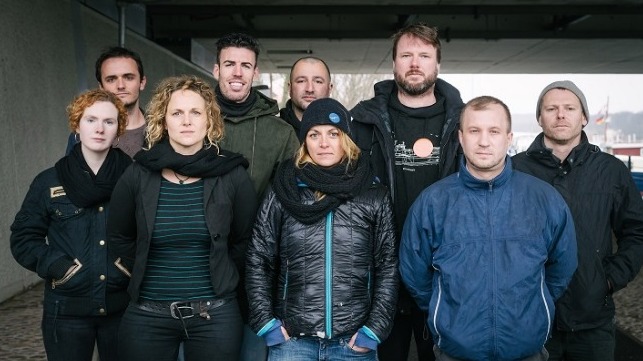
Iuventa crew
Iuventa crew

On 13 May 2019 MarEx  reported that the crew of the rescue ship Iuventa operated by the German NGO Jugend Rettet has received the Swiss Paul Grüninger human rights award for saving the lives of around 14,000 of men, women and children in the central Mediterranean. For more on this award, see: http://www.trueheroesfilms.org/thedigest/awards/paul-grueninger-award

The award is seen as a statement against the criminalization of those helping people at sea and comes whilst the crew is under criminal investigations in Italy for “aiding and abetting illegal immigration.” They face up to 20 years in prison and fines of 15,000 Euro ($16,900) per saved person. The prize money of 50,000 Swiss francs contributes to the defense.

The Iuventa was the first rescue vessel seized in Italy in August 2017. Captain Dariush was master of the Iuventa for three voyages off the Libyan coast: “We’re being charged for saving lives. This is absurd,” he said. “It is European politicians who block any safe way for people in need, so we had to act.

The crew says: “Although we have to stand trial, it is us who accuses Europe. We accuse European politicians of turning their backs on people in need. We accuse the E.U. of collaborating with regimes who violate human rights.” The Italian public prosecutor’s office has been investigating the crew for almost two years. Covert investigators claim to have observed the Iuventa crew cooperating with smugglers. However, the NGO claims that scientists at Goldsmiths, University of London have said there is no evidence for this. “They have compared the accusations of the Italian police with all available data, meteorological measurements, logbooks and recordings of the Reuters agency. In their study for Forensic Architecture, they conclude that the allegations are false.” The trial is expected to begin in autumn, and it is expected that charges will be brought against the 10 crew members. It is a precedent for Europe, says lead lawyer Nicola Canestrini: “This trial will show whether Europe can continue to stand for fundamental rights and solidarity in the world.

——–

Tom Ciotkowski is facing up to five years in prison and a fine of up to 7,500 Euros on trumped up charges. In July 2018, he was observing French riot police preventing volunteers from distributing food to migrants and refugees in Calais. He was charged with contempt and assault after he challenged the violent actions of a policeman against another volunteer. “Tom Ciotkowski is a compassionate young volunteer who was taking action to support migrants and refugees when he was arrested. He has committed no crime and is being unjustly targeted for documenting the abusive behaviour of the police in Calais,” said Amnesty International’s Senior Campaigner on Migration Maria Serrano.

Tom’s case is sadly emblematic of the harassment, intimidation and attacks that human rights defenders supporting migrants and refugees face at the hands of police in Calais. His case also reflects a wider European trend of criminalizing acts of solidarity, as a way of discouraging others from standing up for human rights. We need courageous, compassionate people like Tom more than ever

[BACKGROUND At the end of July 2018, Tom Ciotkowski was observing French riot police ID-checking volunteers who were trying to distribute food to migrants and refugees. He recorded on his mobile phone an official pushing and kicking a volunteer. When Tom complained about the behaviour of the police, an officer approached him and another female volunteer, who he hit with a baton. When Tom asked the officer for his identification number and told the policeman not to hit women, he was pushed hard by an officer and fell backwards over a metal barrier separating the pavement from the road. As Tom fell backwards, a passing lorry narrowly missed him. He was then arrested, put in custody for 36 hours and charged with contempt and assault (“outrage et violence”). In May 2019, Tom filed a complaint against the police officer who pushed him and against other officers who provided reports stating false facts against Tom to support his arrest and prosecution.]

See also: https://humanrightsdefenders.blog/2018/12/02/un-experts-consider-human-rights-defenders-in-italy-under-threat/

Essex university uses human rights award to raise awareness among youth

May 15, 2019
Students from Manningtree High School after winning the Human Rights Prize with Emma Berry, gallery manager at Art Exchange and Katya Al Khateeb from the university's Human Rights Centre
Students from Manningtree High School after winning the Human Rights Prize with Emma Berry, gallery manager at Art Exchange and Katya Al Khateeb from the university’s Human Rights Centre

Nothing world shocking but good to see how human rights awards can be used at the national level to inspire students:

The University of Essex’s annual Human Rights Prize is open to secondary schools and sixth form colleges and aims to highlight human rights issues and empower young people to stand up for others. Manningtree High School students spent a day on campus in December as part of the project. They heard bite-size lectures from human rights experts, visited a marketplace in the Hex – staffed by representatives from Amnesty International, Hope Not Hate and Refugee Action Colchester – and brainstormed ideas with visual artist Jane Frederick and poet Luke Wright.

They then split into smaller groups to develop their creative projects over the next ten weeks. The students’ final presentations, delivered to an audience at Essex Business School, showcased the campaigns staged in their own schools, which featured videos, photography, dance and poetry. A spokesman for Manningtree High School said: “As part of their work, the group planned in detail and decided to visit Highfields Primary to work with Year 5’s on human rights.,,On our return to the university, loaded with props and a well-rehearsed presentation, our students excelled.

https://www.harwichandmanningtreestandard.co.uk/news/17638711.manningtree-school-scoops-human-rights-award/

2019 Laureates of the Vaclac Havel Prize for Creative Dissent announced

May 15, 2019

Today, 15 May 2019, the Human Rights Foundation (HRF) announced the three recipients of the 2019 Václav Havel International Prize for Creative Dissent. For more on this and other awards, see: http://www.trueheroesfilms.org/thedigest/awards/vaclav-havel-prize-for-creative-dissent. The laureates are Ramy Essam, an Egyptian musician in exile, Rap Against Dictatorship, an anti-authoritarian musical group from Thailand, and Rayma Suprani, a Venezuelan political cartoonist. More on these exceptional artists: Read the rest of this entry »

Winners of the 2019 Goldman Environmental Prize

May 13, 2019
This year is the 30th anniversary of the Goldman Environmental Prize which honors grassroots environmental heroes from six continental regions: Europe, Asia, North America, Central and South America, Africa, and island nations. For more more on this and other awards, see: http://www.trueheroesfilms.org/thedigest/awards/goldman-environmental-prize .This year’s winners are Alfred Brownell from Liberia, Bayarjargal Agvaantseren from Mongolia, Ana Colovic Lesoska from North Macedonia, Jacqueline Evans from the Cook Islands, Alberto Curamil from Chile, and Linda Garcia from the United States. The winners were honored at the San Francisco Opera House in California, U.S., on 29 April 2019

https://news.mongabay.com/2019/04/meet-the-winners-of-the-2019-goldman-environmental-prize/

Goldman Prize winner survives armed attack on Afro-Colombian social leaders