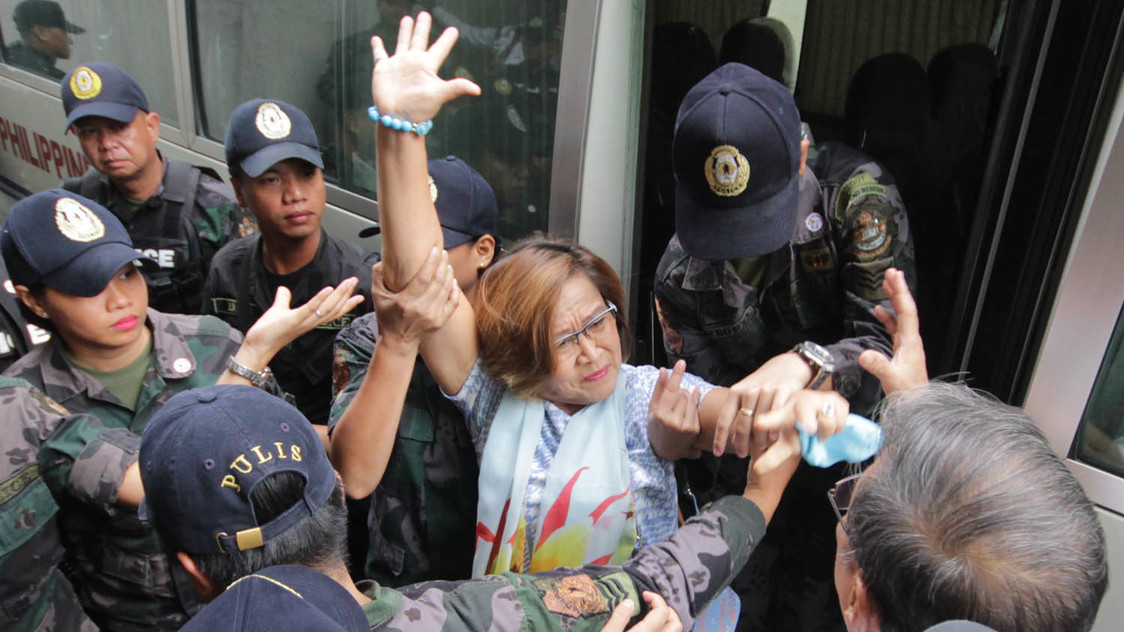
On 9 December 2020 Rappler announced that supporters of embattled Senator Leila de Lima will mark Human Rights Day on Thursday, December 10, with an online film screening titled “CinemaLeila 2020.”
The screenings will include films and documentaries about human rights issues in the Philippines Spearheaded by the Free Leila de Lima Movement, the screening will feature select short films and documentaries about human rights issues in the Philippines.
The line up includes the following titles:
Bad Elements
Miss You ‘Nay
Hayop
I Believe
Marapat Lang
Counter Terror
Paranoia of the Guilty
Dakilang Pagbabago 2020
Sober
Titser Gennie
Selda
Sino si Reina Mae Nasino?
PKNP (Pambili ng Karapatang Pantao)
Pawns
Ili Ili, Tulog Anay
These and other films and documentaries will be streamed on the Facebook page of the Free Leila de Lima Movement and, on De Lima’s official Facebook page.
There will be screenings on Wednesday, December 9 – Human Rights Defenders Day – from 7:30 pm to 9 pm, and on Thursday, December 10, also from 7:30 pm to 9 pm:
Interesting example of enhancing international awards at the local level: Several Dutch embassies have started to issue a local version of the Ministry’s international human rights award, the Tulip [see: https://www.trueheroesfilms.org/thedigest/award/D749DB0F-1B84-4BE1-938B-0230D4E22144]. Here the case of Georgia where the Ambassador, Maaike van Koldam, has awarded 3 Georgian media activists with a Human Rights Tulip prize
Established in 2008 by the Dutch government, the Human Rights Tulip is an annual award intending to support human rights defenders and help them learn from each other. Photo: The Embassy of Netherlands to Georgia.
The winner is Kamilla Mamedova, the founder of Radio Marneuli. The second prize went to Tsabunia Vartagava, an LGBTI and women’s rights activist from Georgia’s western region of Samegrelo, and Manana Qveliashvili, a journalist working on various human rights issues in the Adjara region.
Due to the Covid-19 pandemic, the award ceremony took place virtually. The Tulip prize will remain with the ambassador for now, until she will be able to hand it over to the winner in person.
This year’s Regional Award Winners include four women human rights defenders and an indigenous collective.
The 2020 Laureates are:
Mekfoula Mint Brahim is is the President of Pour une Mauritanie Verte et Démocratique (For a Green and Democratic Mauritania), an organisation leading women’s empowerment projects in rural areas. She is also a member of Alliance pour la Refondation de l’Etat Mauritanien (AREM), which promotes good governance and fights against impunity.
The Guardia Indígena del Cauca – Kiwe Thegnas (Defenders of Life and Territory), member of the organization Asociación de Cabildos Indígenas del Norte del Cauca (ACIN), CRIC branch, is a community life and ancestral resistance composed of women, men, boys and girls who defend their territories in a peaceful, unarmed way.
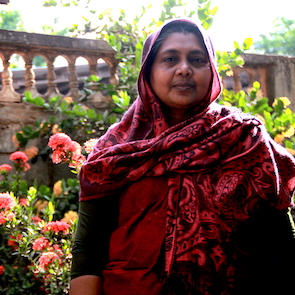
Juwairiya Mohideen is a Muslim woman human rights defender based in Puttalam in the North West of Sri Lanka. In 2010 she established the Muslim Women’s Development Trust (MWDT), providing daily practical support, comfort, advice and legal assistance to women and girls facing abuse, violence and discrimination.
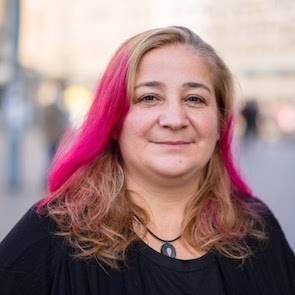
Lara Aharonian is co-founder of the Women’s Resource Center Armenia, a non-governmental feminist organization based in Yerevan that works to empower women and girls to become active citizens by combatting gender stereotypes and providing psychological and legal support to survivors of gender-based violence in Armenia.
Iraqi Women Human Rights Defenders have faced a wave of assassinations and attempted killings, particularly especially in the southern city of Basra. Since mass popular protests erupted throughout the country in 2019, human rights defenders have been targeted for attack, including kidnappings, physical attacks and killings.
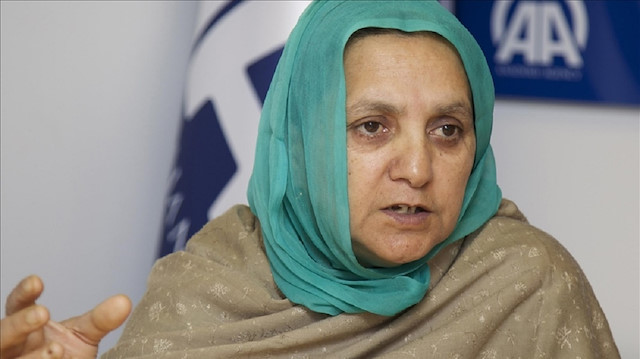
The “iron lady of Kashmir” said that in 30 years of activism, the October raid by the Indian National Investigation Agency was the first time such brazen action was taken against her, calling it “saddening.”
On the eve of International Women Human Rights Defenders Day,Anadolu Agency spoke with Ahangar, who is chair and founder of the Association of Parents of Disappeared Persons (APDP), a group seeking justice for victims of enforced disappearances in the Indian-administered region.
“For the last three decades, nobody has raised questions on my work and integrity. This is for the first time that the Indian Investigating Agency wants to prove otherwise, but I will not budge what I am committed to before my God,” Ahangar said in her office in Srinagar.
In 2017, the Indian National Investigation Agency started pursuing a case against pro-freedom activists and groups, claiming that they were getting money from undisclosed sources and using it to fund terrorist activities Since then, many raids have been carried out across the region..
Ahangar’s son, Javed Ahmed Ahangar, was abducted Aug. 18, 1990, by the Indian army and consequently disappeared. He was a Class 11 student at the time. Overtaken with grief, she looked long and hard to find him, but to no avail. She took the legal route and filed various petitions, but that did not help.
In 1994, she formed the association of Parents of Disappeared Persons when the government and every other institution failed to deliver justice in her son’s case and other victims.
“I am myself a sufferer. My 18-year-old son who was abducted by the Indian Army in 1990 has not been returned to me, and there are hundreds of mothers who are still waiting for their sons but have not been returned. I’m fighting for the return of our sons,” said Ahangar.
She said for four years she fought the legal battle to find his whereabouts. “I saw hundreds of mothers waiting at the doors of these institutions pleading for the same but the reply used to come ‘untraced’ with no accountability. Where are our sons, I am asking the Indian government.”
According to APDP figures, 8,000-10,000 people in the disputed region have disappeared with no trace.
In an in-depth peer-reviewed study, Lubna Mohiuddin (1997) observed that despite no formal declaration of a state of emergency, the presence of Indian troops in the region shot up from 0.15 million in 1990 to 0.7 million by 1997, which aggravated human rights abuses in the region.
“Despite India being a signatory of multiple international covenants, charters and declarations, violence in Kashmir continues to occur in the form of extra-judicial killings, arbitrary arrests, tortures, burning of houses, and gang-rapes,” the study said.
On Aug. 5, 2019, when India scrapped the limited autonomy of the Jammu and Kashmir region, the APDP documented the Kashmir region as going through one of the worst forms of state authoritarianism and high handedness.
“The Indian Government has continuously asserted that ‘normalcy’ has been returned to Kashmir. But, the testimonies and ground level reports indicate the contrary, as there are still severe restrictions and curtailment of basic human rights of the residents of the Kashmir region,” according to the report.
Ahangar says if India thinks “by taking out raids at my home or at my office will stop me from doing what I have been doing for the last 30 years, it will not happen. I have been hardened by the pain and grief after hearing thousands of stories of people who have been trampled under the foot of oppression for so long.
“If I am asking for protection of my and their rights, what wrong I am committing?” she said. “It is a long battle to go. If I have to stand alone, I will and nothing by the grace of God can deter me from doing that.”
On the tenth of every month, the APDP used to hold a sit-in-protest to demand justice against enforced disappearances but after the abrogation of special status and the current pandemic crisis, it has been suspended.
The Council of Bars and Law Societies of Europe (CCBE) has granted its 2020 Human Rights Award to seven Egyptian lawyers who are currently in prison.
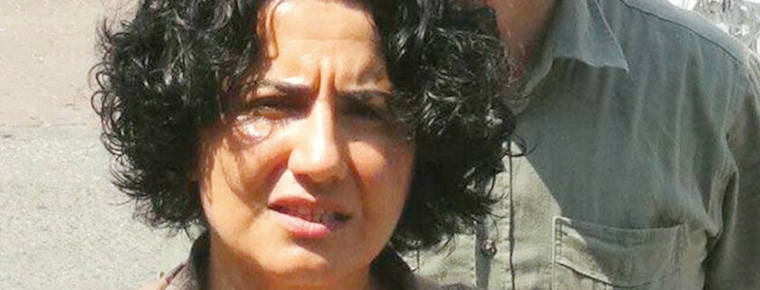
The body, which represents the Bars and Law Societies of 45 countries, has also given an exceptional posthumous award to Turkish lawyer Ebru Timtik (pictured), who died in August 2020.
Haytham Mohammadein, a human rights lawyer and labour activist,
Hoda Abdelmoniem, former member of the National Council for Human Rights, spokesperson for the Revolutionary Coalition of Egyptian Women and consultant for the Egyptian Commission for Rights and Freedoms (ECRF),
Ibrahim Metwally Hegazy, a lawyer, member of the ECRF and co-founder of the Egyptian Association of Families of the Disappeared (EAFD),
Mahienour El-Massry, who is often described as a voice of the revolution and is active in the defence of women’s rights and many other citizen’s rights,
Mohamed El-Baqer, director of Adalah Center for Rights and Freedoms,
Mohamed Ramadan, a lawyer whose work involves legally representing human rights defenders,
Zyad El-Eleimy, a lawyer and a former parliamentarian in Egypt.
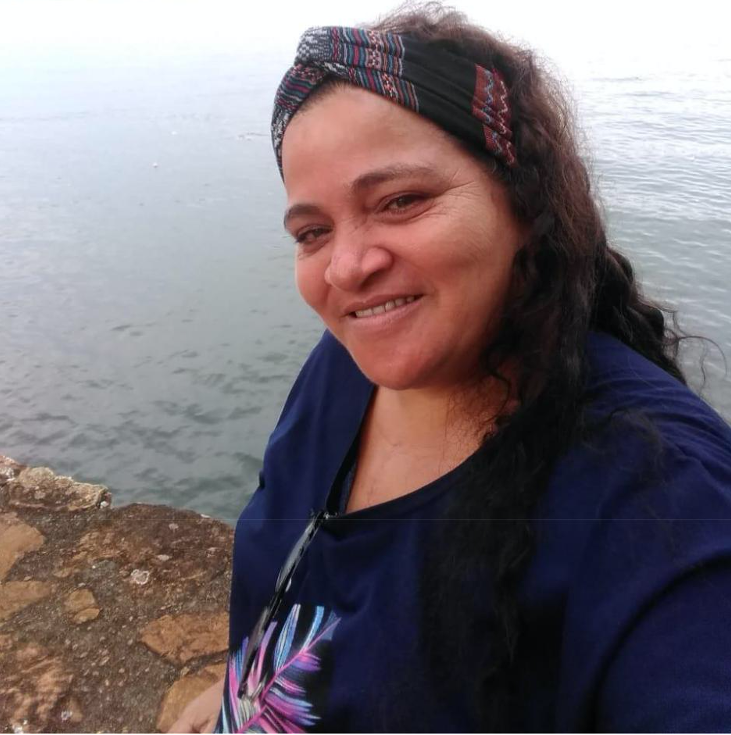
The Edelstam Prize 2020 is awarded toOsvalinda Marcelino Alves Pereira from the Amazon rainforest territory in Brazil for outstanding contributions and exceptional courage. She has fearlessly and continuously been reporting to federal authorities illegal logging of the forest in the Areia region. For more on this and similar awards, see: https://www.trueheroesfilms.org/thedigest/award/CAA00E38-C320-41E0-9FD4-B3BF3DC0D54F
Mrs. Osvalinda Alves Pereira from Pará in Brazil is an Amazon rainforest defender and community organizer who puts herself at great risk in defending the forest and its population. Defending the forest from illegal logging is very dangerous, as laws are rarely enforced against the perpetrators of the abuses. Criminal logging networks deploy men to protect their illegal activities and intimidate, threaten and kill those who obstruct their activities which are causing the deforestation and destruction of the Amazon rainforest.
Osvalinda Alves Pereira and her husband, Mr. Daniel Alves Pereira, have received numerous threats for nearly a decade from criminal networks involved in illegal logging in the state of Pará. For more than 18 months they have been in hiding, with the support of the Federal Program to Protect Human Rights Defenders, Journalists, and Environmental Defenders; however, they are now back in Pará as they feel that, even if the security is not strong enough, they have to continue their work within the rainforest areas where the illegal logging is taking place.
“The courageous activity of Mrs. Osvalinda in reporting illegal logging of the Amazon rainforest despite constant threats and in standing up for her convictions in times when justice is required sets an important example for the resilience needed to protect and defend our environment. Brazil has signed the Paris Agreement on Climate Change and has committed to eliminate illegal deforestation in the Amazon by 2030. However, authorities are failing to implement and enforce environmental laws in the Amazon, which heavily undermines the work to protect the forest,” says Caroline Edelstam, Chair of the Edelstam Prize Jury and co-founder of the Edelstam Foundation
Large farmers involved in illegal logging often use land-reform settlements where poor farmers have small plots to have access to the nearby protected forests. Osvalinda Alves Pereira founded the Areia II Women’s Association to develop sustainable organic agriculture and to reforest areas where logging has occurred. She is a local leader of the Areia Settlement Project, which is geographically situated as a gateway to three major conservation units: the Trairao National Forest, the Riozinho de Afrisio Extractive Reserve, and the Jamanxim National Park, which are areas of great interest to illegal loggers. Pará is today the state with the highest reported number of conflicts over land and resources.
In spite of offers of bribes and persistent threats, Osvalinda Alves Pereira has courageously continued to report the activities of the illegal loggers. Criminal networks are engaged in the large-scale extraction, processing, and sale of timber, illegal land seizures, as well as illegal mining in the Amazon. They employ armed men to intimidate the local population. The vast majority of threats and attacks against forest defenders is never properly investigated or punished. As a consequence, forest defenders are at great risk, and Osvalinda Alves Pereira fears for her life.
“It is important to find ways to enforce national and international law and promote accountability for serious abuses of human rights. In this case, Brazil, should be able to provide protection to forest defenders who receive death threats. Impunity is not an option. The international community also has a responsibility to uphold justice and ensure the protection of victims and defenders of the forest, including both environmental enforcement officials and members of the Indigenous and other local communities, and to uphold the principle that nobody is above the law. This year, nearly 8000 square kilometres have been deforested,” says Caroline Edelstam, Chair of the Edelstam Prize Jury.
The prize will be awarded during a live-streamed ceremony tomorrow, the 24th of November at 5 pm CET, 2020 on http://www.edelstam.org
JONAS ALASKA// With his down-to-earth, personal and honest portrayals, it’s no wonder Jonas Alaska is a critic’s favourite. Already with his debut album, he was triple-nominated for the Norwegian Grammy.
NORA GUNDERSEN & ODA VOLTERSVIK // Nora Gundersen and concert pianist Oda Voltersvik will perform at Den Nationale Scene in November! They have both played as solo artists and chamber musicians both in Norway and abroad.
DØSSI // Ingrid Døssland, known as DØSSI, is a producer and singer/songwriter. With her dreamy voice, DØSSI draws you in to her own world of feelings and melancholy.
FRODE GRYTTEN // Frode Grytten has, throughout an extensive and critically acclaimed career, distinguished himself as one of Norway’s foremost writers.
SHARQANT // Sharquant is a band consisting of three musicians with backgrounds from Syria and Iraq. The band was established in 2018, in Bergen. Their music consists of a blend of different parts of the Arab culture, and their music transports the audience to the Mediterranean region.
Guri Solberg is the host of the Rafto Prize Award Ceremony!
Migrant Workers Rights Network is a grassroots member-based association that works to protect the rights of migrant workers who live and work in Thailand, the majority being from Myanmar. The organization was founded in 2009 by nine Myanmar migrant leaders after seeing extensive exploitation and abuse of migrant workers in Thai factories, the seafood industry, agriculture, and construction. They decided that empowerment of migrants is the best way for migrant workers to protect themselves.
On 10 November 2020 Scholars at Risk (SAR) announced that Dr. Rahile Dawut is the recipient of its Courage to Think Award for 2020. Dr. Dawut is being recognized for her own work, as well as that of all the scholars and students of the Xinjiang Uyghur Autonomous Region, who together struggle for academic freedom and freedom of opinion, expression, belief, association, and movement.
Dr. Dawut is an Associate Professor in the Human Science Institute of Xinjiang University and founder of the Minorities Folklore Research Center in Xinjiang University. In December 2017, Dr. Dawut told a relative of her plans to travel from Urumqi to Beijing. Shortly thereafter, her family and friends lost contact with her. Professor Dawut’s disappearance was made public in August 2018. It is suspected that she is held by state authorities at an undisclosed location.
“My mother is a scholar, not a criminal,” said Akeda Pulati. “She studies the folklore and cultural traditions of minority populations. That is not a threat to the government, other institutions, or the people of China.”
“The imprisonment of Dr. Dawut, an internationally recognized scholar of Uyghur culture, reveals the Chinese government’s blatant repression of voices and ideas it finds displeasing,” said Rob Quinn, executive director of SAR. “This constricts academic activity and public expression, threatening minority traditions, histories, and languages. The disappearance of Dr. Dawut, along with many thousands of others, is an atrocity we should all strive to end.”


 Ebru Timtik