Wednesday 10 June, 2015 (p.m.) Robert F. Kennedy Human Rights, Peace Brigades International, and Amnesty International USA organize a “Discussion with Colombian Human Rights Defender Berenice Celeita“. The event will feature Ms. Berenice Celeita, the founder of the Association for Investigation and Social Action (NOMADESC) and winner of the 1998 Robert F. Kennedy Human Rights Award. Through NOMADESC, Ms. Celeita advises and accompanies social organizations and unions as well as civic, women’s, indigenous, afro-descendent, and family farmer organizations.
Ms. Celeita will discuss the current human rights situation in Colombia, including the most pressing issues faced by marginalized communities claiming their rights, and will speak about strategies for combating human rights abuses against these populations.
[For years, civil society activists in the Cauca and Valle del Cauca Departments of Colombia have endured incidences of intimidation, harassment, and persecution as a result of their work. While these incidences have recently intensified, they are not new and form part of a long pattern of threats and attacks against the work of human rights defenders and community leaders in Colombia. The internal armed conflict in Colombia generates internally-displaced populations and sexual violence against women, and further marginalizes impoverished populations. Indigenous and afro-descendent leaders who stand up for their rights and defend their lands are acutely at risk of death threats and other forms of intimidation. In this context – characterized by a lack of security and government accountability – the work of human rights defenders and civil society activists is paramount and must be safeguarded, as they serve as the voice and guardians for local populations facing evictions, violence, and persecution.]
At the 2015 Oslo Freedom Forum on 26 May Chilean economist, Andrés Velasco, in highly personal account describes how political, economic, and social unrest led to the collapse of Chilean democracy in the 1970s. Growing up under Augusto Pinochet’s military dictatorship, Velasco is familiar with stories of political prisoners, torture, intimidation, and exile. Velasco argues that the extreme brutality of the military dictatorship became too difficult for most Chileans to face, allowing the violence to continue unhindered. As Velasco reminds us, however, Chilean civil society eventually united behind an incredibly creative political campaign, and succeeded in voting Pinochet out of power. Velasco ends his speech on an optimistic note, arguing that the common sense of Chileans will prevent another democratic collapse.
At the 2015 Oslo Freedom Forum (26 May) Australian-Afghan media entrepreneur Saad Mohseni describes how in 2006 he returned to the country of his birth, where he and his brother started by setting up set up a radio station and then a television station in postwar Afghanistan. In a fascinating performance he argues that even after decades of unrest, the country can improve its human rights situation and build a more stable future. According to Mohseni, change has not come about through government or international action alone. Instead, media has played a transformative role in rebuilding Afghanistan. Mohseni tells us about the successes of soap operas in strengthening women’s rights, as well as televised football’s role in bringing citizens together and providing role models. Mohseni believes that Afghanistan has changed significantly due to radio, internet, and television, and that media will continue to play an important role in the future.
In short, he says that the Prime Minister now sees that doing this would be politically very difficult and that he has shelved the issue at least until next year. Instead the Government will do another consultation, and – according to Dunt- “lawyers will tell them what they have already been told: that the UK supreme court is already supreme, that we only have to ‘take account’ of Strasbourg rulings, that the Council of Europe will never tolerate an ‘advisory’ status, that the devolved assemblies will have to have a say on any changes, that the House of Lords will be within its rights to vote it down, that the Commons will probably defeat it and that even if it somehow got it through all those hurdles there’s a stream of legal recognition from Europe which could inject the European Convention of Human Rights into UK law anyway.”
The post contains a lot of interesting details on the inner-workings of the UK parliament and Cabinet and concludes that “in this case, it was a choice between his own inadequacy and the proper functioning of one of the greatest civilising missions in human history. So we should be grateful that, for now at least, his inadequacy won.”
On 26 May 2015, Nurul Izzah Anwar, Malaysian MP and daughter of imprisoned opposition leader Anwar Ibrahim, spoke at the Oslo Freedom Forum. In this video he describes how she was drawn into the opposition movement in Malaysia. She tells us about rampant government corruption, the country’s defunct judicial system, and how the government targets dissidents and attempts to limit change. Anwar explains how the lack of genuine parliamentary immunity prevents Malaysian politicians from speaking against the government. She reminds us that “Malaysia’s most wanted” are the activists that challenge the government, and expresses the hope that Malaysia’s future belongs to those seeking a more democratic and fair country.
Another speaker at the Oslo Freedom Forum (OFF) 2015 was Charlie Hebdo columnist, Zineb El Rhazoui, who paid tribute to her colleagues slain in the January 2015 attacks [she was at the time of the attack abroad] and describes her own experience facing thousands of death threats. In her passionate defense of free speech, El Rhazoui argues that criticism of religion should be encouraged, not avoided. The personal touch in her presentation is moving.
The International Service for Human Rights and United Kingdom Mission in Geneva are organising a panel discussion on “Human rights defenders and the rule of law” on Monday, 8 June 2015, 16.30-18.00 (followed by a reception) at the Graduate Institute, Maison de la Paix (Auditorium 2), Genève, Switzerland.
This event will discuss the importance of the rule of law in safeguarding the rights to freedom of expression, association and assembly for human rights defenders and activists, and the vital role of human rights defenders and international mechanisms in establishing, maintaining and promoting the rule of law. It will also explore the notion that respect for the rule of law requires respect for the rule of international law and national law that is in conformity with international law.
Panelists:
Olga Abramenko, Director, ADC Memorial (Russia)
Ruki Fernando, Human Rights Advisor, INFORM Human Rights Documentation Centre (Sri Lanka)
Mona Rishmawi, Chief of the Rule of Law, Equality and Non-Discrimination Branch with the Office of the High Commissioner for Human Rights
Phil Lynch, Director, International Service for Human Rights
Moderator: Julian Braithwaite, UK Permanent Representative to the UN in Geneva
The 2015 Oslo Freedom Forum which was held this week featured more than 30 speakers from around the world, mostly human rights defenders with a story to tell. I will include over the coming days a selection of their videos. The first is: “My Impossible Escape from North Korea” A talk by North Korean defector Ji Seong-ho describing his extraordinary 6,000 mile journey to freedom. Ji survived being struck by a coal train and losing his hand and foot to a grueling amputation, and now helps other defectors escape.
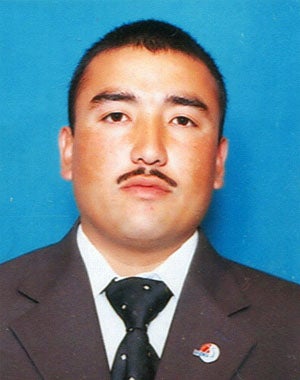
Uzbek authorities should immediately and unconditionally release the imprisoned human rights defender Azam Farmonov, whose sentence has been arbitrarily extended for five years by an Uzbek court, Human Rights Watch said on 28 May. In a related press statement NGOs call on the UN Human Rights Council to mark the 10th anniversary of the Andijan massacre to establish a special rapporteur on the human rights situation in Uzbekistan to hold the government accountable for ongoing, egregious abuses and the ensure sustained scrutiny and public reporting on human rights developments in the country. The Uzbek government’s serious, systematic violations and persistent refusal to cooperate with the UN’s human rights mechanisms-including by denying access to special procedures, and failing to implement key recommendations made by treaty bodies and UN member states under the Universal Periodic Review-warrant resolute Human Rights Council action.
[The arbitrary extension of Farmonov’s prison term shortly before his scheduled release date for allegedly “violating prison rules,” came to light on May 21, 2015. The EU and the UN Committee against Torture have previously called for Farmonov’s release. “Azam Farmonov has already lost nine years simply for being a human rights activist in Uzbekistan,” said Steve Swerdlow, Central Asia researcher at Human Rights Watch. “The cruel addition of five more years to his sentence is yet another sign that the Uzbek government should be made to pay a price for its abysmal human rights record.”]
Human Rights Watch has documented the practice of arbitrarily extending the sentences of people imprisoned on political charges. The action is often taken just days before the person is to be released, on bogus grounds such as possessing “unauthorized” nail clippers, saying prayers, or wearing a white shirt and may result in years of additional imprisonment.
Farmonov’s family also revealed that they had received a note Farmonov had written on toilet paper in which he appeals to United Nations Secretary-General Ban Ki-moon to raise the issue of his unjust treatment directly with President Islam Karimov and senior officials in the Uzbek government. Ban is scheduled to visit Uzbekistan from June 9 to 11 and should urge President Karimov to uphold Uzbekistan’s international human rights commitments and release all those held on politically motivated charges.
The EU, the UN Committee against Torture, and other bodies have earlier called for Farmonov’s release. In an official statement by then-European Commission president José Manuel Barroso, at a January 2011 meeting in Brussels with Karimov, Barroso raised specific human rights concerns, including Farmonov’s unjust imprisonment and ill-treatment. In its 2014 human rights dialogue with Uzbekistan, the EU noted its concern with the authorities’ practice arbitrarily extending sentences. But an EU statement on May 18 following a meeting of the EU-Uzbekistan Cooperation Council reads: “the EU welcomed Uzbekistan’s readiness to discuss about human rights with the EU in an increasingly open fashion within the Human Rights Dialogue.” “The extension of an unjust sentence for a human rights defender, not Uzbek officials’ hollow rhetoric, is the real test of whether the government is ‘ready’ to improve human rights,” Swerdlow reacted
Investigative journalist Rafael Marques de Moraisis due to appear in court today in Angola for sentencing. On 25 May the Public Prosecutor in his trial requested that the judge convict him of criminal defamation and sentence him to 30 days in prison, only four days after the announcement of the Lunda Provincial Tribunal that charges against Mr. Marques de Morais had been dropped!“ After more than two years of continuous judicial harassment, solely based on Mr. Marques de Morais human rights activities, this last decision makes yet another mockery of justice in Angola ”, said Karim Lahidji, FIDH President.
[Mr. Marques de Morais is a well-known Angolan journalist and editor of an Angolan anti-corruption website,who has been facing continuous judicial harassment since the publication in 2011, of his book, “Blood Diamonds : Corruption and Torture in Angola”, in which he documents and denounces the corruption, allegations of homicides, torture, forced eviction of civilian settlements and intimidation of inhabitants of the diamond-mining areas of Angola’s Lundas region by some state agents and business entrepreneurs.]
He is same Rafael Marques de Morais, who was quoted in my post of 19 December 2013 about Mariah Carey performing for the President that “the presidency was happy to cover the capital in posters of her performance, but on November 23 the presidential guards murdered an activist in custody for posting fliers. Those fliers were a peaceful protest of the murder of other activists disappeared by state police. How does Mariah Carey, the artist and humanist, who so often speaks about human rights, feel about that?…..The Angolan Red Cross gala raised $65,000. Mariah Carey’s transportation alone cost several times that number. It’s absolutely shameless,” added de Morais. [from https://thoolen.wordpress.com/2013/12/19/mariah-carey-needs-better-informed-staff-and-donate-her-1-million-fee-to-human-rights-defenders-in-angola/#more-4223] Read the rest of this entry »
 Hans Thoolen on Human Rights Defenders and their awards