Author Archive

Human Rights Defenders in Kenya honored with national awards

December 3, 2018

Kenya is one of the few countries with a fully developed system of national awards for human rights defenders. They are organized by the National Coalition of Human Rights Defenders Kenya and the Working Group on Human Defenders. A ceremony was held on 1 December 2018 at the residence of the Belgium ambassador.

A panel of eminent Kenyans chaired by former Chief Justice Willy Mutunga has honoured rights activist Okiya Omtatah with a Lifetime Achivement award. Omtatah also scooped the Popular Vote award in the annual ceremony.

Anastacia Nambo and Is’shaq Abubakar were awarded the 2018 Human Rights Defender of the year award:

Ms Nambo from Mombasa is a mother, a preacher and an avid advocate of environmental rights. She started her human rights work in 2009 when the Metal Refinery was established in the Uhuru Owino slums. The adverse effects of the metal refinery led to active advocacy and lobbying by Nambo and her community. Threats and attacks. Their struggle bore fruit in 2014 when the refinery was closed. She has endured verbal attacks, threats through texts and attempts to break into her home and had to seek refuge in Uganda.

Is’shaq, a public relations manager working with indigenous communities in Lamu, is a human rights defender on environmental rights issues. He co-founded Save Lamu, an umbrella of CBOs established in Lamu in the onset of the Lapsset project. Save Lamu teaches the community on the environmental impact of the Lapset project and seeks legal redress for the locals. His work has earned him threats and police harassment which he has overcome through strategic partnerships with mainstream organisations like the NCHRD, Muslims for Human Rights (Muhuri) and Kenya National Commission on Human Rights (KNCHR). Receiving his award, he said it will legitimise his work and encourage other human rights advocates in Lamu.

Christine Kandie won the Upcoming Human Rights Defender of the Year award. Kandie fights for the land rights of Endorois women and is the programme’s officer for the Endorois Welfare Council (EWC). She represented her community at the African Commission on Human and Peoples Rights (ACHPR) session in 2011.

The objective of the awards is to honour extraordinary work of human rights defenders who face a myriad of challenges in their calling.  “The award ceremony is a special occasion for these courageous individuals who do excellent work within our community,” said National Coalition of Human Rights Defenders Executive Director Kanau Ngugi.

Read more at: https://www.standardmedia.co.ke/article/2001304811/human-rights-guardians-feted-ahead-of-day-of-human-rights-celebrations
Olympic Committee tries its hands on human rights, ..cautiously

December 3, 2018

The IOC has set up an advisory committee on human rights chaired by Zeid Ra’ad al-Hussein, the former U.N. high commissioner for human rights. One can only hope that he will fare better than his UN predecessor’s short tenure in FIFA’s Governance Committee and that the IOC’s human right panel will do a better job than its FIFA counterpart [see my post of today: https://humanrightsdefenders.blog/2018/12/03/fifas-second-report-on-human-rights-misses-sustainable-approach/]. The IOC advisory committee was in the pipeline since March 2017 [https://humanrightsdefenders.blog/2017/03/14/olympic-games-in-future-bound-by-human-rights-standards/].

IOC President Thomas Bach said Saturday 2 December 2018 at meetings in Tokyo that “human rights standards” will be included in Olympic host-city contracts, beginning with the 2024 Games in Paris. “Promoting humanistic values in sport has been a core feature of the IOC since its beginning” and “Our mission, to put sport at the service of humanity, goes hand in hand with human rights, which is part of our DNA” But his answers re the Bejing Winter Olympics in 2022 fell short of this lofty language: Bach was asked if the committee would look at human rights in China, where hundreds of thousands of Muslims in western China are being held in interment camps. He said the IOC would not question China because it “has not the mandate nor the authority to solve the human rights problems” that are clearly “political issues. Bach suggested the committee would focus on issues like the rights of transgender athletes. “We should concentrate on what we can really achieve and what we can really do” .

https://humanrightsdefenders.blog/2018/06/27/new-global-center-for-sport-and-human-rights-created-to-address-abuses/

FIFA’s second report on human rights misses sustainable approach

December 3, 2018

FIFA’s Human Rights Advisory Board, an independent panel with a mandate to look into how FIFA tackles its human rights issues, published its second report in November 2018. (How independence is to be understood in the context of FIFA is perhaps shown by what happened to its Governance Committee: former UN High Commissioner for Human Rights Navi Pillay and others resigned in May 2017 from FIFA’s governance committee (which is not the human rights committee) saying that their independence was undercut and holding out no hope for internal reform [see: https://www.theguardian.com/football/2017/dec/21/our-sin-take-task-fifa-seriously and https://humanrightsdefenders.blog/2017/02/02/fifa-governance-committee-starts-dealing-with-a-human-rights-policy/])

The report covered the period from October 2017 to September 2018, and while it highlights progress it also shows soccer’s governing body still has a lot of work to do. The advisory board only began its work in March 2017, and described human rights as “still in the relatively early stages of being embedded in FIFA’s culture,” acknowledging that past decisions and contracts make it hard to deal with human rights issues. That can be seen by the large number of recommendations involving the Russia 2018 World Cup and the Qatar 2022 World Cup.

Of the advisory board’s six recommendations for Qatar 2022, FIFA still has work to do in two areas: using its leverage to try and improve the ‘kafala’ labor system so that it is more in line with workers’ rights, and encouraging companies linked to World Cup-related employment to do more to meet international human rights standards. The focus on World cups misses out on the same issues at the Club World Cup which takes place in the UAE in December 2018.

The human rights advisory board’s existence appears in some respects to be a reaction to the criticism FIFA received over the decision to award Qatar the right to host the 2022 World Cup, but the World Cup is far bigger than just the stadiums, and ..FIFA’s narrow focus on stadium workers means it misses the chance to create a long-term positive World Cup legacy in regards to human rights.

The report highlighted that FIFA “needs to invest in a sustainable approach” to human rights rather than just provide superficial fixes. Improvements that are made when issues are in the spotlight are often fluid and can be rolled back once the world’s attention swings to another issue.

One issue that the advisory board brought up, and which will be addressed in more detail in the next report, is how women in Iran have been banned from attending men’s soccer matches.

See also: https://humanrightsdefenders.blog/2018/06/27/new-global-center-for-sport-and-human-rights-created-to-address-abuses/

Nicaragua moves against women human rights defenders

December 2, 2018
 
Ana Quiros

On Monday 26 November 2018 Ana Quiros, Maria Jesus Ara, Beatriz Huber and Ana Ara were called in to immigration. Quiros was then taken to the El Chipote interrogation prison and subsequently driven to the Costa Rica border. The Havana Times of 27 November carries a long piece on this. “Daniel Ortega and Rosario Murillo’s regime has just raised the level of their harassment against feminist movements, in a day of abuses that culminated on Monday with the expulsion from the country of feminist leader Ana Quiros” write Juan Carlos Bow.

Quiros is a Costa Rican and Nicaragua dual citizen who has lived in Nicaragua for more than 40 years – the entirety of her adult life. Along with Quiros, three European women living in the City of Matagalpa for decades, were also cited by immigration without any explanation to appear on Monday at their offices, where they were held for hours and then had their permanent residency revoked. The authorities refused to allow them to be accompanied by lawyers or human rights defenders.

The Ara sisters are Spanish and Huber is Swiss, all had current permanent residency status. Quiros was born in Costa Rica and is a Nicaraguan national since February 1997. All are part of the national feminist movement that has criticized the repression of the Ortega regime and its responsibility for the death of at least 325 Nicaraguans.

Last week the regime blocked activities of the feminist movement to commemorate the International Day for the Elimination of Violence against Women, which is held annually on November 25th.

Before presenting herself at Immigration, Quiros offered a press conference in which she stated that “the dictatorship must be clear that we are going to continue raising our voices, saying strongly that we want a free homeland in which to live.” “I chose to be Nicaraguan and I feel I have the right to demand that my rights be protected, to demand that in Nicaragua there be peace, justice and freedom, and to repudiate the abuses and arbitrariness that they have committed: the murders, the prison and the kidnapping of all those Nicaraguan brothers and sisters, who only want and are asking for a better Nicaragua, a Nicaragua where we all fit, where no one feels that they are above anyone else,” said Quiros.

This is the second time that a government tries to silence the critical voice of Quiros, who is a specialist in public health. In 2000, the administration of Arnoldo Alemán tried to strip Quiros of her Nicaraguan nationality, after she publicly pointed out the acts of corruption of the liberal party president.

Vilma Nunez, of the Cenidh, lamented the expulsion of Quiros noting that the Ortega government has exceeded its intolerance against everything that annoys and bothers it. “…Nuñez said that the citation of Quiros and the other three feminists “has no legal value because it did not state why they are being called in.” ….Nunez said that in order to revoke someone’s citizenship, a trial must first be held, which has not occurred in this case.

https://havanatimes.org/?p=144719

https://www.frontlinedefenders.org/en/case/deportation-ana-quiros


UN Experts consider human rights defenders in Italy under threat

December 2, 2018

In Europe it is not just in Hungary where human rights defenders are under pressure [https://humanrightsdefenders.blog/2018/07/26/some-facts-about-refugee-flows-which-hungary-seems-not-to-know/]. On 21 November 2018 a group of UN experts  – including Michel Forst, the UN Rapporteur on Human Rights Defenders – expressed concern that amidst Italy’s proposed tightening of immigration rules HRDs are the subject of smear campaigns.

Since coming into power in June 2018, the new Italian Government has implemented the anti-migrant and exclusionary measures it campaigned upon. “Removing protection measures from potentially thousands of migrants and limiting their ability to regularise their stay in Italy will increase their vulnerability to attacks and exploitation. They will be at greater risk from traffickers and other criminal groups, and many will have no means to meet their basic needs through lawful means”.

While acknowledging the challenges Italy faces due to the absence of an effective European-wide system of solidarity, the UN experts said this did not justify violations of human rights. “The government must adhere to the values enshrined in the Italian constitution, and the international commitments it signed up to,” they said in an appeal to the government to reconsider the legislative changes.

During the most recent electoral campaign, some politicians fuelled a public discourse unashamedly embracing racist and xenophobic anti-immigrant and anti-foreigner rhetoric. Such speech incites hatred and discrimination,” the experts said. ……“We are also concerned about the continuing smear campaigns against civil society organisations engaged in search and rescue operations in the Mediterranean Sea, as well as the criminalisation of the work of migrant rights defenders, which have become more widespread in Italy,”.

The UN experts urge the Italian government to combat incitement to hatred and discrimination, racism and xenophobia. “Perpetrators of hate crimes must be held accountable and justice provided to the victims. Italian authorities should implement the national and relevant European legal framework and provide the needed responses to hate crime and the use of hate speech.”

The experts have contacted the government about their concerns and await a reply.

https://www.ohchr.org/EN/NewsEvents/Pages/DisplayNews.aspx?NewsID=23908&LangID=E

More short films on each article of the UDHR

November 27, 2018

Further to my post on the series of short films – one for each article in the 70-year old Universal Declaration of human rights [https://humanrightsdefenders.blog/2018/11/15/each-article-in-the-universal-declaration-on-human-rights-has-its-human-story/], there now more out to watch: see e.ghttps://www.facebook.com/unitednationshumanrights/videos/380180556054710/.

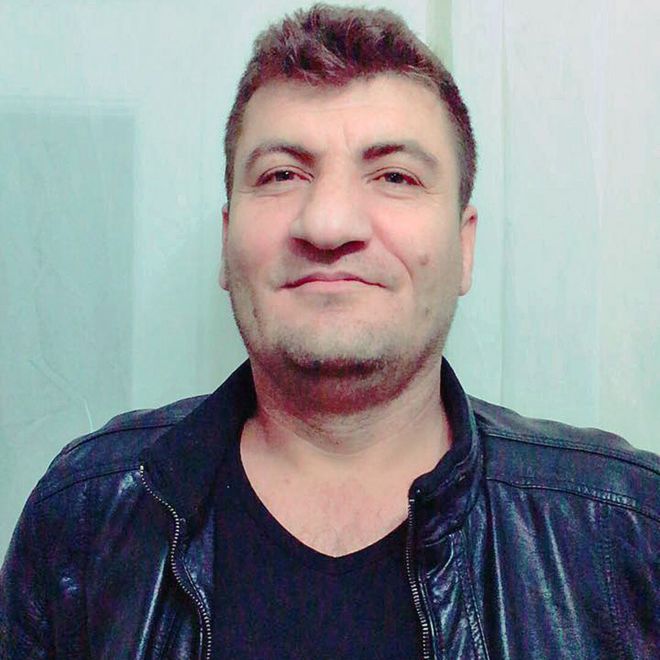
Raed Fares Assassinated in Syria [“What can they do? Kill me?”]

November 26, 2018
Raed Fares
Raed Fares’ radio station defied threats from jihadist groups and resisted orders to stop playing musicPresentational white space

Raed Fares, a well-known Syrian activist, was killed in the north-western town of Kafranbel, in the in the rebel-held Syrian province of Idlib. Fares and fellow activist Hamoud Jneed were attacked in their car. Jneed died immediately, while Fares was transferred to Orient Hospital, where he later died. It was not the first time the founder of Radio Fresh, an independent radio station broadcasting from inside opposition-held areas in the country, had been targeted. His activism had earned the ire of both militants and the Syrian government. Four years ago, two gunmen for the Islamic State (IS) militant group shattered several bones and punctured his lung in a failed attempt to silence Fares. More attempts on his life would follow and yet the former estate agent was determined to carry on.

It was not just Fares the militants took issue with. The radio station – with its music and female presenters – also angered the groups which overran the town and surrounding area. Four years ago, when IS had a presence in Idlib province, the station’s office was raided by militants. In 2016, Fares was detained by the Nusra Front, the former al-Qaeda affiliate in Syria.

The Hayat Tahrir al-Sham alliance, which currently controls most of Idlib province, had ordered Radio Fresh to stop broadcasting music. The station’s response was to play long sequences of other sounds, such as tweeting birds, clucking chickens and bleating goats. “They tried to force us to stop playing music on air,” Fares told the BBC in 2017. “So we started to play animals in the background as a kind of sarcastic gesture against them.”

Among the many expressions of concern is the Human Rights Foundation as Fares spoke at its 2017 Oslo Freedom Forum: “We are deeply saddened and disturbed by the assassination of Raed Fares, a dear friend and esteemed member of the Oslo Freedom Forum community. Raed worked tirelessly to counter fundamentalist narratives through journalism and to empower his fellow Syrians to build a better future. His work, bravery, and determination to succeed despite the many threats on his life make him a hero of the Syrian revolution,” HRF Chairman Garry Kasparov said. … Fares first became known outside of Syria in early 2014, when he started writing eye-catching, often sarcastic protest signs and sharing photos of them on social media. ….He quickly became one of the most trusted sources of on-the-ground footage and information on Syria’s continuing conflict. With his death, many reporters outside Syria have lost a vital and increasingly rare source, and agents of misinformation will grow that much stronger in his absence.

https://www.bbc.co.uk/news/world-middle-east-46320355

https://mailchi.mp/db20e9d559e0/off-speaker-raed-fares-assassinated-in-syria?e=f80cec329e

70th anniversary of the Universal Declaration of Human Rights: the UN plans

November 26, 2018

Series of events to shine a light on the UDHR across the world. I already referred to the series of short films – one for each article in the 70-year old Universal Declaration of human rights [https://humanrightsdefenders.blog/2018/11/15/each-article-in-the-universal-declaration-on-human-rights-has-its-human-story/].

But there is more going on: The UDHR, based on the powerful premise that we are all “born free and equal in dignity and rights,” has spread further and been translated into more languages than any other text ever. The aim of the celebratory events sponsored by the UN Human Rights Office is “to shine a light on the many ways in which universal human rights contribute to the daily lives of people everywhere.” Signature events will be held in 14 cities, spanning seven time zones, with each spotlighting a human rights theme relevant to that location:

Africa

  • Dakar (Nov 30) – Our right to accountability when rights are violated
  • Pretoria (Dec 7) – Young people standing up for rights
  • Marrakesh (Dec 10) – The human rights of migrants

Asia-Pacific

  • Suva (Nov 16) – Our right to live on a healthy planet
  • Bangkok (Nov 28) – The rights of people on the move

Europe

  • Manchester (Nov 12) – Our right to live in harmony
  • Paris (Dec 4) – The city where the UDHR was adopted in 1948
  • Geneva (Dec 13) – Upholding rights for a future we all want

Latin America

  • Mexico City (Dec 6) – Our right to defend human rights
  • Panama City (Dec 10) – Children as defenders of rights
  • Santiago (Dec 10) – Women’s rights are human rights

Middle East

  • Doha (Dec 9) – Our right to peace

North America

  • Los Angeles (Dec 10) – Human rights in the city
  • New York (Dec 18) – UN Human Rights Award ceremony

In addition to the 14 signature events, each of which will be accompanied by a social media campaign featuring prominent global and local public figures standing up for human rights, numerous other celebrations are being organized by Governments, NGOs, academic institutions, and many others all over the world.

I urge everyone to join in celebrating the 70th anniversary of the Universal Declaration.  Join us at the public events if you can, or organize one yourself.  Any way that you can take part actively – shining your light on rights – will make a difference, even if it is simply by participating on social media,” said UN High Commissioner for Human Rights Michelle Bachelet.By doing so, we can show just how precious the UDHR is to people all over the world, and the universal nature of the values it contains.  It was an inspiration, a sensation, in 1948, and it is still an astonishing and inspiring document today.

The preservation of the human rights set out in the Declaration is vital to each and every one us – woman, man and child. Human rights are essential for the protection and dignity of our loved ones, our families and friends, our neighbours and our communities – for all of us, whether living in the smallest village or in the greatest of cities.  Violations of anyone’s rights potentially undermine the rights of all of us. So I urge everyone to use the UDHR’s 70th anniversary to reflect on what rights mean, and think of ways we can actively stand up for the rights of not just ourselves, but of everyone else.”

In addition to the events taking place over the next month, on 9 November the UN Human Rights Office will start publishing a series of short articles on each of the 30 Articles of the Universal Declaration. These will be published – one article a day – on www.ohchr.org and issued to media across the world.

For more information on the events listed in this advisory, please contact Rajat Khosla at rkhosla@ohchr.org / +41 22 917 3311

Twitter: @UNHumanRights and Facebook: unitednationshumanrights

https://www.ohchr.org/EN/NewsEvents/Pages/DisplayNews.aspx?NewsID=23832&LangID=E

The human rights defenders in AI’s 2018 Write For Rights Campaign

November 25, 2018

Amnesty starts again its Write For Rights campaign

November 24, 2018
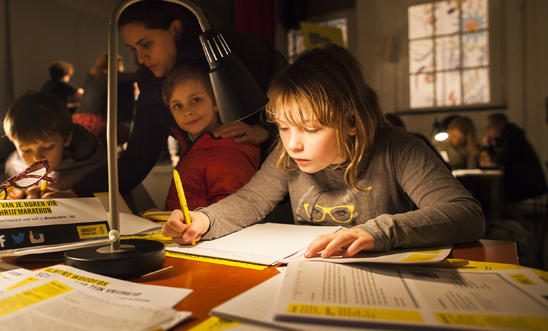
Write for Rights event in Amsterdam, 2015

Write for Rights event in Amsterdam, 2015 © Amnesty International

Every year, Amnesty International runs its Write For Rights, a campaign over November and December where it encourages you to write messages of support to people around the world who have suffered injustice, and show you how to support their campaigns for justice. And the yearly campaign seems to work. For last year’s campaign see: https://humanrightsdefenders.blog/2017/12/04/write-for-rights-again-in-december-2017/

There is plenty of material for those who want to support:

Get the campaign booklet Download the campaign booklet (PDF). It introduces you to each case and sets out how you can write to them, and how to write to the authorities on their behalf. This is the main resource for Write For Rights.

Three ways to join in Write For Rights:

1. Write a message of solidarity

This is where Write For Rights began: writing to people who are wrongly punished, to show them that they’re not alone. If writing letters isn’t for you, you can send a message of solidarity online.

2. Write an appeal letter

In a world of petitions, physical post does get noticed! As well as writing to the people suffering human rights abuses, we also ask you to write to the authorities who can bring them justice. All the details of how to write to authorities are in our campaign booklet.

You can download pre-printed ‘appeal’ address labels to make it easier to send multiple letters.

3. Hold an event

Write for Rights events come in all shapes and sizes – from stalls in outdoor markets, to intimate gatherings in a local pub. See UK AI’s tips for putting together a successful Write for Rights event. Don’t forget to add your event to the website once you’ve got the date and location confirmed!

https://www.amnesty.org.uk/write-rights-getting-started