Author Archive

Many NGO participants denied visa to attend Commission on the Status of Women in New York

March 21, 2019

Kena Betancur / Getty Images

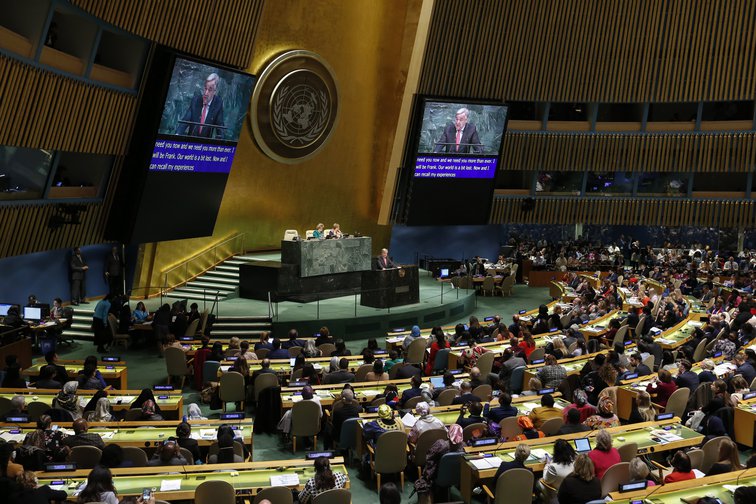
reports on 20 March 2019 that many women who were slated to participate in the UN Commission on the Status of Women have been denied visas, especially lawyers, activists, and women who deliver reproductive health care services from African and Middle Eastern countries that fell under Donald Trump’s travel ban.

The US is obliged under a 70-year-old treaty to not restrict people or NGOs from attending the UN headquarters. BuzzFeed News is yet to receive a response from the US Mission to the UN regarding the total number of visas that have been denied this year. [see also: https://humanrightsdefenders.blog/2019/03/18/irans-election-to-a-un-gender-equality-body-should-not-obscure-the-real-work/]

The International Service for Human Rights said it was aware of at least 41 women who have been denied visas to attend the conference this year — but this figure is said to be only “the tip of the iceberg” and likely to increase.

Women who wanted to attend CSW this year from countries like Iran, Sudan, Zimbabwe, and Syria were asked to provide supporting documents like marriage certificates, proof of property ownership, letters stating employment status, proof of finances, and even proof of birth certificates or proof showing that they have children, according to the petition.

Lyndal Rowlands, advocacy officer with the UN-accredited organization CIVICUS, told BuzzFeed News that among all the people that were denied visas, women from countries that fell under the Trump administration’s travel ban were disproportionately affected. “Last year and this year we have also heard of women from Pakistan and Nepal who were denied visas,” she said. …Most of the women applying for visas, Rowlands said, had not traveled to the US before — a deliberate decision by organizers who wanted a diverse range of women present at the United Nations, not just pundits and experts who travel all the time but women who work at the grassroots.

It’s essential that women who are at the front lines working on women’s rights are present when their rights and the rights of the women they serve are being discussed,” she said. “Governments and UN officials that attend the conference can make better policies when they are informed by the experiences of women who face some of the biggest uphill battles when it comes to fighting for gender equality — for example, delegates who were unable to attend include lawyers and advocates who represent women who have been imprisoned for their activism, [and] women who deliver reproductive health care services.”

https://www.buzzfeednews.com/article/nishitajha/un-women-conference-visas-denied
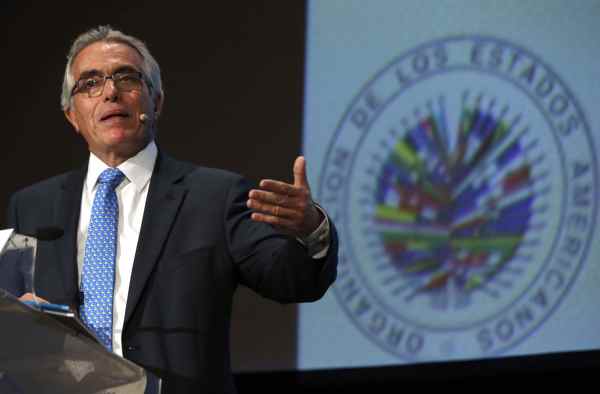
Special Rapporteur Diego Garcia-Sayan not swayed by Moroccan assurances for his visit

March 21, 2019
Morocco Deplores UN Special Rapporteur’s Reasons for Canceling Visit

https://www.ohchr.org/EN/NewsEvents/Pages/DisplayNews.aspx?NewsID=24356&LangID=E

https://www.moroccoworldnews.com/2019/03/268552/morocco-un-special-rapporteurs-visit/

News from the human rights film front (2019)

March 20, 2019

The HRW festival in London is still running (https://ff.hrw.org/london) but others have finished and here is a selection of the wining films:

ONE WORLD FESTIVAL

The film Heart of Stone has taken the Best Film prize at this year’s edition of the One World festival of human rights documentaries in Prague. The winning documentary is about an Afghan refugee in France. The Best Director award went to Denmark’s Mads Brugger, maker of Cold Case Hammarskjold.

——-

The 2019 FIFDH [see: https://humanrightsdefenders.blog/2019/01/20/17th-edition-of-the-geneva-international-film-festival-and-forum-on-human-rights-from-8-to-17-march-2019/]. The awards list is as follows (extract):

Grand Prize of Geneva

Endowed with CHF 10,000 – Offered by the City and State of Geneva: Delphine et Carole, Insoumuses, by Callisto McNulty Learn more

Gilda Vieira de Mello Prize in tribute to her son Sergio Vieira de Mello

Endowed with CHF 5,000 – Offered by the Barbara Hendricks Foundation for Peace and Reconciliation: On her Shoulders, by Alexandria Bombach Learn more

Youth Jury Prize

Endowed with CHF 500 – Offered by Peace Brigades International (PBI): Still Recording, by Ghiath Ayoub and Saeed Al Batal Learn more

Endowed with CHF 500 – Offered by the Eduki Foundation: Carmen y Lola  by Arantxa Echevarría Learn more

Grand Prize for Fiction

Endowed with CHF 10,000 – Offered by the Hélène and Victor Barbour Foundation: The Boy Who Harnessed the Wind, by Chiwetel Ejiofor Learn more

Prize of OMCT

Endowed with CHF 5,000 – Offered by the World Organization Against Torture: Congo Lucha, by Marlène Rabaud Learn more

——-

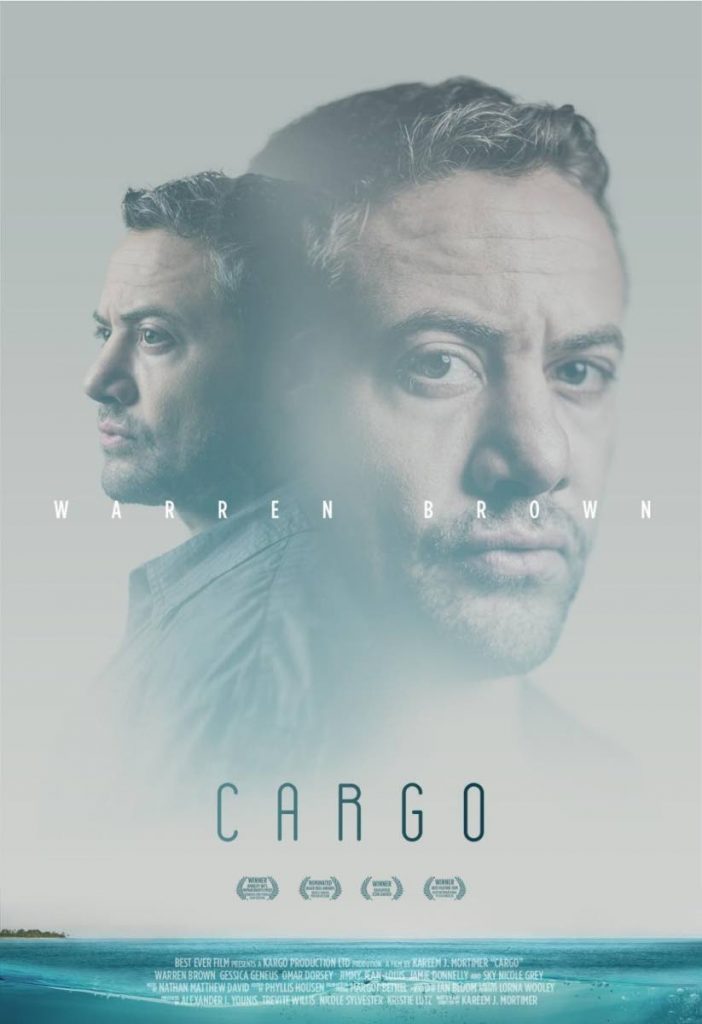
And there is an award-winning Bahamian film “Cargo” which is being shown in cinemas: At the age of 9, Bahamian writer/director Kareem Mortimer saw haunting images of the bloated bodies of Haitian would-be migrants washed up on a beach. Apparently they were trapped and locked in the hold of a ship by a smuggler who did not have the decency to set them free. It was this experience that inspired him to make the drama/thriller feature film Cargo. The film previously debuted in Aruba, Bahamas, Barbados, Curacao, Jamaica, Guyana, Grenada, Suriname and St Lucia and will be released in the Trinidad, US and Canada in the summer. It has won five awards: Best Feature, Silicon Valley African Film Festival; Bahamian Icon Award; Best Film, Haiti International Film Festival, Los Angeles; Trident Award, Barbados Independent Film Festival; and Amnesty International Human Rights Prize for Film, TT Film Festival in 2017.
The poster for the film Cargo.

——-

https://www.radio.cz/en/section/news/french-doc-heart-of-stone-takes-top-prize-at-one-world-festival

https://fifdh.org/en/edition-2019/news/article/le-palmares-integral-du-fifdh-2019-349874

https://newsday.co.tt/2019/03/18/award-winning-bahamian-film-cargo-for-tt/


Equal Justice Initiative founder Bryan Stevenson winner of 2019 Thomas Dodd Prize

March 20, 2019
Bryan Stevenson (Paul Robertson Photo)

The selection committee was singularly impressed by the commitment, courage, and creativity of Bryan Stevenson and his colleagues at the Equal Justice Initiative,” said Glenn Mitoma, Director of the Thomas J. Dodd Research Center. “I look forward to welcoming Bryan and Equal Justice Initiative to UConn, both to honor them and to draw inspiration for our own work at the Dodd Center.”

Stevenson, the founder and executive director of the Equal Justice Initiative, has successfully argued cases before the U.S. Supreme Court, including a recent historic decision that found mandatory life-without-parole sentences for children 17 or younger are unconstitutional.

Under Stevenson’s direction, the organization has won major legal challenges to excessive sentencing and illegal convictions, including reversals, release, or relief for over 145 wrongly condemned prisoners on death row. The group’s education and advocacy efforts include the Community Remembrance Project, which seeks to recognize the victims of lynching by erecting historical markers at lynching sites, and the opening of the National Memorial for Peace and Justice and the Legacy Museum. The museum and memorial are part of Equal Justice Initiative’s work to advance truth and reconciliation around race in America and to more honestly confront the legacy of slavery, lynching, and segregation.

Stevenson is the winer of at least6 other awards including the 2000 Gleitsman award and the Wallenberg medal [see also https://humanrightsdefenders.blog/2016/11/07/human-rights-lawyer-bryan-stevenson-to-receive-michigans-wallenberg-medal/]

See also: https://humanrightsdefenders.blog/2017/02/04/physicians-for-human-rights-gets-dodd-human-rights-award/

Human rights defender in Chechnya, Oyub Titiev, sentenced to 4 years

March 19, 2019

News headlines today: Mar. 18, 2019

Oyub Titiev, the director of the local branch of Memorial, one of Russia’s most respected human rights organizations, was convicted of marijuana possession, a charge his lawyers said was manufactured in order to punish Titiev for his work investigating and exposing human rights abuses in Chechnya, including extrajudicial killings. [see: https://humanrightsdefenders.blog/2018/01/15/chechen-human-rights-defender-oyub-titiev-arrested-on-trumped-up-charges/]

The guilty verdict against Titiev was expected by his colleagues and human right organizations, which have slammed the case as a show trial, filled with inconsistencies and fabricated evidence. “The guilty verdict against Oyub Titiev is gross injustice to him, a disgrace to Russian criminal justice system, and a further sign that Ramzan Kadyrov, the governor of Chechnya, will be emboldened to silence reporting on human rights abuses,” Rachel Denber, deputy Europe and Central Asia director at Human Rights Watch, said in a statement.

Natalia Estemirova, Titiev’s predecessor as director of Memorial’s Chechnya office, was kidnapped in Grozny and shot dead outside the city in 2009. In 2016, masked men attacked a group of journalists trying to enter Chechnya on a tour organized by the Committee to Prevent Torture, beating the reporters and setting their bus on fire. The same month, the head of the organization, Ilya Kalyapin was attacked in Grozny.

Memorial has long been a target of strongman Kadyrov, and repeatedly suffered attacks, and. Around the time of Titiev’s arrest, the organization’s office in a neighboring region was burnt down by masked men. One of Titiev’s colleague in Dagestan was beaten outside his home last March.

After Christchurch: reflecting on how the internet is exploited by extremists

March 18, 2019
Although strictly speaking not about human rights defenders and not really giving new insights, this long piece in the Huffington Post of 16 March 2019 is worth reading in full because it is a good overview of how the internet and extremist aspirations go hand-in-hand. For those who want to read it in full:

Mass Shooters Have Exploited The Internet For Years. New Zealand Took It To A New Level. – The Christchurch massacre was built on existing far-right memes that fueled a live-streaming gunman’s viral aspirations

Read the rest of this entry »

Jamal Khashoggi murder: the plot thickens

March 18, 2019

On 17 March 2019, the New York Times reported that the Crown Prince (MBS) authorised a clandestine campaign against Saudi dissenters and human rights defenders well before Jamal Khashoggi’s murder.

The Rapid Intervention Group was authorised by Crown Prince Mohammed bin Salman and overseen by Saud al-Qahtani, a royal court insider, US officials told the NYT [File: Reuters]
The Rapid Intervention Group was authorised by Crown Prince Mohammed bin Salman US officials told the NYT [File: Reuters]

More than a year before the killing of journalist Jamal Khashoggi, Saudi Arabia’s powerful Crown Prince Mohammed bin Salman, also known as MBS, approved a secret campaign to silence dissenters, the New York Times has reported. The campaign included surveillance, kidnapping, detention and torture of Saudis, said the report published on Sunday citing the US officials who have read classified intelligence reports about the effort. American officials referred to it as the Saudi Rapid Intervention Group, the Times said. [see also: https://humanrightsdefenders.blog/2019/03/08/saudi-arabia-for-first-time-openly-criticized-in-un-human-rights-council/]

…..At least some of the clandestine missions were carried out by the members of the team that killed and dismembered Khashoggi in October at the Saudi consulate in Istanbul, suggesting his murder was part of a wider campaign against dissidents, the report said, citing the US officials and associates of some Saudi victims. These members were involved in at least a dozen operations beginning in 2017, the officials said, including forcibly repatriating Saudis from other Arab countries.

According to the New York-based newspaper, the Rapid Intervention Group has been involved in the harassment of arrested prominent human rights activists and women’s rights defenders, including Loujain al-Hathloul, Aziza al-Yousef and Iman al-Najfan.

Alia al-Hathloul says that al-Qahtani attended several such sessions to torture her sister. He also threatened to kill Loujain and throw her body into the sewers, Alia says. According to the newspaper, the women were beaten, subjected to electric shocks, waterboarding, and threatened with death and rape during the interrogations. Loujain’s sister says that at first the Saudi authorities did not send the arrested women to jail, but in a secret location in the Red Sea city of Jeddah. According to US intelligence assessment, the brutal interrogations prompted university professor al-Najfan to attempt suicide. [see also: https://humanrightsdefenders.blog/2019/03/13/saudi-arabia-persist-with-trial-for-women-human-rights-defenders/]

Saudi officials declined to confirm or deny that such a team existed, or answer questions from the Times about its work.

https://www.aljazeera.com/news/2019/03/mbs-approved-intervention-dissidents-nyt-report-190318075621971.html

Sri Lanka and the UN Human Rights Council: a Tale of Two Stories

March 18, 2019

One at the political level: On 17 March it was reported that a Sri Lankan parliamentarian – who will be a member of a delegation to be sent to the UN Human Rights Council next week – has slammed the UN High Commissioner for Human Rights report on his island, calling it “an atrocious piece of writing containing lies, half lies and highly contestable statements”. Sarath Amunugama, a senior former minister said the Sri Lankan delegation would be meeting with the UN High Commissioner for Human Rights to take up their complaints in person.

The report, released last week, said Sri Lanka had made “virtually no progress” on the investigation of war crimes, and also raised several other issues, including concerns over on-going reports of abduction, torture and sexual violence, institutional failures within the criminal justice system, ongoing harassment of human rights defenders since 2015 and the military’s continued occupation of civilian land. Amunugama though claimed the report was “methodologically incorrect” and contained “totally unwarranted statements”.

His comments come after less than a day after Sri Lanka’s ministry of foreign affairs agreed to the co-sponsoring of a roll-over UN resolution, the president Maithripala Sirisena said he wanted it stopped.  Sirisena also said that the delegation he would be sending to Geneva would argue that Sri Lanka should be allowed to ‘solve its own problems’.

—–

And the other more ‘scientific’, fact-based approach of Verité Research which is engaged in a four-part series on government progress in fulfilling commitments in Resolution 30/1.

Iran’s election to a UN ‘Gender Equality’ body should not obscure the real work

March 18, 2019
UN Commission on the Status of Women opening session, March 2019. Photo: Li Muzi/Xinhua News Agency/PA Images. All rights reserved.

Anne Marie Goetz in Open Democracy of 13 March 2019 goes in more depth on what the UN’s Commission on the Status of Women (CSW) in New York can do and points our that  “Never before has social protection – pensions, health insurance, social security, child benefit, parental leave – been addressed by the CSW. Achieving progress on these issues is threatened by both religious and market fundamentalisms – though a number of states including Lebanon, Namibia, and Uruguay are resisting this backlash.“…

The US, Bahrain and Malaysia have reiterated during this week’s CSW discussions that the family – not the state – is the main source of social protection for many women. This is what I’d call a ‘family fallback’ approach which, combined with cuts to public services, requires women to expand their mothering roles to pick up the slack. Some countries, including Russia and Saudi Arabia, defend this maternal focus as a national cultural preference. The US is now among those supporting this view, arguing that any proposals on women’s rights should only be applied ‘as nationally appropriate’. This allows the notion of ‘national sovereignty’ to trump global standards on gender equality.

But the US position is so extreme that Shannon Kowalski, advocacy and policy director at the International Women’s Health Coalition, told me it’s expected that “major fractures will emerge” even with its conservative friends. Few developing countries can stomach the Trump government’s drift towards abstinence as the foundation of family planning.

Moreover, the US’s refusal to participate in the 2018 Global Compact for Immigration discussions has alienated countries such as the Philippines, Mexico and Indonesia, which have proposed, for instance, that social security benefits earned by immigrant women should be portable and redeemable when they return home.

A diverse counter-movement against the current global ‘illiberal drift’ is also visible at this year’s CSW. The ‘Buenos Aires Group’, consisting of many South American states (notably Argentina, Chile and Uruguay), has emerged as a defender of LGBTIQ rights and a skeptic about privatisation of public services. This year Tunisia and Lebanon, in the Arab states group, and South Africa, Namibia, Liberia and Cape Verde in the ‘Africa Group’ of countries, are championing progressive positions on women’s rights as well. This support from the Global South vitally shows that the gender equality agenda is not just the concern of the usual suspects in the North – Canada, New Zealand, Australia, Iceland, Norway, Liechtenstein and the EU.

https://www.opendemocracy.net/en/5050/religious-and-market-fundamentalisms-threaten-gender-equality-un-summit/

Equatorial Guinean human rights defender Alfredo Okenve gets house arrest instead of award ceremony

March 17, 2019
Alfredo Okenve, a leading rights activist in Equatorial Guinea, was arrested at Malabo's airport on Friday night

AFP reported on 16 March 2019 that Alfredo Okenve, a leading human rights defender in Equatorial Guinea was arrested in the capital Malabo after travelling there to receive an award for his work, his NGO and a police source said Saturday. Okenve had arrived in Malabo on Thursday, a day ahead of a ceremony at the French Institute where he was to receive the Franco-German Prize for Human Rights and the Rule of Law from French and German ambassadors. He was arrested at Malabo airport on Friday night when he was about to board a flight to Madrid after the cancellation of the awards ceremony earlier in the day.

A leading figure in the country’s civil society movement, Okenve is one of the leaders of the Center for Studies and Initiatives for the Development of Equatorial Guinea (CEID-GE), which said he had been flown back home to the port city of Bata and placed under house arrest. The authorities “prevented him from flying to Spain,” said Mariano Nkogo, who is also a senior figure within the NGO. He said a military plane had been chartered to fly Okenve back to Bata.

His arrest was also confirmed by a police officer at the airport and by the opposition Convergence for Social Democracy (CPDS) whose members have been previously targeted in a crackdown by President Teodoro Obiang Nguema, who has ruled the West African state for 39 years.

Friday afternoon’s award ceremony was cancelled after the Guinean government sent a formal note to the envoys’ representatives saying it did not recognise the award, a regional diplomatic source said. “Due to the lack of transparency in the awarding of this prize, the government of Equatorial Guinea cannot recognise its validity,” said the note, a copy of which was seen by AFP. The French and German embassies then postponed the ceremony. [for more on this award – authorities take note! – see: http://www.trueheroesfilms.org/thedigest/awards/franco-german-prize-for-human-rights-and-the-rule-of-law]

In late October, Okenve was seized and beaten by unidentified men who left him in a remote area of Bata. He then went to Madrid to seek medical care, only returning home in mid-February.

See also: https://humanrightsdefenders.blog/2018/03/08/cartoonist-ramon-esono-ebale-freed-in-equatorial-guinea/