Author Archive

Trump’s “new” thinking on human rights in foreign policy?

June 3, 2019

President Trump and Mr. Pompeo have raised human rights abuses only sporadically, to pressure adversaries such as Iran and Venezuela, while ignoring gross violations elsewhere, a gaping inconsistency that undercuts the moral leadership of the United States. Of course, human rights are never the only concern in foreign policy and must be balanced against other factors and interests. But it does not require any more “solid definitions” to understand the horrors of Xinjiang province, where China has herded more than 1 million Turkic Uighur Muslims into brainwashing camps to eradicate their culture and language. This ethnic cleansing has come to light during the Trump administration, but its reaction has been tepid.

Do the president and the secretary need any more “solid definitions” in order to object to the methods of Saudi Arabia’s Crown Prince Mohammed bin Salman, whose hit squad was dispatched to Istanbul to kill journalist and Post contributor Jamal Khashoggi? Is the United States having trouble finding a voice to speak out against the abuse of human rights in Turkey, Egypt and Russia because of a lack of definitions — or because of a misplaced desire to butter up the authoritarians who rule them?

“Fresh thinking” is always valuable. But when it comes to human rights, time-tested institutions, principles and tools exist. They just need to be utilized.

One-day Training Workshop on lobbying for HRD protection in the EU context

June 3, 2019

Chris Collier, Human Rights Consultant, is organising a Training Workshop “Lobbying for HRD protection by the EU, EU member states and like-minded countrie”.  The date is 18 June 2019, 09:30 – 17:00 at EuroMed Rights, Rue des Comédiens 22, 1000 Brussels.

This is a one-day, participatory training workshop for HRDs and staff of European and international human rights organizations.

Participants will:

  • Discuss current guidelines and (good) practices of the EU, EU member states and like-minded countries (Norway, Canada, Switzerland) in HRD protection
  • Learn what kind of action to ask the EU, EU MS and like-minded countries to take in different situations and how to approach them to take such action
  • Create action plans to get the EU, EU MS and like-minded countries to take action on specific HRD issues or cases they are dealing with

The training addresses situations in which HRDs face stigmatization, threats, physical attacks, trumped-up charges, unfair trials and other violations.  It covers action by EU/like-minded countries such as public statements, trial observation, raising cases with authorities, public recognition, visits to HRDs offices/areas of work and visas/temporary relocation. [see also an earlier course: https://humanrightsdefenders.blog/2017/01/24/training-workshop-on-protection-of-hrds-by-foreign-governments/]

The language of the workshop is English.  The workshop fee is €300.  Participants are responsible for all costs of participating in the workshop such as travel, accommodation and meals.  The maximum number of participants in the workshop is 10.

Please contact Chris Collier directly if you would you be interested in participating in this workshop or in receiving further information:  tel. +31-(0)6-34936026
mail@chriscollier.nl
http://www.chriscollier.nl

Human rights cities movement or network?

June 2, 2019

The third edition of the #RightsCity conference will be held on June 3 2019 in Montreal, Canada. For more on the background of the Human Rights Cities movement, see: https://en.wikipedia.or/wiki/Human_Rights_City#History_of_the_Human_Rights_Cities_movement. However, how it relates to the human rights cities network I referred to earlier [https://humanrightsdefenders.blog/2018/12/14/the-human-rights-cities-network-the-beginning/], is not totally clear!

This year, particular emphasis has been placed on the role of prominent human rights defenders, journalists and global human rights leaders, and of Canada as well. The conference brings together some of the world’s human rights leaders and thinkers, including: Saudi activist Omar Abdulaziz; Canadian retired lieutenant-general and senator Roméo Dallaire; Iranian women’s rights leader Shaparak Shajarizadeh; Chinese dissident and former political prisoner Yang Jianli; and former special adviser to the UN Secretary-General on the Responsibility to Protect, Jennifer Welsh.

The event is hosted by the Montreal Institute for Genocide and Human Rights Studies at Concordia University, in partnership with the Raoul Wallenberg Centre for Human Rights, Amnesty International, the Canadian International Council and the Centre for International Peace and Security Studies. (The event is expected to be livestreamed via CPAC.)

Here, some of those involved with the event shed light on the human rights issues they believe are most important to address in order to ensure global stability.

1. Where’s our defence of the global institutions and mechanisms to protect human rights? Kyle Matthews, executive director of the Montreal Institute for Genocide and Human Rights Studies
2. Crimes against humanity have been committed in Cameroon. Let’s not turn away. Pearl Eliadis, Canadian lawyer and senior fellow of the Raoul Wallenberg Centre for Human Rights
3. A call for a new generation of Canadian human rights promotion. Arthur Graham, Canadian lawyer and head of the rule of law and human rights department at the OSCE Mission to Serbia
4. Do not underestimate the importance, and fragility, of multinational democracy.  Michael J. Abramowitz, president of Freedom House
5. Above all, the common thread — and need — is fairness. Jeremy Kinsman, Canada’s former ambassador to the European Union and High Commissioner to Britain


On 4 June streets around Chinese embassy to be ‘renamed’ Tiananmen Square

May 31, 2019

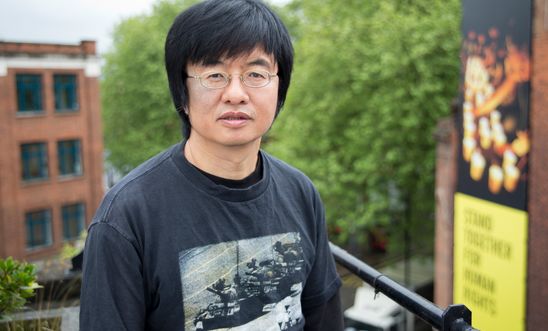
Dr Shao Jiang

I have always liked the symbolic act of renaming streets after human rights defenders [see e.g. https://humanrightsdefenders.blog/2018/06/07/ahmed-mansoor-ten-years-jail-for-tweeting-and-a-street-named-after-you/]. Amnesty International activists will ‘rename’ the streets surrounding the Chinese Embassy in London next week to mark the 30th anniversary of the notorious Tiananmen Square crackdown. On Tuesday 4 June (10h00 am), a total of 30 authentic-looking ‘Tiananmen Square’ street signs will be displayed in the streets around the embassy in central London to mark the anniversary. Amnesty UK Director Kate Allen and Shao Jiang – one of the original student protest leaders who was in Tiananmen Square on the night of 4 June – will place a ‘Tiananmen Square’ sign immediately outside the Chinese Embassy building.

https://www.amnesty.org.uk/press-releases/london-streets-around-chinese-embassy-be-renamed-tiananmen-square-anniversary

Positive communication is the (only) way forward for effective human rights work!

May 30, 2019

For a human rights movement dedicated to exposing abuses, positive communication does not come naturally. But to make the case for human rights, we need to promise a brighter future” says Thomas Coombes – head of brand and deputy director of communications at Amnesty International – in a piece in Open Global Rights of 19 February 2019. I have perhaps also contributed to the gloom with many posts about the decline of the international guman rights regime [with some more constructive posts e.g. https://humanrightsdefenders.blog/2018/12/26/barbara-von-ow-freytag-argues-well-for-a-new-communication-based-approach/ ]. I think rightly Thomas argues: “to break this cycle and sell hope to the media, we need two things: challenging ideas and surprising stories“. Please read the full (short) piece:

For a human rights movement dedicated to exposing abuses, positive communication does not come naturally. We in the human rights community are driven by a desire to make known the suffering and injustice we see in the world, yet what people need from us is not information about what is going wrong, but hope and a means of making it better.

To make the case for human rights, we need to promise a brighter future. At Amnesty International we have a saying: better to light a candle than curse the darkness. But in the human rights movement, we spend a lot more time cursing the darkness. We want to expose terrible suffering so that people are shocked into action. But when we only show the abuses, people start to believe that we live in a world of crisis with no alternative. They accept that reality, give up, or turn to people who preach division, fear and a false sense of safety.

While the human rights movement will always have to expose abuses, we also need to give people a chance to unite behind a cause, challenge governments to live by their values and build support for our way of seeing the world. Hope-based communication is simply a smart strategy for shifting public opinion not by saying what is popular, but by making popular what needs to be said.

Hope-Based Communication is about illustrating what we want to see, not just what other people are doing. Because the human mind adapts easily to bad news, every dose of shock that we administer to the global conscience inoculates people. Without a tangible, believable alternative vision of how things should be, we risk reinforcing current rights abuses as a regrettable but inevitable reality.

Constant stories of crisis create an alarming picture of the world in our minds. When news is all about negative, sensational and exceptional events, it skews our view of other people, cultivates distrust and blinds us to important but unsurprising developments, as Rob Wijnberg, has argued in his manifesto for constructive news outlet The Correspondent. To break this cycle and sell hope to the media, we need two things: challenging ideas and surprising stories.

The environmental movement has already made that first step from dire warnings to big ideas that convince people that another world is possible. For example, in This Changes Everything, Naomi Klein writes about how promises of a bright green future offered a way forward: “What this part of the world has clearly shown is that there is no more potent weapon in the battle against fossil fuels than the creation of real alternatives.

The human rights movement must now do the same thing, and new research offers us a way to completely reframe the way we talk about human rights. For example, Amnesty International Australia now says “Bring them here” of refugees, rather than asking the government to stop treating them like criminals. Anat Shenker-Osorio’s linguistic analysis of how advocates in Australia, the UK and USA make the case for human rights shows that we talk about human rights as an object that is given to individuals, rather than a tool for people to improve their communities and live together. It encourages us to be more specific about power relations and use the language of journeys instead of war.

We want to take society on a journey to a better place, but when we lean heavily on the language of conflict: we fight, recruit, mobilise, resist, defend, protect and counter. We build coalitions. We wage campaigns. We seek to win battles. We ask people to take sides. This language is divisive—it won’t power a constructive, unifying movement. Instead, we need to talk about building, growing and sticking together.

Research from the Common Cause Foundation shows that altruism is as great a motivator to good causes as self-interest, if not more. Successful movements are propelled forward by enthusiasm and passion. While Donald Trump united his base with the simple red baseball cap, ordinary people demanding women’s rights queued for hours to buy “Together for Yes” buttons in Ireland and thronged the streets wearing green scarves in Argentina.

More and more research points to the fact that fear and pessimism triggers conservative and suspicious views, while, hope and optimism tend to more liberal views. Joyful, inspiring content like Planned Parenthood’s Unstoppable campaign serves not just to inspire, it creates political momentum. Anger mobilizes, hope organizes.

New approaches to stories about people seeking refuge highlight not what they flee but what they create in their new home, how the act of welcome transforms the host, or the power of friendships that face adversity and politics.

The stories we tell become our reality, so we need stories of humanity and compassion, reinforcing the idea that human rights are about people standing up for each other

How do we talk about hope and opportunity when human rights defenders are under attack and we need to defend ourselves, to fight back? How can we be positive when it is our duty to document despair?

Human rights defenders have “long been on the front line”, as Kathryn Sikkink argues in Dejusticia’s Playbook for Human Rights Actors. She warns that the frame of crisis and peril inadvertently harms perceptions of the movement’s effectiveness and legitimacy.

The most urgent challenge is to rebrand what it means to do human rights. The space that we most need to create for civil society is a conscious space apart from today’s struggles in which we allow ourselves to envisage bold possibilities of a better world. Human rights should take pride in being the “slow change” movement, that brings about generational attitudinal and societal progress, offering the path out of the darkest times.


Check out this virtual guide for how you can make a shift towards hope based communications in your human rights work.


There is still a place for anger and sadness, if we balance them with a sense of how we make things better. For no matter how dark the story, there is always some glimmer of hope. And it is our job to kindle that flame. The darker the crisis, the more people exhausted by fear and anger will turn to extreme options. So, we have to give people what every human needs: hope. After all, you light a candle when it gets dark. Hope, like a candle, shines brightest in the dark.

the-future-of-human-rights-must-be-hopeful/

Belgian artist launches a Human Rights Pavilion at Venice Bienniale

May 30, 2019
On Mark Westall reports in Fadmagazine that the Belgian artist Koen Vanmechelen has launched a Human Rights Pavilion at Venice.

Belgian artist launches worldwide Human Rights Pavilion at Venice

Coinciding with the 58th Venice Bienniale, Belgian artist Koen Vanmechelen has launched the evolving artwork Human Rights Pavilion. In 2021, he will present his completed Opus to the Venice Biennial authorities with a request for a recurring, international human rights pavilion. Koen Vanmechelen firmly believes that art has a role to play in the current debate about human rights, a controversial issue highlighted by globalisation. Are human rights culturally relative? Does the human rights project have limits? Is the existing Universal Declaration on Human Rights outdated and Western- centered, as some claim?

To answer these questions, together with international partners Global Campus of Human Rights, Fondazione Berengo and the MOUTH Foundation, the Belgian artist launches the Human Rights Pavilion. This ambitious project was initiated on the island of Murano, in parallel with the 58th Venice Biennial. Over the next two years, the evolving work will gain weight and momentum through the dialogues, travels, correspondence, explorations and creations of Vanmechelen during a world tour. The evolving pavilion-to-be should gain form through contact with people and organizations involved or interested in human rights. The focal point is Vanmechelen’s adage ‘the global only exists through the generosity of the local.

Vanmechelen: ‘Through my longstanding work around children’s and nature rights, I learned that connecting to others is vital. Underlying the philosophy that unifies my work is ‘every organism needs another organism to survive.’ Survival depends on the survival of the other or SoTO. The Human Rights Pavilion comes together in three chapters: SoTO Dialogues, SoTO Environment and SoTO Legacy. Different partners are invited to contribute to both the artistic research and the development of the artwork, aiming to include as many disciplines, perspectives, and cultures in the creation. At the end of 2020, all inputs will be reworked into a unifying OPUS. This collective memory of our moment in time and space, will be presented to the UN High Commissioner for Human Rights, the European Commission and the President and Curator of the 59th Venice Biennale of Art. It will be accompanied by a call to establish a recurrent supra-national Human Rights Pavilion as part of the structure of the Venice Biennial.More Info: www.humanrightspavilion.com

Two South Sudanese activists who had disappeared two years ago now presumed dead

May 30, 2019

It’s time for Kenya, South Sudan to account for the enforced disappearance of Samuel Dong and Aggrey Idri

As news of the death of Samuel Dong Luak and Aggrey Ezboni Idri circulated recently, I felt extremely saddened.. The enforced disappearance and extrajudicial killing of two outspoken critics of the South Sudanese government, by South Sudanese security services allegedly with the acquiescence of Kenyan authorities, and both states’ continuous denial of responsibilities, signals a worrying trend of disrespect for human life and insecurity for those who dare to speak up and challenge power.

Samuel Dong Luak was a prominent human rights lawyer, Secretary General of the South Sudan Law Society for over ten years, as well as a member of the South Sudan Constitutional Review Commission.

Aggrey Ezboni Idri was an opposition leader, and member of the Sudan People’s Liberation Movement in Opposition (SPLM-IO). In 2013, after receiving death threats for providing legal assistance to the former Secretary General of South Sudan’s governing party, Pagan Amum, who had been accused of “treason” by President Salva Kiir, Dong fled South Sudan and sought refuge in Kenya, where he was granted refugee status. The same year, Aggrey also relocated to Kenya after South Sudan descended into conflict.

The deceased lived with their families in the capital, Nairobi, until they were disappeared on 23 and 24 January 2017, respectively. Amnesty International, the UN Working Group on Enforced or Involuntary Disappearances, and other human rights groups called on the governments of Kenya and South Sudan to reveal the fate or whereabouts of the two men, suspected to be held by Kenyan authorities before deportation. The families of the disappeared also mobilised; petitioning Kenya’s High Court to produce the two men in court, but the petition was dismissed as Kenya denied having them in its custody. The family later asked the police to conduct a thorough investigation, but a final judgment in January 2019 confirmed the dismissal of their petition and ended judicial oversight into police action with regard to the case. Yet, the Court had noted that the police investigation fell short of seeking information from South Sudanese authorities and potential key witnesses.

The fate of Dong and Aggrey remained unknown until April 30,2019, when the UN Panel of Experts on South Sudan circulated a report pointing to the likelihood of their death. The report states that “the Panel has corroborated evidence strongly suggesting” that Dong and Aggrey were kidnapped in Kenya by an arm of South Sudan’s National Security Service (NSS), transferred to Juba, and executed in a NSS detention and training facility in Luri, on January 30, 2017.

In a report published in April 2018, DefendDefenders reported on the role of the NSS in limiting free expression and committing violations against human rights defenders (HRDs) in South Sudan. This case further highlights the unchecked power and impunity enjoyed by South Sudanese security services, which jeopardises possibilities for peace in the context of the revitalised peace agreement signed in September 2018. South Sudan’s conduct blatantly violates human rights standards, including the Declaration on the Protection of All persons from Enforced Disappearances. Moreover, South Sudan continues to retain laws that are inimical to their regional and international human rights obligation. This results in shrinking civic space and democratic practice and killing or exiling of journalists and HRDs.

The alleged acquiescence or cooperation of the government of Kenya violates article 3 of the UN Convention Against Torture, which prohibits returning people to places where they risk being tortured or ill-treated. Kenya ratified it. Dong’s confirmed status as a refugee also commits Kenya to the principle of non-refoulement enshrined in the 1951 Refugee Convention. Worryingly, this does not seem to be an isolated case.

……..
Against these worrying trends, I add my voice to that of other human rights organisations in calling on South Sudanese and Kenyan authorities to establish swift, impartial, independent, transparent and thorough investigations into Dong and Aggrey’s case. Both Kenya and South Sudan are State parties to the African Charter on Human and Peoples’ Rights, and must take all necessary measures to uphold their obligations under the African Charter and other international instruments. South Sudanese authorities must allow the UN Panel of Experts on South Sudan and other monitors to access the site where the killing allegedly took place and all relevant witnesses and information. It is necessary to investigate these events fully, including the chain of command that led from Dong and Aggrey’s disappearance in Nairobi to their alleged execution. Those responsible, irrespective of their rank or standing, need to be held accountable, and the families of the victims must have access to adequate remedies for the losses they suffered.

The African Commission on Human and Peoples’ Rights and other regional and international organs should collectively and strongly ensure that justice and accountability is served in this case. They must demand that Kenya and South Sudan end all enforced disappearances and extrajudicial killings.

Denials, impunity, and attempts at diffusing responsibility cannot stand in front of such serious allegations. More than two years after their disappearance, justice and accountability are due to the families and the communities Dong and Aggrey were forced to leave behind.

COMMENT: Disappearance and extrajudicial killing


Front Line Defenders seeks events organiser for 12-months

May 30, 2019

is currently seeking an individual demonstrating extensive events, communications and marketing experience to work as part of its Events and Promotions Team in the lead up to the 2019 Dublin Human Rights Festival and the 2019 Dublin Platform for Human Rights Defenders, and to provide maternity cover for the permanent post-holder.


Key tasks (July – October 2019, full-time);

  • manage the 2019 Dublin Human Rights Festival (planning, implementation and managing logistics; maintaining partner relations and building the Festival audience through extensive marketing and promotion; and managing staff and volunteers to support the event);
  • deputise to the International Events & Promotions Coordinator on all aspects of the 2019 Dublin Platform;
  • supporting 200+ delegate visa and travel arrangements;
  • coordination of airport transfers;
  • management at hotel and conference venue;
  • management of conference agenda, registration, interpretation, social programme and all conference administration;
  • task delegation and support to colleagues and volunteers as appropriate; and
  • supporting team in achieving all deliverables related to the 2019 Dublin Platform;
  • updating and maintaining Front Line Defenders database and working documents; and
  • offer coordination and support to the organisation as required.

Key tasks Maternity Cover (October 2019 – August 2020, part-time @ 4 days per week / 28 hours per week):

  • organise the 2020 Front Line Defenders Award including coordinating nomination process, liaising with colleagues and jury members, planning and managing award ceremony logistics and developing programme for the regional award winners and advocacy tour for global laureate;
  • make timely preparations for the 2021 Dublin Platform;
  • organise HRD speakers tours and other promotional events;
  • conduct public outreach and engagement with Irish public and specific groups;
  • maintain positive working relationships with vendors and venues; and
  • offer coordination and support to the organisation as required.

The successful candidate will be able to demonstrate inter alia:

  • extensive event management experience (essential);
  • a proven track record of success developing and executing marketing strategies for event promotion;
  • experience working with graphic designers;
  • experience preparing and managing event budgets with strict adherence;
  • excellent oral and written communication skills;
  • strong computer literacy (database, mailouts, spreadsheets etc); and

The role will be based at the organisation’s headquarters in Blackrock, Dublin. Candidates must be legally entitled to work in Ireland at time of application. The salary will be equivalent to Clerical Officer Higher on the civil service scale (EUR 30,089 pro rata) This is a fixed-term contract for the period 22 July 2019 to 28 August 2020.

Applications comprising a cover letter (1 page) and CV (2 page max.) should be sent to Michelle Foley, International Events & Promotions Coordinator at recruit@frontlinedefenders.org by Friday, 21 June 2019. Please put the name of the role you are applying for in the subject title of the email.

Shortlisted applications should be available for interview in the week commencing the 1 July 2019, and the successful applicant will begin in the position on Monday, 22 July 2019.

For more info: https://www.frontlinedefenders.org/en/international-events-promotions-coordinator-part-maternity-cover-12-months

UN High Commissioner to present her Human Rights Report 2018 to Civil Society

May 29, 2019

On 14 June 2019 the UN High Commissioner for Human Rights Ms. Michelle Bachelet will present the UN Human Rights Report 2018 to Civil Society. The event wil take place from 14:00 to 15:00 on Friday, 14 June, in the Ground Floor Conference Room at Palais Wilson. Please note that the meeting is limited to NGOs holding annual accreditation with UNOG (confirm by 11 June to zghanem@ohchr.org).
However the electronic version of the Report is already available on the Office’s website: https://www.ohchr.org/Documents/Publications/OHCHRreport2018.pdf

Also in USA helping migrants is criminalised: Scot Warren in court on 29 May 2019

May 29, 2019

Not just in Italy [see: https://humanrightsdefenders.blog/2019/05/15/european-governments-should-stop-treating-solidarity-and-compassion-as-a-crime/]. Front LIne Defenders on 28 May 2019 reports that in the United States Scott Warren is facing 20-year prison sentence for “harbouring” migrants.

On 29 May 2019, Scott Warren is due to face a felony trial at the District Court for the District of Arizona. The human rights defender is charged with two counts of “harbouring” migrants in Ajo, Arizona, and one count of “conspiracy to transport and harbour” migrants. If found guilty, he might be sentenced to up to 20 years of imprisonment.

Dr. Scott Warren [https://www.frontlinedefenders.org/en/profile/scott-warren] is a human rights defender working on migration issues in Ajo, Arizona. For over ten years, he has provided humanitarian aid to migrants and asylum seekers who attempt crossing the United States – Mexico border through the Sonora desert. He helped establish the humanitarian aid group No More Deaths or No Más Muertes which provides water and medical aid on migration routes, and documents the deaths of migrants in the desert.

On 29 May 2019 at 9:30am, Scott Warren is due to be tried at the District Court for the District of Arizona for two counts of “harbouring” migrants and one count of “conspiracy to transport and harbour” migrants. On 21 May 2019, the judge assigned to the case rejected a motion to dismiss the indictment. Scott Warren’s lawyers argued that his arrest “arose from selective enforcement of the laws by the Border Patrol” and that he was being targeted specifically for his work in defence of migrants’ rights.

On 17 January 2018, Scott Warren was arrested at a volunteer gathering point known as the “Barn”, located in Ajo, by a convoy of U.S. Border Patrol agents from a specialised anti-smuggling unit. The agents were wearing plain clothes and did not present the human rights defender with a warrant. Earlier on that day, No More Deaths had published a report denouncing the involvement of Border Patrol officers in the destruction of water gallons left by volunteers for migrants crossing the desert. After the publication of the report, Scott Warren gathered evidence of surveillance activities carried out against him by the U.S. Border Patrol.

The arrest of Scott Warren represents an escalation of existing patterns of harassment against humanitarian volunteers and human rights defenders in Arizona. In 2018, officers of the Fish and Wildlife Services cited Scott Warren and other volunteers of No More Deaths for entering the Cabeza Prieta National Wildlife Refuge, one of the most deadly migrant corridors along the Mexico-US border, to provide life-saving aid, including water, food and medical supplies, to migrants crossing the desert.

…..
On recent country visits, Front Line Defenders found that defamation and criminalisation of humanitarian activity is increasing along the migrant caravan routes. Human rights defenders in Mexico and the United States have been detained, harassed and criminalised for the provision of humanitarian aid, including distributing food, water and medical supplies, and operating emergency shelters for migrant families. Moreover, the authorities in the United States have increased efforts towards the criminalisation of all forms of immigration, including through coordinated action with other states in the region.

Front Line Defenders condemns the criminalisation of Scott Warren, as it is believed to be directly motivated by his humanitarian work assisting migrants and documenting their deaths. Front Line Defenders is further concerned about the increased use of the judiciary to target human rights defenders and organisations who assist migrants at the United States – Mexico border, including by selective enforcement of the law.

See latest: https://www.humanrightsfirst.org/press-release/human-rights-first-statement-new-trial-against-arizona-human-rights-defender