Author Archive

Policy response from Human Rights NGOs to COVID-19: Civil Rights Defenders

April 10, 2020

In the midst of the COVID-19 crisis, many human rights organisations have been formulating a policy response. While I cannot be complete or undertake comparisons, I will try and give some examples in the course of these weeks. Here the one by Anders L. Pettersson, Executive Director of the Stockholm-based human rights organization Civil Rights Defenders (as published in the The Globe Post of 9 April 2020): “COVID-19 Is No Excuse for Governments to Abuse Human Rights”:

……But the COVID-19 pandemic is no ordinary struggle. The world is in the midst of an unprecedented health crisis with far-reaching political, economic, and social consequences. Basic human rights, such as the right to freedom of movement and assembly, are being suspended to contain the virus’ further spread. Put simply, drastic measures have to be taken, and we are entrusting our respective governments to take them.
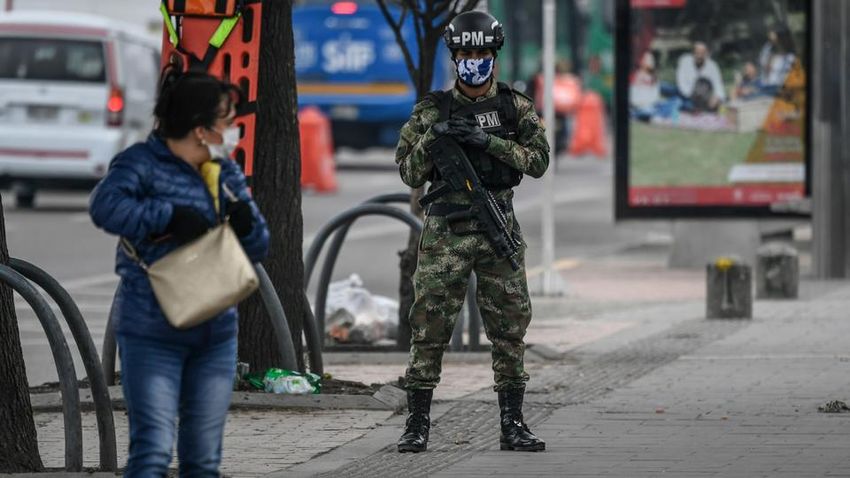
A member of the military police wears a face mask as a preventive measure against the spread of the new coronavirus, COVID-19, as he patrols the streets in Bogota, on March 25, 2020. Photo: AFP

This, however, must not be understood as a blank cheque for authoritarian leaders to tighten their grip on power. While most national constitutions, the European Convention on Human Rights, and the U.N.’s International Covenant on Civil and Political Rights allow for the derogation of certain human and minority rights during a state of emergency, it is “only to the extent strictly required by the situation.”

Across the world, though, numerous examples point to clear overreach of such emergency power and, more depressingly, the abuse of trust vested in governments from civil society.

Abuse of Emergency Powers

  • In Azerbaijan, President Ilham Aliyev said in an address to the nation that his political opponents are trying to use the outbreak to destroy the country, and suggested that measures to “isolate” them might be required. The prominent opposition activist Tofig Yagublu has already been arrested and sentenced to three months of pre-trial detention. He faces up to six years in prison….
  • Meanwhile, Montenegro’s government made the inexplicable move of making public the personal data – including names and home addresses – of all those obliged to be in self-isolation, a gross infringement on the right to privacy.
  • Albania’s Prime Minister, Edi Rama, also wasted no time in flexing his newfound powers. Last weekend, he casually threatened his citizens by posting a video supposedly showing Spanish police beating and chasing people down the streets, with an outrageously inappropriate message “either respect social distancing… or you will also be running.” Except, the video was from a political protest, weeks ago – in Algeria, not Spain.
  • Speaking of “fake news,” we have received reports from partners in Cambodia that over a dozen people have already been jailed, or “re-educated,” for allegedly sharing false social media posts about the pandemic – a measure that we fear is prone to be replicated across the world, not least among E.U. states.
  • Namely, Hungary’s nationalist government recently passed legislation to parliament that would punish anyone who publicizes “fake news” that interferes with the “successful defense” of public health, with up to five years in prison. [see https://humanrightsdefenders.blog/2020/04/07/good-example-of-authoritarian-abuse-of-covid-19-emergency-hungary/]..

Civil society, therefore, finds itself in an incredibly delicate situation.

On the one hand, there is an understanding that the severity of the crisis calls for certain limitations on our fundamental rights. Only national authorities possess the legitimacy to enforce such constraints and the capacity to tackle the virus through strict health and safety measures. We have no alternative but to trust our respective governments to navigate us, and their intentions to save lives and minimize the virus’ impact. On the other hand, we have a responsibility to protect partners across the world, whose fight for democracy and fundamental human rights will be further strained as emergency powers, enforced curfews, and restrictions on free speech come into place. Some measures may be necessary, but others are clearly not – and all must be removed once this is all over. Further, using the pandemic to harass human rights defenders or abuse the rule of law for political gains, as we are already witnessing, is simply unacceptable. We will monitor your moves, keep you accountable, and call you out when the line has been crossed – this is our duty. Widespread trust that has been vested in governments – all governments – amounts to a historic responsibility. Civil society has reached out its hand; do not let us down.

(Disclaimer: The views and opinions expressed here are those of the author and do not necessarily reflect the editorial position of The Globe Post._

Policy response from Human Rights NGOs to COVID-19: the Business and Human Rights Resource Centre

April 9, 2020

COVID-19 (Coronavirus) Outbreak: Human rights defenders & civic freedoms

Public health measures and expanded government powers amid global pandemic pose added threats to freedoms and rights of human rights defenders, including those focusing on business-related human rights impacts. Some governments, and other actors, are using this crisis to attack defenders in new ways, stifle civic freedoms, and push through restrictive measures. Defenders become easier to target, when they isolate, which is compounded by the loss of protective accompaniment and the lack of media attention to their situation. In several countries, rural and indigenous defenders have lost their livelihoods and are experiencing lock-downs – including those in conflict zones – and are less able to raise concerns about harmful business projects as a result. There are also reports of factories using the pandemic to justify dismissal of labour rights defenders. Tech companies may also violate the right to privacy of defenders, as they cooperate with governments to help stop the spread of COVID-19. Some companies are keeping their businesses active, for example in Peru and Colombia, despite the local opposition – and some sectors are likely to use the crisis to lobby for lower regulations, as we are already seeing in Indonesia and the United States, which could lead to more tension and violence in the future. This crisis also underlines that businesses benefit from defenders being able to work freely: this is now more evident than ever, as silencing of health professionals that tried to raise alarm on COVID-19 early, helped turn this ‘potentially containable threat into a global calamity‘, with enormous consequences for businesses and the economy.

The Centre has a section that features the latest news on how the pandemic and the response to it is affecting human rights defenders that raise concerns about businesses, and their impacts on the rights to food, access water, labour rights, environment, housing and health. It also highlights impacts on fundamental freedoms, such as freedoms of expression, association, and assembly, that these defenders need to be able to organize and work. Finally, it will be tracking new ways of protesting and organizing by these defenders and groups amidst the pandemic, and new demands in response to it.

—-

See  In Depth Area for more on COVID-19’s implications for business & human rights


Policy response from Human Rights NGOs to COVID-19: Gulf Center for Human Rights 

April 9, 2020

In the midst of the COVID-19 crisis, many human rights organisations have been formulating a policy response. While I cannot be complete or undertake comparisons, here the position of Khalid Ibrahim, executive director of the Gulf Center for Human Rights (GCHR) posted on 8 April 2020 in Global Voices:

COVID19 cases in the MENA region have led governments to institute containment and other measures to slow the spread the highly contagious coronavirus. These measures have especially targeted some of the most vulnerable groups such as human rights defenders in prison, migrant workers and independent media. The Gulf Center for Human Rights have tracked how some of these measures have seriously impacted the overall human rights situation in the region.

Below is GHCR’s brief human rights review of COVID-19’s impact on the MENA region:

1. Detained human rights defenders

The reality is that most human rights defenders are still in prison in the MENA region at a time when governments including those of Morocco, Saudi Arabia, and Egypt released some prisoners as part of preventive measures to contain the spread of the virus. With the spread of COVID-19, the lives of jailed human rights defenders are at imminent risk in countries such as Iran, Egypt, Kuwait, Syria, Bahrain, Saudi Arabia, the United Arab Emirates, Algeria and other countries that have crowded prisons lacking minimum health standards. Among those currently imprisoned are Abdulhadi Alkhawaja and Nabeel Rajab, founding directors of the GCHR, serving a life sentence and five years in jail, respectively. In the United Arab Emirates, Ahmed Mansoor has been held in solitary confinement for three years, serving a 10-year jail sentence for his human rights activism, including peacefully expressing his views on social media. In Saudi Arabia, women’s rights activist Lugain al-Hathloul also remains in prison.

2. Access to information and shutting down newspapers

Most governments in the MENA region are not releasing the actual numbers of cases of those infected with the virus and also making it very difficult for journalists to have access to reliable information about the spread, treatment, and the victims of COVID-19. Also, journalists who are providing factual information about the crisis to citizens are at risk.

….In Oman, on March 22, 2020, the Supreme Committee for Dealing with COVID-19 ordered all newspapers, magazines, and other publications to cease printing and circulating, according to the Times of Oman, which published the committee’s order. The order also prohibited the sale and circulation of newspapers, magazines and publications imported into the country. In Morocco, that same day, the minister of culture, youth and sports, Hassan Abyaba, announced in a statement the suspension of the publication and distribution of print newspapers until further notice. Also, in Jordan, on March 17, 2020, the Jordanian Council of Ministers suspended the publication of all newspapers for two weeks, according to an official statement by the Jordanian Communications Minister Amjad Adaileh. Newspapers continued to be suspended due to the quarantine and the government’s demand for citizens to stay in their homes.

3. Draft law threatened freedom of expression in Tunisia

4. Temporary imprisonment for spreading rumours in UAE

On April 1, 2020, the Gulf News, a daily English-language newspaper based in Dubai, published an article that says that “people who circulate rumours may be jailed for one year if they spread false information.” It is now possible that COVID-19 could be used as a pretext to imprison some of the bloggers and Internet activists who are targeted by the State Security Apparatus (SSA).

5. Location-tracking applications

Some Gulf states such as Bahrain are using location-tracking technologies which would enable the full detection of the movement of citizens. There are concerns that the use of these applications in countries widely known for gross and documented violations of human rights will allow them to place greater restrictions on personal freedoms.

6. Xenophobia against migrant workers in the Gulf

…..Reports that GCHR received from various Gulf countries confirmed that migrant workers are not given equal access to medical care and they are facing some difficult time at the moment, as many of them already live and work in poor conditions. Authorities across MENA could help stop the spread of COVID-19 by freeing all human rights defenders and prisoners of conscience because they do not pose a risk to the public — but rather are at great risk themselves. While detained, authorities must uphold the UN Standard Minimum Rules for the Treatment of Prisoners to provide basic healthcare and sanitation for all. It is also important to allow visits from UN experts and the International Committee of the Red Cross (ICRC).

https://advox.globalvoices.org/2020/04/08/impact-of-covid-19-containment-measures-on-human-rights-and-civil-liberties-in-the-middle-east/

80 Media and Human Rights groups urge African Heads of State to release jailed journalists amid pandemic

April 9, 2020

On 9 April 2020, the Committee to Protect Journalists (CPJ) and 80 other media and human rights NGOs have urged ten African Heads of State to release journalists from detention in the context of the COVID-19 pandemic.

To:

President of Algeria Abdelmadjid Tebboune
President of Benin Patrice Talon
President of Burundi Pierre Nkurunziza
President of Cameroon Paul Biya
President of Chad Idriss Deby
President of Egypt Abdel Fattah el-Sisi
President of Eritrea Isaias Afwerki
Prime Minister of Ethiopia Abiy Ahmed Ali
Prime Minister of Morocco Saad-Eddine El Othmani
President of Rwanda Paul Kagame

Your Excellencies,

We the 81 undersigned media, press freedom, and human rights organizations are writing to call on your respective governments to release all jailed journalists amid the sweeping COVID-19 pandemic. Last week, the Committee to Protect Journalists published an open letter to world leaders urging the immediate release of all journalists imprisoned for their work. Given that a staggering number of these imprisoned journalists are held in jails across the African continent, we are reiterating that call to your respective countries at this time of grave public health concern.

According to CPJ’s most recent annual survey conducted on December 1, 2019, there were at least 73 journalists in prisons in Africa, including 26 in Egypt, 16 in Eritrea, seven in Cameroon, four each in RwandaBurundi, and Morocco, three in Algeria, and one each in BeninNigeriaChadTanzaniaEthiopiaSomaliaComorosDemocratic Republic of the Congo, and South Sudan.

As of March 31, at least 11 of these journalists have been released from jails in Somalia, Ethiopia, Tanzania, Nigeria, DRC, Algeria, Comoros, South Sudan, and Egypt, according to CPJ research. However, at least six more journalists and media workers have been jailed since December 1, and remain in prison as of March 31, including four inEthiopia and one each in Cameroon and Algeria.

Article 16 of the African Charter on Human and Peoples’ Rights states, “Every individual shall have the right to enjoy the best attainable state of physical and mental health.” These rights were extended to prisoners and detainees when the African Commission adopted the 1995 Resolution on Prisons in Africa. According to the World Health Organization, “People deprived of their liberty, and those living or working in enclosed environments in their close proximity, are likely to be more vulnerable to the COVID-19 disease than the general population.”

For journalists jailed in countries affected by the virus, freedom is now a matter of life and death. Imprisoned journalists have no control over their surroundings, cannot choose to isolate, and are often denied necessary medical care. Many of these journalists have been held in detention without trial for lengthy periods and are suffering from ill health exacerbated by underlying health conditions and overcrowded prisons, where they have contracted malaria, tuberculosis, and other diseases.

We urge you to release every jailed journalist in your respective countries and to protect the free press and the free flow of information at this crucial time. Journalism must not carry a death sentence.

Sincerely,

(for names of signing organisations see link below)

See also: https://humanrightsdefenders.blog/2020/03/20/corona-virus-threatens-human-rights-defenders-in-detention-egypt-and-turkey/

US section of Amnesty International has virtual meeting on Human Rights Defenders

April 9, 2020

Meeting banner

Amnesty International USA is holding its annual meeting on-line: “Under Siege: The Persecution of Human Rights Defenders Around the World and What You Can Do to Support Them!”
Human rights defenders around the world are routinely the target of death threats, smear campaigns, imprisonment, sexual violence, torture, and even assassination. Since 1998, over 3,500 human rights defenders have been killed worldwide. In 2018 alone, 321 human rights defenders were killed. Come and learn about very concrete ways that you can help protect Brave human rights defenders in such countries as Colombia, Saudi Arabia, & the Philippines. 30 April 2020 08:00 PM in Eastern Time (US)
Meeting logo
https://zoom.us/meeting/register/upIudOyprTwrYfg3Ewag_yYS_CPyyruu5Q

Good example of authoritarian abuse of COVID-19 emergency: Hungary

April 7, 2020

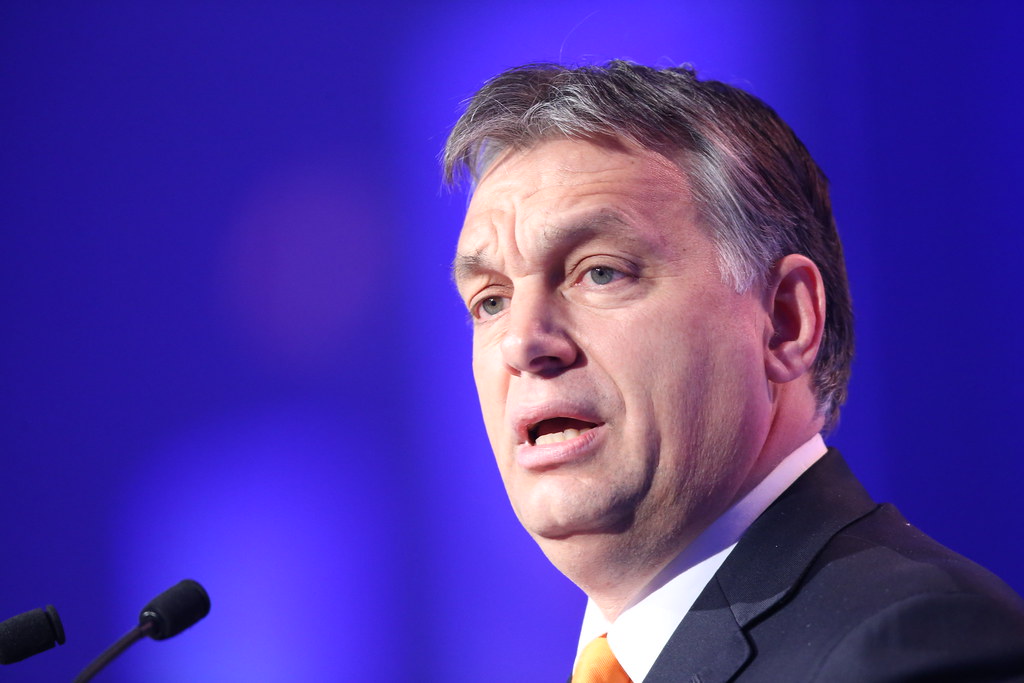
Hungary has defied calls by human rights defenders to respect human rights standards in tackling the COVID-19 outbreak.  Monday 30 March 2020, Hungary’s parliament passed a controversial Law on Protection against the Coronavirus, allowing Prime Minister Viktor Orban to rule by decree for an indefinite period [!], and to jail anybody deemed to be publishing ‘fake news’ by up to five years. In the days prior, Civil Rights Defenders condemned the bill on the grounds that it is an attack on the rule of law and democracy, and presents numerous threats to human rights in the country (see https://crd.org/2020/03/24/hungary-state-of-emergency-is-no-excuse-for-undermining-rule-of-law/).

In one of its first moves, the government tabled a bill outlawing legal gender recognition which is a serious and permanent attack on the rights of Trans people. The following day, on Tuesday, it hinted it would use emergency powers to push educational reform by perusing an appalling new curriculum that will rewrite history books by promoting national pride, and making anti-Semitic authors compulsory reading. Coupled with the restrictions on media freedoms, the freedom of expression and the indefinite emergency rule, these measures are a clear overreach of emergency powers and a grave threat to democracy.

20 EU Member States have reacted in a joint-statement that they are “deeply concerned about the risk of violations of the principles of rule of law, democracy and fundamental rights arising from the adoption of certain emergency measures”. However, the statement’s authors did not call out countries by name, thus creating a loophole for Hungary to shamelessly became a signatory itself [SIC and SICK].

https://crd.org/2020/04/07/hungary-ignores-calls-for-respect-of-human-rights/

Tanzania shows great power sensitivity to UN human rights criticism

April 6, 2020
Chadema party MPs Halima Mdee, Ester Matiko and Ester Bulaya attend a press conference after being released from Segerea prison in Dar es Salaam, Tanzania, on March 12. PHOTO | AFP

Chadema party MPs Halima Mdee, Ester Matiko and Ester Bulaya attend a press conference after being released from Segerea prison in Dar es Salaam, Tanzania, on March 12. PHOTO | AFP
According to BOB KARASHANI in the East African of 4 April 2020 Tanzania‘s Foreign Affairs ministry has hit out at the United Nations Human Rights Office for criticising the country’s human rights record as it heads to the October general election. According to the ministry’s Permanent Secretary Col Wilbert Ibuge, the statement issued by the Geneva-based UN agency on March 17, was biased, with unsubstantiated allegations, and an attempt to both malign Tanzania’s international reputation and intrude on its sovereignty. Col Ibuge said that before going public, the agency should have first raised its concerns with the government for clarification “which would have been duly and graciously provided.”

The UN recently called the sentencing of several opposition leaders on charges including sedition and unlawful assembly “further troubling evidence” of a crackdown on dissent and stifling of public freedoms in the country. It accused the government of using the country’s criminal justice system to target its critics, and called on Tanzania to “immediately lift” a four-year ban on political rallies ahead of the October election. “The democratic and civic space has shrunk to almost nothing in Tanzania,” the agency said.

[see also: https://humanrightsdefenders.blog/2019/12/31/annual-reports-2019-tanzania-mostly-a-bad-year/]

—–

https://www.theeastafrican.co.ke/news/ea/Tanzania-slams-UN-rights-abuses-claims/4552908-5514120-6n56syz/index.html

Policy response by human rights to COVID-19: the Human Rights Foundation

April 5, 2020

Further in the series of posts on this topic: On 13-14 April 2020, the New York based Human Rights Foundation will host COVIDCon, a virtual Oslo Freedom Forum event focused on how tyranny sparked and is exploiting the novel coronavirus pandemic to crack down on civil liberties. For earlier posts: https://humanrightsdefenders.blog/tag/covid-19/

This two-day event, open to global audiences, will feature presentations and panels about the current pandemic and its relationship to state censorship, disinformation, surveillance, and the future of civil liberties. COVIDCon sessions will showcase the difference in the responses of authoritarian regimes and democratic governments to the outbreak of the novel coronavirus.

Confirmed speakers include former Chinese prisoner of conscience Yang Jianli; Iranian journalist and human rights activist Masih Alinejad; Russian democracy advocate Garry Kasparov; recently expelled Wall Street Journal deputy China bureau chief Josh Chin; entrepreneur and angel investor Naval Ravikant; Hong Kong pro-democracy activist Joshua Wong; futurist and “After On” author Rob Reid; Pulitzer Prize-winning author Anne Applebaum; Ideas Beyond Borders’ Melissa Chen; China-U.S. expert Kyle Bass; and others.

Day 1 of the conference will focus on how tyranny sparked the pandemic. Sessions will include:

  • Censorship in China: The Pandemic Spark
  • How Democracies and Dictatorships are Reacting to the Virus
  • China: Savior or Culprit?
  • Reporting on COVID-19: State Censorship and Surveillance
  • What the Pandemic has Revealed about Chinese Economic Dominance
  • The Increasing Risk of Synthetic Biology

Day 2 of the conference will focus on how tyranny exploits the pandemic. Sessions will include:

  • Iran’s Criminal Negligence: COVID-19’s Gateway to the Middle East
  • Pandemic Power Grab: State Abuse of Emergency Laws
  • Trampling on the Rule of Law and Undermining Public Health
  • Keeping Protest Movements Alive During The Pandemic
  • How the Pandemic Changes the Relationship Between Citizen, Technology, and State

REGISTER

https://mailchi.mp/dcbac9797509/authoritarian-regimes-ill-equipped-for-public-health-emergencies-287692?e=f80cec329e

New law in Peru may protect the police more than indigenous human rights defenders

April 5, 2020
Matias Perez Ojeda del ArcoPolice Protection Act (Law No. 31012), which was passed in Peru by the new Congress on 27 March, without approval by the Executive, 11 days after declaring a state of emergency in the country due to the spread of COVID-19. This law is constitutionaly questionable and may open the door to impunity according to the Institute of Legal Defense (IDL), the Ombudsman’s Office, the National Human Rights Coordinator (CNDDHH) of Peru, and the Inter-American Commission on Human Rights (IACHR). [The Act forbids ordering a warrant of arrest or pre-trial detention for Peruvian National Police (PNP) personnel who may injure or kill in a regulatory intervention. Its complementary provision repeals the principle of proportionality in the use of force for a police officer response, which undermines actions under a constitutional framework and is against full respect for human rights, and may create excesses and arbitrariness.]

According to the Ombudsman’s Office, as of January 2020, there were 129 socio-environmental conflicts in Peru. So how will the National Police respond to unforeseen events, even more so in a post-COVID-19 context, where indigenous people’s territories could be more vulnerable to actions to reactivate the country’s economy?  This is more relevant within the framework of the End of Mission Statement of the United Nations Special Rapporteur on the situation of human rights defenders. At the beginning of this year, it identified that, despite the progress made in this area, human rights defenders, especially from indigenous peoples and local communities, are still unable to carry out their work in a safe environment.

According to the Rapporteur and a report by the Ombudsman’s Office, 960 people have been criminalised for defending and promoting human rights since 2002, of whom 538 were criminalised during social protests. Between 2011 and 2016, 87 human rights defenders lost their lives in Peru, 67% because of law enforcement, according to a CNDDHH report.

Comprehensive police protection for common interest has lost its essence. Instead, the interests of companies are gaining serious ground in Peru, i.e. 145 agreements of “Extraordinary Police Service”, between the Peruvian Police and extractive companies (mining and hydrocarbon sector), were established between 1995 and 2018, according to a report by the Working Group on Indigenous Peoples of the CNDDH. One example of this is the agreement between the hydrocarbon company PETROPERÚ S.A. and the PNP (2018) for operations in Amazonas and Loreto regions, which affects the ancestral land of the Autonomous Territorial Government of the Wampis Nation (GTANW).It is crucial that Peruvian authorities repeal said law to avoid risking the lives of human rights defenders, especially indigenous peoples who are at the forefront of threats, harassment and criminalisation when they protest due to conflicts arising in their territories. Indigenous territories are more vulnerable than ever during the current community contagion phase of COVID-19, as proper health infrastructure and equipment may not reach those areas, nor provide timely and dignified protection for them. There are companies working on indigenous territories during the State of Emergency, including the oil palm company Ocho Sur P. in the Shipibo land of Santa Clara de Uchunya. According to IDL, Ocho Sur is continuing to work without an approved Environmental Impact Assessment. When the State of Emergency is over, most companies will want to recover their losses by any means, regardless the rights of indigenous peoples. This is the moment when the State Protection rules must focus on these issues.

http://www.forestpeoples.org/en/new-law-in-peru-threatens-indigenous-human-rights-defenders

Wang Quanzhang must be granted freedom, not ‘non-release release’ and on 22 April that happened

April 5, 2020
On 3 April 2020 Michael Caster wrote “If you care about human rights in China, April 5 – this Sunday – should be circled on your calendar. On that day, human rights lawyer Wang Quanzhang, my old friend and colleague, after an outrageous series of abuses by the Chinese state, is set to walk free. Wang, a defender of villagers’ rights and religious minorities, has been disappeared into Residential Surveillance at a Designated Location (RSDL), hidden under a false name in pre-trial detention for years, and subjected to a secret trial where he was refused legal representation.

wang quanzhang

An activist holds a sign calling for Wang Quanzhang’s release in Hong Kong. Photo: HKFP/Catherine Lai.

…..China law scholar Jerome Cohen coined the term “non-release release” in 2016, then discussing the fake release of human rights lawyer Wang Yu. Like Wang Quanzhang, she had been held in secret for months under RSDL, where she was also tortured….Since Wang was disappeared, his wife Li has also become a fierce defender, despite mounting intimidation from the police. On March 24, Li received a hand-written letter from Wang in prison saying that after release he will likely have to return to his hometown in Jinan. Those of us who know China can read between the lines. Wang risks being forcibly sent away, where he will be kept, apart from his police escorts, away from all others including his family. See also: https://humanrightsdefenders.blog/2018/12/05/li-wenzu-wife-of-wang-quanzhang-wins-2018-edelstam-award/

Responding to the release of Chinese human rights lawyer Wang Quanzhang after four and a half years in prison for “subverting state power”, Amnesty International’s China Researcher Doriane Lau said on 5 April 2020: “There are reasons to fear that Wang Quanzhang’s release from prison offers merely the illusion of freedom. The Chinese government has a history of monitoring and controlling human rights defenders even after they’re released from jail…..Wang Quanzhang was targeted by the government for his work defending human rights and helping to expose corruption. It is an outrage that he was ever jailed in the first place, but now he has served his sentence the authorities must immediately lift all restrictions on him and allow him to return to his family home.

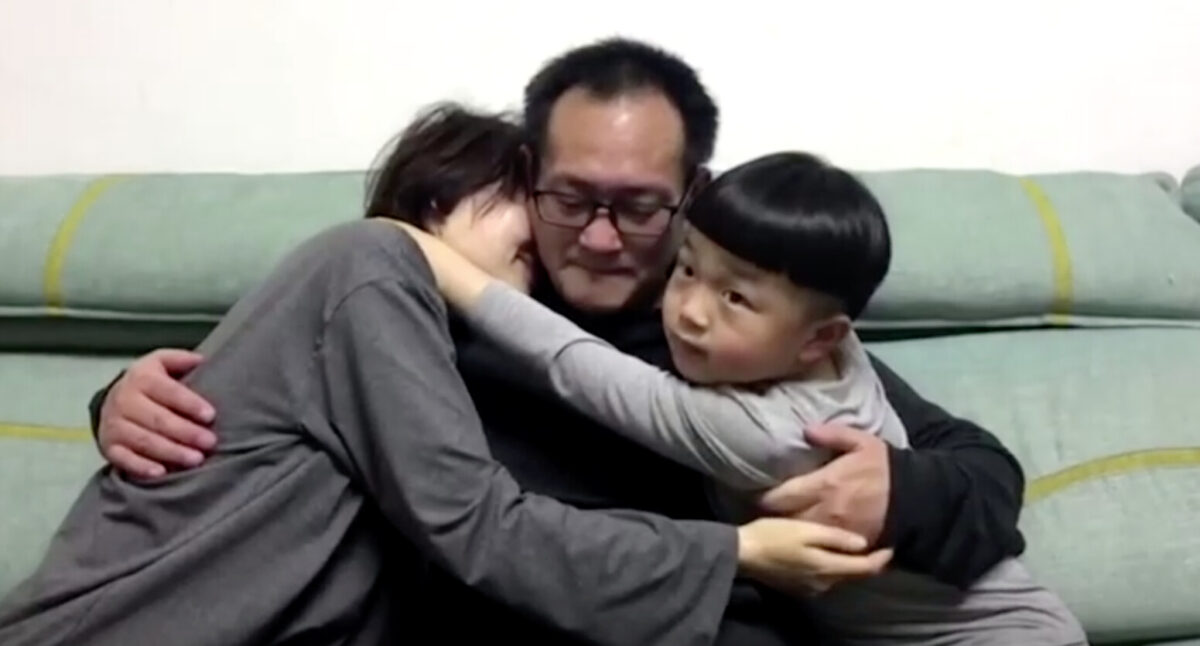
And then on 27 April 2020: ‘Feels Like a Dream’: Teary Reunion for Freed Chinese Human Rights Lawyer and Family

Many activists and lawyers targeted in the 2015 crackdown were subject to heavy surveillance and deprived of freedom of movement after they were released from prison or detention. Human rights lawyer Jiang Tianyong went missing immediately after finishing a two-year prison sentence. He was subsequently sent back to his hometown, where he and his family were closely monitored and followed by the authorities. [see also: https://humanrightsdefenders.blog/2017/11/21/jiang-tianyong-chinese-defender-of-defenders-sentenced-to-2-years-jail/]

5 june 2020: https://www.hrw.org/news/2020/06/05/chinese-human-rights-lawyer-released-after-4-years-0

https://www.amnesty.org/en/latest/news/2020/04/china-wang-quanzhang-freedom-an-illusion-until-government-lifts-ruthless-restrictions/