In an open letter in the Malay Mail of 28 April 2020 over 50 civil society organisations (CSO) and human rights activists, expressed their shock and condemnation about the mounting racist and xenophobic attacks in Malaysia against the Rohingya people and especially the targeted cyber attacks against Tengku Emma Zuriana Tengku Azmi, the representative of the European Rohingya Council’s (https://www.theerc.eu/about/) in Malaysia, and other concerned individuals for expressing their opinion and support for the rights of the Rohingya people seeking refuge in Malaysia.
[On 21 April 2020, Tengku Emma had her letter regarding her concern over the pushback of the Rohingya boat to sea published in the media. Since then she has received mobbed attacks and intimidation online, especially on Facebook. The attacks, targeted her gender, particularly, with some including calls for rape. They were also intensely racist, both specifically targeted at her as well as the Rohingya. The following forms of violence have been documented thus far:
● Doxxing – a gross violation by targeted research into her personal information and publishing it online, including her NRIC, phone number, car number plate, personal photographs, etc.;
● Malicious distribution of a photograph of her son, a minor, and other personal information, often accompanied by aggressive, racist or sexist comments;
● Threat of rape and other physical harm, and;
● Distribution of fake and sexually explicit images.
….One Facebook post that attacked her was shared more than 18,000 times since 23 April 2020.
….We are deeply concerned and raise the question if there is indeed a concerted effort to spread inhumane, xenophobic and widespread hate that seem be proliferating in social media spaces on the issue of Rohingya seeking refuge in Malaysia, as a tool to divert attention from the current COVID-19 crisis response and mitigation. When the attacks were reported to Facebook by Tengku Emma, no action was taken. Facebook responded by stating that the attacks did not amount to a breach of their Community Standards. With her information being circulated, accompanied by calls of aggression and violence, Tengku Emma was forced to deactivate her Facebook account. She subsequently lodged a police report in fear for her own safety and that of her family.
There is, to date, no clear protection measures from either the police or Facebook regarding her reports.
It is clear that despite direct threats to her safety and the cumulative nature of the attacks, current reporting mechanisms on Facebook are inadequate to respond, whether in timely or decisive ways, to limit harm. It is also unclear to what extent the police or the Malaysian Communications and Multimedia Commission (MCMC) are willing and able to respond to attacks such as this.
It has been seven (7) days since Tengku Emma received her first attack, which has since ballooned outwards to tens of thousands. The only recourse she seems to have is deactivating her Facebook account, while the proponents of hatred and xenophobia continue to act unchallenged. This points to the systemic gaps in policy and laws in addressing xenophobia, online gender-based violence and hate speech, and even where legislation exists, implementation is far from sufficient. ]
Our demands:
It must be stressed that the recent emergence and reiteration of xenophobic rhetoric and pushback against the Rohingya, including those already in Malaysia as well as those adrift at sea seeking asylum from Malaysia, is inhumane and against international norms and standards. The current COVID-19 pandemic is not an excuse for Malaysia to abrogate its duty as part of the international community.
1. The Malaysian government must, with immediate effect, engage with the United Nations, specifically the United Nations High Commissioner for Refugee (UNHCR), and civil society organisations to find a durable solution in support of the Rohingya seeking asylum in Malaysia on humanitarian grounds.
2. We also call on Malaysia to implement the Rabat Plan of Action on the prohibition of advocacy of national, racial or religious hatred that constitutes incitement to discrimination, hostility or violence, through a multistakeholder framework that promotes freedom of expression based on the principles of gender equality, non-discrimination and diversity.
3. Social media platforms, meanwhile, have the obligation to review and improve their existing standards and guidelines based on the lived realities of women and marginalised communities, who are often the target of online hate speech and violence, including understanding the cumulative impact of mobbed attacks and how attacks manifest in local contexts.
4. We must end all xenophobic and racist attacks and discrimination against Rohingya who seek asylum in Malaysia; and stop online harassment, bullying and intimidation against human rights defenders working on the Rohingya crisis.
Dated 27 February 2020, the UN has released the letter after 2 months. Qayoom was moved to Agra Central Jail, Uttar Pradesh, on 8 August and was kept in solitary confinement, as per the letter, adding that he is suffering from multiple health issues — including a scheduled open heart surgery at the time of his detention. On 29 January, the letter states, Qayoom suffered a heart attack. Next day, he was taken back to the jail’s dispensary. On 1 February 2020, he was transferred from Agra Central Jail to the All India Institute of Medical Science (AIIMS) in New Delhi, for a medical check-up. “He was then transferred to Tihar Jail, New Delhi,” the letter added.
The Special Rapporteurs also claimed in the letter that Qayoom is being denied “the right to a fair trial… and the right of everyone to hold opinions and to freedom of expression.”
“We also express concern that Mr. Qayoom’s deprivation of liberty appears to be a reprisal for his opinions, the legitimate and peaceful exercise of his freedom to express them and his human rights work,” the letter added, citing various previous cases and relevant articles of ICCPR that entitles anyone who is deprived of liberty by arrest or detention to take proceedings before a court. “Arrest or detention as punishment for the legitimate exercise of other rights, as guaranteed by the ICCPR, is arbitrary, including the right to freedom of opinion and expression,” it mentioned.
The Special Rapporteurs stated:
“Please provide detailed information about the factual and legal grounds for the arrest and detention of Mr. Qayoom, including the charges brought against him. Please explain how his arrest and continued detention are in conformity with India’s international human rights obligations under the conventions it has acceded to.
Please provide detailed information on the treatment by the court of the habeas corpus petition initiated by Mr. Qayoom. Please explain how the absence of a decision on his petition more than six months after it was made is compatible with the requirement that the lawfulness of his detention’s petitioner is adjudicated as expeditiously as possible, and with India’s obligations under ICCPR.
Please provide detailed information on the present medical situation of Mr. Qayoom and explain how his medical concerns have been duly taken into account and addressed since he was arrested and placed in detention. Please explain what measures are being taken to ensure Mr. Qayoom’s access to appropriate medical care on a reliable and regular basis.
Please indicate what measures have been taken to ensure that human rights defenders in India are able to carry out their legitimate work in a safe and enabling environment without fear of threats or acts of intimidation and harassment of any sort.
Please provide detailed information, included disaggregated data to the extent possible, as to the number of persons from Jammu and Kashmir who have been detained under the Public Security Act since August 2019.”
Many media reported on Saudi Arabia‘s King Salman having ordered an end to the death penalty for crimes committed by minors and to floggings, which should indeed be considered progress. King Salman’s son and heir, Crown Prince Mohammed bin Salman, has sought to modernize the country, attract foreign investment and revamp Saudi Arabia’s reputation globally. He’s also overseen a parallel crackdown on liberals, women’s rights activists, writers, moderate clerics and reformers. The 2018 killing of Saudi writer Jamal Khashoggi in Turkey by agents who worked for the crown prince drew sharp criticism internationally. [for some ealrier posts on Saudi Arabia, see: https://humanrightsdefenders.blog/tag/saudi-arabia/]
The latest royal decree could spare the death penalty for at least six men from the country’s minority Shiite community who allegedly committed crimes while under the age of 18, including Ali al-Nimr, who had participated in anti-government protests. Such activity carries terrorism-related charges in the kingdom for disturbing order and disobeying the ruler. Amnesty International and Human Rights Watch have long called on the kingdom to abolish the use of the death penalty, particularly for crimes committed by minors. The president of the Saudi government’s Human Rights Commission, Awwad Alawwad, confirmed the latest decision in a statement Sunday, saying it helps the kingdom establish “a more modern penal code and demonstrates the kingdom’s commitment to following through on key reforms.” He said “more reforms will be coming,” and that the two decisions “reflect how Saudi Arabia is forging ahead in its realization of critical human rights reforms even amid the hardship imposed by the COVID-19 pandemic.”
In the meantime long prison sentences carry their own risk as seen in the case of Saudi human rights defender Abdullah al-Hamid, 69, has died in custody in a hospital in Saudi Arabia, according to the Right Livelihood Foundation, which awarded a prize [https://humanrightsdefenders.blog/2018/11/14/right-livelihood-award-urges-freedom-for-3-saudi-laureates/]. It said on Friday that al-Hamid, who was serving an 11-year prison sentence, was taken to hospital after suffering from ill-health in a Riyadh prison earlier this year. He subsequently had a stroke and fell into a coma in early April, according to rights groups including Amnesty International. “Dr al-Hamid was a fearless champion for human rights in Saudi Arabia,” Lynn Maalouf, Amnesty’s Middle East research director, said in a statement.
The Right Livelihood Foundation said al-Hamid was repeatedly denied crucial medical care and “paid the ultimate price for his convictions”. Ole von Uexkull, head of the foundation, blamed Saudi authorities for his death, saying that al-Hamid’s “unlawful imprisonment and inhumane treatment … led to his death“.
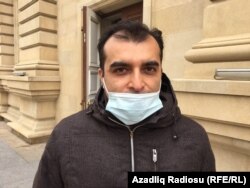
Ilqar Mammadov speaks to reporters on April 23 in Baku.
Ilqar Mammadov, chairman of the Republican Alternative Party (ReAL), and Rasul Jafarov, a prominent human rights defender and board member of ReAL, were acquitted by the Azerbaijani Supreme Court on April 23 after serving years in prison on charges that they and their supporters said were politically motivated. The EU greeted the court’s decision to acquit the two men and said that it “expects Azerbaijan to live up to its international commitments.” [see also: https://humanrightsdefenders.blog/2018/02/10/after-3-year-gap-eu-and-azerbaijan-meet-again-but-human-rights-remain-precarious/]
Rasul Jafarov
“This judgement, which overturns their previous convictions, is a welcome step that finally fully implements the respective decisions of the European Court of Human Rights. The European Union expects Azerbaijan to live up to its international commitments and to continue to implement the remaining decisions of the European Court of Human Rights,” the EU statement said. Mammadov, who served more than five years of a seven-year prison term, fought for his full acquittal since his early release in August 2018. He was detained in February 2013 and charged with helping stoke unrest in the town of Ismayilli, northwest of Baku. He was sentenced to seven years in jail in March 2014. Mammadov and his supporters insisted the case against him was politically motivated.
Jafarov was arrested in August 2014 and in April 2015 he was sentenced to 6 1/2 years in prison after a court in Baku found him guilty of tax evasion, illegal entrepreneurship, and abuse of office. He denied the charges, saying they were politically motivated. Jafarov was granted early release in March 2016 and worked on his full acquittal since then. [https://humanrightsdefenders.blog/2016/03/18/azerbaijan-pardon-jafarov-ismayilova-aliyev/]
The world has come together in the fight against a common enemy in COVID-19; a force so strong that it has knocked economies to the ground, turned our daily lives upside down and made us reflect on what really matters. Yetamidst the world’s lockdown, there are land grabbers and investors looking to take advantage of the situation. For them, there is no better time to strike than now.
This Earth Day, more than any other, it’s time to shine a spotlight on the everyday guardians of our planet, land and environment defenders, who stand at the front line to defend their land and territories from corporate or state abuse and unsustainable exploitation. They protect lands, forests and water sources, which provide their communities with good and healthy food, shelter and medicine.
By protecting such resources for the common good, they find themselves directly in the way of others who want to profit from these natural resources. If their lives were at risk before, this global pandemic has only exasperated an already difficult situation. When a community goes into lockdown, defenders not only become easier to target, they lose their right to protection and the world’s attention and that of the media, is elsewhere.
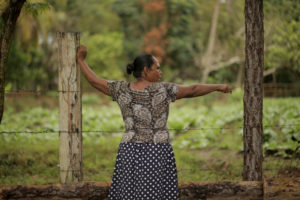
A Miskito woman in Nicaragua. Photo: Jason Taylor/ILC.
Defending land, ecosystems, and Indigenous rights has always come with immense risks.
More than three people were murdered each week in 2019 for defending their land and environment. Countless more were attacked or threatened. Only a year ago, the United Nations Human Rights Council adopted a landmark resolution, recognizing the importance of environmental human rights defenders and urging States to ensure their protection. Yet, as governments call states of emergencies and enforce new containment measures, even where national protection mechanisms for defenders exist, they are rendered futile.
Even worse, lockdowns are being used by irresponsible companies to further suppress defenders and by governments to give industries a free pass.
We saw evidence of this as the first cities in Colombia went into lockdown and three social activists were killed. Marco Rivadeneira, a high-profile activist, was murdered in the southern Putumayo province, Ángel Ovidio Quintero was shot dead in the western Antioquia region, and Ivo Humberto Bracamonte was killed on the eastern border with Venezuela. These follow more than six hundred murders of social activists in Colombia since the Peace Accords were signed.
While in Indonesia, two local land defenders have been killed and four arrested in connection with land disputes in Sumatra and Borneo, as mining and palm oil operations in rural areas continue on with business as usual and activists are told to stay home.
In Brazil, the country’s environment agency is withdrawing its enforcement staff because of the risk of contracting the virus. This move coincides with a 70 percent increase in deforestation compared to 2019. Many fear that loggers and land grabbers will take advantage of the lax policing, hoping for impunity. We are observing the same trend in other countries, all over the world.
The increased vulnerability of these defenders is palpable, and what’s happening, alarming. We must ask ourselves how we can ensure and promote their safety. UN Human Rights Experts have expressed grave concern on “the rise of reports of killings and other instances of excessive use of force targeting in particular people living in vulnerable situations”. Amnesty International has issued a series of recommendations to states in the Americas to ensure that their responses to COVID-19 are in line with their international human rights obligations.
In addition to appealing to States to maintain and reinforce their promises and protection schemes, there are some urgent steps that we need to take.
Develop an urgent real-time alert system for crisis situations to help people in danger. Where data is available, 80 percent of killings are preceded by a non-lethal attack or a threat on the affiliated group or community. So while environmental human rights defenders receive daily death threats, usually a sign for what’s to come, who will hear their cries for help?
A group of organizations belonging to the Defending Land and Environmental Defenders Coalition – among them, the Business and Human Rights Resource Centre, Frontline Defenders, Global Witness, the World Resources Institute and the International Land Coalition – are systematically monitoring COVID-related incidents in order to identify trends. Cases can be securely collected beginning Friday via LANDex, a global monitoring system dedicated to democratizing land data.
Particularly vulnerable are many of the world’s 320 million Indigenous peoples, whose territories are often rich in natural resources. Despite protecting more than 50% of the world’s land surface, they have formally recognized ownership over just 10%, which leaves them especially exposed. Governments and corporations should heedcalls for a moratorium on external activities in Indigenous territories without their express consent.
Beyond urgent measures, building longer-term resilience for these communities is essential so that they are not as vulnerable to increased harassment, threats, criminalization and eventually, killings. Secure land rights for local communities gives greater control over their own territories, and provides them with legal recourse when faced with harassment and attacks.
On this Earth Day, as we look forward to re-building a more sustainable world, we cannot forget those who have dedicated their entire lives – putting themselves and their families at risk – to do just that.
On 21 April 2020, – for the first time – a group of 14 former winners of the Martin Ennals Award for Human Rights Defenders rallied around their follow laureates lingering in jail. They signed a joint letter to the Permanent Representatives to the UN of Bahrain, China, Iran and the United Arab Emirates:
Your Excellencies:
As the COVID-19 pandemic spreads, we the undersigned, winners of the Martin Ennals Award for Human Rights Defenders, are calling for the release of all imprisoned human rights defenders around the world, who are at tremendous risk due to the virus. We add our voices to the calls of international leaders, of hundreds of civil society organizations and thousands of mobilized citizens, to grant clemency towards vulnerable prisoners during this health crisis, including our fellow award-winners who are imprisoned for their defense of human rights in four countries:
Despite the tragedy of lives lost and significant economic damage, we believe this crisis will also present opportunities for a better world. Now is the time to remedy the unjust detention of these individuals. By releasing our brothers and sisters – Ilham, Ahmed, Nabeel, Abdullah, and Nasrin – the leaders of your nations would demonstrate their capacity for mercy and responsibility. We therefore call on your government to free our fellow Martin Ennals Award winners immediately, as well as all human rights defenders in detainment, so that their physical integrity is ensured, and they can receive appropriate medical and psychological support.
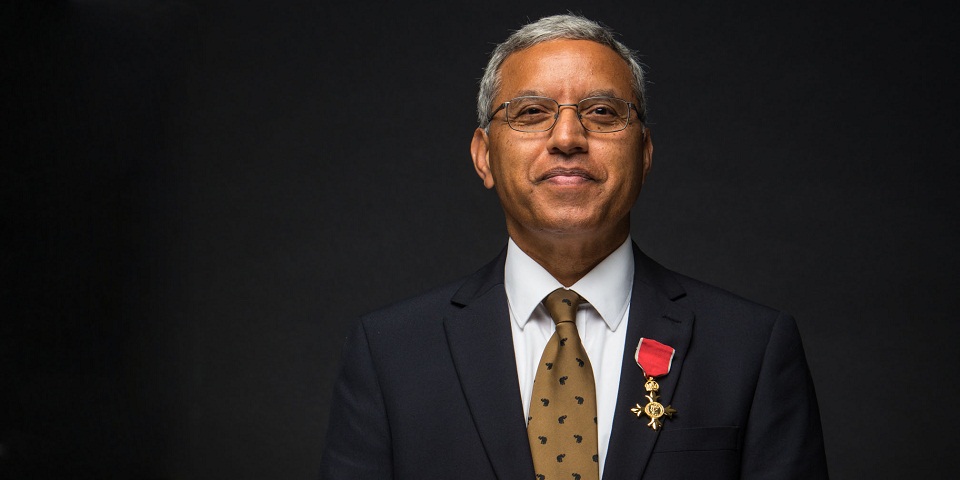
The University of Hull in the UK has awarded the degree of Doctor of Laws (LLD), honoris causa, to Professor Surya P. Subedi, QC, OBE, DCL in recognition of his accomplishments in the field of international law and human rights, the university said in a press statement. Professor Subedi had obtained an LLM with Distinction and a prize for best LLM student of the year in 1988 at Hull. Commenting on the award of such a high accolade by Hull, he said he was honored by the recognition of his accomplishments by his alma mater.
The 62-year-old professor was graduated from the Tribhuvan University, Nepal. Upon completion of his LLM, Professor Subedi won an FCO scholarship to study for a DPhil (PhD) in Law at the University of Oxford and obtained his degree with a prize in 1993. Last year, Oxford awarded him the highest degree – the Doctor of Civil Law in recognition of his contribution to international law and human rights.
This year the University of Oxford has established two awards in the name of Professor Surya Prasad Subedi. The first prize named Dr Surya Subedi Award in Human Rights Law will be given to the outstanding performer in the Human Rights Law (Bachelor’s degree) and the second award named the Dr Surya Subedi Award for the D Phil in Law will be given for the doctoral thesis adjudged the best in the Faculty of Law. Prof Subedi expressed his happiness over the establishment of two awards by one of the world’s distinguished universities in his recognition. .
Six hundred NGOs signed a statement saying “We are in this together, don’t violate human rights while responding to COVID-19“:
As governments are undertaking extraordinary measures to curb the spread of COVID-19, we recognise and commend the efforts states are making to manage the well-being of their populations and protect human rights, such as the rights to life and health. However, we urge states to implement these measures in the context of the rule of law: all responses to COVID-19 must be evidence-based, legal, necessary to protect public health, non-discriminatory, time-bound and proportionate.
All responses to COVID-19 must be deeply rooted in these cross-cutting principles: respect of human dignity, independence and autonomy of the person, non-discrimination and equality, and respect of diversities and inclusion. Any response must comply with international standards on emergency legislation and respect human rights and the rule of law. Extraordinary measures are legitimate only under exceptional circumstances, such as when there is an immediate threat to public health. These measures should be used in a necessary and proportionate manner and should be aligned to international human rights law.
To date, there are over two million confirmed cases of COVID-19 around the world. The next few weeks are crucial as measures put in place by states will determine the course of the pandemic. Resources will come under severe strain and there may be more shortages of personnel and protective equipment which will put countries under immense pressure. More cases may be reported which will lead to stricter measures being implemented by some states. Despite the challenges faced by governments across the globe, responses to the pandemic should not be used as a pretext to restrict civic space.
We are particularly concerned by states that are abusing emergency powers to place restrictions on fundamental rights, including freedom of expression and the right to access information. Across the globe, journalists, human rights defenders and other independent voices are threatened and punished for speaking out about the extent of the pandemic in their countries, or the measures adopted in response to COVID-19. These countries include Tajikistan, Niger, Egypt, Thailand, Saudi Arabia, El Salvador, Bangladesh and China. Other governments are adopting legislative measures to curtail fundamental freedoms, such as in Hungary, Armenia, Azerbaijan, and the Philippines. Some states are abusing their powers to suppress peaceful assemblies, including in Hong Kong.
Governments including India, Myanmar, and Bangladesh, have enforcedinternet restrictions and shutdowns which prevent many people from accessing vital information about how to protect themselves against the virus. These restrictions also negatively affect the growing number of people who are working remotely so that they can practice physical separation.
Access to information is critical in efforts to curb the spread of COVID-19. Governments must proactively share key information about the pandemic as soon as it is available, such as important decisions, the number of cases, availability of equipment and supplies, and clear advice. Information should be widely available to everyone, not just selected government officials or other intermediaries, as is the case in Uzbekistan. This ensures that individuals, communities and health workers can react quickly and responsibly to new information.
Migrants in detention centers, for example in Mexico and Greece, are living in dire conditions without access to adequate hygiene facilities. It is also impossible for them to practice physical distancing due to overcrowding. All asylum seekers who arrived in Greece since 1 March 2020 have been denied access to asylum. We commend states such as Portugal which have temporarily lifted restrictions on asylum seekers with pending applications. This ensures they have access to healthcare and social security in line with the rest of the population.
Women and children who experience or are at risk of domestic violence may be forced to remain in dangerous situations with an abusive partner or relative. At the same time, access to places of safety and support services may be reduced as shelters are impacted by public health measures and criminal justice resources are diverted.
We are concerned by governments confining persons with disabilities within institutions in several countries including France. This contravenes the UN Convention on the Rights of Persons with Disabilities and it places persons with disabilities at an increased risk of contracting COVID-19.
We are concerned by governments that have imposed restrictions leading to human rights violations against LGBT+ persons, including in Peru, Uganda, and Colombia. Governments need to ensure that their policies are inclusive and that all public officials are trained on LGBT+ rights.
Several countries have released prisoners as part of their response to curb the spread of the pandemic. These actions are commendable as congested detention facilities and prisons are high risk areas. We urge countries including Egypt, Bahrain, Kuwait, Iran, Israel, Libya, Morocco, Syria, Turkey, India, and the UAE to include human rights defenders, peaceful protesters and prisoners of conscience among those being released.
We are further concerned by the growing practice of monitoring and closely controlling people’s movements, even at the cost of their privacy. Efforts to contain the virus must not be used to expand systems of invasive digital surveillance. Israel and Taiwan are notable examples of how technological surveillance is being used in this context, and how disproportionate the impact of such measures may be when they are not strictly defined and limited.
The unprecedented challenges presented by COVID-19 present an opportunity for states and civil society organisations to work together to defeat the virus.
We urge states to be transparent and accountable: this will ensure that any measures adopted to prevent the spread of COVID-19 will be effective. Specifically, we urge states to:
Ensure all measures adopted in relation to the COVID-19 pandemic fully comply with states’ international human rights obligations, and that any associated restrictions on human rights are necessary, proportionate, inclusive and time-limited. Also maintain regular contact with civil society to ensure that new measures are in line with international standards.
Ensure that COVID-19 is not used as a pretext for imposing unjustified restrictions on civil society; it must not be used to target human rights defenders and journalists, and to facilitate authoritarian power grabs.
Ensure the pandemic is not used as an excuse to impose forced returns or refoulement in violation of international human rights law; or as a pretext to suspend or derogate from the fundamental right to seek asylum.
Ensure that the independent judiciary, and not other branches of government, decides on any measures limiting the access and operation of courts. Allow independent courts to evaluate any unlawful imposition or unjustified extension of emergency measures, or the unlawful curtailment of the rule of law.
Ensure that judiciaries and other relevant state authorities give particular consideration to urgent cases, where delay is most likely to cause irreparable harm, or where protective measures are required. This refers to: migrants (including asylum-seekers and refugees as well as internal migrants), women and children, LGBT+ communities, older persons, persons with disabilities, religious minorities and other vulnerable groups.
Release detainees; immediately and unconditionally release all human rights defenders and prisoners of conscience. This will ease pressure on the prison system and reduce the chance of the prison population, and the population more broadly, of contracting COVID-19.
Pay special attention to traditionally marginalised or vulnerable groups and ensure access to appropriate support, resources and protection mechanisms. Be aware of any issues relating to stigmatisation, exclusion, violence, hatred, labelling and the targeting of victims of COVID-19.
Ensure that no one is left behind in the national policies and strategies to deal with the COVID-19 pandemic. Make sure policies are inclusive and effectively protect against discrimination on any ground. Consider persons with a disability and make sure all information is delivered in accessible formats.
Apply a gender perspective in all policies relating to the COVID-19 pandemic.
Maintain reliable and unfettered access to the internet so that all have the right to access and share information. End all unjustified interference with internet connectivity.
Protect the role of independent media outlets and public interest journalism. Ensure that measures to contain the virus, as well as the fight against disinformation, are not used as a pretext to muzzle the media or regulate media freedoms.
Ensure any use of surveillance to track the spread of coronavirus is limited in purpose and time and abides by human rights safeguards. States should adhere to the rights of free expression, privacy, non-discrimination, confidentiality and protection of journalist sources.
To see the NGOs that have endorsed, follow the link below:
With all eyes on the pandemic it is easy to forget that “violence as usual” continues against human rights defenders. Here one case:
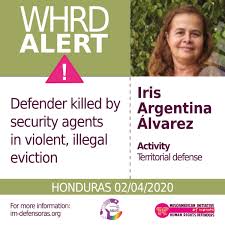
Human Rights Defender, Iris Argentina Álvarez, was killed on 2 April 2020, by private security agents from the company CRAE´S, employed by the La Grecia Sugar Mill. Her murder took place during a violent, illegal eviction in the Los Chanchos section of Marcovia, Choluteca in the South of Honduras. Community witnesses report that National Police officers were in the area when the aggressors opened fire against several families with many children. They affirm that the police did absolutely nothing to stop the violence that ended the life of the defender and left two other people wounded, including an underage child.
The Business and Human Rights Resource Centre attempted to contact La Grecia sugar mill but was not succesful and CRAE´S private security company did not respond.
Front Line Defenders just published ‘Dispatches 2019′ its annual magazine showcasing the work the organisation is doing to support human rights defenders. Together with Global Analysis 2019 (on which I reported already: https://humanrightsdefenders.blog/2020/01/14/front-line-defenders-global-analysis-2019-is-out-304-hrds-killed/),it offers a valuable reminder of the courage of human rights defenders in driving positive social change around the world and maintaining hope in the face of enormous adversity:
Over the last year, Front Line Defenders has continued to expand its support to human rights defenders most at risk. In 2019, FLD provided rapid and practical support to 2,307 human rights defenders and 366 organisations in 117 countries. Through the Protection Grants programme alone, FLD provided direct support through 626 grants totalling over euro 1.5 million to HRDs facing urgent threats, an increase of 17% compared to 2018.
As highlighted in its 2019-2022 Strategic Plan <https://www.frontlinedefenders.org/en/strategic-plan>, it is an organisational priority to support most-marginalised HRDs, including women human rights defenders, LGBTI rights defenders and defenders working on land, environment and indigenous peoples’ rights. Some examples of that commitment in 2019 include the provision of an unprecedented number of protection grants to environmental rights defenders (+51%), the presentation of the Front Line Defenders Annual Award to five LGBTI+ Rights Defenders, the beginning of a new learning and consultation process focused on defamation facing women human rights defenders at risk, and the publication (with Irish writing centre Fighting Words) of the anthology Yes, We Still Drink Coffee, Stories of Women Human Rights Defenders.



 Hans Thoolen on Human Rights Defenders and their awards