“With a deep appreciation for the Newcastle community and the significance of its football club, we have come to the decision to withdraw our interest in acquiring Newcastle United Football Club,” the group said in a statement. “Unfortunately, the prolonged process under the current circumstances coupled with global uncertainty has rendered the potential investment no longer commercially viable.”
The takeover bid had been condemned by Amnesty International and Hatice Cengiz, the fiancee of murdered journalist Jamal Khashoggi, over Saudi’s human rights record, putting pressure on the Premier League not to give it the green light in its owners’ and directors’ test.
“This is a victory for human rights and decency and clear defeat for Mohamed Bin Salman and his efforts to sportswash his human rights record,” said Cengiz in a statement.
“Let this defeat send a strong message to the leadership in Saudi Arabia that they will not be able to use their money to cover up their human rights record.”
In a joint statement published on 29 July 2020 entitled “Sri Lanka: Human Rights Under Attack” by Human Rights Watch and 9 other major NGOs confirms what many have been fearing since the presidential election of November 2019, [See: defenders-in-sri-lanka-fear-return-to-a-state-of-fear/]:
The United Nations, as well Sri Lanka’s partners and foreign donors, should immediately call for full respect, protection and fulfillment of the human rights of all Sri Lankans, and particularly to halt the reversal of fragile gains in the protection of human rights in recent years.
Numerous civilian institutions, including the NGO Secretariat, have been placed under the control of the Defence Ministry. Serving and retired military officers have been appointed to a slew of senior government roles previously held by civilians. The authorities have recently established military-led bodies such as the Presidential Task Force to build “a secure country, disciplined, virtuous and lawful society,” which has the power to issue directives to any government official. This represents an alarming trend towards the militarization of the state. Many of those in government, including the president, defense secretary, and army chief, are accused of war crimes during the internal armed conflict that ended in 2009.
Dissident voices and critics of the current government, including lawyers, journalists, human rights defenders and victims of past abuses, are being targeted by the police, intelligence agencies and pro-government media.
Since the presidential election in November 2019, anti-human rights rhetoric intended to restrict the space for civil society has been amplified by senior members of government. On 6 July 2020, at an election rally, Prime Minister Mahinda Rajapaksa stated that “NGOs will be taken into a special attention under the new government formed after the General Election, specifically, how foreign monies and grants are received to the NGOs from foreign countries and further, activities of the international organisations will be observed.” The government has also announced a probe into NGOs registered under the previous government.
In the months following the November 2019 presidential election, a number of organizations reported visits from intelligence officers who sought details of staff, programs and funding, in particular, organizations in the war-affected Northern and Eastern provinces of the country. Such visits are blatant attempts to harass and intimidate Sri Lankan civil society.
In February, the acting District Secretary in the Mullaitivu District (Northern Province) issued a directive that only non-governmental organizations with at least 70 percent of their activities focused on development would be allowed to work, effectively enabling arbitrary interference with and prevention of a broad range of human rights work. A Jaffna-based think-tank was visited several times, including soon after the Covid-19 lockdown, and questioned about its work, funding and staff details.
Lawyers taking on human rights cases have been targeted through legal and administrative processes and have faced smear campaigns in the media. Kumaravadivel Guruparan, a human rights lawyer, was a senior lecturer at the Faculty of Law at the University of Jaffna. He appeared as counsel on behalf of victims in the case of 24 Tamil youth who were subjected to enforced disappearance while in military custody at Navatkuli in 1996. In November 2019, Guruparan was banned by the University Grants Commission (UGC) from teaching law while also practicing in court. The ban was following a letter sent by the Sri Lankan army to the UGC questioning why Guruparan was permitted to engage in legal practice while being a member of the faculty. Guruparan resigned from the University on 16 July 2020.[ see also: https://humanrightsdefenders.blog/2020/01/02/sri-lankan-human-rights-defender-barred-from-legal-practice-appeals-to-supreme-court/
On 14 April, Hejaaz Hizbullah, a lawyer who has represented victims of human rights violations, was arrested under the draconian Prevention of Terrorism Act (PTA). He is being held illegally without charge and without being produced before a magistrate for over 90 days. He has had limited access to his lawyers and family members. The day before his arrest, Hizbullah joined others in submitting a letter addressed to President Gotabhaya Rajapaksa criticising the denial of burial rights to the Muslim community under Sri Lanka’s Covid-19 regulations.
Achala Senevirathne, a lawyer who represents families in a case involving the enforced disappearance of 11 youth in 2008, in which senior military commanders are implicated, has been attacked on social media, including with threats of physical violence and sexualized abuse. The police have failed to act on her complaints of threats to her safety.
On 10 June, Swastika Arulingam, a lawyer, was arrested when she inquired about the arrests of people conducting a peaceful Black Lives Matter solidarity protest. Other lawyers, not named here for reasons of security, have also been visited at their homes by security officials, or called in for lengthy interrogations linked to their human rights work.
Journalists and those voicing critical opinions on social media, have been arbitrarily arrested. The UN High Commissioner for Human Rights expressed alarm at the clampdown on freedom of expression, including the 1 April announcement by the police that any person criticizing officials engaged in the response to Covid-19 would be arrested. It is unclear whether there is any legal basis for such arrests. The Human Rights Commission of Sri Lanka has cautioned against “an increasing number of such arrests since the issuing of a letter dated 1 April 2020”.
Media rights groups have condemned the targeting of journalists since the presidential election, with threats of arrest, surveillance, and lengthy police interrogations linked to their reporting. Dharisha Bastians, former editor of the Sunday Observer newspaper and a contributor to the New York Times, her family, and associates, have been persecuted by Sri Lankan police in retaliation for her work. Since December 2019, authorities have attempted to link Bastians to the disputed abduction of a Swiss Embassy employee in Colombo. The government claims the alleged abduction was fabricated to discredit the government. Since Bastians had reported on the incident as a journalist, the police have obtained and published her phone records, searched her house, and seized her laptop computer.
On 9 April, a social media commentator Ramzy Razeek was arrested under Sri Lanka’s International Covenant on Civil and Political Rights (ICCPR) Act and the Computer Crimes Act. He approached the Sri Lankan police for protection following online death threats linked to his social media posts condemning all forms of extremism. Instead of receiving protection, he was jailed and denied bail. His hearing has been postponed, despite his failing health and the heightened risk posed by the pandemic in prisons.
The targeting and repression of journalists and human rights defenders is not only an assault on the rights of these individuals, but an attack on the principles of human rights and the rule of law which should protect all Sri Lankans. These policies have a chilling effect on the rights to freedom of expression and association, which are crucial for the operation of civil society and fundamental to the advancement of human rights. Those working on ending impunity and ensuring accountability for past crimes, and especially victims, victim’s families, members of minority communities, and networks in the Northern and Eastern provinces, are particularly at risk of intimidation and harassment.
The Sri Lankan authorities must end all forms of harassment, threats, and abuse of legal processes and police powers against lawyers, human rights defenders and journalists. Ramzy Razeek and Hejaaz Hizbullah must be released immediately. Human rights defenders living and working in Sri Lanka should be able to carry out their peaceful human rights work without fear of reprisals, which requires a safe and enabling environment in which they can organize, assemble, receive and share information.
While the government of Sri Lanka continues to deny Sri Lankans the ability to promote and defend human rights, particularly targeting members of civil society, we call upon the international community, including states and the United Nations, to demand that Sri Lanka live up to its international human rights obligations.
Sri Lankan human rights defenders, lawyers and journalists need to be protected now.
On 29 July, 2020 Just Security published a lengthy interview of World Justice Project Executive Director Elizabeth Andersen with Christof Heyns, Professor of Human Rights Law at the University of Pretoria and member of the United Nations Human Rights Committee. This is particularly important as a new new General Comment was issued just this week by the United Nations Human Rights Committee providing guidance on this topic at a critical moment, with protest movements on the rise across the globe, and many countries grappling with the appropriate response—something that has become even more complicated with the COVID-19 pandemic and public health restrictions on large gatherings.
The audio podcast is available at WJP. For those who pefere to read there is text version in the link below. Here a teaser:
Christof Heyns [00:13:17] I think the main idea is that peaceful assemblies are a legitimate use of the public and other spaces. If one thinks on a very sort of practical level, streets are used for vehicles, but they also are used for marathons and for markets and so forth. And they’re closed off on a Saturday or whatever the case may be for that purpose. And peaceful assemblies, like these other social gatherings, are a legitimate use of space. So a number of domestic courts–Spain and Israel and others–have said the public space “is not only for circulation but it’s also for participation”. And I like that quote; even in the translation it comes across. So that’s the underlying idea. It is, as you say, part of democracy.
It is also part of the message of the General Comment that peaceful assembly is an individual right. So one should not in the first place think about the entire assembly exercising the right — and is it violent or is it not, or does it cause damage, and as a result that everybody’s responsible — the focus is on the individual. And even if there are some individuals in a larger group who are, in an isolated way, engaged in violence, this cannot be attributed to the group as a whole. Every individual has that right. As far as possible, they should be treated as individuals.
I think also the underlying philosophy is to say that the right of peaceful assembly should be dealt with by the authorities in a “content neutral” way. As you will know, this idea is strongly present in the US jurisprudence, for example. So the idea is, even if those who are engaging in assemblies are your political opponents or you don’t like their particular message for whatever reason, they are still allowed to do so. There may be some exceptions and maybe we can talk about that. But in principle, the approach should be content neutral.
People should be allowed also to exercise the right “within sight and sound” of their target. So by doing that, they can demonstrate to others that they feel strongly enough about this to gather around this. But they can also, for themselves, see what is the support that they have. So if you organize an assembly, if you think you’re going to have a million people and it’s only yourself who shows up, that’s a message to yourself about the popularity and the support for your idea. In fact, Gandhi had this idea that what he did were “experiments with truth”. And I think to some extent that’s true for peaceful assemblies today. It’s a way of testing ideas and then seeing what is the response. Putting your toe in the water, putting up a trial balloon. And in many cases, this can diffuse a situation. So the society as a whole can take note and they can internalize the fact that there are people who feel very strongly about a certain cause and then they can do something about it. So it’s almost the idea of precaution. Even if I’m not persuaded, now, I know that these people feel like that, and I can do something about it instead of it blowing up into a massive problem.
….
Elizabeth Andersen [00:21:06] Well, it’s certainly an ambitious project you undertook and covers a lot of ground, with lots of standards and recommendations detailed. I think it’s interesting to think about how that all plays out in a concrete setting. And so you mentioned the Black Lives Matter movement and current protests, particularly here in the United States where I’m from. I’d be interested if you can share with our listeners how you see the Committee’s guidance helping us evaluate the response to that protest movement here in the United States. What’s appropriate? What’s not?
Christof Heyns [00:21:53] Well, I think a number of the themes of the General Comment are relevant in the United States and in other societies now as well. So the starting point is that this is an individual right. If there are members of a particular group of an assembly who are engaging in violence, this cannot be attributed to all members. In some cases, interventions are needed, not only permitted but actually required, if there is danger to the lives of people, for example, or to property. The state has a duty to protect, but that should be targeted as far as possible to the individuals concerned. These should be targeted interventions
I think the other overriding issue is the one of de-escalation. There are two approaches. One is to escalate the situation and to show superior force, so to speak. And, of course, if that’s done by the state, the other side also tries to show superior force, and it escalates. But the police themselves, and also the politicians, have a duty of de-escalation and to accommodate, to tolerate, some level of disruption, and to work towards preventing the situation from getting out of hand.
Perhaps more particularly, the General Comment also focuses on the use of military staff to do law enforcement – and I think much of that applies to paramilitaries as well. We don’t say this can never be done. But if it’s done, it is under exceptional circumstances, if there is no other way of doing it, and it should be on a temporary basis. And those who are involved must have the necessary training, including the human rights training, because, of course, the training of police and military staff differs very much. And then in the last place, they are bound by human rights standards. So the same standards that apply to the police also apply to military and paramilitary staff.
There’s also the issue of plainclothes police officers and the question of wearing identification. The General Comment emphasizes that law enforcement officials must wear clear identification. This is important for accountability purposes. If plainclothes police are used — and again, it’s not completely excluded, it may be the only way to have a positive intervention — before they use any force or arrest anybody, they have to identify themselves…..
More than half the killings were in Colombia and the Philippines and indigenous people made up 40% of the victims, the Britain-based group said inn its report. It was a significant rise on 2018, when 164 killings were recorded.
The threat from mining and large-scale agriculture caused the most number of deaths, with these sectors also responsible for worsening climate change impacts, Global Witness said.
“Insecure land tenure, irresponsible business practices and government policies that prioritise extractive economies at the cost of human rights are putting people, and their land, at risk,” said Rachel Cox, a campaigner at Global Witness.
“Land and environmental defenders play a vital role in protecting climate-critical forests and ecosystems. When they take a stand against the theft of their land, or the destruction of forests, they are increasingly being killed,” she said.
Latin America accounted for more than two-thirds of all victims last year, with Colombia the deadliest country of all, with 64 killings.
In Asia, the Philippines had 43 killings compared to 30 the previous year, with six in India, three in Indonesia and one in Cambodia, according to Global Witness.
Many more were attacked, arrested, threatened and sued, said Global Witness, which recorded killings in 21 countries.
In the Philippines – which was the deadliest country in 2018 – “relentless vilification” of activists by the government and impunity for attackers may be spurring an increase in killings, it said.
A spokesman for President Rodrigo Duterte did not respond to requests for comment.
At least 119 activists and farmers have been killed since Duterte took office in 2016, according to Global Witness, while local campaign groups put the figure at about 200.
Dozens of United Nations experts last month called for an independent investigation into human rights violations in the Philippines, including killings of farmers and indigenous people.
The coronavirus pandemic has accelerated the “downward spiral of the human rights situation”, and a new anti-terrorism bill could be used to target activists, they said.
“Days after the act was signed, the harassment of human rights defenders has visibly worsened,” said Cristina Palabay, secretary general of Philippine human rights advocacy group Karapatan.
“While rural communities, including indigenous peoples, grapple with the impact of COVID-19, they are constantly hounded by military operations that benefit mining corporations encroaching on their ancestral land,” she said.
Two of the country’s biggest agribusiness brands – Dole Philippines and Del Monte Philippines – earlier this year said they would review their processes to better protect land rights.
But attacks against activists during coronavirus lockdowns signalled more violence worldwide, Cox said.
“Governments around the world have used the crisis to strengthen draconian measures to control citizens and roll back hard-fought environmental regulations,” Cox told the Thomson Reuters Foundation.
A letter from Lawyers’ Rights Watch Canada called upon Zoom to ensure that the communications of its users are not similarly suspended or disrupted in the future. The group urged Zoom to establish a company policy to clarify how it intends to adhere to its international legal responsibility under the United Nations Guiding Principles on Business and Human Rights. The group also requested that Zoom refrain from blocking participation of users based on geography.
In June, Zoom suspended three accounts of activists based in the U.S. and Hong Kong in compliance with a request from the government of China, which claimed that the activists were trying to use Zoom to host meetings commemorating the anniversary of the Tiananmen Square massacre. Zoom then reinstated the accounts and said that it would not in the future permit such requests to affect individuals outside mainland China.
Despite the reinstatement of these accounts, the lawyers’ rights group took issue with Zoom’s plans to develop technology that will allow it to remove or block participants based on their location in response to requests from local authorities claiming that certain activity on the platform is prohibited based on their country’s laws.
“All international businesses, including Zoom, must ensure that all their users can enjoy the rights and freedoms afforded to them under international law,” wrote Joey Doyle, a director of Lawyers’ Rights Watch Canada and an author of the letter, in the organization’s press release. “This is particularly important in this present world where most communication takes place over online platforms such as Zoom.”
Zoom has an international law obligation to respect the rights to freedom of expression, association and assembly, the right to access information and the right to privacy, said Lawyers’ Rights Watch Canada, citing the International Covenant on Civil and Political Rights and the Universal Declaration of Human Rights as legal bases. The group also called attention to the U.N. Declaration on Human Rights Defenders, which recognizes the right of such defenders to advance the protection of human rights and fundamental freedoms.
Joshua Lam, another director of Lawyers’ Rights Watch Canada, and executive director Catherine Morris co-authored the letter, addressed to Eric S. Yuan, Zoom’s founder and chief executive officer, and Lynn Haaland, the company’s chief compliance and ethics officer.
Other leaders to receive the award this year include Dolores Huerta, founder and president of the Dolores Huerta Foundation and co-founder of United Farm Workers of America; Dan Schulman, president and chief executive officer of PayPal; and Dan Springer, chief executive officer of DocuSign.
“At a time when the courageous pursuit of equality and justice has become political and riddled with adversity, Robert F. Kennedy Human Rights stands with these modern-day human rights defenders in their inspirational fight for progress,” the organization said in an announcement on Monday
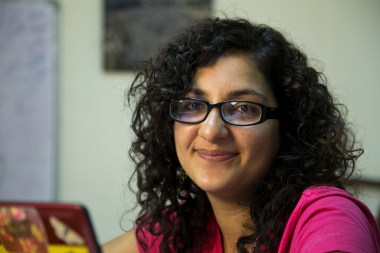
This is an open letter from MONA SEIF asking for your solidarity and support. It is long, but contains crucial details: My name is Mona Seif, I am an Egyptian HRD. Over the past few weeks the Egyptian regime has been escalating violent targeting of my family. If you are following the news from this art of the world then you know how most of the media platforms have been blocked and many journalists detained, harassed, or pushed into exile. So I am writing to you, hoping you will carry my voice and that of everyone facing injustice here.
Mona Seif, Egypt – Final Nominee MEA 2013
My brother Alaa Abdel Fattah has been in jail since last September. He was rearrested only 6 months after he got out of prison after completing a full five-years sentence. He has been in maximum security prison for 10 months in horrific conditions and daily violations of his rights, Egyptian laws and prison regulations. For the past months we have filed numerous official complaints, appealed to all sorts of entities here that have jurisdiction over the prison authorities, but none of them made any move to stop the violations or start a serious investigation. None of them made any attempt to bring us just a small bit of our rights.
On the night of Alaa’s arrival to Tora Maximum security prison 2 he was stripped of his clothes, blind folded, beaten and threatened that “He will never get out of here“, we have submitted an official report to the general prosecutor, we have repeatedly met with the head of his Human Rights adminstration, Alaa went on record in state security prosecution while reviewing his pretrial detention and testified in details on the torture he endured. Until now, not one serious move was taken regarding this horrific incident, and it was an intro to the kind of prison he will be locked in.
Since the crisis of Covid19 started, the Egyptian MOI has used it as an excuse to tighten the isolation of all prisoners, increase intimidation of prisoners and their families, and escalate in their deprivation of their basic rights. Since March 9th all visits have been completely banned in all prisons all over Egypt, however the families were not offered any alternative form of communication. We were not allowed phone calls with the prisoners, and most prisons are not allowing letters, even though both are explicit rights by the law, not to mention worrying times like these. Some prisoners were trying to get the word out about the deterioration of their health, about fear of Corona in prisons, the lack of proper information to help them understand the toll of the crisis and lack of sanitary measures indifferent Egypt, the only response the MOI had was clamping down even harder on those prisoners, punishing those who voiced out their concerns, all this while the arrests of more activists is ongoing and the arrest of doctors who talk publicly about their needs, problems and the reality of managing Covid19 within our health system.
With Alaa in particular, state security seems intent on preventing any sort of communication between us and him, even at times when they are allowing letters from other prisoners. Alaa went on a hunger strike on April12th and they did not even inform us. For a whole month during the covid19 emergency, my brother was on full hunger strike, my mother spent every morning at the prison’s gate and they did not allow us one letter to assure us of his well being. For every letter received we as a family paid a heavy price. We received a letter after Alaa ended his hunger strike on May 18th, and another on June 6th after my mother camped daily by Tora prison. Then the last one we got was on June 25th after we were violently assaulted and robbed right infront of Tora prison on the watch of their guards, and only after my younger sister Sanaa was abducted by plainclothed officers while entering the general prosecutor’s office- with her lawyer- to report the violent assault and officially document her injuries. Sanaa is now detained, and we haven’t been allowed any letters from her as well.
I think I’ve seen alot, I’ve witnessed so many violations committed by the current and previous regimes, but somehow I would have never imagined that a victim of a violent assault would be kidnapped by state security from the gates of the general prosecutor’s office as they are trying to seek his protection and file an official complaint regarding a very public incident like the one we were part of. And it definitely wouldn’t have occured to me that not only the general prosecutor would turn a blind eye on such a grave crime committed at his doorstep, but actually enable them to “legalize” her detention afterwards.
Both Sanaa and Alaa are in prison They, and thousands of prisoners, are at risk facing the combined danger of an epidemic and a brutal senseless regime. Please speak up on their behalf.. write about them, share their stories, add your name to the petition, or you can directly write a letter to Judge Hany Georgy the Head of Human rights administration at the general prosecutor’s office hanyfathy70@yahoo.com
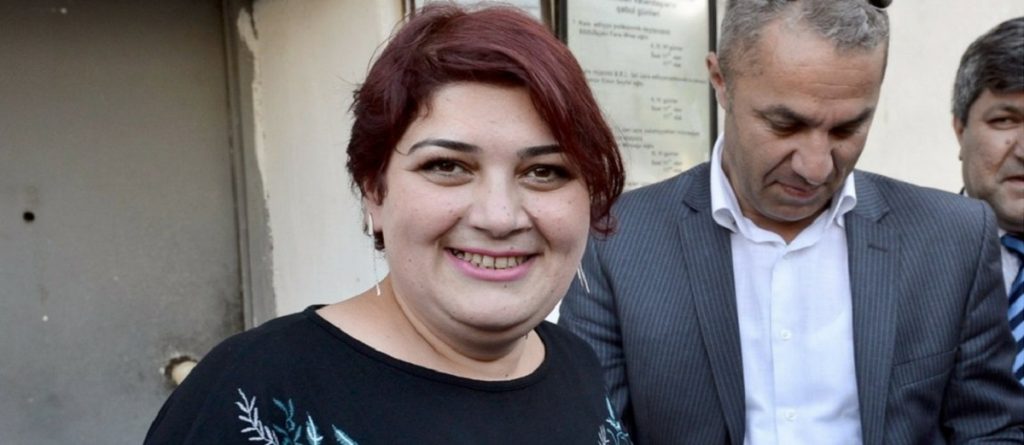
On 26.July 2020 Jam News comes the interesting news that the Azerbaijani investigative journalist Khadija ismayilovahas been offered a $250,000 cash award from Qatar’s Rule of Law and Anti-Corruption Centre. After looking into the activities of the centre and discovering the fund was created by the emir of Qatar, who had closed the center for investigative journalism in Qatar, Khadija Ismail declined the award.
Khadija Ismail
The journalist also added that the reason why the foundation wants to give her the prize is to keep famous journalists under its influence with this award: “Why me? They have been distributing the prize for three years, not a single famous person has yet agreed to receive the prize. It is the famous winners who legitimize such initiatives. I don’t want to sound immodest, but a friend explained to me that they need my name.
“I answered them. I said, thank you, I investigated the issue and do not believe in your sincerity, and I do not sell my reputation for money.”
By the decision of the European Court of Human Rights, in this case, the rights of the journalist, protected by Articles 5 (liberty and security of person), 6 (fair trial), 10 (freedom of expression) and 18 (limits on the use of restrictions on rights) of the European Convention were violated.For these violations, the Azerbaijani government as a whole must pay the journalist compensation to the amount of 25,000 euros, but the journalist says that she has not yet received this money.
Jul 25, 2020 Rights activist Azimjan Askarov, seen here holding one of his self-portraits in his basement prison cell in February 2012. (Photo: Nate Schenkkan)
EURasia.net of 25 July 2020 gives the sad new that Azimjan Askarov, a celebrated ethnic Uzbek humn rights defender, husband to Hadidja Askarova, has died in prison at the age of 69.
The news of his death on July 25 was confirmed by his longtime friend, supporter and fellow activist Tolekan Ismailova and his lawyer, Valeryan Vakhitov. He had suffered from poor health for much of his 10 years in prison, but his condition worsened significantly in the past two weeks. Vakhitov, who visited Askarov in prison only a few days before his death, said his client had lost his appetite, that his skin “looked yellowish in color,” and that he was unable to move unaided.
Although the likelihood of Askarov’s imminent death had been widely anticipated, the actual event has stunned his longtime colleagues and the rights community.
“I am devastated. When we saw one another for the last time, they broughthim to me in their arms. I told him: ‘Please hang on, we love you,’ and he began crying. He seemed to feel something,” Vakhitov told Kloop news website.
Askarov was arrested on June 15, 2010, in the immediate aftermath of a deadly whirlwind of ethnic unrest in southern Kyrgyzstan that killed hundreds, mostly ethnic Uzbeks.
In the days, weeks and months that followed that bloodshed, security services mainly targeted ethnic Uzbeks for investigations, arrests and systematic harassment. Askarov was among the first to be singled out for this treatment.
He was charged with purported involvement in the killing of a police officer on June 13, 2010, in the southern town of Bazar-Korgon. Immediately after his arrest, Askarov was beaten, subjected to abuse and denied access to his lawyer. He spoke about some of that mistreatment in an interview with Eurasianet in 2012, two years into his life sentence.
“They nearly killed me,” he said, referring to local police. “They held my arms behind my back, and took a weight filled with water, and hit me with it [in the stomach]. They hit me over the head with it so that huge lumps rose up.” He also said he saw witnesses beaten bloody to force them to testify against him….
In 2016, the Office of the United Nations High Commissioner for Human Rights found that Kyrgyzstan had in its treatment of Askarov violated multiple articles of the International Covenant on Civil and Political Rights.
Askarov’s initial criminal trial, as well as subsequent appeals, have been decried by legal experts as miscarriages of justice. Many supposed witnesses were intimidated into giving testimonies and people who would have spoken in his defense were denied that opportunity. Perhaps most ominously, hearings were routinely attended by relatives of the alleged murder victim, who openly threatened Askarov and his legal team with death. This pattern repeated over many years.
But as Philip Shishkin, a journalist, noted in his 2013 book Restless Valley, “of the many interesting things about the case, one detail stands out: the verdict relies heavily on the testimony of a half dozen policemen who had reasons to dislike Askarov even before his alleged participation in the murder of their colleague.”
Much of his 15 years of activism was focused on highlighting and documenting allegations of police abuse in his native Bazar-Korgon, including by some of the officers that then pursued his case…
In one typical rebuttal of criticism from 2015, the Foreign Ministry asserted that “the decision of the court was taken on the basis of undeniable evidence, Askarov’s guilt has been proven in all instances.”
“The Kyrgyz Republic stands for the supremacy of the law. The justice system is an independent branch of power,” the ministry said at the time.
There is strong reason to believe, however, that the government allowed itself to be taken hostage by the same kind of combustible, deeply violence-prone nationalist elements that lay behind the ethnic bloodshed of June 2010. Many notorious criminals have been allowed to walk free from prison in Kyrgyzstan over the decades, but as officials saw it, affording that same treatment to Askarov would have threatened to spark another cycle of unrest, immaterial of the legal particulars.
This reading was all but confirmed in an interview given to Eurasianet in 2018 by Roza Otunbayeva, who was interim president at the time of the ethnic unrest and Askarov’s arrest. Asked about the Askarov case, she evinced regret, but concluded that “it was a decision of our court. And this court’s decision was [upheld].” She did, however, have the authority to issue a pardon, which she declined to do.
“It was a decision that [would] again [have broken] the country,” she told Eurasianet. “I mean, the stability of the country, political consensus within the country was very much bound to such a touchy issue. And it was a very high price.”
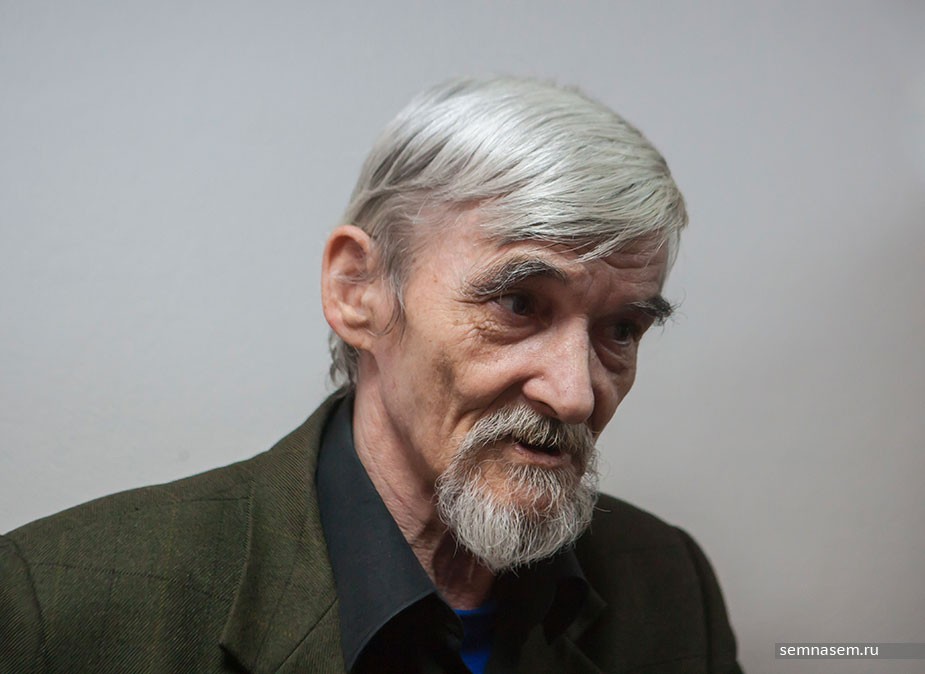
Expert on Stalin atrocities Yury Dmitriyev. Photo: Igor Podgorny, 7×7-journal.ru
The Moscow Times of 22 July 2020 carries a detailed report by Evan Gershkovich on Gulag historian Yury Dmitriyev who has spent decades calling attention to one of the darkest chapters in Russia’s history. He now faces up to 15 years in prison on sexual assault charges in a case his allies say has been trumped up to silence him. Acquitted of child pornography, Yury Dmitriyev now faces charges of sexual assault.
The Moscow Times profiled Dmitriyev in 2018:
Yury Dmitriyev normally hates Moscow. The concrete, the commotion, the pollution. As much as he can, he stays in Karelia, where he was born, raised and has spent his 62 years. In the northwestern region bordering Finland and the Baltic and White Seas, he can usually be found in the woods or in his study, writing.
Yet on a pleasant evening in mid-May, Dmitriyev, a prominent researcher of Soviet crimes, was happy to be in the metropolis. Accompanied by his elder daughter, Yekaterina Klodt, and his lawyer, Viktor Anufriyev, old friends greeted him with grins and tight hugs in a courtyard outside Teatr.doc, a progressive theater, ahead of a human rights awards ceremony.
One month earlier, Dmitriyev had been cleared of child pornography charges. Authorities had detained him in December 2016 after investigators found nude photos of his 11-year old adopted daughter; Dmitriyev said he took the photos to monitor her physical changes as she was prone to illness. From the outset, human rights defenders claimed that the case was fabricated to silence an outspoken activist.
If the arrest came as a shock to those who knew him, so too did his acquittal: Fewer than one percent of criminal defendants in Russia are cleared.
But authorities, human rights defenders now say, weren’t done with the historian just yet. Only a month after the awards night, a judge annulled the April decision, starting the trial anew.
Then, two weeks later, prosecutors brought additional charges to the table: This time they claimed that Dmitriyev had sexually assaulted his daughter. As of late June, the historian was back in jail facing another uphill legal battle, his freedom having been fleeting.
“The new charges are a chance for the prosecution to get it right,” Anufriyev said. “They failed the first time, so officials are giving them another chance to get the job done.”
Digging and documenting
Two decades ago, Dmitriyev discovered a set of mass graves in a Karelian forest containing the bodies of more than 9,500 victims of Josef Stalin’s Great Terror. Poring over KGB documents, the head — and sole employee — of Memorial’s Karelia branch spent the next 20 years documenting each victim’s story.
“What makes Yury unique is that he combines both the digging and the documenting,” said Sergei Krivenko, a colleague of Dmitriyev’s at Memorial and a member of the Presidential Human Rights Council. “Some people work on compiling books of names, some people search for the exact locations of the killings. No one has dedicated themselves to both the way Yury has.”
No one has dedicated themselves to both digging and documenting the way Yuri has.
Those who know Dmitriyev say he toiled everyday. “He’s been doing this work for the past 30 years, and I’m 33,” said Klodt, his elder daughter. “I’m so used to it that, for me, his work is no different than a dentist’s.”
Since the fall of the Soviet Union in 1991, historians say, the state has supported them in locating and memorializing the burial sites of the estimated 15 to 30 million victims of Stalin’s rule. At the location Dmitriyev discovered — Sandarmokh — local authorities helped build roads and erect monuments and aided with an annual gathering at the site.
But in recent years, human rights defenders say, the climate has become less hospitable. Those who spoke with The Moscow Times pointed to a resurgence in Stalin’s popularity as a significant reason: In June last year, Russians voted him the “most outstanding” person in history. In second place was President Vladimir Putin, who has accused the West of “excessive demonization” of the Soviet leader.
Others pointed to a surge in nationalism since 2014, when Russia annexed Crimea and got involved in Ukraine. “There were many foreigners killed at Sandarmokh — Norwegians, Poles, Finns and Ukrainians, including around 200 intellectuals,” Krivenko said. “This is a very important place for Ukrainians especially, and a delegation would visit the site annually.”
Dmitriyev organized the memorial visit every year on Aug. 5. He invited foreign delegations and led discussions, Krivenko said. After the events in Crimea and Ukraine, the discussions often turned to politics.
“I think this is why they went after him,” Krivenko said. He also pointed to an October 2016 decision to add Memorial to a register of “foreign agent” organizations that receive foreign funding. “I think this gave the local siloviki” — officials with ties to law enforcement — “a signal that they could go after us.”
Two months later, in December, Dmitriyev was first arrested.
Prison as a work trip
The day after the awards night, Dmitriyev was invited to speak with human rights students at the Sakharov Center, named after the Nobel Prize-winning human rights activist.
Klodt had come with him and complained that she wasn’t feeling well. “Maybe they should put you in prison for a year too so they can toughen you up,” her father joked.
Quick to laugh, thin and slightly disheveled, Dmitriyev presented an unimposing figure. But when the subject of his work came up, he turned deadly serious.
“I don’t fight the system. That’s a dead end, and I’m already old now,” he told The Moscow Times before the event. “I fight for memory. I fight so anyone who wants to can learn about their relatives, regardless of whether the government wants it or not. These people existed at some point. They worked and loved and had children. I’m for protecting the freedom of private life and of those memories.”
Without those memories, Dmitriyev continued, today’s generation cannot judge whether their government is laudable or acting improperly.
The people I dig up were in the same prison, walked the same halls and were behind the same bars.
“When a person knows the history of their family for multiple generations, they can understand what our state is doing right and what it’s doing wrong,” he said. “Called upon by the state to do this or that, they’ll say, ‘No, my great-grandfather was summoned in the same way and it ended badly for him. So maybe it’ll end badly for me as well.’”
Dmitriyev shrugged at the subject of his time in prison. “I don’t make a great tragedy out of that year,” he said. “I just think of it as a work trip. I’ve gained a better understanding of what my heroes — the people I dig up and write about — were thinking. They were in the same prison, walked the same halls and were behind the same bars.”
More difficult, he said, was being separated from his younger daughter. Dmitriyev himself was adopted, and at some point he decided he wanted to care for an orphaned child too. He hoped he’d be able to talk to her again by the end of the year. “It’s a humane policy by the prosecutor’s office,” he joked. Then he turned serious again: “I can handle it, I’m a tough person. But what about the child? She thinks everyone has abandoned her.”
Into the forest
After Dmitriyev was first arrested, the girl was taken in by her biological grandmother. Klodt said the family and the grandmother maintained regular communication. But when Dmitriyev was acquitted, Klodt said, the grandmother cut off all communication with the family. Then she sent a letter to the prosecution demanding the acquittal be overturned.
Anufriyev, Dmitriyev’s lawyer, believes that local authorities pressured her into writing the letter. He also says that the new charges of sexual assault are founded solely on a June 6 meeting between investigators and the girl during which, Anufriyev says, they coerced her into saying what they wanted. “They say they’re helping the child, but really they’re making her suffer,” he said.
Reached by phone, Tatyana Kordyukova, a spokesperson for the prosecutor’s office, said she couldn’t comment on the case and referred The Moscow Times to the Investigative Committee. The Investigative Committee, in turn, did not respond to requests for comment.
On July 25, the retrial of the first case will begin. The Investigative Committee is currently researching the new charges, a process which could take months. The original charges carry up to 15 years in prison; the new charges up to 20.
This time, though, Anufriyev says Dmitriyev is better prepared. “After his last stint in prison, he now knows that we can fight and win this thing,” he said.
Klodt, too, is ready for the fight. “I’m not constantly hysterical like last time,” she said. “I understand that something needs to be done. I’m not giving up.”
His colleagues say they won’t give up either. When Dmitriyev was first arrested, human rights defenders, artists and writers across the country spoke out for him and wrote letters to Putin. Still, they are sober about the possible outcome.
“This is the atmosphere for us right now,” Krivenko said. He pointed to the case of Oleg Sentsov, a Ukrainian filmmaker accused of terrorism after he had refused to accept the annexation of Crimea, and Memorial colleague Oyub Titiyev, who is also in prison on charges widely believed to be fabricated.
“The only good thing from all this is that the president is showing us how it all happened in the 1930s — how people were blamed, how siloviki read signals from the top,” Krivenko said. “We used to study this in archives, now we see it in real life.”
During his short stint out of prison, Dmitriyev returned to work. Anatoly Razumov, a historian and one of Dmitriyev’s closest friends, stayed at his house from the night before the acquittal was overturned until June 19. The entire time, he says, Dmitriyev worked on a book he had to put off when he was first arrested.
In May, asked if he would return to his work or if he feared doing so would anger certain parties, Dmitriyev was unmoved. “If you’re afraid of wolves, you shouldn’t go into the forest,” he replied.
This article first appeared in The Moscow Times and is republished in a sharing partnership with the Barents Observer.

 Rights activist Azimjan Askarov, seen here holding one of his self-portraits in his basement prison cell in February 2012. (Photo: Nate Schenkkan)
 Hans Thoolen on Human Rights Defenders and their awards
Christof Heyns discusses new UN Comment on Right of Peaceful Assembly
July 30, 2020On 29 July, 2020 Just Security published a lengthy interview of World Justice Project Executive Director Elizabeth Andersen with Christof Heyns, Professor of Human Rights Law at the University of Pretoria and member of the United Nations Human Rights Committee. This is particularly important as a new new General Comment was issued just this week by the United Nations Human Rights Committee providing guidance on this topic at a critical moment, with protest movements on the rise across the globe, and many countries grappling with the appropriate response—something that has become even more complicated with the COVID-19 pandemic and public health restrictions on large gatherings.
The audio podcast is available at WJP. For those who pefere to read there is text version in the link below. Here a teaser:
Christof Heyns [00:13:17] I think the main idea is that peaceful assemblies are a legitimate use of the public and other spaces. If one thinks on a very sort of practical level, streets are used for vehicles, but they also are used for marathons and for markets and so forth. And they’re closed off on a Saturday or whatever the case may be for that purpose. And peaceful assemblies, like these other social gatherings, are a legitimate use of space. So a number of domestic courts–Spain and Israel and others–have said the public space “is not only for circulation but it’s also for participation”. And I like that quote; even in the translation it comes across. So that’s the underlying idea. It is, as you say, part of democracy.
It is also part of the message of the General Comment that peaceful assembly is an individual right. So one should not in the first place think about the entire assembly exercising the right — and is it violent or is it not, or does it cause damage, and as a result that everybody’s responsible — the focus is on the individual. And even if there are some individuals in a larger group who are, in an isolated way, engaged in violence, this cannot be attributed to the group as a whole. Every individual has that right. As far as possible, they should be treated as individuals.
I think also the underlying philosophy is to say that the right of peaceful assembly should be dealt with by the authorities in a “content neutral” way. As you will know, this idea is strongly present in the US jurisprudence, for example. So the idea is, even if those who are engaging in assemblies are your political opponents or you don’t like their particular message for whatever reason, they are still allowed to do so. There may be some exceptions and maybe we can talk about that. But in principle, the approach should be content neutral.
People should be allowed also to exercise the right “within sight and sound” of their target. So by doing that, they can demonstrate to others that they feel strongly enough about this to gather around this. But they can also, for themselves, see what is the support that they have. So if you organize an assembly, if you think you’re going to have a million people and it’s only yourself who shows up, that’s a message to yourself about the popularity and the support for your idea. In fact, Gandhi had this idea that what he did were “experiments with truth”. And I think to some extent that’s true for peaceful assemblies today. It’s a way of testing ideas and then seeing what is the response. Putting your toe in the water, putting up a trial balloon. And in many cases, this can diffuse a situation. So the society as a whole can take note and they can internalize the fact that there are people who feel very strongly about a certain cause and then they can do something about it. So it’s almost the idea of precaution. Even if I’m not persuaded, now, I know that these people feel like that, and I can do something about it instead of it blowing up into a massive problem.
….
Elizabeth Andersen [00:21:06] Well, it’s certainly an ambitious project you undertook and covers a lot of ground, with lots of standards and recommendations detailed. I think it’s interesting to think about how that all plays out in a concrete setting. And so you mentioned the Black Lives Matter movement and current protests, particularly here in the United States where I’m from. I’d be interested if you can share with our listeners how you see the Committee’s guidance helping us evaluate the response to that protest movement here in the United States. What’s appropriate? What’s not?
Christof Heyns [00:21:53] Well, I think a number of the themes of the General Comment are relevant in the United States and in other societies now as well. So the starting point is that this is an individual right. If there are members of a particular group of an assembly who are engaging in violence, this cannot be attributed to all members. In some cases, interventions are needed, not only permitted but actually required, if there is danger to the lives of people, for example, or to property. The state has a duty to protect, but that should be targeted as far as possible to the individuals concerned. These should be targeted interventions
I think the other overriding issue is the one of de-escalation. There are two approaches. One is to escalate the situation and to show superior force, so to speak. And, of course, if that’s done by the state, the other side also tries to show superior force, and it escalates. But the police themselves, and also the politicians, have a duty of de-escalation and to accommodate, to tolerate, some level of disruption, and to work towards preventing the situation from getting out of hand.
Perhaps more particularly, the General Comment also focuses on the use of military staff to do law enforcement – and I think much of that applies to paramilitaries as well. We don’t say this can never be done. But if it’s done, it is under exceptional circumstances, if there is no other way of doing it, and it should be on a temporary basis. And those who are involved must have the necessary training, including the human rights training, because, of course, the training of police and military staff differs very much. And then in the last place, they are bound by human rights standards. So the same standards that apply to the police also apply to military and paramilitary staff.
There’s also the issue of plainclothes police officers and the question of wearing identification. The General Comment emphasizes that law enforcement officials must wear clear identification. This is important for accountability purposes. If plainclothes police are used — and again, it’s not completely excluded, it may be the only way to have a positive intervention — before they use any force or arrest anybody, they have to identify themselves…..
https://www.justsecurity.org/71736/interview-with-christof-heyns-unhrc-general-comment-37-on-the-right-of-peaceful-assembly/
Posted in books, Human Rights Defenders, UN | 1 Comment »
Tags: Christof Heyns, Comment, Elizabeth Andersen, freedom of assembly, freedom of demonstration, Just Security, peaceful protest, podcasts, UN Human Rights Committee, USA, World Justice Project