Author Archive

The risky lives of Human Rights Defenders during the pandemic

July 15, 2021

Meredith Veit in Open Global Rights of 14 July 2021 wrote how limitations on fundamental freedoms have been purposely and disproportionately used against activists who have refused to put their work on pause, even when the rest of the world was locking down.
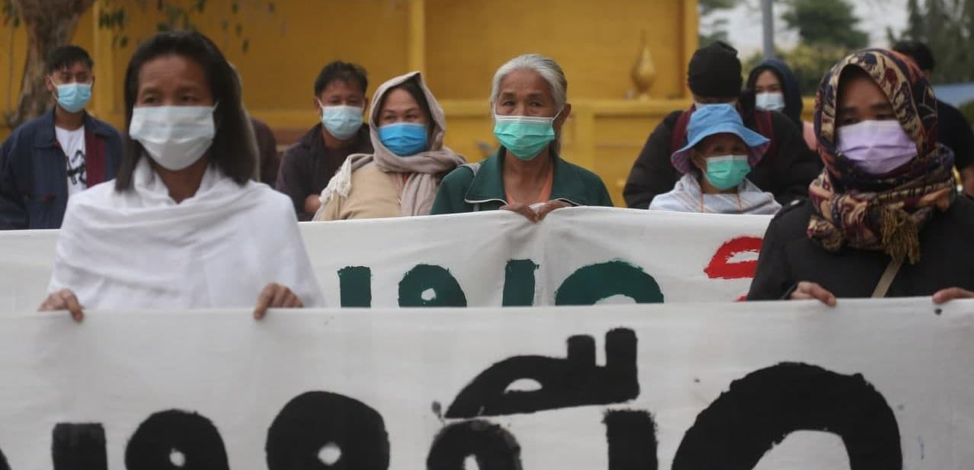
Human rights defenders march in Thailand after a peaceful protester was threatened by gunshots from a mine security officer in January 2021. Photo courtesy of Meredith Veit


“Risking your life for human rights during a pandemic” is part I of a three-part series on COVID-19 and human rights defenders.

Human rights defenders (HRDs) across the world have been exposed to a wide range of dangers and threats—from smear campaigns and harassment to arbitrary detentions, abductions, and assassinations. However, the outbreak of COVID-19 has worsened the conditions for a kind of work that is already extremely mentally, physically, and emotionally  arduous.

As outlined in Front Line Defenders’ most recent annual report, at least 331 human rights defenders were murdered in 2020 (an 8.8% increase compared to 2019). 

While certain restrictions have been necessary for containing the spread of a highly contagious virus, severe limitations on fundamental freedoms have been purposely and disproportionately used against activists who have refused to put their work on pause, even when the rest of the world was locked down.

At the onset of the pandemic, Protection International (PI) began conducting research via organisation-wide surveys to evaluate the impact of COVID-19 on the human rights defenders (HRDs) that we work with. PI works principally in 11 countries—Guatemala, Honduras, El Salvador, Nicaragua, Colombia, Brazil, Democratic Republic of the Congo, Kenya, Tanzania, Thailand and Indonesia. Our findings validate what many human rights practitioners had feared would happen: public health measures are being weaponized against HRDs; there has been a rise in both physical and digital threats and attacks; business interests continue to prevail over human rights; political prisoners continue to be detained and neglected amidst the emergency; and the right to defend human rights is gravely at risk. 

Just one month after lockdowns began, our staff reported that the public health crisis had swiftly exacerbated existing challenges–including heightened physical and digital surveillance, increased criminalization, illegal detentions, and arbitrary arrests. Rates of gender-based violence, including against women HRDs, skyrocketed, and the disproportionate burden of familial care on women rose. The needle on the risk-ammeter didn’t rise gradually; HRDs felt the shock almost instantaneously. 

First, we’ll discuss the most prominently worrying and overarching trend: government’s weaponizing COVID-19 restrictions against their own citizens.

During times of crisis, states lean heavily on law enforcement for the implementation of emergency measures, and due to misinterpretation of government mandates, or sometimes purposefully harsh directives, HRDs and journalists often face the brunt of their brute force. Nearly all PI teams reported that confinement measures have allowed for greater surveillance of defenders.

In Guatemala, for example, a staff member described an unusually persistent police presence outside of their home. In Colombia, our team reports that threats against defenders and their activities have increased, as the government excuses authorities who are acting out under the guise of necessity to control the spread of the virus. 

Towards the beginning of the pandemic, many states did not clearly delineate that press should be excluded from confinement orders. A year later, journalists and dissidents continue to be targeted, discredited, and censored through the veneer of spreading mis- or dis-information about the virus or the effectiveness of the government’s response. In Tanzania, for example, the late President John Magufuli did not acknowledge that COVID-19 was an issue of concern until February 2021 and two editors of independent newspapers said that “officials had informally told them not to publish material that the government would not like.”

Brazil has suffered a similar fate. President Bolsonaro has denied the legitimacy of the pandemic, and he “accus[ed] the press for the chaos that the country is experiencing to divert attention from his disastrous management of the health crisis,” explains Reporters Without Borders. Administrations who baselessly and sweepingly blame journalists and human rights defenders for the impacts of the pandemic are undoubtedly contributing to the rise in violence against them.

Latin America has historically been the region most riddled with killings of HRDs, and this pandemic year has been no exception. The case of Colombia is particularly disheartening, considering that it not only continues to be the most dangerous country in the world for HRDs, but also that the government’s response to the increase of violence and massacres during the pandemic has been to deploy “militarization” techniques. Strict confinement has limited HRDs’ access to protection networks, routes, and allies, especially those who have limited or no access to the internet. Armed actors have taken advantage of confinement measures to more easily locate and murder defenders. Somos Defensores reported a 61% increase in HRD assassinations during the first quarter of 2020 in comparison to the same period of 2019. According to the Institute of Studies for Development and Peace (INDEPAZ), at least 308 HRDs and social leaders have been killed in Colombia since the initial lockdowns began on 25 March 2020, including 83 in 2021. Many Colombian HRDs have used temporary relocation programs to find refuge, but towards the beginning of the pandemic, many of these programs were suspended due to travel restrictions. Once emergency evacuations started to be coordinated again, Colombia was the top country for HRD displacements in 2020.

Protection International Colombia has been working principally with Indigenous communities in the Orinoquía region in the east of the country, which continues to be largely neglected by emergency response and relief efforts. Many Indigenous HRDs are left worrying about basic needs such as health and food supplies, forcing defenders to side-line activities related to protecting their land and the environment. Restrictions on mobility and a lack of connectivity have particularly impacted rural HRDs, especially women. “The already enormous burden of familial and household care that falls on women’s shoulders has increased dramatically. Furthermore, they are more exposed and left vulnerable to domestic violence, since, if there is a cell phone in the house, the man normally has it,” explains Aída Pesquera, PI Representative in Colombia. “All of this notably limits them in the exercise of their human rights work.”

Protection International has been working with local leaders to provide cell-phone data to ensure defenders are able to communicate with their protection networks, provide support to communities by facilitating their access to the internet, as well as carry on with their ancestral self-protection practices. “We support them to move to a place where they can safely connect, and we hold virtual workshops every week on protection,” says Pesquera, “We also provide didactic material that they can use autonomously between sessions.”

While Indigenous groups in Colombia and Brazil were hit hardest by the pandemic, they are not yet on the list of prioritized groups for receiving the vaccine even though roll-out has officially begun.
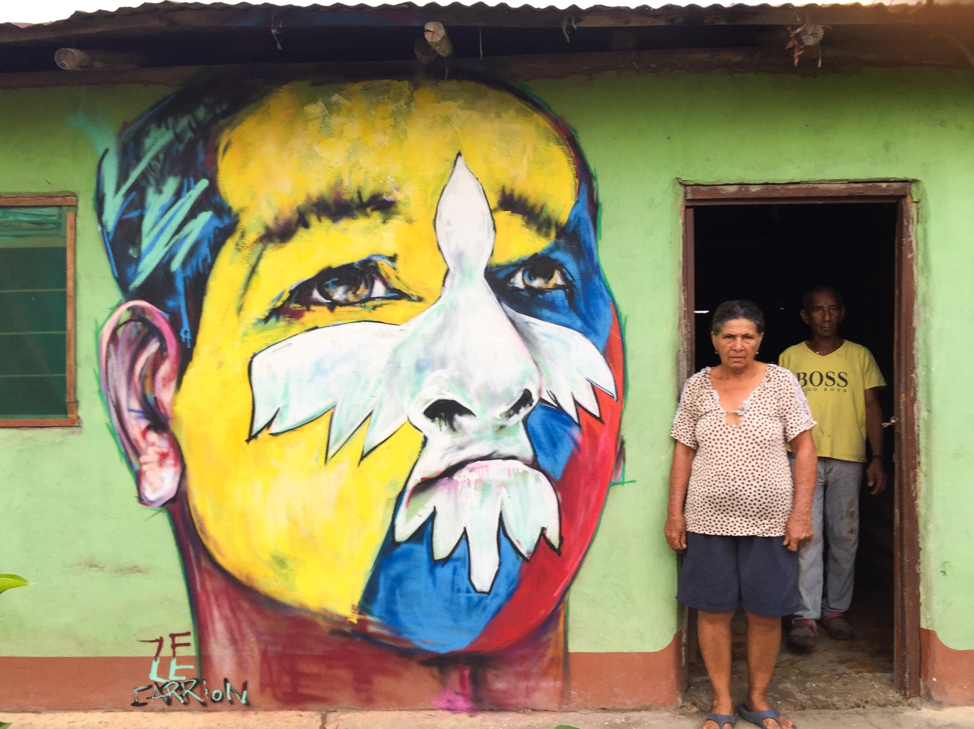
Woman from a rural area of Colombia stands near a mural (2019). Photo courtesy of author

Since we began collecting data, these issues have persisted or even worsened over time. While vaccine inoculation may be on the horizon for some, the reality is that many HRDs are not anywhere near the top of national priority lists for receiving it. We expect that HRDs will continue to work in confrontation with the obstacles listed above for the remainder of 2021, at least.

Human rights groups have been shouting this since March 2020, but we have not yet reached a point where we can stop repeating it: The pandemic cannot be used as a pretext to unjustifiably curtail fundamental rights and freedoms. Governments have no excuse for overtly obstructing the right to defend human rights. One year later, we continue to call on the international community to protect and uphold human rights, especially in times of crisis when they are most at risk of being undermined. Many of us have settled into our routines of the “new normal,” but normalizing these abuses is dangerous. We must continue to speak out. We urge governments around the world to ensure the safety of defenders and to guarantee their right to freedom of expression and their right to defend human rights, even within the context of restrictions that are necessary and proportional.

Meredith Veit is a writer, researcher, multimedia storyteller, and human rights advocate. Her topics of special interest include the right to defend human rights, freedom of the press, digital security, and technology.


https://www.openglobalrights.org/risking-your-life-for-human-rights-during-a-pandemic/

https://www.lutheranworld.org/news/protect-civic-space-post-pandemic-recovery
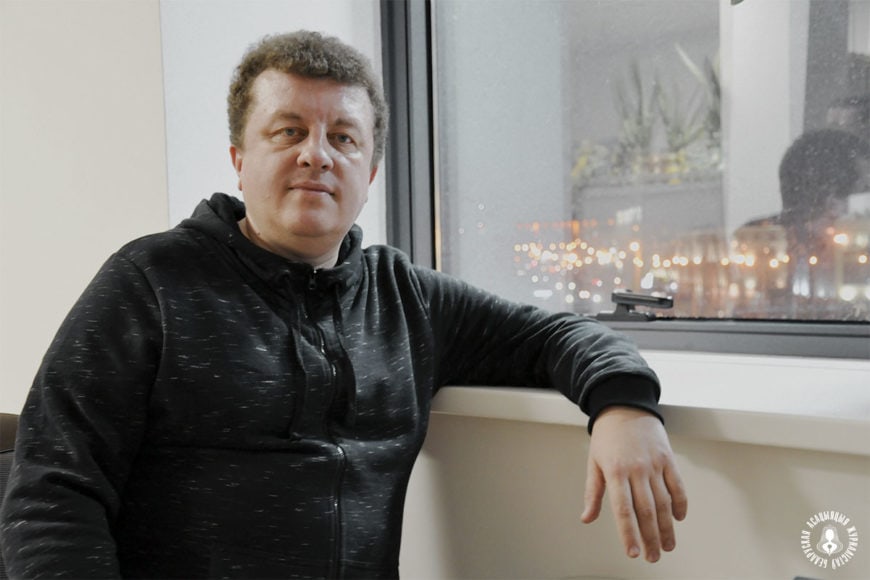
Call for the Immediate Release of Human Rights Defender Andrei Aliaksandrau in Belarus

July 14, 2021

Thirteen Organisations Call for the Immediate and Unconditional Release of Journalist and Human Rights Defender Andrei Aliaksandrau - Protection

Image credit: Volha Khvoin / BAJ

On 2 July 2021, ARTICLE 19 and 12 other media freedom organisations unreservedly condemn the arbitrary detention and judicial harassment of human rights defender and journalist Andrei Aliaksandrau, who is now facing up to 15 years in prison on baseless charges of “treason to the state”. See also: https://humanrightsdefenders.blog/2021/07/06/anais-marin-un-expert-on-belarus-full-scale-assault-ongoing-against-civil-society/

Aliaksandrau has long been a defender of freedom of expression in Belarus and beyond, having previously held positions at the Belarusian Association of Journalists, Index on Censorship, and Article 19 among other media and free speech organisations.

Aliaksandrau was detained in January 2021. The Investigative Committee, Belarus’s criminal investigation service, indicted him on public order offences, for which he was facing up to three years in prison. The charges stem from allegations that Aliaksandrau paid the fines of journalists and protesters whom authorities detained during last year’s pro-democracy protests, triggered by the highly disputed August 2020 presidential election. The Belarusian Investigative Committee and other law enforcement agencies wrongly equated this with financing unlawful protests.

On 30 June, Belapan reported that Aliaksandrau has now been charged with “treason to the state” based on the same set of allegations. 

“More than €530,000 worth of fines were imposed on protesters between 9 August and the end of 2020. It is absurd to conflate efforts to help pay those fines with a public order offense, let alone treason,” the organisations said. 

Belarusian authorities created a new mark of tyranny by laying treason charges against Aliaksandrou. While we urge the release of all 529 political prisoners currently detained in Belarus, which include at least 15 journalists, we are at this point in time expressing special concern for Aliaksandrau. To date, he is the only detainee facing the fabricated charge of treason.”

Aliaksandrau has already spent 172 days in prison for his alleged “crime”. We call for his immediate and unconditional release,” the organisations said.

Signed by:

ARTICLE 19

East European Democratic Centre (EEDC) 

European Centre for Press and Media Freedom

European Federation of Journalists (EFJ)

Free Press Unlimited (FPU)

Human Rights House Foundation (HRHF)

Human Rights Watch

IFEX

Index on Censorship

International Media Support (IMS)

PEN America 

Reporters Without Borders (RSF)

South East Europe Media Organisation (SEEMO)

https://www.article19.org/resources/call-for-release-of-andrei-aliaksandrau/

https://www.hrw.org/news/2021/07/15/belarus-unprecedented-raids-human-rights-defenders

https://www.fidh.org/en/issues/human-rights-defenders/belarus-coordinated-searches-and-detentions-of-journalists-and-human

https://www.fidh.org/en/region/europe-central-asia/belarus/belarus-following-the-adoption-of-the-un-resolution-valiantsin

https://www.aljazeera.com/news/2021/7/16/belarus-police-raid-homes-of-journalists-in-continuing-crackdown

Human rights lawyer Semyon Simonov convicted under Russia’s foreign agents law

July 14, 2021

Nadia Murray-Ragg of Victoria U. Wellington Faculty of Law, in New Zealand reports on 12 July 2021 that human rights defender and lawyer Semyon Simonov was convicted under Russia’s foreign agents law in a controversial criminal trial on Sunday.

In December 2016, Russia designated the Southern Human Rights Center (SHRC) as a foreign agent, considering it to be engaging in political activity. The SHRC is an organization providing pro bono legal services on human rights issues in Russia. Given this status, Russian law required the SHRC to register as a foreign agent. According to Human Rights Watch (HRW), “foreign agent” connotes being a traitor or spy. [see: https://humanrightsdefenders.blog/2019/11/19/russias-foreign-agents-bill-goes-in-overdrive/]

In February of 2017, Russia fined the SHRC for its failure to register. A Russian court determined Simonov, the President of the SHRC, would be held liable to pay the fine in July of 2019 following the SHRC’s non-payment. Sunday’s ruling imposed a sentence of 250 hours of community service onto Simonov for failure to pay the fine.

Simonov has a long history of championing for human rights. He has documented the human rights violations endured by migrant workers preparing for the 2018 FIFA World Cup and the 2014 Winter Olympics.

Simonov’s criminal case has been heavily criticized by the human rights community. HRW’s Russia Researcher, Damelya Aitkhozhina, said “The criminal case against Semyon Simonov has been a sham from start to finish. It’s shocking and abhorrent that the authorities wasted so much time and resources on a case in which the accused did nothing but help people protect their rights.

Similarly, the country’s foreign agents law itself has faced calls for repeal. It has been criticized for quashing dissent and undermining the United Nations’ Declaration on Human Rights Defenders which provides in article one that everyone has the right “to promote and to strive for the protection and realization of human rights”.

The ‘foreign agents’ law is nothing more than a tool of repression,” said HRW. “[I]t should be immediately repealed.” See also: https://humanrightsdefenders.blog/2021/01/11/five-individuals-now-listed-as-foreign-agents-in-russia/

Radio Free Europe/Radio Liberty filed a lawsuit challenging the country’s foreign agents law, citing concerns about the controversial law’s “profound chilling effect”.

https://www.jurist.org/news/2021/07/russia-court-convicts-human-rights-lawyer-under-foreign-agents-law/

Remembering Suha Jarrar, young Palestinian Rights Defender

July 13, 2021

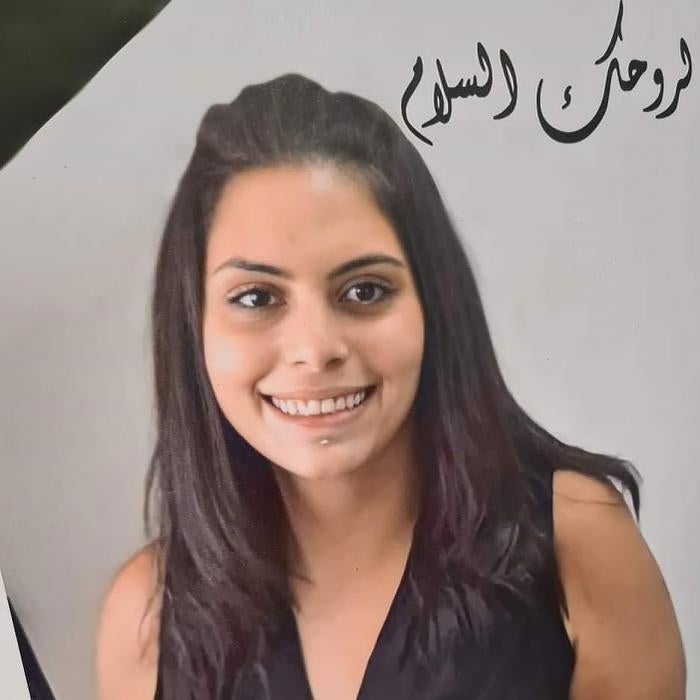
Omar Shakir wrote an obituary for Suha Jarrar, research and advocacy officer at Palestinian human rights organization al-Haq, who died at her home in Ramallah in the Israeli-occupied West Bank. Over her 31 years, Suha made an indelible impact on human rights advocacy in Palestine. He added that the Israeli Authorities should allow the detained mother, Parliamentarian Khalida Jarrar, to attend the funeral

A picture of Suha Jarrar and flowers prepared by the staff of the Palestinian human rights group al-Haq and displayed at a commemoration for Jarrar in Ramallah in the Israeli-occupied West Bank on July 12, 2021 
A picture of Suha Jarrar at a commemoration for Jarrar in Ramallah in the Israeli-occupied West Bank on July 12, 2021 © 2021 al-Haq

Suha conducted innovative research on the environmental impacts of the Israeli occupation, including a 2019 report arguing that discriminatory Israeli policies and practices impede the ability of Palestinians in the occupied West Bank to adapt to climate change. As point person on gender issues for al-Haq, she represented the organization when the United Nations Committee on the Elimination of Discrimination against Women deliberated on the situation of women in Palestine. She researched, advocated, and fearlessly pushed to mainstream within Palestinian civil society the full range of rights issues related to gender and sexuality, even where perilous and proscribed.

Suha died without her mother nearby, since Khalida Jarrar sits in an Israeli jail. For most of the last six years, Israeli authorities have detained Khalida, a 58-year-old elected member of the Palestine Legislative Council, over her political activism with the Popular Front for the Liberation of Palestine (PFLP). One of the more than 400 organizations that Israeli authorities have outlawed, the PFLP includes both a political party and an armed wing. The armed wing has attacked Israeli soldiers and civilians. Israeli authorities have never charged Khalida with involvement in armed activities.

Khalida spent long stretches, including between July 2017 and February 2019, in administrative detention without trial and charge. In March 2021, an Israeli military court sentenced her to two years in prison for “membership in an unlawful association,” based on a plea deal, with Israeli military authorities acknowledging that she “did not deal with the organizational or military aspects of the organization.” Detaining Khalida over her political activism violates her freedom of association, as Human Rights Watch has documented. The suspension of civil rights to the millions of Palestinians living in the Occupied Palestinian Territory is a central part of the Israeli government’s crimes against humanity of apartheid and persecution.

Suha’s infectious smile never faded, even though for much of her adult life, her mother was unjustly behind bars. Israeli authorities have reportedly denied a request for Khalida to attend Suha’s funeral. Having repeatedly detained Khalida in violation of her rights, Israeli authorities should at minimum allow her to say goodbye to her daughter.

https://www.hrw.org/news/2021/07/12/remembering-suha-jarrar-trailblazing-palestinian-rights-defender

Carmel Budiardjo: human rights defender from Indonesia dies

July 12, 2021

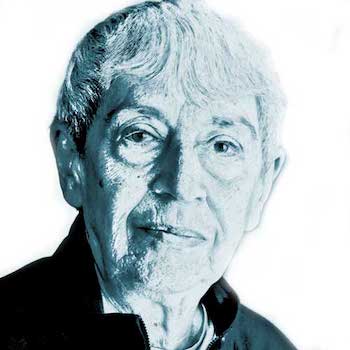
A leading human rights advocate and former political prisoner in Indonesia, Carmel Budiardjo, has died, aged 96.

Carmel Budiardjo played a leading role in reporting human rights violations in Indonesia, including in West Papua, Timor-Leste, and Aceh province. She had herself been jailed without trial in 1968 for three years under the government of General Suharto, while her Indonesian husband was jailed for twelve years. They had been caught up in an anti-communist purge led by Suharto, having been arrested in 1965 on charges of involvement in an attempted coup against his predecessor President Sukarno. See: https://www.trueheroesfilms.org/thedigest/laureates/3BDAA6C3-CFA6-444F-7F15-77D914ACFA8B

After being released she was deported to England, where in 1973 she founded TAPOL, which stands for ‘tahanan politik’ or ‘political prisoners’ in Bahasa Indonesian.

For decades, the NGO has campaigned for the release of poilitical prisoners in Indonesia, including many who have been incarcerated in Papua merely for exercising their basic rights such as to freedom of expression or assembly.

Over the next three decades, TAPOL’s work widened to also address broader wider issues of human and environmental rights, peace and democracy in Indonesia.

According to prominent journalist John Pilger, Budiardjo’s “tireless work saw the release of political prisoners in Indonesia and gave crucial support to the heroic (independence and human rights) struggles in East Timor and West Papua“.

Despite the brutal repression of human rights activism by Suharto’s New Order regime, Budiardjo and TAPOL built an extensive network and collaborated with brave human rights defenders and pro-democracy campaigners in Indonesia.

Budiardjo raised international attention towards the 2004 assasination of Indonesian human rights campaigner, Munir Said Thalib, after whose death a lethal dose of arsenic was identified in his body.

Around the same time she launched a campaign demanding an international embargo against the British government selling arms to Indonesia when Indonesian militrary forces had launched a major offensive to crush the Free Papua movement.

She remained an active campaigner well into her 90s, concerned with the plight of political prisoners in Papua and throughout the Indonesian republic

The author of several books, Carmel Budiardjo is remembered as an inspirational defender of human rights.

https://www.rnz.co.nz/international/pacific-news/446720/carmel-budiardjo-rights-defender-who-shone-a-light-on-papua

The 3 human rights lawyers shortlisted for the L4L award

July 12, 2021

Lawyers from Myanmar and Belarus, and a lawyers’ collective from Algeria are shortlisted as finalists for the 2021 Lawyers for Lawyers Award. The 2021 Award will be presented to the laureate during a seminar hosted by Lawyers for Lawyers and the Amsterdam Bar Association in Amsterdam on 18 November 2021. The ceremony will also be live-streamed.

For more on the Lawyers for Lawyers Award and other awards for lawyers see: https://www.trueheroesfilms.org/thedigest/awards/B40861B3-0BE3-4CAF-A417-BC4F976E9CB0 .

The expert jury selected U Khing Maung Zaw from Myanmar, the Collective for the Defence of Hirak Detainees from Algeria and Maksim Znak and Liudmila Kazak from Belarus as finalists for the Award. The laureate of the Award will be announced later this year.

About the finalists

  • In Myanmar, U Khing Maung Zaw has courageously upheld the rule of law for more than five decades. He is currently representing leaders of the recently deposed Myanmar government and a number of other persons who have been arbitrarily detained on politically motivated criminal charges associated with the military coup in Myanmar beginning 1 February 2021. In this context of repression and danger, U Khin Maung Zaw remains committed to representing his clients.
  • Since February 2019, grassroots peaceful protests (the “Hirak”) have called for genuine democratic reform and rule of law in Algeria. In response, the government launched a campaign of arrests and judicial harassment against all those associated with this movement. The Collective for the Defence of Hirak Detainees, formed in July 2019 after the first wave of arrests, voluntarily and tirelessly defends those arbitrarily prosecuted, especially from marginalised backgrounds who cannot afford legal support.
  • In the aftermath of the 2020 presidential elections in Belarus, lawyers working on politically sensitive cases or cases of human rights violations were subjected to pressure, harassment and intimidation in connection to their professional activities. Maksim Znak and Liudmila Kazak represented human rights defenders and opposition leaders, and are paying a high price for their work. On 9 September 2020, Maksim Znak was taken into custody and is still being detained. On 19 February 2021, Liudmila Kazak was disbarred.

Israel and the international crime of Apartheid: a response by Human Rights Watch worth studying in full

July 9, 2021

EJIL Talk!, the Blog of the European Journal of International Law, last week had a symposium (see: https://www.ejiltalk.org/), which has addressed a number of legal issues arising from HRW’s report released in late April 2021 “A Threshold Crossed: Israeli Authorities and the Crimes of Apartheid and Persecution.” This report has received significant media attention.

See also: https://humanrightsdefenders.blog/2021/01/18/israel-and-apartheid-israeli-human-rights-group-stirs-debate/ and https://humanrightsdefenders.blog/2021/05/10/israeli-government-sponsored-app-goes-after-hrw-for-apartheid-categorisation/

On 9 july 2021 Clive Baldwin, Senior Legal Adviser of HRW, uses the opportunity to contribute to a substantive discussion focusing primarily on the implications of the report for the broader international legal discourse.

After detailed discussion of the international LEGAL aspects, he concludes:

The discussion demonstrates the importance of considering the term “apartheid” under international criminal law as a specific crime against humanity, together with the closely related crime against humanity of persecution. This requires a legal understanding of its definition and constitutive elements, as well as of ways to apply it. To even begin the process of criminal justice, prosecutors – and in particular those at the ICC – will first need to understand and investigate these crimes. Legal discussions like this symposium can, we hope, help advance this objective. These are crimes against humanity that have been neglected for too long.

https://www.hrw.org/news/2021/07/09/human-rights-watch-responds-reflections-apartheid-and-persecution-international-law

Don’t let Tajikistan human rights defender Yorov celebrate his 50th birthday in jail!

July 9, 2021

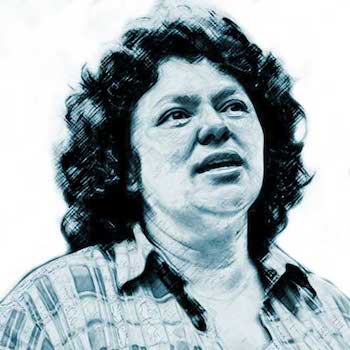
Buzurgmehr Yorov, a Tajikistani human rights lawyer (Photo supplied)Buzurgmehr Yorov, a Tajikistani human rights lawyer (Photo supplied)
IPHR 0 Comments

On 9 July 2021, Buzurgmehr Yorov, a Tajikistani human rights lawyer and outspoken critic of the government, risks to mark his 50th birthday behind bars. Yorov was wrongfully imprisoned in September 2015 and sentenced to 22 years on trumped-up charges. [see: https://www.trueheroesfilms.org/thedigest/laureates/00187e62-3527-4167-93e2-45c84b098562]. Human rights organisations CIVICUS and the International Partnership of Human Rights (IPHR) call for his immediate and unconditional release.

In 2015, Buzurgmehr was arrested after representing members and leaders of the banned opposition party, the Islamic Renaissance Party of Tajikistan (IRTP). Following his arrest, he was interrogated for ten hours and allegedly beaten. He was then detained for eight months before his trial began – during this time he was physically abused and held in solitary confinement on many occasions.  

In a series of closed and unfair trials held between October 2016 and August 2017, the human rights lawyer was convicted on various charges, including overthrowing the government, inciting unrest, and insulting the President and government officials. Although his sentence was reduced by six years in November 2019 to mark the 25th anniversary of Tajikistan’s constitution, he is currently being held in the Strict Regime Prison Colony No.1 in Dushanbe.

In May 2019, the UN Human Rights Council concluded that Buzurgmehr’s arbitrary detention is against international law, and it called on the Tajikistan authorities to release him immediately.  See also: https://humanrightsdefenders.blog/2019/09/29/in-tajikistan-lawyers-have-to-be-human-rights-defenders/

“The Tajikistani authorities use intimidation, harassment, arbitrary arrest, threats and criminal prosecution to pressure independent lawyers to drop or refrain from taking up cases and issues considered to be politically sensitive. Burzurgmehr Yorov was brave enough to try to do his job despite this pressure. The international community should urge the Tajikistani authorities to implement UN recommendations and release him immediately,” said Brigitte Dufour, Director of IPHR. 

Buzurgmehr has repeatedly been subjected to torture and ill-treatment in detention, including severe beatings and periods in solitary confinement. His family are particularly concerned about his health during the COVID-19 pandemic, as several fellow prisoners have contracted the virus and died.  

Buzurgmehr Yorov has been a vocal critic of government abuse and has been awarded numerous international prizes in recognition of his contribution to democratic and civil rights in Tajikistan. After founding Sipar law firm in 2007, he frequently represented government critics and provided legal assistance to victims of human rights violations. 

Buzurgmehr’s family recall one occasion before his detention – when the police demanded he accompany them to the station, Buzurgmehr replied, “Here, in the office of the bar, there are people who came from afar, from different parts of the country to see me. I will never make them wait just because I am urgently called to talk to the head of the Interior Ministry’s Department for Combating Organized Crime. Even if President Emomali Rahmon invites me to talk – until I fulfill my duties to clients, I’m not going anywhere.”

Buzurgmehr’s detention marks a concerning trend in Tajikistan, where independent lawyers are increasingly facing intimidation, harassment, arbitrary arrest, threats and criminal prosecution, in an attempt to stop them from taking on politically sensitive cases.  

Buzurgmehr Yorov is one of the faces of CIVICUS’s international #StandAsMyWitness campaign, calling for the release of imprisoned human rights defenders across the world. Ahead of Buzurgmehr Yorov’s 50th birthday, CIVICUS and IPHR join calls for his immediate and unconditional release. The international community must continue to put pressure on the Tajikistani authorities to improve the situation of lawyers in the country and to respect fundamental rights.

Tajikistan is rated as ‘repressed’ by the CIVICUS Monitor, CIVICUS’s online platform that measures civic freedoms, including the freedoms of expression, association and assembly, in every country across the world.

IPHR: International Partnership for Human Rights (IPHR) is an independent, non-governmental organization founded in 2008. Based in Brussels, IPHR works closely together with civil society groups from different countries to raise human rights concerns at the international level and promote respect for the rights of vulnerable communities.

https://www.eurasiareview.com/08072021-call-for-tajikistan-to-release-human-rights-lawyer-ahead-of-50th-birthday-behind-bars/

One of the Killers of Berta Caceras was just brought to justice

July 7, 2021

According to Common Dreams, human rights defenders on Monday 5 July 2021 welcomed the conviction of Roberto David Castillo Mejía, a Honduran businessman and former military intelligence officer, for the March 2016 assassination of Indigenous environmental activist Berta Cáceres, while calling on authorities in the Central American nation to bring everyone involved in planning the murder.

Memorial day: Environmental activist Berta Caceres was killed in her home in March 2016 Photo CC by Trocaire on Flickr.
(Photo CC by Trocaire on Flickr.)

The Guardian reports that the Tegucigalpa high court found Castillo—formerly head of the dam company Desarrollos Energéticos, or DESA—guilty of collaborating in Cáceres’ murder. The court ruled that Cáceres was killed for leading the campaign to stop construction of the $50 million Agua Zarca dam, a local grassroots effort which caused delays and monetary losses for DESA.

The environmentally destructive hydroelectric project is located on the Gualcarque River, which is sacred to the Indigenous Lenca people, and was approved despite its failure to comply with Honduran and international environmental requirements.

Cáceres, who was 44 years old when she was murdered, was co-founder and coordinator of the Council of Popular and Indigenous Organizations of Honduras (COPINH), a group dedicated to the defense of the environment in Intibucá and the protection of the Lenca. In 2015 she received the prestigious Goldman Environmental Prize for leading “a grassroots campaign that successfully pressured the world’s largest dam builder to pull out of the Agua Zarca Dam” project at Río Gualcarque. See also: https://humanrightsdefenders.blog/2020/06/10/nina-lakhanis-who-killed-berta-caceres-reviewed/

COPINH hailed Monday’s verdict as “a popular victory for the Honduran people” that “means the criminal power structures failed to corrupt the justice system.”

Erika Guevara-Rosas, Americas director at Amnesty International, said in a statement that “the long-awaited prosecution of David Castillo, convicted as co-author of the murder of Berta Cáceres, is an important step towards justice and the result of her family and COPINH’s tireless efforts to secure truth, justice, and reparation. However, justice for Berta will never be truly complete until everyone who took part in the crime, including those who planned it, is brought to justice.

We urge the prosecutors to keep uncovering the truth,” Guevara-Rosas continued. “Until all those responsible are held accountable, other human rights defenders in Honduras will continue to lose their lives, for raising their voices and defending the most vulnerable. The Honduran authorities must put an end to impunity.”

Noting that Honduras is “the most dangerous country for defenders of land, territory, and the environment,” Guevara-Rosas admonished the Honduran government, which she said “seems to look the other way when human rights defenders are attacked instead of fulfilling its obligation to protect them.”

“Authorities must take this seriously and do whatever is necessary to keep human rights defenders safe from harm, so that a crime like the murder of Berta Cáceres is never repeated,” she added.

A 2017 report (pdf) by international legal experts concluded Cáceres’ murder was not an “isolated incident” and alleged “willful negligence by financial institutions.” The report found that the targeting of Cáceres was part of a “strategy” by DESA employees, private security firms, and public officials “to violate the right to prior, free, and informed consultations of the Lenca.”

“The strategy was to control, neutralize, and eliminate any opposition,” the report said.

Berta received several awards: https://www.trueheroesfilms.org/thedigest/laureates/2AD0CEE4-80CB-3234-04B4-F2ED7ACBE6C5


http://redgreenandblue.org/2021/07/06/environmental-activist-berta-caceras-murdered-killer-just-brought-just

https://www.law.berkeley.edu/article/roxanna-altholz-human-rights-clinic-berta-caceres-investigation/

Urgent Action Fund for Women’s Human Rights provides quick relief

July 6, 2021

Christy Price on 30 June 2021 sets out the way the Urgent Action Funds works: The Urgent Action Fund for Women’s Human Rights works on behalf of women and LGBT+ human rights defenders at critical moments to get them the funding, protection, and strength they need to effect change quickly and without the bureaucracy.

People often speculate on where activists get the money to organize, educate and execute direct actions. Many times, they blame some “nefarious”, rich philanthropist for paying a group of people to protest in actions that lean their way politically. The truth is, at least for Women’s Human Rights Activists, much more nuanced. 

The Urgent Action Fund for Women’s Human Rights works on behalf of women and LGBT+ human rights defenders at critical moments to get them the funding, protection, and strength they need to effect change quickly and without the bureaucracy. 

The Urgent Action Fund For Women’s Human Rights is part of a larger project called the Global Philanthropy Project which is made up of 21 member organizations. The Urgent Action Fund is one of those member organizations. 

The Urgent Action Fund quickly funds women’s human rights defenders (WHRD) who are poised to make great gains and face serious threats to their work. Once a WHRD applies for a grant they receive a decision within 72 hours, with money on the ground being used to defend women and LGBT people within one to seven days. Activists can apply 24/7 and in any language. 

The Urgent Action Fund is led by activists rooted in feminism and strengthened through solidarity. Besides providing rapid response grantmaking, they help grassroots activists by advocacy and alliance building, as well as research and publications. They join a global consortium of Urgent Action Funds in Latin America and Africa. 

The Urgent Action Fund provides funding for direct action, political education, movement resilience, collective care, new grassroots frameworks and leadership building focused on women, transgender, gender diverse, youth and/or the historically marginalized. Collectively Urgent Action Fund support’s women’s rights and LGBT+ rights movements in more than 110 countries worldwide. 

If you are looking for funding for your organization or group, you can visit https://urgentactionfund.org/who-we-are/mission-history/ to learn more about this organization and to apply for a grant. You can also visit their Facebook and Twitter pages to see how you can get involved. The staff are all working remotely due to the COVID-19 pandemic but can be reached at 415-523-0360.

https://www.postnewsgroup.com/womens-human-rights-activists-receive-urgent-action-funds/