The reason is that defenders who draw attention to the human rights and environmental risks associated with business projects, including of EU companies, and who seek accountability where violations and harms actually occur, are often at high risk of retaliation for their actions, in particular where they themselves are from the communities directly affected.
With this in mind, in September 2021, she issued the public statement referred to above calling on the EU Commission to seize the moment and craft a powerful, progressive proposal which would include safeguards for Human Rights Defenders highlighting corporate harms. She followed this up in November with a series of meetings with key EU Commissioners and their teams in Brussels, during which she outlined what she believes to be the key provisions to include in their proposal on due diligence for it to empower human rights defenders. This position has now become public through the paper below:
Mariam Atahi left Afghanistan for safe haven abroad in August 2021 with financial assistance from Journalists for Human Rights and the Daniel Pearl Foundation. However, her fight for women’s rights continues, uninterrupted.
As the Taliban began its ‘humanitarian talks’ last month in Oslo, Mariam called for the release of three fellow activists, allegedly detained for protesting against the closure of women’s universities. “It hurts me,” she said, “…to not have any information or hope to give their families asking questions about their whereabouts.”
As co-founder of the Feminine Perspectives Campaign, Mariam has been leading a fearless movement to demand accountability for the violation of women’s rights by the Taliban. In 2016, she and four colleagues interviewed women from different provinces to document “what women exactly want” and presented them during the 2016 talks with the Taliban in Qatar. They stressed that the freedom to study, work and participate in public life is important to women in urban Kabul and rural provinces alike.
This work put a target on her back. In late 2019, Mariam was working as a communications specialist at Save The Children and was informed by the National Directorate of Security in Afghanistan that she’s on the Taliban’s hit list. At the time, she was used to fielding multiple ‘mysterious calls’ a week. However, the NDS insisted she take the risk more seriously. Mariam applied for an emergency visa to India and relocated to Delhi for two months. When she returned in early 2020, the threats continued. She changed her look, her route to work and her schedule – but kept on working. In 2021, she took on a communications role with UNICEF.
“Fighting for women and children’s rights is in my blood. When I see women suffering, I feel responsible. I want to build a bridge for them to reach their dreams. I have to do this work for the rest of my life.”
After the Taliban takeover, Mariam decided to leave Afghanistan for a safer location where she can continue her work.
‘In Kabul, I always felt like someone is knocking at my door. I want to set myself in a better position, so I’m able to mobilize more resources to help my people. I hope to see the international community show their solidarity with Afghan women and make a solid, genuine commitment to safeguarding their rights.”
The Network is now launching its official website, where details about activities, priorities and participants can be found and engagement is encouraged.
Responsible businesses and investors need to both step up and lead by example as well as to speak and act decisively to protect open societies and the “shared civic space” in which both companies and civil society develop. Sustainable development cannot thrive in closed societies where cronyism and corruption prosper, and basic human rights are not respected.
The Network is now launching its official website, where details about activities, priorities and participants can be found and engagement is encouraged.
The Business Network on Civic Freedoms and Human Rights Defenders is coordinated by the Business & Human Rights Resource Centre, the International Service for Human Rights, and The B Team. Approximately 40 major multinationals currently participate in the Business Network. The Network works across sectors, which include businesses, civil society (NGOs, community representatives, union leaders and other front line human rights defenders), investors, international institutions and academia.
Poland must investigate all allegations of harassment of human rights defenders, including media workers and interpreters, at the border with Belarus, and grant access to journalists and humanitarian workers to the border area ensuring that they can work freely and safely, UN human rights experts* said on 16 February 2022.
“I am receiving several reports of harassments from human rights defenders who assist migrants and document human rights violations against them at the Polish-Belarusian border, and I am deeply concerned at this practice,” said Mary Lawlor, the Special Rapporteur on the situation of human rights defenders.
Jakub Sypiański, a volunteer interpreter assisting migrants and asylum-seekers, was reportedly stopped by armed soldiers when driving home in November 2021. The soldiers, who were in an unmarked vehicle, did not identify themselves nor explain their actions. They forced open the car door, took the keys out of the ignition and tried pulling him out by his legs.
“Most of the migrants at the border do not speak Polish,” said Mary Lawlor. “Interpreters play a vital role in ensuring their human rights are protected both at the border and in immigration detention centres.”
At around the same time, armed soldiers reportedly harassed journalists covering the arrival of migrants and asylum seekers. Soldiers who did not identify themselves stopped, searched and handcuffed photojournalists Maciej Moskwa and Maciej Nabrdalik outside a military camp. The soldiers searched their equipment, scrutinising their photos, and documented their phone messages and incoming calls.
Journalists Olivia Kortas and Christoph Kürbel, along with two local Polish residents, were allegedly harassed by soldiers while filming a documentary about the human rights situation of migrants at the border.
“Reports that these journalists are being persecuted for documenting such human rights violations are appalling,” said Irene Khan, the Special Rapporteur on the right to freedom of opinion and expression. “Their work is crucial for everyone’s access to information about the situation unfolding at the border. If they are not allowed to do their job, there are very serious consequences for the human rights of migrants”.
“Interpreters and journalists, along with medics, lawyers and others who peacefully work for the protection of human rights or who provide humanitarian aid, are human rights defenders, according to the UN Declaration on Human Rights Defenders. Poland should bear this in mind and ensure that they are able to carry out their legitimate work in a safe and enabling environment and with full access to the border area,” said Lawlor.
The experts are in contact with the Polish authorities on the matter.
The experts’ call was endorsed by: Mr. Felipe González Morales, Special Rapporteur on the human rights of migrants, and Ms. Elina Steinerte (Chair-Rapporteur), Ms. Miriam Estrada-Castillo (Vice-Chair), Ms. Leigh Toomey, Mr. Mumba Malila, and Ms. Priya Gopalan, Working Group on arbitrary detention.
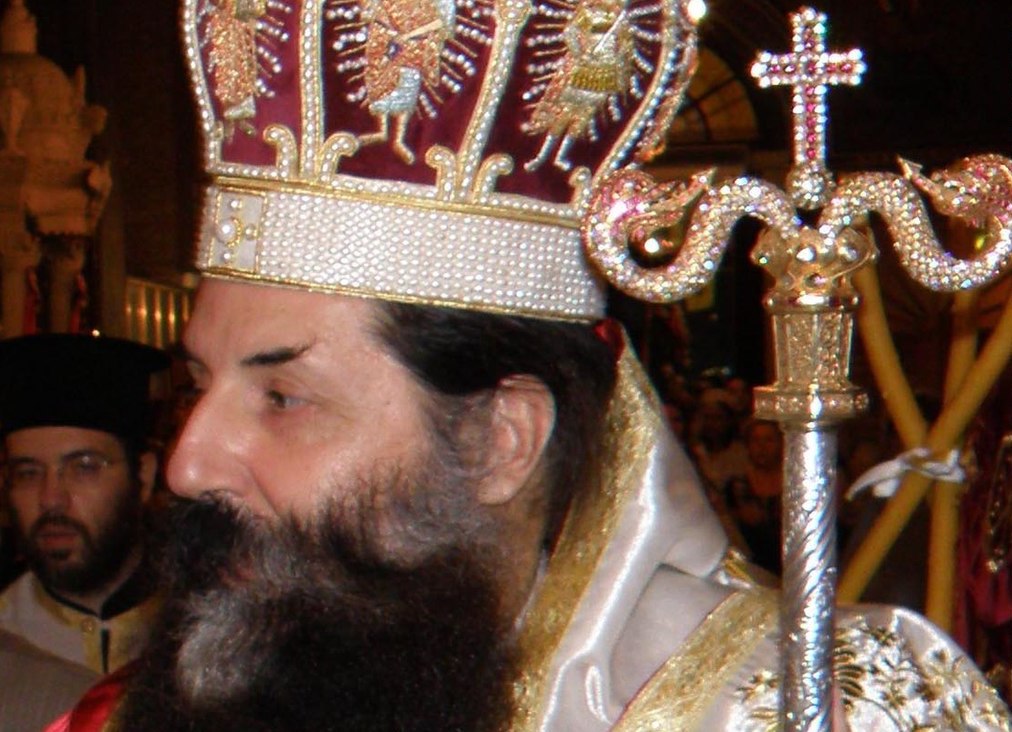
Greek Orthodox Bishop Seraphim of Piraeus. Two activists were found to have falsely accused him of hate speech by a Greek court on Tuesday. Credit: Ewiki/Wikimedia Commons/ CC BY-SA 3.0
Several newspapers (here Anna Wichmann for GreekReporter of 16 February 2022) commented on the rather surprising ruling by a Greek court that two human rights activists falsely accused a Greek Orthodox bishop of hate speech and sentenced them to year-long prison sentences that were suspended for three years.
Bishop Seraphim, who is the Metropolitan of Piraeus, was acquitted on charges of hate speech. The bishop has made what many believe are both coded and explicit references to antisemitic tropes many times. For example when Greece introduced new legislation to expand rights for gay and lesbian couples in 2015, he claimed that an “international Zionist monster” was behind the bill.
He also claimed that Jews themselves funded and planned the Holocaust and charged that they were the reason for Greece’s financial troubles on Greek television five years ago. After his statement about the Holocaust began to garner controversy, the Greek Orthodox Bishop clarified that it was his own opinion and not that of the Greek Orthodox Church.
These comments were seen as extremely troubling in a country whose once vibrant Jewish community was nearly wiped out during the Holocaust, and antisemitic rhetoric and attacks, usually in the form of vandalism, are still a major problem.
The accused brought a formal complaint against the Bishop in 2017 in which they claimed he fueled hatred and incited violence against Greece’ Jewish minority with his inflammatory statements about Jews and the Holocaust. They also claimed that he had abused his office.
The prosecutor dismissed the activists’ complaint in 2019, but the Bishop decided to file his own motion against the activists for falsely accusing him of hate speech, and the prosecutor subsequently formally charged the accused in November.
Greece passed Law No. 4285/2014 in 2014, which criminalized hate speech — particularly speech which incites violence — and genocide denial. The law reads “Anyone, who publicly incites, provokes, or stirs, either orally or through the press, the Internet, or any other means, acts of violence or hatred against a person or group of persons or a member of such a group defined by reference to race, color, religion, descent or national or ethnic origin, sexual orientation, gender identity, or disability, in a manner that endangers the public order and exposes the life, physical integrity, and freedom of persons defined above to danger, will be punished by imprisonment of from three months to three years and a fine of €5,000 to €20,000.”
Human rights groups around the world paid careful attention to the case; many believed that bringing the activists to trial alone was a sign of an alarming shift of the judicial system’s role in the country as a force against activists.
Amnesty International stated on social media that “The ruling poses a direct threat to the right to freedom of expression and has a chilling effect on human rights defenders advocating against racism and hate speech.”
Andrea Gilbert, one of the accused, who works for the Greek Helsinki Monitor rights group, expressed her outrage at the verdict to The Guardian: “Today’s outrageous verdict is representative of the institutionalized antisemitism that exists in Greece…We have immediately appealed and will fight it all the way.”
Activists and people who work for NGOs argue that the trial epitomizes how difficult it is for them to work in Greece.
“Human rights defenders (in Greece) are consistently targeted for their legitimate work…(They) face different types of attacks, including surveillance, judicial harassment, arbitrary arrests, detentions, ill-treatment, entry bans and expulsions,” the international secretariat of the World Organization Against Torture stated to The Guardian.
Although not included in the activists’ initial complaint of hate speech against Greek Orthodox Bishop Seraphim, he is also known to express what many believe are homophobic sentiments.
He has claimed that homosexuality brings about disease and can be “carcinogenic.” He has also called homosexuality an issue of “psychopathology” rather than sexuality.
In 2021, when Greece was hit with catastrophic wildfires that destroyed vast swaths of land and thousands of houses, Seraphim released a statement in which he hinted that the fires were a punishment for Greece adopting legislation that expanded the rights of gay people, writing:
“With love I would say to our leaders that when they show off the subversion of human ontology and human nature and institutionalize it as a “human right,” despite the fact that it doesn’t have any relationship with human nature, and they view it as a plus on their CV for advancement in their position of authority, they don’t understand that this is hubris, and each instance of hubris requires purification and ‘just repayment.’”
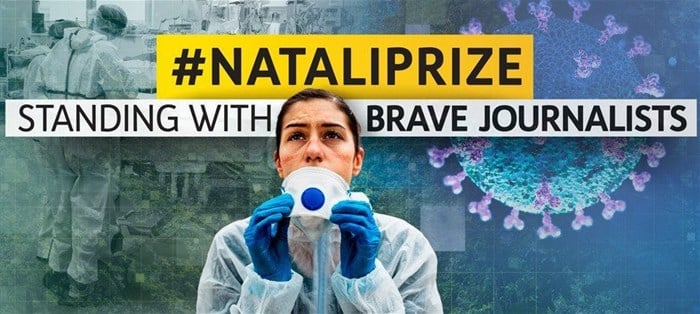
The Lorenzo Natali Media Prize has announced that it is open for applications. The European Union’s journalism award is celebrating its 30th anniversary, and awards journalists reporting on themes such as inequality, poverty, climate, education, migration, employment, digital, healthcare, peace, democracy, and human rights.
Commissioner for International Partnerships, Jutta Urpilainen, said, “The Lorenzo Natali Media Prize celebrates its 30th anniversary. Democratic backsliding that we have witnessed during the pandemic, hybrid threats, disinformation and shrinking space for civil society are all worrying phenomena, which brave journalists tackle. As showcased at the Summit for Democracy in December, the EU is a firm supporter of fundamental freedoms and those who defend them, often with high personal risk. The Lorenzo Natali Media Prize is a symbol of our support to those who give voice to the voiceless and bring truth to light.”:
The submission should be made online in one of the five accepted languages (English, French, Spanish, Portuguese, or German). Applications can be submitted from today until 31 March 2022. Submissions can be entered online here.
A Grand Jury of international renowned journalists and specialists in international development from around the world will choose the winners in each category. Each winner will receive €10,000. The winner of the Best Emerging Journalist category will also be offered work experience with a media partner. The winners will be announced at the Lorenzo Natali Media Prize Award Ceremony during the 2022 European Development Days between 14 – 15 June 2022.
The decision on February 16, 2022 by the Court of Justice of the European Union to allow EU institutions to tie funding to EU states to respect for the rule of law clears the way for strong action by the European Commission, Human Rights Watch said. The EU Court’s ruling dismissed the actions brought by Hungary and Poland against the new conditionality mechanism.
“The EU Court has sent a clear signal that EU funds should be used in ways that uphold rather than undermine Europe’s democratic values,” said Philippe Dam, Europe and Central Asia Advocacy Director at Human Rights Watch. “The EU Commission should now act swiftly and demonstrate that defending the rule of law is at the top of its agenda.”
In December 2020 the EU adopted a regulation creating a new conditionality mechanism to protect the EU budget from rule of law breaches by an EU member state. A last-minute deal among EU member states obliged the Commission to wait for a ruling by the EU Court of Justice before finalizing the guidelines for applying the conditionality mechanism. Hungary and Poland brought legal action before the EU Court seeking to annul the rule of law conditionality mechanism in March 2021, initiating that process…
The court’s ruling confirms that “compliance by the Member States with the common values on which the European Union is founded (…) such as the rule of law and solidarity, justifies the mutual trust between those States.” The Court added that the EU “must be able to defend those values.”
The European Commission should demonstrate its stated commitment to protect the rule of law and democratic values in the EU by swiftly initiating procedures provided by the regulation, Human Rights Watch said. It should seek to suspend, reduce, or prevent new agreements to provide EU funds to a member state if it finds that the state has failed to respect the rule of law.
In applying the conditionality mechanism, the European Commission should ensure that a broad range of breaches to EU’s democratic values could lead it to recommend cutting funds to EU member states. These should include attacks on the independence of the judiciary, as well as state interference with media and civil society. The Commission should also seek to ensure that EU funding cannot be used to promote intolerance or discriminatory policies, including against women and lesbian, gay, bisexual, and transgender (LGBT) people and other minorities.
The Commission should also ensure that carrying out this procedure does not punish EU citizens for the actions of their governments, including by negatively affecting their economic and social rights. The Commission should conduct human rights impact assessments to determine the risk that people’s rights would be harmed by any decision and should divert rather than cut funding as required, to ensure that beneficiaries’ rights are not affected.
Hungary and Poland, the two EU countries that initiated legal action against the regulation, are already facing scrutiny for their poor rule of law records under the Article 7 procedure – the EU treaty provision dealing with governments that flout EU values, which can ultimately lead to the suspension of their voting rights in the Council. Hungary is among the largest recipients of EU funding per capita, and Poland is the largest overall net recipient.
Poland’s government has eroded judicial independence and ignored recent EU Court of Justice decisions. It also used its politically compromised constitutional tribunal to undermine women’s rights and the binding nature of EU law. LGBT and women’s rights activists face threats and harassment. In Hungary, restrictive laws target civil society groups, and the government or its supporters control most media outlets. A June 2021 law banned discussion on gender identity and sexual orientation, putting health providers, educators, artists, and broadcasters at risk of sanctions.
EU member states also have a serious responsibility to ensure that all member states respect EU’s democratic values and the rule of law. On February 22 they will hold a hearing on the situation of the rule of law in Poland under the Article 7 procedure. But since Article 7 was triggered in 2017 on Poland and in 2018 on Hungary, other EU member states have failed to take further action to hold those two governments to account.
..Proceedings under Article 7 should remain the cornerstone of the action against the erosion of EU values in countries like Hungary and Poland. The EU is equipped with the tools needed to stand up against member states that disregard the EU’s own democratic values, Human Rights Watch said. What has been missing is political will by the EU Commission and by leading EU member states to take decisive action and to hold states responsible for abuses to account.
“The EU Court ruling underscores that EU institutions can fight back against the erosion of the rule of law within the bloc, but much depends on the European Commission quickly building on this momentum,” Dam said. “Tying EU money to EU values and strengthening scrutiny of rule of law abuses should go hand in hand to demonstrate that EU membership and respect for the rule of law are inseparable.”
The “Don’t be afraid” film directed by Mikhail Arshynski has won the “Best Documentary on Human Rights” nomination at the Best Film Awards in London.
The film shows the struggle of the Belarusian people for fair elections the fate of people who responded to the call of blogger Syarhei Tsikhanouski and took part in the 2020 presidential campaign. Events are shown through the lenses of Arshynski, who witnessed an unthinkable political confrontation. With a camera in hand, he followed each stage of the campaign. He filmed how the authorities prevented the collection of signatures and their transfer to the election commissions how the headquarters of alternative candidates united. Mikhail traveled with them to the regions of Belarus.
The film won also the top prize at the South Korean “Hinzpeter Awards” film festival.
That things are getting worse is also shown by the report that on 25 January, officers of the Financial Investigation Department of the State Control Committee of Belarus searched the apartment of the director of Mahiliou Human Rights Center, Valery Krauchanka. After the search, the law enforcers took his son’s toy gun and 10-year-old leaflets of the Belarusian Helsinki Committee. On January 26, another search was conducted in Krauchanka’s home, as a result of which a laptop was seized.
The Mahiliou Human Rights Center has been actively engaged in human rights activities in the Mahiliou region for more than 20 years. For this, they had repeatedly come under the scrutiny of local authorities, who are dissatisfied with the criticism coming from human rights defenders.
The hearing about the “Mahiliou Human Rights Center” liquidation will be held on February 17 at 14.30, reports the Human Rights Center “Viasna.”
ISHR, the Martin Ennals Foundation and eight other major human rights groups urge in a joint statement the Chinese government to ensure lawyer Yu Wensheng is able to leave Nanjing Prison on March 1st, and freely reunite with his family in Beijing.
The signatory organisations also called in the joint statement for sustained attention on the growing risks and threats his wife, Xu Yan, faces for advocating for his rights and release.
For this, the authorities revoked his legal license on 16 January, 2018. Three days later, he was forcibly disappeared, a day after publishing an open letter calling for constitutional reform. He was put on trial in secret on 9 May 2019, but his wife, Xu Yan, was only informed of his four-years jail sentence in June 2020.
The signatories of the joint statement express grave concern that Yu Wensheng may be put under a de facto home arrest, severely restricted in his movements and communication, and unable to reunite with his family in Beijing.
Human rights lawyers have endured such restrictions upon leaving prison on grounds of a supplemental sentence of ‘deprivation of political rights’, in a phenomenon known as ‘non-release release’. In September 2019, UN experts condemned the use of this practice against lawyer Jiang Tianyong as ‘gratuitously punitive and legally unjustified’.
IThe signatory organisations urge the Chinese authorities to:
Ensure that Yu Wensheng is able to reunite with his family in Beijing on 1 March, to exercise his rights to move and communicate freely, and that he is not subjected to surveillance and harassment. He must also be able to resume his legal work without restrictions;
Put an end to the surveillance and harassment of Yu Wensheng’s family;
Guarantee in all circumstances that all lawyers in China, including human rights lawyers, are able to carry out their legitimate professional duties without fear of reprisals and free of restrictions.
On 14 February 2022 FIDH published a joint statement to support Sri Lankan human rights defender Ambika Satkunanathan:
We the undersigned human rights organizations, express our deep concern about the statement issued by the Sri Lankan Foreign Ministry on February 4, 2022, in which the government denounced testimony given by Ambika Satkunanathan, a leading human rights lawyer, to the European Parliament on January 27. The government statement clearly constitutes an act of harassment and intimidation. We condemn the Sri Lankan government’s tactics to intimidate human rights defenders, and express our full solidarity with Ms. Satkunanathan, a well-known, respected and courageous human rights defender. Targeting her for providing accurate testimony about the human rights situation in Sri Lanka to the European Parliament is completely unacceptable, and sends a chilling message to all Sri Lankan civil society, especially those in the north and east, who are already operating under considerable duress under the current administration.
Sri Lanka’s international partners, including the European Union, should publicly condemn the Sri Lankan government’s statement and express solidarity with Ms. Satkunanathan, who has been targeted for her international engagement, and increase their efforts to engage with Sri Lankan civil society at large.
The Foreign Ministry’s statement contains numerous false claims in an attempt to disparage and delegitimize a distinguished human rights advocate, placing her at risk of physical danger in retribution for her brave work. The government’s claim that her testimony was “reminiscent of LTTE [Liberation Tigers of Tamil Eelam] propaganda that once stoked hatred among communities,” and that “such allegations need to be refuted in the interest of social harmony” Is particularly insidious and dangerous.
The government’s statement mirrors its repeated practice of falsely equating human rights defenders and human rights advocacy with those pursuing “terrorism.” The statement’s language aligns these baseless allegations with vague and frequently abused provisions under the Prevention of Terrorism Act (PTA), exposing Ms. Satkunanathan to a heightened risk of threats, attacks and persecution.
Ms. Satkunanathan was a commissioner of the National Human Rights Commission of Sri Lanka before that body’s independence was compromised under the current administration and led the first national study on Sri Lanka’s prisons. Prior to that, she was for many years a legal consultant to the Office of the United Nations High Commissioner for Human Rights. She is the author of an important recent report on abuses committed during the so-called “war on drugs.”
We are concerned that the government’s statement seeks to place the blame on human rights defenders if the European Union determines that Sri Lanka failed to meet its human rights commitments under GSP+, the preferential tariff system. The European Union should remind the Sri Lankan government that the responsibility to uphold its international human rights obligations rests with the government. The government’s treatment of human rights defenders reflects its lack of respect for international human rights law.
We support Ms. Satkunanathan’s testimony to the European Parliament, which accurately described a situation already reported by the United Nations and many domestic and international human rights organizations. The government’s response contains numerous false statements, including:
The government claims to be “engaged in long standing cooperation with the UN human rights mechanisms and the UN Human Rights Council.” On the contrary, in February 2020, soon after taking office, the government of President Gotabaya Rajapaksa withdrew Sri Lankan support from consensus resolutions of the council, repudiating commitments made by the previous government. Special Procedures mandate holders of the Council issued a statement on February 5, 2021, noting that their recommendations, including on torture, the independence of the judiciary, arbitrary detention, enforced disappearances, minority rights, counterterrorism, freedom of religion or belief, and freedom of assembly and association, had been ignored.
The government claims to be “strengthen[ing] rule of law, access to justice and accountability.” However, President Rajapaksa campaigned on a platform of protecting “war heroes” from prosecution, and has appointed individuals implicated in war crimes to senior government posts. His presidential commission on “political victimization” has sought to interfere in judicial proceedings and block trials and investigations in human rights cases implicating the president’s associates and the president himself. The president pardoned Sunil Ratnayake, one of very few members of the armed forces ever convicted of human rights violations, who murdered eight Tamil civilians including children.
The government denies that civic space is shrinking, as Ms. Satkunanathan described in her testimony. Yet under the current government, many human rights defenders have said that they are subjected to continual government intimidation, intrusive surveillance, and attempts to block their access to funds. In her most recent update to the Human Rights Council, High Commissioner Michelle Bachelet wrote that, “surveillance, intimidation and judicial harassment of human rights defenders, journalists and families of the disappeared has not only continued, but has broadened to a wider spectrum of students, academics, medical professionals and religious leaders critical of government policies.” The UN Special Rapporteur on contemporary forms of slavery in his end-of-mission statement last December documented government intimidation of civil society and a “shrinking civic space.”
The government claims there is no “concrete evidence of discrimination against minorities.” In fact, for nearly a year the government banned the burial of people said to have died with Covid-19, causing immense distress to the Muslim community without any medical justification in what is only but one example of discrimination against ethnic and religious minorities. Such burials are now permitted only at a single remote site. In January 2021 High Commissioner Bachelet found that, “Tamil and Muslim minorities are being increasingly marginalized and excluded in statements about the national vision and Government policy… Sri Lanka’s Muslim community is increasingly scapegoated.” The High Commissioner’s findings are in line with reports by Amnesty International, Human Rights Watch, and others that the Prevention of Terrorism Act is used almost exclusively against members of the Tamil and Muslim communities. The government continues to deny efforts to commemorate war victims belonging to the Tamil community.
The government denies Ms. Satkunanathan’s description of alleged extrajudicial killings committed in the context of Sri Lanka’s “war on drugs.” However, these abuses are widely documented. In September, High Commissioner Bachelet said, “I am deeply concerned about further deaths in police custody, and in the context of police encounters with alleged drug criminal gangs, as well as continuing reports of torture and ill-treatment by law enforcement officials.”
The Sri Lankan government’s statement attacking Ambika Satkunanathan for her testimony to the European Parliament’s Sub-Committee on Human Rights exemplifies threats faced by human rights defenders, particularly when they engage with foreign and international forums, and it further shows the government’s refusal to address the ongoing serious human rights violations taking place in the country. Instead of trying to silence those who seek to defend human rights, the government should give serious consideration to their input and contributions, and take urgent action to ensure that they can work in a safe environment without fear of reprisals.


 Imaged sourced:

 The government claims to be “engaged in long standing cooperation with the UN human rights mechanisms and the UN Human Rights Council.” On the contrary, in February 2020, soon after taking office, the government of President Gotabaya Rajapaksa
  Hans Thoolen on Human Rights Defenders and their awards