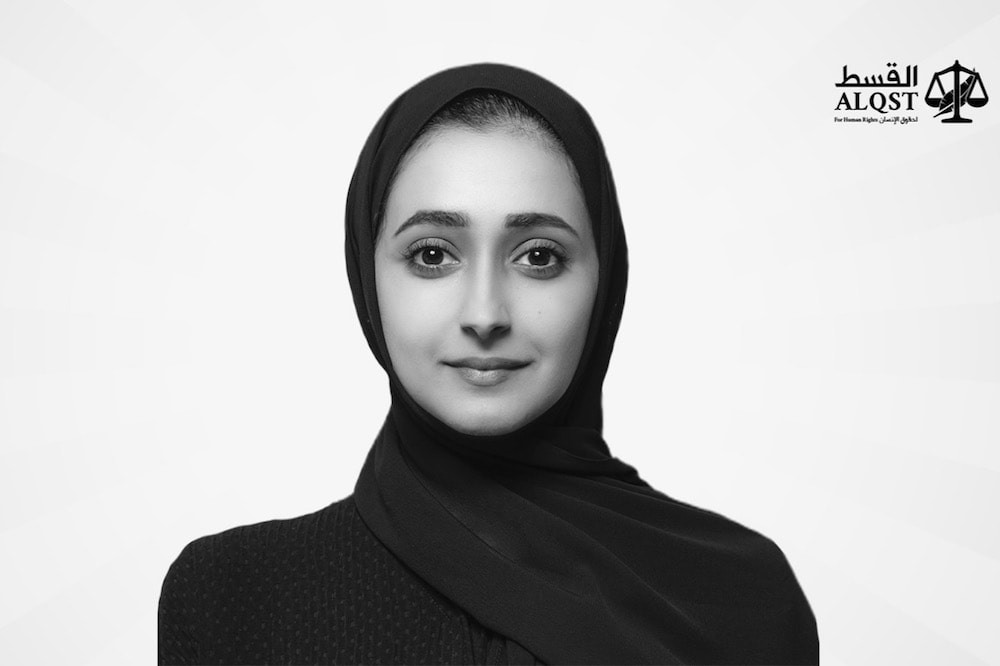
On 9 February 2021 Hamida Giyasbayli of OC Media reports thatAzerbaijani human rights lawyer Shahla Humbatova has vowed to fight disbarment procedures against her despite what she says is a campaign of ‘harassment and threats’ from the Bar Association.
The Azerbaijani Bar Association has accused Humbatova of submitting a fake document as evidence during a civil case she was litigating, a criminal offence. They have also accused her of owing ₼460 ($270) in membership fees. The association has taken her to court in an attempt to disbar her, which would strip her of the right to practice law.
Speaking with OC Media, Humbatova said the allegation she submitted fake documents was baseless, and that her defence had submitted evidence proving this.
She confirmed that she had owed eight months of membership fees, but insisted the association did not make any effort to notify her of this. ‘I learned about this from the media the day after the Board’s decision [to take me to court]’, she said. She immediately made the payment, so when the Bar went to court with her disbarment request, there was no longer any debt. Emin Abbasov, a legal practitioner who also works on human rights cases, criticised the proceedings against Humbatova for being conducted behind closed doors and without any records. Abbasov, along with four others, is himself appealing to the European Court of Human Rights after being denied certification by the Bar Association.
Humbatova told OC Media that the move to disbar her was a continuation of the policy of dismantling human rights defenders in the country. ‘It is lawyers and human rights activists who are fighting against politically motivated arrests, torture, repression of dissidents and those who simply demand their rights, and informing the public and international organisations. Therefore, they are being neutralised’, she stated.
In December 2019, 42 member organisations of the Human Rights House, a global rights group, called on the Azerbaijani Bar Association to ‘halt reprisals against a number of human rights lawyers, including Shahla Humbatova and Elchin Sadigov’. Sadigov is Humbatova’s current lawyer.
Saudi activist Loujain al-Hathloul had been sentenced to almost six years in jail (AFP/File photo) By Ali Harb in Washington
After more than 1,000 days in detention where she endured torture and hunger strikes, Saudi women’s rights activist Loujain al-Hathloul is expected to be released on Thursday, her sister revealed in a tweet on Monday.
Her early release would come weeks into the administration of US President Joe Biden, who has vowed to “reassess” relations with Riyadh and prioritise human rights in its dealings with the kingdom. In a phone call with Saudi Foreign Minister Faisal bin Farhan last week, US Secretary of State Tony Blinken stressed “several key priorities of the new administration including elevating human rights issues and ending the war in Yemen”, according to a statement by the State Department.
Gulalai Ismail, one of Pakistan’s boldest human rights defenders and a stalwart critic of Pakistan’s security services, succeeded in escaping to the United States in 2019, humiliating the authorities who had been persecuting her. Now Pakistan has taken aim at her parents, accusing them of terrorism, and throwing her father, who was recovering from Covid-19, into jail.
A bail hearing ended with Mohammed Ismail being led away in handcuffs. He faces charges of sedition and terrorism financing, which human rights defenders say are bogus and thinly veiled revenge against the family for embarrassing the state security services.
Ms. Ismail, who now lives in New York and has applied for political asylum in the United States, said the charges against her and her parents were “malicious and false.” “This is about setting a precedent,” she said on Wednesday, by phone from Brooklyn. “If a woman raises her voice, the whole family will face consequences.”
Musician Patti Smith attends a special screening of The Seagull at the Elinor Bunin Munroe Film Center in New York, NY on May 10, 2018. (Photo by Stephen Smith/SIPA USA) (Newscom TagID: sipaphotoseight127601.jpg) [Photo via Newscom]
Patti Smith is honored for her social commitment “She is an activist – with her books, her songs and her life. She stands up for human rights, peace, freedom, poverty reduction, inclusion and climate protection all her life,” the message said. In addition, Smith is a declared Beethoven fan. The Beethoven Academy has taken human rights, peace, freedom, poverty reduction and inclusion as its guiding principles. The International Beethoven Prize was awarded for the sixth time. [see: https://www.trueheroesfilms.org/thedigest/award/c05408e0-e598-11e7-a009-858a33846a9e].
International media (here CNN) reported on 11 November 2020 on the killing of prominent Libyan lawyer and women’s rights activist Hanan al-Barassi, who was gunned down by armed men Tuesday in the eastern city of Benghazi. Her killing in Benghazi, which falls under the control of the Libyan National Army (LNA), came just a day after she shared comments on social media criticizing the son of renegade military general and LNA leader Khalifa Haftar. “The assassination of human rights defenders and opinion-holders and the silencing of voices is a heinous crime and a disgraceful form of tyranny and a desperate attempt to destroy hope for the establishment of a civil and democratic state,” Libya’s Interior Minister, Fathi Bashagha, tweeted Tuesday.
According to the United Nations Support Mission in Libya (UNSMIL), al-Barassi — whom the mission describes as a “vocal critic of corruption, abuse of power and human rights violations” — was shot “in broad daylight” by unidentified armed men. “Her tragic death illustrates the threats faced by Libyan women as they dare to speak out,” UNSMIL added. In videos posted publicly on her Facebook page, al-Barassi expressed criticism of figures loyal to the LNA. In a livestream shared on Monday, just a day before her killing, al-Barassi said she would not be silenced by threats. “I won’t surrender, only with bullets will I ever surrender — if I die, so be it. Only in death will I be silenced. Tomorrow I will have several surprises [to share], several surprises,” she told viewers. The LNA has not yet responded to a CNN request for comment on al-Barassi’s death.
Elham Saudi, the director of Lawyers for Justice in Libya, an organization which seeks to defend and promote human rights in the conflict-ridden country, called the attack an “appalling and painful reminder of the reality on the ground” for women in Libya. “With no accountability, violators will continue to get away with literal murder in broad daylight,” she added.Al-Barassi’s killing follows a series of attacks against those critical of forces aligned to the LNA.
“The killing of an outspoken lawyer in broad daylight in Benghazi will send chills through activists across the region,” said Hanan Salah, senior Libya researcher at Human Rights Watch. “This brutal killing smacks of a cold-blooded execution. The only way to end this cycle of violence is if authorities hold criminals to account for these terrible acts.”
In the Daily Maverick of 1 November 2020 Estelle Ellis tells the sad story of murdered land rights defender Fikile Ntshangase in South Africa
A strongly worded statement from a large number of civil society organisations in South Africa has condemned the death of KwaZulu-Natal community activist Fikile Ntshangashe who was gunned down in her home last week as lawyers were preparing for a groundbreaking appeal fighting an order that her community organisation and those who assisted them should pay for a failed attempt to stop further mining operations in the area.
“I refused to sign. I cannot sell out my people. And if need be, I will die for my people.” This was the quote that activists remembered Mama Fikile Nsthangashe by after she was gunned down in her home at Ophondweni near Mtubatuba on 22 October 2020.
As the vice-chairperson of a sub-committee of the Mfolozi Community Environmental Justice Organisation (MCEJO), she was deeply involved in the challenge against the further expansion of a large coal mine at Somkele in KwaZulu-Natal by Tendele Coal Mining (Pty) Ltd. She was described by her fellow activists as a strong, passionate and principled leader.
On Tuesday the Supreme Court of Appeal will hear one of Nsthangashe’s final stands – an appeal in the case brought by MCEJO to stop the mining operations in the area.
According to a joint statement issued by environmental rights NGO Groundworks; Earthlife Africa; Global Environmental Trust, Mining Affected Communities United in Action, the Mfolozi Community Environmental Justice Organisation, the Southern Africa Human Rights Defenders Network and Women Against Mining United in Action the South African Police were called on to act swiftly and arrest those responsible for her death.
The statement alleges that four gunmen arrived at Ntshangashe’s home on 22 October 2020 at about 18:30. Her 11-year-old grandson was with her. She was shot five times and died at the scene.
“Tendele’s coal mining operations have caused untold destruction of the environment and the homes and livelihoods of the residents of Somkhele,” the statement reads. “Over the past few months, tension has been rising in the community over the proposed expansion of Tendele’s operations, and [her organisation’s] opposition to that expansion … Recently, Tendele was pushing for an agreement to be signed between MCEJO and Tendele to the effect that MCEJO would withdraw its Court challenges of Tendele’s expansion of its coal mine at Somkhele. Mama Ntshangase refused to sign the agreement, which certain of her fellow sub-committee members signed, purportedly doing so on behalf of the organisation … She warned sub-committee members that they had no power to make decisions on behalf of MCEJO and that the agreement only benefited Tendele. She also refused to attend any of the secret meetings that other sub-committee members held with Tendele. Days before her brutal killing, Mama Ntshangase stated her intention to write an affidavit, revealing that sub-committee members had spoken to her of a payment of R350,000 in return for her signature,” she added.
According to the statement the expansion of the mine would require the relocation of 21 families (19 of them MCEJO members) from their ancestral land. Many of these families have lived on their land for generations.
“We mourn the senseless tragedy of Mama Ntshangase’s murder, and condemn her killing. We call on the South African Police Service to act swiftly to arrest and prosecute her murderers,” the statement concluded.
Martin Mosweu from the Southern Africa Resource Watch said he was deeply saddened and angered by the killing of Ntshangase.
“She was hailed as a courageous human rights defender by her community for standing against the Tendele Coal Mine expansion in violation of the right to a safe environment. The murder of Fikile Ntshangase is a cause of concern to the work of human rights defenders in South Africa and in the SADC region. Governments are failing in their international obligations to the Declaration of Human Rights by not protecting and supporting human rights defenders in the context of their work. In Southern Africa, people who live near mines continue to face threats of violence and intimidation from mining companies who blatantly disregard their socio-economic, land, and environmental rights. Human rights defenders continue to be threatened and killed for standing up against powerful mining companies that violate human rights, often with impunity and tacit support from governments. This is why many mining communities throughout the region are now taking a stand and demanding a new order, insisting on extractive projects that secure a beneficial win-win relationship, free and prior informed consent in involuntary displacements, and community engagement in all stages of the mining cycle for inter-generational sustainable livelihoods,” he added.
Papers filed at the Supreme Court of Appeal for a hearing on Tuesday, in one of the last battles that Ntshangase had been passionately fighting on behalf of her community, has painted a stark picture of the conflict in the area.
The appeal, brought by MCEJO and the Global Environmental Trust is against the refusal by the Pietermaritzburg High Court to issue an interdict to stop mining operations in the area.
The community claimed that the mine did not have the necessary environmental authorisation, lacked land use authorisation, had not removed or altered the traditional graves in the area according to law and had failed to comply with the Waste Act.
The mine, however, argued that it had all the valid mining rights and permissions to carry on with its operations. In papers filed at court, lawyers for Tendele, stressed that their operations were conducted in terms of valid Mining Rights and Environmental Management Programmes granted and approved by the Department of Mineral Resources in 2006 and that while the legislative framework had changed there were transitional measures put in place for mines like Tendele.
This, according to papers before court included the waste management at the mine.
According to papers filed at the Supreme Court of Appeal the Centre for Environmental Rights (CER), represented by advocate Max du Plessis SC; intervened in the matter because of its concerns that the judgment opened the door for mining companies to operate illegally. The CER also expressed its concern over a cost order made in the original case as this “would discourage communities from approaching the courts to defend their constitutional rights through the fear of being debilitated by having to pay the legal costs of industry and the state”.
When Rugiati Turay was 12, she was taken to an aunty together with her three sisters and a female cousin.
“We were told it was just a visit,” Turay, now 47, recalls. “But I was grabbed and blindfolded and taken to a room. Women sat on me and held me down.”
Turay’s clitoris was then cut off. She still remembers the pain.
“I bled excessively and I almost lost my life. For one week, I could not walk,” Turay told DW. “All I knew was just the pain and the bleeding.”
Like Turay, some 90% of women and girls in Sierra Leone undergo female genital mutilation, or FGM. It is a cultural practice that involves the partial or total removal of the female genital organs, such as the clitoris or labia.
In Sierra Leone, the cutting is part of the initiation into secret women’s societies, known as Bondo, that prepare girls for marriage and motherhood.
When she was cut as a girl, Turay didn’t have the knowledge to express what had happened to her. She just knew it was wrong, she said in a telephone interview from Lunsar, a town some 120 kilometers (74 miles) from the capital, Freetown. Rugiatu Turay works to persuade traditional practitioners to lay down the tools used to cut girls
“I started talking to my friends, explaining to them what I went through,” she said. “Because we were all eager … to become members of the Bondo society. But when I experienced what I experienced, I thought it is high time to talk to others and not to be fooled.”
More than a decade later, Turay found herself in Kalia refugee camp in Guinea, where she had fled Sierra Leone’s civil war that raged from 1991 to 2002. In the camp, she was shocked that amid the hardship and insanitary conditions of the camp, mothers were still organizing for their daughters to be cut.
That was the moment when Turay, who had trained and worked as a teacher before fleeing the fighting, started on her journey to campaign to stop female genital mutilation in Sierra Leone.
The nation is one of 28 African countries where female genital mutilation is practiced
“I decided [that] we needed to engage these people. They needed to know that we have run away from violence committed to us by people and we are now perpetuating that violence on us,” she said.
In 2000 while still in Kalia camp, Turay founded the Amazonian Initiative Movement (AIM), together with a group of like-minded women, to reduce the incidence of FGM among the refugees.
The name was taken from the “strong and fearless” Amazonian warrior women from Greek mythology, explains Turay, chosen because “looking at the issues I was determined to address and knowing [Sierra Leone] and the people where I came from, I knew it was going to be a rough battle.”
In 2003, when she returned home after the end of the civil war, Turay started up a branch of the grassroots organization in her hometown of Lunsar.
As part of their activities, Turay and other AIM activists visit villages to talk to those involved in FGM, from women and girls, to local chiefs and imams. They also seek out the soweis, the traditional cutters, who earn a living from the practices. They seek to convince them to stop cutting and look for alternative livelihoods for these women. AIM has held several public ceremonies involving hundreds of soweis who have vowed to lay down their knives and razor blades.
It has also held a large alternative rites of passage lasting for 14 days to replace the traditional Bondo bush ceremony that girls usually pass through during initiation but without the cutting.
As well as running a safe house for girls fleeing from FGM and other violence such as forced marriage, AIM has built a school that includes a curriculum teaching about cutting.
Turay’s work hasn’t been easy. Initially, she couldn’t even rent a building for AIM as no one wanted to have anything to do with an anti-FGM organization. Luckily, her father supported her efforts, turning over his own house to use as her office.
She, and others involved in the organization, have also faced numerous death threats as well as being banned by the village chief – something Turay says has only hardened her resolve.
“When you threaten me and say you’ll kill me, I come back and I engage you,” she said.
“I ask, ‘Why do you really want to kill me? Tell me, what have I done? Have I killed anyone? No, I want to change your beliefs that are not progressive, that have killed so many people, that have kept others quiet but suffering in silence’.”
And so I use those threats and I talk to the leaders of the secret society and I engage them.”
Because of coronavirus travel restrictions, Turay will attend the awards ceremony on October 24, 2020 virtually. Turay was nominated by the German women’s rights organization, Terres des Femmes, for the award.
Iranian opposition human rights activist, Narges Mohammadi, at the Defenders of Human Rights Center in Tehran (AFP/File photo) By MEE staff
Prominent Iranian human rights defender Narges Mohammadi has been released from prison, her husband confirmed on Thursday 8 October 2020. She had been serving a eight and a half years out of a10-year sentence for ‘forming and managing an illegal group’
Ismail Sadeghi Niaraki, prosecutor in Zanjan province, said a newly passed law reducing prison sentences included the activist and said she had been released on that basis, according to BBC Persian. Mohammadi, who was held in Zanjan Prison in northwestern Iran, was the spokeswoman for the Centre of Human Rights Defenders in Iran.
Originally serving a six-year sentence dating from 2011, she had been released on bail before being arrested again on new charges in 2015.
The mother of two was then sentenced to 16 years in prison for “forming and managing an illegal group” among other charges, with a minimum of 10 years having to be served. Coronavirus: Iran reports record high death numbers as it grapples with third wave
Her husband, Taghi Rahmani, confirmed the news on Twitter. “Narges was released from Zanjan prison at three in the morning,” he tweeted. “Wishing freedom for all prisoners.“
“Nasrin Sotoudeh has become a symbol of the Iranian civil rights movement through her courage and tireless commitment to human rights and the rule of law,” the presidents of the German Judges Association said on Wednesday. Barbara Stockinger and Joachim Lüblinghoff stated that now more than ever, Ms. Sotoudeh needs wide international support, and that they wanted to honor her “highly impressive commitment in Iran and to bring her fate to the public attention”.
The 57-year-old lawyer and rights activist began a hunger strike at Tehran’s notorious Evin Prison on August 11 to protest the “unfair” and “illegal” conditions of political prisoners in Iran. She has demanded the release of political prisoners to protect them from the spread of coronavirus in prisons.
Sotoudeh, an international award-winning lawyer and rights activist, was been sentenced to a total of 33 years in prison and 148 lashes on several charges, including conspiracy against national security, spreading lies and disturbing public opinion.
Earlier this year, Sotoudeh went on a hunger strike to protest the maltreatment of political prisoners vulnerable to the coronavirus pandemic. She previously staged a 49-day hunger strike in prison in 2012 while she was serving another sentence for her human rights work. On Wednesday, Swedish Foreign Minister Ann Linde expressed deep concern about Sotoudeh’s health and said she wanted to reiterate the EU’s call for her sentence to be reviewed. In a statement on August 28, the American PEN association called for the immediate release of Sotoudeh and other political prisoners, as well as an end to judicial and legal harassment of her and her family.
Ashley Boucher reported on August 25, 2020 for the BBC that Saba Sahar, Actress and woman human rights defender reportedly underwent a successful surgery after being shot in the stomach.
Saba Sahar facebook
Afghan actress Saba Sahar was reportedly shot in Kabul on Tuesday 25 August. Her husband Emal Zakitold the BBC that three gunmen opened fire on the car she was traveling in on her way to work just five minutes from their house, the outlet reported. Zaki said that Sahar was one of five people in the vehicle, including the driver, two bodyguards and a child, according to the BBC. It was not clear if the child was one of Sahar’s children. Both bodyguards reportedly also sustained injuries from the shooting, according to BBC. In addition to her work as an actress and director, Sahar is a trained police officer and women’s rights advocate.
In an interview with The Guardian in 2012 she said: “I want to show the conservatives who lock their daughters and wives at home that they should let them out to get an education, earn some money and help rebuild Afghanistan,” she said, adding that she has received death threats from anonymous phone callers. “They told me to say goodbye to my loved ones because I’d soon be dead.” After reporting the threats to authorities, Sahar said the calls only continued. “They called me again and asked why I’d gone to the authorities,” she said. “They said that even if the whole government is behind you, we will still kill you. We will murder you on the street, in public.” “Every morning when I leave the house, I know I might get killed, might never see my family again,” she told The Guardian at the time.