Dr. Maria Luisa Acosta is the coordinator of the Centro de Asistencia Legal a Pueblos Indígenas (CALPI), an organisation that supports and seeks to realise the rights of Indigenous and Afrodescendant peoples and communities in Nicaragua. She shares her vision for the future and how, despite the personal toll of her work, she remains steadfast in her convictions.
“States have the obligation to respect defenders, to provide them with security, to heed their calls and to consider that we are people who support the most vulnerable sectors of society, and that this is a contribution to democratic life.“
Mariam Atahi left Afghanistan for safe haven abroad in August 2021 with financial assistance from Journalists for Human Rights and the Daniel Pearl Foundation. However, her fight for women’s rights continues, uninterrupted.
As the Taliban began its ‘humanitarian talks’ last month in Oslo, Mariam called for the release of three fellow activists, allegedly detained for protesting against the closure of women’s universities. “It hurts me,” she said, “…to not have any information or hope to give their families asking questions about their whereabouts.”
As co-founder of the Feminine Perspectives Campaign, Mariam has been leading a fearless movement to demand accountability for the violation of women’s rights by the Taliban. In 2016, she and four colleagues interviewed women from different provinces to document “what women exactly want” and presented them during the 2016 talks with the Taliban in Qatar. They stressed that the freedom to study, work and participate in public life is important to women in urban Kabul and rural provinces alike.
This work put a target on her back. In late 2019, Mariam was working as a communications specialist at Save The Children and was informed by the National Directorate of Security in Afghanistan that she’s on the Taliban’s hit list. At the time, she was used to fielding multiple ‘mysterious calls’ a week. However, the NDS insisted she take the risk more seriously. Mariam applied for an emergency visa to India and relocated to Delhi for two months. When she returned in early 2020, the threats continued. She changed her look, her route to work and her schedule – but kept on working. In 2021, she took on a communications role with UNICEF.
“Fighting for women and children’s rights is in my blood. When I see women suffering, I feel responsible. I want to build a bridge for them to reach their dreams. I have to do this work for the rest of my life.”
After the Taliban takeover, Mariam decided to leave Afghanistan for a safer location where she can continue her work.
‘In Kabul, I always felt like someone is knocking at my door. I want to set myself in a better position, so I’m able to mobilize more resources to help my people. I hope to see the international community show their solidarity with Afghan women and make a solid, genuine commitment to safeguarding their rights.”
The long-time president of the Nicaraguan Center for Human Rights, doesn’t rule out the possibility of being jailed by the Ortega-Murillo regime. Re-published on 11 December in Havana Times:
Vilma Nuñez learned about Nicaraguan jails when she was just a child. She was eight years old when they took her to visit a political prisoner – her father. He had been imprisoned by Somoza’s National Guard, the same repressive body that years later would also jail and torture her.
In the course of over six decades of work, she’s become the veteran defender of Nicaraguans’ human rights. Founder and current president of the Nicaraguan Center for Human Rights (Cenidh), she confesses that she decided to study Law to fight against the outrages she’d experienced since childhood. Her law career has spanned 63 years, although she was very seldom the prosecutor, but almost always worked on the side of defense. See also: https://humanrightsdefenders.blog/2018/12/02/nicaragua-moves-against-women-human-rights-defenders/
Through Cenidh, Nuñez continues her struggle for the liberation of the Ortega regime’s political prisoners, just as she did in 1958, when she formed part of the Leon student movement. Through that organization, she became involved in the Committee for the Liberation of the Political Prisoners during the the Somoza regime. On one occasion, she recalls, they requested and received an audience with Luis Somoza Debayle, effectively Nicaragua’s dictator from 1956–1967. Together with university chancellor Mariano Fiallos Gil, she met with the man who had inherited the Somoza dynasty. The dictator became enraged when they demanded the release of the prisoners.
Twenty-one years after that meeting, Nuñez was jailed and tortured with electric shocks by order of the dynasty’s final successor, Anastasio Somoza Debayle. It’s not surprising, then, that the current situation of the political prisoners brings her back to the days of that other terrible dictatorship that – like the current regime – wouldn’t tolerate criticism.
In addition, Nuñez is a survivor of the student massacre of July 23, 1959. She has felt in her own flesh what it means to be jailed for false crimes because of having protested. At 83, it’s been her destiny to once more live under attack from a new dictatorship.
At the end of 2018, the Ortega regime ordered the Sandinista-dominated National Assembly to strip Cenidh of the non-profit status it had held since its founding in 1990. It also confiscated its offices.
“They’ve struck us a blow, but it doesn’t hurt us,” the Cenidh president declared defiantly. “A serious human rights organization can’t be dissolved by a resolution from a political organ with no autonomy or independence; nor can they dissolve our commitment and accompaniment of the Nicaraguan people,” she affirmed, in reference to the legislature’s decision…
According to Nuñez, all the attacks are because they won’t forgive her for having accompanied the case of Zoilamerica Narvaez, Daniel Ortega’s stepdaughter. In 1998, Narvaez filed formal accusations of 19-years of rape and sexual abuse and harassment against Ortega.
The issue most disturbs Dr. Nuñez at present is not being able to accompany the victims at the site where the human rights violations are occurring. She can’t even file an appeal, because the entire state apparatus is controlled by the Ortega regime.
“No one listens or does anything, which generates a situation of powerlessness. You can’t protest, or do anything, and for that reason I’ve said that I feel I’m a prisoner in Nicaragua,” she explains.
Nevertheless, she insists that she won’t cease in her struggle for the defense of human rights and the search for justice. “Fear has been one of the most powerful weapons wielded by the dictatorship, and I won’t let it dominate me,” she declares.
The human rights defender doesn’t rule out the fact that they may want to jail her. Every day, she says, she once again conquers that fear. “The authentic defense of human rights isn’t restricted to the use of the Law. Although the national and international statutes are always useful, they go hand in hand with less formal mechanisms, and one of the most effective of these is the public denunciation,” Nuñez notes.
“I’m going to continue on in Nicaragua. My commitment is to keep standing beside the people, denouncing and defending human rights as long as I can. It’s always been my lot to be standing on the sidewalk, right in the nose of the tyrants and human rights violators,” Vilma Nuñez says.
Antonia Urrejola, president of the Inter-American Commission on Human Rights: “Ever since I first met her, [Dr. Nuñez’] strength has impressed me (…) if there’s a person who’s always been present in the denunciations of human rights violations in Nicaragua, it’s her. She’s an example of strength and courage.”
Gonzalo Carrion, Nicaragua Nunca + Human Rights Collective: “The history of the human rights movement in the last sixty years in Nicaragua chronicles a people suffering and resisting two different dictatorial dynasties. Whoever writes [that story] will inevitably have to tell of Vilma Nuñez’ activism and commitment.”
Gioconda Belli, Nicaraguan writer: “Who hasn’t seen Doña Vilma traveling to the most remote places to accompany victims whose rights have been violated? No one, more than you knows how to be at the side of the Nicaraguan people.”
It is hoped that the award will “further inspire the world to pay closer attention to human rights in Afghanistan, especially women’s rights” and “encourage human rights defenders and those who have been deprived of human rights,”
According to the TFD, Rasuli has been actively involved in social activism and the promotion of women’s rights at a young age and thorough her years of work, “Afghan women have gradually been able to receive justice from judicial procedures.”
As the co-founder and executive director of the Women for Justice Organization, Rasuli has led lawyers, gender experts and activists in efforts to increase women’s access to justice, uphold the rule of law in Afghanistan, and investigate some of the most emblematic sex crime cases in the country over the years, the TFD said in its statement.
She also previously served as director of Medica Afghanista, another organization that provides psychosocial counseling and legal support to female survivors of sexual violence. However, in an interview with the European public broadcaster, Arte, aired in September, Rasuli revealed that she has relocated to the U.S. following the U.S. military pull-out from Afghanistan.
The TFD on Tuesday declined to confirm Rasuli’s current whereabouts, but said she would deliver her acceptance speech in a pre-recorded video that would be published on its website on 10 December.
The foundation said it would not host a physical award ceremony this year due to COVID-19.
On 4 November 2021 the Observatory for the Protection of Human Rights Defenders, a partnership of the World Organisation Against Torture (OMCT) and FIDH, has received new information and requests your urgent intervention in the following situation in China.
New information:
The Observatory has been informed by the Network of Chinese Human Rights Defenders (CHRD) about the imminent risk of death of freelance journalist Zhang Zhan, who has been detained since May 2020 as a reprisal for her coverage of the Covid-19 pandemic from February 2020 until her arrest. Ms. Zhang is a former lawyer whose licence was suspended in retaliation for her activism and a well-known and outspoken journalist on the situation of human rights in China. See also: https://humanrightsdefenders.blog/2021/01/06/china-eu-deal-what-about-human-rights/
According to the relatives of Zhang Zhan, the journalists’ life is at imminent risk of death as a result of the partial hunger strike she started in June 2020 to protest her arbitrary detention and later her sentencing. The mother of Zhang Zhan was allowed to have a videocall with her daughter on October 28, 2021, after which she reported that the journalist weights less than 40 kg, is unable to walk unassisted and cannot raise her head without assistance. Her health is extremely poor, as she suffers from severe malnutrition, a gastric ulcer and swollen legs and feet. During her detention, she has been restrained and force-fed via a nasal tube.
The relatives of Zhang Zhan have been consistently denied their right to visit the journalist and only been allowed to communicate with her by video calls on two occasions, on October 28 and February 2021, and by a phone call on August 2021. Moreover, Zhang Zhan’s mother requested the Chinese security police the permission to visit the journalist in prison to persuade her to abandon the hunger strike. At the time of publication of this Urgent Appeal, she had not received a reply.
The Observatory recalls that Zhang Zhan was hospitalised in a prison hospital between July 21 and August 11, 2021 due to her deteriorating health conditions. During her hospitalisation, she was tied to a hospital bed and force-fed by prison authorities. On August 11, she was transferred back to the Shanghai Women’s Prison, where she remained detained at the time of this Urgent Appeal.
The Observatory further recalls that on May 14, 2020, Zhang Zhan went missing in Wuhan, Hubei Province, one day after releasing a video that criticised the government’s measures to contain the virus, claiming the authorities were being negligent. Zhang Zhan had travelled to Wuhan from her home in Shanghai in early February 2020 to report from the epicenter of the Covid-19 pandemic. She reported numerous stories, including the detention of other independent reporters and harassment of families of victims seeking accountability, via her WeChat, Twitter, and YouTube accounts.
After seven months of pre-trial detention, on December 28, 2020, the Shanghai Pudong People’s Court found Zhang Zhan guilty of “picking quarrels and provoking trouble” (Article 293 of China’s Criminal Law) and sentenced her to four years in prison. The court rejected the application filed by Zhang Zhan’s lawyers to request bail, live streaming of the trial, and a time extension of the proceedings. Their requests to have the defense witnesses appear in court to present exculpatory evidence was also rejected by the court. Zhang Zhan attended her trial in a wheelchair because of her poor health.
The Observatory is deeply concerned about the health conditions and risk of death of Zhang Zhan and urges the Chinese authorities to immediately and unconditionally release her and grant her immediate access to adequate and comprehensive medical treatment.
The International Service for Human Rights published on 30 September 2021 “Human rights defender’s story: Rosana Lezama Sanchez from Venezuela”.
“What is needed from the international community in general, and from within the UN, is a concrete, coherent and unified voice in favour of the protection of human rights defenders, the safeguard of the fundamental liberties, the civic space and human dignity,” says Rosana Lezama Sanchez, a law student in Venezuela working with three national human rights organisations.
Rosana Lezama is a law student in Venezuela working with three national human rights organisations: Centro para los Defensores y la Justicia (CDJ) / Observatorio Venezolano de Conflictividad Social (OVCS) / Centro de Derechos Humanos de la Universidad Católica Andrés Bello (CDH-UCAB). Her work includes the protection of human rights defenders, issues of transitional justice, rule of law, the right to peaceful assembly, and State repression. In this video, Rosana talks about her vision for the future and her work to achieve it.
Rosana was also a participant in ISHR’s Human Rights Defender Advocacy Programme (HRDAP) and ISHR Academy in 2021.
The sixth annual Aurora Prize for Awakening Humanity was awarded on 9 October 2021 to Julienne Lusenge, a human rights defender, co-founder of Women’s Solidarity for Inclusive Peace and Development (SOFEPADI) and Fund for Congolese Women (FFC), who has been helping the victims of wartime sexual violence for years. Her boundless courage and tireless activism have shone a light on the desperate plight of thousands of Congolese women subjected to horrific sexual abuse amidst the civil war in the country, exposing the perpetrators and bringing them to justice. She was named the 2021 Aurora Prize Laureate at the Ceremony titled “Reviving Together” that was held in Venice, Italy. For more on the Aurora Prize and its laureates, see: https://www.trueheroesfilms.org/thedigest/awards/35D4B5E3-D290-5DF9-08E1-14E6B3012FFA
“Julienne Lusenge’s exceptional achievements remind us of the impact one person can have, even when encountering the seemingly insurmountable pressure and risks. By recognizing her courage, commitment and selflessness, we are hopeful that she can also inspire each one of us to think about what we can do to stand up on behalf of those whose rights are abused and who are in dire need of our solidarity and support,” noted Lord Ara Darzi, Chair of Aurora Prize Selection Committee and Co-Director of the Institute of Global Health Innovation at Imperial College London. Julienne Lusenge won 4 earlier awards: see https://www.trueheroesfilms.org/thedigest/laureates/d373dbdb-b269-4ecd-810c-bfd05b18859c
As the 2021 Aurora Prize Laureate, Julienne Lusenge will receive a $1,000,000 grant and a chance to continue the cycle of giving by supporting organizations that help people in need. This year, considering the acute needs of the people of Artsakh (Nagorno-Karabakh) affected by the 2020 war, Aurora will recommend her to direct 25% of the award funds to addressing urgent humanitarian issues in Artsakh. The Aurora Co-Founders are committed to matching this contribution to bring the total amount to $500,000. Besides this, Ms. Lusenge has nominated three organizations that support grassroots women’s organizations, empower survivors of gender-based violence and reintegrate internally displaced persons:
Fund for Congolese Women;
League for Congolese Solidarity;
Association of Mothers for Development and Peace.
“The outstanding work carried out by Julienne Lusenge and her organizations that help women, as well as her courage and perseverance in going against powerful local forces to protect them, is an example of empathy, kindness and dedication. One of the most important goals of Aurora is empowering such heroes, and we are grateful for the opportunity to do just that,” said Hina Jilani, Aurora Prize Selection Committee member and Former United Nations Special Representative of the Secretary-General on Human Rights Defenders..
Freshta Karimi, 38, the founder of the Da Qanoon Ghushtonky (DQG) organisation, one of the largest suppliers of legal aid in Afghanistan, won the Ludovic-Trarieux International Human Rights Prize 2021, awarded by jurists to their peers.
Her organisation works in particular on upholding the rights of woman and children in Afghanistan and she has regularly represented it abroad in recent years.
Since the Taliban seized power last month however, she has kept a lower profile, lawyer Bertrand Favreau, the founder of the prize and chairman of its jury, told AFP.
“For at least five years, she has received threats from the Taliban in all the cities where she has tried to open an office to inform women of their rights,” he said.
That had not stopped her continuing her outreach work however, travelling to even the most remote villages, he added. “Today she is one of the most threatened lawyers in the world.”
The Ludovic Trarieux Award is an annual prize which recognises lawyers of any nationality who have sought to defend human rights, often at great risk to themselves. The award was named after Trarieux, who in 1898 founded France’s Human Rights League (LDH). For more on this and other awards for jurists, see: https://www.trueheroesfilms.org/thedigest/awards/7C413DBA-E6F6-425A-AF9E-E49AE17D7921.
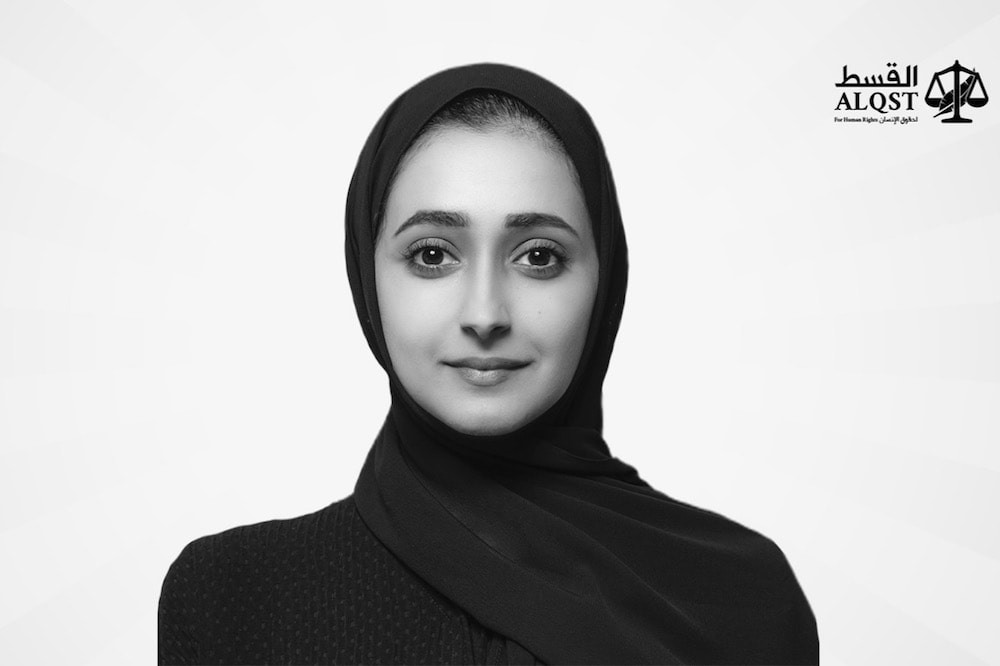
On 21 June 2021 the Gulf Centre for Human Rights pays tribute to prominent Emirati human rights defender Alaa Al-Siddiq who died in a tragic car accident in the UK, and joins the growing calls for an investigation into the circumstances of her death.
The Gulf Centre for Human Rights (GCHR) is deeply saddened by the loss of courageous Emirati human rights defender Alaa Al-Siddiq, Executive Director of ALQST for Human Rights and a Senior Researcher at Wejha Centre for Studies, who died tragically in a car accident in Oxfordshire, the United Kingdom on 19 June 2021.
We would like to pay tribute to her unique courage, her kind heart, her wonderful personality, and her tireless work to defend human rights in the United Arab Emirates (UAE), Saudi Arabia and other Gulf countries. We will remember the anniversary of her loss as the Day of the Gulf Women Human Rights Defenders.
Alaa was a forceful and determined 33-year-old woman. She was outspoken and always defended her father, Sheikh Mohammed Abdul Razzaq Al-Siddiq, a prisoner of conscience who is a member of the “UAE 94”. In 2013, he was sentenced to ten years in prison in a show trial based on trumped-up charges, that violated international standards.
Documenting human rights violations in the UAE and other Gulf countries comes at a price. Despite all the challenges and threats she faced, Alaa never stopped fighting for freedom for her father and other wrongfully detained prisoners of conscience, hoping for a country that respects human rights including freedom of speech.
Alaa’s role as Executive Director of ALQST, a leading organisation in documenting human rights abuses in Saudi Arabia, didn’t make things easier. Alaa was always receiving threats on her Twitter account: https://twitter.com/alaa_q, yet she dealt with the e-flies with patience, civility and respect.
Her relationship with GCHR was a very strong and fruitful one that produced a report, “Torture in the United Arab Emirates: The Tolerance Charade“, published in March 2021 with the Wejha Centre for Studies. She also contributed to several successful online events using Zoom and Clubhouse, including a side event during the 45th session of the United Nations Human Rights Council in October 2020.
In December 2020, Alaa was among the WHRDs in the MENA region that GCHR celebrated via a Twitter campaign during the #16DaysofActivism against gender-based violence (GBV). (See the main image above.)
“It is a very big loss, and no one will be able to fill her empty place,” said Khalid Ibrahim, GCHR Executive Director, who added, “It is a very sad day for me as we have lost a wonderful woman, a true courageous, independent, hardworking and ever-patient advocate.”
“I cannot believe that we lost Alaa. She was very courageous! She carried on in the fight against oppression despite all the hardships. Alaa was a genuine voice in a country where everything is built on lies,” said Salma Mohammad, GCHR Project Coordinator.
According to the police and local authorities, the circumstances of the car crash were an accident, but they are still looking for witnesses to find out exactly what happened. GCHR calls on the UK police to publicise the information about the incident which took the life of Alaa Al-Siddiq and injured four others.
Noelyn Nassuuna in KFM of 30 April 2021 reports that Ugandan women’s rights activist Rita Aciro is the winner of the 2021 European Union Human Rights Defenders’ Award.
The award is given annually by the European Union and Norway to recognise a human rights defender in Uganda for their outstanding contribution.
Speaking during the award ceremony last evening, the Germany Ambassador to Uganda Matthias Schauer said human rights need to be defended all over the world especially for disadvantaged groups.
While receiving the award, Aciro said it was an honour of the invisible Human Rights Defenders in homes, and public spaces who never have the spot light yet do an incredible job in giving a voice to women and girls.


 Hans Thoolen on Human Rights Defenders and their awards