On 22 October 2019 ISHR published this interview with Marisa Hutchinson, Board member of the Association EQUALS in Barbados
share information on human rights defenders, with special focus on human rights awards and laureates
All over the world, lesbian, gay, bisexual and transgender people of all ages face harassment and discrimination — at work, at home, at school and in many other everyday situations.
In many countries, national laws are skewed against them. In some 76 States, having a partner of the same sex is a criminal offense. People are being arrested, singled out for physical attack, being tortured, even killed — just for being in a loving relationship.
When I raise these issues, some complain that I’m pushing for “new rights” or “special rights” for lesbian, gay, bisexual and transgender people. But there is nothing new or special about the right to life and security of person, the right to freedom from discrimination. These and other rights are universal … enshrined in international law but denied to many of our fellow human beings simply because of their sexual orientation or gender identity. We cannot let these abuses stand.
We know what needs to be done. States must repeal discriminatory laws and ban discriminatory practices: punish violence and hatred … not love. And we should all challenge homophobic attitudes. The best antidote is education — for children and adults alike. Reach out. Talk. Learn. And help make our world safer and better for everyone. This is an historic moment: more and more States recognize the need for action and are speaking up — including here at the United Nations.
With your help and the support of millions of people who believe in universal human rights, we will secure equal rights for every last one of us.
Last year ISHR interviewed Nayaali Ramirez Espinosa, a lawyer providing legal assistance to Mayan communities in the region of Holpelchén, in the State of Campeche in Mexico. She expresses her satisfaction with some legal achievements such as the indigenous consultation in the region. It was published on 13 December, 2018.
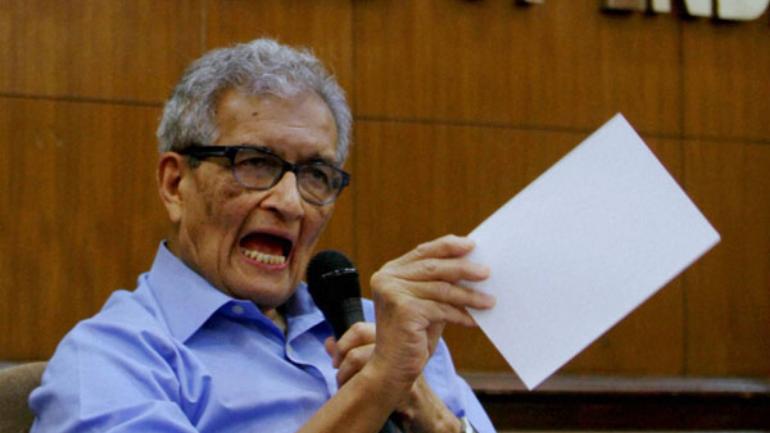
On being asked about the actor’s comments, Sen said, “We must protest against such attempts to disturb the actor. What has been happening (in the country) is objectionable. It should stop.” The 85-year-old economist Amartya Sen said that many institutions in the country are under attack, and their freedom is being encroached. “Even journalists are facing harassment,” he said.
Further talking about the troll attacks against personalities like Shah, Sen said, “Losing the ability to tolerate others is a serious cause for concern, it points to losing of the ability to think and analyse.”
Under the hashtag #AbkiBaarManavAdhikaar, Amnesty India had claimed that India has witnessed a massive crackdown on freedom of expression and human rights defenders. In a solidarity message in Urdu, Shah had said, “Artistes, actors, scholars, poets are all being stifled. Journalists too are being silenced.” “In the name of religion, walls of hatred are being erected. Innocents are being killed. The country is awash with horrific hatred and cruelty“. Last month, the 68-year-old also said that the death of a cow had acquired more significance than that of a police officer in the country. He was speaking in the wake of a mob violence that broke out in Uttar Pradesh’s Bulandshahr on December 3 over alleged cow slaughter in the Mahaw village. The violence led to the death of two men, including a police inspector.
The National Award-winning actor’s visit to a literary fest in December was cancelled following protests by Hindu outfits over his comments on mob violence.
The European Centre for Constitutional and Human Rights, ECCHR, uses the emancipatory potential of law in order to unmask unjust power relations and enforce social justice. Its goal is to change or re-create legal norms in the spirit of global justice. As part of its 10-year anniversary it created a new ECCHR department: the Institute for Legal Intervention. The Institute will complement ECCHR’s litigation and will encompass the Education Program, professional exchanges in transnational networks, cooperation with universities and dialogue with artists as well as cultural and social movements. The aim of the Institute is to initiate important legal debates, to foster young human rights lawyers and to deepen collaboration between disciplines.
All this thanks to the generous support of the Bertha Foundation. The Video clip above gives the details.
see also my: https://humanrightsdefenders.blog/2017/03/31/universal-jurisdiction-gathers-momentum-says-group-of-ngos/
Yesterday, 3 May 2018, was World Press Freedom Day and many noteworthy activities took place. The Economist and many other newspapers of course paid attention with grisly statistics from the Committee to Protect Journalists and other sources. It was also a time to award courageous journalists and cartoonist; just to mention a few:
Musa Kart was announced as the 2018 laureate of the International Press Cartoon Prize by Cartooning for Peace.


The 2018 International Press Cartoon (or Drawing) Prize, presented biannually in Geneva, was awarded to the Turkish cartoonist who was recently sentenced to almost four years in prison for “aiding terrorism”. He is a 64-year-old artist working with the Turkish daily newspaper Cumhuriyet and was described as a “free spirit and a remarkable artist” by Swiss cartoonist Chappatte, a member of the jury.
It was also the day of the presentation of the first Ari Rath Prize for Critical Journalism (established to honour journalists who have rendered outstanding services to critical reporting on immigration, expulsion and asylum, committed to respect for human rights, in the spirit of the former editor-in-chief of the Jerusalem Post, who died in January 2017). Austrian journalist Alexandra Föderl-Schmid was the laureate.

For more on the many human rights awards for the media and journalists see: http://trueheroesfilms.org/thedigest/
The Stockholm Center for Freedom (SCF) partnered with the London-based International Observatory of Human Rights (IOHR) to commemorate World Press Freedom Day in Stockholm with an event focused on Turkey, which leads the world in the highest number of journalists in jail. According to SCF data, 258 journalists and media workers were in jail as of today, with 59 of them already convicted on dubious charges of terrorism, defamation and coup plotting. In addition, 142 Turkish journalists who were forced to go into exile or still remain at large in Turkey are wanted for arrest by authorities.

In his article, Tashi Wangchuk insisted that his language advocacy was peaceful and non-political. His attempts to persuade the Chinese government to guarantee Tibetan language instruction were conducted through official channels and he made it clear that he was not advocating Tibetan independence. Instead, his main focus was ending the destruction of Tibetan language and culture. Despite taking these precautions, Tashi Wangchuk was arrested on 27 January 2016, held in an unknown location and later stood trial in a closed session. See also:
https://humanrightsdefenders.blog/2018/03/07/china-and-the-un-human-rights-council-really-win-win/

And then there were many smaller events all around the globe that also deserves attention, such as Amnesty International Nepal voicing support to journalists as human rights defenders (such as Charan Kumar Prasai and Subodh Pyakurel and Rajan Prasad Kuikel).
 published on 24 November 2017 this video interview Sonia Acabal from Guatemala about the situation in her country, the women’s network Rednovi and what it means to be a women’s rights defender.

 Hans Thoolen on Human Rights Defenders and their awards