Tomorrow, 29 November, 2019, young people will gather at locations around the world for a Fridays for Future Global Climate Strike. On 2 December, United Nations delegates, world leaders, business executives, and activists will meet at the 25th Conference of the United Nations Framework Convention on Climate Change (COP25) in Madrid to discuss ways to protect the environment. Participants in these events should also discuss ways to protect the protectors: the individuals and groups targeted around the world for their efforts on behalf of the planet.
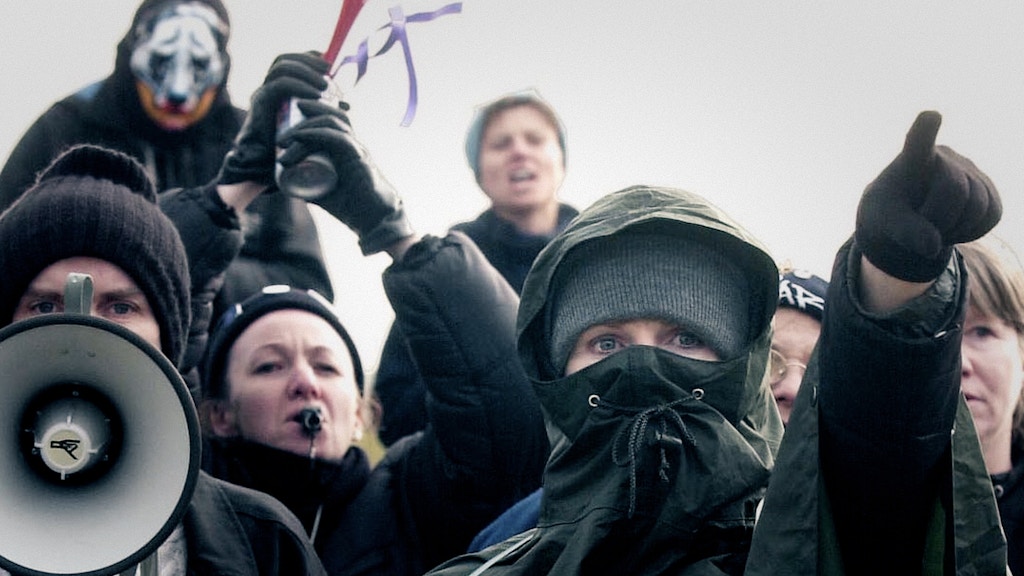
Protecting the endangered Asiatic cheetah. Tweeting a satirical poem. Attending a climate conference. Campaigning against a power plant. These actions hardly conjure images of suicide bombers or coup plotters. Yet they have been labeled “eco-terrorism,” “extremism,” or “threats to national security” by governments and businesses that seek to block the work of environmental activists. The dangers facing environmental defenders do not stop at accusations that they are national security risks.From the Amazon rainforest to South African mining communities, activists seeking to preserve ecosystems and ancestral lands are being threatened, attacked, and even killed with near total impunity, Human Rights Watch has found. But in contrast to many of these illegal acts, the unjust labeling of environmentalists as security threats is often more insidious, as it is generally carried out under the color of law.
In a long interesting piece on 28 November Human Rights Watch writes that only in exceptional cases would the actions of environmental activists meet a generally recognized definition of terrorism … When they engage in civil disobedience, their aim is usually to strengthen – and improve the enforcement of – existing environmental protection measures. It lists examples where environmental activists have been smeared as terrorists or other national security threats (for more detail see the original article):
In Kenya, the police and military have frequently labeled environmental activists opposing a mega-infrastructure project in the Lamu coastal region, including a coal-fired power plant, as “terrorists” while subjecting them to threats, beatings, and arbitrary arrests and detentions. In 15 cases documented by Human Rights Watch between 2013 and 2016, the authorities accused environmental defenders of membership in, or links to, the extremist armed group al-Shabab but provided no compelling evidence.
In the Philippines, President Rodrigo Duterte in 2018 placed 600 civil society members, including environmentalists and indigenous rights defenders, on a list of alleged members of the country’s communist party and its armed wing, which he declared to be a terrorist organization. Duterte’s “terrorist list” included Victoria Tauli-Corpuz, an indigenous Filipina who is the UN special rapporteur on the rights of indigenous peoples and a climate change activist.
In Ecuador, eight years passed before the prominent environmental activist José “Pepe” Acacho, a Shuar indigenous leader, was able to clear himself of “terrorism” charges for his activities opposing mining and oil exploration in the Amazon. Acacho was charged with terrorism in 2010 for allegedly inciting violence during Shuar protests against a mining law.
In the US in August 2018, then-US Interior Secretary Ryan Zinke blamed “environmental terrorist groups” that opposed logging for wildfires on the West Coast – a proposition immediately attacked by leading environmental organizations including the Sierra Club. In 2017, 84 members of the US Congress, most of them Republicans, asked the Justice Department if activists mobilizing against the construction of oil pipelines could be prosecuted as terrorists. (The department’s response was that in some cases, yes.)
.
In Russia, at least 14 environmental groups have stopped work in recent years, and the head of the prominent group Ekozaschita! (Ecodefense!), Alexandra Koroleva, fled the country in June to avoid prosecution under the draconian Law on Foreign Agents. The 2012 law requires any Russian group accepting foreign funding and carrying out activities deemed to be “political” to register as a “foreign agent,” a term that in Russia implies “spy” or “traitor.” Authorities have used the law to silence groups that opposed state-sanctioned development projects and petitioned authorities for the release of imprisoned environmental activists, a Human Rights Watch investigation found.
Civil society participation will be crucial to ambitious outcomes at COP25. Parties to the summit, which include all UN member countries and the European Union, should allow activists ample opportunity to air their concerns about the climate crisis and use their combined expertise to help identify solutions. They should also provide activists with a safe space to speak out about the threats they face for carrying out their work.
In addition, parties should publicly commit to robustly carrying out international and regional treaties that protect environmental defenders. One of these treaties is the Escazu Agreement (the Regional Agreement on Access to Information, Public Participation and Justice in Environmental Matters in Latin America and the Caribbean), the world’s first covenant to include specific provisions promoting and protecting environmental defenders. Twenty-one countries have signed the 2018 agreement. But only six countries have ratified it – five shy of the ratifications needed to enter it into force. Chile, which stepped down as COP25 host because of protests stemming from economic grievances, but will still preside over the negotiations in Madrid, should lead by example and ratify the agreement.
COP25 participants should also commit to upholding the Aarhus Convention (the United Nations Economic Commission for Europe Convention on Access to Information, Public Participation in Decision-making and Access to Justice in Environmental Matters), to which Spain is a signatory. The convention – an environmental pact for Europe, the European Union, and Central Asia – grants the public, including environmental groups, an array of rights including public participation and access to information and justice in governmental decisions on the environment, without harassment or persecution. Parties to the treaty, including the EU, and Poland for its crackdown at COP24, have been criticized – including in some cases by the Aarhus Convention’s own oversight body – for flouting these provisions.
COP25 delegates should recognize that to genuinely protect the environment, they also need to protect its defenders – including those unjustly targeted in the name of security.
The Speak Up, Sing Out Music Contest 2020 is on. In collaboration with the GRAMMY Museum, Robert F. Kennedy Human Rightsinvites students to write and produce original songs that speak out against human rights abuses. The format is open to any genre of music. The Grand Prize winning songwriter will participate in a GRAMMY-related event. ENTRY DEADLINE: APRIL 20, 2020.
“Getting your voice heard can really change your community, society, more than you could ever think.” says the 2019 Speak Up, Sing Out contest winner Tess Lira shares the inspiration behind her empowering song “Solid Gold” and encourages songwriters to trust their voices.
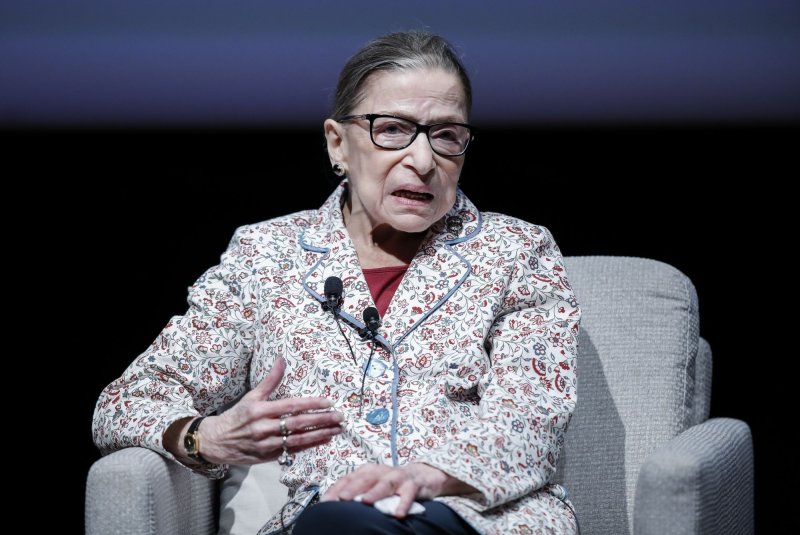
Ruth Bader Ginsburg; Photo by Kamil Krzaczynski/UPI | License Photo
On 23 October 2019 UPI reported that Supreme Court Associate Justice Ruth Bader Ginsburg received a $1 million prize for her support of human rights and gender equality. The Berggruen Institute, a non-partisan think tank, presented the fourth annual award to Ginsburg, 86. The institute was founded in 2010 by billionaire philanthropist Nicolas Berggruen.
“I am delighted the Jury has chosen to honor such a prolific leader in the field of jurisprudence,” Berggruen said. “Throughout her career, Ginsburg has used the law to advance ethical and philosophical principles of equality and human rights as basic tenets of the USA..Her contributions have shaped our way of life and way of thinking and have demonstrated to the world the importance of the rule of law in disabling discrimination.”
The Berggruen Prize for Philosophy & Culture is given each year to someone who has contributed to self-understanding and advancement in the world. Ginsburg chose to donate her winnings to a charity or non-profit organization she has not revealed.
Ayşe Erzan, Istanbul Technical University For her lifelong commitment to human rights, especially for her steadfast defense of the rights of citizens to criticize those in power, even at great personal cost.
Xiaoxing Xi, Temple University For his articulate and steadfast advocacy in support of the US scientific community and open scientific exchange, and especially his efforts to clarify the nature of international scientific collaboration in cases involving allegations of scientific espionage.
[In 2008, Sergei Magnitsky, a young Russian lawyer who uncovered massive tax fraud perpetrated by Russian officials, was charged with the very offenses he had uncovered. In an effort to cover up the crimes he had exposed, Magnitsky was sent to prison where he later died from abuse, neglect, and mistreatment. Bill Browder, for whom Magnitsky had worked, vowed to dedicate himself to seeking justice for Sergei and this crusade has made him a global human rights leader. First passed by the US Congress in 2012, the Global Magnitsky Human Rights Accountability Act authorized sanctions of government officials implicated in serious human rights abuses. ..Since its enactment, the US Government has sanctioned more than 70 officials in over a dozen different countries. Most recently, Magnitsky sanctions were enacted to penalize those Saudi Arabian officials implicated in the murder of journalist Jamal Khashoggi.]
Bill Browder’s campaign for justice and accountability did not stop in the United States. Since 2012, similar Magnitsky laws have been enacted in Canada, Estonia, the United Kingdom, Latvia, and Lithuania. Despite fervent opposition from Russia and other lawless regimes that prefer to have their human rights abuses go unnoticed and unpunished, the European Union, Australia, France, Germany, Ireland, Denmark, Italy, and other EU member countries are considering the passage of their own Magnitsky laws.
World leaders gathering for the United Nations General Assembly should reject the abusive policies of autocratic populists and promote greater respect for human rights worldwide, Human Rights Watch said ton 23 September 2019. Four leaders who have spearheaded aggressive attacks on human rights at home and at times abroad – Brazilian President Jair Bolsonaro, US President Donald Trump, Egyptian President Abdel Fattah al-Sisi, and Turkish President Recep Tayyip Erdogan – will open the annual General Debate at UN headquarters on September 24, 2019.
“Rising authoritarianism is one of the gravest challenges that defenders of human rights face every day,” said Kenneth Roth, executive director of Human Rights Watch. “It’s essential that world leaders push back against the lineup of anti-rights crusaders who will open this year’s UN General Assembly this year.”
Egypt’s al-Sisi, whom Trump reportedly praised as his “favorite dictator,” has been crushing free speech and other basic rights for six years. Hallmarks of his rule include the massive use of lethal force against protesters, and widespread and systematic use of torture in detention facilities.
In Turkey, three years after a violent coup attempt in 2016, Erdogan’s presidency has normalized emergency rule. More than 40,000 people are imprisoned on terrorism charges, few of the more than 130,000 public officials dismissed have been reinstated, elected Kurdish mayors have been removed, and the country is the world’s top jailer of journalists.
The Trump administration has repeatedly disparaged human rights, emboldening white supremacists and other extremists at home and abusive leaders abroad. And with respect to climate change, one of the top issues at this year’s General Assembly, Brazil’s Bolsonaro has effectively given a green light to criminal networks destroying the Amazon rainforest and intimidating and attacking forest defenders. Trump has actively undermined efforts to address climate change.
The lineup of abusive leaders speaking at the General Assembly does not end with the opening speakers. Leaders and ministers from countries with abysmal human rights records – including China, Iran, Russia, Saudi Arabia, and Venezuela – will also take the podium during the General Debate.
…“The only way for the UN’s prime-time lineup of leaders who proudly disparage rights not to set the tone for the entire General Assembly is for more principled leaders to be vocal and unflinching in their support for human rights and fundamental freedoms,” Roth said.
shows a rise in reprisals against human rights defenders (UN Human Rights Office). The study documents incidents from nearly 50 countries, such as the detention and imprisonment of activists, and the filming of participants at meetings, including on UN premises, without their consent. Andrew Gilmour, UN Assistant Secretary-General for Human Rights, said there are also cases of authorities threatening and harassing relatives of activists. “Some governments seem prepared to go to almost any lengths to punish people who cooperate with us. This may actually underscore the justice of the victims’ causes,” he said. The report covers the period from 1 June 2018 to 31 May of this year. It also notes misuse of online spaces to promote hate speech, cyberbullying and smear campaigns, particularly against women and lesbian, gay, bisexual, transgender and intersex persons. Mr. Gilmour expressed concern over the continued trend in the use of national security arguments and counter-terrorism strategies as justification for blocking access to the United Nations. “Reported cases include individuals or organizations being charged with terrorism, blamed for cooperation with foreign entities or accused of damaging the reputation or security of the State. These have also been used to justify restrictions on foreign funding,” he wrote in the report’s conclusions and recommendations. “A disproportionate number of cases of enforced disappearance or detention, many which have been deemed arbitrary by United Nations experts, relate to these national security arguments. This is a worrisome trend that I have addressed publicly, including in my previous report, and, regrettably, it continues.” He said the UN will continue to strengthen its response to these developments, including through improved reporting on allegations. However, he added, the onus remains on countries as “Member States must be accountable for their own actions and practices, and provide remedy when reprisals occur. [see also: https://humanrightsdefenders.blog/2019/09/17/intimidation-and-reprisals-on-un-premises-ngos-ask-for-more-action/%5D
However, the ISHR – which has followed the phenomenon much more systematically, made a more detailed and sombre assessment on 19 September: “Beyond rhetoric – States should step up efforts to prevent reprisals”
It notes that during the second interactive dialogue on reprisals with the Assistant Secretary-General, only Germany and Costa Rica raised specific cases of reprisals in Egypt and Nicaragua, respectively. The Bahamas and the Maldives shared good practices. Other States condemned reprisals rhetorically, expressing particular concern about reprisals and intimidation against women human rights defenders and LGBTIQ defenders, as well as by Council members.
During the dialogue Germany followed up again on the case of Egyptian lawyer Ebrahim Metwally who was arrested on his way to Geneva to attend a meeting with the Working Group on Enforced and Involuntary Disappearances. He was tortured and has been detained since September 2017. During the first interactive dialogue in September 2018, Germany was the only country to raise concern over an individual victim of reprisals. Costa Rica was the only other country to raise a specific situation of reprisals this year: it expressed particular concern about acts of intimidation and reprisals in Nicaragua.
The Bahamas responded to the allegations of intimidation and reprisals against woman human rights defender Alicia Wallaceafter she engaged with the Committee on Elimination of all forms of Discrimination against Women (CEDAW). She and her colleagues were subjected to hate speech by a well-known radio personality, the effect of which was to create an unsafe environment for Ms. Wallace and other women human rights defenders. The Bahamas affirmed its commitment to protect human rights defenders and ensure that they can engage freely with the UN. The delegation told the Council that authorities proactively provided assistance to Ms. Wallace to guarantee her safety.
The Maldives also told the Council that it is investigating the deaths of human rights defender Yameen Rashidand journalist Ahmed Rilwan to bring the perpetrators to justice; that the defamation law providing imprisonment sentences for journalists was repealed in November 2018; and that an amendment to the Human Rights Commission Act is currently considered in parliament, which would guarantee that the Commission can communicate with international organizations. The Maldives agreed with the Assistant Secretary-General that the powerful impact of prevention is through a zero tolerance policy for reprisals and committed to condemn all reprisals as a matter of urgency. The Maldives admitted that that they ‘have seen it first hand and do not want to bear witness to it again!’.
In its statement during the interactive dialogue, ISHR asked the Assistant Secretary-General what steps should be taken to ensure a more comprehensive report to the Council. This came in response to notably missing cases that ISHR submitted implicating Brazil, Russia and the United States. The Assistant Secretary-General acknowledged ISHR’s leading role in efforts to end reprisals, expressed his concern regarding the situations mentioned, but disagreed with ISHR’s statement that Secretary-General Guterres is pandering to certain States, ignoring victims’ legitimate claims and undermining efforts to protect victims from reprisals. He explained that the particular case raised by ISHR concerning remarks made by the then U.S. National Security Adviser, Mr. John R. Bolton, and the U.S. Secretary of State, Mike Pompeo did not fall under the reporting mandate of the Secretary-General as the intimidation related to the International Criminal Court. However, ISHR recalls that the Secretary General’s 2018 reprisals report stated that ‘while recognising the independent judicial character of the International Criminal Court, the Court is regarded as a related organisation in the United Nations’ and cases related to the ICC have been included several times previously, for example:
The 2018 reprisals report documented that two defenders in Iraq faced reprisals after attending a preparation meeting for a conference aimed at calling on Iraq to join the Court (para 29).
The 2017 reprisals report included Israel in the reprisals report regarding incidents of reprisals and intimidation of defenders engaging with or promoting engagement with the International Criminal Court (para 39).
Read ISHR’s full statement at the interactive dialogue here.
The Heads of Mission in Zimbabwe of the European Union, France, Germany, Greece, the Netherlands, Romania, Sweden, the United Kingdom, Australia, Canada and the USA issued the following statement on 20 August 2019:
Intimidation, harassment and physical attacks on human rights defenders, trade union and civil society representatives, and opposition politicians – prior to, during and following the demonstration in Harare on 16 August – are cause for great concern.
The Zimbabwean Constitution guarantees the right to personal security from violence and prohibits physical or psychological torture. The Heads of Mission urge the authorities to respect these fundamental rights, and to hold perpetrators of violence legally responsible.
The Heads of Mission call on the authorities to respect the constitutional rights to freedom of assembly, association and expression as well as to peaceful protest, and urge all political party leaders and supporters to abstain from threats and incitement to violence as well as acts of violence or vandalism. The security forces must adhere to their Constitutional mandate and exercise restraint and proportionality while maintaining public order.
Only by addressing concretely and rapidly these human rights violations will the Government of Zimbabwe give credibility to its commitments to address longstanding governance challenges. The Heads of Mission reiterate their calls for the implementation of the government’s political and economic reform agenda, underpinned by inclusive national dialogue and increased efforts to address the severe social situation.
Although not directly linked to human rights defenders (but they are often the victims of gun violence) the above statement by the Rupert Colville, spokesperson for the UN High Commissioner for Human Rights, reacting to the weekend mass shootings in Texas and Ohio, raises the straightforward question: why should any civilian anywhere be able to acquire an assult rifle…??
“Award a protection against autocratic tendencies, but Magsaysay is ‘not infallible” says Sandeep Pandey, a social activist and academic, a Magsasay recipient, who returned his award in 2002.
There could not have been a better choice than Ravish Kumar for this year’s Magsaysay Award. Ravish has demonstrated exemplary courage in questioning the sectarian, communal, jingoistic and irrational politics which has dominated the narrative in this country over the last five years when one by one most of the saner voices were made to disappear, some made compromises or simply surrendered and worst there were others who decided to collaborate with this insidious project of right wing fundamentalism. [see: https://humanrightsdefenders.blog/2019/08/03/magsaysay-awards-2019-honor-4-outstanding-asians/] .. The Magsaysay Award will definitely bring more credibility to his work and hopefully some of the opposition from right wing forces, who are known to troll in an organised manner any sane voice in support of human rights, democracy, justice, communal harmony, peace and friendship, especially with Pakistan, and who’ve targeted Ravish in the past, will subside. .. However, the aura of Magsaysay is quite exaggerated in India than other countries of Asia, and outside of Asia very few people have heard of it, probably because there are many well known Indians who have won it. Part of the reason for its popularity in India is that it and its winners feature prominently in most General Knowledge books which are used by students preparing for competitive examinations. But the Magsaysay Foundation itself is not infallible, unlike its reputation.
I went to Manila in 2002 to receive the Magsaysay Award as well as participate in a Peace conference organised at the University there in the wake of impending US attack on Iraq. It was a mere coincidence that both events were happening on same dates. There was a demonstration outside the US Embassy the day after the Award ceremony. The chairperson of the Foundation asked me not to participate in the demonstration as it could tarnish its image. .. I argued that US was a bigger culprit in the game of warfare and I considered it part of my activism to oppose the US policy. Before landing in Manila I had little idea that the Foundation was completely US funded — by the Rockefeller and Ford Foundations. Obviously the Magsaysay Foundation was quite uncomfortable with my stand. The fears of Magsaysay Foundation came true. Even the Hindi Indian media back home covered the demonstration outside US Embassy in Manila highlighting my participation. An editorial in a Manila newspaper asked me to return the $50,000 Award money to the US Embassy before I returned to India if I was the principled man I wanted them to believe. I returned the cheque from the airport to the Magsaysay Foundation before embarking the plane out of Manila. .. But the Award is prestigious and definitely is a protection against autocratic tendencies of the state and its cronies in India, especially for human rights defenders and upright journalists like Ravish Kumar. We hope that the right-wing fundamentalists will take his viewpoint more seriously and the media fraternity will start considering him as an ideal rather than an exception. He has now emerged as the hope for a free media in India and by extension a democratic polity. This is a victory of progressive forces, sanity and humanity and we must celebrate it. Most of all it is a victory for truth which has become a casualty in the era of post-truth. The post-truth has created only strife and conflicts. If we have to return to the human endeavour of making this world a better place for everybody, there is no option but to go back to recognizing truth as the most important values. In spite of Nathuram Godse having become a hero for a fringe group in this country, the universal ideal continues to be Mahatma Gandhi. —