World leaders gathering for the United Nations General Assembly should reject the abusive policies of autocratic populists and promote greater respect for human rights worldwide, Human Rights Watch said ton 23 September 2019. Four leaders who have spearheaded aggressive attacks on human rights at home and at times abroad – Brazilian President Jair Bolsonaro, US President Donald Trump, Egyptian President Abdel Fattah al-Sisi, and Turkish President Recep Tayyip Erdogan – will open the annual General Debate at UN headquarters on September 24, 2019.Posts Tagged ‘USA’
Human Rights Watch takes populist leaders in UN to task
September 25, 2019
World leaders gathering for the United Nations General Assembly should reject the abusive policies of autocratic populists and promote greater respect for human rights worldwide, Human Rights Watch said ton 23 September 2019. Four leaders who have spearheaded aggressive attacks on human rights at home and at times abroad – Brazilian President Jair Bolsonaro, US President Donald Trump, Egyptian President Abdel Fattah al-Sisi, and Turkish President Recep Tayyip Erdogan – will open the annual General Debate at UN headquarters on September 24, 2019.Andrew Gilmour’s 2019 report on reprisals: it gets worse but response remains mostly rhetoric
September 23, 2019However, the ISHR – which has followed the phenomenon much more systematically, made a more detailed and sombre assessment on 19 September: “Beyond rhetoric – States should step up efforts to prevent reprisals”
See also: https://humanrightsdefenders.blog/tag/42nd-session-of-the-un-human-rights-council/] and https://humanrightsdefenders.blog/2019/09/17/intimidation-and-reprisals-on-un-premises-ngos-ask-for-more-action/]
It notes that during the second interactive dialogue on reprisals with the Assistant Secretary-General, only Germany and Costa Rica raised specific cases of reprisals in Egypt and Nicaragua, respectively. The Bahamas and the Maldives shared good practices. Other States condemned reprisals rhetorically, expressing particular concern about reprisals and intimidation against women human rights defenders and LGBTIQ defenders, as well as by Council members.
During the dialogue Germany followed up again on the case of Egyptian lawyer Ebrahim Metwally who was arrested on his way to Geneva to attend a meeting with the Working Group on Enforced and Involuntary Disappearances. He was tortured and has been detained since September 2017. During the first interactive dialogue in September 2018, Germany was the only country to raise concern over an individual victim of reprisals. Costa Rica was the only other country to raise a specific situation of reprisals this year: it expressed particular concern about acts of intimidation and reprisals in Nicaragua.
The Bahamas responded to the allegations of intimidation and reprisals against woman human rights defender Alicia Wallace after she engaged with the Committee on Elimination of all forms of Discrimination against Women (CEDAW). She and her colleagues were subjected to hate speech by a well-known radio personality, the effect of which was to create an unsafe environment for Ms. Wallace and other women human rights defenders. The Bahamas affirmed its commitment to protect human rights defenders and ensure that they can engage freely with the UN. The delegation told the Council that authorities proactively provided assistance to Ms. Wallace to guarantee her safety.
The Maldives also told the Council that it is investigating the deaths of human rights defender Yameen Rashid and journalist Ahmed Rilwan to bring the perpetrators to justice; that the defamation law providing imprisonment sentences for journalists was repealed in November 2018; and that an amendment to the Human Rights Commission Act is currently considered in parliament, which would guarantee that the Commission can communicate with international organizations. The Maldives agreed with the Assistant Secretary-General that the powerful impact of prevention is through a zero tolerance policy for reprisals and committed to condemn all reprisals as a matter of urgency. The Maldives admitted that that they ‘have seen it first hand and do not want to bear witness to it again!’.
In its statement during the interactive dialogue, ISHR asked the Assistant Secretary-General what steps should be taken to ensure a more comprehensive report to the Council. This came in response to notably missing cases that ISHR submitted implicating Brazil, Russia and the United States. The Assistant Secretary-General acknowledged ISHR’s leading role in efforts to end reprisals, expressed his concern regarding the situations mentioned, but disagreed with ISHR’s statement that Secretary-General Guterres is pandering to certain States, ignoring victims’ legitimate claims and undermining efforts to protect victims from reprisals. He explained that the particular case raised by ISHR concerning remarks made by the then U.S. National Security Adviser, Mr. John R. Bolton, and the U.S. Secretary of State, Mike Pompeo did not fall under the reporting mandate of the Secretary-General as the intimidation related to the International Criminal Court. However, ISHR recalls that the Secretary General’s 2018 reprisals report stated that ‘while recognising the independent judicial character of the International Criminal Court, the Court is regarded as a related organisation in the United Nations’ and cases related to the ICC have been included several times previously, for example:
- The 2018 reprisals report documented that two defenders in Iraq faced reprisals after attending a preparation meeting for a conference aimed at calling on Iraq to join the Court (para 29).
- The 2017 reprisals report included Israel in the reprisals report regarding incidents of reprisals and intimidation of defenders engaging with or promoting engagement with the International Criminal Court (para 39).
Read ISHR’s full statement at the interactive dialogue here.
https://www.ishr.ch/news/hrc42-beyond-rhetoric-states-should-step-efforts-prevent-reprisals
Statement by western diplomats in Zimbabwe on human rights defenders
August 21, 2019The Heads of Mission in Zimbabwe of the European Union, France, Germany, Greece, the Netherlands, Romania, Sweden, the United Kingdom, Australia, Canada and the USA issued the following statement on 20 August 2019:
Intimidation, harassment and physical attacks on human rights defenders, trade union and civil society representatives, and opposition politicians – prior to, during and following the demonstration in Harare on 16 August – are cause for great concern.
The Zimbabwean Constitution guarantees the right to personal security from violence and prohibits physical or psychological torture. The Heads of Mission urge the authorities to respect these fundamental rights, and to hold perpetrators of violence legally responsible.
The Heads of Mission call on the authorities to respect the constitutional rights to freedom of assembly, association and expression as well as to peaceful protest, and urge all political party leaders and supporters to abstain from threats and incitement to violence as well as acts of violence or vandalism. The security forces must adhere to their Constitutional mandate and exercise restraint and proportionality while maintaining public order.
Only by addressing concretely and rapidly these human rights violations will the Government of Zimbabwe give credibility to its commitments to address longstanding governance challenges. The Heads of Mission reiterate their calls for the implementation of the government’s political and economic reform agenda, underpinned by inclusive national dialogue and increased efforts to address the severe social situation.
See also the Government’s reaction: https://allafrica.com/stories/201908210061.html
UN spokesperson on human rights puts a simple question on gun violence
August 9, 2019Although not directly linked to human rights defenders (but they are often the victims of gun violence) the above statement by the Rupert Colville, spokesperson for the UN High Commissioner for Human Rights, reacting to the weekend mass shootings in Texas and Ohio, raises the straightforward question: why should any civilian anywhere be able to acquire an assult rifle…??
See also in this context: https://www.cnsnews.com/news/article/patrick-goodenough/un-rights-experts-bigoted-statements-make-politicians-complicit
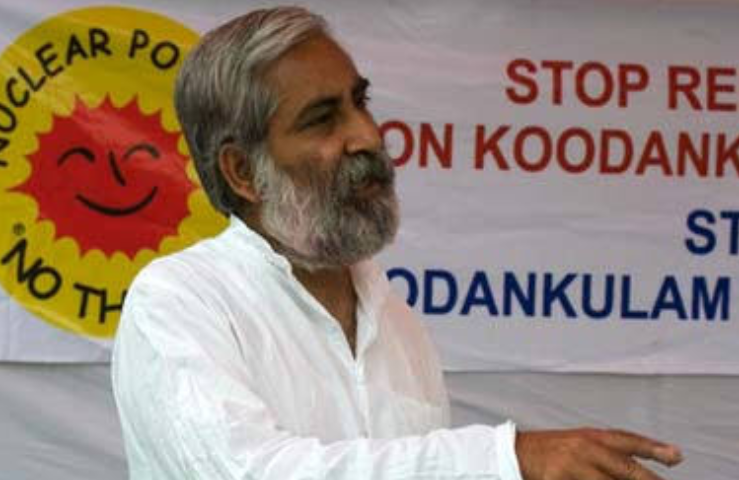
Former Magsaysay laureate Sandeep Pandey is in two minds about this award
August 5, 2019“Award a protection against autocratic tendencies, but Magsaysay is ‘not infallible” says Sandeep Pandey, a social activist and academic, a Magsasay recipient, who returned his award in 2002.
There could not have been a better choice than Ravish Kumar for this year’s Magsaysay Award. Ravish has demonstrated exemplary courage in questioning the sectarian, communal, jingoistic and irrational politics which has dominated the narrative in this country over the last five years when one by one most of the saner voices were made to disappear, some made compromises or simply surrendered and worst there were others who decided to collaborate with this insidious project of right wing fundamentalism. [see: https://humanrightsdefenders.blog/2019/08/03/magsaysay-awards-2019-honor-4-outstanding-asians/]
..
The Magsaysay Award will definitely bring more credibility to his work and hopefully some of the opposition from right wing forces, who are known to troll in an organised manner any sane voice in support of human rights, democracy, justice, communal harmony, peace and friendship, especially with Pakistan, and who’ve targeted Ravish in the past, will subside.
..
However, the aura of Magsaysay is quite exaggerated in India than other countries of Asia, and outside of Asia very few people have heard of it, probably because there are many well known Indians who have won it. Part of the reason for its popularity in India is that it and its winners feature prominently in most General Knowledge books which are used by students preparing for competitive examinations. But the Magsaysay Foundation itself is not infallible, unlike its reputation.
I went to Manila in 2002 to receive the Magsaysay Award as well as participate in a Peace conference organised at the University there in the wake of impending US attack on Iraq. It was a mere coincidence that both events were happening on same dates. There was a demonstration outside the US Embassy the day after the Award ceremony. The chairperson of the Foundation asked me not to participate in the demonstration as it could tarnish its image. ..
I argued that US was a bigger culprit in the game of warfare and I considered it part of my activism to oppose the US policy. Before landing in Manila I had little idea that the Foundation was completely US funded — by the Rockefeller and Ford Foundations. Obviously the Magsaysay Foundation was quite uncomfortable with my stand. The fears of Magsaysay Foundation came true. Even the Hindi Indian media back home covered the demonstration outside US Embassy in Manila highlighting my participation. An editorial in a Manila newspaper asked me to return the $50,000 Award money to the US Embassy before I returned to India if I was the principled man I wanted them to believe. I returned the cheque from the airport to the Magsaysay Foundation before embarking the plane out of Manila.
..
But the Award is prestigious and definitely is a protection against autocratic tendencies of the state and its cronies in India, especially for human rights defenders and upright journalists like Ravish Kumar. We hope that the right-wing fundamentalists will take his viewpoint more seriously and the media fraternity will start considering him as an ideal rather than an exception. He has now emerged as the hope for a free media in India and by extension a democratic polity. This is a victory of progressive forces, sanity and humanity and we must celebrate it. Most of all it is a victory for truth which has become a casualty in the era of post-truth. The post-truth has created only strife and conflicts. If we have to return to the human endeavour of making this world a better place for everybody, there is no option but to go back to recognizing truth as the most important values. In spite of Nathuram Godse having become a hero for a fringe group in this country, the universal ideal continues to be Mahatma Gandhi.
—
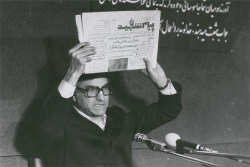
Abass Amiretezam’s Children Filed an Action Against Government of Iran and IRGC for Alleged 38 Years of Torture, in Federal Court
July 16, 2019
On 15 July 2019, the law firm Herischi & Associates LLC issued a press release announcing that the family of Mr. Abbas Amirentezam, former Deputy Prime Minister of Iran in 1979, filed an action against the Islamic Republic of Iran and the Iranian Revolutionary Guard Corp (IRGC) for, allegedly, the almost 40 year unlawful incarceration and house arrest of their father who was subjected to torture, solitary confinement, and lack of medical care that ultimately led to his death in 2018. The complaint is lodged under the Foreign Sovereign Immunities Act (FSIA)
Allegedly, Mr. Amirentezam was the longest-held political prisoner and prisoner of conscience in the Islamic Republic of Iran. According to Fariba Amini, as of 2018 he had “been in jail for 17 years and in and out of jail for the twenty one years, altogether for 38 years.” He was Iran’s Ambassador to the five Scandinavian countries and Deputy Prime Minister in the Interim Government of the Islamic Republic. Mr. Amirentezam opposed the Iranian hostage taking of the American Embassy in Tehran in 1979 and was subsequently arrested. Allegedly for 555 days, he was held in solitary confinement without access to lawyers nor any details of the charges against him before his trial; after Iran released the 52 American hostages in 1981, Amirentezam was tried without access to a lawyer and jury; he was unjustly convicted and condemned to life in prison.
The following is alleged in the complaint:
According to his memoir, “until 1996, while he was incarcerated in Evin prison, Mr. Amirentezam was denied any visitation rights and/or communication with his children. Mr. Amirentezam was routinely tortured and exposed to mock executions. He was refused medical treatment and consequently suffered irreparable damage to his health. His family not only endured his absence but lived in continuous fear of his death. Despite attempting to silence Mr. Amirentezam – he defied and remained as vocal as he could throughout his incredible hardship.”
According to UN Commission on Human Rights Report published on March 1996, Amirentezam interviewed with the UN Special Representative of the Commission on Human Rights, Mr. Maurice Copithorne. In his 1996 report to the UN, Mr. Amirentezam alleges that “1,100 political prisoners had been executed in Evin prison during one night at the beginning of the fall of 1981.” Pursuant to Mr. Amirentezam personal website, he alleges that, “despite constant pressure from the Iranian authorities, he never confessed to any erroneous allegations and never asked for mercy. He remained defiant to the end. As a result, he is the recipient the human rights award of Bruno Kreisky Prize in 1998 and the Jan Karski Award for Moral Courage in 2003.”
Mr. Amirentezam died on July 12, 2018 while under house arrest in Tehran. Allegedly until his death, he demanded a fair and public trial. Mr. Amirentezam children claimed in their Complaint that they have suffered significantly by the immense pain intentionally imposed unto their family by the government of the Islamic Republic of Iran. The Complaint further alleges that, “the Amirentezam family is demanding justice by exposing the government of the Islamic Republic of Iran and the IRGC for all the cruelty and suffering they have endured for almost four decades.”
This case is brought under terrorism exception of the Foreign Sovereign Immunities Act (FSIA) in the U.S. District Court for the District of Columbia through Plaintiffs attorney, Mr. Ali Herischi of Herischi & Associates, LLC. This action is filed on the first anniversary after Mr. Amirentezam’s death. Plaintiffs are asking for compensatory and punitive damages. Mr. Herischi is hopeful that “this case will bring attention to the systematic human rights abuses and domestic terrorism by the government of the Islamic Republic of Iran and the Iranian Revolutionary Guard Corps.”
Commission on Unalienable Rights: a more nuanced critique by Moyn
July 14, 2019On July 12, 2019 Samuel Moyn published in Prospect an rather different, less alarmist approach to the efforts of the US State Department to redefine human rights [https://humanrightsdefenders.blog/2019/07/11/trump-marches-on-with-commission-on-unalienable-rights/]. The author [see also: https://humanrightsdefenders.blog/2018/04/25/has-the-human-rights-movement-failed-a-serious-critique/] makes the point that, first, it looks like the commission will exercise no real power and second that ‘rights proliferation’ is an entirely mainstream and reasonable concern. He also makes interesting points on the composition of the Commission. Whatever one’s views on this are, the piece is worth reading in its totality:
The announcement by Secretary of State Mike Pompeo that he has formed a new Commission on Unalienable Rights is being cited as one more reason to decry Donald Trump for busting norms and persecuting the worst-off. It is, The New Yorker wrote, an act of “unbelievable hypocrisy” for Trump to wrap himself in the mantle of human rights when he has violated them left and right, laid siege to a liberal international order founded on them, and embraced autocracy the world over.
It’s a natural response, but a closer look at the panel suggests that the criticism ought to fall on the symbolic politics of the commission, and our response needs to involve more than just championing the human rights Trump has been trashing, as if the status quo ante 2016 was working well.
It was remarkable, when Pompeo announced the commission at the State Department, how fulsomely he embraced the whole idea of human rights. It is a testament to the fact that—even under Trump—it is an idea that remains non-negotiable, something leaders must redefine in theory even when others suspect them of betraying it in practice.
Pompeo’s apparent worry, to judge from The Wall Street Journal op-ed he penned the day of the announcement, is what is known as rights “proliferation.” Specifically, he charged that, after the Cold War, rights advocates “turned their energy” to “new categories of rights.”
The commission’s very use of the word “unalienable,” which figured in America’s Declaration of Independence before falling out of general usage, trafficked in a founder fetishism that implied that it is the good old rights that matter, not newfangled ones or new claimants. And Pompeo doubled down on this nostalgia in his repeated shout-outs to 1776, and his admonition not “to discover new principles but to ground our discussion of human rights in America’s founding principles.”
Critics have understandably guessed that the goal is to emphasize religious freedom and free-market principles, treating abortion and LGBT rights as illicit, and possibly economic and social rights too. “In effect,” Masha Gessen wrote, also in The New Yorker, “the new commission will contemplate who is and isn’t human, and who, therefore, possesses inalienable rights.” Fetuses will be accorded rights, and the LGBT community stripped of them.
It’s a reasonable fear and something to watch. But the really significant thing about the commission may lie elsewhere.
For one thing, it looks like the commission will exercise no real power. Critics fear that its true purpose is to make an end run around other parts of the State Department, such as the legal adviser’s office and the Bureau of Democracy, Human Rights, and Labor, but those departments are also run by Trump appointees.
For another, rights proliferation is an entirely mainstream and reasonable concern, backed by such august rights thinkers as Baroness Onora O’Neill, a British liberal philosopher and House of Lords member. If everything is a right, nothing is. If there are new rights, it is not obvious the old ones have the same currency. Finally, it is never totally clear what it means to call something a right to begin with—especially since most rights are not intended to function as trumps but rather signal that policymaking somehow ought to take account of the priorities that rights name. These questions will not go away. Indeed, the idea that they are already settled, through appeal to the authority, consensus, and orthodoxy of the human rights movement, resembles the Foundermania in which Pompeo indulged.
None of this means that Trumpian human rights ought not to be treated with alarm. But for now, the international consensus around human rights among transnational experts is simply too strong to allow this commission to magically shift it. Indeed, the response to Pompeo’s announcement, which reportedly surprised Foggy Bottom, proves how weak the commission is likely to be.
For that reason, it is more interesting to focus on what this move says about the conservative movement under Trump and its changing understandings of internationalism. And to understand that, it is critical to shift from Pompeo to the members of the commission he appointed.
“Human rights” have for decades, and for conservatives and liberals alike, described the values America should stand for in global affairs, especially in a world of despots. The founders announced a revolution to that world, but mainly to secure human rights for (some) Americans in their new state. Yet like liberals and conservatives for decades, the commission, originating in the State Department, presumes that human rights are already safe for the domestic politics of the United States, or someone else’s problem. Pompeo is not changing internationalist premise, and has no power as secretary of state to do so.
Before Trump, conservative internationalism has differed from liberal internationalism on details. Conservatives in the Cold War dithered about whether to support autocrats abroad but in the end, after the ascendancy of neoconservatism, embraced “democracy promotion.” As for American liberals, this has led them to idealize America’s global military ascendancy and to support many wars. And like those liberals, after a near miss under Jimmy Carter’s presidency when human rights were born, conservatives have embraced a vision of human rights abroad that ignores economic and social rights like the entitlement to a job or basic necessities—even though they were part of the 1948 Universal Declaration of Human Rights that Pompeo also invoked.
It is perfectly legitimate to resist militarism and neoliberalism, central fixtures of U.S. foreign policy for decades on both sides of the aisle. In fact, one might have thought that Trump, who ran as a kind of anti-war candidate playing on the economic stagnation of the rest at the expense of the rich like himself, would have raised doubts about what conservatives and liberals alike have taken human rights to be about. But no. A more debatable path for conservative internationalism is suggested by the commission’s membership.
Led by Mary Ann Glendon, the controversial Harvard Law professor and staunch right-wing Roman Catholic, the most interesting thing about the commission is not its inclusion of some house publicists of the interdenominational religious right, most of whom have (like Glendon) treated the “theocon” magazine First Things as one of their main outlets. Rather, it is the inclusion of others with links to the secular far right, or at least curious about it. Former New Left intellectual Russell Berman, along with his fellow German literature specialist David Tse-Chien Pan, both have spent lots of time working for Telos, the onetime New Left journal that since the 1980s has promoted the thinking of the European far right. As political scientist Joseph Lowndes has written, Telos has a fascinating if small role in the American circles that led to contemporary far-right nationalism.
It is no more than a hint, in short, but the most fascinating thing about the commission’s membership is therefore that it appears to be a laboratory for new collaborations between the religious right and the secular far right. And in particular, it is a setting for experimenting with what the future of conservative internationalism should look like.
If it means, as commission member Peter Berkowitz wrote recently, that “a certain restraint is again crucial to conserving a free and open international order” after decades of promoting human rights abroad the wrong way, that is one thing. But there are other possibilities. If it means a conservative internationalism that, as Quinn Slobodian has argued, actually extends free trade while striving for racially and religiously homogeneous societies, conservative internationalism will look very different.
Ironically, neither the founders nor “natural law”—the favorite concept of several of the religious conservatives on the panel—will help it decide this dilemma on the right, which is the real story of Trump’s presidency when it comes to foreign policy. And much more is at stake than saving human rights from its new defenders in resisting the future conservative internationalism may have in store.
https://prospect.org/article/can-pompeo-redefine-human-rights-trump-era
Trump marches on with “Commission on Unalienable Rights”
July 11, 2019Secretary of State Mike Pompeo announced the creation of the Commission on Unalienable Rights, saying the country must be “vigilant that human rights discourse not be corrupted or hijacked or used for dubious or malignant purposes.” As human rights claims have “proliferated,” he said, nations have grown confused about what constitutes a human right and which rights should be respected and treated as valid.
“I hope that the commission will revisit the most basic of questions: What does it mean to say, or claim, that something is in fact a human right?” Pompeo said. “How do we know, or how do we determine that this — or that — is a human right. Is it true, and therefore ought it to be honored?”
The commission will be chaired by Harvard Law School professor Mary Ann Glendon, a former U.S. ambassador to the Vatican.
Amnesty International USA said there was no reason for such a review given the decades-old protections in place. “This administration has actively worked to deny and take away long-standing human rights protections since Trump’s inauguration,” Joanne Lin, the group’s national director of advocacy and government affairs, said in a statement.
“If this administration truly wanted to support people’s rights, it would use the global framework that’s already in place. Instead, it wants to undermine rights for individuals, as well as
A group of Democratic senators said in a letter last month: “We believe the extent to which this administration has undermined American leadership and credibility on promoting fundamental human rights is of historic proportions,” the senators wrote. “The department’s proposed Commission on Unalienable Rights must not serve as a platform to further erode U.S. leadership and undercut U.S. interests.”
Glendon, who joined Pompeo at the State Department for the announcement, said she was honored to do the job at a time when “basic human rights are being misunderstood by many, manipulated by many and ignored by the world’s worst human rights violators.”
NGOs in June 2020 filed an amicus curiae brief: https://democracyforward.org/wp-content/uploads/2020/06/URC_51_Amicus-Brief-human-rights-orgs-06.09.20.pdf
Harassment of migration human rights defenders in the US alleged by AI
July 8, 2019
(Photo by John Moore/Getty Images)
On 2 July 2019, Amnesty International said that the Department of Homeland Security (DHS) and the Justice Department are using the justice system to target illegal immigrant activists. “Amnesty International has found since 2018 that the United States (US) government has executed an unlawful and politically motivated campaign of intimidation, threats, harassment, and criminal investigations against people who defend the human rights of migrants, refugees and asylum seekers (‘migrant human rights defenders’) on the US–Mexico border,”
The London-based human rights organization interviewed 23 “human rights defenders” who claim they have being targeted by the U.S. government because of their work on behalf of immigrants. Of the 23 who were interviewed, 10 were put under a DHS watch list for their alleged involvement in human smuggling — criminal investigations that Amnesty International referred to as “dubious.” Others alleged instances of targeted harassment and intimidation at the hands of U.S. authorities. The people interviewed by human rights group included activists, lawyers and others who work to promote the interests of illegal aliens.
“The Trump administration’s targeting of human rights defenders through discriminatory misuse of the criminal justice system sets it on a slippery slope toward authoritarianism,” Erika Guevara-Rosasa, Americas director for Amnesty International, said in the report. “The US government is disgracing itself by threatening and even prosecuting its own citizens for their vital work to save the lives of people in a desperate situation at the border.”
See also: https://humanrightsdefenders.blog/2019/05/29/also-in-usa-helping-migrants-is-criminalised-scot-warren-in-court-on-29-may/. His case ended in a mistrial: https://theintercept.com/2019/06/12/felony-trial-of-no-more-deaths-volunteer-scott-warren-ends-in-mistrial/ But now faces a retrial: https://www.democracynow.org/2019/7/3/no_more_deaths_scott_warren_retrial
https://dailycaller.com/2019/07/01/amnesty-international-report-migrants/
116 Iranian Human Rights Defenders speak out against US-Iran military conflict
June 28, 2019The impact of military action on Iran would “lead to an accelerated human rights and humanitarian crisis and would only serve to destabilize an already troubled region,” said the statement co-organized by United for Iran and the Center for Human Rights in Iran. The names of the signatories, including activists, lawyers, journalists, and lawyers, are to be found in the link below.
Following is the letter:
We, the undersigned Iranian and international human rights organizations and advocates, express grave concerns over the rising tensions between the United States and the Islamic Republic of Iran, which risks a military confrontation that would cause massive human rights harms. We urge all parties and international actors to take immediate and clear steps to prevent a conflict.
The impact of any military action in Iran, as we have seen in neighboring countries, would be devastating. It would likely lead to an accelerated human rights and humanitarian crisis and could only serve to destabilize an already troubled region. Only peace-focused policies that prioritize the rights and well-being of ordinary people in Iran and the region can provide meaningful, long-term benefits.
We have a deep understanding of the problems in Iran, including human rights challenges and corruption within some government sectors. We have dedicated our lives to strengthening the rights of women and girls, ethnic minorities, religious minorities, workers, journalists, university students, LGBTQ people, artists, and political prisoners in Iran. We have fought for the freedom of speech, freedom of religion, the right to a fair trial, socio-economic rights of the Iranian people, and an end to discrimination. We have consistently opposed Iranian authorities in their abuse of power and oppressive policies. It is from this perspective that we warn against the threat posed by military conflict.
We also fear that military action against Iran will be disastrous for millions of ordinary people and could lead to the type of violent sectarian civil conflict seen in neighboring countries. The instability of these conflicts and the extent to which they pit groups of people against each other has led to immeasurable human rights abuses.
Many Iran-based human rights defenders have expressed dismay that broad economic sanctions imposed by the US and the specter of war have already made their work more difficult. Many of them are struggling to make ends meet in a depressed economy, while their activities have become increasingly risky in a heightened security environment. The threat of war has strengthened support for the Iranian state’s security approaches and has been used as a pretext to crack down on activists. Minority communities, who have little space for civic activism, suffer the brunt of crackdowns at such times. Many Iranian human rights defenders fear that an actual military conflict would give the Iranian security forces an opportunity to finally put a complete stop to their advocacy efforts.
These concerns reflect some of the likely outcomes of any military confrontation in Iran, underscoring the need for peaceful and legal solutions to any tensions between states.
We urge all parties to show maximum restraint. We ask that the United Nations Secretary-General, the European Union, and the government of Japan, as well as countries in the region that have stepped in the past to foster peace, to intervene to prevent the outbreak of war and deepening human rights and humanitarian crisis.
Sincerely,
116 Iranian Rights Defenders Warn of “Devastating” Consequences of US-Iran Military Conflict