Posts Tagged ‘UN General Assembly’
October 17, 2014
The need to combat impunity for attacks against human rights defenders, together with the enactment of specific laws and policies to protect their work, have been identified as key priorities by the new
UN Special Rapporteur on Human Rights Defenders,
Michel Forst, in his
inaugural report to the UN General Assembly next week. This is stated by the International Service for Human Rights in Geneva.
The report, which will be presented to the General Assembly in New York in the week of 20 October, sets out a vision and priorities for the mandate over the coming three years, including a focus on groups of human rights defenders who are ‘most exposed’ or at risk, such as those working to promote economic, social and cultural rights, the rights of minorities, the rights of lesbian, gay, bisexual, transgender and intersex persons, women human rights defenders, and those working on issues of business and human rights or on accountability for past violations. According to the Special Rapporteur, each of his ‘future thematic and mission reports will contain a specific section dedicated to analysing the development of trends and particular threats facing the most exposed groups’.
The report expresses grave concern at the related issues of lack of cooperation with the mandate by some States, and the intimidation and reprisals faced by many human rights defenders in connection with their engagement with international and regional human rights mechanisms. The Special Rapporteur is ‘struck by the number and gravity of threats’ against those who cooperate with the UN, the report says, including ‘threats against the defenders themselves or their families, defamation campaigns, death threats, physical violence, abductions, hounding by law enforcement, assassinations or various forms of harassment and intimidation by the police’. In this connection, the Special Rapporteur pledges to follow-up more actively and systematically with States in relation to the investigation and remediation of alleged threats and attacks against defenders.
The need to ensure accountability and combat impunity for attacks against defenders comes through as a strong theme in the Special Rapporteur’s report, with Mr Forst identifying that ‘it is partially because of the de facto impunity enjoyed by perpetrators of reprisals against defenders that the phenomenon grows and expands’ and pledging that ‘one of the main lines of his work will be to combat the culture of impunity’. It is likely that the Special Rapporteur will dedicate a forthcoming report to this topic.[for examples see: https://thoolen.wordpress.com/tag/reprisals/]
Building on the recommendation of the previous Special Rapporteur that States enact specific laws and policies to protect human rights defenders, Mr Forst’s inaugural report identifies a need to ‘intensify efforts to convince governments to develop specific national measures, following the examples of Brazil, Colombia, Cote d’Ivoire and Mexico’ and foreshadows a future study focusing on the importance of national laws and mechanisms and ways to improve their effectiveness. He also pledges to play a significant role in the identification and dissemination of ‘good practices’ in the implementation of the Declaration of Human Rights Defenders, including through a more visible social media presence for the mandate.
Finally, the Special Rapporteur identifies a need to further intensify cooperation with other UN mandate holders, together with the Special Rapporteurs on Human Rights Defenders appointed by regional mechanisms, including the African Commission on Human and Peoples’ Rights and the Inter-American Commission on Human Rights. In this regard, it is notable that the Special Rapporteur has already issued joint statements with other mandate holders, such as the Special Rapporteurs on Freedom of Expression and Freedom of Association and Assembly, on issues including the detention of Bahraini human rights defender Maryam Al-Khawaja, the use of anti-terrorism legislation to criminalise human rights defenders in Ethiopia, and the passage of draconian anti-protest legislation in the Australian state of Tasmania.
via Special Rapporteur: Combat impunity and enact laws to protect human rights defenders | ISHR.
Posted in human rights, Human Rights Defenders, ISHR, UN | Leave a Comment »
Tags: Australia, Bahrain, empowering civil society, Ethiopia, Human Rights Defenders, impunity, international protection, intimidation, ISHR, Michel Forst, reporting, reprisals, Special Rapporteur on Human Rights Defenders, UN General Assembly, UN Special Rapporteur on Human Rights Defenders
June 6, 2014
The ISHR Monitor of June 2014 contains a good wrap-up of the situation regarding reprisals against Human Rights Defenders written by Eleanor Openshaw under the title: “Reprisals: States must reduce unacceptable human cost of cooperating with UN”.
‘Regrettably, reprisals against persons cooperating with the United Nations, its mechanisms and representatives in the field of human rights continue. ...’ said UN Secretary-General Ban Ki-moon in 2013. In response, the UN Human Rights Council adopted a landmark resolution in September 2013 calling on the Secretary-General to designate a UN-wide senior focal point to combat reprisals. Regrettably, Human Rights Council resolution 24/24 was blocked by the UN General Assembly in New York in December 2013, but NGOs are now calling again on States to revisit the issue as a matter of priority. “The disappearance, arbitrary detention, ill-treatment and death of human rights defender Cao Shunli in retaliation for her efforts to hold China to account for its human rights record at the UN is just one example among many of the unacceptable human cost of cooperating with the UN,’ said Ms Openshaw.
A number of positive recent developments (referred to in earlier blog posts [https://thoolen.wordpress.com/tag/reprisals/]) include a May 2014 decision by the African Commission on Human and Peoples’ Rights in Angola to appoint its own focal point, and a joint statement delivered by Botswana on behalf of 56 States in Geneva in March 2014 recognising that ‘the current response by the UN and the member States in addressing reprisals is inadequate’ and calling on them to ‘address cases of reprisals through a more effective and coordinated approach.‘
‘With the opportunity for the General Assembly to revisit the issue in September, NGOs are urging States to transfer the political will shown on this issue in Angola and Geneva to New York, and achieve an outcome that challenges impunity for the perpetrators of reprisals and increases protection for human rights defenders and others who engage with the UN human rights system,‘ Openshaw said (Program and Advocacy Manager, e.openshaw[at]ishr.ch).
The statement was signed by a coalition of 12 leading international and regional NGOs (of which 8 are members of the MEA Jury or Regional Panel):
- Amnesty International
- Association for the Prevention of Torture (APT)
- Asian Forum for Human Rights and Development (FORUM-ASIA)
- Cairo Institute for Human Rights Studies
- Commonwealth Human Rights Initiative
- Conectas Direitos Humanos
- Human Rights House Foundation
- Human Rights Watch
- International Commission of Jurists
- International Federation for Human Rights (FIDH)
- International Service for Human Rights
- World Organisation Against Torture (OMCT)
full article: Reprisals: States must reduce unacceptable human cost of cooperating with UN | ISHR.
Posted in human rights, Human Rights Defenders, MEA, UN | 1 Comment »
Tags: anti-reprisals focal point, Cao Shunli, coalition, human rights, Human Rights Council, Human Rights Defenders, MEA, reprisals, retaliation, UN, UN General Assembly, UN Human Rights Council, UN Resolution
May 20, 2014
Thanks to Theo van Boven, who alerted me, I am happy to report another small step in the war against reprisals. On 21 April 2014 the UN General Assembly adopted a resolution on the Strengthening on the Treaty Bodies in which operative paragraph 8 strongly condemns intimidation and reprisals against human rights defenders and others who coöperate with the treaty bodies. (A/RES/69/268). For text of resolution: http://www.un.org/en/ga/search/view_doc.asp?symbol=A/RES/68/268
for more posts on reprisals: https://thoolen.wordpress.com/tag/reprisals/
Posted in Human Rights Defenders, UN | Leave a Comment »
Tags: intimidation, reprisals, retaliation, Theo van Boven, Thoolen, treaty bodies, UN, UN General Assembly, UN Resolution
January 8, 2014
On 4 December 2013 I reported on the setback in the establishment of a focal point against reprisals in the United Nations. The disappointing vote in the Third Committee could theoretically have been reversed by the General Assembly but that miracle did not happen. On 19 December the General Assembly also put on hold a Human Rights Council initiative to strengthen the protection of human rights defenders from attacks and reprisals. A group of African States, together with China, Cuba, and Russia, successfully put forward a resolution to defer the appointment of a senior UN official tasked with coordinating the protection of human rights defenders. This is despite the Human Rights Council overwhelmingly passing a resolution in September calling on the UN Secretary-General to appoint ‘a United Nations-wide senior focal point’ to combat reprisals and intimidation.‘ The vote had a narrow margin of only three votes: 83 – 80.
[In the face of an African Group position, only two African States had the courage to abstain from the vote: Chad and Morocco.]
via UN General Assembly turns its back on human rights defenders | ISHR.
Posted in human rights, Human Rights Council, Human Rights Defenders, OHCHR, UN | 1 Comment »
Tags: anti-reprisals focal point, General Assembly, Human Rights Council, Human Rights Defenders, international protection, reprisals, retaliation, UN, UN General Assembly, United Nations
December 4, 2013
The Monitor of the ISHR reports that in the Third Committee there was a serious setback in establishing an high-level ‘anti-reprisals focal point’ in the UN. In an unprecedented move, a group of States, led by Gabon and joined by others such as China and Russia, was successful in securing the passage of a resolution in the Third Committee of the UN General Assembly to defer the appointment of such a senior UN official despite Read the rest of this entry »
Posted in human rights, Human Rights Defenders, UN | 1 Comment »
Tags: anti-reprisals focal point, China, European Union, Gabon, Human right, Human Rights Council, Human rights defender, Human Rights Defenders, International Service for Human Rights, ISHR, Norway, OHCHR, reprisals, retaliation, Russia, Third Committee, Third Committee of the GA, UN, UN General Assembly, United Nations, United Nations Human Rights Council
November 2, 2013
“Women human rights defenders risk violence, prejudice and exclusion for their courageous work. Through this resolution, we want to contribute to their protection,” says Norway’s Foreign Minister Børge Brende. Norway is coordinating the UN General Assembly’s work in New York on the protection of human rights defenders. The UN Special Rapporteur on the situation of human rights defenders, Margaret Sekaggya, has on several occasions expressed great concern for the challenging working conditions of human rights defenders. This is the first time a resolution on the situation and significance of women human rights defenders has been put on the table. “We want to send a clear signal of support to women who fight for human rights around the world, and we call on member states to enable and allow for their work to make our societies better,” says Brende. The resolution also calls on national human rights institutions, regional organizations and the UN system to take action. The draft resolution was formally presented on Friday 1 November.
via Norway’s Proposal to Protect Women Human Rights Defenders – The Nordic Page – Panorama.
Posted in human rights, Human Rights Defenders | 3 Comments »
Tags: human rights, Human Rights and Liberties, Human rights defender, Human Rights Defenders, human rights of women, international protection, Margaret Sekaggya, New York, Norway, UN General Assembly, UN Resolution, UN Special Rapporteur, United Nations, United Nations Special Rapporteur, women human rights defenders
October 29, 2013
Human rights defenders working on behalf of communities affected by large-scale development projects are increasingly being branded ‘anti-government’, ‘against development’ or even ‘enemies of the State’, the Special Rapporteur for human rights defenders, Margaret Sekaggya, has warned. Read the rest of this entry »
Posted in human rights, Human Rights Defenders, UN | 3 Comments »
Tags: criminalization, death threats, detention, development, environmental issues, freedom of expression, Human right, Human rights defender, Human Rights Defenders, judicial harassment, Land issues, Margaret Sekaggya, retaliation, Sekaggya, Special Rapporteur, UN General Assembly, United Nations, United Nations Special Rapporteur
October 27, 2013
The Tehran Times of 24 October 2013 , the governmental english-language newspaper of Iran, devoted a big piece on the reaction of the Government to the latest report by Ahmed Shaheed, UN special rapporteur on human rights in Iran. According to Reuters, in an address to the UN General Assembly’s Third Committee Ahmed Shaheed, said, “Any renewed or revitalized dialogue between Iran and the international community must include and not seek to sideline the issue of human rights” and “Human rights considerations must be central to the new government’s legislative and policy agenda, and to international dialogue and cooperation.” Iranian Foreign Ministry spokesperson, Afkham, responded on Thursday that the mechanism for the appointment of the rapporteur was “completely political,” adding, “Terrorist groups and the groups which are seeking violence and have innocent people’s blood on their hands have been used as sources to prepare this report so it has no legal weight. In addition, Iran’s Permanent Mission to the UN issued a statement in which it defended the country’s human rights record. For those who are interested here follow some long excerpts which in tone and content are still very tough but perhaps the last paragraph reflects a bit more the hope that many have since Rouhani’s election: “Finally, notwithstanding our strong criticism of the report, we will continue our efforts to promote human rights in our country, including through enhancing our cooperation with the UN human rights machinery, particularly OHCHR, the UPR, thematic mandate holders and bilateral dialogue on human rights.” Read the rest of this entry »
Posted in human rights | Leave a Comment »
Tags: Ahmed Shaheed, death penalty, human rights, Iran, Islamic Republic of Iran, Reuters, Rouhani, Tehran Times, UN, UN General Assembly, United Nations, United Nations Special Rapporteur
September 18, 2013
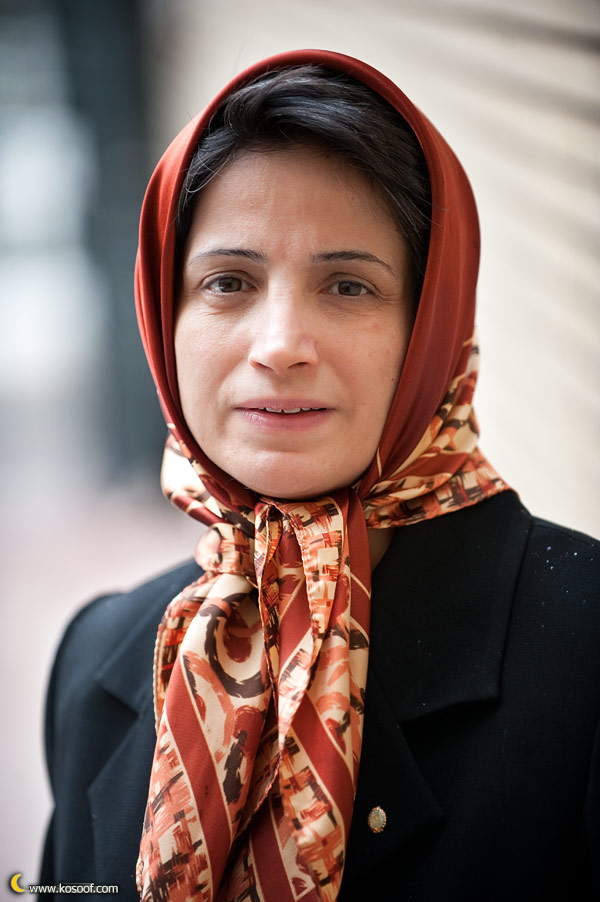
Today, 18 September 2013, the BBC and other news media brought the good news that Iran lawyer Nasrin Sotoudeh is among the freed political prisoners which Iran is reported to have freed (at least eight). Nasrin Sotoudeh was arrested in 2010 and jailed for six years on charges of acting against national security. She was one of the three Final Nominees of the MEA in 2012 and winner of the European Parliament’s Sakharov award.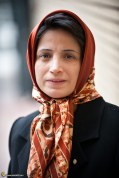
The release of the political prisoners comes just days before Iran’s new President Hassan Rouhani visits New York for the UN General Assembly. In his election campaign, he promised to free political prisoners.
via BBC News – Iran lawyer Nasrin Sotoudeh among freed political prisoners.
Posted in human rights, Human Rights Defenders | Leave a Comment »
Tags: BBC News, European Parliament, free, Hassan Rouhani, Human Rights and Liberties, Iran, Martin Ennals Award for Human Rights Defenders, MEA, Nasrin, Nasrin Sotoudeh, New York, political prisoner, political prisoners, release, Sakharov Prize, UN General Assembly
 Hans Thoolen on Human Rights Defenders and their awards