Posts Tagged ‘Ukraine’
September 30, 2018
The nominees for the 2018 Sakharov Prize for Freedom of Thought have been announced on 27 September (Nominations can be made by political groups and groups of at least 40 MEPs – remarkable is the more active role played by right-wing groups in the EP, see the last two nominees):
Oleg Sentsov, a Ukrainian film director, convicted to 20 years in prison for “plotting terrorist acts” against the Russian “de facto” rule in Crimea. Amnesty International has described the court process as “an unfair trial before a military court”. He has become a symbol for the approximately 70 Ukrainian citizens illegally arrested and convicted to long prison sentences by the Russian occupation forces in the Crimean peninsula. He has been on hunger strike since May 2018. Nominated by EPP.
NGOs protecting human rights and saving migrant lives across the Mediterranean Sea. Since 2015, NGOs from across the EU have launched search and rescue operations in the Mediterranean to try and save the lives of refugees struggling to reach EU shores. The NGOs are: Boat Refugee Foundation, Jugend Rettet, Lifeline Rescue Boat, Médecins Sans Frontières International, MOAS, Proactiva Open Arms, PROEM-AID, Save the Children, Sea Eye, Sea Watch, and SOS Mediterranée. Nominated by S&D and the Greens/EFA.
Seyran Ateş, a German lawyer of Turkish origin, fighting against political and religious extremism and the oppression of women. She was behind the establishment of the Ibn Rushd Goethe Mosque in Berlin, where men and women can pray together and has received numerous death threats and has to have round the clock protection. She was nominated by ECR, Hans-Olaf Henkel and 40 other MEPs for her “commitment to the protection of human rights and her devotion to a modern and open Islam”.
Caesar is the code name of a former Syrian military photographer who smuggled more than 55,000 pictures out of Syria exposing the war atrocities. Their authenticity is confirmed by the Human Rights Watch. Caesar’s photographs will play a vital role in building criminal and civil cases against those responsible for the crimes documented. Nominated by ALDE.
Nasser Zefzafi is the leader of Hirak, a mass protest movement in the Rif region, Morocco, fighting corruption, oppression and abuse of power. He was arrested in May 2017 and sentenced to 20 years in prison for “conspiracy against the security of the state”. On August 2018, King Mohammed VI pardoned 188 Hirak activists, but Zefzafi was not among them. At the end of August he went on hunger strike to denounce his conditions of detention. Nominated by GUE, Kati Piri, Judith Sargentini, Marie-Christine Vergiat and 39 other MEPs for his fight “against oppression and abuse of power”.
Dewayne Johnson is a former groundskeeper from the US who has just won a landmark case against Monsanto. He was the first person to take Monsanto to trial over allegations that the chemicals sold by the company under the herbicide brand Roundup cause cancer. At the end of the process Dewayne had just months to live, yet he took the stand and described his pain and suffering. Nominated by EFDD as an inspiration “for those afraid to go to court and defend their rights”.
AfriForum is an NGO that aims to protect the rights of minorities in South Africa, with a specific focus on the rights of Afrikaners. It focuses on raising national and international awareness about farm attacks, murders and the expropriation of farm land without compensation, which threatens property rights, food supply and food security. Nominated by ENF.
Mary Wagner is a Canadian activist who has been arrested on multiple occasions and accused of “disturbing the business” of an abortion clinic in Toronto. She remained in prison for not complying with a probation order to stay away from abortion clinics. She was nominated by Marek Jurek and 41 other MEPs for her work “safeguarding the rights of those who cannot speak for themselves”.
For more information this award and 2 others with Sakharov in the name: http://trueheroesfilms.org/thedigest
Posted in awards, EU, Human Rights Defenders | 3 Comments »
Tags: AfriForum, Caesar, Dewayne Johnson, digest of human rights awards, human rights award, Mary Wagner, Mediterranean, migrants, Morocco, Nasser Zefzafi, Oleg Sentsov, Sakharov Prize for Freedom of Thought, Seyran Ateş, Turkey, Ukraine, USA
March 31, 2017
The Jury has selected human rights defenders from Ukraine, Nicaragua, Vietnam, South Africa and Kuwait as finalists for the 2017 Front Line Defenders Award for Human Rights Defenders at Risk:
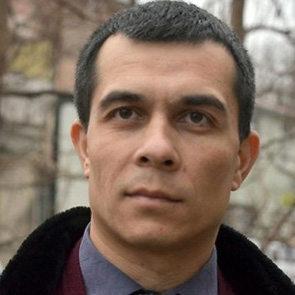
Emil Kurbedinov, Crimea/Ukraine
Emil Kurbedinov is a Crimean Tatar and human rights lawyer. Since the occupation of Crimea by the Russian Federation, Emil has been defending the persecuted Crimean Tatar minority, civil society activists and journalists. He also provides emergency response and documentation of rights violations during raids and searches of activists’ homes. In January 2017, masked representatives from Crimea’s Centre for Counteracting Extremism detained Emil and took him to a local directorate of the Russian Federal Security Service (FSB) for interrogation. A district court found him guilty of “propagandizing for extremist organisations” and sentenced him to ten days in detention.
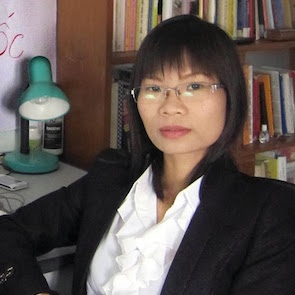
Pham Thanh Nghien, Vietnam
Vietnamese blogger Pham Thanh Nghien spent four years in prison for her work publicising violations against and defending the rights of relatives of fishermen killed by Chinese patrols. Following her release, she was kept under house arrest, during which time she spearheaded numerous human rights campaigns and co-founded the renowned Vietnamese Bloggers’ Network. Nghien has had her home raided, been blocked from attending medical appointments, had a padlock placed on her door from the outside, and been refused a marriage certificate. Nghien has also survived numerous physical assaults aimed at stopping her powerful, peaceful work uncovering and publicising human rights violations in Vietnam.
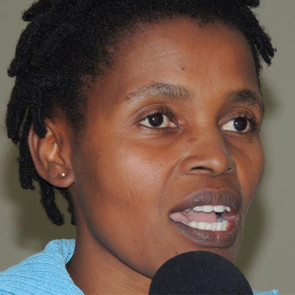
Nonhle Mbuthuma, South Africa
Nonhle Mbuthuma has persisted in her struggle for land and environmental rights in South Africa’s Eastern Cape despite assassination attempts, ongoing death threats and the murder of her colleague. She is a founder and current member of the Executive Committee of the Amadiba Crisis Committee, formed to unite community members in five villages of the Amadiba Tribal Authority region opposing destructive mining projects. In July 2016, Nonhle and other activists successfully forced the biggest shareholder in a titanium mining project to withdraw, but threats to activists continue as the community now fears the project will continue with funding from local “front” companies.
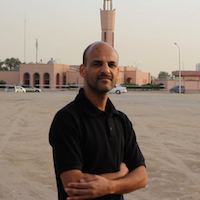
Abdulhakim Al Fadhli, Kuwait
Abdulhakim Al Fadhli is currently imprisoned for his peaceful activism on behalf of Kuwait‘s stateless Bedoon and other minority communities in Kuwait. The term Bedoon, meaning “without” in Arabic, refers to the community of stateless persons, native to Kuwait, who are prohibited from obtaining any official state documents including, but not limited to, birth, death and marriage certificates. Abdulhakim is currently serving a one-year prison sentence and faces deportation upon release. Throughout his imprisonment, he has protested and staged hunger strikes against the inhumane and unsanitary conditions in the Anbar 4 prison facility, where he has also been subjected to solitary confinement. [see also https://humanrightsdefenders.blog/2014/02/27/car-chase-in-kuwait-bedoun-human-rights-defender-the-target/]
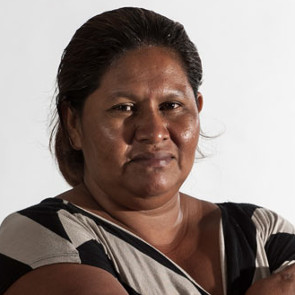
Francisca Ramírez Torres, Nicaragua
Human rights defender Francisca Ramírez Torres‘ children were attacked in attempt to stop her powerful work advocating against a destructive inter-oceanic canal in Nicaragua. Francisca is the coordinator of the Council for the Defence of Land, Lake and Sovereignty, which educates communities on their rights, campaigns for the repeal of laws allowing land-grabbing. The proposed canal would displace thousands of small farmers and indigenous peoples, without respecting their right to free, prior and informed consent. Francisca has been detained, harassed, and had her home and family attacked for her peaceful resistance to this destructive canal project.
The annual Front Line Defenders Award seeks to focus international attention on the human rights defender’s work, thus contributing to the recipient’s personal security, and a cash prize of €15,000 is awarded to the Award recipient and his/her organisation in an effort to support the continuation of this important work.
Source: 2017 Front Line Defenders Award for Human Rights Defenders at Risk | Front Line Defenders
Posted in awards, Front Line, human rights, Human Rights Defenders | 3 Comments »
Tags: Abdulhakim Al Fadhli, Bedoon, Crimea, Emil Kurbedinov, finalists, Francisca Ramírez Torres, Front Line Defenders Award for Human Rights Defenders at Risk, human rights awards, Human Rights Defenders, Kuwait, Nicaragua, Nonhle Mbuthuma, Pham Thanh Nghien, South Africa, Ukraine, Vietnam
September 16, 2016
The European Parliament awards the Sakharov Prize for Freedom of Thought every year to honor individuals and organisations defending human rights and fundamental freedoms. Nominations for the Sakharov Prize are made by political groups or by at least 40 MEPs. The 4 nominees for this year’s Sakharov Prize are:
Can Dündar, the former editor-in-chief of Turkish daily Cumhuriyet, was arrested last November after his newspaper reported on Turkey’s intelligence service smuggling arms to rebels in Syria. He was later sentenced to five years and 10 months in prison for “revealing state secrets”, survived an assassination attempt and now lives in exile. He was nominated by Greens/EFA, EFDD and GUE/NGL.
Mustafa Dzhemilev, former chair of Mejlis of the Crimean Tatars People (Tatar parliament), a former Soviet dissident and a Ukrainian MP, has been standing up for human and minority rights for more than half a century. He was six months old when he and his family were deported to central Asia along with all other Crimean Tatars and was only able to come back 45 years later. Now, after Russia annexed Crimea, the human rights activist is again barred from entering the peninsula. He was nominated by EPP and ECR.
Nadia Murad Basee and Lamiya Aji Bashar are advocates for the Yazidi community and for women surviving sexual enslavement by Islamic State. They are both from Kocho, one of the villages near Sinjar, Iraq, which was taken over by Islamic State in the summer of 2014, and are among the thousands of Yazidi girls and women abducted by Islamic State militants and forced into sex slavery. Murad is also a promoter for recognition of the Yazidi genocide. They were nominated by S&D. Murad Basee was also nominated separately by ALDE.
Ilam Totti, a peaceful advocate of China‘s Uyghur minority, is serving a life sentence in prison. He was convicted on charges of “separatism” for co-founding the website Uyghur Online, designed to promote understanding between Uyghurs and Han Chinese. He was nominated by MEP Ilhan Kyuchyuk and 42 other MEPs. Ilam Totti – also spelled as Ilham Totti – was announced on 27 April as one of the Final Nominees of the MEA [https://thoolen.wordpress.com/2016/04/27/breaking-news-final-nominees-2016-martin-ennals-award-tohti-zone-9-bloggers-razan-zaitouneh-annoucement/]
The vote for the shortlist of three finalists will be held during a joint meeting of the foreign affairs and development committee. The Conference of Presidents, made up of the Parliament President and the political group leaders, will announce the winner(s) of the 2016 Sakharov Prize on 27 October.
For more on the Sakharov award: https://thoolen.wordpress.com/tag/sakharov-prize/
Source: Sakharov Prize 2016: nominees revealed | News | European Parliament
Posted in awards, EU, human rights, Human Rights Defenders | 2 Comments »
Tags: Can Dündar, China, Crimea, European Parliament, human rights award, Ilam Totti, Ilham Tohti, Lamiya Aji Bashar, Mustafa Dzhemilev, Nadia Murad Basee, nominations, Sakharov Prize for Freedom of Thought, Turkey, Ukraine, Uyghur, Yazidi
June 18, 2016

Despite the hopes raised by the Euromaidan movement and improvements in many facets of life and governance in Ukraine, the last two years have brought the occupation of Crimea, armed conflict in parts of eastern Ukraine, and ongoing abuses, corruption, and political unrest. Two years after Euromaidan and the illegal occupation of Crimea, what efforts have been undertaken to prevent unlawful killings and ensure accountability, justice and redress in such cases?
The Human Rights House Foundation organisms a side event: “The human rights situation in Ukraine two years after Euromaidan: a view from civil society”, on Monday 20 June 2016, from 17:00 to 18:00 in Room XXIV, Palais des Nations, Geneva
Speakers:
- CHRIST HEYNS, United Nations Special Rapporteur on extrajudicial, summary or arbitrary executions
- TETIANA PECHONCHYK, Human Rights media monitoring, Ukraine;
- OLGA SKRYPNYK, Crimean Human Rights Group, Ukraine;
- MARKIYAN HALABALA, Euromaidan victim’s legal representative, Ukraine;
- Moderator: Anna Innocenti, Human Rights House Foundation.
for more info: ALEXANDER.SJODIN@HUMANRIGHTSHOUSE.ORG
Posted in human rights, Human Rights Defenders | Leave a Comment »
Tags: Christof Heyns, Euromaidan, Geneva, Human Rights House Foundation, meeting, side event, Ukraine
May 13, 2016
Fritt Ord and ZEIT-Stiftung have given their 2016 awards to: Read the rest of this entry »
Posted in awards, human rights, Human Rights Defenders | Leave a Comment »
Tags: Alison Des Forges Award, Ane Tusvik Bonde, anti corruption, Azerbaijan, Chechnya, Elena Milashina, Fritt Ord/Zeit Press Prize, human rights awards, Human Rights House Foundation, journalists, media, Nashi Groshi, Press Freedom, Russia, Seymur Hazi, Ukraine
March 14, 2015
 The Human Rights House Foundation, in cooperation with the Ukrainian Parliament Commissioner for Human Rights (Ukraine), the Center for Civil Liberties, the Human Rights House Kyiv, the “Almenda” Civic Education Center and the Head of Mejilis of the Crimean Tatar People (Ukraine), organizes the side event: “The Human Rights Situation in Ukraine“. On Tuesday 17 March 2015, from 14 to16h, at Palais des Nations, room XII.Panelists:
Valeriya Lutkovska, Ukrainian Parliament Commissioner for Human Rights (Ukraine),
Refat Chubarov, Head of Mejilis of the Crimean Tatar People (Ukraine),
Olga Skrypnyk, “Almenda”, Civic Education Center (Ukraine),
Oleksandra Matviichuk, Center for Civil Liberties, Human Rights House Kyiv (Ukraine).
Florian Irminger, Human Rights House Foundation, moderator.
Posted in human rights, Human Rights Defenders | 1 Comment »
Tags: Geneva, Human Rights Defenders, Human Rights House Foundation, Oleksandra Matviichuk, Olga Skrypnyk, Parliament Commissioner for Human Rights, side event, Ukraine, UN Human Rights Council, violations
February 12, 2015
In the context of the current conflict in Ukraine, the following notice, dated 11 February 2015, from the Ukrainian Helsinki Union is interesting:
“Human Rights Defenders: Introduction of Certificate from Military Registration and Enlistment Office for Trips Abroad can Prejudice National Interests of Ukraine“
The initiative of the General Staff of the Armed Forces of Ukraine, demanding persons liable for call-up to have the certificate from military registration and enlistment office to travel abroad and even to leave region is contrary to the Constitution of Ukraine and valid legislation, perpetrates human rights and can prejudice national interests of Ukraine.
The representatives of Ukrainian Helsinki Union assert: “The implementation of forced mobilization in no way will strengthen the defensive capacity of our country and will not make better anything in our Armed Forces, except the call-up statistics of military registration and enlistment offices. Yet, Ukraine is extremely interested in free movement of people, wares and capital. Panic about mobilization breakdown is more the product of information war than the result of real processes in the society. The President of the Russian Federation Vladimir Putin was the first one to state the forced mobilization in Ukraine. The contempt of freedom of movement policy must be ceased immediately. Provoked by Russian propaganda, this policy is apparently harmful for the national interests of Ukraine”.
via Human Rights Defenders: Introduction of Certificate from Military Registration and Enlistment Office for Trips Abroad can Prejudice National Interests of Ukraine :: helsinki.org.ua.
Posted in human rights, Human Rights Defenders | Leave a Comment »
Tags: Armed Forces of Ukraine, conflict, conscription, forced mobilisation, freedom of movement, Human Rights Defenders, international human rights and humanitarian law, Ukraine, Ukrainian Helsinki Human Rights Union
December 19, 2014
Not a shocking story but an excellent illustration of how to motivate students through meeting Human Rights Defenders in person:
Thirty three staff and students of the Limerick Institute of Technology (LIT), Tipperary were in Strasbourg last November as guests of the European Parliament’s Human Rights committee. The group spent three days in the French city. They were given a seminar on the European Parliament. However the main purpose of the visit was to attend a workshop with Human Rights Defenders from across the world. They met students involved in the pro-democracy movement in Ukraine and a young woman pleading for the lives of her imprisoned parents in Azerbaijan.
However the most heart wrenching and inspiring words came from Dr Denis Mukwege, a doctor from the Congo who has dedicated his life to treating women who are victims of the brutal conflict in the east of his country. Dr Mukwege was in Strasbourg to receive the Sakharov Prize for freedom of speech and the Tipperary students were part of a delegation of young people invited to meet with him and other nominees. [https://thoolen.wordpress.com/2014/10/22/congolese-gynecologist-wins-europes-sakharov-prize-in-2014/]
He told the group that it was the womens’ courage and stories of recovery that kept him motivated. All present felt honoured to be invited to such a prestigious event and urged everybody to remember those struggling against injustice. For more information on the groups visit: Social Community Studies facebook page at LIT


News – LIT-Tipperary-Students-Meet-Human-Rights-Defenders.
Posted in awards, human rights, Human Rights Defenders | Leave a Comment »
Tags: Azerbaijan, Democratic Republic Congo, Denis Mukwege, EP, Human Rights committee of the European Parliament, Human Rights Defenders, human rights education, Ireland, Limerick Institute of Technology, Sakharov Prize, Strasbourg, students, Ukraine
December 5, 2014
(Vladimir Putin (c) Mikhail Metsel)
Russia‘s TASS agency reports on 5 December that today President Vladimir Putin will meet in the Kremlin members of the Russian Presidential Council for Civil Society Development and Human Rights (HRC) and federal and regional ombudsmen. “The meeting participants are planned to tell the head of state about their work in the current year, as well as touch upon most important issues of human rights observance and development of the civil society institutions in regions,” the press service said.
Putin regularly meets with human rights defenders, the piece continues and refers to one held on 14 October with members of the Human Rights Council. The main issues on the agenda were assistance to Ukrainian refugees, support of non-profit organizations, transparency of elections, problems of the law enforcement system and others.
The article continues (without blushing): “Speaking of supporting the civil society institutions, including human rights defenders, Putin promised that the state spending on this in 2015 would be increased to 4.7 billion rubles ($86.47 million), while in 2013 this figure stood at 2.7 billion rubles ($49.67 million).” The president thanked the Russian human rights activists for the attention they pay to numerous facts of violation of human rights in the neighbouring country — Ukraine. “Many international human rights organizations hypocritically turn a blind eye to the developments,” he said.
Many of the proposals voiced by the human rights activists turn into presidential instructions. Thus, on the October meeting results the president has already given a number of instructions on organizing assistance to children affected by the armed conflict in the south-east of Ukraine, on perpetuation of the memory of the victims of political repression, on migration problems, on improving law enforcement activity and a number of others.
TASS: Russia – Putin to discuss with ombudsmen human rights observance issues.
some items that were apparently not discussed: https://thoolen.wordpress.com/tag/foreign-agent/
Posted in human rights, Human Rights Defenders | Leave a Comment »
Tags: Civil society, foreign agent law, human rights activists, Human Rights Council, Human Rights Defenders, human rights organizations, President Putin, Putin, Russia, TASS, Ukraine
May 31, 2014
On the eve of celebrations to mark the 70th anniversary of the Normandy landings, MEA Laureate 2008 Mutabar Tadjibayeva speaks out through her exile-based NGO “Fiery Hearts Club”. She passionately appeals to Western politicians invited to the ceremony not to sit next to Russian President Vladimir Putin on the honor podium. The text is below is reproduced as is (it exists also in Russian):
We see the following solid arguments that have pushed us to make this appeal.
Firstly, it is continuing policy of Putin’s intervention in the internal affairs of Ukraine that has given rise to the so-called “Ukrainian events”, has led to increased ethnic strife between the fraternal Slavic peoples of Ukraine and escalation of the armed conflict, has resulted in many casualties on both sides of the incomprehensible, artificially stirred up conflict, has led to separatism and threat of the collapse of the independent, sovereign nation.
One of these days the Ukrainian people democratically elected their new president. Despite this, the situation in Ukraine causes serious concerns and is far from stability. Putin’s policy of interference and provoking conflicts continues and poses a serious threat to achievement of the peacebuilding process and stabilization of the situation in the country. Western leaders should make it clear to Putin that such interference in the internal affairs of Ukraine is intolerable. They must refuse sitting next to him during the celebrations in Normandy, which is an excellent diplomatic opportunity to express such a stance.
Secondly, the major concern is the situation with the civil society in Russia under Putin. Following overall Putin’s “hunt for foreign agents” represented by Russian human rights organizations, the government put the “foreign agent” label on any independent public activity. Russian human rights activists argue that the sign “foreign agent” is offensive for human rights, environmental and social organizations. Their goal is to deliver assistance to people, defend generally valid, legal and democratic principles. This way they serve the country and the peoples of Russia.
Human rights activities are not possible without an appeal to the government and the public opinion, without involvement of activists into civic campaigns. The “foreign agent” label in the current social atmosphere of xenophobia and hatred towards the West undermines the very idea of the civilian control because it makes any public activities of non-governmental organizations senseless and first of all their appeals to officials for the sake of interests of individuals and the society. With such a label, work of human rights organizations has no sense, provokes and justifies public hatred towards human rights defenders, and pushes human rights organizations to liquidation or disbandment.
How can Putin, the initiator of all-out struggle against “foreign agents” among Russian human rights activists and the oppressor of free activities the of Russian civil society, sit on the podium next to the honorable leaders of democratic countries during the celebrations of the 70th anniversary of the Allied landings in Normandy? It is beyond our understanding.
Thirdly, the next reason, which pushed us to make this appeal, is associated with the recent tragic deaths of well-known Russian human rights activist Andrei Mironov and Italian journalist Andrea Roccella in Ukraine during armed conflicts. Italian journalist Andrea Roccella and his translator Andrei Mironov were killed on the night of May 25 in the village of Andreevkaunder Slavyansk. According to preliminary data, their car came under a mortar attack. During the accident, French correspondent William Rogulon was wounded. Although both sides of the conflict, the official Ukrainian armed forces and the separatist armed groups supported by Russia, blame each other for the tragedy, it has been widely discussed in the Internet the version according to which the group of journalists could be attacked by separatists.
OSCE has called the death of Roccella and Mironov a terrible reminder of how little is done in the east of Ukraine to protect journalists risking their lives in the conflict zone. This and all other deaths of innocent victims of the Ukrainian conflict require immediate and thorough investigation and punishment of those responsible for casualties. We believe that Russian President Vladimir Putin is personally responsible for what is happening in Ukraine, including the tragic deaths of the Italian journalist and the Russian human rights activist. The solemn events in Normandy is also dedicated to the memory of million victims of World War II, and Putin as one of the main perpetrators of human casualties occurring in Ukraine, is just not worthy to take part in the celebrations in Normandy.
Fourthly, it is under Putin’s ruling that numerous cases of kidnapping and illegal extraditions of Uzbek citizens temporarily residing on the territory of Russia occur as well as those who seek asylum from persecution of the Uzbek authorities in third countries, including Uzbek labor migrants, whom the Uzbek authorities want to describe as “religious extremists and terrorists”. It is Putin that allows the Uzbek authorities increase their unauthorized surveillance and monitoring of millions of Uzbek labor migrants working in Russia through their agent intelligence networks.
Cases of unauthorized detention and abduction of Uzbek labor migrants in Russia by the Uzbek security services have increased. Sometimes the Uzbek security services work through official channels, make official requests to the Russian authorities, for instance, they make requests for extradition of those, who are suspected of religious extremism in Uzbekistan. The Russian authorities arrest Uzbek labor migrants and extradite them to Uzbekistan, very often even when their complaints are under consideration of the European Court of Human Rights in Strasbourg and/or the Court ordered the Russian authorities not to extradite Uzbek citizens.
It is under Putin’s regime that ethnic nationalism is growing in Russia against immigrants or non-indigenous ethnic groups of Russia and numerous fascist and ultranationalist groups conduct their activities with impunity. Every year, these groups murder with impunity and physically maim over a hundred representatives of other ethnic groups residing in Russia. The Russian enforcement agencies do not investigate most of such cases and do not punish those responsible for such crimes.
Websites of fascist groups openly promote violence and methods of punishment, torture against “visitors”, and majority of materials of the Russian media are full of discriminatory, one-sided approach to coverage of events related to non-indigenous residents of Russia. Rights of migrant workers from the former Soviet countries are grossly violated in Russia not only by fascist groups, but also by employers, government and administrative bodies and officials. Most of such cases are not investigated and perpetrators remain unpunished.
We call Western politicians to refuse sitting next to Putin during the celebrations in Normandy.
The U.S.A. President Barack Obama and President of France Francois Hollande will meet with Russian President Vladimir Putin on June 5, 2014 on the eve of the celebrations in Normandy. We call the Presidents of the United States and France to take it seriously and demand that Putin provides clarifications on the above-described human rights violations.
Western politicians should pay special attention to the issue of violation of human rights in post-Soviet countries, who are under the influence of Moscow’s policy and the role of Putin’s government in these offenses against citizens of post-Soviet countries, like, for instance, cases of abductions and extraditions.
Fiery Hearts Club International Human Rights Organization also intends to organize a protest near the venue of the celebrations to mark the 70th anniversary of the Allied landings in Normandy and in the French capital. We also invite to participate in the planned protest actions those, who will support our appeal.
We also call our partners, international organizations, non-profit organizations, ordinary citizens, including citizens of France and other democratic countries of the world, young people in these countries to support our appeal and express their support by signing this appeal.
In order to support our appeal, by signing it and/or taking part in the protest, please contact us by email mutabartadjibaeva[at]gmail.com
Thank you in advance for your support!
Sincerely,
Mutabar Tadjibayeva,
Head of “Fiery Hearts Club”
International Human Rights Organization
28 may 2014
France, Paris
http://jarayon.com/en/index.php/component/k2/item/249-we-appeal-to-politicians-not-to-sit-next-to-putin
Posted in Human Rights Defenders, MEA | 1 Comment »
Tags: Andrei Mironov, Civil society, Club Flaming Hearts, diplomatic pressure, Fiery Hearts Club, foreign agent law, MEA Laureate 2008, migrants, Mutabar Tadjibayeva, Normandy, Putin, Russia, Russian President Vladimir Putin, Ukraine, Uzbekistan


 Hans Thoolen on Human Rights Defenders and their awards