Posts Tagged ‘Trump’

Collecting human rights prize, Yazidi lawmaker calls Trump’s travel ban ‘unfair’

February 9, 2017
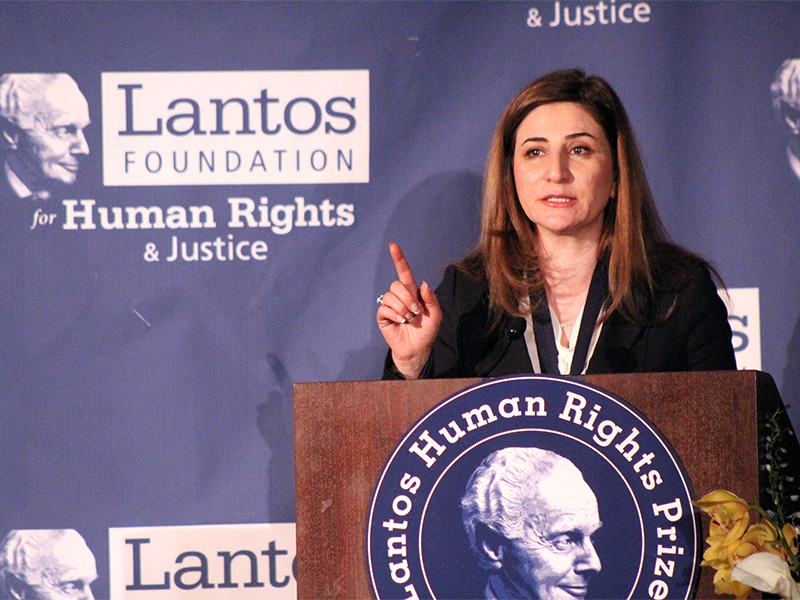
Iraqi lawmaker Vian Dakhil speaks after receiving the Lantos Human Rights Prize at a Capitol Hill ceremony on Feb. 8, 2017. RNS photo Adelle M. Banks

Iraqi lawmaker Vian Dakhil at the Lantos Human Rights Prize ceremony, 8 February  2017 – RNS photo


Last week I wrote about an award-winning human rights defender not being able to come and collect her award in the USA [https://humanrightsdefenders.blog/2017/02/01/yazidi-human-rights-laureate-may-be-banned-from-coming-to-washington-to-accept-award/].  Vian Dakhil made it to Washington in the end. She had already received a visa to come to Washington to accept an award from the Tom Lantos Foundation when President Donald Trump’s executive order pausing immigration from seven Muslim-majority countries, including Iraq, was issued. After an arduous process involving the State Department and the Iraqi Embassy, she was granted an exemption to the travel ban so she could attend the award ceremony on 8 February. Her sister and translator was able to get a visa after a federal judge temporarily halted the implementation of the executive order. Read the rest of this entry »

Yazidi human rights laureate may be banned from coming to Washington to accept award

February 1, 2017

The idiocy of Trump’s recent executive orders on immigration is probably not better illustrated than by the case of Vian Dakhil (Yazidi MP in Iraq and ‘Isil’s most-wanted woman’). She may be barred from from coming to Washington to accept the Lantos Human Rights Prize.

Vian Dakhil answers questions during an interview in September 2014 CREDIT: AFP

Vian Dakhil was set to receive the Lantos Human Rights Prize at the US Capitol in Washington DC for her “courageous defence” of the Yazidi people as they faced mass genocide two years ago at the hands of the Islamic State of Iraq and the Levant (Isil). However, as a carrier of an Iraqi passport she is unlikely to be allowed to enter the country next week despite holding a US visa.  “It is not clear yet if I will travel or not,” Mrs Dakhil, 46, said. “The decision was a complete surprise.” The Lantos foundation dubbed her “ISIS’s most-wanted woman”. She used her position in parliament to inform the world of the atrocities being committed against the Yazidi people

 wrote in the Washington Post of 30 that Vian Dakhil was set to receive the Lantos Human Rights Prize at the U.S. Capitol on 8 February 2017. The prize is given by the foundation named after the late Tom Lantos, a Holocaust survivor who championed human rights for decades while serving in the U.S. Congress. Dakhil’s case is a startling example of how the executive order signed by President Trump is having unintended consequences and ensnaring not only those who have no links to terrorism but also those who have risked their lives to fight terrorism in cooperation with the United States. “It adds a deep level of irony that this award is given in the name of my late father, the only Holocaust survivor ever to be elected to Congress,” said Katrina Lantos Swett, the president of the foundation. “He exemplified how America is strengthened and enriched by immigrants and refugees. I assure you he is turning in his grave at this.”

Read the rest of this entry »

2017 (8): Human Rights Movement Must Come Together to Resist Trump’s Agenda

January 28, 2017
In the Huffington Post of 27 January 2017 David TolbertPresident of the International Center for Transitional Justice, wrote: “Human Rights Movement Must Come Together to Resist Trump’s Agenda”.  In the piece he says many useful things especially that “it is clear that a coalition of forces must emerge in American civil society to provide the backbone of resistance to the Trump agenda.” Here some excerpts:

(see also https://plus.google.com/+HansThoolen/posts/hNZtNKR5KKL)

….

– Trump has rushed headlong into creating further divisions and has begun an assault on human rights and basic decency — including a de facto ban on many Muslim refugees from entering the United States and the resurrection of CIA “black sites“ — and promises more to come. 

– The new president exalts torture, mocks the disabled, casts aspersions on those who defend human rights, appeals to racist sentiments through coded and not-so-coded language and denigrates women in both word and deed.

– He shows no regard for the Geneva Conventions or the painstaking work of generations of human rights activists, many of them American, to ensure that civilians are not abused in times of conflict and that the vulnerable are protected. 

– For good measure, he seems to demean virtually every restraint that protects the citizen from the state. His first call as president to a foreign leader was to President Abdel Fattah al-Sisi of Egypt, who crushed the protests against army rule, devastated Egypt’s civil society with draconian laws targeting human rights defenders and turned Egypt’s legal institutions into “kangaroo courts.” A chilling signal indeed.

Say what you will, Trump has clearly laid down the gauntlet that places the most powerful of nations on the side of the privileged and signals that human rights will be honored only in the breach. This can hardly be a surprise, given his campaign rhetoric that called openly for torture and other serious crimes that violate international and domestic law. 

…….

….. The whiff of McCarthyism is in the air for those of us who do not define ourselves as allegiant to Trump’s vision of America.

The inaugural speech and Trump’s first actions also send powerful messages regarding the struggle for human rights across the planet. The consequences of his dark vision will be dire. The record of the United States is patchy at best in terms of promoting human rights abroad, but it has played an important role in a number of areas, commencing with Eleanor Roosevelt’s work on the Universal Declaration of Human Rights. 

While its record in Latin America and the Middle East has been particularly deplorable, this country has supported civil society groups in a number of countries and other international initiatives that have promoted accountability for human rights violations. It has worked with other countries and the United Nations to advance the normative agenda that has enshrined human rights in international law and broadly supported the human rights movement in areas such as individual liberties and women’s rights. Mr. Trump will end these efforts in an obvious return to the old adage: “Governments can boil their own people in oil for all we care, as long as they support us.” 

This abdication of American support for human rights will not only undermine those countries that respect human rights but will also embolden those who seek to undermine the United Nations and other institutions that have advocated for and protected those rights. The emerging Trump-Putin partnership will mean that victims of human rights abuses around the world will have nowhere to turn to, as avenues to redress, accountability and acknowledgement of the violations close down.

The question is, what can we do? What is our responsibility as human rights defenders, but also as citizens of the United States and the world at large?

…..

While there is not a single “silver bullet” to take on what we will face ahead, we need to move past “conversations” and start organizing. It is hard to imagine — in this diverse and app-based world of today — that a single organization can take the lead in such a movement, like the Southern Christian Leadership Conference (with lots of allies and competition, of course) did for the Civil Rights Movement. However, it is clear that a coalition of forces must emerge in American civil society to provide the backbone of resistance to the Trump agenda. 

We cannot afford atomization along the lines of our specific causes, be they accountability for human rights violations, racial injustice, inequality, LGBTI rights, indigenous rights or other human rights causes we support. If we are to have a chance to stop Trump’s destructive agenda, we must unite and act as a movement as strongly against the Dakota Access Pipeline as against a registry for Muslims or systemic police violence against African-Americans. Our goals in protecting human rights in the United States must be as clearly defined as our actions must be coordinated. 

…..

The time for action and resistance is now. I and the organization that I lead, the International Center for Transitional Justice, have over the years had a great deal of experience in addressing the abuses of regimes across the world that disregard human rights and commit abuses. Once rights and the institutions built to protect them are pushed to the side and the strong man reigns, the path to violations becomes real and the difficulties of re-establishing the rule of law become very steep indeed. The warning signs here in the United States are now laid bare. They should be a call to action for us all.

Source: Human Rights Movement Must Come Together to Resist Trump’s Agenda | The Huffington Post

2017 (7): Trump’s first orders to cut global funding and treaties

January 26, 2017

The ‘ink’ of my previous post [https://humanrightsdefenders.blog/2017/01/26/2017-6-predictions-on-trump-and-the-un-prophets-or-cassandras/] has hardly dried and I see the piece written by Max Fisher in the New York Times of 25 January 2017 that states that the latest draft orders suggest that President Trump intends to pursue his campaign promises of withdrawing the United States from international organizations: Read the rest of this entry »

2017 (6): predictions on Trump and the UN – prophets or Cassandras?

January 26, 2017

The U.N. Human Rights Chief Fixes for a Fight with Trump

Photo credit: FABRICE COFFRINI/AFP/Getty Images

Already on 22 November 2016 Colum Lynch posted in “Foreign Policy” an insightful piece entitled: “The U.N. Human Rights Chief Fixes for a Fight with Trump”.  It records the thinking of senior UN staff and NGO leaders who are going to confront a Donald Trump with a hard-line national security team. They fear that a Trump presidency could spur a global retreat from international human rights principles, marking the dawn of American leadership (see long extracts from the piece below) on green. Now – on 26 January 2017 – Daniel Warner in his weekly blog in the Tribune de Geneve wrote a post entitled: “The U.N., Trump and Cassandra” in which he reports that a bill was introduced into the U.S. House of Representatives on January 3 calling for the total disengagement of the United States from the United Nations. The bill, H.R. 193 – known as American Sovereignty Restoration Act of 2017 – has been referred for deliberations to the House Foreign Affairs Committee. The bill – tried before in 2015 – may not pass, but the writer fears it reflects the tenor of the current Trump administration. See his words below marked in blue.

—-

The U.N. high commissioner for human rights, Prince Zeid Ra’ad al-Hussein, informed his staff in the weeks following the U.S. election that they will have to serve as the front line in an international effort to check any excesses on the human rights front. A chief concern, officials say, is that if the U.N. doesn’t call out its most powerful member for straying from universally accepted human rights norms, the rest of the world will be emboldened to ditch them. “We are going to speak up,” one U.N. official told Foreign Policy. “It’ll be rough, but if [Trump] puts any of those ghastly campaign pledges into action we will condemn.”

…..Still, Trump’s campaign pledged to restore waterboarding, deport millions of undocumented migrants, and ban Muslims from traveling to the United States. …

The U.N.’s approach to human rights is particularly tricky for the incoming U.N. secretary-general, António Guterres, a former Portuguese prime minister who headed the U.N. refugee agency for nearly 10 years. Guterres has been an outspoken champion of refugees, pressing European governments, as well as the United States, to resettle far larger numbers of refugees. Two weeks after Trump called for his ban on Muslims last December, Guterres admonished the Security Council, saying, “Those that reject Syrian refugees because they are Muslims are the best allies in the recruitment propaganda of extremist groups.” But Guterres may be constrained as the leader of the United Nations, a job that requires a close relationship with the United States and other big powers. ……

That makes it likely that Zeid will take the lead on human rights. Throughout the U.S. presidential campaign, Zeid, a Muslim prince from the Jordanian royal family, has repeatedly excoriated Trump, telling reporters in December that his threat to ban Muslim travel to the United States is “grossly irresponsible.” In September, Zeid included Trump, along with France’s Marine Le Pen and Dutch far-right politician Geert Wilders, on a list of “populists, demagogues, and political fantasists” who promoted their arguments grounded in “half truths and oversimplification.” [see also: https://humanrightsdefenders.blog/2016/09/14/un-high-commissioner-for-human-rights-states-may-shut-my-office-out-but-they-will-not-shut-us-up/]

Some U.N. officials say Zeid’s criticism of the U.N.’s most powerful country could strengthen his hand in disputes with other U.N. members, particularly those from the developing world who have long accused the United Nations of applying greater pressure on small powers for breaching human rights norms, while letting the United States and other big powers off the hook. Other U.N. officials fear that Zeid may be exposing the organization to a battle with the U.N.’s most powerful players that he can’t win. In September, Russia’s U.N. ambassador Vitaly Churkin formally protested Zeid’s public denunciations of Trump and other European nationalists. “Prince Zeid is overstepping his limits from time to time, and we’re unhappy about it,” Churkin told The Associated Press.

More recently, Zeid tangled with China over his attendance at a ceremony for the Martin Ennals Award for Human Rights Defenders, which honored a Uighur economist, Ilham Tohti, who is serving a life sentence on charges of fomenting separatism and violence. A senior Chinese official appealed to Zeid not to attend the event, according to a U.N. official. But Zeid refused, insisting that he had an independent mandate to shed light on human rights violations wherever they occur, including China.

Even before Trump’s election, U.N. officials believed that human rights were under threat from authoritarian governments, including China, Egypt, Russia, and Turkey, which have been engaged in major crackdowns on civil liberties at home. “They are backsliding on human rights, but from a position of weakness,” said Kenneth Roth, executive director of the New York City-based advocacy group Human Rights Watch. “Both [Vladimir] Putin and Xi Jinping are engaging in the worst crackdowns in their countries in two decades, each driven by the terror as to how their countries will react to a weakening economy; they’re trying to snuff out in advance opposition they anticipate.”

Roth said there is a real danger that Trump and other populist leaders will accelerate the curtailment of human rights. “The entire human rights movement is weary about Trump,” he said. “It’s not clear what his values are. That is why his initial appointees are so important.” Dimitris Christopoulos, president of the International Federation for Human Rights, fears Trump’s controversial positions, including torture and deportation, would embolden smaller countries. When big powers, particularly the United States, tread on human rights the world tends to follow. If smaller countries, such as Burundi and Kenya, hear Trump threatening to cast out foreign refugees they may choose to act in kind, Christopoulos said. Saudi Arabia threatened this year to cut funding to U.N. relief programs and to lead a walkout by Muslim states from the United Nations if the U.N. didn’t lift its name from a list of countries that killed or maimed children in armed conflict, according to a senior U.N. official. In its defense, Saudi officials noted that the United States had shielded its closest Middle East ally, Israel, from being included on the same list in 2015. It was only fair, therefore, that Riyadh be spared the shame of being included on the list...

Rights advocates say the rising tide of nationalism and populism in Europe and the United States represents a potentially existential threat to the human rights movement, as governments that once championed the cause on the international stage head into retreat. Britain’s new prime minister, Theresa May, has railed against “left-wing human rights lawyers” who are seeking the prosecution of British soldiers alleged to have committed war crimes in Afghanistan and Iraq. She has proposed that London withdraw from key provisions of the European Convention on Human Rights that potentially expose British troops to prosecution. A generation of European nationalist leaders, including Le Pen and Wilders, who had been on the fringe of the European political spectrum, have seen their electoral prospects grow in the face of spreading anti-immigrant sentiment. That has left German Chancellor Angela Merkel as one of the “only outspoken leaders on human rights,” Roth said. In her first statement following Trump’s election, Merkel said she would work closely with Trump, but only on the basis of “democracy, freedom, respect for the rule of law, and the dignity of men regardless of origin, skin color, religion, gender, or sexual orientation.”

———-

Daniel Warner further wrote: Fervent supporter of H.R. 193 and prominent Republican Rand Paul (Rep-KY) said in 2015: “I dislike paying for something that two-bit Third World countries with no freedom attack us and complain about the United States… There’s a lot of reasons why I don’t like the U.N., and I think I’d be happy to dissolve it,” added the Kentucky senator. Or, as John Bolton, once U.S. ambassador to the U.N. and now being considered for the number two spot in the State Department famously said: “There’s no such thing as the United Nations. The Secretariat building in New York has 38 stories. If it lost ten stories it wouldn’t make a bit of difference.”
This time, following the election of Donald Trump and the U.S. abstention on a Security Council resolution to condemn the continued construction of illegal Israeli settlements, the bill has a better chance. The mood in Washington of “America First” will try to repeal all multilateral agreements such as the Trans-Pacific Partnership and the North American Free Trade Agreement as well as weakening multilateral organizations like the North Atlantic Treaty Organization.
Does the introduction of the bill matter? For International Geneva, it certainly does. While the United States might not withdraw from the U.N., the negative attitude of the current administration towards multilateralism and multilateral organizations will have obvious negative consequences for Geneva, sometimes called “The Rome of Multilateralism.” Even with U.S. participation, the international system will lack United States leadership during the Trump presidency. The visit of the Chinese President to the U.N. Office in Geneva and his speech at Davos were clear signs of shifting multilateral leadership.
I heard a comment from someone within the Washington bureaucracy that gives some hope.  Her feeling was that career civil servants will slow down if not block radical changes in U.S. foreign policy. The slow wheels of government will crush any unilateral attempts by the Trump leadership. The ship of state will carry on with deep divisions between the political appointments and career civil servants. This would be an indirect check on the incoming politicians.
On January 21, one day after Trump’s inauguration, millions marched against the Trump presidency throughout the United States. Millions more marched around the world for women’s dignity and many against Donald Trump as well. Will anyone march to save multilateralism and the U.N?

——

Sources:

The U.N. Human Rights Chief Fixes for a Fight with Trump | Foreign Policy

The U.N., Trump and Cassandra : Le blog de Daniel Warner

see also:

https://humanrightsdefenders.blog/2017/01/23/2017-4-canadas-year-of-real-human-rights-action/

https://humanrightsdefenders.blog/2017/01/24/2017-5-with-trump-us-president-sweden-must-stand-up-for-human-rights/

2017 (5): With Trump US president, Sweden must stand up for human rights

January 24, 2017

On 24 January 2017, thelocal.se published the English version of an opinion piece originally written in Swedish by Civil Rights Defenders executive director Robert Hårdh for newspaper Dagens Nyheter. Like my post published yesterday about the call for Canada to ‘compensate’ for Trumps election [https://humanrightsdefenders.blog/2017/01/23/2017-4-canadas-year-of-real-human-rights-action/], this piece argues that Sweden, also as a member of the EU and with its current place on the UN Security council, must step forward and take a greater responsibility to protect human rights on a global level: Read the rest of this entry »

Pakistani human rights defender Hina Jilani is the new President of OMCT

November 30, 2016

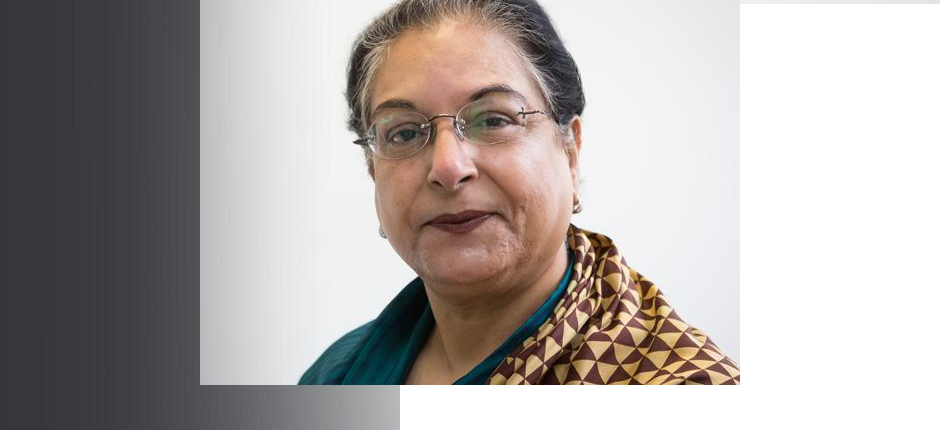
On 29 November 2016 OMCT announced that Hina Jilani, a prominent Pakistani human rights defender, is the newly elected President of the World Organisation Against Torture (OMCT).hina-jilani-biography-1_940x430

Ms. Jilani was elected to a four-year term on Saturday 26 November at the organization’s General Assembly meeting held every four years. Addressing OMCT partners and members of its SOS-Torture network of more than 200 non-governmental organizations around the world, she said she would focus on boosting its cohesion to make its voice louder. “We can’t just condemn points of view; we have to convince people,” she said. “We have to show them that these values did not come out of nothing, that they are worth being preserved.  We have to show that undermining these values is not in the best interest of humanity.

Hina Jilani created Pakistan’s first all-women law firm and co-founded Pakistan’s first legal aid centre in 1986. In 1991 helped set up a shelter for women fleeing violence and abuse and presented one of the first cases of domestic violence in the country. Ms. Jilani was also one of the founders of the Human Rights Commission of Pakistan, an NGO promoting human rights in Pakistan. She also created Pakistan’s Women Action Forum, a prominent women’s rights group whose campaigns have been at the heart of the democracy movement in the country. Ms. Jilani has been a lawyer at the Supreme Court of Pakistan since 1992.

At the international level, she was the first United Nations Special Representative of the Secretary-General on the situation of Human Rights Defenders from 2000 to 2008. She was appointed in 2006 and 2009, respectively, to the UN International Fact-Finding Commissions on Darfur and on the Gaza Conflict.

Her expertise and lifelong dedication to human rights has earned her international recognition. In 2013, she joined The Elders, a group of statesmen, peace activists and human rights advocates, brought together by Nelson Mandela.  In 2000 she was honoured with the Amnesty International Ginetta Sagan Award for Women’s Rights, just a year after she was awarded the Human Rights Award by the Lawyers Committee for Human Rights. In 2008 she received the human rights award of the American Bar Association.

For more posts on Hina see: (https://thoolen.wordpress.com/tag/hina-jilani/OMCT-LOGO

She spoke after a two-day forum organized on the occasion of the 30th anniversary of OMCT and its SOS-Torture network, along with UN Human Rights Commissioner Zeid Ra’ad Al-Hussein, who shared concern that many countries were “returning to authoritarianism”, human rights defenders around the world were under “enormous pressure”, and that reprisals and arbitrary detentions were increasingly done under the pretext of fighting terrorist activities. The High Commissioner said he feared that declarations such as United States President-elect Donald Trump’s campaign declarations (condoning ill treatment such as “waterboarding”, for instance) might inspire other Governments to resume resorting to torture, hence exacerbating the practice around the world.

She also seemed undeterred by the consequent risks of wavering support of multilateral institutions, since the US election and the British “Brexit” vote triggered a wave of speculation as to a possible shift in funding priorities away from international aid, and since the withdrawal by several States such as South AfricaBurundiGambia and Russia from the International Criminal Court, triggered concerns over the deconstruction of a system built up to protect victims of serious human rights violations. “This is not an easy time for human rights defenders, but when has it been for us? We keep our determination despite all the challenges,” she told activists. “The global donors must understand that if there is hesitation in supporting these human rights defenders and their networks it will only reduce our outreach. But we did it before we had money. We have no reason to believe that this is a favour to any one organization or community.”

Ms. Jilani said that OMCT was one of the organizations best placed to uphold human rights and combat torture, adding: “It has the experience, the capacity, and the knowledge to take this challenge forward.”

Source: Prominent Pakistani human rights defender Hina Jilani becomes new OMCT President / November 29, 2016 / Statements / OMCT