Posts Tagged ‘transition’

Iran reform and the role of Human Rights Defenders

January 20, 2025

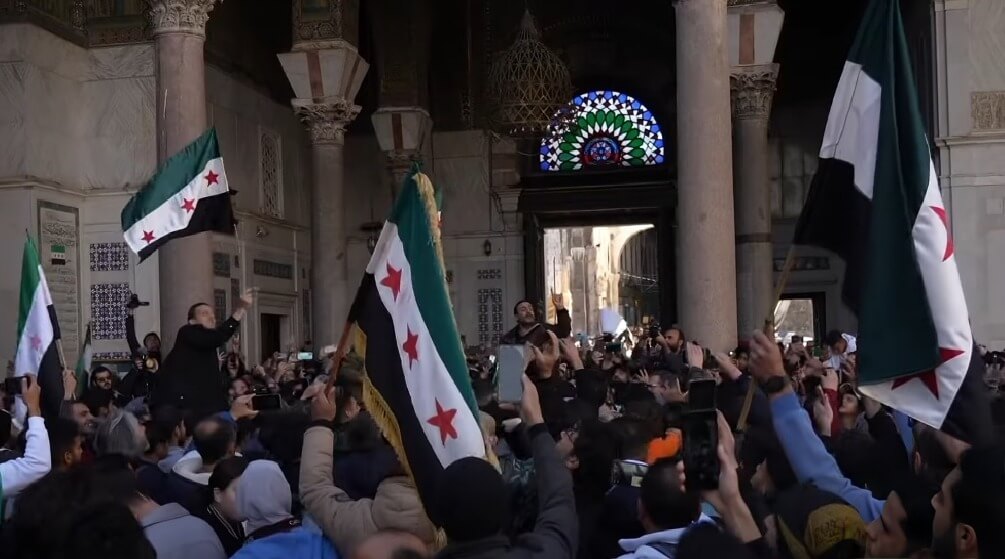
Historic examples in countries such as Portugal and Greece show how military defeats can catalyze democratic transitions by exposing the incompetence of authoritarian regimes. After the recent change in Syria, I thought that this piece with its focus on HRDs deserves wider attention:
The Stimson Center published this anonymously on January 9, 2025 as the author is a Tehran-based analyst who has requested anonymity out of legitimate concern. The writer is known to appropriate staff, has a track record of reliable analysis, and is in a position to provide an otherwise unavailable perspective.

While the world focuses on regional turmoil, Iran is undergoing significant transformation domestically, albeit at a slow pace.

At the heart of this evolution is a surprisingly robust society-based reform movement that is actively challenging the existing power structure, leading to a noticeable weakening of the regime. This emerging dynamic holds the potential to produce a system more representative of wishes of the Iranian population than the theocracy/flawed democracy in place for the past 46 years.

Fundamental reform of the existing constitution, along with empowering civil society, can lead to more democracy provided that Iranians do not get caught up in radical movements and wars. The implications of such changes could extend beyond Iran’s borders to neighboring Arab states. Historian Robert D. Kaplan has argued that Iran serves as the Middle East’s geopolitical pivot point, and that nothing could change the region as profoundly as the emergence of a more liberal regime in Iran.

Iranian people have paid a high price in pursuit of democracy. One metric is the number of political prisoners. While it is difficult to give an accurate estimate,  human rights organizations have estimated that hundreds of Iranians are being held on vague national security charges and denied due process. Conditions in Iranian prisons are abysmal, with reports of poor healthcare, abuse, and medical neglect. High-profile cases have drawn international condemnation, but the government shows little willingness to address these systematic abuses. The continued detention and mistreatment of political prisoners remains a major concern, reflecting the Islamic Republic’s intolerance of dissent and disregard for fundamental civil liberties.

Yet despite the repression, protests continue and at an accelerated pace. They include the “Bloody November” 2019 protests sparked by fuel price increases, the popular reaction to the U.S. assassination of Gen. Qassem Soleimani in January 2020 and the accidental Iranian downing of a Ukrainian passenger plane that followed, and the “Women, Life, Freedom” movement of 2022 against enforced veiling These developments, coupled with recent military defeats of Iran and its non-state partners, have dampened the Islamic Republic’s regional power while undercutting its domestic legitimacy, which had rested on electoral and ideological pillars.

Since the Hamas attack on Israel on October 7, 2023, and the devastating Israel response, the region has witnessed repeated and dramatic setbacks for Iran and its partners in Gaza, Lebanon and most recently in Syria.  Historic examples in countries such as Portugal and Greece show how military defeats can catalyze democratic transitions by exposing the incompetence of authoritarian regimes. In Iran, the ongoing erosion of both electoral and ideological legitimacy may compel the regime to seek a more democratic approach to governance.

The path toward society-based reform in Iran is centered on strengthening civil society. Other strategies – such as seeking change through foreign intervention as advocated by some in the diaspora – would not produce a better outcome.

The society-based reform movement in Iran encompasses various grassroots efforts aimed at addressing social, political, and economic issues. Reformists emphasize grassroots engagement and building connections with the public. Key aspects include empowering local communities, promoting decentralized decision-making, rebuilding trust between citizens and political entities, and encouraging participatory decision-making. The movement prioritizes social issues and adopts a long-term vision for sustainable development.

The challenges to change remain significant. The regime continues to arrest and otherwise repress activists and economic constraints limit participation. Many Iranians are disillusioned and society is fragmented by cultural barriers. Despite these obstacles, society-based reform aims to facilitate meaningful change by leveraging the strengths and voices of local communities.

The reform movement in Iran has deep historical roots, predating the Constitutional Revolution of 1905-1911, which created the first elected parliament in the Middle East. The oil nationalization movement in the early 1950s was another significant turning point, leading to widespread social mobilization and civil society involvement, including the emergence of political organizations, intellectual activism, popular protests, and women’s participation. While then Prime Minister Mohammad Mossadegh is often credited with initiating nationalization, his true achievement lay in strengthening civil society, establishing an independent Bar Association, labor unions, and implementing reforms that favored peasants and small businesses.

Mossadegh was deposed in 1953 in a CIA-led coup which restored the monarchy and led to severe repression of civil society. The Shah’s regime viewed civil society organizations as threats, leading to political repression, media censorship, and the targeting of student and labor movements. This suppression dismantled the civil society infrastructure, contributing to widespread discontent and ultimately the Iranian Revolution of 1979.

The theocracy ushered in a new era of repression but that eased following the election of reformist President Mohammad Khatami in 1997. Iran’s reform movement split at the time into two factions: society-centered intellectuals and a power-centered left within the regime. Differences in approach emerged during 2001 presidential elections as well as the 2009 Green Movement against the fraud-tainted re-election of then President Mahmoud Ahmadinejad.

Since the 2022 protests, however, reformists who once favored participating in elections and government have shifted toward embracing society-based efforts. Azar Mansouri of the Iran Reform Front noted this change, emphasizing the need for unity among reformists and the importance of community-centered reforms given government-imposed limits on reformist participation in officially sanctioned politics.  Former president Khatami and theorist Mahmoud Mir-Lohi have also highlighted that the movement is transitioning from an “election-centered” to a “society-centered” focus, aiming to reconnect with citizens and address societal needs.

This movement is characterized by a range of actors who include those working on:

  • Human Rights. Numerous organizations and activists, some with external links,are dedicated to promoting freedom of speech, press freedom, and the rights of minorities and marginalized groups as well as opposing arbitrary detention, torture, and the death penalty. The groups include HRANA, the Center for Human Rights in Iran and Defenders of Human Rights in Iran.
  • Women’s Rights. Women’s rights activists are at the forefront of the reform movement, challenging discriminatory laws and advocating for gender equality. Activists such as Nasrin Sotoudeh, Narges Mohammadi, Parvin Ardalan and Sepideh Gholian promote the right of women to choose whether to wear the hijab and have garnered significant attention and support both domestically and internationally. These activists have paid a high price for their beliefs and many are in prison serving long terms although Mohammadi, a 2023 Nobel peace prize laureate, was recently allowed home for a brief period after undergoing medical treatment.
  • Student Activism. Iranian students have a long history of political activism, often taking a leading role in protests and reform movements. Student organizations suchas the Independent Student Union advocate for educational reform, political freedom, and social justice.
  • Labor Movements. Workers’ rights groups have organized to demand better working conditions, fair wages, and labor protections. During the 2022 Women, Life, Freedom movement, 14 unions formed a coalition to push for new labor laws as part of a broader reform agenda. The Haft-Tappeh Sugar Cane Company union succeeded in ousting the director of the company, returning laid-off workers and encouraging formation of more independent unions.
  • Environmental Activism. Civil society groups are increasingly focused on environmental issues, advocating for sustainable development and government accountability regarding natural resource management and combating water scarcity and pollution.
  • Social Media and Digital Activism. Social media has empowered activists to organize, share information, and mobilize more effectively despite government attempts to suppress or filter access to the internet.

Various other initiatives promote civic awareness and participation. One such entity, www.karzar.net has initiated hundreds of big and small campaigns on a wide range of issues, most recently opposing a new law meant to enforce veiling.  In reaction to widespread public rejection of the law, the government of President Masoud Pezeshkian paused its implementation in December.

Despite facing significant challenges, the society-based reform movement remains a vital factor in Iran’s political landscape. The example set by the fall of the repressive Assad regime in Syria may embolden the Iranian public to demand reforms and increase international pressure on Iran to embrace democratic changes.

Report on Human Rights Defenders in States in Transition in Africa

March 17, 2018

recently published its report on ‘Lessons Learnt: Human Rights Defenders Working in States in Transition.’ A State’s transition towards democracy will invariably present particular challenges for human rights and their defenders. But it will also present opportunities. ISHR seeks to ensure that defenders have the tools that will enable the development of national laws and mechanisms that are compatible with, and give effect to, international human rights obligations. ISHR hopes that this report will be used by defenders to reflect on the strategies, successes and shortcomings of other campaigns and programmes in order to appreciate the impact they’ve had in various African States.

https://mailchi.mp/ishr/ishr-african-commission-monitor-july-31701?e=d1945ebb90

Click to access final_sitroadmap_compressed.pdf

From Dictatorship to Democracy – The Role of Human Rights Defenders. Streamed on 28 April 2016

April 27, 2016

Frontline NEWlogos-1 condensed version - cropped

in partnership with University College Dublin and Trinity College, Dublin, organize “Dictatorship to Democracy – The Role of Human Rights Defenders”  a lecture by Professor Jan Sokol. He was one of the first signatories of Charter 77, a petition drawn up and signed by a number of brave Czechoslovakian writers and intellectuals in 1977 which demanded that the Communist government of Czechoslovakia recognise some basic human rights. He will give an account of his own experience of the Czechoslovakian transition to democracy and his current views on the appropriateness and efficiency of a “dissident” position.

The lecture will be accessible on-line too, as it will be live-streamed on Thursday evening 28 April @ 6.30pm (GMT+1) at the following link: https://www.youtube.com/watch?v=gijJmeidFzQ

Source: From Dictatorship to Democracy – The Role of Human Rights Defenders Tickets, Thu, 28 Apr 2016 at 18:30 | Eventbrite

Human rights defenders squeezed by geo-politics? The cases of Colombia, Iran and Cuba.

September 11, 2015

Health and holidays (in that order) have slowed down my blog production somewhat this summer, but perhaps this was a welcome break for many of my readers for reasons of holiday and health (in that order I hope). Anyway, during these summer months I read quite some instances of HRD repression related to countries involved in major ‘geo-political’ progress and I started wondering whether this is coincidental. Take the following three cases: Colombia, Iran and Cuba. Read the rest of this entry »

Lessons from the Pinochet regime by Andrés Velasco

June 2, 2015

https://youtu.be/E2y26RFZgxU

At the 2015 Oslo Freedom Forum on 26 May Chilean economist, Andrés Velasco, in highly personal account describes how political, economic, and social unrest led to the collapse of Chilean democracy in the 1970s. Growing up under Augusto Pinochet’s military dictatorship, Velasco is familiar with stories of political prisoners, torture, intimidation, and exile. Velasco argues that the extreme brutality of the military dictatorship became too difficult for most Chileans to face, allowing the violence to continue unhindered. As Velasco reminds us, however, Chilean civil society eventually united behind an incredibly creative political campaign, and succeeded in voting Pinochet out of power. Velasco ends his speech on an optimistic note, arguing that the common sense of Chileans will prevent another democratic collapse.

Human Rights in Zimbabwe: disappointing compromises, but progress

January 8, 2013

Somewhat different from the Observatory’s report on Zimbabwe I referred to in my post of 26 November 2012, this report by a broad coalition of local NGOs (listed at the end of the document) paints a more mixed picture. The report of the Zimbabwe NGO Human Rights Forum covers the period September to december 2012.

After reflecting on the deadlock in the constitution making process, the report documents the continuing harassment of civil society and political activists that characpreviewterised the period. The operating environment for NGO’s continued to be very challenging. Police arrested and ill-treated peaceful protesters, especially the Women of Zimbabwe Arise activists. Other organisations that faced raids and arrests included the Gays and Lesbians of Zimbabwe, the Counselling Services Unit and many other civil society organisations offering vital services to vulnerable Zimbabweans. Human Rights lawyers were hampered at every turn as they tried to carry out their professional duties and protect Human Rights Defenders.

Fears of the same levels of political violence that characterised the 2008 election period were re-ignited when President Mugabe announced to the UN General Assembly that there would be a constitutional referendum in November 2012 and harmonised elections in March 2013. The news was greeted with great concern. In September 2012, the Zimbabwe Election Support Network stated that it would be logistically impossible to hold a referendum in November and elections in March. They cited disputes in finalising the new constitution, continuing political intimidation and gross inaccuracies in voters’ lists that still name ‘ghost’ electors who have long been dead. The organisation called for a number of important issues to be dealt with first. These include resourcing the Zimbabwe Electoral Commission, revision of the outdated Referendum Act and effecting technical changes to the Electoral Bill as well as updating and cleaning the voter’s roll. This led to the passing into law of the Zimbabwe Human Rights Commission and the Electoral Amendment acts.

Sadly as 2012 drew to a close the Annual ZANU PF Congress rang a warning bell against NGO’s and, as if nothing had ever changed, within days, the police began wantonly raiding and arresting human rights organisations all over again.

Despite the setbacks narrated above, it is our view that Zimbabwe is in a better place today than it was 2008. All the credit is due to the Human Rights Defenders who have tirelessly worked on the ground as well as our regional and international partners and without whose input the country could have descended into lawlessness. The attainment of democracy is a process not an event and indeed Zimbabwe is currently in transition although that transition is fraught with unnecessary detours and compromises. However such compromises, disappointing as they may be in the short run, may aid the transitional process in the long run. A case in point is the limited temporal jurisdiction of the Zimbabwe Human Rights Commission and Zimbabwe’s failure to ratify the Rome Statute.

Ironically a focus on ratification of the Rome Statute for some countries in transition can impede the chances of a peaceful transition. In other words whilst Zimbabwean civil society is absolutely committed to ratification, that long-term necessity should also not derail the process of transition, and this indeed calls for a judicious balancing act. ‘In other words it was important not to allow perfection to become the enemy of the good.’

Download PDF (340.68 KB)

Libya: emerging movement of Human Rights Defenders faces huge challenges and needs support with understanding

November 22, 2011
Lutz Oette, from the NGO ‘REDRESS’, published on 22 November 2011 an interesting analysis in openDemocracy, in which he describes the enormous challenges faced by the small number of human rights lawyers in Libya. 

Emerging from an enforced time warp, the Libyan population is today confronted with the wreckage of a regime that was based on a barely comprehensible ideology, repression and sheer force. The recent atrocities are a particularly grim episode in a long history etched into the collective memory of Libyans over the last forty-two years. With the focus in the west on Gaddafi’s image as terrorist or madman, or both, there has been little sense or understanding of what life has been like in Libya in all these years. In Libya itself, individuals and groups are now beginning to talk openly about their experiences. This entails having to come to terms with the multiple sufferings and deprivations endured. It also means grappling with the more fundamental question of what these have done to the political and social fabric of the country.

Libya, both its current government and society at large, is at an important crossroads where the past, present and future interlink: how it provides justice for past violations and how it respects the rights of those who currently find themselves on the wrong side will be crucial for the broader task of rebuilding a system in which human rights are better protected. Many Libyans are keenly aware of the importance of getting this process right. From the moment it became possible, several initiatives sprang up in Benghazi, Misrata, Tripoli and elsewhere to document human rights crimes and to develop local justice initiatives. There are also official committees tasked with monitoring detention conditions and human rights.

Organizations such as Lawyers for Justice in Libya (LFJL) are helping build a network of human rights defenders. Their commitment was evident during a recent meeting in which LFJL brought together lawyers from across the country. Many of these lawyers – several of whom have personally suffered torture – have maintained a genuine belief in the rule of law. Little attention has been paid to their important work on the ground. For all the inevitable shortcomings of a nascent human rights movement, it provides the much needed impetus to rebuild a credible legal system.

For now, the lawyers involved are looking for ways of how best to work together to deal with the many pressing problems, not least what to do with members of their own profession who failed to live up to expected standards under the previous regime. This raises vexed questions both about the responsibility of judges, prosecutors and others, and due process for those accused of wrongdoing. These efforts are but one part of the precious process taking place today in which Libyans are seeking to reclaim their society. It is already clear that this process will neither necessarily be smooth nor take place in isolation. There is a need for outside expertise and capacity building, including in questions of human rights protection. Indeed, many Libyans may welcome such an engagement. However, the involvement of international actors is a double-edged sword if experiences in other countries in conflict or post-conflict situations are anything to go by. It is too early to tell how the current transition in Libya will pan out. International actors have an important role sharing experiences and seeking to uphold international standards. However, it is equally critical that they tread carefully when engaging in Libya, particularly in an area as painful and sensitive as human rights.

 In my view the author quite rightly points out that international institutions, such as the United Nations or the International Criminal Court, NGOs and donors will undoubtedly take a keen interest in questions of human rights and justice in Libya. …” Yet it is important that they give the fledgling Libyan human rights movement and civil society the space and time needed to develop and to address the issues facing them. There is a risk that international actors – even if only unwittingly – import their own priorities and change the local dynamics. The potential pitfalls are many, such as conflicting objectives, taking an approach that does not reflect the primary concerns of local actors at the time, introducing an element of ‘human rights’ bureaucracy or business, or undermining local networks through recruitment policies.”

This is very much in line with my views on NGOs in transition countries as published in the book and China and NGOs, “The international human rights movement: not perfect, but a lot better than many governments think”  Ashgate, ISBN: 978-1-4094-1959-4: “Repression is, in some ways, the binding and mobilising element in a weak civil society. Afterwards, the challenge becomes to find common ground that is based more solidly on human rights philosophy and has a forward-looking element [….] International NGOs – especially those with links to a variety of domestic NGOs – may be helpful in building consensus. What is also subsequently required from NGOs is constructive participation in debating, designing and implementing a host of new regulations, processes and mechanisms, including those relating to democratic governance and the ratification of international human rights standards.  International NGOs can bring expertise, funding and pressure, but have to take care that they do not overwhelm the local NGOs.[….] The creation of democratic governance institutions also requires a human rights ‘culture’. Many people in transition countries will not fully understand the human rights discourse.[ ….The] domestic NGOs are often small and weak in the early phases of transition and international NGOs can help with quick access to relevant information, sharing experiences, staff training, visibility and access to donors. However, again, the risk is that this privileges certain NGOs relative to their national counterparts and the ‘foreign’ resources may hamper the feeling of ownership.

After a history of false hopes and lost opportunities, it is now crucial to support Libyans who take a lead in discussing how best to respond to violations and develop a system that stands the test of time for the right reasons. For the full text see:

Libyan lawyers and human rights: a nascent movement facing a challenge | openDemocracy.

NGOs in China and Europe, just published, contains fascinating information

March 8, 2011

One should be careful praising books to which one has contributed oneself. But I make an exception for this volume which makes a comparison of the experiences of NGOs in China and Europe. The chapters on China contain the most comprehensive and up-to-date analysis of various types of NGOs currently active in the country. The contributions on foreign NGOs in China, non-governmental think tanks, public interest legal organizations, labour related NGOs and charity organizations, are the first in English to discuss successful experiences as well as the difficulties they face in the post-Mao era. They show that the Chinese government does not know on which foot to dance. It wants a flourishing civil society (without which social and economic growth cannot be sustained) but also wants to continue to exercise full control over developments less ‘harmony’ is threatened.  This applies specially to NGO work in the sensitive human rights sector.

The European studies draw examples from countries where the experiences of NGOs are at various stages of development. The section on NGOs in Central and Eastern Europe examines the rapid expansion of civil society and their pivotal role in promoting political change and building democracy in a transitional society, as well as the challenges they confront in advancing a strong civil society. Those chapters on NGOs’ experiences in Western European countries, especially in the Netherlands and the UK, provide insightful information and examination of the most contentious issues about NGOs’ accountability, fundraising, governance and relationship with their governments.

Contents: Introduction: challenges and opportunities for NGOs in different parts of the world, Yuwen Li; Part I NGOs in the Context of China: International NGOs in China: current situation, impacts and response of the Chinese Government, Han Junkui; The development and institutional environment of non-governmental think tanks in China, Jia Xijin; Development of charities in China since the reform and opening up, Liu Peifeng; The development of women’s NGOs in China, Shen Guoqin; Public interest legal organizations in China: current situation and prospect for future development, Xie Haiding; A review of the development of labour organizations in China in the 30 years since the reform and opening up, Zhou Shaoqing. Part II Civil Society Organizations in Europe: The voluntary sector and government: perspectives from the UK, Liz Atkins; Creating an enabling environment for NGOs in Central and Eastern Europe, Nilda Bullain; Socially responsible NGOs? A European perspective, Paul Dekker; The role and organization of voluntary action, Richard Fries; Oversight on fundraising by NPOs: Dutch experiences with a European perspective, Adri Kemps; Civil society in the Czech Republic, Petr Jan Pajas; Learning for a lifetime: NGOs, capacity building and nonprofit education in Eastern Europe, Balazs Sator.

My own contribution: ” The international human rights movement: not perfect, but a lot better than many governments think” traces the development of the international human rights movement of the last 60 years and zooms in on those aspects that are the most often misunderstood – or found objectionable – by authoritarian states.

The editor is Yuwen Li, Associate Professor of Chinese Law at the Erasmus University Rotterdam. The publisher is Ashgate, 340 pages, ISBN: 978-1-4094-1959-4 (ebook, ISBN 978-1-4094-1960-0)