Hans Thoolen on Human Rights Defenders and their awards

share information on human rights defenders, with special focus on human rights awards and laureates


Posts Tagged ‘resource extraction’

« Older posts
Newer posts »

Global Witness: 2020 the worst year on record for environmental human rights defenders

September 13, 2021

Since 2012, Global Witness has been gathering data on killings of land and environmental defenders. In that time, a grim picture has come into focus – with the evidence suggesting that as the climate crisis intensifies, violence against those protecting their land and our planet also increases. It has become clear that the unaccountable exploitation and greed driving the climate crisis is also driving violence against land and environmental defenders.

In 2020, we recorded 227 lethal attacks – an average of more than four people a week – making it once again the most dangerous year on record for people defending their homes, land and livelihoods, and ecosystems vital for biodiversity and the climate. [CF: https://humanrightsdefenders.blog/2020/07/29/global-witness-2019-worst-year-ever-for-land-rights-and-environmental-defenders/]

As ever, these lethal attacks are taking place in the context of a wider range of threats against defenders including intimidation, surveillance, sexual violence, and criminalisation. Our figures are almost certainly an underestimate, with many attacks against defenders going unreported. You can find more information on our verification criteria and methodology in the full report. Downloads

In 2020, over half of attacks took place in just three countries: Colombia, Mexico and the Philippines.

For the second year in a row, Colombia saw the highest number of killings in 2020, with 65 land and environmental defenders murdered. These took place in the context of widespread attacks on human rights defenders and community leaders across the country, despite the hopes of the 2016 peace agreement. Indigenous peoples were particularly impacted, and the COVID pandemic only served to worsen the situation. Official lockdowns led to defenders being targeted in their homes, and government protection measures were cut.

In Mexico, we documented 30 lethal attacks against land and environmental defenders in 2020, a 67% increase from 2019. Logging was linked to almost a third of these attacks, and half of all the attacks in the country were directed against Indigenous communities. Impunity for crimes against defenders remains shockingly high – up to 95% of murders do not result in prosecution.

In the Philippines, the deteriorating human rights situation has received increasing international condemnation. Opposition to damaging industries is often met with violent crackdowns from the police and military. In our data, over half of the lethal attacks were directly linked to defenders’ opposition to mining, logging, and dam projects.

President Duterte’s years in office have been marked by a dramatic increase in violence against defenders. From his election in 2016 until the end of 2020, 166 land and environment defenders have been killed – a shocking increase for a country which was already a dangerous place to stand up for the environment.

Forest defenders under threat

In instances where defenders were attacked for protecting particular ecosystems, 70% were working to defend the world’s forests from deforestation and industrial development. In Brazil and Peru, nearly three quarters of recorded attacks took place in the Amazon region of each country.

Almost 30% of the attacks were reportedly linked to resource exploitation (logging, mining and large-scale agribusiness), and hydroelectric dams and other infrastructure. Of these, logging was the sector linked to the most murders, accounting for 23 cases. Mexico saw a large rise in logging- and deforestation-related killings, with 9 in 2020.

An unequal impact

Much like the impacts of the climate crisis itself, the impacts of violence against land and environmental defenders are not felt evenly across the world. The Global South is suffering the most immediate consequences of global warming on all fronts, and in 2020 all but one of the 227 recorded killings of defenders took place in the countries of the Global South.

The disproportionate number of attacks against Indigenous peoples continued, with over a third of all fatal attacks targeting Indigenous people – even though Indigenous communities make up only 5% of the world’s population. Indigenous peoples were also the target of 5 out of the 7 mass killings recorded in 2020.

As has been the case in previous years, in 2020 almost 9 in 10 of the victims of lethal attacks were men. At the same time, women who act and speak out also face gender-specific forms of violence, including sexual violence. Women often have a twin challenge: the public struggle to protect their land, and the less-visible struggle to defend their right to speak within their communities and families.

[Defenders are] at risk because they find themselves living on or near something that some corporation is demanding. That demand – the demand for the highest possible profit, the quickest possible timeline, the cheapest possible operation – seems to translate eventually into the understanding, somewhere, that the troublemaker must go. – Bill McKibben

Business is responsible

Many companies engage in an extractive economic model that overwhelmingly prioritises profit over human rights and the environment. This unaccountable corporate power is the underlying force that has not only driven the climate crisis to the brink, but which has continued to perpetuate the killing of defenders.

In too many countries, rich in natural resources and climate critical biodiversity, corporations are operating with almost complete impunity. Because the balance of power is stacked in the favour of corporations, it’s rare that anyone is arrested or brought to court for killing defenders. When they are it’s usually the trigger-men – the ones holding the guns, not those who might be otherwise implicated, directly or indirectly, in the crime.

Governments must stop the violence

Governments have been all too willing to turn a blind eye and fail in providing their core mandate of upholding and protecting human rights. They are failing to protect land and environmental defenders, in many cases directly perpetrating violence against them, and in others complicit with business.

Even worse, states around the world – from the US to Brazil, Colombia and the Philippines – used the COVID pandemic to strengthen draconian measures to control citizens and close civic space.

There is a clear link between the availability of civic space and attacks against defenders – the most open and tolerant societies see very few attacks, whereas in restricted societies, attacks are much more frequent.

The majority of killings took place in states with limited civic freedoms

Data on civic freedoms via CIVICUS Monitor Open Narrowed Obstructed Repressed Closed 0 50 100 150 killings Killings in closed civic spaces are likely to be underreported about:blank

Recommendations

As the climate crisis intensifies, so too does its impact on people, including on land and environmental defenders. Meaningful climate action requires protecting defenders, and vice versa. Without significant change this situation is only likely to get worse – as more land is grabbed, and more forests are felled in the interest of short-term profits, both the climate crisis and attacks against defenders will continue to worsen.

Governments can turn the tide on the climate crisis and protect human rights by protecting civil society, and through passing legislation to hold corporations accountable for their actions and profits. Lawmakers have relied too much on corporate self-reporting and voluntary corporate mechanisms. As a result, companies continue to cause, contribute to, and benefit from human rights abuses and environmental harms, particularly across borders.

The United Nations, through its member states, must formally recognise the human right to a safe, healthy, and sustainable environment, ensure that commitments to meet the Paris Agreement integrate human rights protections, and implement the recommendations of the Special Rapporteur on human rights defenders and the UN Working Group on Business and Human Rights.

Statesmust ensure national policies protect land and environmental defenders and scrap legislation used to criminalise them, require companies to conduct human rights and environment due diligence in their global operations, and investigate and prosecute all actors involved in violence and other threats against defenders.

The European Commission is currently preparing to publish binding due diligence legislation, including an initiative on Sustainable Corporate Governance. They must ensure this initiative requires all companies doing business in the EU, including financial institutions, to identify and address human rights and environmental harms along their value chains. This legislation must include robust liability regimes and penalties to hold companies accountable for failing to do so.

Finally, companies and investors must publish and implement effective due diligence systems to identify and prevent human rights and environmental harms throughout their supply chains and operations, adopt and implement a zero-tolerance stance on reprisals and attacks on land and environmental defenders, and provide effective remedy when adverse human rights and environmental impacts and harms occur.

People sometimes ask me what I’m going to do, whether I’m going to stay here and keep my mother’s fight alive. I’m too proud of her to let it die. I know the dangers – we all know the dangers. But I’ve decided to stay. I’m going to join the fight. – Malungelo Xhakaza, daughter of murdered South African activist Fikile Ntshangase

Defenders are our last line of defence against climate breakdown. We can take heart from the fact that, even after decades of violence, people continue to stand up for their land and for our planet. In every story of defiance against corporate theft and land grabbing, against deadly pollution and against environmental disaster, is hope that we can turn the tide on this crisis and learn to live in harmony with the natural world. Until we do, the violence will continue.

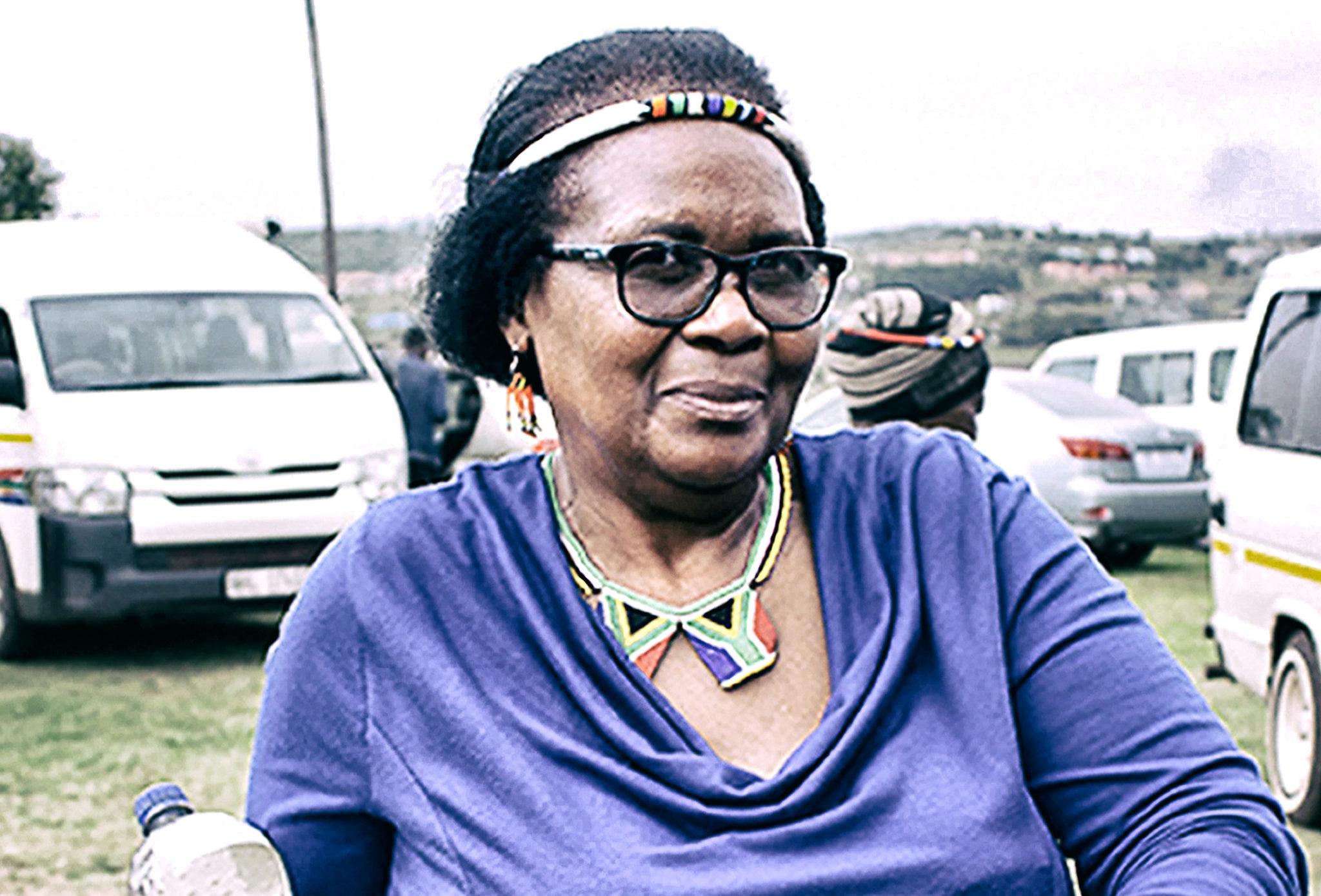
Those murdered included South African Fikile Ntshangase, 65, who was involved in a legal dispute over the extension of an opencast mine operated by Tendele Coal near Somkhele in KwaZulu-Natal province. She was shot dead in her own living room. See also: https://humanrightsdefenders.blog/tag/fikile-ntshangase/

https://www.bbc.com/news/science-environment-58508001

Download the full report : Last line of defence (low resolution) (2.3 MB), pdf

Download the full report : Last line of defence (high resolution) (18.1 MB), pdf
Posted in books, human rights, Human Rights Defenders | 8 Comments »
Tags: annual report 2020, Colombia, environmental defenders, Fikile Ntshangase, forrest, Global Witness, Human Rights Defenders, indigenous groups, land rights defender, Mexico, Philippines, resource extraction

Almost 200 international organizations denounce attacks against peaceful resistance to Escobal mine in Guatemala

January 25, 2021

On 21 January, 2021 Ellen Moore in Earthworks reports that more than 190 organizations have denounced an armed attack against Guatemalan land defender Julio David González Arango, a leader in the peaceful resistance to Pan American Silver’s Escobal mine. Julio was shot and wounded on January 16 at his home. Since the attack, two other members of the peaceful resistance have received threatening messages saying they’ll be next. The letter calls on the Guatemalan Attorney General to immediately launch a thorough investigation into the attack and hold the material and intellectual authors of this crime responsible. Julio has led opposition to the Escobal mine for nearly a decade, facing numerous criminalization and defamation campaigns against him by supporters of the mine. Saturday’s terrifying attack is part of a long history of violence against opponents of the Escobal mine since the project was first imposed in 2011. A Constitutional Court order suspended the mine in 2017 pending consultation with the Xinka people. But the threats and defamation campaigns against community leaders never stopped. In early December, a complaint was filed with Guatemalan authorities denouncing threats against Julio. Community leaders report that following the filing of the complaint, threats against them actually increased, including threats directed at Xinka representatives who are participating in the consultation process. 

This is a dangerous time for land-defenders impacted by the Escobal mine, which Xinka leaders say is made worse by Pan American Silver’s ongoing community outreach. For more than two years, the Xinka have called on the company to respect the court ordered suspension and halt all mining activities, including community programs, which they say stoke tensions and undermine their ability to freely participate in the consultation process.

While the Ministry of Energy and Mines (MEM) recently agreed to accept all 59 Xinka representatives in the consultation process, marking the first significant advancement in almost two years, serious obstacles remain. A recent report details a slew of attacks against judicial independence in Guatemala, including allegations of corruption within the Supreme Court. This is significant for the Escobal mine consultation given that the Supreme Court is the main arbiter in the process, responsible for ensuring that the Constitutional Court order is upheld and Xinka rights are respected. Without an independent and impartial Supreme Court, Xinka communities are left in an increasingly precarious and dangerous situation. 

For More Information: 
  • Organization Letter – English
  • 2020 Report on Escobal Mine Consultation
  • Blog: Tough Questions and No Answers From Pan American Silver

More than 190 international organizations denounce latest attacks against members of the Peaceful Resistance to Escobal mine in Guatemala

Posted in Human Rights Defenders | 1 Comment »
Tags: attack, environmental defenders, Escobal mine, Guatemala, Julio David González Arango, Pan American Silver, resource extraction, Xinka people

Civil Rights Defender of the Year Award 2020 goes to Naw Ohn Hla

December 11, 2020
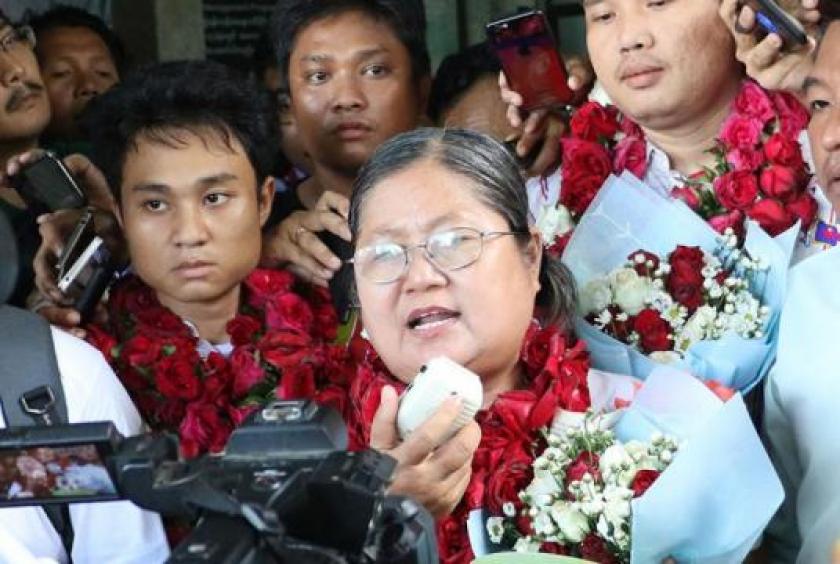
Naw Ohn Hla appears in court in Kyauktada Township in October last year on charges of organizing Kayin Martyr’s  Day. (Photo-Nay Myo Win)

Naw Ohn Hla appears in court in Kyauktada Township in October last year on charges of organizing Kayin Martyr’s Day. (Photo-Nay Myo Win) Published 11 December 2020

Naw Ohn Hla, chairperson of Democracy and Peace Women Network in Myanmar, has been presented with the Civil Rights Defender of the Year Award 2020 by Civil Rights Defenders based in Sweden. The award announcement was made on Human Rights Day on December 10.

Naw Ohn Hla is a Karen democracy activist, politician, human rights defender, environmental rights and land rights activist for decades. She has been active in campaigning against the Letpadaung mining project in northern Burma. Naw Ohn Hla is also serving as general secretary of the United Nationalities Democracy Party.

Naw Ohn Hla has received the award for her exceptional perseverance in the fight against oppression and for her continued courage to stand up to those in power, Civil Rights Defenders said in its statement.

“We are standing by the victims of human rights violations. It is now encouraging to see that not only us but also the international community is standing by this. It also encourages us to do more,” said Naw Ohn Hla.

She said she would accept the award at the headquarters of Civil Rights Defenders in Sweden together with the 2021 award winner because this year sees the Covid-19 outbreak.

For more on the Civil Rights Defender of the Year Award see: https://www.trueheroesfilms.org/thedigest/ 

See also: https://humanrightsdefenders.blog/2017/01/25/civil-rights-defender-of-the-year-award-2017-goes-to-edmund-yakani-from-south-sudan/

https://elevenmyanmar.com/news/naw-ohn-hla-wins-civil-rights-defender-of-the-year-award-2020

https://en.wikipedia.org/wiki/Naw_Ohn_Hla

Posted in awards, Civil Rights Defenders (NGO), human rights, Human Rights Defenders | 1 Comment »
Tags: Civil Rights Defender of the Year award, Civil Rights Defenders, human rights award, International Human Rights Day (2020), Myanmar, Naw Ohn Hla, resource extraction, Stockholm

Fikile Nsthangashe: “I will die for my people” and she did..

November 2, 2020

Portrait of a Community Activist

In the Daily Maverick of 1 November 2020 Estelle Ellis tells the sad story of murdered land rights defender Fikile Ntshangase in South Africa

A strongly worded statement from a large number of civil society organisations in South Africa has condemned the death of KwaZulu-Natal community activist Fikile Ntshangashe who was gunned down in her home last week as lawyers were preparing for a groundbreaking appeal fighting an order that her community organisation and those who assisted them should pay for a failed attempt to stop further mining operations in the area.

“I refused to sign. I cannot sell out my people. And if need be, I will die for my people.” This was the quote that activists remembered Mama Fikile Nsthangashe by after she was gunned down in her home at Ophondweni near Mtubatuba on 22 October 2020.

As the vice-chairperson of a sub-committee of the Mfolozi Community Environmental Justice Organisation (MCEJO), she was deeply involved in the challenge against the further expansion of a large coal mine at Somkele in KwaZulu-Natal by Tendele Coal Mining (Pty) Ltd. She was described by her fellow activists as a strong, passionate and principled leader.

On Tuesday the Supreme Court of Appeal will hear one of Nsthangashe’s final stands – an appeal in the case brought by MCEJO to stop the mining operations in the area.

According to a joint statement issued by environmental rights NGO Groundworks; Earthlife Africa; Global Environmental Trust, Mining Affected Communities United in Action, the Mfolozi Community Environmental Justice Organisation, the Southern Africa Human Rights Defenders Network and Women Against Mining United in Action the South African Police were called on to act swiftly and arrest those responsible for her death.

The statement alleges that four gunmen arrived at Ntshangashe’s home on 22 October 2020 at about 18:30. Her 11-year-old grandson was with her. She was shot five times and died at the scene.

“Tendele’s coal mining operations have caused untold destruction of the environment and the homes and livelihoods of the residents of Somkhele,” the statement reads. “Over the past few months, tension has been rising in the community over the proposed expansion of Tendele’s operations, and [her organisation’s] opposition to that expansion … Recently, Tendele was pushing for an agreement to be signed between MCEJO and Tendele to the effect that MCEJO would withdraw its Court challenges of Tendele’s expansion of its coal mine at Somkhele. Mama Ntshangase refused to sign the agreement, which certain of her fellow sub-committee members signed, purportedly doing so on behalf of the organisation … She warned sub-committee members that they had no power to make decisions on behalf of MCEJO and that the agreement only benefited Tendele. She also refused to attend any of the secret meetings that other sub-committee members held with Tendele. Days before her brutal killing, Mama Ntshangase stated her intention to write an affidavit, revealing that sub-committee members had spoken to her of a payment of R350,000 in return for her signature,” she added.

According to the statement the expansion of the mine would require the relocation of 21 families (19 of them MCEJO members) from their ancestral land. Many of these families have lived on their land for generations.

“We mourn the senseless tragedy of Mama Ntshangase’s murder, and condemn her killing. We call on the South African Police Service to act swiftly to arrest and prosecute her murderers,” the statement concluded.

Martin Mosweu from the Southern Africa Resource Watch said he was deeply saddened and angered by the killing of Ntshangase.

“She was hailed as a courageous human rights defender by her community for standing against the Tendele Coal Mine expansion in violation of the right to a safe environment. The murder of Fikile Ntshangase is a cause of concern to the work of human rights defenders in South Africa and in the SADC region. Governments are failing in their international obligations to the Declaration of Human Rights by not protecting and supporting human rights defenders in the context of their work. In Southern Africa, people who live near mines continue to face threats of violence and intimidation from mining companies who blatantly disregard their socio-economic, land, and environmental rights. Human rights defenders continue to be threatened and killed for standing up against powerful mining companies that violate human rights, often with impunity and tacit support from governments. This is why many mining communities throughout the region are now taking a stand and demanding a new order, insisting on extractive projects that secure a beneficial win-win relationship, free and prior informed consent in involuntary displacements, and community engagement in all stages of the mining cycle for inter-generational sustainable livelihoods,” he added.

Papers filed at the Supreme Court of Appeal for a hearing on Tuesday, in one of the last battles that Ntshangase had been passionately fighting on behalf of her community, has painted a stark picture of the conflict in the area.

The appeal, brought by MCEJO and the Global Environmental Trust is against the refusal by the Pietermaritzburg High Court to issue an interdict to stop mining operations in the area.

The community claimed that the mine did not have the necessary environmental authorisation, lacked land use authorisation, had not removed or altered the traditional graves in the area according to law and had failed to comply with the Waste Act.

The mine, however, argued that it had all the valid mining rights and permissions to carry on with its operations. In papers filed at court, lawyers for Tendele, stressed that their operations were conducted in terms of valid Mining Rights and Environmental Management Programmes granted and approved by the Department of Mineral Resources in 2006 and that while the legislative framework had changed there were transitional measures put in place for mines like Tendele.

This, according to papers before court included the waste management at the mine.

According to papers filed at the Supreme Court of Appeal the Centre for Environmental Rights (CER), represented by advocate Max du Plessis SC; intervened in the matter because of its concerns that the judgment opened the door for mining companies to operate illegally. The CER also expressed its concern over a cost order made in the original case as this “would discourage communities from approaching the courts to defend their constitutional rights through the fear of being debilitated by having to pay the legal costs of industry and the state”.

For another land issue in South Africa, see: https://humanrightsdefenders.blog/2020/01/30/rural-women-in-south-africa-win-landmark-case-in-court/

https://www.dailymaverick.co.za/article/2020-11-01-fikile-nsthangashe-i-will-die-for-my-people/

Posted in Human Rights Defenders | Leave a Comment »
Tags: Daily Maverick, Fikile Ntshangase, joint statement, killing, land rights defender, local community, Mfolozi Community Environmental Justice Organisation (MCEJO), murder, profile, resource extraction, South Africa, woman human rights defender

Brazilian Alessandra Korap Munduruku Wins 2020 Robert F. Kennedy Human Rights Award

October 14, 2020

Robert F. Kennedy Human Rights has named Alessandra Korap Munduruku the winner of its 2020 Human Rights Award for her work defending the culture, livelihoods, and rights of Indigenous peoples in Brazil.

Indigenous peoples, including Alessandra’s Munduruku community, have faced tremendous challenges in Brazil in recent years—from gold miners and loggers illegally invading and exploiting Indigenous territories; to widespread fires in the Amazon; and an increased risk to the coronavirus; not to mention a combative president who’s proactively removed protections for Indigenous tribes and insulted them on numerous occasions.

As one of the key leaders and organizers of the Munduruku people, Alessandra has fought to stop construction projects and illegal mining that are infringing upon Munduruku territory, garnering international attention and support. She’s advocated for the demarcation of Indigenous lands and for Indigenous communities to be consulted on decisions that affect their territories. Alessandra has also played an important role in advancing the leadership of women in the Munduruku community and among other Indigenous tribes in Brazil through her involvement in the Wakoborûn Indigenous Women’s Association and the Pariri Indigenous Association. 

“I’m humbled to be this year’s Robert F. Kennedy Human Rights Award winner,” said Alessandra Korap Munduruku. “To have the additional backing and support of Kerry Kennedy and her entire organization, especially during the pandemic, will make all the difference as we continue to fight for our rights, including the demarcation of our lands to ensure that Indigenous peoples have their autonomy, and for the fight of women who are also the strength of the resistance.”

“Throughout history, Indigenous peoples, including the Munduruku, have repeatedly been oppressed, silenced, and subjected to horrific human rights abuses,” said Kerry Kennedy, president of Robert F. Kennedy Human Rights. “Alessandra has heroically faced intimidation and violence for defending Indigenous rights across Brazil—including the ability to oppose projects and developments that affect her peoples and their livelihoods. She is a champion of women’s rights, Indigenous rights, and the foundational right of all human rights—civic space. Civic space protects the right to dissent, to advocate and to defend human rights, free of government reprisal. It is the keystone of a functioning democracy.”

Alessandra will be honored at a virtual ceremony on Thursday, October 22, at 6:00pm EDT. The event is free and open to the public. You can register here. 

Kerry Kennedy will present the award, followed by a keynote address from former U.S. Secretary of State John Kerry on the countless threats and challenges Indigenous peoples face around the world. Andrew Revkin, director of Columbia University’s Earth Institute, will then moderate a discussion on the pathways forward for Indigenous peoples in Brazil with an esteemed panel of experts:

  • Juarez Saw Munduruku, Chief of the Sawré Muybu village in Brazil 
  • Maria Leusa Cosme Kaba, a Munduruku women’s leader
  • Francisco Calí Tzay, UN Special Rapporteur on the Rights of Indigenous Peoples
  • Sebastião Salgado, Award-winning French-Brazilian documentary photographer 
  • Antonia Urrejola Noguera, Rapporteur on the Rights of Indigenous Peoples and Commissioner of the Inter-American Commission on Human Rights
  • Christian Poirier, Program Director at Amazon Watch 
  • For more on the Robert F. Kennedy Human Rights award, see: https://www.trueheroesfilms.org/thedigest/award/69FD28C0-FE07-4D28-A5E2-2C8077584068

See also: https://humanrightsdefenders.blog/2020/07/29/rfks-ripple-of-hope-award-2020-to-kaepernick-fauci-and-other-us-leaders/

https://www.globenewswire.com/news-release/2020/10/12/2106955/0/en/Alessandra-Korap-Munduruku-Wins-2020-Robert-F-Kennedy-Human-Rights-Award-for-Her-Work-Protecting-Indigenous-Peoples-in-Brazil.html

Posted in awards, Human Rights Defenders | 1 Comment »
Tags: Alessandra Korap Munduruku, Brasil, Brazil, human rights award, Indigenous People, land rights defender, Munduruku people, resource extraction, RFK Human Rights

Steven Donziger speaks out himself about being targetted by Chevron

August 17, 2020
Mongabay of 15 August 2020 carries a piece by Steven Donziger himself [about whom i posted recently: https://humanrightsdefenders.blog/2020/08/10/steven-donziger-human-rights-defender-now-victim-of-judicial-harassment/] entitled: Don’t Let Big Oil Open a New Front in Its War on Environmental Defenders. “Chevron clearly wants me confined so I can no longer work on the case or speak publicly about the company’s gross wrongdoing.”
In the Pozo Aguarico region of Ecuador, lawyer Maria Cecilia Herrera shows the oil pollution that remains in the ground 30 years after oil production ceased. Photograph by Enrico Aviles, 2020.

In the Pozo Aguarico region of Ecuador, lawyer Maria Cecilia Herrera shows the oil pollution that remains in the ground 30 years after oil production ceased. Photograph by Enrico Aviles, 2020.

After recalling the work and death of his friend Rosan Steve relates how the culprit, the oil giant Chevron, has been pursuing a scorched-earth campaign to avoid paying for the cleanup or helping any of the victims. In the process, Chevron and its main law firm – Gibson Dunn – has pioneered a new, highly unethical form of lawfare intended to intimidate environmental defenders in all 180 countries where it operates. I should know; I’m the main target of Chevron’s lawfare, which has involved 60 law firms and 2,000 lawyers.

Here’s some of the backstory. Multiple courts have found that from the late 1960s to 1992, Texaco deliberately dumped billions of gallons of cancer-causing oil waste across 1,500 square miles of previously pristine rainforest, poisoning groundwater and rivers residents depended on for drinking, bathing, and fishing. Texaco, which was later acquired by Chevron, told local Indigenous peoples that the toxic waste was actually good for them, saying it would “nourish the brain and retard aging.”

In 1993, a coalition of 30,000 Indigenous peoples and rural communities fought back. The father of one of my Harvard Law School classmates asked me to join the team of Ecuadorian and American lawyers representing them. After hearing from leaders like Rosa and seeing the damage with my own eyes, I was appalled by what Texaco had done to these communities. Unlike BP’s Deepwater Horizon spill in the Gulf of Mexico, this disaster was no accident. It was done by design to externalize production costs onto some of the most vulnerable communities on the planet—the very people whose historical role is to act as the guardians of the forest.

After years of fighting in courts in the U.S., Ecuador, and Canada, the coalition won an unprecedented $9.5B in damages. Several appellate courts and a total of 17 appellate judges affirmed the case unanimously, and Canada’s Supreme Court ruled the Ecuadorians had the right to enforce their judgment. Human-rights champions hailed the victory as the beginning of a new era of environmental accountability.

But then Chevron unveiled another component of its strategy to try to prevent the Indigenous plaintiffs from receiving a cent. The central feature was filing a civil RICO suit in U.S. federal court against me as well as all 47 Ecuadorian community leaders who signed the lawsuit, claiming that the entire case on which I had spent 18 years of my life had been nothing more than a “racketeering” conspiracy designed to “extort” money from the company. Judge Lewis Kaplan denied us a jury, refused to review any of the voluminous scientific proof of Chevron’s pollution, and then ruled in Chevron’s favor. He based his decision almost completely on the testimony of a man who later admitted to lying repeatedly under oath and to receiving huge payments from the company.

I continue to challenge Kaplan’s flawed decision, which has been rejected by multiple appellate courts in Ecuador and Canada. But largely because I would not turn over my computer and cell phone to Chevron (an order that many experts believe to be a violation of attorney-client privilege and one that I have appealed), Kaplan tried to prosecute me criminally for contempt. His charges were rejected by the federal prosecutor. Kaplan then took the extraordinarily rare step of appointing a private law firm, Seward & Kissel, to prosecute and detain me in the name of the government. Seward & Kissel later admitted that Chevron is actually a client of the law firm.

While I await my day in court, I’m now under house arrest. (I believe I’m the only lawyer in U.S. history detained pretrial on a contempt charge.) I’ve been confined to my small apartment for 12 months on a charge that carries a maximum of six months’ imprisonment. This has been incredibly hard on my 14-year old son as well as my clients, who have been denied their lawyer. Chevron clearly wants me confined so I can no longer work on the case or speak publicly about the company’s gross wrongdoing.

One thing that keeps me going is the fact that hundreds of top human-rights lawyers and dozens of Nobel Laureates have sprung to my defense. They see this abuse of power as the latest example of corporations trying to criminalize environmental activism. They know the use of corporate lawfare to target activists has been copied by a mining company in South Africa, a pipeline company in the U.S., and a logging company in Canada.

Two weeks ago, two retired U.S. federal judges provided a big boost. The Hon. Nancy Gertner (Harvard Law School) and the Hon. Mark Bennett (Drake University Law School) criticized their former colleague Kaplan in the news journal Law360 for the way he’s handled this case. I’m grateful for their courage, because it’s extremely rare for federal judges to call out colleagues publicly.

Please vote with your wheels and fill up your tank anywhere but Chevron. And I hope governments around the world will stand up to attempts to criminalize peaceful activism. They can start by refusing to do business with Chevron until the company learns to respect the rule of law and ceases its attacks on human rights defenders. We must not let this targeting of human rights defenders spread as quickly as the toxins that killed Rosa and the men, women, children whose names filled her notebook.

Steven Donziger

Steven Donziger is a human-rights advocate based in New York City. He can be followed on Twitter at @SDonziger. His legal defense fund is at www.donzigerdefense.com and Frente de Defensa de la Amazonía’s web site is makechevroncleanup.com

https://www.commondreams.org/views/2020/08/15/dont-let-big-oil-open-new-front-its-war-environmental-defenders

See also later: https://www.thenation.com/article/activism/a-new-justice-movement-emerges-to-defend-steven-donziger/

as well as

https://www.thenation.com/article/environment/steven-donziger-chevron-sentencing/

Posted in Human Rights Defenders | 1 Comment »
Tags: Chevron, Common Dreams, environmental defenders, human rights lawyer, judicial harassment, Mongabay, pollution, resource extraction, Steven Donziger, Texaco

Global Witness: 2019 worst year ever for land rights and environmental defenders

July 29, 2020

On Wednesday 29 July 2020 Global Witness revealed the highest number of land and environmental defenders murdered on record in a single year, with 212 people killed in 2019 for peacefully defending their homes and standing up to the destruction of nature. 2019 is thus the deadliest year since the advocacy group began compiling data in 2012. [see: https://humanrightsdefenders.blog/2019/07/30/in-2018-three-murders-per-week-among-environmental-human-rights-defenders/]

More than half the killings were in Colombia and the Philippines and indigenous people made up 40% of the victims, the Britain-based group said inn its report. It was a significant rise on 2018, when 164 killings were recorded.

The threat from mining and large-scale agriculture caused the most number of deaths, with these sectors also responsible for worsening climate change impacts, Global Witness said.

“Insecure land tenure, irresponsible business practices and government policies that prioritise extractive economies at the cost of human rights are putting people, and their land, at risk,” said Rachel Cox, a campaigner at Global Witness.

“Land and environmental defenders play a vital role in protecting climate-critical forests and ecosystems. When they take a stand against the theft of their land, or the destruction of forests, they are increasingly being killed,” she said.

Latin America accounted for more than two-thirds of all victims last year, with Colombia the deadliest country of all, with 64 killings.

In Asia, the Philippines had 43 killings compared to 30 the previous year, with six in India, three in Indonesia and one in Cambodia, according to Global Witness.

Many more were attacked, arrested, threatened and sued, said Global Witness, which recorded killings in 21 countries.

In the Philippines – which was the deadliest country in 2018 – “relentless vilification” of activists by the government and impunity for attackers may be spurring an increase in killings, it said.

A spokesman for President Rodrigo Duterte did not respond to requests for comment.

At least 119 activists and farmers have been killed since Duterte took office in 2016, according to Global Witness, while local campaign groups put the figure at about 200.

Dozens of United Nations experts last month called for an independent investigation into human rights violations in the Philippines, including killings of farmers and indigenous people.

The coronavirus pandemic has accelerated the “downward spiral of the human rights situation”, and a new anti-terrorism bill could be used to target activists, they said.

“Days after the act was signed, the harassment of human rights defenders has visibly worsened,” said Cristina Palabay, secretary general of Philippine human rights advocacy group Karapatan.

“While rural communities, including indigenous peoples, grapple with the impact of COVID-19, they are constantly hounded by military operations that benefit mining corporations encroaching on their ancestral land,” she said.

Two of the country’s biggest agribusiness brands – Dole Philippines and Del Monte Philippines – earlier this year said they would review their processes to better protect land rights.

But attacks against activists during coronavirus lockdowns signalled more violence worldwide, Cox said.

“Governments around the world have used the crisis to strengthen draconian measures to control citizens and roll back hard-fought environmental regulations,” Cox told the Thomson Reuters Foundation.

“This a more worrying time than ever.”

ttps://www.globalwitness.org/en/press-releases/global-witness-records-the-highest-number-of-land-and-environmental-activists-murdered-in-one-year-with-the-link-to-accelerating-climate-change-of-increasing-concern/

https://news.trust.org/item/20200728231459-86pra

https://www.aljazeera.com/news/2020/07/dangerous-day-land-rights-defenders-killings-surge-200729022143251.html

Posted in books, Human Rights Defenders | 4 Comments »
Tags: annual report 2019, Colombia, environmental defenders, Global Witness, Human Rights Defenders, indigenous groups, killings, land rights defender, Latin America, Philippines, Rachel Cox, resource extraction

New law in Peru may protect the police more than indigenous human rights defenders

April 5, 2020
Matias Perez Ojeda del Arco wrote on 3 April, 2020 in Forest Peoples about the Police Protection Act (Law No. 31012), which was passed in Peru by the new Congress on 27 March, without approval by the Executive, 11 days after declaring a state of emergency in the country due to the spread of COVID-19. This law is constitutionaly questionable and may open the door to impunity according to the Institute of Legal Defense (IDL), the Ombudsman’s Office, the National Human Rights Coordinator (CNDDHH) of Peru, and the Inter-American Commission on Human Rights (IACHR). [The Act forbids ordering a warrant of arrest or pre-trial detention for Peruvian National Police (PNP) personnel who may injure or kill in a regulatory intervention. Its complementary provision repeals the principle of proportionality in the use of force for a police officer response, which undermines actions under a constitutional framework and is against full respect for human rights, and may create excesses and arbitrariness.]

According to the Ombudsman’s Office, as of January 2020, there were 129 socio-environmental conflicts in Peru. So how will the National Police respond to unforeseen events, even more so in a post-COVID-19 context, where indigenous people’s territories could be more vulnerable to actions to reactivate the country’s economy?  This is more relevant within the framework of the End of Mission Statement of the United Nations Special Rapporteur on the situation of human rights defenders. At the beginning of this year, it identified that, despite the progress made in this area, human rights defenders, especially from indigenous peoples and local communities, are still unable to carry out their work in a safe environment.

According to the Rapporteur and a report by the Ombudsman’s Office, 960 people have been criminalised for defending and promoting human rights since 2002, of whom 538 were criminalised during social protests. Between 2011 and 2016, 87 human rights defenders lost their lives in Peru, 67% because of law enforcement, according to a CNDDHH report.

…Comprehensive police protection for common interest has lost its essence. Instead, the interests of companies are gaining serious ground in Peru, i.e. 145 agreements of “Extraordinary Police Service”, between the Peruvian Police and extractive companies (mining and hydrocarbon sector), were established between 1995 and 2018, according to a report by the Working Group on Indigenous Peoples of the CNDDH. One example of this is the agreement between the hydrocarbon company PETROPERÚ S.A. and the PNP (2018) for operations in Amazonas and Loreto regions, which affects the ancestral land of the Autonomous Territorial Government of the Wampis Nation (GTANW).It is crucial that Peruvian authorities repeal said law to avoid risking the lives of human rights defenders, especially indigenous peoples who are at the forefront of threats, harassment and criminalisation when they protest due to conflicts arising in their territories. Indigenous territories are more vulnerable than ever during the current community contagion phase of COVID-19, as proper health infrastructure and equipment may not reach those areas, nor provide timely and dignified protection for them. There are companies working on indigenous territories during the State of Emergency, including the oil palm company Ocho Sur P. in the Shipibo land of Santa Clara de Uchunya. According to IDL, Ocho Sur is continuing to work without an approved Environmental Impact Assessment. When the State of Emergency is over, most companies will want to recover their losses by any means, regardless the rights of indigenous peoples. This is the moment when the State Protection rules must focus on these issues.

http://www.forestpeoples.org/en/new-law-in-peru-threatens-indigenous-human-rights-defenders

Posted in human rights, Human Rights Defenders | Leave a Comment »
Tags: forest peoples, human right defenders, impunity, indigenous peoples, land rights defender, Matias Perez Ojeda del Arco, Mining, Peru, police behavior, resource extraction

In 2018 three murders per week among environmental human rights defenders

July 30, 2019
Taking a stand for environmental justice and protecting natural resources is a dangerous pursuit. A new report from the UK-based NGO Global Witness showed that 164 environmental human rights defenders worldwide were killed for their activism in 2018. That averages to just over three murders per week. And that’s an underestimation.

Global Witness said the true number was likely “much higher, because cases are often not documented and rarely investigated. Reliable evidence is hard to find or verify“. Also, murder is not the only way to quash dissent. Global Witness said, although killings are at a disturbing level, companies and governments were increasingly using other tactics like criminalization, non-lethal violence, harassment and threats, as the Guardian reported. One common tactic is for governments to label activists as terrorists. “Deaths were down last year, but violence and widespread criminalization of people defending their land and our environment were still rife around the world,” said Alice Harrison, a senior campaigner at Global Witness, as the HuffPost reported.

“The drop in killings masks another gruesome reality, ” said Harrison. “Our partners in Brazil and many other countries have noted a spike in other forms of non-lethal attacks against defenders — often attacks so brutal they’re just shy of murder.” [See also: https://humanrightsdefenders.blog/2019/01/09/global-witness-report-2018-on-environmental-defenders-bad-but-2017-was-worse/]

The bulk of the murders took place in Asia or Central and South America. In fact, more than half were in Latin America and most of the victims were indigenous or rural campaigners standing up for their communities against mining, hydrocarbon development, damming and agribusiness. The mining sector was responsible for one-fourth of the murders.

The Philippines replaced Brazil as the most murderous country, with 30 victims, followed by Colombia with 24, India with 23 and then Brazil with 20. It’s the first time since the annual list began in 2012 that Brazil did not top the list, according to the Guardian. The number of reported murders there dropped from 57 the year before to 20 in 2018.

Guatemala had one of the highest numbers per capita and the sharpest increase with a five-fold increase, bringing the total number to 16 deaths in 2018, which Global Witness attributed to new investments in plantations, mining and energy projects, according to US News and World Report. “In general, the surge in killings is because Guatemala is witnessing a major setback with regard to democracy and human rights,” said Jorge Santos, executive director of the non-profit Unit for the Protection of Human Rights Defenders in Guatemala, to Al Jazeera. His group has documented machete attacks and armed militias opening fire on indigenous people campaigning for land rights in areas that are home to mining operations, oil palm plantations and displacement of the Maya Q’eqchi’ community.

For the role of international financial institutions in al lthis see my post of roday: https://humanrightsdefenders.blog/2019/07/30/uncalculated-risks-attacks-on-human-rights-defenders-in-name-of-development/

https://www.globalwitness.org/en/press-releases/spotlight-criminalisation-land-and-environmental-defenders/

https://www.ecowatch.com/environmental-activists-killed-2639511189.html?rebelltitem=3#rebelltitem3

https://www.euronews.com/2019/07/30/more-than-160-people-killed-for-defending-the-environment-campaign-group

https://timesofoman.com/article/1694919/World/Asia/Philippines-authorities-respond-to-Global-Witness-report

See also: Download the full report: Enemies of the State? (PDF, 3.8MB)

Posted in books | 4 Comments »
Tags: criminalisation, enemies of the state, environmental human rights defenders, Global Witness, Guatemala, killings, Latin America, Philippines, resource extraction, statistics

Environmental defenders in Alberta, Canada, be warned….oil will get you

July 9, 2019

2019-07-01_thumb

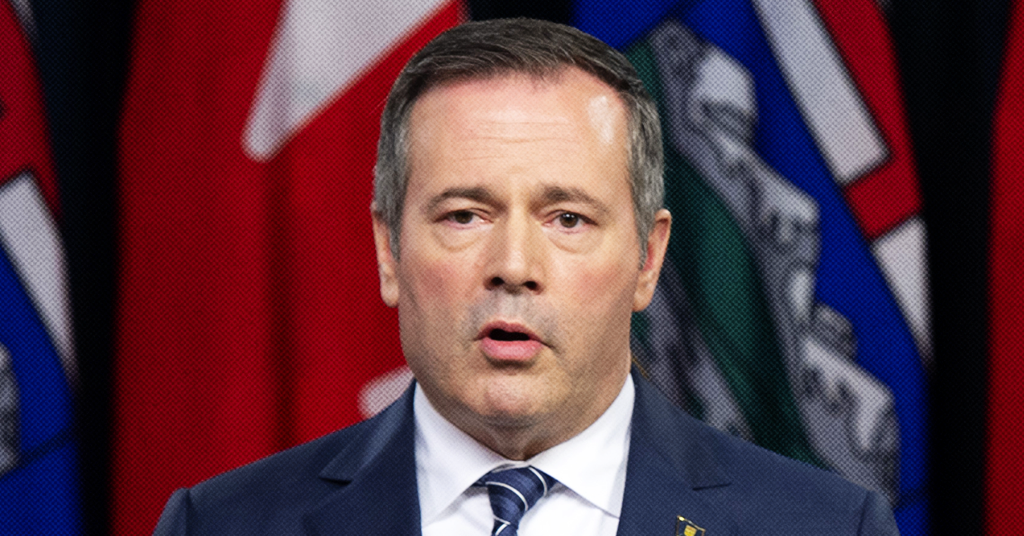
Press Progress blog of 3 July 2019 analyses the agressive tone of Alberta‘s Premier Jason Kenney, who talks of “war” on environmental defenders. Civil liberties groups and human rights organizations are warning that his new “war room” is an attempt to intimidate critics and put a chill on free expression rights in the province. Described as a “fully staffed, rapid response” unit mandated to respond to “all the lies” about the oil industry, the $30 million “war room” is part of Kenney’s so-called “fight back strategy” that aims to wage war against environmental groups. Kenney has also indicated he will launch a public inquiry into the activities of environmental groups like the David Suzuki Foundation, while Kenney’s energy minister has promised the government will assemble a team of lawyers to launch lawsuits against environmentalists.

“Talk of a war room, focused on targeting ‘offending’ environmentalists, seems determined to send a clear message,” Amnesty International Canada Executive Director Alex Neve told PressProgress. Cara Zwibel, director of the Canadian Civil Liberties Association’s Fundamental Freedoms program, agrees the campaign’s stated mission could be “very problematic from a free expression perspective.”

Standing behind Kenney at the press conference was Vivian Krause, a self-described “researcher” who focuses on “the money behind environmental campaigns.” Krause’s research, which is often panned by her critics as a “conspiracy theory,” claims environmental groups funded by the Rockefeller Brothers are secretly working to cap oil production in Alberta.

Also sharing the stage with Krause and Kenney was Tim McMillan, President and CEO of the Canadian Association of Oil Producers (CAPP) as well as Sandip Lalli, President and CEO of the Calgary Chamber of Commerce. Kenney was introduced at the press conference by Robbie Picard, an oil activist who has been involved with groups like Canada Action and Rally for Resources, but better known for creating the “I Love Oilsands” t-shirts. As Maclean’s notes, Picard is known to be “a bit too enthusiastic in his cheerleading” for the oil industry, as well — in a 2018 appearance on Rebel Media, Picard described environmentalists as “terrorists” who should face “six months in jail” for protesting the oil industry.

Jason Kenney’s ‘War Room’ is a Threat to Free Speech, Say Civil Liberties and Human Rights Groups

Posted in human rights, Human Rights Defenders | 1 Comment »
Tags: Alex Neve, Canada, Cara Zwibel, environmental human rights defenders, environmental issues, harassment, intimidation, Jason Kenney, oil industry, Press Progress, resource extraction

« Older posts
Newer posts »
  • Enter your email address to subscribe to this blog and receive notifications of new posts by email.

    Join 1,786 other subscribers
  • Recent Posts

    • Andrea Bolaños Vargas next Special Rapporteur on human rights defenders?
    • Risks for Human Rights Defenders amid war in the Middle East
    • Strategy 2030: ISHR’s new Strategic Framework
    • Launch of the 2025 Freedom of Thought Report
    • Checklist with criteria for candidates Special Rapporteur on freedom of expression
    • UN experts warn of extreme M23 violence targeting human rights defenders in DRC
    • Amnesty Reports Attacks on Indonesian Human Rights Defenders in 2024 – four acquitted in 2026
    • After 16 years of outstanding leadership, Gerald Staberock is stepping down as Secretary General of the OMCT
Blog at WordPress.com.
Entries and comments feeds.Valid XHTML and CSS.
  • Subscribe Subscribed
    • Hans Thoolen on Human Rights Defenders and their awards
    • Join 441 other subscribers
    • Already have a WordPress.com account? Log in now.
    • Hans Thoolen on Human Rights Defenders and their awards
    • Subscribe Subscribed
    • Sign up
    • Log in
    • Report this content
    • View site in Reader
    • Manage subscriptions
    • Collapse this bar
 

Loading Comments...