Posts Tagged ‘relocation’

Guidelines for Universities Hosting Human Rights Defenders

March 1, 2025

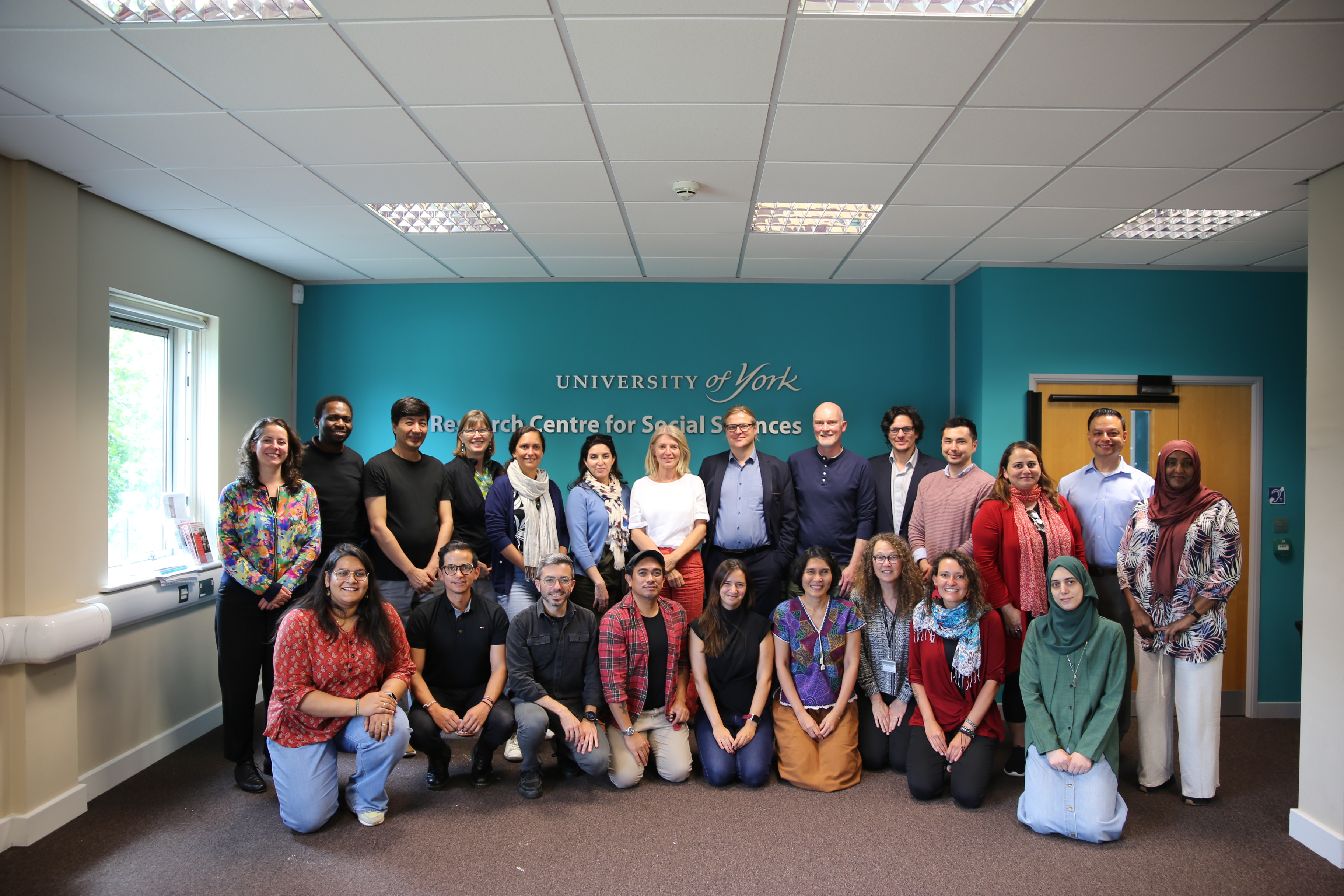
A landmark document for universities seeking to support HRDs, civil society and democracy was launched this February by York University

The Guidelines, co-produced through a year-long collaborative process, aim to support universities involved in human rights protection work and share best practice on hosting HRDs.

This initiative, led by the UNESCO Chair in the Protection of Human Rights Defenders and Expansion of Political Space, was facilitated by the Centre for Applied Human Rights (CAHR) at the University of York. Chairholder Professor Paul Gready highlighted the critical need for these guidelines: 

“Civil society is under attack in many parts of the world as it faces legislative, administrative, financial, and physical threats. Universities are spaces that uphold academic freedom and democracy, and they have a crucial role to play in protecting these values everywhere.” 

The Guidelines underscore the importance of universities in the human rights protection ecosystem, and their role in providing a platform for HRDs to continue their vital work in safer environments, and respite while rejuvenating HRDs for their future work.

At an event in July 2024 which discussed a draft of the Guidelines, Sharan Srinivas, Director, Protecting Rights Defenders, Open Society Foundations, emphasised the importance of building a community both within and outside of the university environment: 

“The Guidelines address critical issues in human rights work, such as risk, trauma and psychosocial support. The process has built a strong community, and it’s crucial to continue building solidarity and links within the human rights ecosystem. I hope universities can scale up this work, and I wish you well in your efforts.”

Professor Charlie Jeffery, Vice-Chancellor of the University of York, attended the event, and provided his support for the initiative. He said “Reading the draft Guidelines, and seeing the depth, purpose and quality of the discussions at this stage shows great enterprise and ambition. For me, the question of how to align these Guidelines with university values, and bring universities along with you is key. At York, CAHR not only aligns with our values but continues to push us further in our mission for public good.” 

Professor Gready thanked all the attendees for their generosity in sharing their experiences and expertise. He said “There is an enormous amount of work still to do to ensure these Guidelines have an impact. But these Guidelines will empower universities working with HRDs, who need our support in an increasingly volatile world.”

The UNESCO Chair is planning a series of regional “What Next?” events over the next 6-12 months to discuss how to implement the Guidelines as extensively as possible. To learn more about these events and the Chair’s work, please visit the UNESCO HRD Hub

https://www.york.ac.uk/cahr/news/2025/cahr-launches-guidelines-for-hosting-hrds/

Funding for individual women human rights defenders

June 8, 2024

Safety Net funding is for individual women human rights defenders (WHRDs) from or working in conflict and crisis affected countries, who, due to their commitments to human rights and peace, currently face – or have faced risks – with resulting impacts that continue to threaten their safety and work. SAFETY NET DOES NOT FUND CIVIL SOCIETY ORGANIZATIONS OR PROGRAM IMPLEMENTATION.

The WPHF Window for WHRDs Safety Net aims to improve the security and protection of WHRDs by providing for, but not limited to: 

  • Temporary relocation costs (e.g. accommodation, food and transportation) 
  • Security and protection costs (e.g. secure transportation, digital or physical security training) 
  • Equipment (e.g. mobile phone, computer, security system and cameras) 
  • Self-care (e.g. physical or mental health support) 
  • Legal assistance  
  • Repatriation costs, to facilitate return and reintegration in home country

Safety Net grants are provided for amounts up to USD 10,000 (subject to revision by the NGO partners of the WPHF Window for WHRDs) to cover needs for a duration of up to six months.

Eligibility Criteria

  • Gender: women and those who identify as women. This includes lesbian, gay, transgender and intersex (LGBTI) human rights defenders.
  • Age: 18 years old and above. 
  • Country of origin: from/working in conflict and crisis-affected contexts. *See for reference countries that might be eligible for support: List of matters of which the UN Security Council is seized: S/2023/10
  • Human rights activities: provides details of peaceful engagement in the advancement of human rights, either individually or through a civil society organization.
  • Threats and risks:
    • Demonstrates current or past serious security risks for her and/or her dependents, because of her commitment to human rights and peace; AND/OR
    • Demonstrates that risks are – or have been such – that her ability to keep working on behalf of human rights and peace is threatened.
  • Grant and duration: the requested funding cannot exceed USD 10,000, or cover needs beyond an anticipated 6-month period. 

Decision-making process

You can submit your application using one of the two below methods below

Offline: click the below button to download a Word version of this form, then email it to WPHF-WHRD@unwomen.orgAPPLICATION FORM – FLEXIBLE FUNDINGE nglish

Online: complete the secure, data encrypted application form below, then click the ‘Submit’ button at the bottom of the page. APPLICATION FORM

The Window for WHRDs is demand-driven and accepts requests on a rolling basis. 

For further information on safe online communication, please see: https://ssd.eff.org/en/module/communicating-others. We also encourage you to visit: https://www.accessnow.org/help/ to access 24/7 help in multiple languages to protect yourself online.

WPHF Funding Window for WHRDs NGO Partners 

10 years Natalia bracelet

December 20, 2023
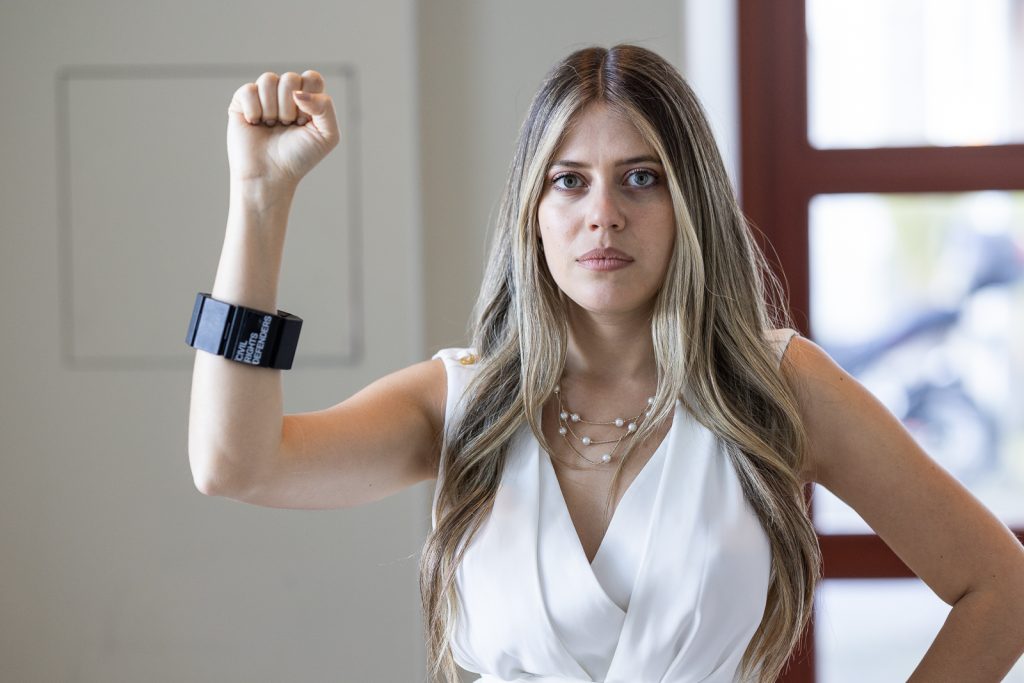
Génesis Dávila, participant in the Natalia Project.

On 18 December 2023 Civil Rights Defenders published an account of 10 years Natalia [see: https://humanrightsdefenders.blog/2014/04/24/the-natalia-gps-alarm-bracelet-wins-golden-egg-awards-in-stockholm/]

10 years ago, Civil Rights Defenders launched the Natalia Project, the world’s first assault alarm and community-based security system for human rights defenders. In the event of an attack, participants in the project can send out a distress signal so they can be located quickly and get help.

Natalia Project participant Génesis Dávila is the director and founder of Defiende Venezuela, a human rights organisation fighting for accountability and justice for victims of political persecution, people in arbitrary detention, and others who have been subjected to government-sanctioned attacks in Venezuela. In Venezuela being a human rights defender puts Génesis at risk of the very same political persecution she is trying to document.  

I face different threats on a daily basis. In general, they come from the Venezuelan regime. They harass human rights defenders because we try to protect people who are in danger and victims of human rights violations. This is something that puts us at great risk.” “It is really exhausting because then you don’t have space for other things. It’s the feeling of being chased all the time. It puts you under stress. You feel that you are never safe, wherever you are.”

In the case of an attack, the alarm is activated, and a distress signal goes off. Civil Rights Defenders and a network of human rights defenders can start investigating the situation within minutes.

For me, my Natalia has been a game changer. It helped me feel safe. Just having this tiny device with me, knowing that there was someone on the other side of the world just waiting for my call, being ready to act if something happens gave me such a confidence. That changed everything.”

The Natalia Project device is built to be durable and easy to use and take wherever is needed. 

Everywhere I go, I bring my Natalia. If I’m about to fly somewhere, I check my passport, cellphone and my Natalia. It makes me feel safe. It’s my lucky charm.” 

“Anyone who wants to support human rights can do it. You don’t have to be a lawyer, or someone waving a flag. You just need to advocate for human rights, and that will be enough.” 

CRD also runs an emergency fund, see: https://crd.org/emergency-fund/

Call for Applications for September 2023 by Shelter City Netherlands

March 22, 2023

On 21 March 2023 Justice & Peace Netherlands launched a new call for applications for human rights defenders at risk to participate in Shelter City. The deadline for applications is 4 April 2023. Now extended to 11 April.

Shelter City is a global movement of cities, organizations and people who stand side by side with human rights defenders at risk. Shelter City provides temporary safe and inspiring spaces for human rights defenders at risk where they re-energise, receive tailor-made support and engage with allies.

From September 2023 onwards, several cities in the Netherlands will receive human rights defenders for a period of three months. At the end of their stay in the Netherlands, participants are expected to return with new tools and energy to carry out their work at home.

Visit to the ICC in The Hague, 2022

Journalists’ Safe Haven Initiative: Justice & Peace aims to promote the safety of journalists, and in particular women journalists, worldwide so that they can build new strategies and continue their important work for freedom of expression in their country of origin. With support from the Dutch Ministry of Foreign Affairs, Justice & Peace will be able to provide two additional temporary safe spaces per year in The Hague for journalists at risk and provide them with tailor-made support.

Justice & Peace and the Asser Institute have established a collaborative relationship to strengthen and support the capacity of local human rights defenders worldwide. In the context of the Institute’s Visiting Researchers Programme, the Asser Institute hosts one Fellow per year within the framework of the Shelter City initiative by Justice & Peace. The selected Fellow will carry out a research project during the three-month period and take part in other human rights relevant (research) activities of the Asser Institute. In line with these activities, closer to the end of the three-month period, the Fellow will have to present the relevant research findings in a public or closed event. The Fellow may also participate in other (public) events like lectures or (panel) discussions.

To be eligible for Shelter City, human rights defenders should meet the following conditions:

  • They implement a non-violent approach in their work;
  • They are threatened or otherwise under pressure due to their work or activism;
  • They are willing and able to return to their country of origin after 3 months;
  • They are willing to speak publicly about their experience or about human rights in their country to the extent that their security situation allows;
  • They have a conversational level* of English (limited spots are available for French or Spanish speaking human rights defenders);
  • They have a valid passport (with no less than 18 months of validity at the time of applying) or be willing to carry out the procedures necessary for its issuance. Justice & Peace covers the costs of issuing a passport and / or visa (if applicable);
  • They are not subjected to any measure or judicial prohibition to leave the country;
  • They are willing to begin their stay in the Netherlands around September 2023.

Note that additional factors will be taken into consideration in the final round of selection, such as the added value of a stay in The Netherlands as well as gender, geographic, and thematic balance. Please note that only under exceptional circumstances are we able to accept human rights defenders currently residing in a third country.

see also: https://humanrightsdefenders.blog/2022/04/20/shelter-city-netherlands-call-for-applications-for-september-2022/

To apply for Shelter City, use the online application form below. An independent commission will select the participants.

Apply for Shelter City

For more information, please contact us at sheltercity@justiceandpeace.nl.

Shelter City and Artists’ Safe Haven; a call for applications

September 24, 2022

Justice & Peace Netherlands is launching a new call for applications for its initiatives: Shelter City and Artists’ Safe Haven initiative. The deadline for applications for both initiatives is 2 October 2022 at 23:59 CET. Please note that special conditions may apply due to COVID-19.

Shelter City is a global movement of cities, organizations and people who stand side by side with human rights defenders at risk. Shelter City provides temporary safe and inspiring spaces for human rights defenders at risk where they re-energise, receive tailor-made support and engage with allies. The term human rights defender is intended to refer to the broad range of activists, journalists and independent media professionals, scholars, writers, artists, lawyers, civil and political rights defenders, civil society members, and others working to advance human rights and democracy around the world in a peaceful manner. From March 2023 onwards, several cities in the Netherlands will receive human rights defenders for a period of three months. At the end of their stay in the Netherlands, participants are expected to return with new tools and energy to carry out their work at home. For last year see: https://humanrightsdefenders.blog/2022/04/20/shelter-city-netherlands-call-for-applications-for-september-2022/

Artists’ Safe Haven initiative

Through its Artists’ Safe Haven initiative, Justice & Peace Netherlands aims to contribute to the promotion of freedom of artistic expression globally, including the right to create art, admire it, critique it, challenge it, be provoked by it, and respond to it free of governmental censorship, political interference or the pressures of non-state actors. Through the provision of temporary relocation and tailor-made support for artists at risk, Justice & Peace aims to promote the safety of these artists, and in particular women artists, worldwide so that they can build new strategies and continue their important work for freedom of artistic expression in their country of origin. With support from the Dutch Ministry of Foreign Affairs, Justice & Peace will be able to provide three temporary safe spaces in The Hague in March, June or September 2023 for artists or art practitioners at risk.

https://7a2pv.r.a.d.sendibm1.com/mk/mr/K_x49f0_LN6hMWyukmyZin_8nFjvyvxEZ64oBYmy0mcrornzARhZf2MMVMohYTcigMvb7fOgyE8_v0NpVjJ007RkNxvaOwa970jiH0-_rgbyYyAtoTgTtlTVcOhkQ5AFqLqJihg

Shelter City Netherlands: Call for Applications for September 2022

April 20, 2022

On 20 April 2022, Justice & Peace Netherlands launched a new call for applications for at risk human rights defenders to participate in Shelter City. The deadline for applications is 3 May 2022.

Shelter City provides temporary safe and inspiring spaces for human rights defenders at risk where they re-energise, receive tailor-made support and engage with allies. The term human rights defender is intended to refer to the broad range of activists, journalists and independent media professionals, scholars, writers, artists, lawyers, civil and political rights defenders, civil society members, and others working to advance human rights and democracy around the world in a peaceful manner.

From September 2022 onwards, several cities in the Netherlands will receive human rights defenders for a period of three months. At the end of their stay in the Netherlands, participants are expected to return with new tools and energy to carry out their work at home.

Justice & Peace aims to promote the safety of journalists, and in particular women journalists, worldwide so that they can build new strategies and continue their important work for freedom of expression in their country of origin. With support from the Dutch Ministry of Foreign Affairs, Justice & Peace will be able to provide two additional temporary safe spaces per year in The Hague for journalists at risk and provide them with tailor-made support.

Justice & Peace and the Asser Institute have established a collaborative relationship to strengthen and support the capacity of local human rights defenders worldwide. In the context of the Institute’s Visiting Researchers Programme, the Asser Institute hosts one Fellow per year within the framework of the Shelter City initiative by Justice & Peace. The selected Fellow will carry out a research project during the three-month period and take part in other human rights relevant (research) activities of the Asser Institute. Only in English.

To be eligible for Shelter City, human rights defenders should meet the following conditions:

  • They implement a non-violent approach in their work;
  • They are threatened or otherwise under pressure due to their work or activism;
  • They are willing and able to return to their country of origin after 3 months;
  • They are willing to speak publicly about their experience or about human rights in their country to the extent that their security situation allows;
  • They have a conversational level* of English (limited spots are available for French or Spanish speaking human rights defenders);
  • They have a valid passport (with no less than six months of validity) or be willing to carry out the procedures necessary for its issuance. Justice & Peace covers the costs of issuing a passport and / or visa (if applicable);
  • They are not subjected to any measure or judicial prohibition to leave the country;
  • They are willing to begin their stay in The Netherlands around September 2022.

Note that additional factors will be taken into consideration in the final round of selection, such as the added value of a stay in The Netherlands as well as gender, geographic, and thematic balance. Please note that only under exceptional circumstances are we able to accept human rights defenders currently residing in a third country.

To apply for Shelter City, please click on the link below. Application forms must be submitted by 3 May 2022 at 23:59 CET (Central European Time). An independent commission will select the participants.

Apply now to Shelter City for September 2022

Note that selected human rights defenders will not automatically participate in Shelter City as Justice & Peace is not in control of issuing the required visas to enter the Netherlands.

For more information, please contact us at sheltercity[at]justiceandpeace.nl.

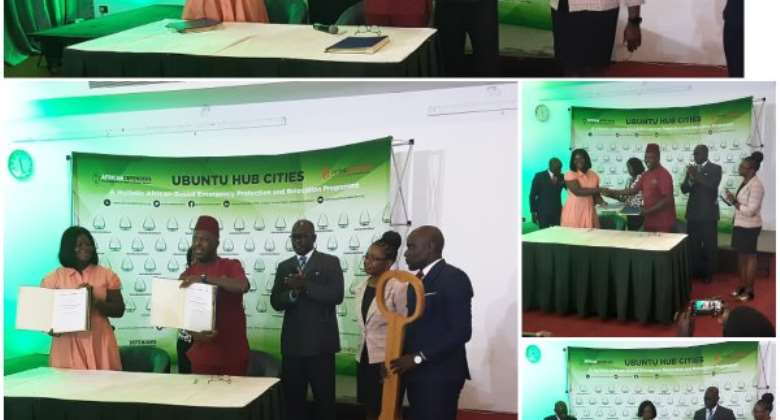
Ubuntu Hub in Accra will serve as a safe haven for Human Rights Defenders

March 28, 2022

Accra set to house threatened African Human Rights Defenders

An interesting example of what African NGOs can do in their own region for human rights defenders:

The Gender Centre for Empowering Development (GenCED) and African Defenders, a Pan-African Human Rights Defenders (HRDs) Network, have signed a Memorandum of Understanding (MoU) to set up the 7th Ubuntu Hub in Accra.

The Hub will serve as a safe haven for Human Rights Defenders and in some instances, their families within the continent who are subjected to attacks, threats, violence, and extreme pressure as a consequence of their human rights works.

The MoU would ensure that such victims are given medical, social, educational and psychosocial support in Accra or another African country if they so will, to ensure their wellbeing and development.

Mr Shire said it was prudent for Africa to stay alive and support each other to close the gaps such as threatening, torturing, murmuring, and crying caused as a result of the lack of protection of its people.

A feasibility study conducted by the parties proved that Accra in Ghana was the most suitable host for the initiative as its political, security, and human rights records gave the idea that the city provided an appropriate environment for the relocation of at-risk HRDs, he said.

Why do human rights defenders need to travel to Finland, just to seek a safe haven, why can’t we seek one from another country within our own continent,” he said.

He explained that the cost of relocating African HRDs at risk to another continent was prohibitory expensive, and the HRDS often faced cultural displacement, stigmatization and cultural and language barriers, hence, finding themselves unable to actively continue their human rights activism when relocated outside of the continent.

In 2019, he said the African Defenders, therefore, launched the Ubuntu Hub Cities, with the aim of providing at-risk African HRDs, with options for safe internal and external temporary relocation without having to leave their home continent.

The initiative since its inception has created a Hub in Kampala, Abidjan, Tunis, Johannesburg, Pretoria, and Cape Town.

Through their diverse local partnerships, Mr Dire said relocation also provided an opportunity for HRDs at risk to learn and share experiences, so that, they could have a positive impact on the host community and return home with enhanced capacities to protect and promote human rights.

Under the Ubuntu Hub Cities Initiative, he mentioned HRDs, Journalists, Writers and Scholars, Trade Union Workers, Human Right Lawyers and Artists as some of the groups they supported.

Ms Esther Tawiah, the Executive Director, GenCED, said African leaders had to stay true to the power and give voice to the ordinary citizen who gave them the mandate.

https://www.modernghana.com/news/1147846/accra-set-to-house-threatened-african-human-rights.html

Civil Rights Defenders’ Emergency Fund gives insight over 2021

March 18, 2022

Zinaida Muradova, Head of Rapid Response at Civil Rights Defenders

Defending human rights has become increasingly dangerous in many parts of the world. Many of those who do, face numerous risks and threats on a daily basis. When a threat towards a human rights defender escalates, Civil Rights Defenders’ Emergency Fund provides rapid assistance to strengthen the defender’s security as quickly as possible. 

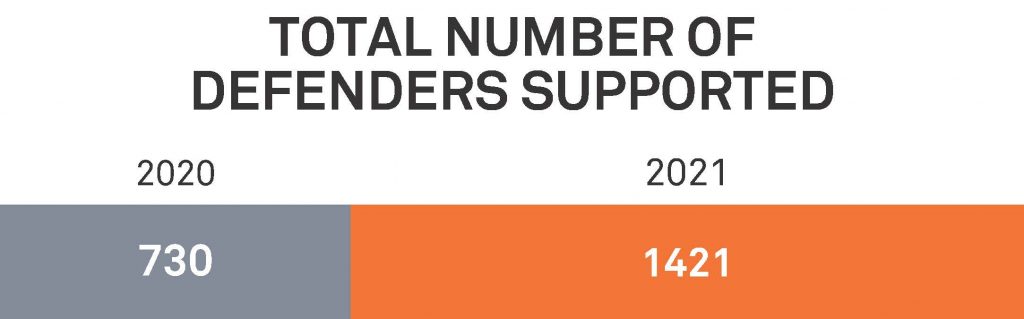
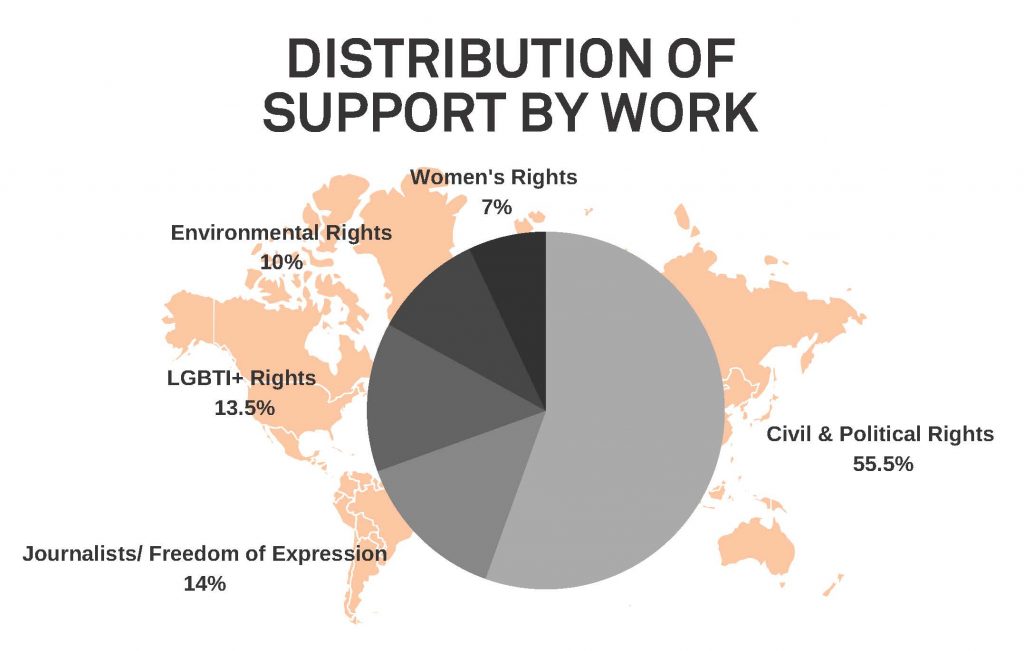
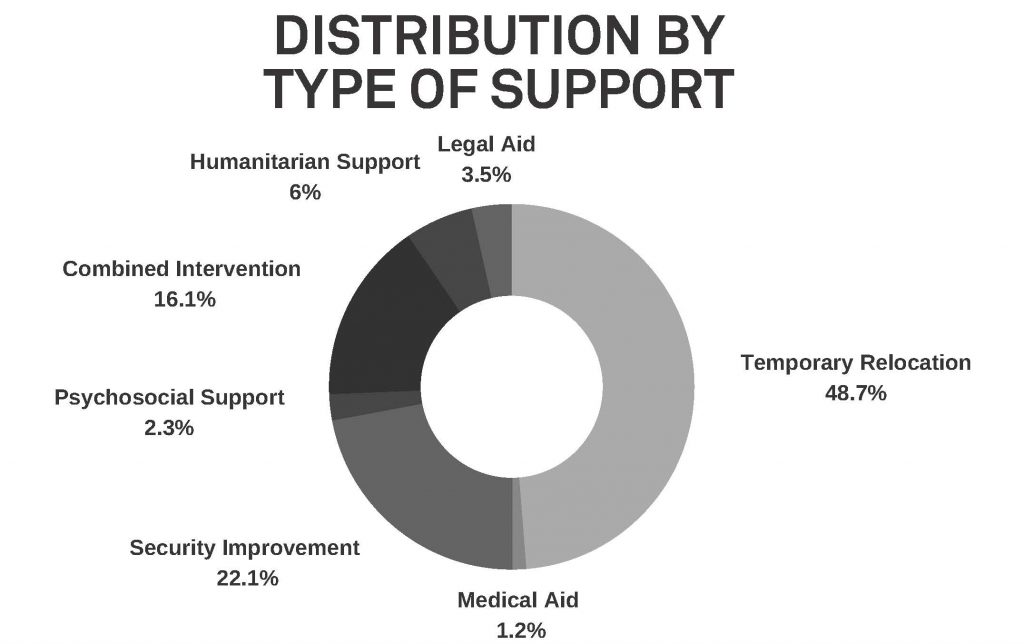
On 7 March 2022 it provided a breakdown of its use. The fund can, for example, provide legal aid or temporarily relocate people who suffer persecution, as well as provide preemptive efforts such as security trainings and digital security solutions. In 2021, the fund supported a total of 1421 human rights defenders in 30 countries. 

Emergency support doubled in 2021

In 2021, Civil Rights Defender’ Emergency Fund has received and processed the largest number of applications since the inception of the fund in 2012. We have supported a total of 1.421 Human Rights Defenders (HRD:s) and/or members of their families at risk through a total of 171 grants in 30 countries. The number of applications and granted support have thus both doubled compared to 2020.  

The world is becoming an increasingly dangerous place for human rights defenders, which is a significant explaining factor behind this increase. The CRD Emergency Fund has seen and reacted to the global backsliding of democracy and a number of emerging conflicts in 2021. The aftermath of the war between Armenia and Azerbaijan, the military coup in Burma, the spring protests in Colombia, the witch-hunt on civil society in Belarus, the civil war in Ethiopia and the Taliban’s takeover in Afghanistan are only a few of the conflicts that have deteriorated the security situation for human rights defenders in 2021. Many human rights defenders cannot continue their work for human rights and democracy without the support of the outside world.

Although the number of applications has doubled, so has the number of Emergency Fund applications granted. This increase is much thanks to the additional resources that Civil Rights Defenders has been able to put into processing fund applications. 

We are humbled to have been able to support so many human rights defenders in 2021. The need for emergency support is greater than ever, with the war in Ukraine the number of applicants is likely to keep increasing in the immediate future”, says Zinaida Muradova.

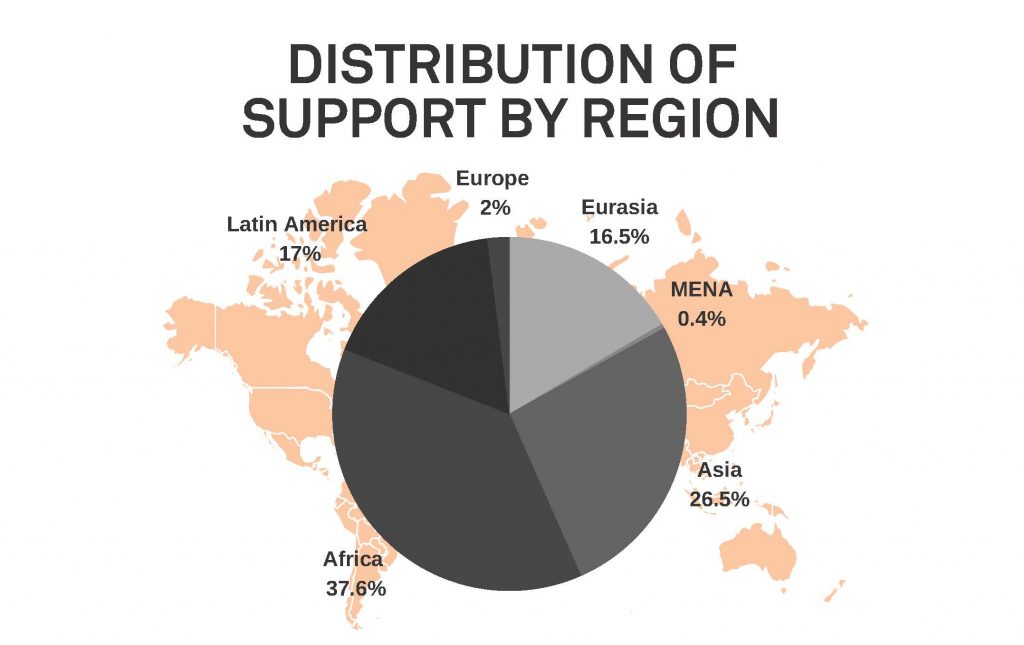
Emergency support to Burma and Asia has significantly increased in 2021, although the majority of human rights defenders who received emergency support continued to be from Africa. Additionally, the Emergency Fund continued to expand its global reach in five more regions – Eurasia, Europe, Africa, Latin America and MENA. In total, support was provided to human rights defenders in 30 countries during the course of 2021. 

Further advancing gender sensitivity 

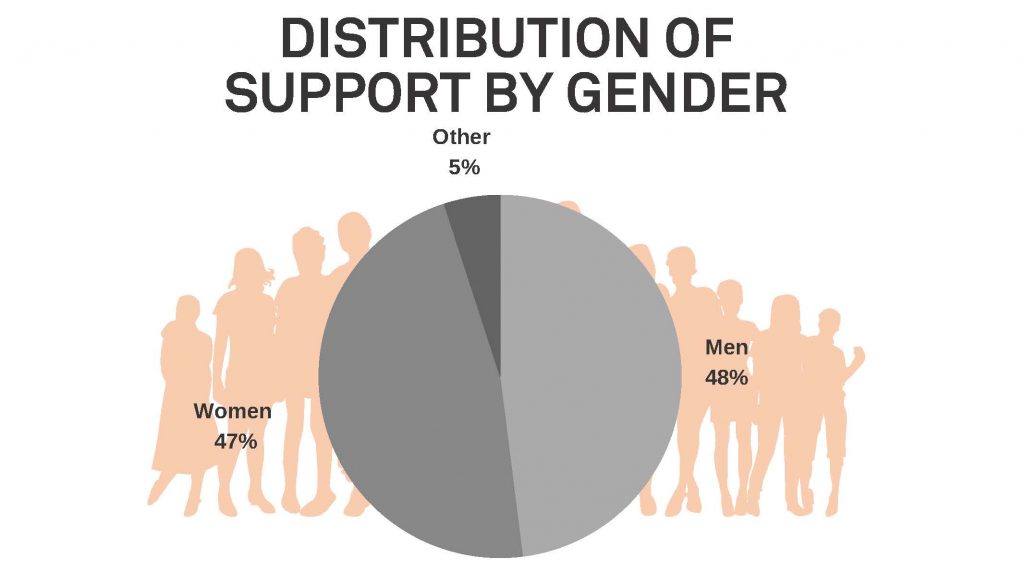
The Emergency Fund continued to build on gender work started in 2019 to ensure a good gender balance and representation amongst the beneficiaries of support. We have been working to increase the accessibility of the mechanism for the most vulnerable groups. We see an improvement in gender balance, for example the percentage of non-conforming people supported doubled compared to 2020.

An increasing demand for legal aid and psychological support  

Despite the Covid 19 pandemic and continued strict restrictions on travel around the world, temporary relocations, where human rights defenders can reside safely for a short period, remained by far the most requested type of support in 2021. The majority of relocations were related to the major crises in countries mentioned above. Requests for preventive security measures to improve home, office or digital security, such as installing security cameras or digital security software, remained to be in high demand as well. Many HRD:s needed so called combined interventions, meaning a combination of several of the above mentioned support types. 

In 2021 The Emergency Fund has seen a noteworthy increase in requests for humanitarian and psychological support. Many HRDs also request legal aid due to an increasing trend of arbitrary arrests and charges.

Democracy and human rights cannot be achieved without human rights defenders. Through the Emergency Fund we ensure that they feel safe enough to continue their work which ultimately helps ensure that the fight for democracy can continue worldwide”, says Zinaida Muradova. 

See also: https://humanrightsdefenders.blog/2020/12/11/civil-rights-defender-of-the-year-award-2020-goes-to-naw-ohn-hla/

Shelter City Netherlands: Call for Applications for September 2021

April 29, 2021

Justice and Peace Netherlands is launching a new call for applications for at risk human rights defenders to participate in Shelter City. The deadline for applications is 14 May 2021 at 23:59 CEST (Central European Time). Please be aware that special conditions apply because of the COVID-19 situation (see conditions below).

Shelter City provides temporary safe and inspiring spaces for human rights defenders at risk where they re-energise, receive tailor-made support and engage with allies. The term human rights defender is intended to refer to the broad range of activists, journalists and independent media professionals, scholars, writers, artists, lawyers, civil and political rights defenders, civil society members, and others working to advance human rights and democracy around the world in a peaceful manner.

From September 2021 onwards, several cities in the Netherlands will receive human rights defenders for a period of three months. At the end of their stay in the Netherlands, participants are expected to return with new tools and energy to carry out their work at home.

Journalists’ Safe Haven Initiative

Justice and Peace aims to promote the safety of journalists, and in particular women journalists, worldwide so that they can build new strategies and continue their important work for freedom of expression in their country of origin. With the support of the Dutch Ministry of Foreign Affairs, Justice and Peace will be able to provide two additional temporary safe spaces per year in The Hague for journalists at risk and provide them with tailor-made support.

Shelter City and COVID-19

Please note that the current situation of the coronavirus (COVID-19) may pose certain challenges to the stay of human rights defenders in the Netherlands in 2021. These challenges can include:

  • Limitations and/or changes in the programme that we can offer human rights defenders during their stay in the Netherlands;
  • New measures and restrictions (including a lockdown) taken by the Dutch government;
  • Cancellation of flights to/from the Netherlands;
  • Postponement of return to the home country after 3 months because of travel restrictions;
  • Participants might be requested to self-quarantine for 5-10 days upon arrival in the Netherlands (the Shelter City programme will be adapted accordingly) and to take other preventive measures due to COVID-19 (including a COVID-19 test before travelling to the Netherlands).

Please consider these potential challenges carefully before applying to the programme.

Applicants must fulfil the following conditions:

In order to be eligible to the Shelter City programme, applicants must meet the following conditions:

  1. They implement a non-violent approach in their work;
  2. They are threatened or otherwise under pressure due to their work;
  3. They can be relocated for a maximum period of 3 months. Limited spots are available for people who are not able to stay for the full 3 months;
  4. They are willing and able to return to their country of origin after 3 months;
  5. They are willing to speak publicly about their experience or about human rights in their country to the extent that their security situation allows;
  6. They have a conversational level* of English (limited spots are available for French or Spanish speaking HRDs);
  7. They are willing and able to come to The Netherlands without the accompaniment of family members;
  8. They have a valid passport (with no less than six months of validity) or be willing to carry out the procedures for its issuance. Justice and Peace covers the costs of issuing a passport and/or visa (if applicable);
  9. They are not subjected to any measure or judicial prohibition to leaving the country;
  10. They are willing to begin their stay in The Netherlands around September 2021.

Note that additional factors will be taken into consideration in the final round of selection, such as the added value of a stay in the Netherlands as well as gender, geographic, and thematic balance. Please note that we can only accept human rights defenders currently residing in a third country under exceptional circumstances.

To apply or submit the application of a human rights defender, please fill in the form by clicking ‘Apply Now’ below. Application forms must be completed by 14 May 2021, at 23:59 CEST (Central European Summer Time). An independent commission will select the participants.

Note that the selected human rights defenders will not automatically participate in Shelter City as Justice and Peace is not in control of issuing the required visas to enter the Netherlands.

For last year’s call see: https://humanrightsdefenders.blog/2020/11/24/new-call-for-applications-for-human-rights-defenders-at-risk-to-participate-in-shelter-city-netherlands/

Apply now for Shelter City 2021

For more information, please contact us at sheltercity[at]justiceandpeace.nl.

New call for applications for Human Rights Defenders at risk to participate in Shelter City Netherlands

November 24, 2020

Justice and Peace Netherlands is launching a new call for applications for at risk Human Rights Defenders to participate in Shelter City. The deadline for applications is 10 December 2020. Please be aware that special conditions apply because of the COVID-19 situation.

Shelter City provides temporary safe and inspiring spaces for human rights defenders (HRDs) at risk where they re-energise, receive tailor-made support and engage with allies. Shelter City offers the HRD a shelter for three months, during which they will rest, gain new skills, extend their network and raise awareness about the situation in their country. At the end of the programme, participants are expected to return with new tools and energy to carry out their work at home.
From March 2021 onwards, several cities in the Netherlands will receive HRDs for a period of three months.

  • Participants might be requested to self-quarantine for 10 days upon arrival in the Netherlands (Shelter City programme will be adapted accordingly) and to take other preventive measures due to COVID-19 (including a COVID-19 test before travelling to the Netherlands.
  • Applicants must fulfil the following conditions in order to be eligible for Shelter City:
  • They implement a non-violent approach in their work;
  • They are threatened or otherwise under pressure due to their work;
  • They should be able to be relocated for a period of maximum 3 months. Limited spots are available for people who are not able to stay for the full 3 months;
  • They are willing and able to return to their country of origin after 3 months;
  • They are willing to speak publicly about their experience or about human rights in their country to the extent that their security situation allows;
  • They have a conversational level* of English (limited spots are available for French or Spanish speaking HRDs);
  • They are willing and able to come to The Netherlands without accompaniment of family members;
  • They have a valid passport (with no less than six months of validity) or be willing to carry out the procedures for its issuance. Justice and Peace covers the costs of issuing a passport and / or visa (if applicable);
  • They are not subjected to any measure or judicial prohibition of leaving the country;
  • They are willing to begin their stay in The Netherlands around March 2021.
    To apply or submit the application of a human rights defender: <https://form.jotform.com/JPNL/SC2021-01_EN. An independent commission will select the participants. For more information, please contact us at sheltercityATjusticeandpeace.nl.
  • For last year’s call, see: https://humanrightsdefenders.blog/tag/shelter-city-program/