UN Special Rapporteur on Extra-Judicial Executions Agnes Callamard. Photo: Foreign and Commonwealth Office/Wikipedia.
Juan Ameenin The Shift of 13 April 2020 wrote a piece entitled: “Coronavirus emergency measures must be timely and proportionate” based on a set of guidelines issued by the UN’s Human Rights’ Committee on Economic, Social and Cultural Rights (CESR), in whcih governments are urged to respect human rights across the spectrum, including economic and social rights, and civil and political rights as this would be fundamental to the success of the public health response.
The announcement shed light on the controversial decision by the Maltese government to close the country’s ports as migrant boats were stranded. The UN said it was aware that governments had to take difficult decisions in light of the coronavirus pandemic, but insisted measures should be proportionate. Emergency powers must be used for legitimate public health goals, not used as a basis to quash dissent or silence the work of human rights defenders or journalists.
This was also highlighted by Agnes Callamard, the UN Special Rapporteur on Extra-Judicial Executions, who said these emergency measures also had to be lifted when these were no longer necessary for protecting public health. People needed to be informed about the emergency measures, where these applied and for how long they were meant to be in effect. “As the crisis passes, it will be important for governments to return life to normal and not use emergency powers to indefinitely regulate day-to-day life, recognizing that the response must match the needs of different phases of this crisis,” the CESC said.
Unfortunately, several governments around the world – and in the EU – have taken advantage of the coronavirus pandemic to implement a series of measures that roll back human rights.
As people are being called upon to stay at home, governments must take urgent measures to help people without adequate housing. …The authorities should also take particular care to prevent more people from becoming homeless and implement good practices such as moratoriums on evictions, deferrals of mortgage or loan payments.
It was also important to keep in mind people who relied on community and home services to eat, dress and bathe – including people with a disability or the elderly.
The guidelines also refer to prisoners and those kept in detention, saying these were at a higher risk of infection in case of an outbreak. Social distancing was difficult to maintain in these places, which had a high risk of contamination. States should “urgently explore options for release and alternatives to detention to mitigate the risk of harm within places of detention,” it said.
The document also tackled the issue of migration, saying migrants and refugees also faced “particular risks” as these may be confined to camps and settlements, which might be overcrowded, overstretched and with poor sanitation. “It is also vital that any tightening of border controls, travel restrictions or limitations on freedom of movement do not prevent people who may be fleeing from war or persecution from accessing safety and protection,” the committee said.
This recommendation is the exact opposite of the decision taken by the Maltese government last week to close its ports, making it very clear that it would not be taking any more migrants as a measure to prevent the spread of COVID-19. This announcement came 24 hours after Italy closed all its ports, saying its harbours could not be considered safe. The decision was harshly criticised by more than 20 non-governmental organisations who called on the prime minister to ensure that all persons within Malta’s responsibility were rescued and their safety guaranteed. “The nation cannot quietly celebrate Easter while men, women and children are drowning on our doorstep. Saving lives and ensuring their disembarkation at a safe place is a fundamental legal obligation and also a moral imperative that can in no way be negotiated or renounced,” the NGOs said.
The guidelines called on governments to take “specific actions” to include migrants and refugees in national prevention and response campaigns by ensuring equal access to information, testing, and health care for all, regardless of their status. Earlier this month, the Maltese authorities put the Hal Far open centre under a two-week quarantine after eight migrants tested positive for coronavirus. The decision was slammed by local NGOs who said this would exacerbate the situation where the virus could potentially spread among the 1,000 residents.
On 14 April 2020 Clément Nyaletsossi Voule, the UN Special Rapporteur on the rights to freedom of peaceful assembly and of association, called on States not to use state of emergency declarations during the COVID-19 crisis to impose wholesale restrictions on freedom of peaceful assembly and association, and released detailed Guidelines governments and law enforcement agencies must follow to avoid human rights abuses.
“No country or government can solve this health crisis alone and I am concerned about worrying trends and limitations emerging from civil society reports around the world, including on civil society’s ability to support an effective COVID-19 response,” said Clément Nyaletsossi Voule, the UN Special Rapporteur on the rights to freedom of peaceful assembly and of association. “Civil society organisations are key in helping States to frame inclusive policies, disseminate information, and provide social support to vulnerable communities in need,” he said.
In his 10 Guidelines, the expert said that where new laws or regulations are adopted, any limitations on rights imposed must adhere to the principles of legality, necessity and proportionality. Free-flow of information is crucial in times of crisis and laws criminalising ‘false news’, including those targeting human rights defenders, must be avoided. “It is inadmissible to declare blanket restrictions on human rights and fundamental freedoms,” Voule said. “Exemptions should be foreseen for civil society actors, particularly those monitoring human rights, trade unions, social services providing humanitarian assistance, and journalists covering the management of the crisis. “State of emergency does not halt the freedoms of peaceful assembly and of association,” the human rights expert said.
Voule said his Guidelines could help States reassess measures already in place to ensure compliance with their human rights obligations and to take citizens’ demands fully into account.
On 27 March 2020 HRW Europe said that people in immigration detention in European countries pending deportation should be given alternatives to detention amid the COVID-19 pandemic. “While entire societies learn to live under lockdown, we shouldn’t forget about people locked up because they have the wrong papers,” said Judith Sunderland, associate Europe and Central Asia director at Human Rights Watch. “Authorities across Europe should take measures to protect the health and rights of detainees and staff in immigration detention centers, including by releasing people and finding alternatives to detention.” ….As travel bans increasingly prevent forced returns and courts limit their activities, the reason that thousands of people across the EU and other European states may be held in detention – imminent deportation – is no longer justified. The EU Returns Directive allows detention pending deportation for up to 18 months, but stipulates that if “a reasonable prospect of removal no longer exists…detention ceases to be justified and the person concerned shall be released immediately.”
Amnesty International issues a call for action re Greece: While the world is facing the crisis of COVID-19 pandemic, the risks for refugees in the Greek islands are multiplying by the hour. Thousands of older people, people with chronic diseases, children, pregnant women, new mothers and people with disabilities are trapped there in dangerously overcrowded conditions. Now, they also face the threat of the COVID 19 pandemic, the consequences of which would be catastrophic for those confined in camps. In addition to protecting the rest of the population, the Greek Government must take immediate measures to protect refugees from the pandemic and move them to safety.
…In a statement of principles on the treatment of prisoners and detainees amid the COVID-19 crisis, the European Committee for the Prevention of Torture, a body of the CoE, asked authorities to use alternatives to detention “and refrain, to the maximum extent possible, from detaining migrants.” On March 25, its sister body, the UN Subcommittee on the Prevention of Torture urged all states to reduce populations in detention centers and refugee camps “to the lowest possible level.” The same day, UN High Commissioner for Human Rights Michelle Bachelet said governments should “work quickly to reduce the number of people in detention” to mitigate the risk of COVID-19 “rampaging through such…extremely vulnerable populations.” On March 26, Council of Europe Commissioner for Human Rights Dunja Mijatović echoed the call to release detainees from immigration detention to the extent possible.
Moroever, we should not forget that more than three quarters of refugees live in developing countries in the Americas, Africa, the Middle East and Asia. As the Reuters and Al-Jazeeraa stories (link below) makes clear, a COVID-19 outbreak would put extraordinary strain on fragile local health-care services and likely result in avoidable suffering and death. Preventing or delaying outbreaks, particularly among the most vulnerable, is the most important action we can take right now.
Human rights group Amnesty has warned that concerned citizens across Europe are facing prosecution for offering help and assistance to refugees and migrants.
In a new report published on 3 March 2020, Amnesty Internationalsaid European law enforcement authorities and prosecutors are “misusing already flawed” laws intended to prevent people smuggling and terrorism to target members of the public who offer migrants shelter and warm clothing, or attempt to rescue them at sea. Amnesty examined several cases that took place in Croatia, France, Greece, Italy, Malta, Spain, Switzerland and the UK between 2017 and last year, during which human rights defenders who attempted to help refugees and migrants were targeted under legislation intended to tackle organised immigration crime networks. Amnesty’s report comes as world media attention has once again turned to the Mediterranean migrant crisis after Turkey opened its border with Greece to thousands of Syrian refugees.
In one such case, Frenchman Pierre Mumber was charged with “facilitating irregular entry” into France when he was caught offering tea and warm clothing to four west African asylum seekers before being acquitted on appeal. The report also notes that Swiss citizens have faced prosecution for providing migrants and refugees with shelter or helping them access services and protection. Elsewhere, the agency revealed that people in Italy who have worked to rescue migrants and refugees crossing the Mediterranean on unseaworthy vessels have been subjected to smear campaigns and criminal investigations. See also:
Commenting on the contents of the report, Elisa De Pieri, Regional Researcher at Amnesty International, said: “The increased focus on limiting and deterring arrivals in Europe has meant that making refugees or migrants feel safer or welcomed is seen as a threat. “The failure of European states to fulfil the basic needs of refugees and migrants means it is often left to ordinary people to provide essential services and support. “By punishing the people who step up to fill the gaps, European governments are putting people on the move at even greater risk.”
Amnesty International Germany has awarded its human rights prize to the “luventa10“, the crew members of a sea rescue ship that saved refugees stranded at sea. The activists currently face human trafficking charges in Italy. For more on this and similar awards: http://www.trueheroesfilms.org/thedigest/awards/a-i-germanys-human-rights-award. This was announced on Tuesday.
In 16 operations between July 2016 and August 2017, the Iuventa crew allegedly helped rescue more than 14,000 people at sea, Amnesty said. Run by the German non-governmental organization Jugend Rettet (“Youth Rescues”), the Iuventa was confiscated by Italian authorities in Lampedusa in August 2017 under the suspicion that the organization was aiding illegal immigration and working with Libyan smugglers. See also: https://humanrightsdefenders.blog/2019/05/15/european-governments-should-stop-treating-solidarity-and-compassion-as-a-crime/
Criminal investigations have been brought against ten ocean rescue activists from Germany, the UK, Spain, and Portugal, “even though all they’ve done is save humans from drowning in the Mediterranean Sea,” Amnesty said, explaining its reasoning behind the choice.
An Italian court has charged the activists with “aiding and abetting illegal immigration.” Markus Beeko, secretary-general for Amnesty International Germany, calls the charges “more than shaky.” Iuventa10 stands as an example of how those that help “are criminalized for not forsaking people fleeing their home countries in their moment of need,” the organization said. An awards ceremony will take place in Berlin on April 22.
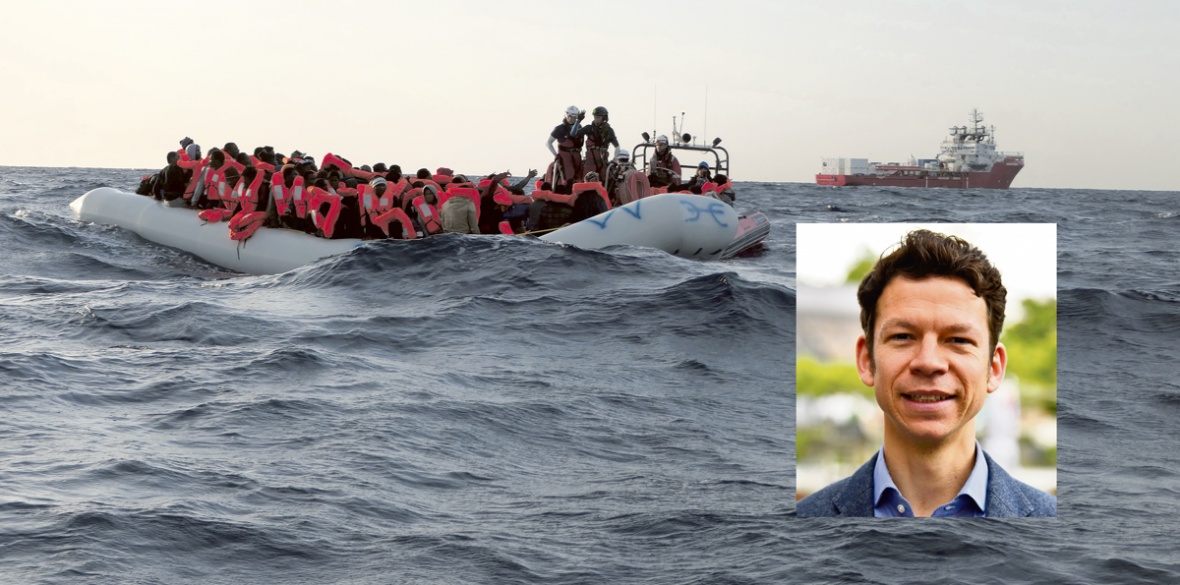
Ocean Viking completes another sea rescue and (insert) David Starke Photo: Avra Fialas/SOS Mediterranee
18 December was International Migrants Day and in honor of that a report from David Starke (general director of SOS Mediterranee Germany and Ben Cowlesthe Star’s web editor) in the Morning Star of 7 December 2019 arguing the case of rescuers as human rights defenders.
THE Ocean Viking, a refugee rescue ship operated jointly by SOS Mediterranee and Doctors Without Borders (MSF), saved the lives of 60 people from a watery grave in the Mediterranean last week. The European Union — having ignored the refugees’ initial distress calls as they attempted to escape war-torn Libya in an unseaworthy boat on the evening of November 28 — refused to provide the Ocean Viking with a port of safety. It wasn’t until Palermo mayor Leoluca Orlando called on Italian prime minister Giuseppe Conte to end the five-day standoff on Twitter that the ship was allowed to dock.,,,
SOS Mediterranee and MSF originally began operating refugee rescue missions in the central Mediterranean onboard the Aquarius. But after a series of legal threats from EU member states, the charities were forced to abandon it.
“In 2016-7 when we started operations, we were celebrated as heroes. The Aquarius rescued nearly 30,000 people,” Starke says. “But then in June 2018, the escalations started. We were the first ship to be refused access to harbours in Italy. We had to bring the rescued all the way from Italy to Valencia. That was the first really significant standoff, which by now has become the norm.”..
In November 2018, while the Aquarius was docked in Marseilles, the Panamanian government — under pressure from Italy — withdrew its flag from the ship. ….
“We tried Switzerland, Germany and France. These would have been robust flags — meaning that if there was political pressure then they would not give in so easily to the Italian government. But none of the governments granted them to us” and we had to give up.
—
“It’s maritime law to rescue people in distress at sea. All we do is follow existing laws. And according to those laws, a rescue is only completed once the rescued have reached land: once they’re put in a port of safety. “At the moment, it is European countries that have the nearest port of safety to our rescues and the only countries that can be considered safe. “The fact is our work is hampered by European governments.”
—
Despite abiding by refugee and maritime law, it is often the Ocean Viking’s crew (and the entire civil refugee rescue fleet in general) that are portrayed as the criminals or as human traffickers. “All we do is save people’s lives. We are human-rights defenders. However, if you talk to to some politicians, if you read some newspapers, if you read some of the nasty emails we receive, they say we smuggle people. They say we’re criminals.
—
Despite the EU’s willingness to allow refugees escaping Libya to die crossing the world’s deadliest border and the demonisation of those trying to prevent that, Starke says that he is optimistic. “I’m optimistic the situation will change, simply because it has to change.
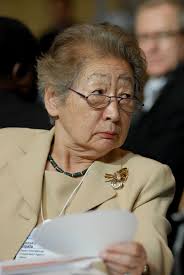
Sadako Ogatathe first woman to head the UN High Commissioner for Refugees has died at the age of 92 on 22 October 2019. I served under her for many years and have the greatest admiration for her. Sadako Ogata worked on some of the largest crises of the decade during her time in service from 1991 to 2000, including the Kurdish refugees fleeing from Iraq after the 1991 Gulf War, the Balkans War and the Great Lakes region of Africa. Before joining the UN, she was an academic – serving as dean of the faculty of foreign studies at Sophia University in Tokyo in 1989, where she had been a professor since 1980. She was well respected by UN staff and world leaders alike, and was described by her colleagues as a “five-foot giant” for her formidable negotiating skills and ability to confront hostile factions. From 2003 to 2012, Ogata was the head of the Japan International Cooperation Agency, overseeing efforts to provide assistance to those in developing countries.
Back in Japan, she also criticised her country’s low acceptance of refugees. “Japan has to set up a situation to welcome people… those who are in need, in serious need… I think we should be open to bringing them in,” she said in a Reuters interview in 2015. “[To say] Japan does not have resources, that’s nonsense.”
She rightly received a lot of recognition while alive, including:
1994 Franklin Roosevelt Four Freedoms Award
1994 Prize for Freedom (Liberal Int’l)
1994 International Human Rights Law Group Award
1995 Liberty Medal
1995 Freedom Award (refugees)
1997 Ramon Magsaysay Award for Community Leadership
Azizbek Ashurov, a lawyer, whose work has supported the efforts of the Kyrgyz Republic in becoming the first country in the world to end statelessness, has been selected as the 2019 winner of the UN Refugee Agency’s Nansen Refugee Award. Through his organization Ferghana Valley Lawyers Without Borders (FVLWB), he has helped well over 10,000 people to gain Kyrgyz nationality after they became stateless following the dissolution of the Soviet Union. Among them, some 2,000 children will now have the right to an education and a future with the freedom to travel, marry and work.
After the dissolution of the USSR in 1991 and the formation of new states, many people became stranded across newly established borders, often with now invalid Soviet passports or no means to prove where they were born. This left hundreds of thousands of people stateless throughout the region, including in Kyrgyzstan. Motivated by his own family’s difficult experience of achieving citizenship after arriving from Uzbekistan in the aftermath of the dissolution, Ashurov helped to found FVLWB in 2003 to offer free legal advice and assistance to vulnerable displaced, stateless and undocumented people in the southern part of Krygyzstan.
Ashurov and FVLWB formed mobile legal teams which travelled to remote areas of the south of the country to find vulnerable and socially marginalized groups. In their mountainous country, the mobile legal teams relied on a battered four-wheel drive or travelled on horseback. This work in collaboration with the Kyrgyz government resulted in the country announcing in in July this year that it had ended statelessness.
Venezuelan singer Danny Ocean is one of the performers who will be honouring the winner of the 2019 UNHCR Nansen Refugee Award at a ceremony in Geneva on 7 October. “I know how hard it is to leave behind family, friends and everything you know to build a life again somewhere new,” said Ocean, who rose to global fame with his hit Me Rehuso, in which he sings about the love he left behind when he moved from his native Venezuela to the United States of America. “Millions of people each year are forced into making this decision to protect themselves and their families. For those refugees who have lost everything, the humanity and support of others is their only lifeline. For many years the winners of the Nansen Refugee Award have been that lifeline. It is an honour for me to play a part in celebrating their extraordinary achievement.”
The ceremony will also feature a keynote address by Nadine Labaki, the Lebanese director of the Cannes Jury Prize winner, and Oscar-nominated film, Capernaum, and will be hosted by award-winning South African TV presenter Leanne Manas. Other performers joining them on the night will be Swiss musician Flèche Love and German poets and stage performers Babak Ghassim and Usama Elyas.
The journalist Michael Greenproduced for Earshot a fascinating story on the long trip of Abdul Aziz Muhamat from Manus Island to Geneva. Green followed Aziz closely for years and came to Geneva with him for the Martin Ennals Award ceremony where I met them both. Now the story is complete with beautiful pictures, insights and sound tracks. Flight from Manus cannot really be summarised and the best is to see the whole story for yourself (link below).
“One day, he’s in a detention centre. The next he’s in Geneva, where his face is on billboards and he’s celebrated as a champion of human rights. Aziz was in an incongruous situation, burdened with a heavy choice….
…..With some delays and complications, he made it to Switzerland, but he was only given permission to stay for two weeks. Then, he’d have to return to Manus Island — back to the situation he was being celebrated for campaigning against.
One day, when he arrived for an event at a university, I noticed he was sporting a brand new navy blue overcoat. That morning, someone who had attended the awards ceremony recognised Aziz at the train station. The man said he’d been following Aziz on Twitter and noticed that he was always wearing the same flimsy, zip-up top. He wanted to buy Aziz a proper winter coat — and took him into a nearby store to do just that. Aziz never even got his name.
And yet, despite the all interest and adulation, he still wasn’t free…
..Aziz started getting headaches every day. In his meetings, people were telling him he should not go back to Manus Island. His friends back there were saying it wasn’t safe to return. Despite his doubts, and a crushing sense of guilt and duty towards the people he left behind, Aziz decided he would be a more effective advocate if he could remain in Europe. On the day he was due to leave Switzerland, in early March, Aziz instead sought asylum. He submitted himself to a new detention centre — and to a new uncertain, indefinite future…
The sound bites were turned into a podcast, The Messenger, co-produced by Behind the Wire and The Wheeler Centre.
———————————–
For those in Geneva on Wednesday 2 October 2019 (18:15 – 19:30) in Auditorium A2 of the Maison de la paix, Geneva, Abdul Aziz Muhamat will be speaking about “Surviving Manus Island detention Centre: A testimony” Moderator: Vincent Chetail A staunch defender of human rights and dignity, Abdul Aziz Muhamat will share his experience and offer his insight into what lies ahead.
Rouba Mhaissen, Defending the human rights of people living as refugees
The Rafto Prize 2019 is awarded to Rouba Mhaissen, director of Sawa for Development and Aid (SDAID), for defending human rights from the local to the global level for people living as refugees. Rouba Mhaissen has contributed locally to improving the lives of people living as refugees in Lebanon in ways that protect their dignity and right to self-determination. At national and global levels, Mhaissen stands out as a relentless and powerful defender of the human rights of refugees. For more on this and other awards for human rights defenders see: http://www.trueheroesfilms.org/thedigest/awards/rafto-prize. For last year’s award: https://humanrightsdefenders.blog/2018/09/27/polish-ombudsman-adam-bodnar-winner-of-2018-rafto-award/
The Rafto Conference with a keynote address by the Rafto Laureate will take place 2 November at 11:00-14:00 at Universitetsaulaen, Bergen and the award ceremony the next day 3 November at 18:00 also in Bergen.
Dr. Rouba Mhaissen (31) is a Syrian-Lebanese economist, activist, community mobilizer and development practitioner who works on forced migration and the Syrian refugee crisis. She is the founder and director of Sawa for Development and Aid, and an outspoken defender of the rights of people living as refugees. Her relentless demands for human rights for all refugees have been heard in international fora. Through her advocacy for Syrian refugees in Lebanon, Mhaissen underlines the importance of treating refugees and other migrants with dignity and as people with the right to form their own lives and destinies: Since the beginning of the Syrian civil war in 2011, the Lebanese government has maintained open borders for Syrian refugees. The early arrivers were allowed to work in certain sectors of the economy, despite being exposed to expensive fees for work-permits, marginalization, and limited freedom of movement. But as the civil war endures, the refugees’ situation has become precarious. The demographic, political, and economic balance in Lebanon is fragile as a third of the local population lives below the poverty line and one out of four are refugees. Lebanese authorities routinely blame the country’s hardship on the refugees, and the economic crisis has further increased the suspicions of refugees.
In this increasingly volatile situation, the Lebanese government has begun emphasizing return-policies toward Syrians living in Lebanon, through a combination of restrictive policies and rampant discrimination. Unlawful evictions, harassment, intimidation, and attacks on refugees leave many with no choice but to return. Upon their arrival in Syria, many have faced arbitrary arrests, interrogations and torture. For Syrian refugees, both residing in Lebanon or returning to Syria represent impossible “choices”.
The Rafto Prize 2019 is a call to protect human rights for all, irrespective of our legal status. .. The current international neglect of the human rights situation for people living as refugees must stop: In the short-term this means financial support, in the long term assisting resettlement and facilitating return or local integration.
These are the every-day heroes going to extraordinary lengths to help forcibly displaced people in great need, who have been chosen as the regional winners of the UNHCR 2019 Nansen Refugee Award. The regional winners for Africa, the Americas, Asia, Europe and the Middle East were short-listed from more than 450 nominees.
They are:
Africa: Evariste Mfaume, the founder of NGO Solidarité des Volontaires pour l’Humanité in the Democratic Republic of the Congo, who champions the rights of Congolese people displaced by conflict and also refugees and their host communities.
Americas: Bianka Rodriguez from El Salvador, a young trans woman and executive director of NGO COMCAVIS TRANS, who advocates for the rights of forcibly displaced LGBTI people in the country.
Asia: Alberto Cairo, a physiotherapist in Afghanistan and head of the International Committee of the Red Cross orthopaedic programme, who has dedicated almost 30 years of his life to providing prosthetic limbs and helping find jobs for injured Afghans.
Europe: Humanitarian Corridors, a ground-breaking cross-border initiative established with the Italian Government in 2015 to enable particularly vulnerable refugees to start a new life in safety in Italy.
Middle East: Abeer Khreisha, a community volunteer in Jordan, known as ‘the mother of Syrians’ for her work helping refugees.




 Hans Thoolen on Human Rights Defenders and their awards