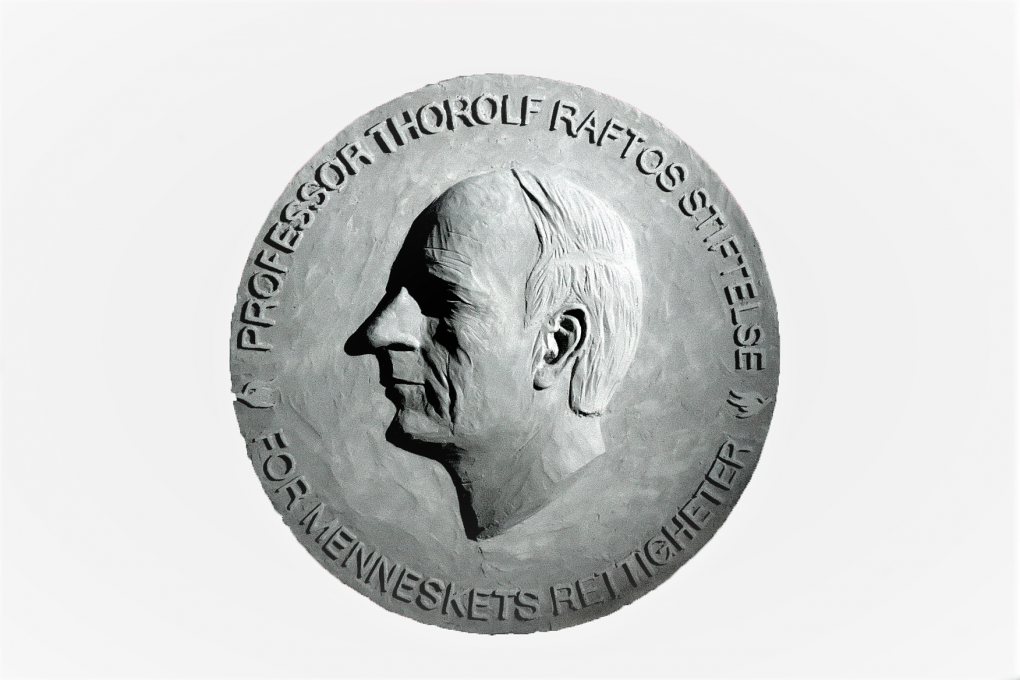
Each year the Rafto award goes to a person or an organization who stands up for human rights and democracy. Please make a nomination. Annual deadline is 1 February.
Each year we announce the recipient of the Rafto Prize in the end of September at a press conference at the Rafto House in Bergen. The announcement is live streamed on our website and on Facebook.
Questions?
For questions regarding nominations, please contact the Secretary of the Committee, Liv Unni Stuhaug, livunni.stuhaug@rafto.no
The Rafto Prize 2023 was awarded to Defence for Children International-Palestine (DCIP) for their persistent work to defend and promote the rights of children living in the Occupied Palestinian Territory (OPT). [see: https://humanrightsdefenders.blog/2023/09/21/defense-for-children-palestine-winner-of-the-2023-rafto-prize/]. For over 30 years, DCIP has investigated, documented and pursued accountability for grave human rights violations against children; held Israeli and Palestinian authorities accountable to universal human rights principles; and advocated at the international and national levels to advance access to justice and protection for children.
The Rafto Prize 2023 is awarded to Defence for Children International-Palestine (DCIP) for their persistent work to defend and promote the rights of children living in the Occupied Palestinian Territory (OPT). For over 30 years, DCIP has investigated, documented and pursued accountability for grave human rights violations against children; held Israeli and Palestinian authorities accountable to universal human rights principles; and advocated at the international and national levels to advance access to justice and protection for children.
“By awarding the Rafto Prize to DCIP, the Rafto Foundation wants to shine a spotlight on their work to promote and defend children’s rights,” said Jostein Hole Kobbeltvedt, executive director of Rafto Foundation. “With this award, we want to support DCIP by putting pressure on international organizations, including the UN, to investigate violations of children’s rights in the OPT and other armed conflicts around the world and demand that these be stopped.”
“Our human rights documentation and evidence-based advocacy exposing Israeli forces’ grave violations against Palestinian children have made us a target of the Israeli government for years,” said Khaled Quzmar, General Director at DCIP. “But we will not back down. We are grateful for the Rafto Foundation’s recognition of the necessary human rights work my colleagues and I carry out to defend and protect Palestinian children.”
DCIP is an independent, local Palestinian child rights organization dedicated to defending and promoting the rights of children living in the West Bank, including East Jerusalem, and the Gaza Strip. Since 1991, DCIP has investigated, documented, and exposed grave human rights violations against children; provided legal services to Palestinian children in urgent need; held Israeli and Palestinian authorities accountable to universal human rights principles; and advocated at the international and national levels to advance access to justice and protection for children.
Israeli Minister of Defense, Benny Gantz, designated DCIP and five other Palestinian human rights and civil society groups as “terrorist organizations” on October 19, 2021, pursuant to a 2016 Israeli law. The designation effectively criminalized the activities of these organizations and authorized Israeli authorities to close their offices, seize their assets, and arrest and jail their staff members.[see also: https://humanrightsdefenders.blog/2021/10/23/assault-by-israel-on-palestinian-human-rights-ngos/]
A candidate should be active in the struggle for the ideals and principles underlying the United Nations Universal Declaration of Human Rights.
A candidate’s struggle for human rights should represent a non-violent perspective.
A candidate may be a person or an organization, and two or more candidates may share the prize.
Who can nominate?
Anyone with an interest in and knowledge about human rights is welcome to nominate candidates. Candidates nominated by themselves or by their staff or by honorary officers will not be taken into consideration.
Deadline for nominations: 1 February. Nominations received after 1 February will be taken into consideration for the Rafto Prize the following year.
Each year we announce the recipient of the Rafto Prize in the end of September at a press conference at the Rafto House in Bergen. The announcement is live streamed on our website and on Facebook.
For questions regarding nominations, please contact the Secretary of the Committee, Liv Unni Stuhaug, livunni.stuhaug@rafto.no
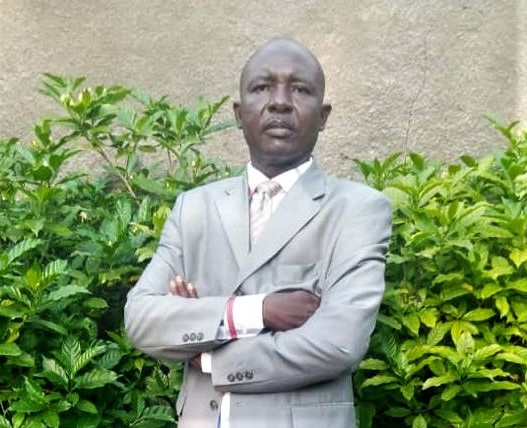
The Rafto Prize 2022 is awarded to Nodjigoto Charbonnel and his organization Association Jeunesse pour la Paix et la Non-Violence (AJPNV), “Youth for peace”, for their courageous struggle to abolish torture in Chad as well as internationally. In the context of authoritarianism, terrorism, war on terror and institutionalized violence, and at great personal risk, Charbonnel and his team assist survivors in rebuilding their lives after torture, and advocate the protection of human rights, and the prevention of torture and sexual violence by providing human rights education for youth and civil society.
For more on this award and its laureates, see: https://www.trueheroesfilms.org/thedigest/awards/A5043D5E-68F5-43DF-B84D-C9EF21976B18. Since the year 2000, AJPNV has conducted programs for the rehabilitation of victims of torture, the promotion of peace and non-violence and the prevention of torture in Chad. The need is overwhelming: in 2021, the organization treated 575 torture survivors. AJPNV provides medical, psychological, and legal support, free of charge, to victims of torture and sexual violence to reduce its somatic, psychological, and social harm. They assist the reintegration of victims of sexual violence through vocational training and prevent torture through education on the effects of torture on the individual and on the society.
Nodjigoto Charbonnel became familiar with the long-term harm and suffering caused by torture after his father survived mistreatment by state authorities. This experience motivated Charbonnel to found AJPNV. For 8 years he worked as an engineer at an international oil and gas production company, but in 2012 they terminated his contract because of his human rights work. Charbonnel serves as the Sub-Saharan Africa Council member of the International Rehabilitation Council for Torture Victims and as a regional leader of the Global Human Rights Project. Due to his work, Charbonnel has been detained and imprisoned three times. He and his family have also suffered harassment by state agents. Despite the political repression, Charbonnel and his AJPNV team maintain a clear voice for the victims of torture and sexual violence: “We reaffirm our commitment to shed light on those who commit torture, to expose their violation, to prevent future acts of torture, to ensure justice“
A candidate should be active in the struggle for the ideals and principles underlying the United Nations Universal Declaration of Human Rights.
A candidate’s struggle for human rights should represent a non-violent perspective.
A candidate may be a person or an organization, and two or more candidates may share the prize.
Deadline for nominations: 1 February 2022. Nominations received after 1 February will be taken into consideration for the Rafto Prize the following year.
For questions regarding nominations, please contact the Secretary of the Committee, Liv Unni Stuhaug, e-mail: livunni.stuhaug@rafto.no
Annual Report 2020 Human rights work in a challenging year
The Rafto Foundation’s Executive Director Jostein Hole Kobbeltved summarizes last year’s efforts to promote human rights and support human rights defenders.
2020 did not turn out as planned, for anyone. The global Covid-19 crisis is not just a health crisis, but also a human rights crisis. Emergency laws have been used to suppress human rights defenders. According to Human Rights Watch, more than 83 countries have introduced laws restricting freedom of expression. This often occurs where civil society is already under pressure. At the same time, human rights defenders have started to use new and creative tools to be able to continue their work.
The 2020 Rafto Prize, which was awarded to the Egyptian Commission for Rights and Freedoms (ECRF), [see: https://www.trueheroesfilms.org/thedigest/laureates/cb80c53f-6f2a-473d-a3a1-03993cc6a5c6] spotlighted the reign of terror and continuing absence of a constitutional state in Egypt ten years after the Arab Spring. It shone a light on the brave human rights defenders of the ECRF who, at particular personal risk, document human rights abuses and support those being persecuted by the increasingly authoritarian Egyptian authorities. Because of strict travel and meeting restrictions, both the announcement and presentation of the Rafto Prize were made digitally. What started off as a challenge became an opportunity to reach a wider international audience than ever before.
The 2020 Rafto Prize awarded to Egyptian Commission for Rights and Freedoms (ECRF)
Support for Rafto Laureates and human rights defenders
#1000RobesMarch in Warsaw on 11 January 2020 where Rafto organised a Norwegian delegation that participated in the demonstrations.
Increasing human rights competence among businesses
Together with businesses, we have continued to develop our sector-specific work in the finance, seafood, construction and maritime industries. We have leveraged the synergies between our local presence in the Human Rights City Bergen and our international partnerships. 2020 saw the launch of FUTURE-PROOF, a regional collaboration platform for business and human rights, for which engagement among businesses in the Bergen region has continued to rise. We scaled up our cooperation with the CEMS network and our first fully digital Masters in Business and Human Rights attracted a record number of participants. [see: https://humanrightsdefenders.blog/2019/05/01/applications-open-for-raftos-business-and-human-rights-course-in-norway/]
The KAN coalition, which is campaigning to establish Norwegian human rights due diligence legislation for business and which the Rafto Foundation helped found, was officially launched in autumn 2020 with a number of Norwegian businesses as members. The development aid programme to combat modern slavery, to which the Rafto Foundation has contributed, was launched and represents a welcome boost to Norwegian initiatives in this area.
Outdoor school at the Human Rights Cairn at Vidden in Bergen.
Education adapted to a new era
For our democracy and human rights education, it has been important to support schools and teachers in handling the challenges presented by the pandemic. We have revised our programme to include digital education, outdoor courses and training adapted to infection protection at both the Rafto House and in schools. This has enabled us to reach more than 7,500 students and teachers over the whole of western Norway in the most demanding of years. We have also increased the focus on our education platform, the Rafto model, and signalled the need for more resources to meet the growing demand from schools following the launch of our new curricula.
ECRF documents, reports and raises awareness about the grave human rights violations in Egypt and beyond, and provides legal support to victims of human rights abuses. Almost ten years since the Arab Spring, it is more pressing than ever to focus on the alarming state of basic human rights in the Middle East. ECRF was founded by Mohamed Lotfy and Ahmed Abdallah in the wake of the coup d’état in 2013. In a relatively short time ECRF has grown to a team of more than 50 lawyers and researchers as well as about 1000 volunteers. The aim of their work is to provide non-partisan support to human rights defenders. Despite working under extremely harsh conditions, the ECRF uses the parts of Egypt’s judiciary, which are still functioning, to defend human rights for political prisoners, prosecuted human rights activists and protestors and victims of disappearances and torture. In this state of fear, the work of ECRF stands out as a beacon of hope for human rights.
Enforced Disappearances
The ECRF works at ground level across Egypt, using peaceful and legal means. The organization conducts extensive documentation, monitoring and analysis of human rights violations. To do this, ECRF’s lawyers and researchers meet with victims, collect testimonies and analyse documents and court verdicts. ECRF has emergency hotlines where relatives and friends can report on arbitrary arrests, and receives on daily basis cases of enforced disappearance. The campaign “Stop Enforced Disappearances” documented 2723 cases over a five-year period. Through the documentation of cases, campaigning and legal aid, the ECRF has contributed to several reappearances. They use the documentation in court defences, as a basis for reports, policy papers, for advocacy, press statements and in social media campaigns to raise awareness around human rights issues. [see also: https://humanrightsdefenders.blog/2019/11/28/egyptian-human-rights-defender-ibrahim-ezz-eldin-reappears-after-167-days/]
Egypt’s state of fear
After a political crisis in 2013, the Egyptian army took control again and General Abdel Fattah el-Sisi has since ruled as president. Under his leadership, the worrying human rights situation in Egypt has deteriorated to a degree not seen before.
Government security forces frequently conduct mass arrests and enforced disappearances, and critical voices are detained incommunicado for long periods of time. Thousands of political opponents, including children, have been arrested in sweeping campaigns. The prisoners are often held in overcrowded prisons in poor conditions, without access to satisfactory medical care.
The regime has dramatically narrowed the space for civil society and dissent by imposinga number of restrictions on the population such as travel bans, targeting human rights defenders and a range of repressive measures. In August 2019, President el-Sisi approved a law that severely restricts NGOs’ independence. His government uses the “war on terrorism” as a disguise to conceal their abuses. In April 2017, the government declared a state of emergency, which gave the security forces unchecked powers. In 2019 the government passed constitutional amendments that consolidated the authoritarian rule, once again undermining the rule of law.
Polish lawyer Adam Bodnar – Defender of minority rights and judicial independence in Poland (Photo credit: Kluczek/RPO.GOV.PL )
The Rafto Prize 2018 is awarded to the Polish lawyer Adam Bodnar and the institution he leads, the Office of the Commissioner for Human Rights, for the important stance taken in the face of current political developments in Poland. A key function of the Ombudsman, or the Commissioner for Human Rights, is to ensure that the public authorities secure and respect the human rights of all members of Polish society. As lawyer and Ombudsman, Adam Bodnar (41) has highlighted the crucial role played by independent Ombudsman institutions in safeguarding human rights in Poland – and other countries – where such actors and institutions increasingly have come under attack.
Since Law and Justice (PiS) won the Polish election in October 2015, the party has used its majority in the National Parliament to adopt legislation that reduces the independence of the courts and centralizes state powers. New laws grant the government control of state media and place severe limits on freedom of information and political lobbying. The rights of vulnerable groups have been repeatedly ignored. “The award is not just an award to my work and the institution, but mostly a support from your community given to the Polish civil society, academia, judges and lawyers fighting for rule of law, juridical independence, pluralism and protection of minorities in Poland,” said Adam Bodnar.
The Rafto Prize for 2018 to Adam Bodnar and the Ombudsman for Human Rights highlights the rolling back of democracy and human rights protections in Poland. The conflict over the Polish Constitutional Tribunal and the Supreme Court are important internationally because they are symbolic of an alarming tendency where the independence of courts increasingly is under political pressure. It is crucial that the international community, the EU, Norway and other European countries take a clear stance against human rights violations and attacks on the rule of law and minority rights that take place in our own region. Adam Bodnar, being the civil servant, cannot accept the prize money awarded along with the Rafto Prize. The Rafto Foundation will identify and donate the prize money to civil society working for human rights in Poland.




 Hans Thoolen on Human Rights Defenders and their awards