Posts Tagged ‘profile’

Human rights defender’s profile: Leon Dulce from the Philippines

September 30, 2020
human rights defender

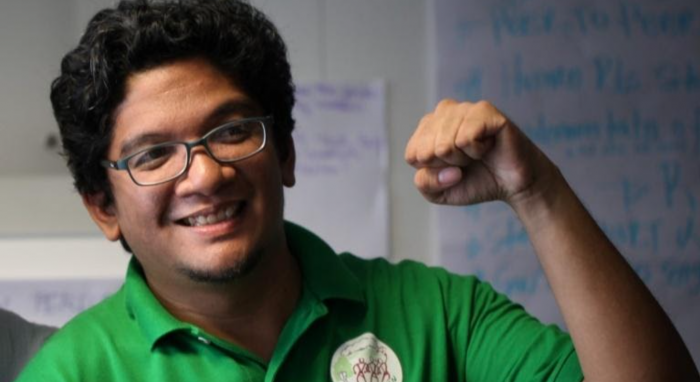
On 24 September.2020 the International Service for Human Rights (ISHR) published the human rights defender’s story of Leon Dulce from the Philippines. Leon Dulce is the National Coordinator for Kalikasan People’s Network for the Environment, an organisation that prevents environmental exploitation and protects marginalised communities from harm caused such exploitation. Working closely with different networks and alliances, his responsibilities include legislative advocacy, undertaking fact-finding investigations, facilitating grassroots dialogues, and engaging with government agencies.

Hi Leon, tell us about yourself and how you decided to defend human rights

I am Leon Dulce, a 31 year-old environmental defender from the Philippines.  Choosing the path less travelled in protecting our right to a balanced and healthful ecology was a confluence of factors throughout my life, from the formative influence of my parents, both development workers, to my exposure to student activism in the University of the Philippines.  The life-changing decision to be a full-time activist came in 2011 when I decided to join the Kalikasan People’s Network for the Environment (Kalikasan PNE) to be one of its youth organisers. I haven’t turned back ever since.

How does defending rights affect your personal life?

Being an environmental defender has shaped my worldview to live with simplicity, to tap your inner humanity, to be conscientious of your work knowing the lives of people and our planet itself are at stake. I echo the words of Albert Einstein, “Man can find meaning in life, short and perilous as it is, only through devoting himself to society.”

Macintosh HD:Users:leon:Downloads:Links:Image-1.jpg

At the 2017 International Human Rights Day protest mobilisations in the Philippines. Photo credit to Kalikasan PNE

What continues to inspire you to defend human rights?

We continue to be inspired by the living, breathing victories of people power in working towards a better world. We have seen that it is possible for corporations to be shuttered down and made to pay reparations, murderous generals put in jail, and fascist dictators to be toppled and held to account, all at the hands of people power.

Businesses should realise that the whole of society benefits from a premium investment in due diligence for our rights, environment, and climate. When nobody is left behind, everyone is on board to push through with building the cogs and wheels of society.

There are no shortcuts, especially with multiple conflicting interests over natural resource-rich environments where the powerful can easily override the marginalised.

Are you encountering any threat because of your work, and if so, what could be done at national / international level to help you work in safer conditions?

We have been repeatedly tagged as enemies of the State in a worsening crackdown on human rights defenders by the regime of President Rodrigo Duterte. Our office has been constantly harassed and almost raided by the police last year. Our members on the ground have been murdered in the dead of the night.

We hope the international community joins us in urging the United Nations to conduct an independent investigation into the human rights situation in the Philippines. We hope the inquiry would lead to greater action from UN experts and member States to hold the Duterte regime to account.

What is your hope for the future? 

I hope to live in that better world, a just and humane society in harmony with nature and climate, before I come to the end of my days.

What was the human rights problem you were addressing? 

We are campaigning with local indigenous Tuwali communities to close down the 10,266-hectare Didipio gold-copper mine of Australian-Canadian corporation Oceanagold. This mining project has figured in a long history of civil-political and socio-economic rights violations against the indigenous communities in the remote mountain villages of Kasibu Municipality since it acquired a contract over the mineralised lands it currently operates on in Nueva Vizcaya province in 2006.

Why did you decide to choose this UN mechanism to help you solve it? 

We decided to engage with the UN Special Procedures hoping that a communication from UN Special Rapporteurs would pressure the Duterte government to take action, even in spite of its bristling stance against the UN.

If the Special Rapporteurs respond with a country visit, whether formal or academic, it would create high-profile attention for the Tuwali people’s struggles against Oceanagold. It would be a show of solidarity that would raise the morale of the defenders on the ground.

What happened at the UN?

On 13 February 2019, a total of nine Special Procedures mandate holders sent a joint communications letter to the Duterte government echoing the human rights concerns we raised.

Later, on 30 April 2020, Special Rapporteurs would cite this communication once again in urging the Duterte government to respect indigenous people’s rights in response to an earlier violent dispersal of the Tuwali protester’s ongoing barricade against the mine.

What was the impact on the ground? 

We believe the intervention from the UN experts is a significant factor in making the Duterte government think twice from railroading then the impending renewal of Oceanagold’s contract agreement.

The UN Communication helped create the momentum that led to the provincial government’s issuance of a restraining order against the Oceanagold mine, and the community organisations’ launching of a people’s barricade enforcing this restraint through direct action.

Do you have any tips for other defenders using this mechanism? 

Crucial to our success in engaging the UN Special Procedures is in how we strategically located it within an interplay of various advocacy tactics. The UN intervention fed into the direct action of organised communities of defenders, and helped galvanise a broad support network from churches, local governments, and civil society.

The intervention was also leveraged in a communications and lobbying strategy that exposed the national government’s collaborationism with irresponsible big businesses, discouraged their usual ‘rubber-stamping’ for these mining corporations, and deterred full-on reprisals against the defenders.

Profile of Behrouz Boochani who Just Wanted to Be Free

August 5, 2020

The New York Times Magazine of 4 august features a long, substantial and richly illustrated story by Megan K. Stack – an author and a journalist- on Behrouz Boochani the Iranian refugee rescued from Australia’s off shore camps [see: https://humanrightsdefenders.blog/2019/12/01/behrouz-boochani-gives-interview-in-new-zealand-finally-out-of-manus-island/].

See also: https://humanrightsdefenders.blog/2019/09/30/flight-from-manus-the-inside-story-of-an-exceptional-case/

Here follow some long excerpts that give you a flavour of a profile worth reading in full:

Behrouz Boochani’s book, “No Friend but the Mountains,” won the prestigious Victorian Prize for Literature in 2019 while he was still detained on Manus Island.
Behrouz Boochani’s book, “No Friend but the Mountains,” won the prestigious Victorian Prize for Literature in 2019 while he was still detained on Manus Island.Credit…Birgit Krippner for The New York Times

He fled Iran’s Revolutionary Guard. He exposed Australia’s offshore detention camps — from the inside. He survived, stateless, for seven years. What’s next?

..The cellphone was everything on Manus. Boochani and the other detainees hoarded their cigarettes for weeks to barter for phones with the detention center’s local employees. Once acquired, the phones had to be hidden from the guards, who conducted surprise dawn inspections to hunt for contraband. Boochani’s phone was confiscated twice; each time, there was no recourse but to start over again, one sacrificed smoke at a time.

The phones quickly became the only tool successful at breaking through the shroud of secrecy that Australia tried to throw over the migrants’ detention. Locked up in the disused rooms of the old naval base, the asylum seekers were called by serial numbers instead of names. Communications were tightly restricted. Under Australian law, workers who spoke publicly about what they saw or heard at the detention sites faced up to two years in prison. But official documents and accounts from survivors and whistle blowers gradually leaked out, along with accusations of sexual and physical abuse. Asylum seekers sought solace in self-harm as their mental and physical health crumbled under the strain of prolonged and uncertain detention.

Boochani wrote “No Friend but the Mountains” in Persian, sending texts of ideas and descriptive fragments to nonexistent WhatsApp numbers that he used to organize his thoughts. Once satisfied with a passage, he sent it to Moones Mansoubi, a translator in Sydney, who organized the material into chapters before sending it along to Omid Tofighian, an Iranian-Australian philosophy professor. Slowly, haltingly, Boochani and Tofighian texted back and forth about how best to translate and arrange the passages into a draft. Together they blended poetry and prose into a genre Tofighian calls “horrific surrealism.”

First-person narratives that paint historical events from the perspective of the persecuted have proven powerful and enduring. These stories are subversive; the images slip into a reader’s mind and create empathy where there was little before. They can permanently alter the way history is recorded and understood.

Boochani’s book challenges readers to acknowledge that we are living in the age of camps. The camps lie scattered throughout the Middle East, cluster on Greek islands and stretch like an ugly tattoo along the U.S.-Mexican border. Camps sprawl through Bangladesh, Chad and Colombia. People are suspended in a stateless and extralegal limbo on the tiny Pacific island nation Nauru, in Guantánamo and in the Syrian town of al-Hawl. At no time since humans first drew borders have there been more migrants and refugees than today. Countless individual lives weave into a collective panorama of displacement and statelessness and detention. These truncated journeys are a defining experience of our times.

As for Boochani, he refuses to cede the story of his hardships to third-party observers. He criticizes journalists who depict refugees as faceless victims. He bristles at perceived condescension from academics or activists who benefit from what he describes as an industry built around the plight of refugees. When Kristina Keneally, a prominent center-left senator in Australia, sent a tweet supporting Boochani, he tweeted in anger: “Such a rediclilius [sic] and unacceptable statement by Labor Party. You exiled me to Manus and you have supported this exile policy for years…

The miseries of offshore detention were meant to pressure migrants to abandon their asylum claims so they could legally be sent back whence they came and — more crucial — to create a spectacle so chilling that “boat people” would stop coming to Australia altogether. That was the first and last point of this byzantine enterprise.

…After six months of misery and unanswered questions, immigration officials appeared at the camp and warned asylum seekers that they would be stuck in Manus for a long time yet. Enraged detainees rioted that night, lunging at the guards and hurling chairs. Local police and Manus residents rushed into the compound to quell the unrest. Dozens of detainees were injured, some suffering broken bones and severe lacerations. One man lost an eye; another’s throat was slashed, reportedly by a guard. Barati, Boochani’s close friend, was viciously attacked by a group that included an employee of the Salvation Army, which had a $50 million contract from the Australian government to provide counseling to the asylum seekers. The assailants killed Barati by dropping a heavy rock onto his head. He was the first detainee to die on Manus.

In 2019, most of the asylum seekers were moved to motels in Port Moresby because, it seemed, nobody knew what else to do with them.

The first time I saw Boochani, he was still being detained on Manus Island. It was a chilly, wind-scraped morning in 2019. Boochani was discussing his book via video link at the annual writers festival in Byron Bay, Australia. When his face flickered onto the screen, the overflowing crowd that jammed the seaside auditorium gasped and burst into applause. Boochani looked haggard and detached; dangling hair framed his craggy features. “Oh, God,” said a woman near me. “He looks so alone.”…

Peter Dutton, Australia’s home affairs minister, frequently says the asylum seekers in Papua New Guinea include men “of bad character” — “Labour’s mess” that he has been forced to “clean up.” Pauline Hanson, a right-wing populist senator, called the men “rapists” on the floor of Parliament this past winter. “These people are thugs,” she said. “They don’t belong here in Australia.”..

All told, Australia has locked up thousands of desperate people, including children, in de facto prisons on Manus and Nauru. The detentions have been harsh but effective, officials say: The flow of boats slowed and eventually stopped. Asylum seekers are still stuck on Nauru; until last year, they included children. The Australian government recently spent about $130 million to reopen the detention center on Christmas Island — despite the lack of new arrivals to lock up. In other words, the policy is still unapologetically intact, ready and waiting for any boats that make it to Australian waters.

It was a brilliant January day in Christchurch, New Zealand. Screeching gulls wheeled in off the Pacific; swollen roses bobbed in the breeze. In the hydrangea-fringed garden of a spare, tidy house, Boochani sat smoking. He couldn’t smoke inside because the house wasn’t exactly his; it was on loan from the University of Canterbury. Boochani’s neighborhood looked as if Beatrix Potter had painted it in watercolors: prim, ivy-laced cottages and tidy beds of hollyhocks and lavender. It was nice, Boochani conceded. Too nice, sometimes. “It’s too much, you know?” he said. “It’s too much peace and too much beauty. It’s hard to deal with this. It’s like you go from a very cold place to a very hot place.”

During these early and disorienting weeks, Boochani got word that it was finally time to begin the final steps to resettle in the United States. He’d been awaiting this news for months, but when his chance came, he backed out. Reports of tensions between the U.S. and Iran, immigration crackdowns and political tumult had eroded his eagerness. “I don’t feel safe in America now,” he said simply. “I don’t mean that someone would kill me. But I don’t trust the American system. It’s like chaos there now.”

Instead, Boochani took a bold gamble: He applied for asylum in New Zealand. He accepted a fellowship with the university’s Ngai Tahu Research Center, which specializes in Maori and Indigenous studies — a nod to his Kurdish identity — although the post would remain a secret while his application to stay in New Zealand was pending. Neither his whereabouts nor his plans were public knowledge. Conservative politicians in both New Zealand and Australia were calling for Boochani to be turned out. What would he do then, where would he go? He shrugged; he didn’t answer; instead, he began to roll another cigarette. ..

..This is the complication and the delicacy of Boochani: His most famous work was derived from the considerable suffering he endured at the hands of the state. He is proud, even cocky at times. And yet this pride must wrestle with the dehumanization he has endured. His existence was controlled by a hostile bureaucracy for years; now his days were arranged by benevolent well-wishers.

Then, on July 23, Boochani’s birthday, he finally got word from his lawyer: His application had been accepted. Boochani could stay in New Zealand. He was free. On the phone, he let out a wild and incredulous laugh. Of course! When else? It had been his birthday, too, the day he was lifted from the sea and taken into Australian custody. Hearing him laugh like that, I remembered one of his stories: When he was born, his parents asked a visiting cousin who knew how to read to choose a name for the baby. The cousin opened a book and poked his finger onto the page at random, striking the word “Behrouz” — Farsi for “fortunate.” Literally, “good day.”

Boochani rode his bike from his house to the sea. He looked at the expanse of ocean, these waters that had almost killed him, the sea he suspected of absconding with years of his life, the waves that crashed now on the mineral grains of this new land he called home. He looked at the ocean, at all of that past and all of that future, the churn of time and destiny, and he smoked a cigarette. Just one cigarette. One cigarette and the sea in his eyes. And then he rode home again.

https://www.nytimes.com/2020/08/04/magazine/behrouz-boochani-australia.html?referringSource=articleShare

Human rights defender’s story: Maryam Al-Khawaja from Bahrain

August 3, 2020

On 17 July 2020 ISHR published this video of Maryam Al-Khawaja, who is a human rights defender from Bahrain/Denmark. She is the Vice-Chair of the Urgent Action Fund for Women’s Human Rights, a board member at ISHR, and a board member at CIVICUS.

see also; https://humanrightsdefenders.blog/tag/maryam-al-khawaja/

https://www.ishr.ch/news/human-rights-defenders-story-maryam-al-khawaja-bahrain

Tabassum Adnan from Swat, Pakistan, tries to work within the Jirga system

July 31, 2020
img

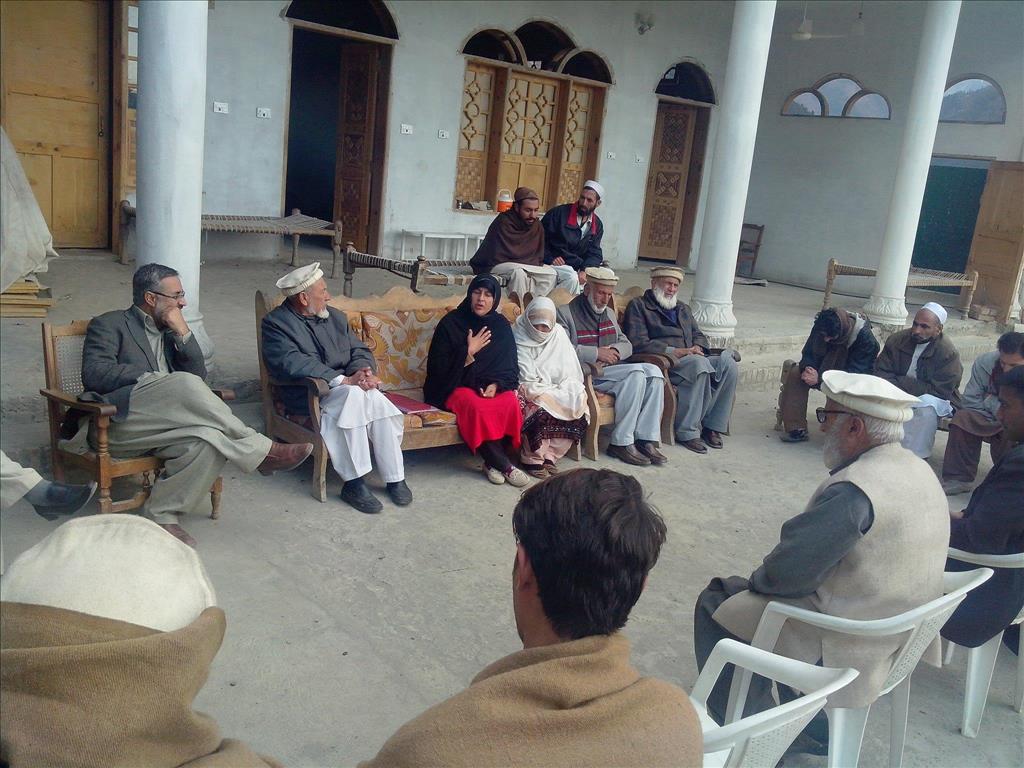
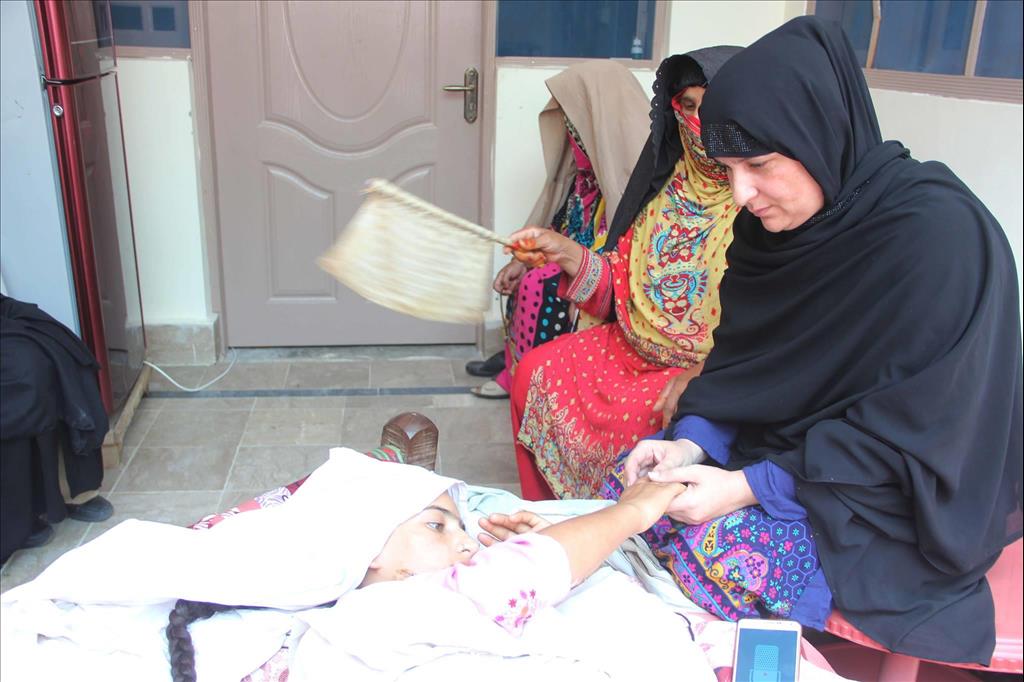
Khalida Niaz in MENAFN (Tribal News Network) of 29 July 2020 tells the story of Tabassum Adnan from Swat district of Khyber Pakhtunkhwa who has been nominated for the Women Building Peace Award in the US.

Tabassum is working for human rights, with particular emphasis on women rights, in Swat since 2010. He has the honour of being the founder of first women Jirga of Pakistan. For this effort, she won Nelson Mandela Award, International Woman of Courage Award and several other awards.

Tabassum said in a special interview with TNN that she has worked a lot on human smuggling, Swara, early marriages and share of women in ancestral property. She said she is now planning to work on the use of ice and other drugs by children to save their future.

‘When I arranged a sitting with women of my area, I realised that they are being denied their rights and they must have representation in the Jirga. Earlier, Jirgas only had male members and no one listened to the problems of women. A woman can better understand the problems of other women. I also used to raise voice for women’s rights by attending Jirgas of men,’ she told TNN.

Tabassum is the first woman in Pakhtun history who was invited to a Jirga of men which was hearing a case about alleged sexual abuse of a child in Swat. She said once a case of Swara (giving a girl in marriage to rival family as compensation to settle dispute) was given to her in which all the accused Jirga members were arrested. She said the family members of the arrested people were requesting her to forgive them, but she asked them to approach the court for this purpose. She said if the girl’s father has committed a crime then he, and not his daughter, must be punished for it. She said she also has a daughter and she can understand how the girls suffer due to this obsolete tradition.

The rights activist said she initially included eight such women in the Jirga who had the ability of public speaking and decision making. She said the number of women in the Jirga has increased now. She said her Jirga has resolved about 2,000 cases so far and many other cases are in process of being resolved.

About her personal life, Tabassum said she was born in Swat and then went to Qatar with her father. She said she returned to Swat for marriage and settled there. She said she started working for women’s rights after her divorce and set up Khwendo Jirga platform for women for resolution of their problems. She said she has three sons and a daughter.

Tabassum faced many hardships while carrying out her mission for women’s rights. Besides problems on local level, Jamia Ashrafia of Lahore also issued a fatwa (edict) against her by accusing her of spreading obscenity.

I never asked any woman to uncover herself. I only want to give them confidence to fight for their rights. There is no harm if a woman sitting in her home decides to raise voice for her rights,’ she said.

Tabassum said now men have also started contacting Khwendo Jirga for resolution of their domestic disputes involving women. She said men feel comfortable in discussing problems of women with women members of the Jirga. She said she is also the first woman member of Dispute Resolution Council of Swat Police Station where many women arrive for resolution of their problems. She said she also encourages young girls not to afraid and speak up for their rights.

The rights activist enjoys full support of family for her work, but she sometimes receives threats from those affected by the Jirga decisions. About major problems of women in Swat, she said the ratio of divorce is increasing and prostitution has also increased besides the property disputes. She said the practice of Swara has reduced significantly.

Tabassum said she gets more recognition abroad as compared to Pakistan. Although she got a certificate from the district police chief, but she complains of not receiving much encouragement from the government.

https://menafn.com/1100562913/Pakistan-How-Swats-Tabassum-got-nominated-for-international-award

Oak Human Rights Fellow is migrants’ rights defender Nasim Lomani

June 13, 2020

On 12 June 2020 the Oak Institute for Human Rights announced as the 2020 Oak Human Rights Fellow: Nasim Lomani, a human rights defender and migrants’ rights activist, who has been working in Greece and across the EU for over a decade.

As a then 16-year-old Afghanistani, Lomani left for Greece nearly two decades ago. Upon arrival, he was arrested and charged with illegal crossing of the Greek border, ultimately serving a two-year prison sentence. During the process of appealing to the court for having his rights as a refugee abused and violated, he learned about the bureaucratic difficulties that all migrants face while trying to enter Europe. He joined a number of solidarity groups, such as the Network for Social Support to Immigrants and Refugees and the Migrants’ Social Center in Athens, where he coordinated free language classes and the Athens Anti-racist Festival. He also engaged in solidarity work that involved lawyers, human rights defenders, as well as refugees and migrants.
 Nasim Lomani

Nasim Lomani © Marios Lolos

In Greece, Lomani, founded City Plaza – Refugees Accommodation Solidarity Space in Athens – where he organized daily life for migrants, managed media communication, coordinated international volunteers, and served as the public representative to researchers, students, and academics. City Plaza, once one of the largest solidarity migrant accommodations in Athens, was an abandoned hotel in central Athens repurposed to offer migrants the right to live in dignity in the urban space with access to social, economic, and political rights. Lomani lived inside the now-closed City Plaza for the entirety of its existence. Over almost three and half years, it welcomed 3,000 people, lodging up to 400 at a time.  The story of City Plaza is known as an example of self-organization, self-management, and everyday processes to help empower refugees. In essence, it was a political statement against Europe’s use of militarized borders, repression, and systematic violation of human rights and refugees’ rights.

Lomani was also involved in organizing the largest NoBorder refugee and migrant solidarity camp to date, leading to the closure of the Pagani Detention Center on Lesvos island in 2009. 

Lomani is at increasing risk, as migration solidarity work and defending human rights in Greece, and Europe at large has been criminalized in recent years. Helping refugees and criticizing the human rights violations by authorities is now a major offense by both national and European law. In Greece, this has led to large-scale evictions of housing sites for refugees and asylum seekers and to increasing arrests and trials of activists on the ground. 

Lomani has been active in the human rights field since he was a child, so the Oak Fellowship will come as a much-needed respite.

Established in 1997 by a grant from the Oak Foundation, the Oak Institute for Human Rights hosts a Fellow each year. The fellowship offers an opportunity to spend the fall semester in residence at Colby, where they teach, conduct research, and raise awareness about important global human rights issues.

http://www.colby.edu/news/2020/06/12/migrants-rights-activist-to-be-2020-oak-human-rights-fellow/

Chilean human rights defender, José (Pepe) Zalaquett, no more

February 22, 2020

Brazil remembers Sister Dorothy Stang murdered 15 years ago

February 13, 2020

Sister Dorothy Stang, a member of the Sisters of Notre Dame de Namur, is pictured in a 2004 file photo in Belem, northern Brazil.  (CNS/Reuters)

12 February 2020 was the 15th anniversary of Sr. Dorothy Stang‘s assassination in the Amazon region of Brazil. The nun was 73 when she was murdered on 12 February, 2005, on an isolated road near the Brazilian town of Anapu. She had lived in the country for nearly four decades and was known as a fierce defender of a sustainable development project for the Amazon forest. The U.S.-born nun is remembered as a crusader for the poor and the landless and for her love of the land and the Amazon forest.

Lise Alves, for the Catholic News Service, wrote about her on 12 February 2020:

She taught me how to be a missionary in Brazil; she was my mentor,” Sr. Rebeca Spires told Catholic News Service. Spires, who, like Stang, is a member of the Sisters of Notre Dame of Namur, said the first thing Stang gave her was Brazil’s land statute. “She was all about doing things within the law,” said Spires.

…She said that, in the early 2000s, Stang started to pressure public officials to combat land invasions by ranchers and large landowners, who wanted to take away areas occupied by smaller farms. The officials “became extremely irritated with her, with her persistence,” Spires said. “Although threatened with death, Dorothy never failed in her life’s mission, to fight for the poor of the land, so that they had their rights guaranteed and a dignified life,” read the statement issued by the Brazilian bishops’ Pastoral Land Commission to mark Stang’s death.Mary Cohen, a lawyer in Belem and a member of the Brazilian bishops’ justice and peace commission, was president of the human rights commission at Brazil’s lawyer association when Stang was in Anapu. Cohen remembered Stang’s determination, as the nun pushed and pressured government agencies into taking action. “She once slept on the steps of the INCRA (Institute for Agrarian Reform) so they would talk to her. She had a lot of determination, and that invigorated all of us,” said the lawyer. That determination made many people in the region angry. Trying to reduce the tension between landowners and peasants and their advocates, the lawyer’s association gave Stang a human rights award two months before she was killed.

We thought that more media attention and recognition of her work would keep her safe, that they (landowners and ranchers) would be deterred. We were wrong,” said the lawyer. And although Stang’s assassination made international headlines and caused worldwide commotion, those who continue her work say the threats today to the landless and their advocates are even greater. “There are still a lot of people being threatened, and I wouldn’t want to jeopardize anyone’s life,” Sr. Jane Dwyer, a member of the Sisters of Notre Dame of Namur who worked closely with the murdered nun, told CNS.

Dwyer, who still lives in Anapu, told CNS she was uneasy about giving interviews over the telephone. She said that, since 2015, 19 landless, small-scale farmers had been assassinated over land conflicts in the area. “Nineteen in the last five years,” she said. “Of the 19 assassinations, in only one did authorities bring someone to justice,” added Spires, who works with the Brazilian bishops’ Indigenous Missionary Council in Belem. Cohen said those who speak out today against the rich and powerful in the region continue to be threatened. “Her successor, Father Amaro (Jose Amaro Lopes de Souza), continues to be threatened, and when they were unable to scare him off, they accused him of extortion and inciting violence among landless peasants,” she said…

“The synod document is titled ‘Querida Amazonia’ (Beloved Amazonia), which … embodies what Sister Dorothy spoke of her entire life: ‘Dear Amazon, we are here to defend you, to protect you. Dear people of the Amazon, we are here to help you in your fight, in your resistance, in the recognition of your rights.'”

“Are You With Me?” – the life of Kevin Boyle

December 23, 2019

One Man’s War for Human Dignity: The Extraordinary Life of Kevin Boyleis the title of a piece by Charles Norchi (law professor) in Global Geneva of 6 December 2019. It is about the new book by Mike Chinoy about the life and work of Kevin Boyle, the Northern Irish human rights activist: “Are You With Me? Kevin Boyle and the Rise of the Human Rights Movement”. It chronicles the life of a man who spanned civil rights in Northern Ireland and the human rights movement from the halls of academia to international organizations and tribunals.

Boyle, a scholar-teacher-advocate-counselor who, like Eleanor Roosevelt, occupied multiple roles in the human rights movement, played a significant role in helping to bring an end to this turmoil which also affected the United Kingdom itself, Ireland, Europe and the United States. Yet he remained an unsung hero, until this book.

…Chinoy delivers the reader to a front row seat of the late 20th Century human rights canvass – the Northern Ireland civil rights movement, advocacy before the European Court of Human Rights, academia, civil society and the flowering human rights movement. Boyle was at the forefront of it all. From his perch at the Queen’s University Law Faculty in Belfast, he drafted proposals for resolving the Northern Irish conflict. He also shone a light upon the abuses perpetrated by the British army and Northern Ireland police in a landmark case to the European Commission on behalf of seven Northern Irish men who were interned without trial, beaten and tortured. He mobilized international law on behalf of victims of torture, unjust imprisonment, discrimination and defended freedom of expression, belief and association.

Boyle with former Irish president Mary Robinson during her stint as United Nations High Commissioner for Human Rights in Geneva (1997-2002).

Boyle also guided Amnesty International’s campaign against apartheid in South Africa, and spearheaded efforts to defend Salman Rushdie as Director of Article 19. Yet he never neglected human rights teaching, because students were the future. So he Directed the University of Essex Human Rights Law Centre and was founding Director of the Irish Centre for Human Rights at the National University of Ireland at Galway. When President Mary Robinson became United Nations High Commissioner for Human Rights, she wisely appointed Boyle her chief legal advisor – so he moved to Geneva.

This human rights law professor, advocate and activist died of lung cancer at age sixty-seven. At the time my University of Maine School of Law colleague Orlando Delogu who taught with Boyle at Galway observed, “He was single minded in his defence of oppressed people. The breadth of his interests was quite amazing, but always behind the scenes, the use of law – never violence.” Boyle helped lay the foundation for expanded human rights protections across the planet and inspired generations of scholars and activists.

How did Chinoy choose the title for this book? Boyle was first a university teacher. While lecturing he would pause and ask his students, “Are you with me?” It was a two-fold question. Did they understand the material? And would they be with him on the front line in the fight for human rights? “Are you with me?”

Are You With Me? will be launched at Essex University on 19 March 2020, with book events to follow in Dublin, Belfast, London, Galway and  Oxford. it can be pre-ordered through Lilliput Press: https://www.lilliputpress.ie/product/are-you-with-me

One Man’s War for Human Dignity: The Extraordinary Life of Kevin Boyle

Interview with Olga Karach of International Center for civil initiative in Belarus.

December 20, 2019

On 21  October 2019 ISHR published this filmed interview with Olga Karach, Chief of International Center for civil initiative OUR HOUSE from Belarus.


Meet Marisa Hutchinson of the Association EQUALS in Barbados

November 10, 2019

On 22 October 2019 ISHR published this interview with Marisa Hutchinson, Board member of the Association EQUALS in Barbados