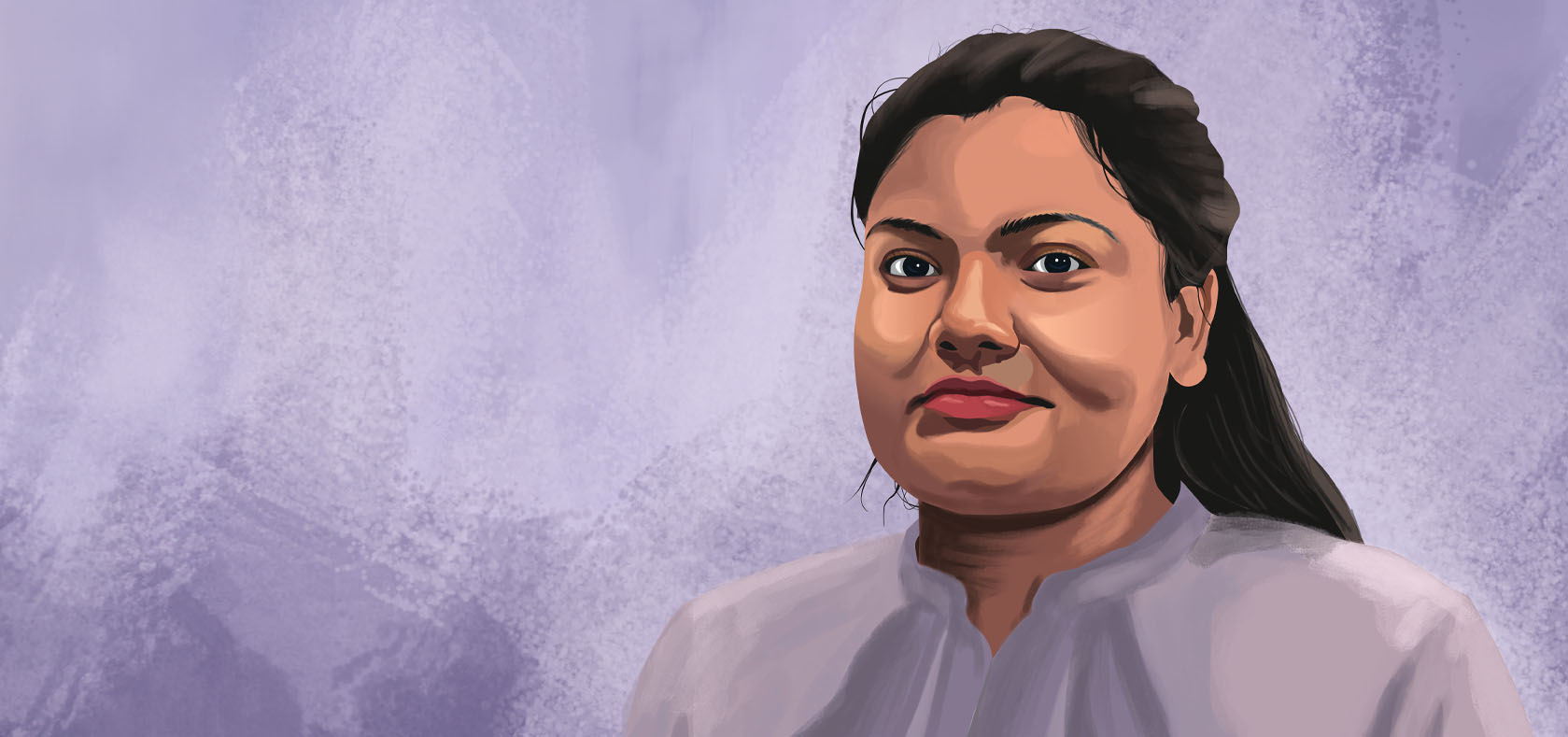
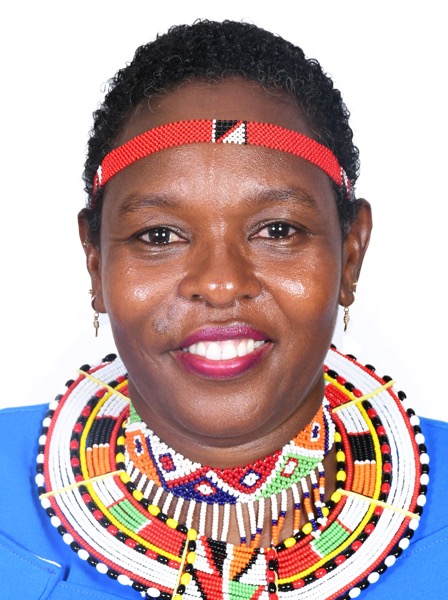
Camila Zuluaga is an international advocacy lawyer at the Colombian Commission of Jurists (CCJ). She spoke to ISHR about her hopes for Colombia, which she hopes to make a safer country for human rights defenders. Camila was also one of the participants to ISHR’s flagship training course, the Human Rights Defender Advocacy Programme (HRDAP).
Mariana de la Fuente, is a human rights defender who fights against slave labour and human trafficking in Brazil. According to ILO, more than 57,000 workers in Brazil were rescued in conditions similar to slavery – between 2003 to 2021.
Pierre-Claver Akolly Amégnikpo Dekpoh works at the West African Human Rights Defenders Network (WAHRDN) in Lome, Togo. He spoke to ISHR about what drove him to become a human rights defender and about the challenges that he and his colleagues in Togo and West Africa face in working towards the realisation of human rights.
Santiago Cantón, secretary general of the International Commission of Jurists. (Geneva Solutions/Michelle Langrand)
On 11 May 2023 Geneva Solutions carried an interview with the incoming Secretary General of the International Commission of Jurists:
The new head of the International Commission of Jurists warns of the challenges human rights face as democracies across the world falter and calls on human rights groups to rally behind a new purpose. After spending the last few years in the United States, Santiago Cantón, the Argentinian jurist who recently became the new secretary general of the International Commission of Jurists (ICJ), will call Geneva his home for the next five years.
The discreet organisation of well-respected judges and lawyers, located in the Paquis neighbourhood and now celebrating its 70th anniversary, is almost as old as the 1948 Universal Declaration of Human Rights. Born from the ashes of World War II initially to investigate abuses committed in the Soviet part of post-war Germany, the group has made vital contributions over the decades to the human rights architecture. Most notably, they helped push for the creation of an international criminal court and several UN human rights instruments, including the Convention on Enforced Disappearances, first proposed by its then-president Niall MacDermot.
Cantón, 60, also brings with him some heavy baggage of experience in human rights. He was the executive secretary from 2001 to 2012 of the Inter-American Commission of Human Rights, one of the arms of the Organization of American States tasked with reviewing rights abuses. Before that, Cantón served as the commission’s first special rapporteur on freedom of expression from 1998 to 2001. More recently, Cantón was part of the UN Human Rights Council’s commission of inquiry on abuses committed in the occupied Palestinian territories during the 2018 protests.
As a young student, Cantón saw his country fall into the clutches of a military junta that would rule ruthlessly for ten years. While initially drawn to diplomacy and foreign relations, Cantón knew it wasn’t an option to place his skills at the service of a dictatorship. He opted instead to study international law and human rights.
One of his first experiences, and the one to inspire him the most, was advising former US president Jimmy Carter in his democracy programmes in Latin America, most notably supporting elections in Nicaragua and the Dominican Republic in 1990 at a time when the two countries were emerging from bloody conflicts and transitioning into democracies. He saw the region break away from the chains of military regimes and usher in a new era of democracy and rule of law. “1948, with the universal declaration of human rights, was the big bang of human rights,” he told Geneva Solutions. “Since then, the architecture of human rights created throughout the world has been extraordinary.”
But the tides have turned. “Human rights are in decline and have been since the beginning of the century,” he regretted.
For Cantón, part of it is due to a lack of leadership. “We don’t have the same leaders in the world, and the governments that support human rights today, do not have the leadership they need to have for political reasons.” He said long gone are the Raúl Alfonsín of Argentina, Fernando Henrique Cardoso of Brazil and Patricio Aylwin of Chile, leaders who stood up for democratic values following their countries’ exit from military rule.
“You do have leadership on the wrong side. And they’re winning,” he added. He cited the leaders of El Salvador and Mexico, as well as Brazil’s Jair Bolsonaro and the US’s Donald Trump, as examples of how populist leaders have successfully appealed to disillusioned populations.
“Take El Salvador. Here we have someone that has 70 to 80 per cent of popularity. People (feel) that democracy did not deliver. They are tired and want to change everything completely,” he said. President Nayib Bukele’s recent sweeping crackdown that saw over 60,000 suspected gang members arrested has been praised by many Salvadorians fed up with the violence and insecurity that has gangrened the country for years. And despite the harsh criticism his methods have drawn from human rights campaigners, political figures across the region are flaunting it as a successful model that can be replicated in their own countries.
Cantón cautions against the temptation of wanting to scrap everything. “We cannot just change everything! There are things we need to keep, and human rights is one of those,” he said.
On Cuba, Nicaragua and Venezuela, the usual trio singled out for their authoritarian regimes, Cantón prefers to avoid tired narratives. “it’s not a question of left and right, it’s a question of the strength of the rule of law, and the rule of law is declining,” he observed.
Beyond that, human rights that touch upon issues associated with deeply entrenched cultural values have also been met by a wall of resistance. Cantón hasn’t finished unpacking he has already faced a first crisis. A report published by the ICJ in early March on how to apply human rights standards to criminal law was falsely accused across the internet of condoning sex between adults and minors. For Cantón, the world is increasingly polarised, and he views social media as a significant contributing factor. “It’s hard to find the middle ground, and when things are so polarised, they keep getting pushed harder towards two crazy extremes.”
But governments are not the only ones that need to do some soul-searching. Civil society is also struggling to maintain morale, according to Cantón. “It’s very frustrating when you take one step forward, and you have to go back like ten steps,” he said. For the past years, human rights groups have been on the defence, trying to protect hard-won advances. “We need to mobilise the human rights community again, strongly behind something,” he said.
One of the initiatives the ICJ is working on is the creation of a standing independent mechanism to investigate rights violations. UN-backed probe mechanisms are usually set up on a case-by-case basis and have been accused of being selective and politically motivated. The group of lawyers suggests that such a permanent expert body, created through the Human Rights Council or the General Assembly, could help by making it easier to trigger investigations.
‘Witnessing the realisation of human rights in our countries would be a great joy because that is what we work towards.’
Pierre-Claver Akolly Amégnikpo Dekpoh works at the West African Human Rights Defenders Network (WAHRDN) in Lome, Togo. He spoke to ISHR about what drove him to become a human rights defender and about the challenges that he and his colleagues in Togo and West Africa face in working towards the realisation of human rights.
The regional NGO DefendDefenders highlights every month a “Human Rights Defender of the month”. In January 2023 it was Jane Naini Meriwas. Like many African societies, The Samburu community in Northern Kenya is a gerontocracy – a very hierarchical community in which elders hold sway over almost all private and public matters. Among these predominantly pastoral nomads, very little importance is attached to the young – especially young girls, who are barely given a chance at education and often married off before their first menstrual cycle, but not before they undergo mandatory Female Genital Mutilation (FGM).
It is in this community that Jane Naini Meriwas was born 46 years ago, in Kipsing village, Oldonyiro Subcounty, Isiolo County. When she was 16, her mother passed on, and she watched with great trepidation as her father planned to marry another wife, not sure what that would mean for her or her ambitions for school. As it turned out, fate was on her side. When her father uncharacteristically asked what she thought of his plans, Jane seized the opportunity to stand up for herself and interests:
“I told him that if he wants to go ahead and remarry, he should give me my mother’s share of livestock to support my education since I know I would have no one looking out for me going forward,” says Meriwas. Simultaneously shocked and touched by his daughter’s candidness, Meriwas’ father decided to give the idea of remarrying more thought. By the time Meriwas returned home at the end of the school term, she found that her father had abandoned the idea altogether, and decided to support her to finish school. “I was surprised and elated in equal measure. It also encouraged me to always be confident and speak my mind, assured that I had a father who would always listen to me,” she says. At University, Meriwas studied Community Development, after which she worked with a catholic mission in her community. But her passion to empower more women in her community would not let her rest. “Issues like FGM, girl child beading, forceful abortion, early marriages, wife beating, were still holding my community back and I could not just pursue a personal career and pretend everything was right. I had to do something,” she says. Meriwas teamed up with five other women, with whom they would every month, organise groups of women and sensitise them to resist and push back against these harmful cultural practices. Overtime, they also started engaging with men, encouraging them to educate girl children, using Meriwas’ father as an example. Won over by his daughter’s dedication, Meriwas’ father would tag along to some of these meetings, to testify on the benefits of educating a girl-child. “From a reluctant patriarchal man, he had become a champion of girl-child empowerment,” says Meriwas.Jane Naini Meriwas
Encouraged by the growing consciousness and awareness her and her colleagues’ efforts were igniting in her community, Meriwas, in 2006 resigned her formal job to start Samburu Women Trust, a not-for-profit organisation devoted to the empowerment of Samburu’s indigenous women and girls. Here, the Trust offers pyscho-social support to women who have been abused by their husbands, runs campaigns against FGM, supports girls denied an opportunity to go to school by their parents, and engages local and opinion leaders on the consequences of some of the community’s harmful cultural practices to influence mindset change.
Today, Samburu Women Trust has 50 women and girls of different ages, including a Chief Government Officer, who have been empowered to successfully resist FGM and are instead now local champions against the practice. Over the years, the community’s women and girls who previously never owned land have been empowered to start asserting their rights to land, so much that when the Kenyan Government came to issue land tittles to the Samburu Community last year, of the 1000 land tittles issued, 600 were issued to women.
These gains have marked Meriwas out for hateful threats and profiling by especially the patriarchal elders and local politicians afraid of losing their power and social influence thanks to the emerging social consciousness in the community. At one time, she was trailed and pursued by two men and only managed to escape them by running to the nearest police station.
Still, Meriwas will not relent. Together with her team they are now drafting an anti-beading law for tabling in the Samburu County assembly, to outlaw the culture of girl-child beading. The practice involves the community’s warrior men known as Morans marking out young girls between 9 -15years with beads around their necks and proceeding to have involuntary sexual relations with them, as a way of preparing them for marriage. Since the morans and their beaded girls are always from the same clan, marriage is prohibited, and in the event of a pregnancy, it is terminated through forceful abortion carried out by the community’s women elders. “It is a very abusive practice in so many ways, and it is only the Samburu that practice it. So, we are determined to end it,” she says.Jane Naini Meriwas
Asked about what drives her, she says it is the urge to push the ladder back. “I went to school by a chance, I overcame all the obstacles as an indigenous woman to be where I stand today as a respected woman leader in my community and country. So I feel I have an obligation to empower other young girls and women like me to emerge.”
‘If we work together to make sure that issues are more visible, that happen in Africa, the civil society organisations, I think, will be achieving more.’
Odinakaonye ‘Odi’ Lagi is the programme director for the Network of University Legal Aid Institutions (NULAI), Nigeria, and she works on promoting access to justice and legal aid for Nigerians. Citing the example of the Nigerian social movement to protest against the actions of the Special Anti-Robbery Squad (known as the end #EndSars protests), which she says did not receive enough attention in the continent, she calls for civil society groups and activists across Africa to come together to shed more collective light on individual national struggles.
Meet HRF Freedom Fellow Volya Vysotskaia, a Belarusian human rights activist who exposes repression and torture by state officials.
Vysotskaia is currently part of the 2022 Freedom Fellowship, a programme of the Human Rights Foundation, a one-year program that provides hands-on, expert mentorship across seven critical areas: leadership, movement-building, organizing, fundraising, media, mental health, and digital security.
On September 27, the Investigative Committee of the Republic of Belarus announced that five people would be tried in absentia — Vysotskaia is one of them. She has since been denied information about the trial, and her request to appear virtually was rejected. Should she return to Belarus, a country where torture and inhuman treatment is routine, officials will likely detain her.
Learn more about Vysotskaia’s case.
Q: Can you tell us about your activism protecting democracy in Belarus?
A: From August 2020 to October 2021, I was an editor of the Telegram channel, the “Black Book of Belarus.” Our work “de-anonymized” or identified law enforcement officers and other government authorities who committed human rights violations, hiding behind their high-power statuses. We published the pictures and personal data of riot police officers, prosecutors, judges, and other officials to hold them accountable for their repression of Belarusian citizens demanding democracy and freedom.
Q: What led to the criminalization of the Black Book of Belarus’ editors and readers?
A: In October 2020, a special service agent infiltrated our team and leaked information about members. Previously, he was part of the special operation that hijacked a Ryanair flight in May 2021 to imprison Sofia Sapega, another team member. After we uncovered the agent, my team and I were chased down in Vilnius, and dozens of people in the Telegram group were also imprisoned.
Q: What is unique about your criminal case?
A: The case brought against my four colleagues and me is the first trial in absentia in the country’s history. We have been accused of “exasperation of enmity” and “social disagreement,” as well as illegal actions relating to private life and personal data. The Belarusian KGB has also added us to the list of individuals engaging in “extremist activities.” Belarusian courts recognize almost all civil society organizations as extremists, but we will be the first to be tried and sentenced without the opportunity to defend ourselves.
Belarusian authorities are undoubtedly denying us the right to a fair trial. Notably, I was denied access to information about my criminal case, and I never met the lawyer assigned to me, nor did the lawyer ever respond to my calls.
Q: What is the scope of legal harassment against Belarusian pro-democracy activists in exile?
A: The Lukashenko government changed the criminal procedural law back in July and invented a special proceeding for trying in absentia those who are engaged in “anti-state activities,” and living in exile. The addendum of this new procedural law provides that defendants are no longer aware of the content of their cases. It is sufficient for the legislative body to post this information on official websites, which clearly violates Article 14 of the International Covenant on Civil and Political Rights (ICCPR).
Q: What should the international community learn from your case?
A: The violations of the right to a fair trial, among other rights, didn’t start in Belarus with our case. It just brings back the attention of the international community to the fact that the repressions in Belarus haven’t stopped. They continue every day. The power, the judicial system, and the independence of Belarus with Lukashenko are fake. The regime represses and scares the Belarusians inside the country, and while the international community doesn’t react to the severe violations of human rights, the regime spreads its attention to those living in exile. Because silence allows them to do that.
The international community has to learn that there have to be efficient mechanisms for bringing perpetrators to trial until they destroy whole nations, as well as to guarantee the defense for the victims of violations. International justice can’t be built on the international ignorance of injustice. Being concerned doesn’t stop dictators.Repression in Belarus. HRF condemns the actions of Alexander Lukashenko’s regime and stands with Volya and all Belarusians who speak truth to power, even when their lives are at risk
The Freedom Fellowship is a one-year program that gives human rights advocates, social entrepreneurs, and nonprofit leaders from challenging political environments the opportunity to increase the impact of their work. Through mentorship and hands-on training sessions, fellows develop critical skills and join a growing community of human rights activists.
“I chose to be a human rights defender by, hopefully, protecting those who don’t know where to find a solution when there are human rights abuses happening to them.”
Soun Yuthyia is the advocacy director for The Cambodian Centre for Human Rights, an organisation that seeks to protect and promote respect for human rights throughout Cambodia. He shares his vision for the future of Cambodia and how his work has positively impacted the people of Cambodia.
Yuthyia also shares his experience with HRDAP and the ISHR Academy in the below video:
DefendDefenders’ regulary chooses a Defender of the Month. Here an example:
Fadia Khalaf was not meant to be an activist. By her own admission, she was born into a conservative Muslim family – the first of six siblings. In Saudi Arabia where she was born and raised, the ruling ideology in the Kingdom was wahabbism – a puritanical version of Islam in which women are strictly expected to stay in the background and not play any public role. Yet even in that conservative setting, she managed to nurture a political consciousness:
“I think reading at young age helped build my awareness on concepts like justice and rights in general. I was exposed to concepts around human freedom, and that nurtured the rebel in me,” she says. Fadia Khalaf Tweet
Now aged 25, Fadia is the Co-founder of Missing Initiative, a volunteer, youth organization dedicated to documenting all persons that are reported missing during Sudan’s ongoing political crisis. The initiative was started in the aftermath of the Khartoum massacre, when armed forces of the Sudanese Transitional Military Council attacked a protest outside the country’s military headquarters, killing at least 127 people.
“From the start of protests to remove Bashir (Sudan’s long-serving President deposed in April 2019), we would always report people who we would realize never returned home after the protests. This was our way of looking out for each other. But after 3 June 2021 (the day of the Khartoum massacre), the situation was terrible. People were killed, women were raped, while many others were disappeared. All of a sudden, because of our past work, I started getting tens of phone-calls of people letting me know that their persons were missing, asking me to do something about it. I had to post all these missing cases on my social media platforms(Twitter & Instagram via @SlayKaiii) in addition to reporting to police, to try to find them. It was from that crisis that I and five other friends decided to start Missing initiative to continue searching for these people,” Fadia Khalaf Tweet
The initiative helps document persons announced missing, liaises with the police to conduct a search process, follows up on those in police detention to ensure the progress of their cases and helps some of those arrested find legal representation. To date, Missing Initiative has documented over 100 cases of missing persons, and helped locate about 60, from prisons to hospitals. Among these, at least five were found dead in city morgues.
“It’s horrifying, the conditions in which we find some of these people, if we find them at all. Some are in urgent need of medical attention from all forms of torture, others are imprisoned without charge. Others, we find, have died. But at least, it gives closure to their families,” she says. Fadia Khalaf Tweet
As a result of their work, Fadia says that Sudanese now recognise forced disappearances as a state crime, and have gradually developed a consciousness and vigilance to look out for each other against state-inspired violence.
These efforts have not been without consequences. Fadia says she and her colleagues have been threatened together with their families, and that she continues to be randomly followed and her phones tapped. She says as women human rights defenders (WHRDs) in a deeply patriarchal society, they’re even more endangered because the society does not believe they should have any rights at all, much less a voice.
“The day women rise in Sudan, patriarchy will fall because it thrives on subjugating women. And that’s why those like us are harassed because the system fears that we will awaken and empower other women to rise up and refuse to be dominated,” she says. Fadia Khalaf Tweet
Nonetheless, Fadia is optimistic, the growing women and youth agitation is unstoppable: “This spirit and desire for change, I have never seen it before. Young people are willing to die for a better country every day! It is inspiring. All they need is to be empowered more,” she notes.