Posts Tagged ‘profile’

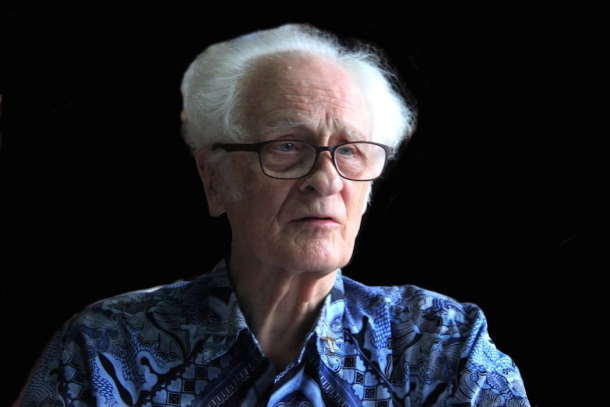
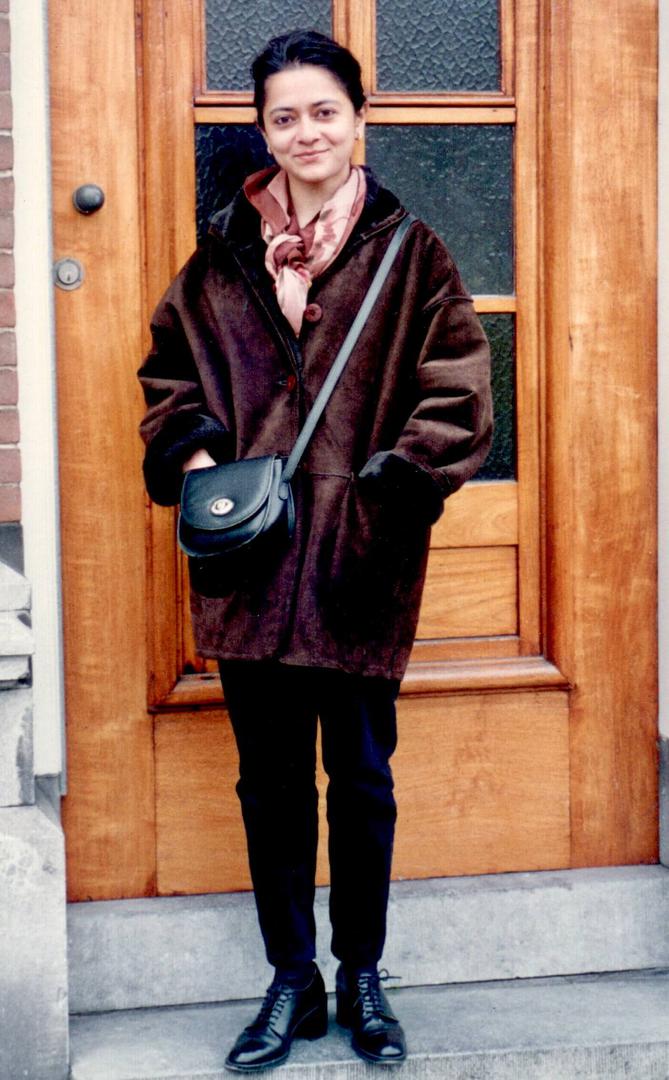
In memoriam human rights defender Tejshree Thapa of Human Rights Watch

April 3, 2019

Profile of Valentina Rosendo Cantu, human rights defender in Mexico

March 13, 2019

On 8 March 2019 LEXICON marked International Women’s Day  – in partnership with Peace Brigades International,- with a profile of Valentina Rosendo Cantu, a human rights defender in Mexico. This is the story of a woman who fought for her dignity and transformed her trauma and suffering into resilience. Her case led to a groundbreaking verdict by the Inter-American Court in June 2018.

Read the rest of this entry »

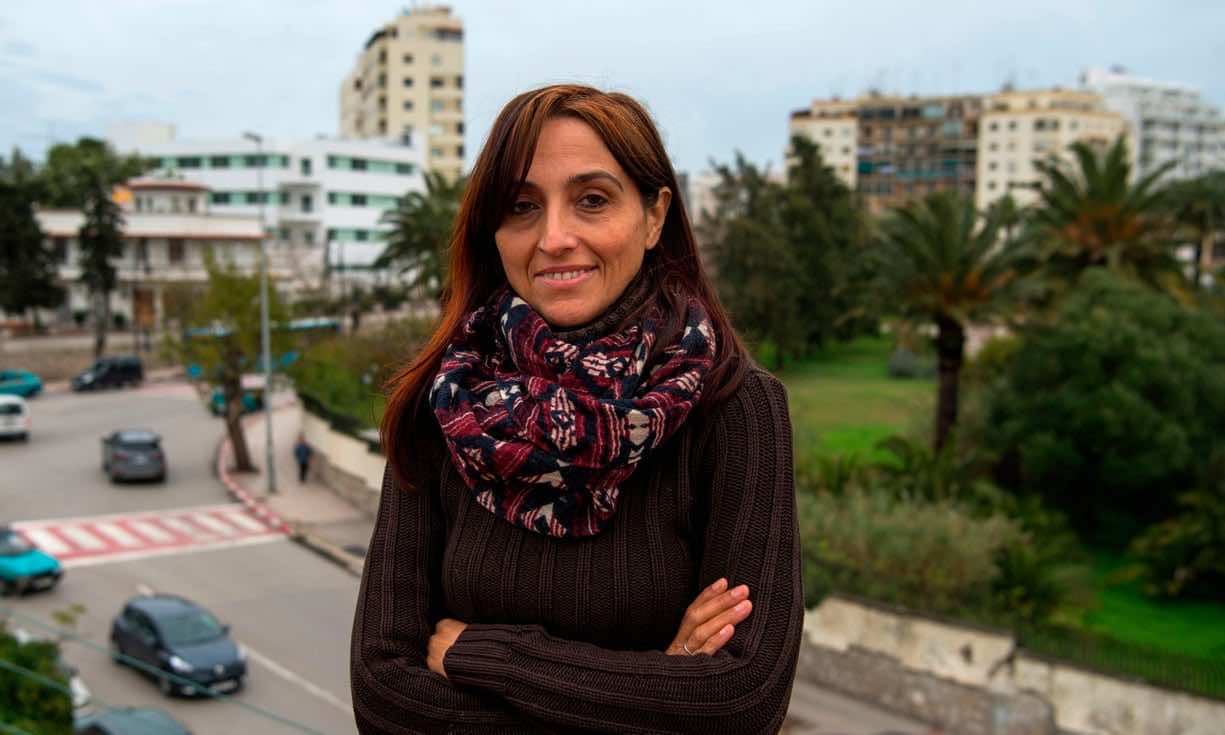
Moroccan court drops charges agains human rights defender Helena Maleno

March 12, 2019
 Helena Maleno - Credit: Fadel Senna (AFP), Getty Images
Helena Maleno – Credit: Fadel Senna (AFP), Getty Images

Maleno has won international recognitions with several awards, including the human rights award “Nacho de la Mata” (2015), the Human Rights Award of the Human Rights Association of Spain (2018), and the MacBride Peace Prize (2018).

https://www.moroccoworldnews.com/2019/03/267803/morocco-case-spanish-human-rights-activist-helena-maleno/

The UN Environmental Rights Initiative interviews Donald Hernández Palma

February 26, 2019

On 26 February 2019 the UN Environmental Rights Initiative (launched in Geneva last year during the UN Human Rights Council). The aim is to ensure that human rights defenders can carry out their activism safely, defend their local environments and the planet. 

However, alarming statistics on killings have been reported over the past few years—especially regarding the targeting of indigenous groups. Latin America has seen the highest number of murders in recent years, accounting for almost 60 per cent of the global total in 2016. In Honduras, 128 defenders are estimated to have been murdered since 2010—the world’s worst rate. UN Environment reached out to Donald Hernández Palma, a Honduran lawyer and human rights defender, for his take on the situation facing environmental and human rights defenders. [see also: https://humanrightsdefenders.blog/2014/11/28/peace-brigades-international-officially-launches-its-country-chapter-in-ireland/ ]

Donald specializes in criminal and environmental law, with a particular focus on mining. He is a member of the Latin American Lawyers’ Network, which works against the negative impacts of transnational extractive companies in Latin America. Since 2010, Donald has worked for the Honduran Centre for the Promotion of Community Development as coordinator of its legal department. He is also the coordinator of the Human Rights and Environmental Department.

Could you tell us a little about yourself, where you come from and how you became part of the environmental advocacy movement?

I am the son of peasant parents who cultivated coffee. I grew up in a remote village in Honduras. I studied in a school that only went up to sixth grade and had to walk almost 20 kilometres a day to go to class. Later, I studied agronomy, a profession I practiced for more than 10 years, in direct contact with peasant families across Honduras. I have directly witnessed the serious subsistence difficulties faced by my countrymen far from government aid.

Since graduating in criminal law in 2007, have been working on environmental protection issues in rural communities. In 2010, I began my work at the Honduran Centre for the Promotion of Community Development, allowing me to work in the defence of human rights for the same populations I had known for many years before.

What situations help explain the kinds of challenges environmental human rights defenders face in Honduras?

Different forms of political and economic corruption in Honduras have compromised – and in some cases denied – local communities’ access to natural resources. Many people have resisted mining, hydro and logging projects, and because of this resistance, have found themselves criminalized and harassed—even killed. Honduras is today considered one of the most dangerous countries for those who defend their land and territories.

What kind of resources are being exploited in your country and how is it affecting land, water, air and biodiversity?

Currently, 302 mining concessions have been approved by the Honduran Government for open-pit mining. Projects are awarded to national and international businesses on thousands of hectares of land, affecting populations that are rarely consulted. Meanwhile, rivers are being appropriated in many regions of the country to generate electricity. Projects are also often granted without consultation to business families, as a payback for favors made for political campaigns.

Also, thousands of hectares of land are being used to plant African palm, transgenic corn and sugar cane for biofuels. This is displacing traditional agriculture, and also causing displacement of populations from their territories to urban centres within and outside the country. Laws have also been passed in Congress to privatize criollo seeds, removing the right of indigenous peoples and peasant peoples to trade their seeds as they have been doing for thousands of years.

What has been done to address these problems?

Organizations like ours do permanent research on the concessions of common goods. This information is very difficult to obtain because it is hidden from the people. There is a law on access to public information that is not respected. We give this information to the affected peoples, whom we also organize and train on human rights and indigenous law, among other issues. We also carry out public protests, present unconstitutionality appeals before the Supreme Court of Justice and carry out legal defence actions when the leaders are criminalized for defending their territory.

What kind of national laws have been enacted? Do international laws help you in any way?

We have a mining law that is highly harmful to the population, a plant breeders’ law that harms people’s rights over seeds, and energy laws that facilitate the implementation of electrical projects that avoid environmental impact prevention processes. In addition, the modification of the criminal code criminalizes public protest. It is precisely international law that allows us to exercise defensive actions in favor of indigenous peoples and peasants, since Honduras has been found not to comply with the international treaties that bind the Honduran state to respect human rights defenders.

Are you working with any NGO groups? 

I am the facilitator at The National Coalition of Environmental Networks and Organizations Honduras (CONROA), a joint space that brings together more than 30 organizations.

Has the newly-signed treaty by 24 Latin American and Caribbean countries, formally called the Regional Agreement on Principle 10, provided any protection on people’s rights in Honduras

Unfortunately, the Honduran state was one of the countries in the region that did not sign this important treaty.

Have you encountered any successes, and is attention increasing on this issue on the ground? 

Unfortunately, an advocate such as Bertha Cáceres, our comrade in this struggle, had to die so that the eyes of the world could return to the terrible situation due to the contempt of the state against those who defend common goods. The visits of the rapporteurs (Michel Fort) and the rapporteur of indigenous peoples have been very important in forcing the Honduran State to respect human rights defenders.

María Ruth Sanabria: 40 years of taking risks as human rights defender in Colombia

January 20, 2019

The Lutheran World Federation published on 18 January a profile of Colombia HRD María Ruth Sanabria: “40 years of taking risks to defend the rights of others“.

María Ruth Sanabria, Colombian human rights defender. Photo: LWF Colombia

Despite continued threats on her life, María Ruth Sanabria remains undeterred in the struggle for the rights of marginalized people. This includes a project called “Towards the territorialization of peace through women’s bodies, voices and words,” supported by The Lutheran World Federation (LWF) and the Evangelical Lutheran Church of America.

Ever since she was young, Sanabria always felt drawn to dealing with “the pain of others,” and describes this characteristic as the essence of a true human rights defender. Looking back at more than 40 years of advocacy work, she remembers the people who lost their lives because of their work as human rights defenders, a task that is becoming increasingly dangerous in Colombia. Sanabria is gravely concerned about the prevailing discrimination and attacks against human rights’ defenders in her country. She has been the target of attempts against her life. And, she is not the only one. According to the Piedra en el Zapato [A pebble in your shoe] report published by the organization Somos Defensores [We Are Advocates] in 2017, there were more than 500 attacks against human rights’ defenders, leading to 106 murders, 370 threats, 23 arbitrary detentions, nine case of legal prosecution and two instances of theft of sensitive information. [see also my: https://humanrightsdefenders.blog/2018/04/28/2018-latin-america-still-the-graveyard-for-environmental-human-rights-defenders/]

She was aged only 17, when she first became involved in the peasants’ struggle for land rights in San Alberto, a small village in the northern department of Cesar. She later became acquainted with the Indupalma’s Union of palm tree workers, many of who were persecuted and killed during the 1984 economic liberalization crisis, and the subsequent paramilitary attacks.

Following the murder of her husband, a peasant leader, in the early 1990s, and a series of threats against her, Sanabria fled San Alberto in 1994, and sought refuge in Arauquita town in the northeastern department of Arauca. She recalls arriving there with her four children, four boxes and 10,000 Colombian pesos (USD 3).

Fleeing meant she not only had to leave behind a major part of her life, but she also had to gain recognition as a woman leader and advocate in an unfamiliar environment. Gradually, she began to participate in political fora via the Unión Patriótica party, which saw 3,500 of its members murdered during the second half of the 1990s.

In 2001, she met Armando, her partner, who is also a human rights advocate. Together, they formed the Arauquita’s section of the Permanent Committee for the Defence of Human Rights – Arauca Chapter (CPDH). The threats from armed groups resumed, and there were new attempts against her life again, which forced her to seek refuge in Argentina in September 2006. She returned in 2007 only to witness the vicious attacks that paramilitary forces meted on peasant leaders and human rights advocates.

Her contact with the LWF started with a meeting involving its office in Colombia, CPDH and the Arauca Peasant Association (ACA), where joint work was initiated. The strong bond of trust that was established then is still going strong. Thanks to the LWF, “the CPDH was able to open its first offices in Arauquita and Fortul, although the latter was dismantled after the conflict took a turn for the worse,” she says. The office also acted as a center for workshops, which previously had been held under trees, in slums, and in the streets. “The people from the Lutheran World Federation have always been there for us through the toughest of times,” Sanabria concludes.

https://www.lutheranworld.org/news/maria-ruth-sanabria-40-years-taking-risks-defend-rights-others

Scottish Bar gives inaugural human rights award to Salome Nduta of Kenya

January 9, 2019

Salome Nduta receives her award from Lord Bonomy, Chair of the judging panel in Scottish Bar International Human Rights Award.

Salome Nduta, from Nairobi, Kenya, is a protection officer with the National Coalition of Human Rights Defenders, and was honored as the first winner of the Scottish Bar International Human Rights Award. [see: http://trueheroesfilms.org/thedigest/awards/scottish-bar-international-human-rights-award]

I was born and brought up in one of the informal settlements of Nairobi in Kenya – Korogocho. I experienced first hand deprivation and lack of necessities as a child. I saw the struggles of a single mother eking [out a living] for her children surrounded by poverty and human rights violations by both state and non-state actors. It is this kind of environment that laid the basis of my activism work. My journey of activism has been full of experiential moments that have continued to push me to the next level. In all these moments, the legal fraternity has walked with me side by side. In Korogocho, a legal advice centre first trained me as a paralegal and walked with me through my journey of campaign against forceful evictions and for demolition of informal settlements which saw me arrested a number of times for standing up against oppression. Korogocho and other informal settlements do still exist but there is now in place clear eviction and resettlement guidelines, a housing Act and article 43 of the Constitution of Kenya 2010 on social economic rights, as a result of the work of human rights defenders (HRDs). HRDs play a pivotal role in bringing and sustaining change. My activism life is a journey of moments and not just challenges, moments of falling, waking up, dusting yourself down and keeping on walking. Some moments are sad and some are joyous even when you are inhaling tear gas from canisters thrown by police.

“In each moment, one constant factor remains, change does occur! It is this change that keeps human rights defenders going. At times, it is difficult to see the change with our naked eyes but faith makes us believe that change has occurred or will occur, however long it takes, and that for me and other HRDs is sufficient. We are all blessed with characteristics that best describe us: patience, focus and dedication to the cause. My employer, NCHRD-K, deserves recognition and accolades for giving me the space and opportunities for growth and sharpening my skills to do what I love doing most, supporting human rights defenders. My daily tasks entail responding to distress calls from targeted HRDs day and night – targeted by both state and non-state actors – assessing their cases and advising on best suited intervention including legal, medical, psychosocial and relocation. The environment which HRDs operate in within the country cannot be described as entirely safe. I get satisfaction and strength when HRDs come and say, your intervention has brought me this far. In 2016, a human rights defender was sleeping in his house with his ten-year-old son Ainea, seven-month-old daughter and his wife. A petrol bomb was thrown into the house and it was by sheer luck that Ainea was still awake. He woke his parents. They safely got out, but everything else was burnt to ashes. This was the first time I was dealing with a case where children were involved. In 2018, the family invited us to the opening of their new home and I could not contain my emotions when I heard Ainea and his sister tell me thank you for the support to their family. Ainea declared he will support his father in his work as long as God gives him strength. For me this was a major change, winning a young boy into activism because he has seen it, lived it and emerged victorious. My passion is to give life to Chapter 4 of the Constitution of Kenya 2010, where humanity is respected not just in rhetoric but in words and deeds.”

Read more at: https://www.scotsman.com/news/opinion/scottish-bar-salutes-salome-s-work-1-4852029

Craig Foster, Australian footballer and …human rights defender!

January 2, 2019

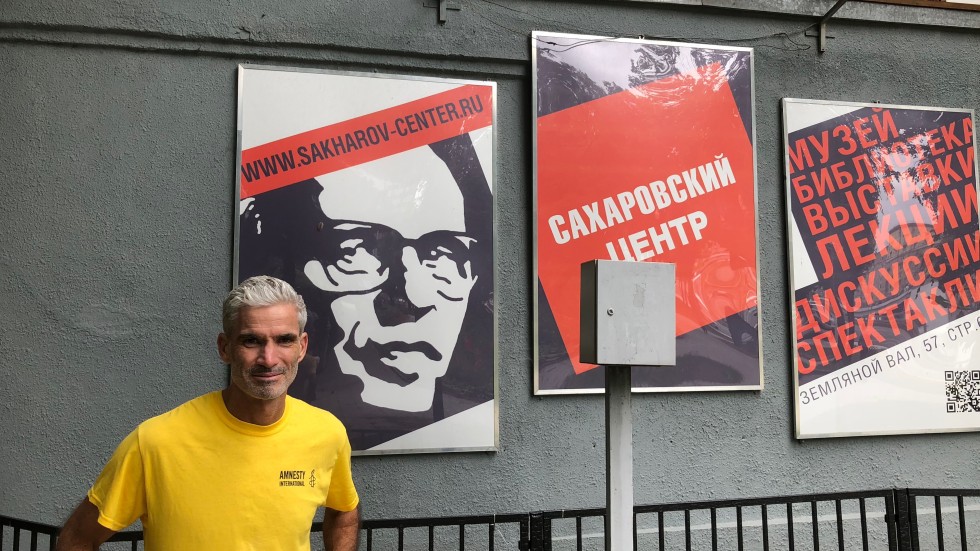
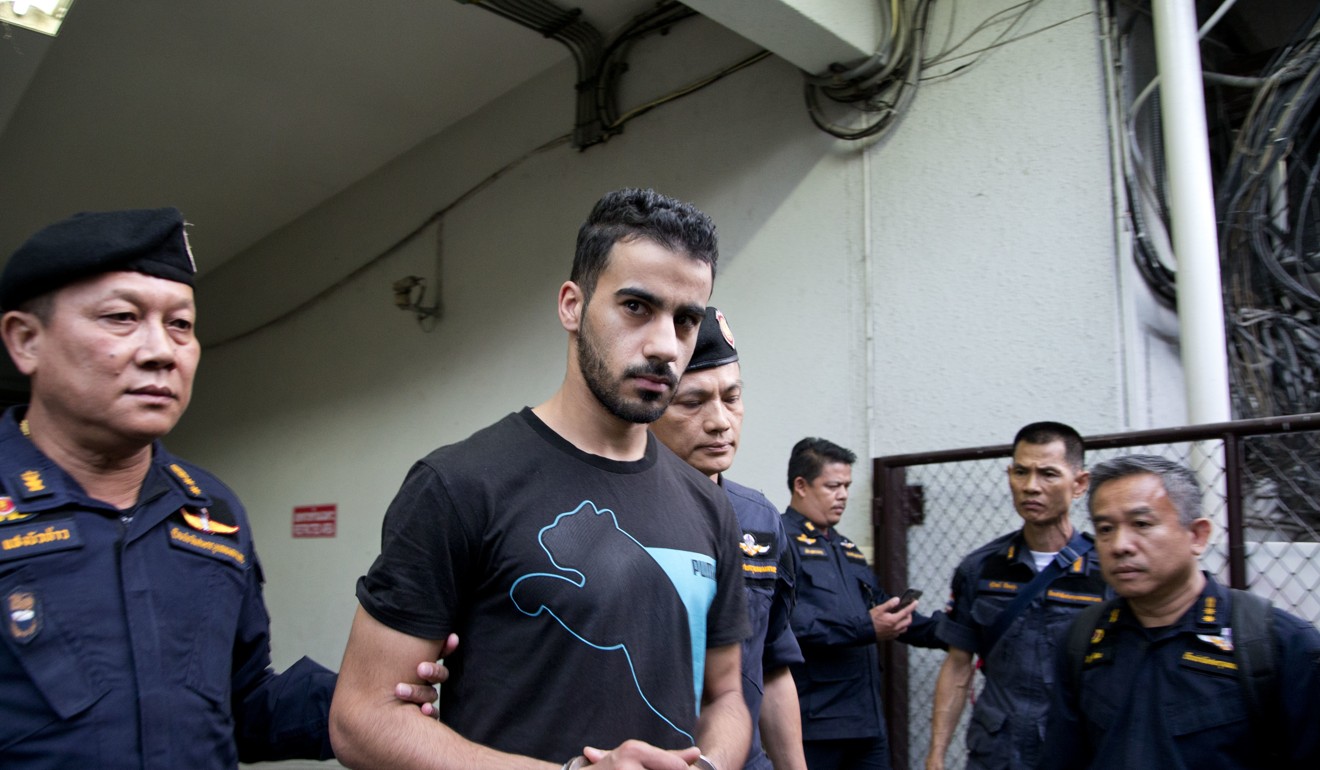
Football’s power to fight injustice motivates Craig Foster. The former Socceroos captain who played for Hong Kong’s Ernest Borel in the early ’90s is a broadcaster in Australia and also works for Amnesty International as a human rights and refugee ambassador. He is among the most vocal of activists in calling out human rights transgressions in football and sport and is one of the many prominent figures fighting for the release of Bahrain’s Hakeem al-Araibi, an Australia-based refugee footballer who is in a Thai jail awaiting extradition to his home country where he fears torture and persecution. [For some of my other posts on football and human rights, see: https://humanrightsdefenders.blog/tag/football/]

On  Tuesday, 01 January, 2019, Nazvi Careem Nazvi Careem wrote a long piece about Craig Foster’s work and dedication:

And if he ever doubted just how powerful this sport can be, he only needs to recall the heartbreaking words of a young African refugee who had lost everything – fleeing his war-torn homeland after his parents, sibling and other members of his family were killed. “He was involved in a football programme over a period of time. He was very, very quiet and said very little,” said Foster. “He was in a new country and was experiencing psychological difficulties, which is totally understandable. “When he was asked why he liked the programme, he simply said: ‘The only thing that still exists in my life is football. It is the only thing that hasn’t been taken away from me’. And he was crying when he said it.

He [Craig Foster] is among the most vocal of activists in calling out human rights transgressions in football and sport and is one of the many prominent figures fighting for the release of Bahrain’s Hakeem al-Araibi, an Australia-based refugee footballer who is in a Thai jail awaiting extradition to his home country where he fears torture and persecution. (AFC must be held to account if Bahraini refugee player is extradited from Thailand, says ex-Socceroos captain Craig Foster)

…Since retiring as a player in 2002, Foster became involved in social issues related to football, working with disadvantaged, minority and indigenous communities in a variety of programmes. “I’m just finishing my law degree, which has given me some further insight into the challenges of human rights and international refugee law. I feel strongly about these issues and in football, we are at an advantage because we are the most diverse, multicultural community in Australia.

…..Foster, who played for Portsmouth and Crystal Palace in England and also had a stint in Singapore, said he felt an obligation to give something back to the sport. As an ex-player and a broadcaster with the SBS organisation in Australia, Foster is in an ideal position to reach out to the masses. At the same time, he puts his contribution to social issues in perspective, admitting that he is in a position of comfort compared with activists whose lives are on the line in their efforts to effect change.

“Of course, you can’t fight every battle, but there are key ones which take a huge amount time. But the people I have immense respect for are the human rights defenders in their countries….In Australia we have serious human rights issues, with indigenous Australians and also in terms of refugees and arrivals.

Profile of migrants rights defender Mariana Zaragoza from Mexico

December 18, 2018

On 13 December 2018 ISHRGlobal published this interview with Mariana Zaragoza. Our countries are restricting migrants’ rights, and there is always something we can do to demand full protection of people“, says Mariana Zaragoza in her interview. Mariana works in the immigration programme at the Ibero-American University of Mexico and she advocates for migrants and refugees’ rights.

Russian human rights defender Ludmila Mikhailovna Alexeeva is no longer

December 10, 2018

https://www.hrw.org/news/2018/12/09/tribute-ludmila-mikhailovna-alexeeva#

Meet Eva Lewis, the sole human rights defender from the USA at the HRD Summit in Paris

November 16, 2018

A young activist, Eva Lewis, who grew up on the south side of Chicago recently traveled to Paris to participate ...

Eva Lewis, founder of the I Project. Photo Credit: Provided by Eva Lewis

Katherine Newman in the Chicago Citizen proudly profiles the young woman from Chicago Eva Lewis who – as only HRD from the USA almost represented “the United States At Human Rights Defenders World Summit” [https://humanrightsdefenders.blog/2018/07/24/announcement-of-the-human-rights-defenders-world-summit-in-paris-october-2018/].

A young activist, Eva Lewis, who grew up on the south side of Chicago recently traveled to Paris to participate in the Human Rights Defenders World Summit 2018. Lewis spoke on the Americas panel, alongside activists from Latin America, and discussed youth-led movements in the United States as well as the state of black and brown people in the country. “What the Summit aims to do is bring together representatives from each country to talk about the state of human rights defenders and to brainstorm ways that we can elevate our fight for human rights and create a direct action plan that can be implemented to protect human rights defenders internationally,” said Lewis.

Lewis was one representative in a diverse group of 150 human rights defenders from around the world that came to Paris for the three-day Summit.  “I was on the Americas panel and I was the only US representative and also the youngest delegate at the Summit and I was the only English speaker on my panel. Everyone on the panel talked about their own fight for human rights and how it pertains to their country and the people that they were there to represent,” said Lewis.

“I set my self up to fulfill a specific agenda which was to bring human rights of black and brown folks in the U.S. to an international platform because we don’t talk about human rights violations against black and brown people in the US as a human rights issue. This was the first time anyone had that conversation at the Summit and I was happy to be able to be the one to present that conversation.”

Nineteen-year-old Lewis is an award-winning student, activist, and artist. She is also known for founding the I Project, a non-profit organization aiming to create equitable communities in Chicago.

I really liked hearing about how people structure their organizations so what I think I gained the most from the Summit is good information about how to make the infrastructure of my own organization more sustainable. The I Project is relatively new and we’ve only had a fiscal sponsorship for about a year and we are not sustainable at all and I’m comfortable admitting that because the journey is important and part of the process,” said Lewis.

http://thechicagocitizen.com/news/2018/nov/14/young-chicagoan-represents-united-states-human-rig/