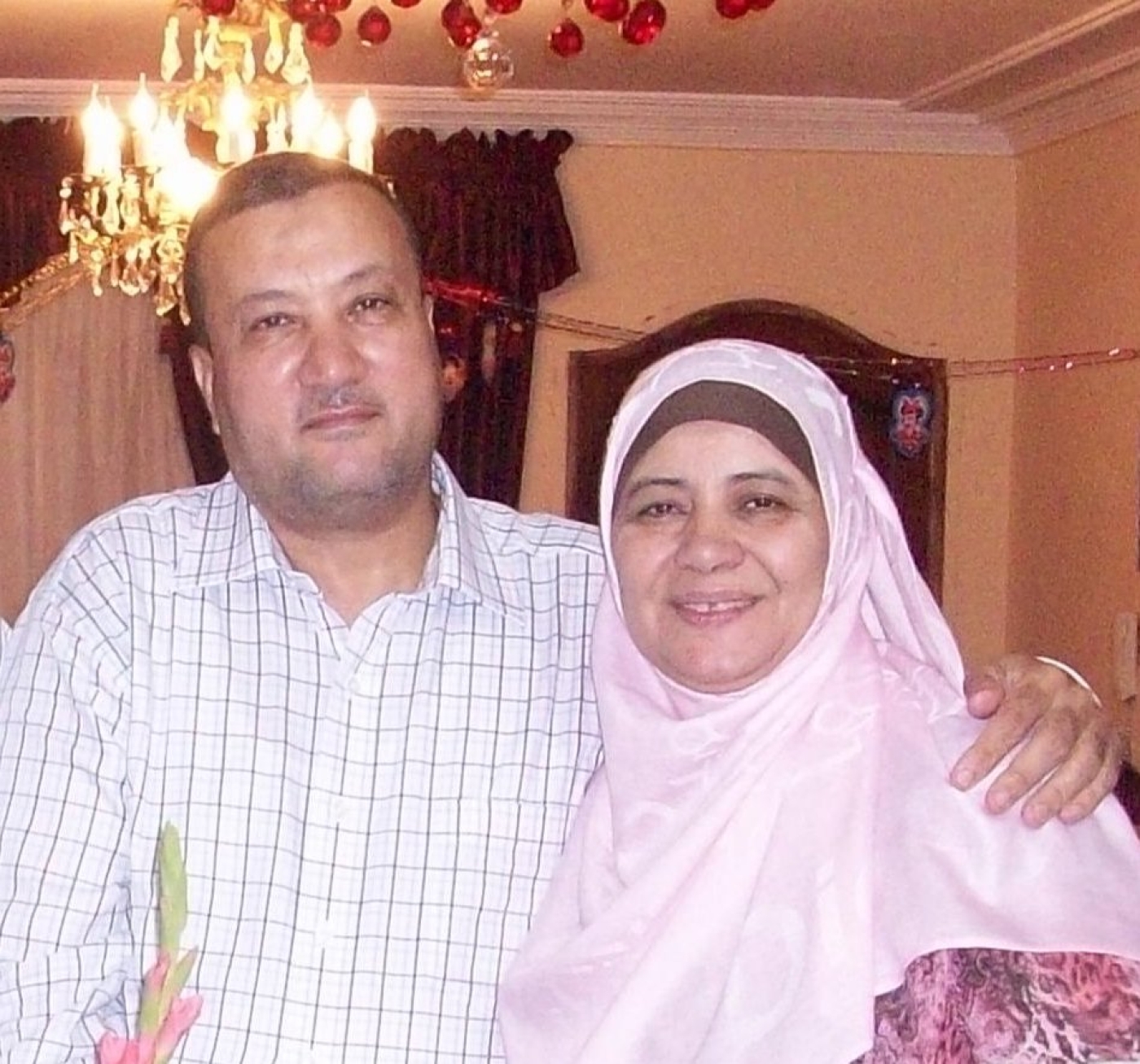
Ahmed Abdrabbu, left, and wife were arrested at Cairo International Airport on 23 December 2018 (Twitter/@nosaybaahmed)
On 2 September 2020 the Middle East Eye reported that – according to the Committee for Justice (CFJ )- Egyptian human rights defender Ahmed Abdrabbu became the latest of some 1,000 prisoners to die amid medical negligence since Abdel Fattah el-Sisi assumed presidency.
Ahmed Mefreh, the director of the Geneva-based Committee for Justice (CFJ), told Middle East Eye that Abdrabbu suffered from a number of chronic illnesses, including acute kidney failure, which had developed amid unsanitary conditions at the prison. “Preliminary information shows that he died because of deliberate medical negligence in jail,” Mefreh said. “For nearly two years, he has been held in solitary confinement, in extremely cruel conditions, including denial of medical care by prison officials.“
The Tora prison, also known as “the Scorpion“, has been repeatedly denounced by rights groups and described as “degrading” by Human Rights Watch. “Authorities there have denied inmates contact with their families or lawyers for months at a time, held them in degrading conditions without beds, mattresses or basic hygienic items, humiliated, beaten, and confined them for weeks in cramped ‘discipline’ cells – treatment that probably amounted to torture in some cases,” HRW said in a report in 2016.
According to Abdrabbu’s family, the publisher was arrested on 23 December 2018 at Cairo International Airport and was later charged with “membership in a terrorist organisation” and working to “undermine the constitution”, accusations commonly used by Egyptian authorities against opponents of the government of President Abdel Fattah el-Sisi. His wife, who was with him at the time, was released in June 2019 and is currently serving parole, his daughter Nusaiba wrote on Twitter.
This is an open letter from MONA SEIF asking for your solidarity and support. It is long, but contains crucial details: My name is Mona Seif, I am an Egyptian HRD. Over the past few weeks the Egyptian regime has been escalating violent targeting of my family. If you are following the news from this art of the world then you know how most of the media platforms have been blocked and many journalists detained, harassed, or pushed into exile. So I am writing to you, hoping you will carry my voice and that of everyone facing injustice here.
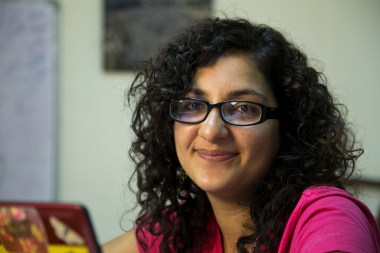
Mona Seif, Egypt – Final Nominee MEA 2013
My brother Alaa Abdel Fattah has been in jail since last September. He was rearrested only 6 months after he got out of prison after completing a full five-years sentence. He has been in maximum security prison for 10 months in horrific conditions and daily violations of his rights, Egyptian laws and prison regulations. For the past months we have filed numerous official complaints, appealed to all sorts of entities here that have jurisdiction over the prison authorities, but none of them made any move to stop the violations or start a serious investigation. None of them made any attempt to bring us just a small bit of our rights.
On the night of Alaa’s arrival to Tora Maximum security prison 2 he was stripped of his clothes, blind folded, beaten and threatened that “He will never get out of here“, we have submitted an official report to the general prosecutor, we have repeatedly met with the head of his Human Rights adminstration, Alaa went on record in state security prosecution while reviewing his pretrial detention and testified in details on the torture he endured. Until now, not one serious move was taken regarding this horrific incident, and it was an intro to the kind of prison he will be locked in.
Since the crisis of Covid19 started, the Egyptian MOI has used it as an excuse to tighten the isolation of all prisoners, increase intimidation of prisoners and their families, and escalate in their deprivation of their basic rights. Since March 9th all visits have been completely banned in all prisons all over Egypt, however the families were not offered any alternative form of communication. We were not allowed phone calls with the prisoners, and most prisons are not allowing letters, even though both are explicit rights by the law, not to mention worrying times like these. Some prisoners were trying to get the word out about the deterioration of their health, about fear of Corona in prisons, the lack of proper information to help them understand the toll of the crisis and lack of sanitary measures indifferent Egypt, the only response the MOI had was clamping down even harder on those prisoners, punishing those who voiced out their concerns, all this while the arrests of more activists is ongoing and the arrest of doctors who talk publicly about their needs, problems and the reality of managing Covid19 within our health system.
With Alaa in particular, state security seems intent on preventing any sort of communication between us and him, even at times when they are allowing letters from other prisoners. Alaa went on a hunger strike on April12th and they did not even inform us. For a whole month during the covid19 emergency, my brother was on full hunger strike, my mother spent every morning at the prison’s gate and they did not allow us one letter to assure us of his well being. For every letter received we as a family paid a heavy price. We received a letter after Alaa ended his hunger strike on May 18th, and another on June 6th after my mother camped daily by Tora prison. Then the last one we got was on June 25th after we were violently assaulted and robbed right infront of Tora prison on the watch of their guards, and only after my younger sister Sanaa was abducted by plainclothed officers while entering the general prosecutor’s office- with her lawyer- to report the violent assault and officially document her injuries. Sanaa is now detained, and we haven’t been allowed any letters from her as well.
I think I’ve seen alot, I’ve witnessed so many violations committed by the current and previous regimes, but somehow I would have never imagined that a victim of a violent assault would be kidnapped by state security from the gates of the general prosecutor’s office as they are trying to seek his protection and file an official complaint regarding a very public incident like the one we were part of. And it definitely wouldn’t have occured to me that not only the general prosecutor would turn a blind eye on such a grave crime committed at his doorstep, but actually enable them to “legalize” her detention afterwards.
Both Sanaa and Alaa are in prison They, and thousands of prisoners, are at risk facing the combined danger of an epidemic and a brutal senseless regime. Please speak up on their behalf.. write about them, share their stories, add your name to the petition, or you can directly write a letter to Judge Hany Georgy the Head of Human rights administration at the general prosecutor’s office hanyfathy70@yahoo.com
This is an open letter from MONA SEIF asking for your solidarity and support. It is long, but contains crucial details: My name is Mona Seif, I am an Egyptian HRD. Over the past few weeks the Egyptian regime has been escalating violent targeting of my family. If you are following the news from this art of the world then you know how most of the media platforms have been blocked and many journalists detained, harassed, or pushed into exile. So I am writing to you, hoping you will carry my voice and that of everyone facing injustice here.
Mona Seif, Egypt – Final Nominee MEA 2013
My brother Alaa Abdel Fattah has been in jail since last September. He was rearrested only 6 months after he got out of prison after completing a full five-years sentence. He has been in maximum security prison for 10 months in horrific conditions and daily violations of his rights, Egyptian laws and prison regulations. For the past months we have filed numerous official complaints, appealed to all sorts of entities here that have jurisdiction over the prison authorities, but none of them made any move to stop the violations or start a serious investigation. None of them made any attempt to bring us just a small bit of our rights.
On the night of Alaa’s arrival to Tora Maximum security prison 2 he was stripped of his clothes, blind folded, beaten and threatened that “He will never get out of here“, we have submitted an official report to the general prosecutor, we have repeatedly met with the head of his Human Rights adminstration, Alaa went on record in state security prosecution while reviewing his pretrial detention and testified in details on the torture he endured. Until now, not one serious move was taken regarding this horrific incident, and it was an intro to the kind of prison he will be locked in.
Since the crisis of Covid19 started, the Egyptian MOI has used it as an excuse to tighten the isolation of all prisoners, increase intimidation of prisoners and their families, and escalate in their deprivation of their basic rights. Since March 9th all visits have been completely banned in all prisons all over Egypt, however the families were not offered any alternative form of communication. We were not allowed phone calls with the prisoners, and most prisons are not allowing letters, even though both are explicit rights by the law, not to mention worrying times like these. Some prisoners were trying to get the word out about the deterioration of their health, about fear of Corona in prisons, the lack of proper information to help them understand the toll of the crisis and lack of sanitary measures indifferent Egypt, the only response the MOI had was clamping down even harder on those prisoners, punishing those who voiced out their concerns, all this while the arrests of more activists is ongoing and the arrest of doctors who talk publicly about their needs, problems and the reality of managing Covid19 within our health system.
With Alaa in particular, state security seems intent on preventing any sort of communication between us and him, even at times when they are allowing letters from other prisoners. Alaa went on a hunger strike on April12th and they did not even inform us. For a whole month during the covid19 emergency, my brother was on full hunger strike, my mother spent every morning at the prison’s gate and they did not allow us one letter to assure us of his well being. For every letter received we as a family paid a heavy price. We received a letter after Alaa ended his hunger strike on May 18th, and another on June 6th after my mother camped daily by Tora prison. Then the last one we got was on June 25th after we were violently assaulted and robbed right infront of Tora prison on the watch of their guards, and only after my younger sister Sanaa was abducted by plainclothed officers while entering the general prosecutor’s office- with her lawyer- to report the violent assault and officially document her injuries. Sanaa is now detained, and we haven’t been allowed any letters from her as well.
I think I’ve seen alot, I’ve witnessed so many violations committed by the current and previous regimes, but somehow I would have never imagined that a victim of a violent assault would be kidnapped by state security from the gates of the general prosecutor’s office as they are trying to seek his protection and file an official complaint regarding a very public incident like the one we were part of. And it definitely wouldn’t have occured to me that not only the general prosecutor would turn a blind eye on such a grave crime committed at his doorstep, but actually enable them to “legalize” her detention afterwards.
Both Sanaa and Alaa are in prison They, and thousands of prisoners, are at risk facing the combined danger of an epidemic and a brutal senseless regime. Please speak up on their behalf.. write about them, share their stories, add your name to the petition, or you can directly write a letter to Judge Hany Georgy the Head of Human rights administration at the general prosecutor’s office hanyfathy70@yahoo.com
On 14 July 2020 the FOROYAA Newspaper carried a summary of remarks made byHannah Foster, who is the spokesperson of the NGOs Forum at the opening ceremony of the 66th Ordinary Session of the African Commission on Human and Peoples’ Rights (ACHPR) which started on Monday July 13th 2020 (via Zoom)
Gambian human rights defender, Mrs. Hannah Foster, has raised concern about human rights violations in Africa, in particular amid the spread of Covid-19
“We all have seen that from all parts of the world human rights violations have remained a major concern in most countries. Since late December 2019, the Coronavirus which causes Covid-19 has held the world captive with uncertainties, fear and insecurity. In most countries, we’ve seen the freedom of association and assembly remains a major cause for concern in most of the countries reviewed,” she said
Madam Foster said it is also a cause for concern that with Covid-19, there has been an increase of gender based violence registered in most of the countries that have been reviewed by the Forum.
She added that it was reported at the Forum that systematic harassment and targeting of human rights defenders in many countries persist and or have intensified the closing of civic space due to the existence of restrictive legislations.
“It was ascertained that a lot more needs to be done as many African countries continue to face challenges of insecurity, violence, terror attacks and the volatile situation brought about by Covid-19,” she said.
Speaking further, Madam Foster said they had raised the issue of overcrowding in prisons especially during Covid-19. “The overcrowding of prisons due to non-observance of judicial guarantees in respect of remand detainees as well as standard minimum rules, also have created challenges. And the Forum calls on the African Commission to urge States to respect and implement all laws governing the treatment of prisoners especially in this time of Covid-19, which has brought about an extension of restricting laws that are being implemented,” Foster informed the participants.
Foster said the Forum urged more States and NGOs to use and popularize the African Commission processes and decisions and to encourage States to comply with decisions as well as consider signing the Protocol on the right to individul complaint
“We have challenges of Benin and Cote d’Ivoire withdrawing their signatures of Article 346. And we will like to urge the Commission to enter into dialogue with them to ensure that they encourage them to review the decision,” she said.
Foster said the forum also observed that freedom of expressions, the criminalization of bloggers and internet restrictions continue to hinder the independent and freedom of journalists and like-minded groups.
“Humanitarian access has also become very problematic. The Forum took this opportunity to call on the African Commission and all States that have not ratified pertinent treaties to speedily do so in order to enable their implementation as the enjoyment of those rights by all citizens,” she added.
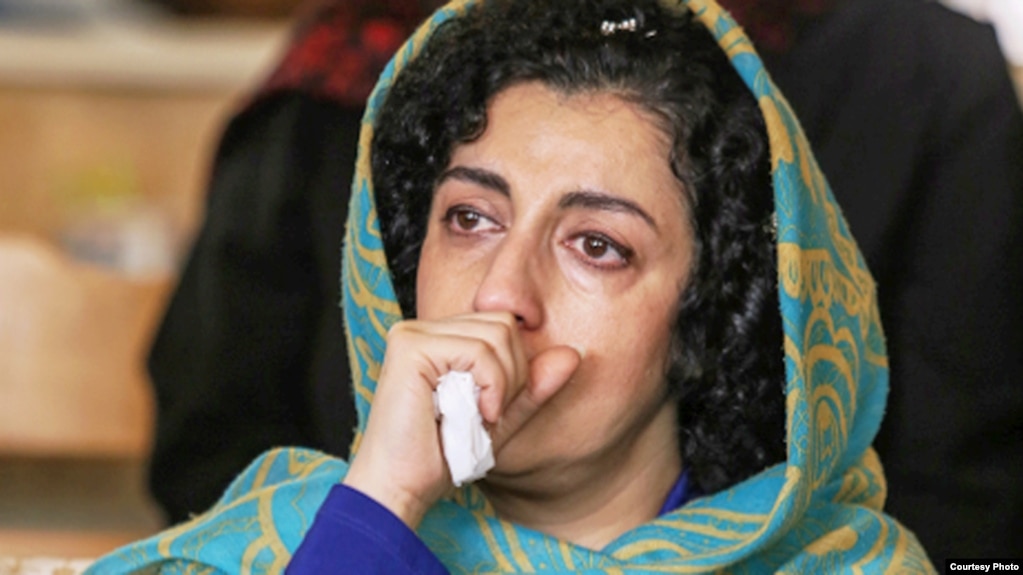
Narges Mohammadi has “serious health problems,” her brother says, but is not allowed out of prison to see a doctor.
Reporters Without Borders (RSF) has condemned the latest “absurd charge” brought against jailed Iranian journalist and human rights advocate Narges Mohammadi, who has been imprisoned since 2015. On 12 June 2020 RSF urged the UN special rapporteur on the human rights situation in Iran, Javaid Rehman, to “intervene quickly and do everything possible to obtain the release of Iran’s longest-held woman journalist.“
In a recent open letter to the Iranian judicial authorities, her brother revealed that she was now accused of “dancing in prison during the days of mourning” commemorating the seventh-century killing of Imam Hussein, a revered figure in Shi’ite Islam. Mehdi Mohammadi, now a refugee in Norway, also wrote that his sister had serious health problems but “was not allowed out of prison to see a doctor, who went to her cell.” “This persecution of Narges Mohammadi is evidence of judicial discrimination at the behest of the Intelligence Ministry and senior justice system officials,” said Reza Moini, the head of RSF’s Iran-Afghanistan desk.
In the meantime there is also an interesting case of an Iranian judge and former prosecutor who was arrested in Romania by Interpol for rights violations (13 June 2020 Radio Farda)
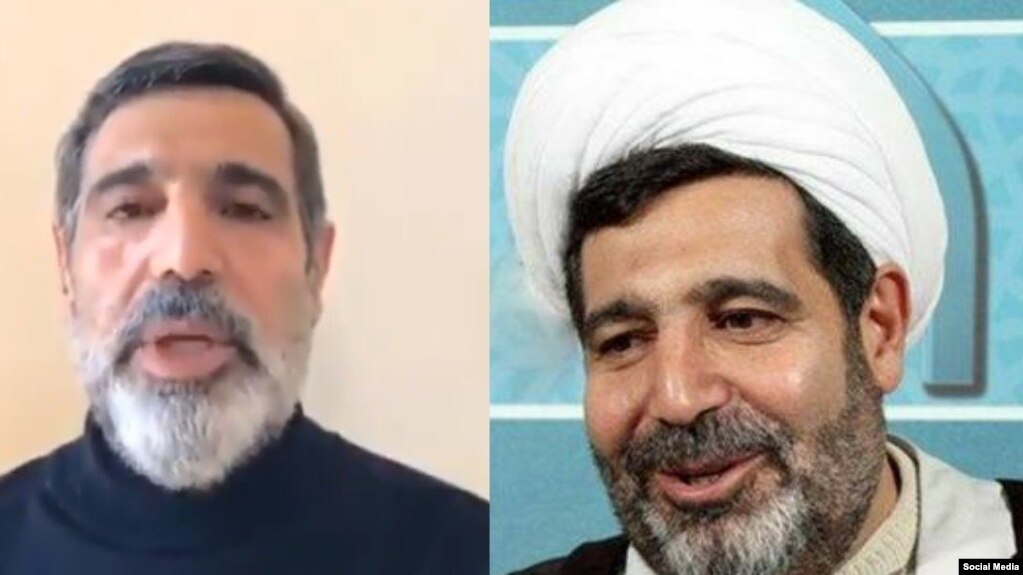
Gholamreza Mansouri, Iranian judge and former prosecutor.
Iran’s Judiciary Spokesman confirmed that Interpol has detained Gholamreza Mansouri in Romania. He is accused of human rights violations by rights defenders, but he is also one of the defendants in a recent sensational corruption case in Iran who fled to Europe. Judiciary spokesman Gholam-Hossein Esmaili said Mansouri’s extradition is not possible now due to coronavirus restrictions but he will be returned to Iran and put on trial for corruption. He also told a local news network that Iran requested the arrest through the Interpol.
In a tweet on June 11, the Secretary-General of Reporters without Borders urged German authorities not to let him escape justice. Reporters without Borders (RSF) has supported the call of Iranian activists and filed a complaint with Germany’s Federal Public Prosecutor against Mansouri for the arrest and torture of at least 20 journalists in 2013….Mansouri is a highly influential prosecutor and judge notoriously famous for prosecuting journalists and putting them behind bars. In one instance in 2013 he ordered the simultaneous arrest of 20 journalists in one day.
Mansouri’s name came up as one of the recipients of bribes in the first trial session of Akbar Tabari, a former Judiciary deputy. The former judge allegedly received 500,000 euro in bribes from Tabari.
In a video published on social media on June 9, Mansouri claimed that he was abroad for treatment of a serious medical condition and could not return due to the restrictions introduced after the breakout of coronavirus. He did not reveal where he was but said he would go to an Iranian embassy to arrange for his return to defend himself against the corruption charges.
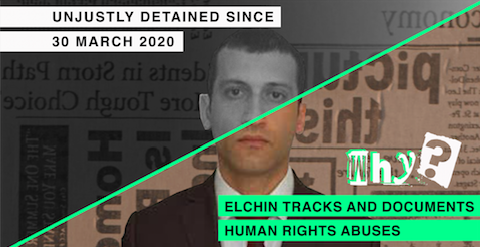
As a human rights lawyer and journalist, Elchin Mammadis used to speaking his mind. The 42-year old attorney presides over the Social Union of Legal Education of Sumgait Youth (SULESY), a non-governmental organisation that provides free legal assistance to low income families and non-profits. His busy schedule also includesda job as the editor in chief of Yukselish Namine, a newspaper specializing in human rights concerns. On 30 March 2020, a few days after he had published online a critical report on the human rights situation in Azerbaijan, police officers arrested Elchin at his home in Sumgait, a town north of the capital Baku. The police claimed to have found stolen jewellery at his office.
The next day, Sumgait City Court remanded Elchin Mammad in custody for three months as a criminal suspect. The father of two young children remains detained under trumped-up charges at Shuvalan pre-trial detention centre no. 3. This latest twist is nothing new to Elchin. He has faced harassment from the authorities in connection with his human rights work since 2015, when his organisation was investigated. He was subjected to arbitrary detention, repeatedly summoned and questioned by the police. He was also placed under travel restrictions in connection with the investigation.
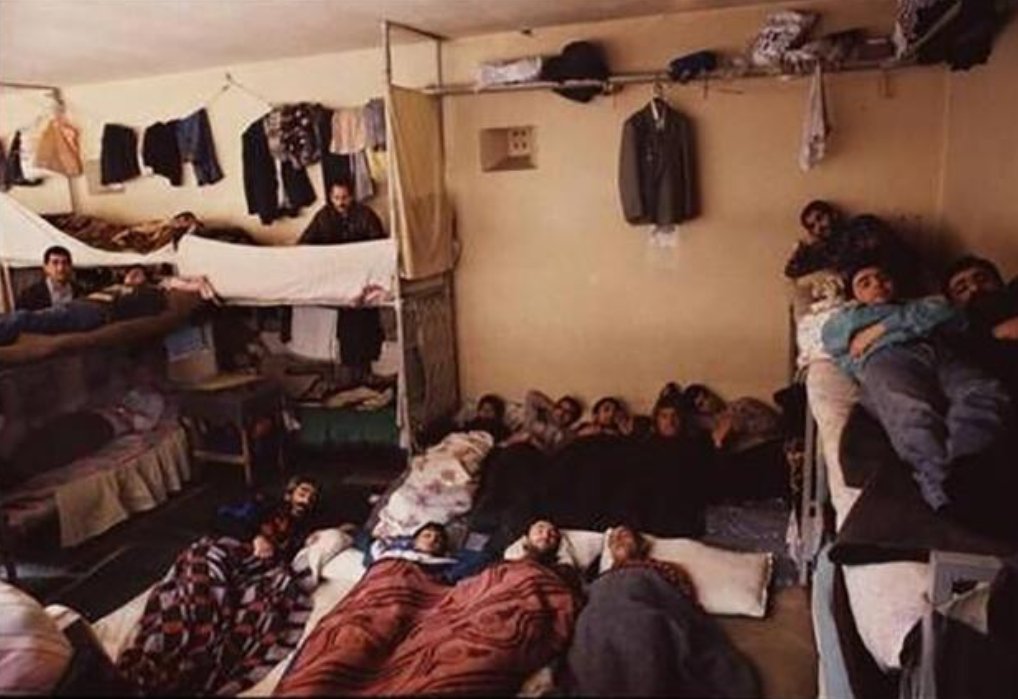
On 15 May, the government officially stated that there are 46 COVID-19 infected inmates in the country. This puts Elchin’s life at risk, particularly as he suffers from hepatitis C. Azerbaijan’s prison system is plagued by severe overcrowding, while food, medication, sanitation, and even drinking water are substandard. This has led to the European Court of Human Rights repeatedly ruling that detention conditions in the country amount to inhuman and degrading treatment. In times of pandemic, such an environment risks becoming an incubator for the novel coronavirus.
Elchin’s case is particularly emblematic of the Azerbaijani authorities’ abusive and arbitrary methods used to silence critical voices. In 2014, the government launched an unprecedented crackdown on civil society. Prominent human rights defenders joined other political prisoners in Azerbaijan’s jails, on fabricated criminal charges of financial irregularities. Although most were released after spending years in prison, as a result of international pressure, the situation of defenders remains precarious
The authorities have seized the coronavirus outbreak as an opportunity to intensify the crackdown on civil society. On 19 March, President Ilham Aliyev used his yearly address to the nation on the Novruz Bayrami holiday to promise “new rules” for the duration of the pandemic, threatening to clear the country of “traitors” and “enemies” and to “isolate the fifth column”. To people like Elchin, who has dedicated his life to the defence of the downtrodden, these ominous words might now ring like a death sentence.
Human rights defenders are often kept in detention and that is bad enough, but with the Covid-19 pandemic this risks killing many of them. Overcrowded prison conditions are such that infection is bound to occur. Following a request from the UN Special Rapporteur on Human Rights in Iran, Tehran released 85,000 prisoners, including many political prisoners, in an attempt to help stop the spread of the virus. China, Italy and Bahrain also have released prisoners over coronavirus concerns.
Now a coalition of human rights groups, activists, and politicians, including former Tunisian President Moncef Marzuki, sent a letter to UN Secretary and the UN High Commissioner for Human Rights urging the prisoner releases after the first case among prisoners was confirmed in Egypt. …..”Even more worrying in this time of pandemic, prisoners are crammed in cells that are so small that they have to wait for their turns to lay down and sleep,” the letter read.
Coronavirus: Egypt detains novelist Ahdaf Soueif for demanding prisoners’ release
On Wednesday the Egyptian government’s reaction was – surprise, surprise – to detain four activists who staged a protest calling for the release of prisoners in the country. The writer Ahdaf Soueif protested in front of the cabinet building in Cairo, alongside academic Rabab al-Mahdi, Soueif’s sister and academic Leila Soueif, and her niece, activist Mona Seif. Mona Seif live streamed the protest on Facebook, recording a confrontation with police officers who reportedly asked them to stop and “discuss the matter” at a police station…..On 19 March the Middle East Eye reported that Laila Soueif remained in custody late on Wednesday but the three others were freed. This comes as Egyptian prosecutors on Thursday ordered the release of 15 political dissidents, including a prominent academic arrested as part of a crackdown on nationwide protests in September. Mona Seif, Laila Soueif’s daughter, is the sister of Alaa Abdel Fattah, a left-wing activist currently in pre-trial detention.
On 19 March 2020, the Nordic Monitor reports that President Erdoğan’s government in Turkey has rejected calls from human rights organizations to release inmates from two overcrowded prisons despite detection in those facilities of the coronavirus, which has caused the death of more than 8,000 people around the world. A purge of thousands of dissidents in the aftermath of a coup attempt in July 2016 has filled Turkey’s prisons, which today are overcrowded with tens of thousands of political prisoners…On Wednesday Erdoğan announced a number of measures to battle the spread of the coronavirus following an emergency meeting convened to coordinate the fight. Yet the release of prisoners was not among the measures disclosed by the Turkish president.
Ömer Faruk Gergerlioğlu, a member of parliament and one of Turkey’s most prominent human rights defenders, revealed how he received news from Edirne Prison that three prison guards tested positive there for COVID-19, as a result of which the prison was put under quarantine. A day later, Balıkesir’s Kepsut Prision was also quarantined, Turkish media reported. “A short while ago my husband called and informed me that contamination in a cell had been detected and that they had put everyone in quarantine,” the wife of an inmate told reporters. On March 16 Gergerlioğlu launched a campaign for the release of all prisoners starting with those at greatest risk and submitted a parliamentary question directed to the Ministry of Justice about health conditions in the country’s prisons.
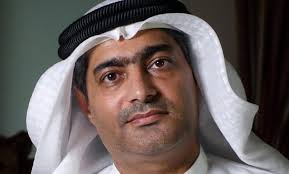
Due to the closed conditions in the UAE and the lack of human rights organisations, it is not possible for GCHR to verify whether he remains on hunger strike. He was reported to be in very bad physical and mental shape earlier this month. It appears that Mansoor was badly beaten as a result of his protests about the poor conditions in which he has been held, and his ongoing detention, which violates international standards. He was beaten badly enough to leave a visible mark on his face, indicating he may have been tortured. He remains in solitary confinement in the isolation ward of Al-Sadr Prison in Abu Dhabi, where he is being held in a small cell with no bed or running water, which he is never allowed to leave. GCHR issued a special report on his medieval prison conditions.
On 7 May 2019, the United Nations Special Rapporteur on Torture and six other UN human rights experts condemned Mansoor’s conditions of detention, noting that “the poor conditions of his detention in the United Arab Emirates, including prolonged solitary confinement, may constitute torture.”
Mansoor, who is also on the Advisory Committee of Human Rights Watch’s Middle East and North Africa Division, is the 2015 winner of the Martin Ennals Award for Human Rights Defenders. He is serving a 10-year sentence handed down on 29 May 2018 for the “crime” of speaking out about grave human rights violations in the UAE. For more info, click here.
GCHR and partners worldwide are planning a week of action to help free Mansoor surrounding his 50thbirthday on 22 October 2019. More information will be published soon at https://www.facebook.com/FriendsofAhmedMansoor/ and on GCHR’s platforms.
GCHR is concerned that Ahmed Mansoor’s life is at risk and calls on:
The UN mechanisms to act quickly to help protect and free Ahmed Mansoor;
The UAE authorities to release Ahmed Mansoor immediately and unconditionally, put a stop to torture and reprisals against him; and allow international observers to visit him in prison and check on the conditions; and
All supporters to tweet at UAE’s Vice President and Prime Minister @HHShkMohd to #FreeAhmed.
Today, almost 10 years after his death, the European Court ruled that Russia violated Magnitsky’s right to life by failing to hold an effective investigation into the alleged medical negligence that resulted in his death; that his detention conditions amounted to inhuman and degrading treatment; that repeated extensions of his detention was unjustified; and that his posthumous trial and conviction by a Russian court was inherently unfair. True, the judgment doesn’t break new ground in light of the court’s well-established case law on ill-treatment, death in custody, and lack of accountability for perpetrators in Russia. But you should read it to see the summary of facts submitted by Magnitsky’s representatives about the alleged embezzlement and tax fraud, which at the time was possibly the largest tax fraud uncovered in Russia’s modern history.
You should read the judgment for its harrowing accounts of Magnitsky’s prolonged suffering and dying, and of the enraging mess that is the official account of his death. You should read it to feel the truly Kafkaesque ordeal Magnitsky, his mother, spouse, and lawyers went through as they desperately tried to find recourse, get him the proper medical assistance, and, after his death, to secure some justice and accountability for his death. And yet no one who had a role in his detention and suffering has been truly held accountable.


 Hans Thoolen on Human Rights Defenders and their awards